"Industrializing" Tourism--Taiwanese Manufacturers Get into the Tourism Biz
Chang Chuing-fang / photos Chuang Kung-ju / tr. by Scott Williams
February 2010


Travel preferences differ from per-son to person. Some people enjoy alternating between part-time work and play. Others prefer to alight at the hotspot of their choice just long enough to take a few photos to prove they've been there. Still others do little more than nap in the car and visit the restroom occasionally. But the newest fashion in travel is an educational visit to a manufacturing facility.
Did you know that Taiwan had a whisky distillery? Are you curious about scientifically manufactured Chinese herbal medicines? Interested in how hand-crafted paper is made? Worried about chemical preservatives in your beloved preserved fruits? Join us for an eye-opening journey to Taiwan's tourist factories. We guarantee it will satisfy your thirst for both knowledge and fun.
Tourist factories? That's right. A number of Taiwanese firms are transforming their cold, efficient manufacturing plants into hybrid facilities that manufacture goods while providing visitor services, that sell both a product and a glimpse of the manufacturing process. In fact, these kinds of experience-oriented tours are now popping all over Taiwan.
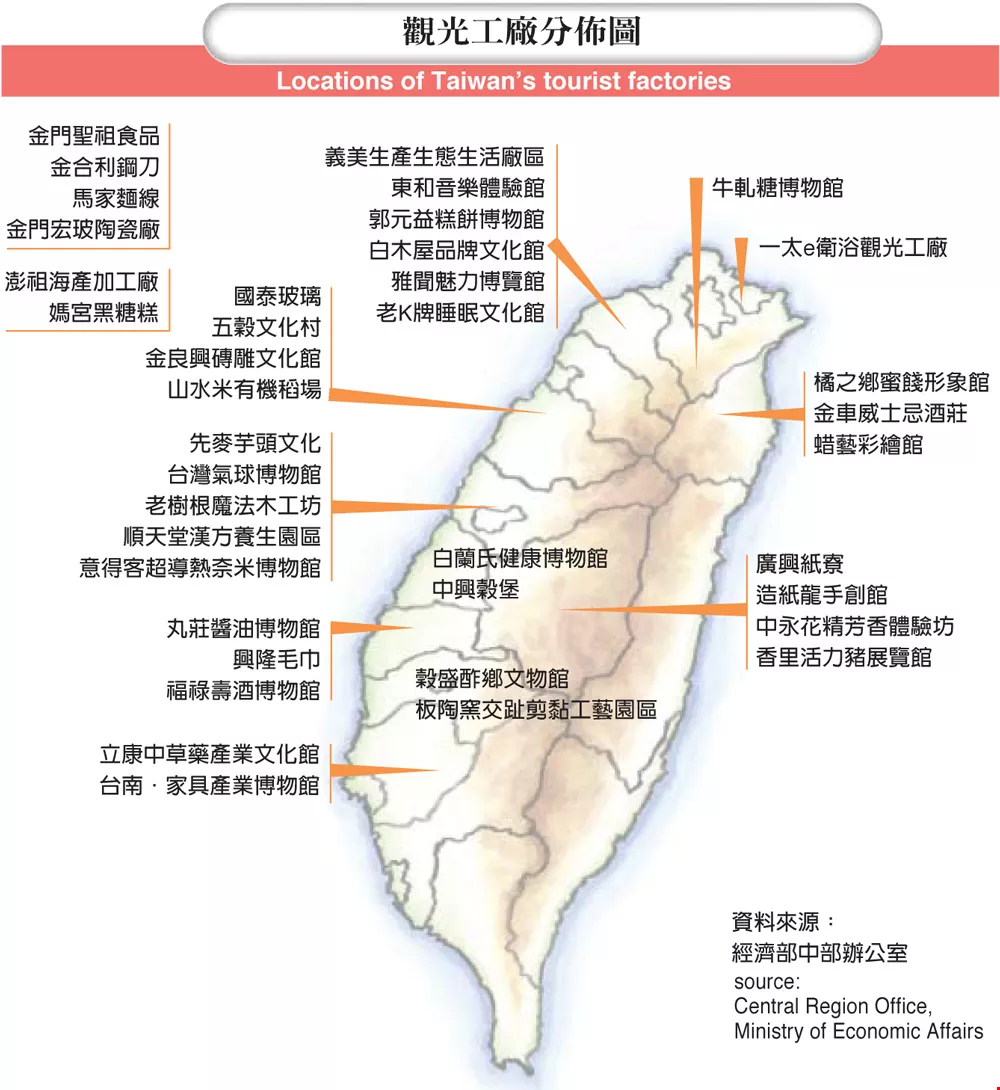
Locations of Taiwan's tourist factories/source: Central Region Office, Ministry of Economic Affairs
"If you're paid for raw materials, you're in the primary products business. If you're paid for tangible products, you're in the commodities business. If you're paid for your activities, you're in the services business. If you're paid for the time you interact with your clients, you're in the experience business. If you're paid based on the honor and pleasure your clients receive, you're a transformational business," writes Lee Jen-fang, a professor with the Graduate Institute of Technology and Innovation Management at National Chengchi University, describing the transformation of industry in his introduction to the Chinese edition of The Experience Economy.
In 1993, British scholar Auliana Poon suggested that once wealthy travelers had had enough of famous scenic spots, tourism would move towards the kind of experiential travel that offers travelers an insiders' perspective. Jimmy Jung, president of National Kaohsiung Hospitality College, claims that the spread of technology to all areas of life is also changing the tourism market. He sees travel consumers becoming more flexible, more diverse, and more focused on "real" experiences, which has driven the rise of the "tourist factory."
Shen Jong-chin, director of the Central Region Office of the Ministry of Economic Affairs (MOEA), says that the ministry began helping traditional manufacturers transform their facilities into tourist factories in 2003. More than 10 million people are estimated to have visited these facilities to date, generating NT$400 million output and a further NT$100 million in related services.
Lin Peijun, a section head in the Tourism Bureau's Planning and Research Division, says that several circumstances (e.g. a lack of English-speaking guides) have kept Taiwanese tourism factories from attracting foreign tourists.
But, given that the domestic travel industry generated revenues of NT$184.2 billion in 2008, local tourist factories still have a lot of room to grow. Although the domestic travel market has been trending towards saturation in recent years (roughly 100 million person-trips annually), Lin argues that tourist factory revenues should increase with the 2010 inclusion of tourist factories among the destinations at which civil servants may use their national travel cards.
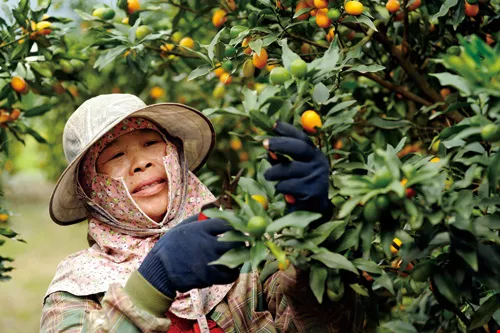
Agrioz, located in Ilan County at the foot of Mt. Xue, produces all-natural preserved fruits that contain no manmade sweeteners or food colorings of any kind. Seeing the company's operations at first hand gives consumers of its fruits confidence in the safety of its products.
From the standpoint of economic transformation, tourist factories are more than a bright spot for the tourism industry. More importantly, they are also providing Taiwan's traditional manufacturers with a means to restructure their business models.
Shen says that the MOEA has been supporting struggling industries since the start of the offshoring and hollowing out of Taiwanese manufacturing in the early 1990s. To that end, it has employed measures ranging from manufacturing-process and pollution-control improvements, technological upgrades, the introduction of digital management, and brand building to fostering alliances with firms in other sectors. Its 2003 plan to extract tourism value from traditional manufacturers built on these earlier efforts and has been a tremendous success.
Over the last seven years, the Central Region Office of the Industrial Development Bureau (IDB) has assisted in the transformation of 53 factories, 39 of which have now been certified as tourist factories. The largest number of these are located in Taichung, with six in Miaoli and six in Taoyuan.
"In the past, competitiveness depended on 'hard power'; in the future it will rely on 'soft power,'" argues Paul Shu, a lecturer at Yuan Ze University. Shu explains that manufacturing and mass production have been the dominant paradigm since the Industrial Revolution, a state of affairs which has resulted in an excess of production capacity. The service industry, on the other hand, is built upon person-to-person interactions and therefore has unlimited potential for growth. "The trend for manufacturers to reorient towards services is unstoppable," he says. "And it is especially urgent that traditional manufacturers, which offer little in the way of value-added, get on board."
"It's all about industrial know-how," says Shen, "and social communication." He notes that Taiwan has many traditional manufacturers that have a deeply engrained manufacturing culture and potential educational-tourism value. Examples include Taiwan's world-leading glassmakers and bicycle manufacturers. Efforts to prevent industrial counterfeiting and interference have long kept such facilities off limits to visitors. But once they open up, they not only make excellent sites for industrial tourism, but also help the public better understand business and provide a channel for communication between the business community and society at large.
Cooperation between the public and private sectors is enabling many of Taiwan's traditional manufacturers to transform themselves into the new stars of the "experience economy," a process which is making them less dependent on the paper-thin margins of the manufacturing sector.
"[These facilities are] using services as a platform and products as tools to bring customers into their operations and create unforgettable experiences for them," says Lee, who argues that the operating models of experiential companies are born of creativity and culture, with a helping of knowledge and aesthetics. Such companies don't want to just entertain their guests, but to encourage their participation.
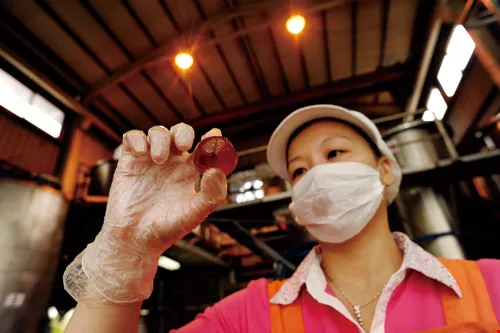
Agrioz, located in Ilan County at the foot of Mt. Xue, produces all-natural preserved fruits that contain no manmade sweeteners or food colorings of any kind. Seeing the company's operations at first hand gives consumers of its fruits confidence in the safety of its products.
In fact, touring factories isn't really all that new. Many Taiwanese born in the 1950s and 1960s can still recall childhood visits to Rabbit's pencil factory and Hey Song's soda plant. Tourist factories also exist abroad. Some are even international tourist destinations.
Hou Jing-shoung, chairman of the Department of Landscape Architecture at Tunghai University, says that tourist factories have succeeded in revitalizing sunset industries in industrialized countries, and cites Germany's Ruhr industrial hub and the Netherlands' Koninklijke Porceleyne Fles as cases in point.
Once home to bankrupt steel mills and mines, northern Germany's Ruhr region has been successfully transformed into an important historical site for industry. The effort has included a number of projects, including one that revitalized a mining district by leasing disused industrial premises to industrial design firms. The post-modern sensibility and versatility of the old buildings have inspired the designers who work here, and have also attracted hordes of visitors.
Established in Delft in 1653, Koninklijke Porceleyne Fles is the last of the Netherlands' 17th-century porcelain factories to still make its products by hand. It opened its doors to tourists after running into financial difficulties in the 1990s. Since then, its tourism program-which includes introducing visitors to four centuries worth of Delft porcelains, letting them watch its master craftsmen form and paint its porcelains, and even allowing them the opportunity to make blue porcelains for themselves-has helped turn the company around.
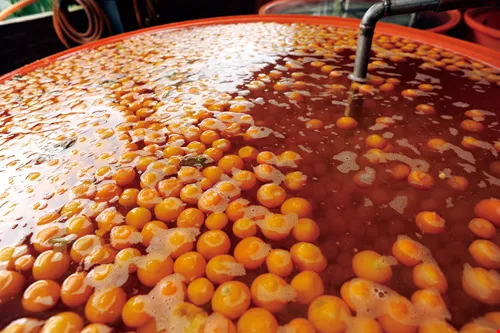
Agrioz, located in Ilan County at the foot of Mt. Xue, produces all-natural preserved fruits that contain no manmade sweeteners or food colorings of any kind. Seeing the company's operations at first hand gives consumers of its fruits confidence in the safety of its products.
But there are differences between Taiwan's tourist factories and those abroad, both in terms of how long they've been around and in their business models.
"Foreign factories frequently have hundreds of years of history behind them, giving them more 'texture,'" says Li Chun-ju, a professor in the Department of Tourism at Providence University, adding that Taiwanese factories are "shallower." Though they can turn on a dime in response to the market, their very adaptability and lack of a cultural foundation can give people the impression that they lack "roots."
According to the MOEA, tourist factories must possess five things: photogenicness, visibility, food to eat, things to do, and products to buy. In 2009, it ranked Taiwan's tourist factories on five additional criteria-thematic interest, space, image, facilities, and quality of service.
"Themes and culture were key points," says Hou, who was among the judges. He argues that a tourist factory's biggest selling points should be the firm's history, industrial know-how, and unique production processes. "The more a factory utilizes traditional processes, the more handmade its products, the greater its chances of becoming a tourist factory." Hou says that machines and standardization are no substitute for skilled craftsmen. "That's the kind of treasure we should be preserving."
In the end, Adahesong Taiwan Salico's Nougat Museum, I-Mei Foods' Production, Ecology and Lifestyle Park, Kawai Taiwan's Music 4 Fun, Kuo Yuan Ye Foods' Museum of Cake and Pastry, White Wood House's gallery, the Taiwan Balloons Museum, Sun Ten Natureceutica's Hanfang facility, Brand's Health Museum, Union Rice's Rice Castle, Taiwan Paper's Guanxing Paper Mill, and Puli Paper's factory were judged outstanding facilities that stood head and shoulders above the competition. Taiwanese born in the 1950s and 1960s retain a warm place in their hearts for nearly all of these firms.
Li Chun-ju, who has been involved with promoting the development of tourist factories since 2003, says that while the scoring method and the backgrounds and personal preferences of the judges made it inevitable that some excellent facilities would be overlooked, we can take comfort in the fact that growing numbers of well known companies are establishing their own tourist factories and doing quite a good job of it.
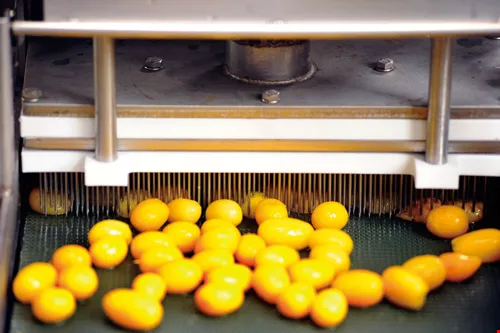
Agrioz, located in Ilan County at the foot of Mt. Xue, produces all-natural preserved fruits that contain no manmade sweeteners or food colorings of any kind. Seeing the company's operations at first hand gives consumers of its fruits confidence in the safety of its products.
When factories that used to focus exclusively on producing goods open up to visitors, virtually everything-from employee attitudes to the look of the grounds-has to change.
Agrioz Foods, for example, set out to change the popular notion of how preserved fruits are made. Before they visit the company's facility, many mistakenly believe that workers tread on the fruit in their bare feet, spattering juice all around before taking the fruit outside to dry in the sun (and be feasted upon by flies). This couldn't be further from the truth.
Agrioz, which is located in Ilan County at the foot of Mt. Xue, has been in business for 21 years. As part of its transformation into a tourist factory two years ago, it completely renovated and beautified its facility. As a result, there's none of the casualness or backwardness many visitors expect, nor even the faintest tang in the air.
Instead, visitors to the observation gallery see fruit being washed, selected, brined, rinsed, pierced, candied, dried, and packaged. Seeing the process at first hand helps them appreciate just how top-notch Agrioz's candied kumquats really are.
Lin Ting-kang, who inherited the company from his parents, says that there's no great mystery to the food business-you just have to win people's trust by putting yourself in their shoes. With that in mind, Agrioz has only one rule for its employees: "Make things you'd be willing to eat yourself."
The newly built Agrioz Preserved Fruits Image Store beside the factory is aimed at winning over the public. The display and sales area doesn't have the sour smell of preserved fruit, and is instead permeated with the scent of the good old days. Most visitors only learn that preserved fruits were originally a parting gift after reading the poem on the pavilion wall: "Ripened kumquats fall to the ground / exuding a toothsome scent / The day of our parting / is the time for golden kumquats / I hope the taste of these sweet fruits / will remind you of me." A small sack of preserved fruits wouldn't spoil on a long journey and helped stave off hunger and thirst. Having one with you was akin to having a dear friend looking out for you from afar as you traveled your weary road.

Manufacturers getting into tourism have to change their way of doing business. Puli Paper's incredible creativity is everywhere in evidence, from the paper-roll wall in the background of the photo to the paper dolls being diplayed by these employees.
Established just 12 years ago, White Wood House entered the ranks of Taiwan's tourist factories in July 2008 and earned the IDB's "Outstanding Tourist Factory" award in 2009. "Our objective was to create atmosphere, touching moments, and ambiance," says founder Stella Chien, adding that White Wood House has gone for "emotive marketing."
"There's no looking back when you're creating a brand," says Chien. "We've spent NT$1.6 billion building this brand over the last 12 years." She recalls making a visit to a French perfume factory five years ago when thinking about whether the tourist factory route was appropriate for White Wood House. The trip made it clear to her that the context was crucial. "When you set ordinary lavender against the backdrop of a castle, it becomes something very different!"
Other firms play up the past. "All the old things in our factory are valuable," says Ko Chi-beng, president of I-Mei Foods. Ko says that I-Mei, which was established in 1934, hasn't had to spend a lot of money on converting its facility into a tourist factory. The company's philosophy has always been to remember its roots, and the fact that the factory retains every piece of its old equipment is a draw for tourists. Ko too is proud of all the "old stuff."
The I-Mei facility, which includes an ecological garden and exhibition hall, is so large and storied that it takes visitors five to six hours to see it all. But I-Mei's facility differs from other tourist factories in one major regard: the company caters banquets and year-end feasts for so many hotels that it can't open up its production area to visitors.
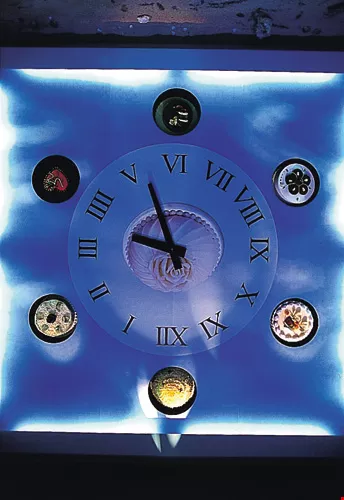
After kicking off a cake craze 12 years ago, White Wood House opened its operations up to visitors two years ago. Its carefully crafted gallery aims to blend a beautiful setting with an emotionally stirring atmosphere.
A number of tourist factories, including the Guangxing Paper Mill in Puli, Nantou County, seek to offer visitors something unique.
Li Chun-ju notes that Guangxing is an old mill, worn, cramped, and without air conditioning. In the summer, visitors make paper and sweat side by side with employees. Hand crafting paper is fascinating in spite of the heat, and has attracted more than 1 million visitors to the mill over the last few years.
Puli's 40-year-old Puli Paper has taken a different path, focusing on innovative research and development. Visitors are amazed by the company's gift boxes, its paper gallery made from stacked rolls of paper, and its paper-roll dolls and decorations.
Founded in 1963 and located in Shengang Township, Taichung, Tailloon Balloons is the last of Taiwan's balloon manufacturers. The company has experienced a complete turnaround since converting its production facility into a tourist factory and building the Taiwan Balloon Museum. "We went from a place no one had heard of to being hugely popular overnight," says founder You Zhengbo. "We owe most of that to the Industrial Technology Research Institute, which guided the process."

Although the transformation from a traditional manufacturing facility into a tourist factory involves taking up service-sector tasks, the factories remain at heart working manufacturing facilities. Unfortunately, manufacturing and service are very different in terms of their thinking, values, and supply chains, and businesses have been finding it very difficult to integrate these two very different types of operations.
Take opening a production line to visitors, for example. At a tourist factory, visitors naturally want to see goods being produced. But most people visit on holidays, when facilities don't typically run their production lines. If factories are to let the public observe "real manufacturing," workers have to put in overtime. Older workers also have to make themselves part of the show, dressing neatly, keeping their actions professional, and reining in their usual inclinations to nag and make faces. It puts workers under a great deal of pressure and it's only natural that there be backlash.
Factory owners have an even more difficult time adjusting their values and their approach to manufacturing.
Li Chun-ju, who has been providing guidance to tourist factories for many years, says that at some companies, the owners' ideas about the firm differ with generation. The older generation sees their factories as being in crisis and suffering under a mountain of debt, whereas the younger generation is more inclined to spend money on cosmetic renovations, to put time and labor into designing tourist routes, and to train guides. The fact that such brand-building efforts take time to yield economic benefits results in constant cross-generational conflict. In some cases, the younger generation has even been shown the door.
Other companies have been rejuvenated by tourism only to find that they can't stand the hassle of running a tourist factory. Some of these have gone on to revert to being purely manufacturers.
Li cites Hualien's Chyi-Sheng Marble, which was among the first local companies to open up to tourists, as a case in point. The company borrowed money with government assistance and spent millions remodeling the facility's steel exterior. Once the renovations were complete, visitors and orders began pouring in. Prices soared, even for products, like floor tiles, that it made from scrap. After over two years running the facility as a tourist factory, the Chyi-Sheng brand had become a success. Earnings from its marble business rose enough to keep the company afloat, and two years ago it stopped admitting tour groups.
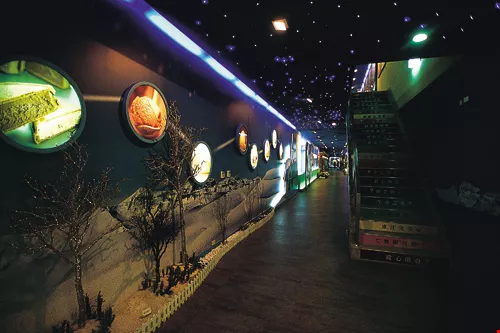
After kicking off a cake craze 12 years ago, White Wood House opened its operations up to visitors two years ago. Its carefully crafted gallery aims to blend a beautiful setting with an emotionally stirring atmosphere.
"Consumption is no longer just a desire for 'objects.' It now also encompasses a desire for new experiences," writes PC Home publisher Jan Hung-tze, describing the new concept in an introduction to the Chinese edition of The Experience Economy. Tourist factories fulfill this desire. In the context of factories, Jan's statement might be rephrased to read, "Production is no longer just the manufacture of goods. It must also, and more importantly, deliver an experience."
But what factories have the potential to distill their production processes into an "experience" and make them available to the public? Companies aren't the only ones struggling with this question. Even the MOEA's Central Region Office, which advises on the transformation process, is still feeling its way.
Li Chun-ju says that just as a surgeon should not operate on someone who is too frail, "attempting to transform a weak, poorly managed facility into a tourist factory is a risky proposition." On the other hand, does working only with companies that are already sound and well capitalized mean failing in our original intent to assist struggling firms?
Given how little time we've been at this, we don't yet have the process down well enough nor have enough test cases to know. An interesting thing about visits to these traditional manufacturing facilities is that they not only offer visitors the chance to sightsee, experience, and learn, but also, in a sense, transport them back to those heady days when Taiwanese manufacturers were creating our economic miracle. By visiting and shopping, visitors are also helping Taiwanese industry create a new soft-power miracle. This too is a rare opportunity. l
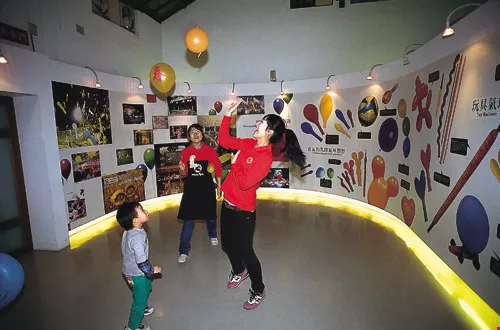
Located in Shengang Township, Taichung, Tailloon Balloons is Taiwan's only remaining balloon manufacturer. The facility's conversion into a tourist factory has rejuvenated it, turning it into a hugely popular destination for both parents and children.
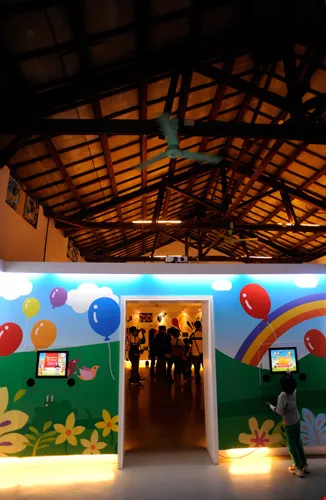
With clever packaging even a cold manufacturing plant can become a hot tourist destination. The photo shows Puli Paper in Puli, Nantou County.
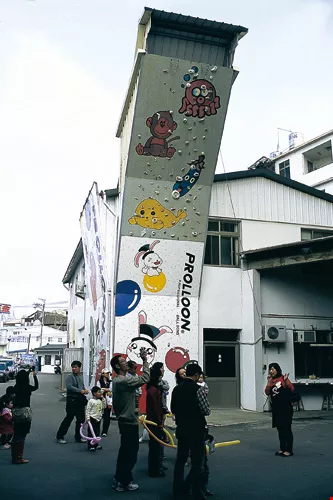
Located in Shengang Township, Taichung, Tailloon Balloons is Taiwan's only remaining balloon manufacturer. The facility's conversion into a tourist factory has rejuvenated it, turning it into a hugely popular destination for both parents and children.
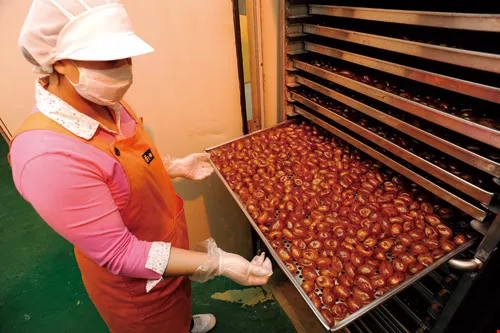
Agrioz, located in Ilan County at the foot of Mt. Xue, produces all-natural preserved fruits that contain no manmade sweeteners or food colorings of any kind. Seeing the company's operations at first hand gives consumers of its fruits confidence in the safety of its products.


