Giving Asian Americans a Voice on Stage--Musical Dramatist Welly Yang
Yang Ling-yuan / photos Jimmy Lin / tr. by Jonathan Barnard
March 2006
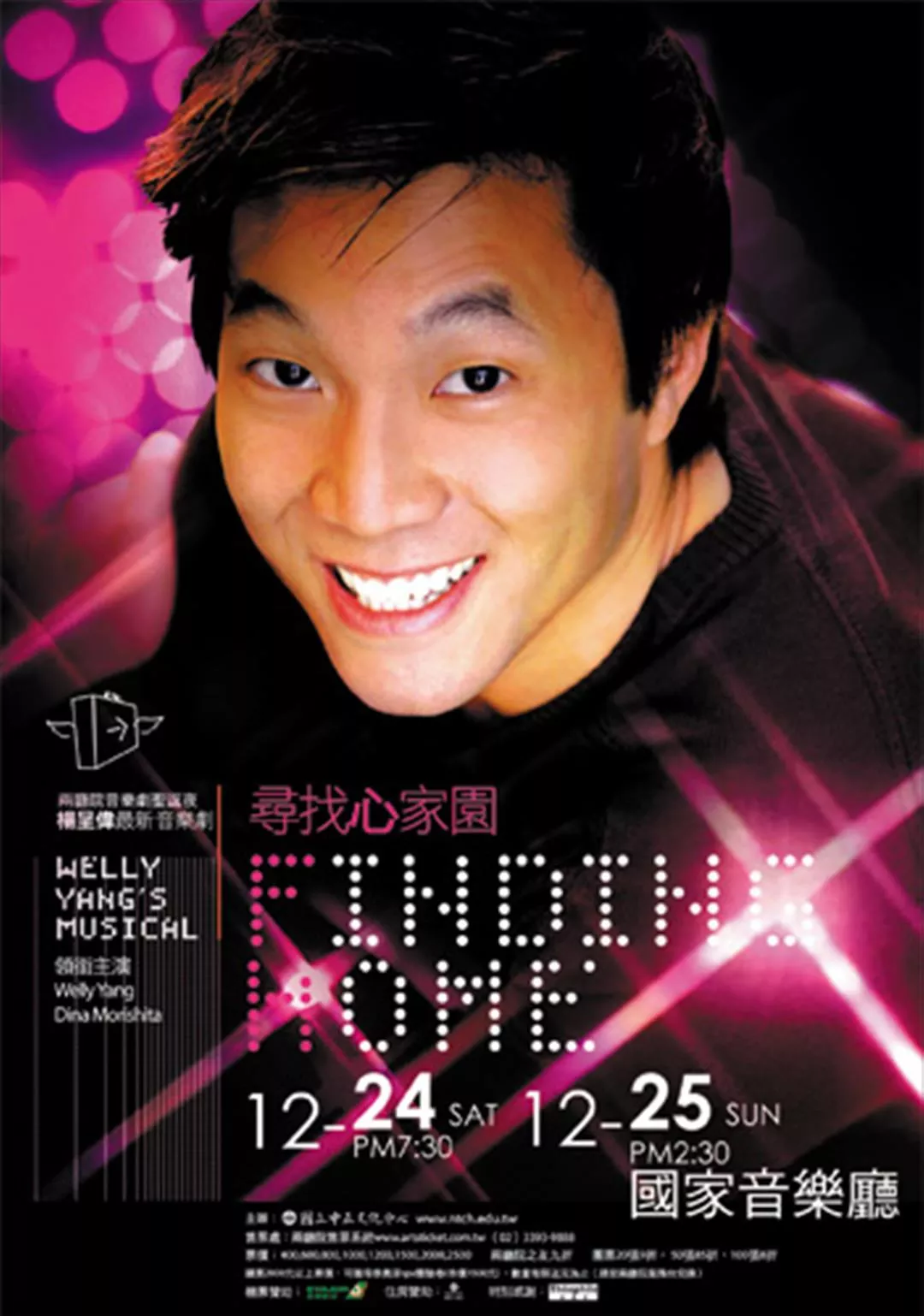
As the conductor moves his baton, the National Concert Hall fills with lavish and thunderous notes, and the spotlight illuminates Welly Yang. With a deep, sonorous voice, he belts out "Anthem" from the Broadway musical Chess, which is the prelude to his own musical Finding Home.
"What is your desired home? Is it your ancestors' blood and sweat or chasing after your own dream?" Yang has taken his father Yang Tzu-hsiung's true life story of struggling overseas for 40 years and turned it into musical theater: A native son of Tainan goes to America to pursue his studies so as to carry on his father's legacy as a physician. Once there he fails to live up to his father's expectations, but settles down. Then, some 20 years later, when he wants his own son to continue his professional legacy, he discovers that his son has already found a new garden in his own land of dreams.
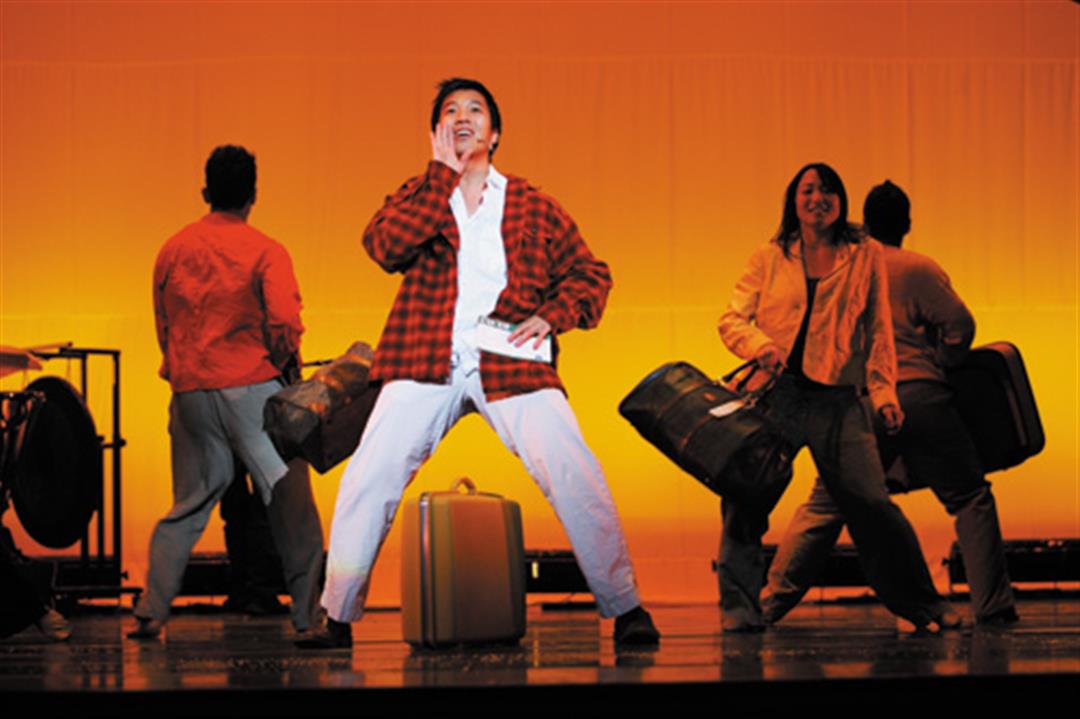
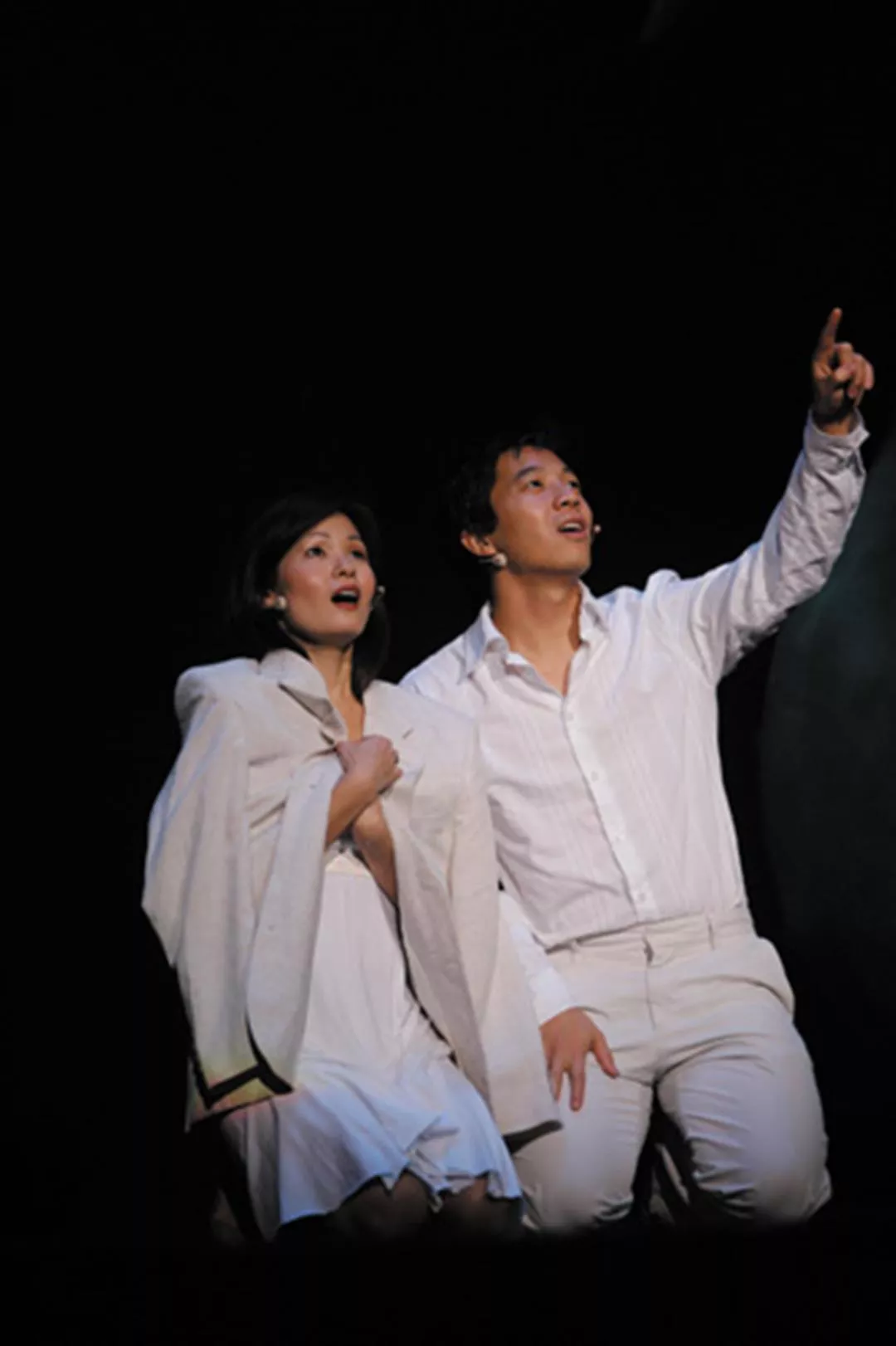
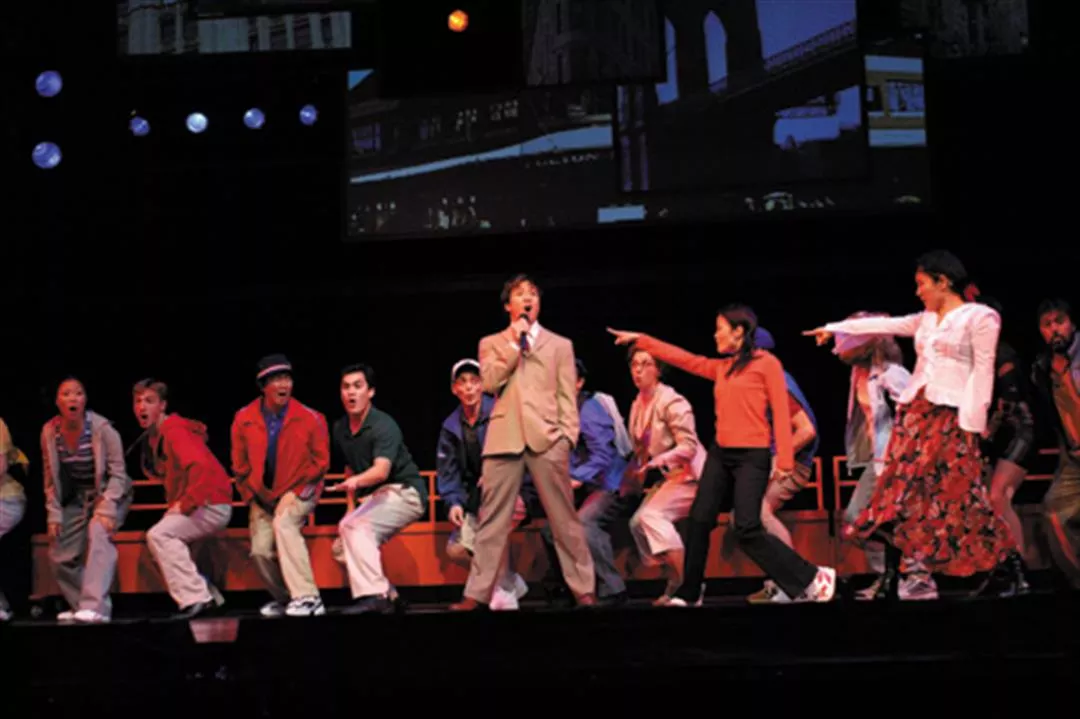
With a simple structure but rich content, Finding Home borrows some of Broadway's most familiar songs, such as "On Broadway" and "Elaborate Lives." It also rewrites some famous Taiwanese folk and pop songs, including "A Little Bird Is Crying," "Eternal Homeland," and Lim Giong's "Marching Forward." Both types of song capture the hearts of the audience. The use of multimedia, moreover, gives the show a cutting-edge feel. A film clip of Yang's parents' wedding is spliced together with footage of the play's opening at UCLA's Royce Hall, when Yang actually proposed to the female lead, Japanese-American Dina Morishita. It infuses even more passion into the atmosphere of joy and surprise.
On Christmas night of 2005, crowds of music aficionados made their way toward the National Concert Hall to enjoy a modern dramatic musical: Finding Home. Quite a few of them were going because of the play's writer and male lead: Welly Yang, winner of a Remy Martin XO Honor given at the 2006 Asian Excellence Awards.
All 4,000 seats for each of the two eagerly anticipated performances sold out. Yang's parents, meanwhile, were overcome with joy about their son's return to Taiwan--because for them Taiwan is forever their homeland and the place of Welly's roots.
Six years ago, with Broadway's halo hovering overhead, Yang brought a company of 27 actors, orchestral musicians, dancers and technicians to Taiwan to perform his own musical Making Tracks. The drama traced two Asian-American families through a century of struggles: a Chinese family whose immigrant founder travels across the Pacific to dynamite mountain slopes and lay railway tracks, and a Japanese family who were treated like prisoners of war and placed in an internment camp during World War II. More than 85% of the musical's seats were filled for its performances in Taipei and Kaohsiung, and six shows in Taipei totally sold out. The play not only sparked enthusiasm for musical theater but also provided an introduction to a versatile ethnic Chinese superstar of the new generation: Welly Yang, who can act, sing, write and direct.
Yang then obtained the stage rights for Ang Lee's film The Wedding Banquet. The drama likewise revolves around a Taiwanese family that has migrated to the US. It faces the modern dilemma of whether a son should marry and carry on the family line or find love as a homosexual. Yang once again chose Taiwan for the show's opening, and it was, as expected, a smash hit.

Through musical theater Chinese-American Welly Yang, a rising star on Broadway, and his Japanese-American fiancee Dina Morishita give voice to the inner thoughts of Asian Americans. They hope their efforts will meet with a response from mainstream American society.
"We are Taiwanese"
Born in New York in 1973, Yang has repeatedly created plays that draw on the experiences of Asian Americans and has selected Taiwan to debut these shows. He credits his choices entirely to the influence of his parents.
"It's because they'd usually speak Taiwanese at home, and play and sing Taiwanese folksongs," Yang recalls. "And they would often say, 'We are Taiwanese.'" Although his open-minded parents did not try to indoctrinate Welly and his brother with a need to stay true to their roots, their home had frequent Taiwanese guests, and the two boys would often accompany their mother on marches, where they'd wave the national flag.
As a youngster, Welly didn't understand why they had to put brown paper bags with eyeholes over their heads before they went on a march, or why those visitors and his parents would talk all day in such solemn voices.
When he was older and understood the ways of the world, his mother told him that those guests were all exiled leaders of the Taiwan democracy movement, and that those marches were for democracy for Taiwan. When he entered middle school, his mother sent out letters to lobby the support of US congressmen, and she would ask Welly to proofread them and correct the English. It was only then that he discovered that his mother, Maysing Yang, and his father, Yang Tzu-hsiung, had long thrown themselves into the Taiwan human rights and democracy movements. When his parents had carried him in one arm and waved flags with the other, it was all so that the people in their ancestral home could live better lives.
Those experiences sparked in Welly an interest in politics, but he still had only vague impressions of Taiwan. He remembers that when he was 13, his mother arranged for him and his brother to travel to Green Island and play violin for political prisoners. When the performance was outrageously stymied by the police, the incident left a lingering sense of fear. From that moment, Welly Yang was blacklisted. When he left Taiwan, it would be 17 years before he returned.
Despite these experiences, Welly never considered himself an "immigrant" in America. His parents raised him and his brother to assimilate into American society, not only giving them names redolent of the English nobility--Wellington and Winston--but also sending to them a top New York area boarding school. In that period the Yangs were not well off, but his father nevertheless bit the bullet and insisted that the children finish their studies. The true reason was that although his parents had lived in America for many years, they had few connections and their English wasn't fluent. Consequently, it was hard for them to enter mainstream American society. Hoping that the next generation wouldn't encounter the same obstacles, they wanted their two sons to have the best educations possible and to come into contact with the sons of upper-class families, so that they wouldn't lose the race in the starting blocks.

Yang's stage adaptation of The Wedding Banquet also focused on the theme of Taiwanese in the United States. It was through this production that Yang met his fiancee Dina Morishita (front row, second from right).
Looking for new identities
If it wasn't for acting, Yang may never have understood how mainstream American society viewed Asian Americans. As his parents had intended, Welly believed from a young age that he was a true American. Although he had a hidden identity, it didn't have any real meaning, and when he chatted with friends about his "Taiwanese" background, they would say, "That doesn't exist; you're Asian American."
But Yang, who had always played leads in high school and college productions, would find that once he embarked on an acting career he could only find work as supporting Asian roles. Whenever producers called auditions for an all-American kid with great singing skills, they would say, as soon as they laid eyes on him, "He's not exactly the type we are looking for." The rejections hit Yang hard. He realized that no matter how much he identified with America inside, and no matter how Americanized he was in his behavior, it was hard to get past the stereotypes that people attached to his black hair and yellow skin. He was forced to reconsider his identity.
When Yang began to make a name for himself on Broadway, he noticed the situations of other Asian-American actors. Their plight induced him to get involved and start organizing. Apart from promoting the Remy Martin XO Honors of the Asian Excellence Awards, which recognize Asian Americans who have made contributions to the performing arts, he also founded Second Generation Productions, which brings together Asian-American performers, who are usually scattered throughout the Broadway community, to come together and create works of musical theater about Asian Americans' stories.

"What is your desired home?" is the moving question that Yang's musical drama Finding Home asks time and again.
The crying violinist
Welly Yang's Asian-American consciousness was formed unintentionally, and likewise the path he followed to become an actor was an accidental one.
When he was young, Yang didn't realize he had any gift for performance. He was, to the contrary, a shy child, and would only occasionally perform in school concerts. But when he saw the solemn pronouncements of lawyers in TV dramas, he always felt in awe. His maternal grandfather had been a judge under Japanese rule in Taiwan, so he thought he would pursue a legal career. Although things didn't turn out the way he planned, he has recently had the opportunity to play a lawyer in the TV show Law and Order and a human rights lawyer in the modern musical Ceiling/Sky. So one might say he has fulfilled his dream after all.
Welly Yang's father Yang Tzu-hsiung originally set out to be a doctor but ended up going into banking. And his mother, Maysing Yang, who was appointed vice minister of the Overseas Chinese Affairs Commission early this year, owned a successful business for more than a decade.
Like many overseas Chinese parents, who have high expectations about their sons, his parents pushed him and his brother to study the violin when he was just four. Yet all Welly wanted to do at that age was to play, and he found it hard to calm down and focus. Whenever it came time for him to practice, it turned into a traumatic family crisis. For every half hour of playing, there was an hour of fighting and crying. Even his mother couldn't help but feel pained as she watched. But his parents' determination would later prove to be farsighted and justified, because although he would abandon the violin to study acting, his musical training from a young age cultivated an outstanding musical sense and a solid foundation in music theory. And, due to the demands of a role, he would even pick up the violin again many years later.

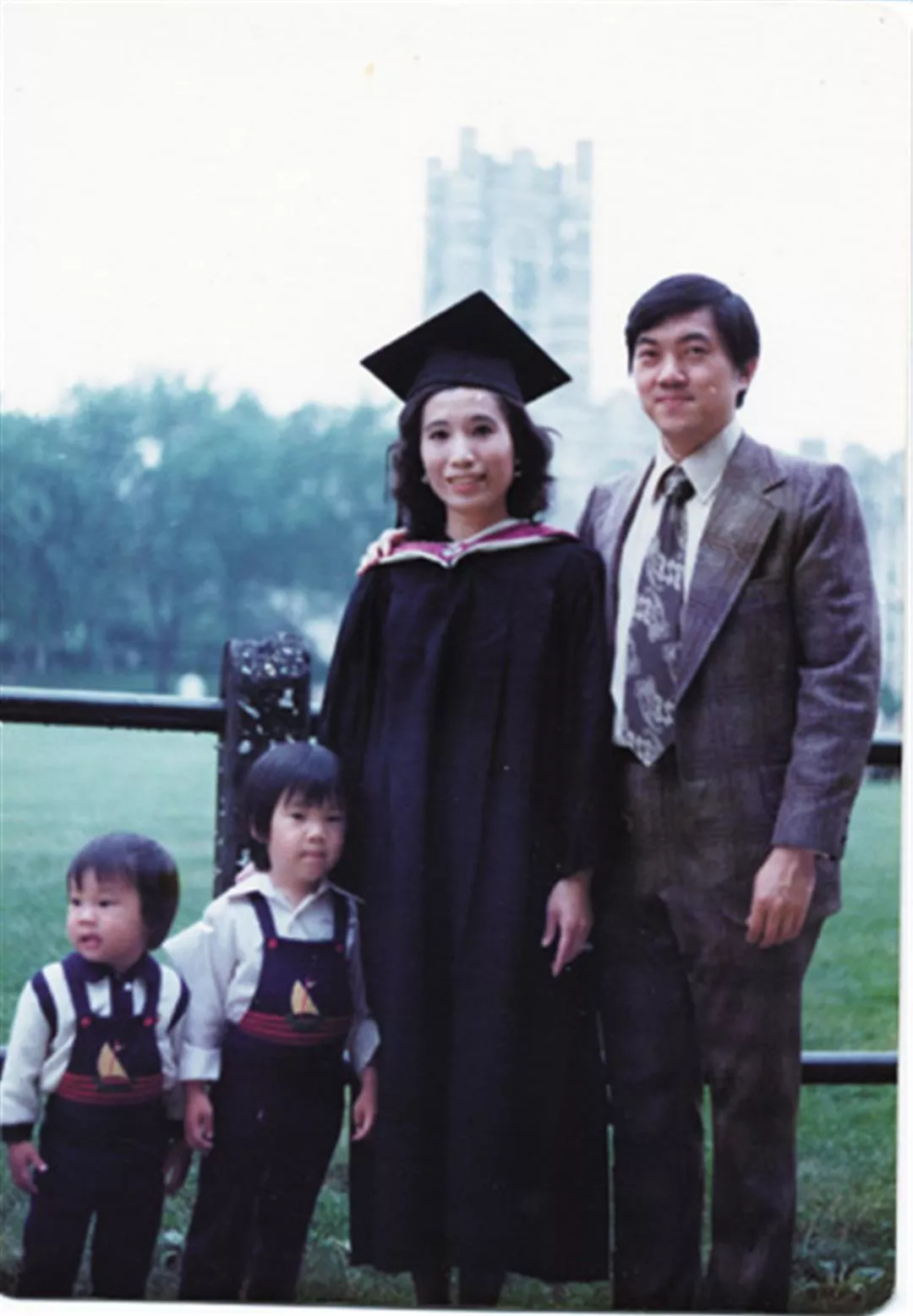
Yang comes from a distinguished family. His father Yang Tzu-hsiung and mother Maysing Yang were pioneers of the Taiwanese democracy movement overseas. This family photo was taken when Maysing received her master's in sociology from Fordham University.
Finding a mentor
Recalling his own history of acting, Yang can't help but laugh. Girls are what first seduced him to get up on stage. In high school, he saw a notice about tryouts for a drama about pirates, and his mother urged him to give it a shot. She harbored no ambition to be a mother of a star, but she felt that Welly was too introverted and that acting might help him to build up confidence and help him express himself better. Welly did not feel cut out to be an actor, so to prepare for the audition he asked his grandmother Kao Ya-mei, who was an operatic vocalist, to give him some lessons. With this professional instruction, he landed the leading role. But what made him fall in love with the stage was that the pirate he played was surrounded by a bunch of beautiful girls. They stimulated his interest in the profession of acting.
Although he majored in international relations at Columbia University, he also took a lot of drama classes. It was in these classes that he found his mentor: drama instructor Aaron Frankel, who was, at nearly 80, still passionate about the theater. During one class performance, he praised Yang's acting abilities. It was the first time that Yang felt that he had really entered into a role, and hearing this old professor, who never complimented students, compliment him, made him only that much more confident.
Not long after this, Yang decided to give it a go as an actor, and he sought out Frankel for a chat. Frankel warned him that having talent was no guarantee of getting work. If he was determined to pursue a career in acting, he would need the full support of family and friends, and to be certain that he had no financial worries. But Yang, full of enthusiasm and ambition, couldn't grasp the professor's inner meaning.

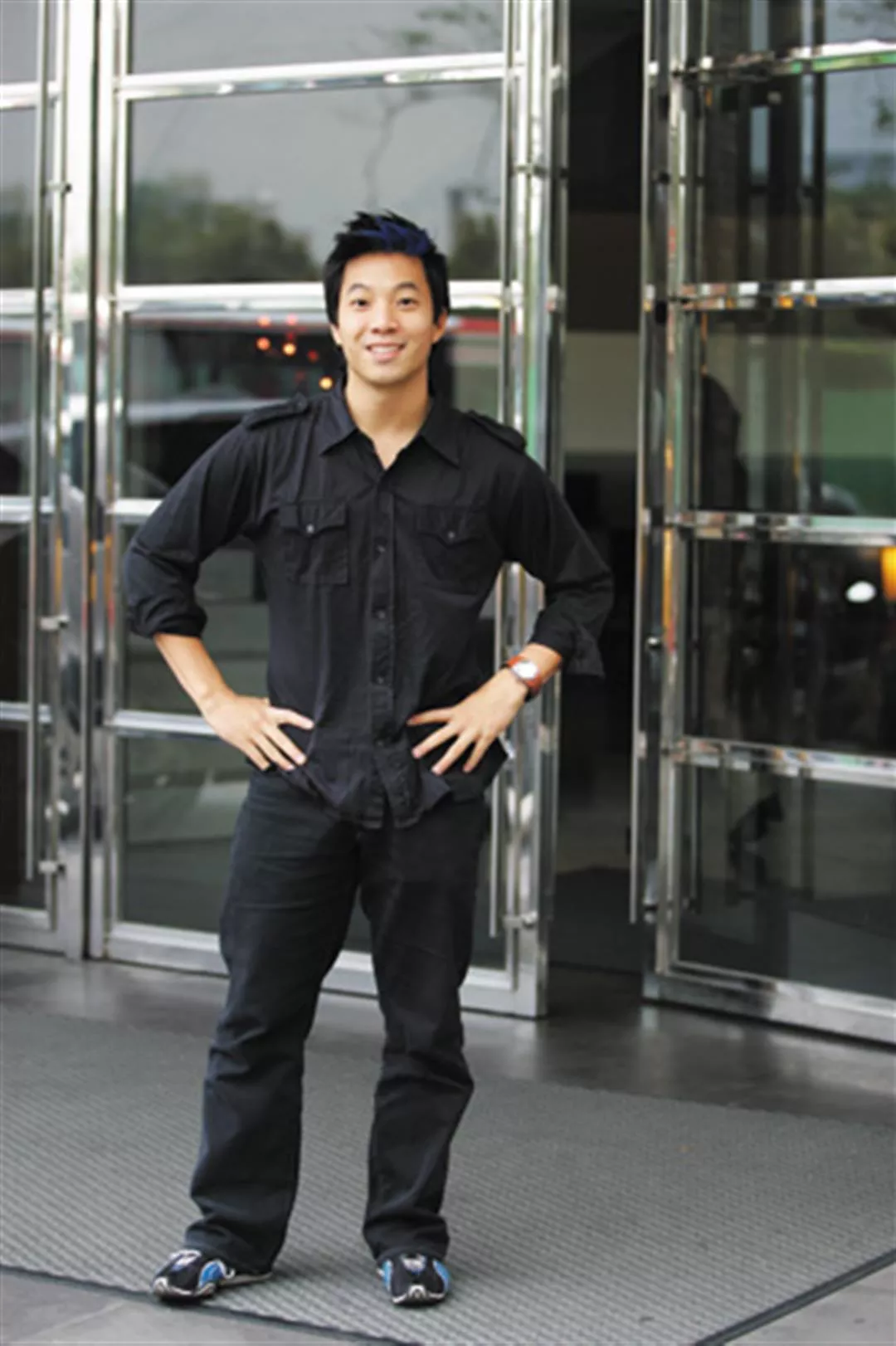
Off stage, Yang appears the carefree hunk, but the messages that he is intent upon conveying are weighty and profound.
A shining star
With his professor's introductions, he found an agent to help him find acting jobs, and in a very short time had one, playing a small role in a drama. When he excitedly told his parents that he had a summer job in theater, his surprised parents responded: "Why are you working in a theater, rather than a lawyer's or congressman's office." He replied that he would have a long life as an office worker; it was summer vacation--let him "have a little fun" with what interested him.
On opening night, he specially invited his parents. He had a small part as a Japanese laborer with poor English, and his parents were less than impressed. After the performance, they asked him: "Do you want to play a servant forever?" Welly felt very frustrated, but he silently swore that he would show them. And when he was 20, he landed an important role as the evil Thuy in the Broadway show Miss Saigon.
From that point on, his career advanced smoothly. The year he graduated he was invited by the modern composer John Adams and the avant-garde playwright Peter Sellars to perform in a international tour of the modern musical Ceiling/Sky, which had stops in 12 countries around the world--moving from New York's Lincoln Center to UC Berkeley, to Hamburg, Paris, Edinburgh... even to a performing arts festival in Helsinki. The experience broadened Yang's horizons. He learned from his elders and made many contacts. Even more importantly, he made a little money. It was the most rewarding period of his life.
Next he got the lead in a revival of Cole Porter's Aladdin. The show was pretty successful, and even more TV and film producers came calling. A TV company even had him host his own talk show.

Asian-American obstacles
"Compared to others, I have been truly lucky, and I feel very grateful for all the help people have given me." Many of his acting friends from high school were trying to eke out a living with jobs at small theaters. Other young people worked very hard and attended every tryout they could but ended up just spinning their wheels. It made him feel that the world of theater was a cruel and calculating place.
Although Yang had a sense of crisis, he didn't have any concrete plans about his own future. But what woke him up was a remark from his father: "Miss Saigon, Aladdin--how long can you play these kinds of roles?" Thenceforth, his father, who had originally opposed his choice of profession, started diligently to plan his career. It was also his suggestion that Welly found a theater company and try writing plays from his own experience.
It was about that time that Welly noticed that the mainland Chinese market was opening up, which in turn stirred up a craze for the Orient in the American entertainment industry. It was a development that excited Asian-American actors who had previously found it difficult to land jobs. But their hopes ended in disappointment. It turned out that the industry was willing to spend a lot of money to bring in actors from China, rather than use its own homegrown Asian-American talent.
"Initially everyone thought that the hard times were over and opportunity was knocking," Yang recalls. "We didn't expect to be kicked down into a deeper hole." At that point Yang resolved that it was time for them to make their own way.
With the encouragement of his family, Yang established the non-profit Second Generation Productions eight years ago. It quickly grew from a small outfit of only three persons to a company of more than 30 collaborating actors, dancers and workers, who were ready at any given moment to work on the company's behalf. Apart from bringing Asian-American performers to work together on the same productions and cultivating new playwrights, the company even more importantly put Asian-American stories on stage, so that Asian Americans would have a chance to sing and shout about their own experiences.
Don Quixote's dream
In 1998 Yang asked Korean Woody Pak, who has won numerous awards at international film festivals for his scores, and Brian Yorkey, who has written many works of musical theater, to create a major musical Making Tracks, with the idea of getting people to recognize the talents of Asian Americans and revamp the image of Asian Americans in American society. Making Tracks was a hit, receiving excellent reviews in the Chinese-American community and mainstream American media.
Because Yang had received much help to achieve his current success, once he had established his company, he actively sought to cultivate talent by having them learn from the best. For instance, he sought out Tony-winner David Henry Hwang and hot Broadway playwrights or composers. He hoped that the newcomers in his company, by learning from these leading lights, might one day be honored themselves on the world stage.
Yang received much affirmation for his hard work during this period, including a commendation from the National Arts Club and recognition from A. Magazine as one of the "hottest Asian-American entrepreneurs under 30." The CBS television network also awarded him their sixth "Fulfilling the Dream" Award.
Having played so many roles, Yang now most wants to play Don Quixote, because that character, through his tireless striving to fulfill his own dream, truly ends up changing others' lives. A prostitute that he insists is a princess ends up believing it herself at the last moment.
Yang believes that the challenges he now faces are a lot like the struggles his parents went through for the Taiwanese democracy movement. Although the fruits of democracy may not all be entirely sweet, democracy has truly changed the nature of life in Taiwan. Yang finds that extremely moving. And now his own Quixotic dream has in fact been realized--because he is in San Jose, California playing that role of his dreams.