Midi Z: Taiwan, Cradle of My Cinema
Lee Hsiang-ting / photos Seashore Image Productions and Flash Forward Entertainment / tr. by Geof Aberhart
October 2016


“Thank you, Taiwan! For me, being been able to come to Taiwan from where I started in Myanmar has been like winning the lottery!” So said Myanmar-born Taiwanese director Midi Z in a social media post after his latest film, The Road to Mandalay, took the FEDEORA Award for Best Film at this year’s Venice International Film Festival.
After having represented Taiwan in pursuit of an Oscar in 2015 with Ice Poison, Midi Z’s next feature, The Road to Mandalay, was chosen to compete at the 2016 Venice International Film Festival. Every time he has won awards on the international stage, the young director has made it a point to thank Taiwan, remarking that Taiwan’s liberal creative environment has done much to nurture his filmmaking despite his having studied design rather than film.
With many of his films focusing on the tragic plight of Burmese-Chinese, director Midi Z holds a unique place in Taiwan’s film world.
Since his design course graduation short Paloma Blanca eight years ago, Midi Z has been an attention-getter among Taiwan-based directors at film festivals around the world. Since completing college, he has gone on to make at least two films a year—shorts, documentaries, and features—and he shows no signs of slowing down in his ongoing intense and planned efforts to stretch himself.
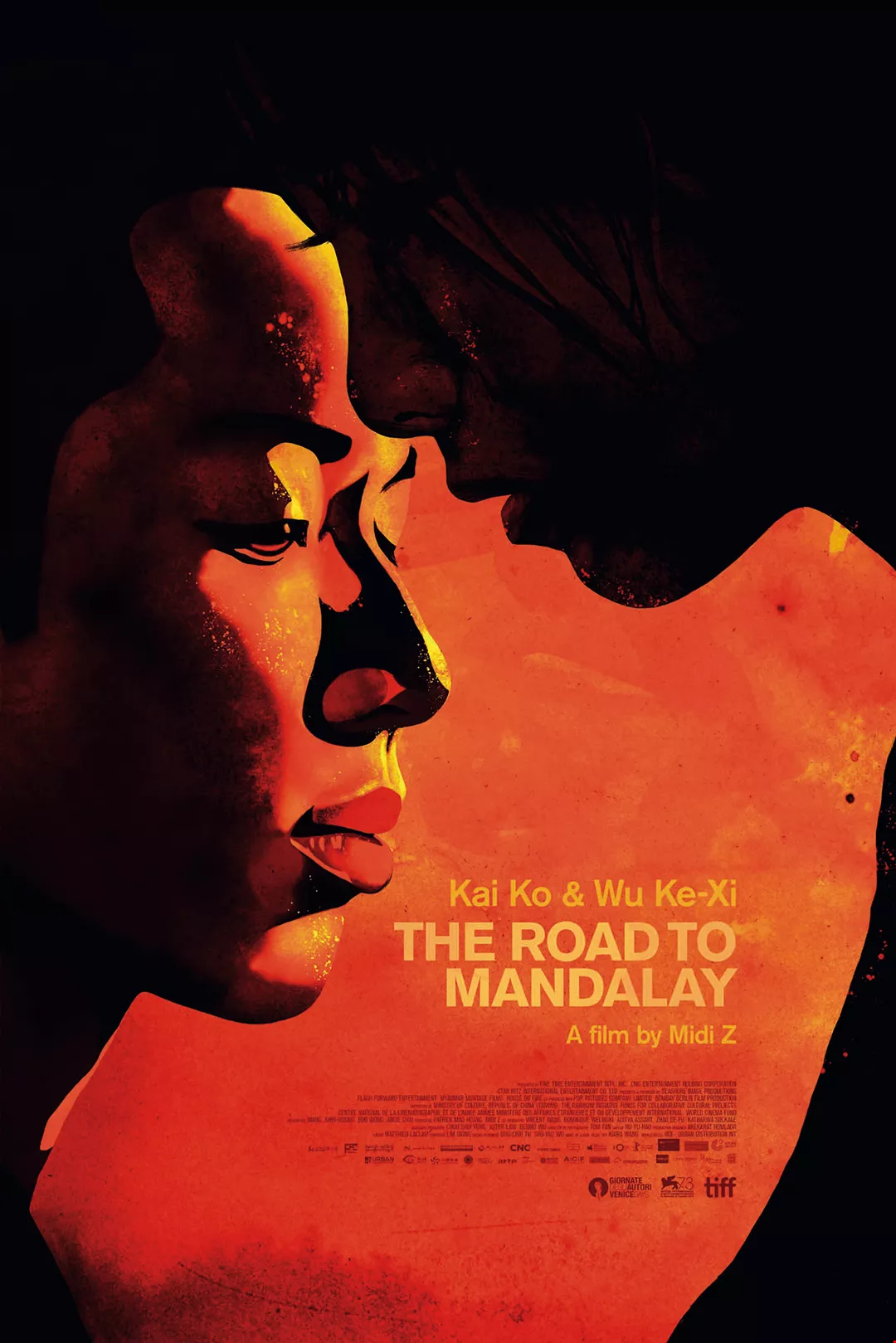
The poster for The Road to Mandalay is the work of Hollywood poster designer Akiko Stehrenberger, and reflects the different perspectives on love of the male and female leads.
Learning film for a living
“In the past I used some pretty basic approaches to making films,” says Midi Z, recalling his start, when the entire effort was just a way to make some money.
In college, he took on freelance projects, doing filming, editing, and scoring for things like weddings and graduations. In his senior year, he got worried that his graduation project wouldn’t make the grade and he might have to return to his native Myanmar, so he hit the library and borrowed every book he could find on film and directing. After successfully making it through college, Midi Z went on to graduate school, also in design, where he rented DVDs daily, watching everything on the disks down to the behind-the-scenes featurettes. His explorations of film took up most of his free time, and as he fell more deeply in love with the world of cinema, his professors began to recognize that he had a gift.
“I wouldn’t presume to say I have a ‘gift,’ I’m just able to shoot a little better and a little quicker than most, and I get more of a sense of comfort and achievement out of it,” says the ever-modest director. As he speaks about himself with a hint of a Burmese accent, Midi Z comes across as quite shy, completely unlike the powerful realism of his films.
His graduation short Paloma Blanca received acclaim at film festivals in countries as diverse as South Korea, Australia, Denmark, and France. Thanks to this, Midi Z caught the attention of advertising agencies, earning himself a work permit that let him stay in Taiwan. For a year he worked on projects night and day, eventually earning enough to build a house for his family in Myanmar. Afterwards, to stay on in Taiwan, he tested into graduate school, which was when he began seriously thinking about what he wanted to film next.
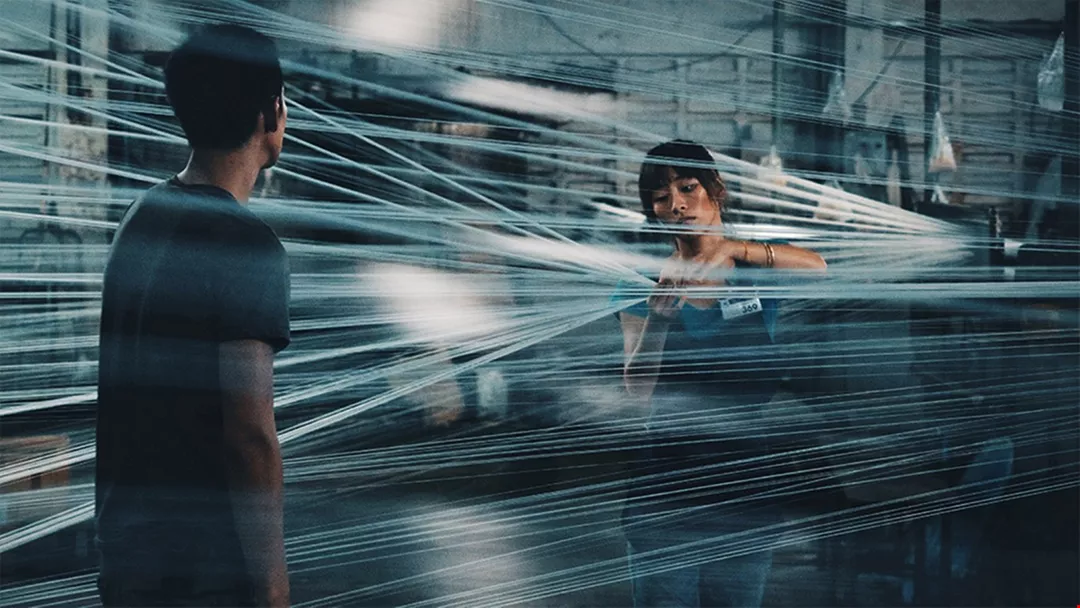
The Road to Mandalay is Midi Z’s move from indie film to the commercial mainstream and tells the tale of two ethnic Chinese in Myanmar and their “Taiwan dream.”
Telling tales of home
“I’d watched at least a thousand films by then, so I’d started to pick up a few techniques and begun realizing that what really touched me were stories that related to my own background. That inspired me to start thinking about telling my own story to similarly touch others.”
What he most wants to do through his films, Midi Z says, is tell his stories to others, since his own background is much different to that of the average Taiwanese.
Midi Z was born and raised in the city of Lashio, near Myanmar’s northeastern border with China, to an ethnically Chinese family that traces its origins to the city of Nanjing. Until he was 16, he lived in an area characterized by poverty and a lack of resources. In a world where power and wealth dictate status, life around him was a black hole he desperately wanted to find a way to stay clear of.
In 1998, when Midi Z was 16, his family spent a month’s worth of living expenses to sign him up for an entrance test for a Taiwanese school. He tested among the top 50 of the nearly 6,000 applicants, and with US$200 and a suit that cost half a year’s family savings, headed to Taiwan alone to study. From his second day in Taiwan, he was already working part-time to support himself.
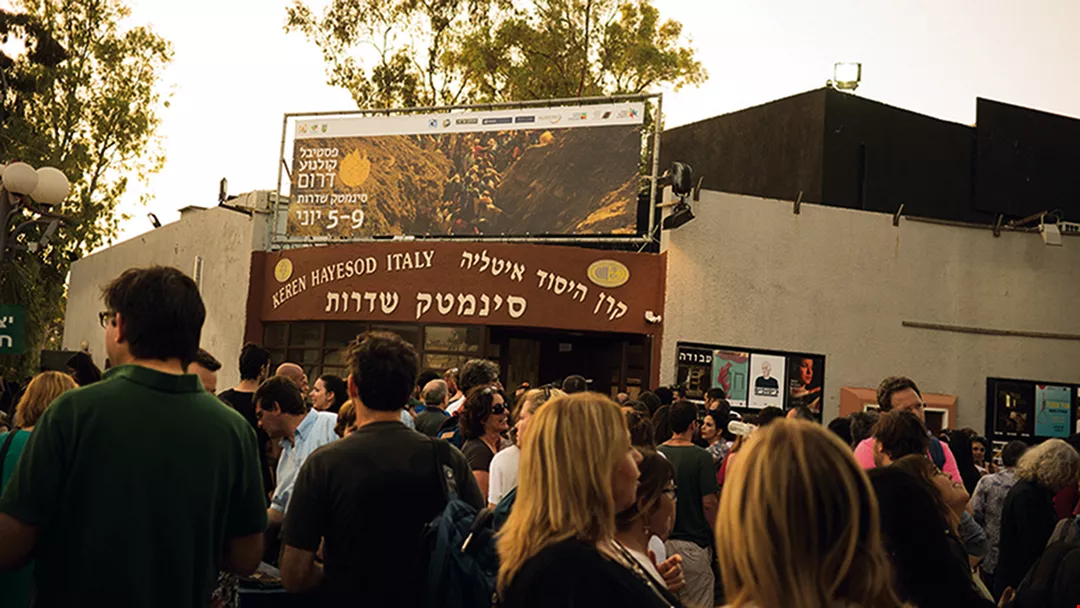
The 2016 Cinema South Film Festival in Sderot, Israel, used Midi Z’s documentary City of Jade as its visual motif. The town was practically full of billboards for the film.
Help from higher up
For ten years after arriving in Taiwan, Midi Z had not returned to his hometown. In 2008, driven by his desire to tell the stories of his home, he picked up his camera and headed back to Myanmar to start shooting. The next year he was selected for the Golden Horse Film Academy, shooting the short film Huashin Incident with renowned director Hou Hsiao-hsien as producer. He went on to become one of Hou’s apprentices.
“Mr. Hou told me then that even without resources you can still make films, and that was how he started out himself. He taught me a lot, and his encouragement gave me the courage to shoot a film entirely solo,” says Midi Z. In fact, he says, the elder statesmen of Taiwanese cinema have all been more than happy to help out the new generation.
For example, in 2014 Ang Lee braved the cold, wet New York winter to make a special appearance at the premiere of the only Chinese-language film to show at that year’s Tribeca Film Festival, Midi Z’s Ice Poison. After the screening, Lee was effusive in his praise for Midi Z’s ability to produce a robust, expressive film dealing with an unusual topic despite a lack of resources and equipment. Lee went on to share his own experiences with him, talking about the different problems a filmmaker faces making a film solo versus making one with a crew of 200. Midi Z also still remembers Lee’s assistant telling him that the director had been up all the previous night dealing with meetings, but still insisted on making it to the screening and getting up on stage. He even made time beforehand to share a meal with Midi Z and give him personal encouragement. To this day, Midi Z remains touched and grateful for Lee’s support.
In 2010, Midi Z again picked up his camera to shoot his first feature-length film, Return to Burma, working alongside a producer and a sound mixer. The film, depicting the realities of life in Myanmar, was nominated for the New Currents Award at the Busan International Film Festival and won the Tiger Award at the International Film Festival Rotterdam. Just before heading to the latter festival, Midi Z formally became a citizen of the Republic of China.
His second feature, 2012’s Poor Folk, even received sponsorship from the International Film Festival Rotterdam’s Hubert Bals Fund. In late 2013, Midi Z and a team of seven spent ten days in the China-Myanmar border region shooting his third feature film, Ice Poison. In 2014 the film was screened in the Panorama section of the Berlin International Film Festival, won Best International Feature Film at the Edinburgh International Film Festival, and won Best Director at both the Peace & Love Film Festival in Sweden and Taiwan’s Taipei Film Festival. It was also selected to represent Taiwan in the Best Foreign Language Film category at the 2015 Academy Awards. While it wasn’t nominated for an Oscar in the end, all of this is a powerful sign that Midi Z has become a force to be reckoned with.
While making Ice Poison on a budget of only US$10,000 and serving as writer, director, cameraman, and producer, Midi Z also completed two documentaries, Jade Miners and City of Jade, which tell the stories of Burmese jade miners, and in particular of his own elder brother, who had left the family some 20 years earlier to work in the mines. “Personally, I feel that if I hadn’t made these first, I wouldn’t have been able to make anything else. Even The Road to Mandalay is the story of my sister, who’s 12 years older than me, her generation, and the ‘Taiwan dream’ of so many ethnic Chinese in Southeast Asia.”
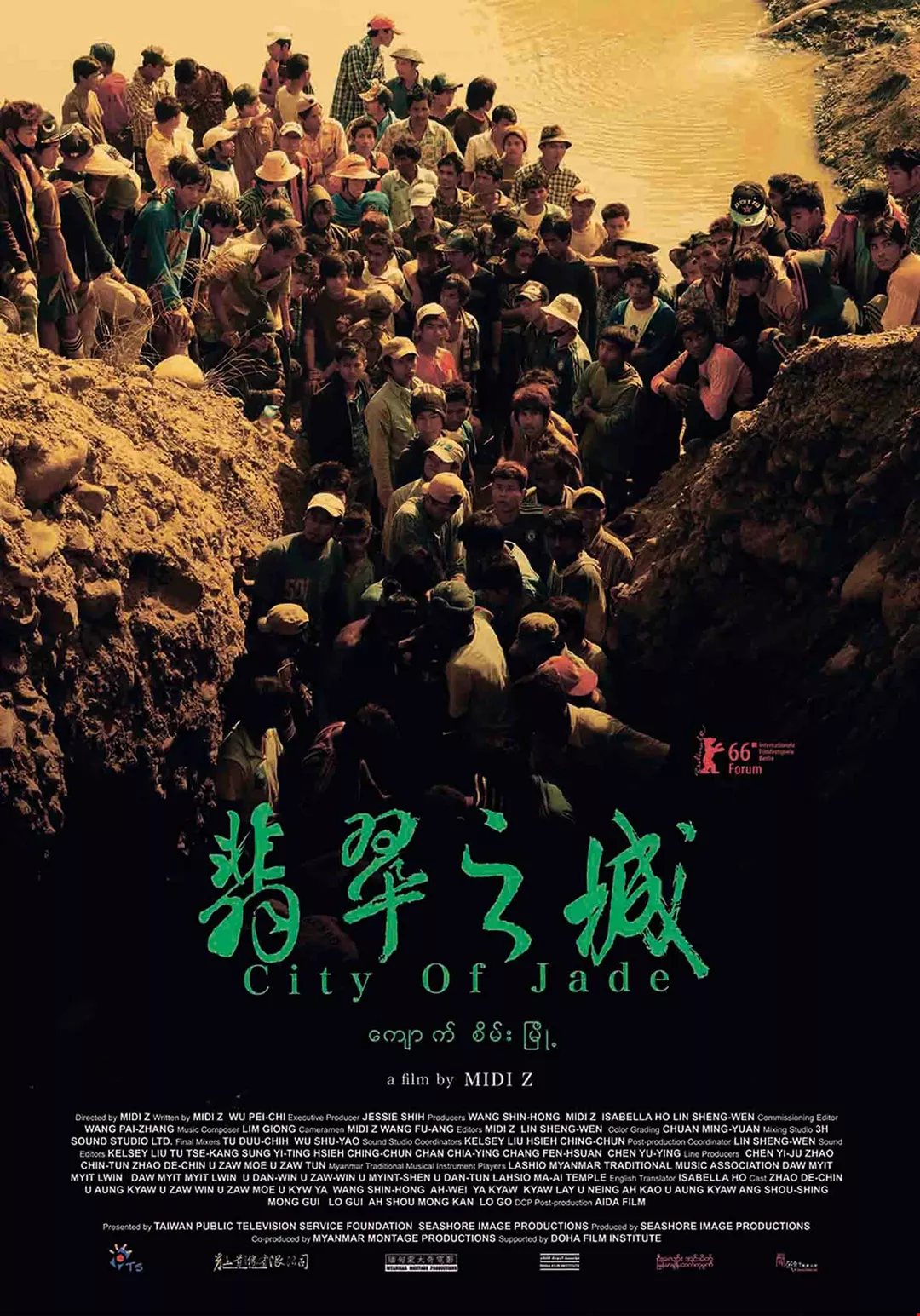
The 2016 Cinema South Film Festival in Sderot, Israel, used Midi Z’s documentary City of Jade as its visual motif. The town was practically full of billboards for the film.
The bigger picture
Midi Z’s films have a kind of tension in how they look directly at the challenges facing ordinary people desperate for a way out of poverty. With his long takes, their desperation and oppression at the hands of people and circumstances become a cinematic vocabulary, and this has caught the eye of critics around the world.
In Midi Z’s eyes, films are simply creations, with no particular political or social pretense. He says he feels no duty to speak for the underprivileged of Myanmar, nor does he feel that just by telling his stories he will somehow change everything. His films come simply from his personal observations and ideas; “I don’t try and dress up my films, I just want to tell these stories and get them off my chest. I’m simply an artist venting his emotions.”
From our position as outsiders looking in, these films also help us get to know Midi Z.
The Road to Mandalay cost nearly NT$40 million to make, with investors from France, Germany, and Myanmar helping foot the bill. The film’s story is focused on something the world is concerned with—economic refugees—and as such attracted considerable attention and investment from distributors and buyers on an international level. The film is also Midi Z’s first attempt at a large-scale feature production, and in an age when Taiwanese filmmakers often struggle with a stagnant market and have trouble attracting funds, Midi Z finds himself no longer struggling with limited resources, while the international nature of his investors has also helped him get a foothold in a larger market.
When he began writing the script for The Road to Mandalay five years ago, not having a professional background in film meant Midi Z felt somewhat lacking in confidence, but he was nonetheless determined to see things through. He submitted his script to major script competitions around the world, going through some 12 drafts and getting suggestions from a range of judges, as well as finding more opportunities for international investment. As both director and producer, he learned about distribution and how to sell his films to potential investors. Approaching it all with a strong will and clear-headed analysis, he slowly found ways to make his idea into reality. As his latest work has started racking up recognition, he has remarked that such encouragement is a huge boost to his confidence, and helps keep him moving on his journey through film.
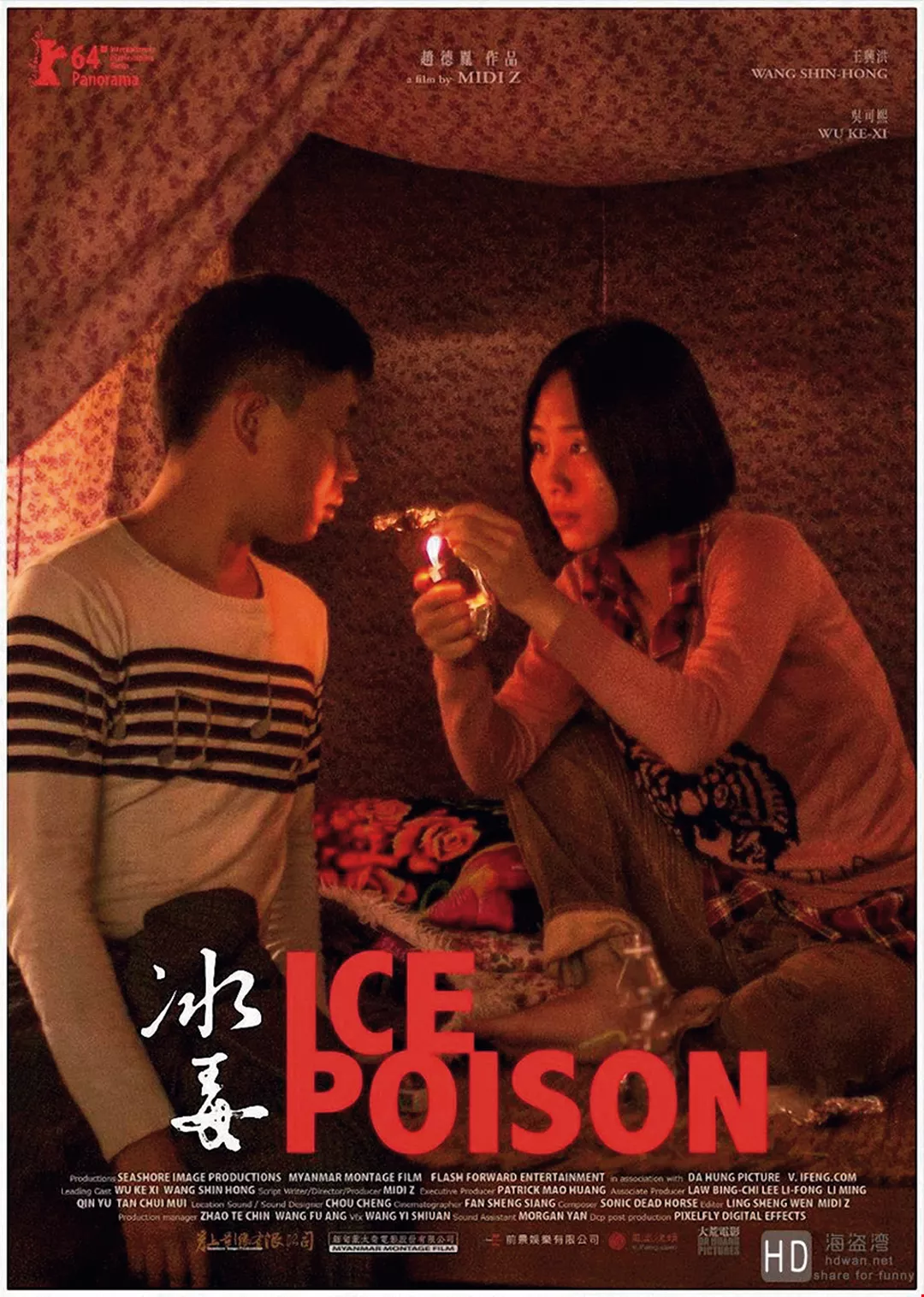
Ice Poison, made by a team of only seven people on a budget of just US$80,000, was chosen as Taiwan’s entry for the 2015 Academy Award for Best Foreign Language Film.
More than just a dream
At 33 years old, Midi Z has traveled with his films to more than 100 film festivals in over 40 countries, with several countries even putting on special screenings of his works. However, he hasn’t let all this go to his head. In private, Midi Z is an ordinary person, with things like reading proposals and scripts just his everyday work rather than some grand dream.
“I don’t really talk about film as being a dream, that’s not realistic. To me, film is a practical pursuit, with all kinds of things that need doing and plans that need making. I just take everything one step at a time, getting better with experience,” he says. At any moment, he could go back to his old one-man model. The freedom of Taiwan, he says, has given him near limitless creative inspiration, and his passion and personal investment in film aren’t restricted by the scope of any given production. As long as the images feel real, feel true, then ultimately they will be seen.
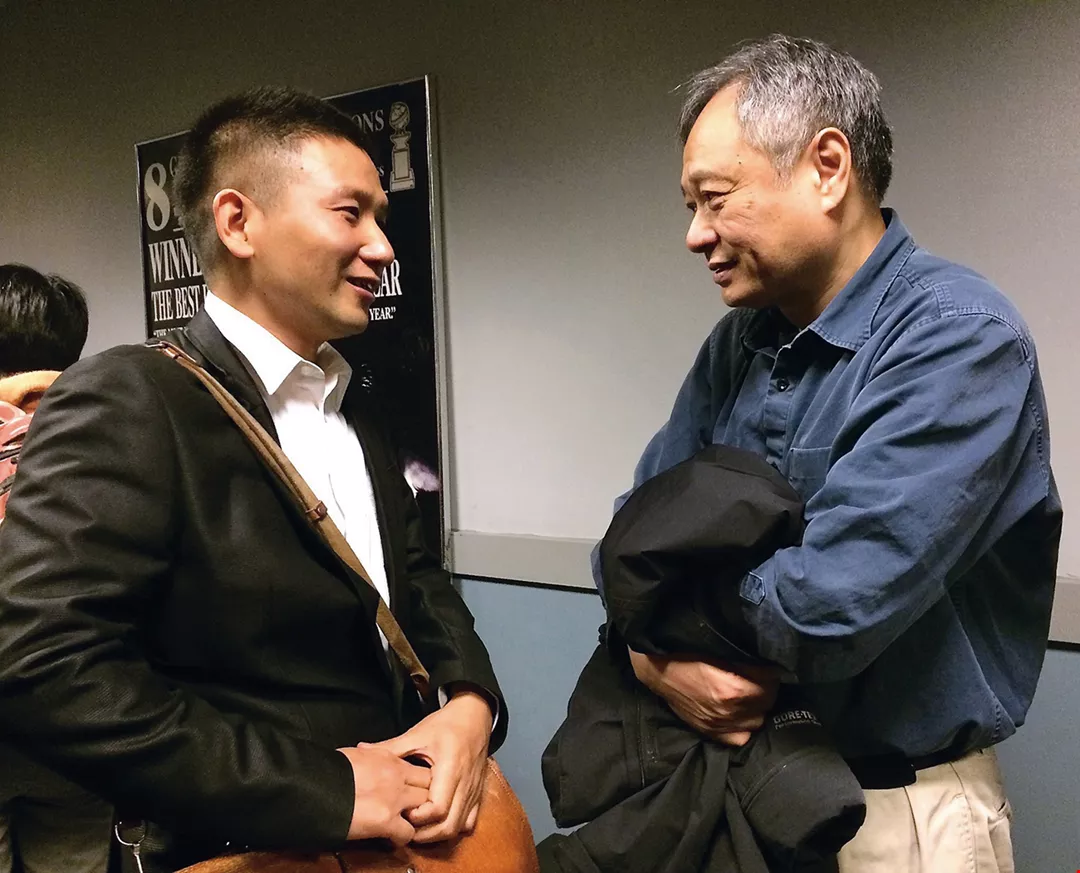
Midi Z says that elder statesmen of Taiwanese cinema like Hou Hsiao-hsien and Ang Lee have been more than happy to give advice to newcomers like himself. This photo shows Lee at the 2014 Tribeca Film Festival giving words of encouragement to Midi Z.
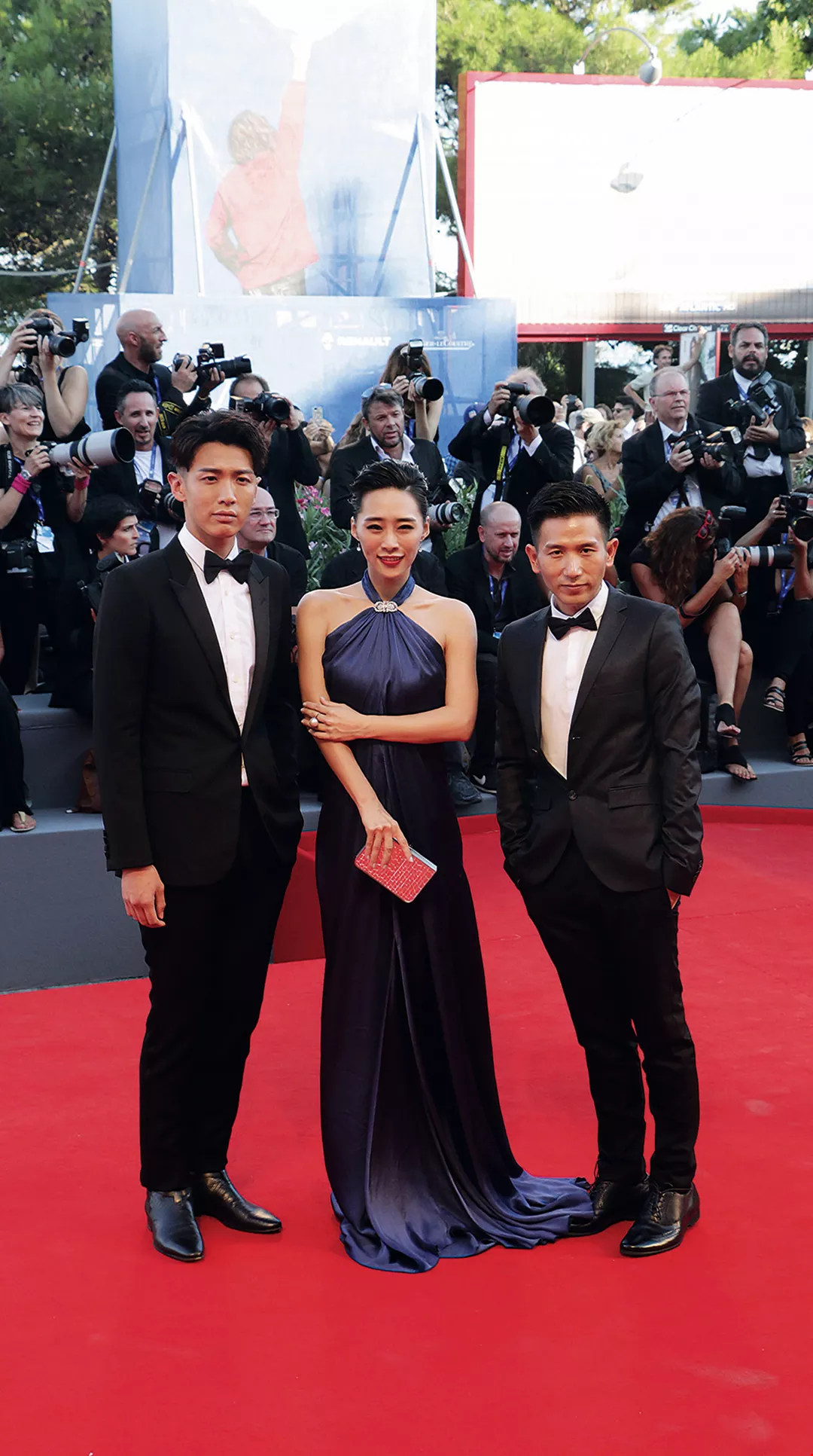
Midi Z has once again taken to the red carpet at the Venice International Film Festival. His films have started in Taiwan, told tales of his home in Myanmar, and drawn attention on the world stage. From left to right: lead actor Kai Ko, lead actress Wu Ke-xi, and director Midi Z.
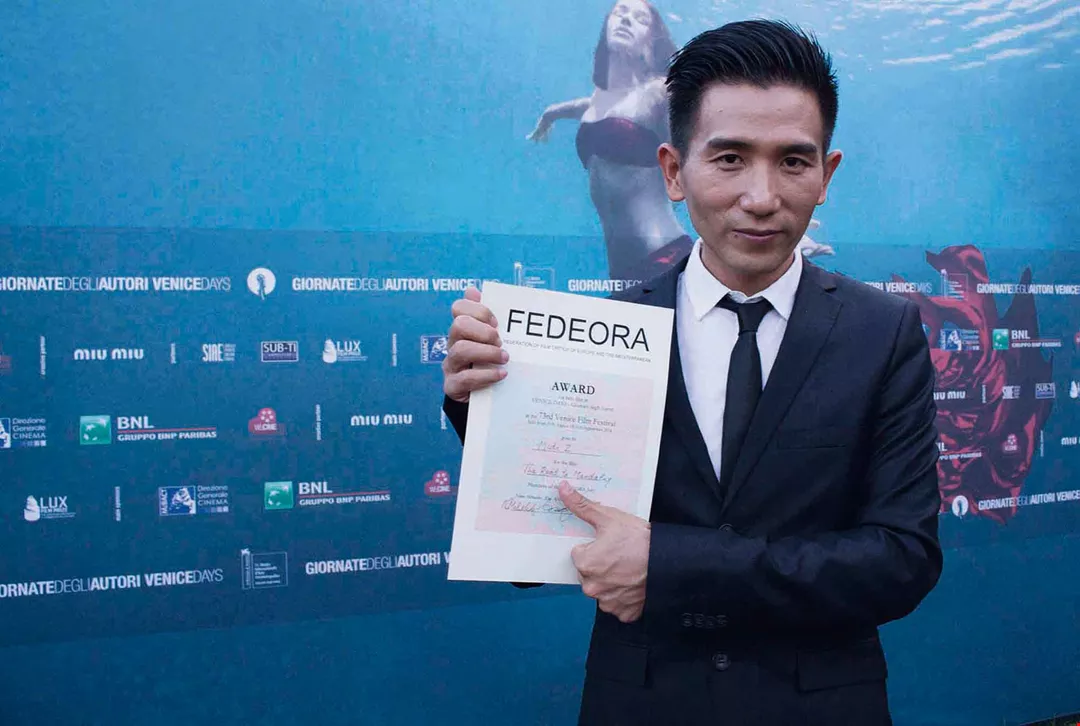
he FEDEORA Award for Best Film at the Venice International Film Festival, Midi Z remarked, “Taiwan is the place that has nourished my cinematic spirit.”


