A Taste of Showa, Seasoned with Kindness--Japan's Shikatsu Historical and Folklore Museum
Vito Lee / photos courtesy of Shikatsu Historical and Folklore Museum / tr. by Geof Aberhart
January 2004


Museums are veritable treasure troves of human knowledge and experience. In the past few years, interest in the various kinds of "locality-specific" museums has taken off. They may not be able to boast the precious relics of Taipei's National Palace Museum, nor are their staff as expert as those of the major museums, but these smaller museums more than make up for their limited resources with enthusiasm and local flavor.
Shikatsu, in Japan's Aichi Prefecture, is home to one of these smaller community museums. The Shikatsu Historical and Folklore Museum was set up at the desire of residents, and has a distinctly local character. With this interest in museums coming along in Taiwan, we would do well to look at the story behind Shikatsu's facility.
Shikatsu is situated about 70 minutes' drive from Nagoya, near the northwest corner of the city. Riding the bus to the town, I see the four-lane city roads give way to narrow streets as I make my way out of Nagoya's hustle and bustle. The narrow streets out of town are dotted with gas stations, restaurants, and shops, all displaying brightly colored flags, hanging limply in harmony with the tranquil surroundings.
The town of Shikatsu has a population of just over 40,000, and is neighbored by the towns of Nishiharu and Toyoyama, the cities of Iwakura and Komaki, and the metropolis of Nagoya. There's a very distinct look to the town-its "town charter" specifically notes that it should be "a wonderful place-a natural, sun-kissed cultural landmark."
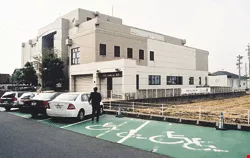
The museum and the town library occupy the same building. Both are popular recreational destinations for locals after the rice harvesting season is finished. (photo by Vito Lee)
Guided by happiness
The Shikatsu town hall is the operational heart of the town, and it is from here that the town's 46 public facilities are coordinated. Be it focused on leisure, culture, health care, or socializing, each one of the facilities, scattered over the town's 8.4 square kilometer area, is run from the town hall.
The town charter, carved on a black tablet in front of the town hall, is less a set of regulations than a gentle reminder of the townsfolk's common ideals, and the Shikatsu Historical and Folklore Museum, situated behind the town hall, could be considered a physical manifestation of these very ideals.
The moment you enter the museum, you are met by rows of elementary school desks lined up next to the door. Spread out over the desks are beginners' Japanese textbooks which were issued by the Japanese Ministry of Education and Culture during the Showa period (1935-1988). Carrying on through, various everyday items are displayed on old-fashioned wooden shelving, giving the place an air of authenticity. The items on display range from movie tickets to notebooks, and of course there are a fair few things like face cream, soap, and coffee. Further along, you will find well-maintained antique refrigerators and motorbikes. In its 1200 square feet of floor space, the museum has managed to bring together over 10,000 display pieces. In addition to this lovingly compiled collection, a section of the street nearby has been restored to match the theme of the museum. All this, as well as a resident-focused management style, has helped the museum become the best-loved cultural facility in Shikatsu. One mother, visiting the museum with her child, said she considers it a perfect place for a family outing, and whenever friends from out of town come to visit, she takes them there too.
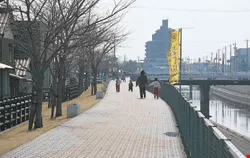
The museum and the town library occupy the same building. Both are popular recreational destinations for locals after the rice harvesting season is finished. (photo by Vito Lee)
Bringing Showa back to life
The Shikatsu Historical and Folklore Museum, also known as the Showa Everyday Object Museum, was set up in 1990 and initially concentrated on collecting tools from the area's agricultural history. Yoshinori Ichihashi, a curator at the museum, explains that in its early days the museum didn't really have a clear objective, and the management was somewhat substandard. Then in 1994 it established its main exhibition, centered on everyday items from the Showa period.
With the help of media promotion, locals and residents of neighboring areas were encouraged to donate a large number of items to the collection. Thanks to this, all the items on display in the museum were actually used by their previous owners, while also being kept in excellent condition. From food wrappers and packaging, through toys, electrical goods, and even old-fashioned bicycles, industrial designs of the period all manifested a kind of simplicity, and curves were a popular design feature.
Each of the 20 exhibition rooms has a different theme, and strolling through each room, it can seem as though you're walking through a family's home. One section is an old living room, in which a 14-inch color television sits on a pristine tatami, playing matches by Japanese pro-baseball team the Giants. Although it may not be occupied now, the room still has an air of life about it, and you can really feel the character of the sort of person who would have lived there.
Leaving the living room, walking through the kitchen and its display of Hitachi rice cookers, and heading out the back door, you'll find yourself standing on a street corner, bathed in the faint yellow glow of a streetlight. A barber's shop sits nearby, closed up for the night, the clippers, scissors, and other tools set out tidily in front of a mirror. Opposite the barber's is a small grocery store. Outside the brightly lit store is a large red postbox, with various motorcycles and trolleys standing alongside. Beside them is a house's fence with a bit broken; if you succumb to temptation and take a look into the hole, you'll find a mother hen pecking at grains of rice, and clothes drip-drying on a bamboo pole-a vivid picture of everyday life.
Thanks to the museum's focus on a "hands-on" approach, visitors to the museum often stroll up and lean against the motorcycles and chat for a while without giving it a second thought. If it weren't for the fact they're in an enclosed area, they'd probably jump on and go for a ride. With people leaning against bikes, chatting, and holding their drinks, it's as though this dusky Showa scene had come back to life!
As well as a keen sense of the visual and tactile, the displays also have quite the emotive element. Passing through this re-creation of an everyday scene from the past may call up long-forgotten memories from deep in your subconscious, whisking you off into another world.
Ichihashi says that since the museum transformed itself into a showpiece of Showa-era life in 1994, annual visitor numbers have been consistently growing, and among those numbers, at least 20 to 30% have been return visits. As well as pulling in locals, it's also become a must-see destination for tourists visiting the town.
Coming out of their shells
Shikatsu has a population similar to that of most small towns in Taiwan, with over-65's numbering about 6000. With the continuing graying of society, these elderly folk, having taken their leave of the working world, are becoming the driving force of the town. Tomotsu Nagase, Shikatsu's mayor, says that for a long time now, caring for the elderly has been one of the main policy directions of the Shikatsu council.
In order to keep pace with the needs of the elderly population, the museum has instituted a service widely used in geriatric care, "Life Review," which has become one of the unique attractions of the museum.
The Life Review technique was first proposed by American doctor Robert Butler in the 1960s. With the support of the Japanese ministries of labor and welfare, Shikatsu has developed a system whereby the elderly residents, with the help of guides, are allowed to interact with the exhibits. Using these old tools, things like washboards and foot-basins, as props, they recall their old ways of life and hobbies, and these are used these as conversation topics to help get the elderly residents involved in a kind of information exchange.
Generally, the participants in Life Review are aged between 65 and 80. The museum divides them into three groups, according to their health status, based on such things as their mental acuity and their level of mobility. Then group numbers are balanced out. After the groupings are complete, each group has "classes" once a week, carrying on for eight weeks.
According to Ichihashi, each Life Review class takes one hour, and the whole system relies on volunteer facilitators' participation and assistance. Medical practitioners have reported distinct improvements in participants' condition, including such things as their level of withdrawal from society and their mental state. Also, this uniting of cultural preservation, social welfare, and medical help has garnered praise from experts in the medical world such as Endoh Eishun, head of medicine at the Chubu Region National Hospital.
Life itself is the central theme of Life Review; things like doing homework when they were in elementary school, how they used to wash clothes, even how housework would be done are all used as class themes. Once the theme is set, all the appropriate exhibits are gathered and volunteer help organized. At the moment the museum has a total of five sets of commonly used Life Review tools and ten common themes, and staff make regular inquiries for outside help from hospitals and sanatoria. And as everyone knows, the logistics of getting museum pieces lent out and relocated are extremely complicated, but to help other elderly people and help spread the use of Life Review, the museum has set up a simplified process. "We even deliver!" quip the museum's curators.
Yoshinori Ichihashi, himself just over 40, says, "In future the museum will expand its focus and incorporate items from the present period. This way I can reminisce over the things of my youth when I get old!"
The hearts of our elders
Stepping out of the museum, I find old men and women, dressed up for the occasion, standing around chatting, sighing, "Ah, I feel so nostalgic!"
To put into practice this ideal of caring for the elderly, Shikatsu-once voted Japan's best town-has allocated close to 1.5% of its annual budget to the museum and library, and an astonishing amount of human and physical resources have been put into them. From the establishment of the museum, to the introduction of Life Review classes, and even an "elderly health and wellbeing" plan laid out by the town in 1994, all kinds of efforts have been made to help the elders of the town. On seeing the smiles on their old faces, it's likely everyone can agree that it has all been worthwhile.
Leaving the museum, the gardens in front of the council buildings are all neatly groomed. Carrying on a little further, the town charter standing next to the main door of the council buildings, comes back into view. Its first article-"To be appreciative and empathetic toward others...."

@List.jpg?w=522&h=410&mode=crop&format=webp&quality=80)


