Constant change is a salient feature of the networked era. Over the past five years, 3G technology has spread pervasively with the rise of smart phones and social media platforms such as Facebook. With hardware, software and Internet platforms flowing together, the age of “instant sharing” has dawned.
People’s lives—all the way from the manner in which they communicate with acquaintances to their capacity for political mobilization—have been reimagined and readapted by dramatic advances in Internet technology. How will the introduction of 4G technology affect Taiwan, where the Internet is moving closely in step with global trends? What weird and wonderful innovations can we expect?
One of the world’s three great computer shows, Computex Taipei was held at the Taipei World Trade Center in June. It featured innovations in areas such as wearable technology, cloud-based platforms and touch-screen applications that herald a new wave of software and hardware trends.
Since the widespread adoption of Internet technology in the 1990s, human life has been transformed and reimagined. Internet users can chat with people in virtual worlds and summon products from thousands of miles away, and those lacking in status or power have greater capacity to battle the powers that be and mainstream opinion.
Today, with dramatic increases in transmission speeds, the era of everyone having their own mobile device has arrived. The Internet is no longer only about social connectivity and exchange of information. Now it is quietly transforming even the appearance of Internet users.
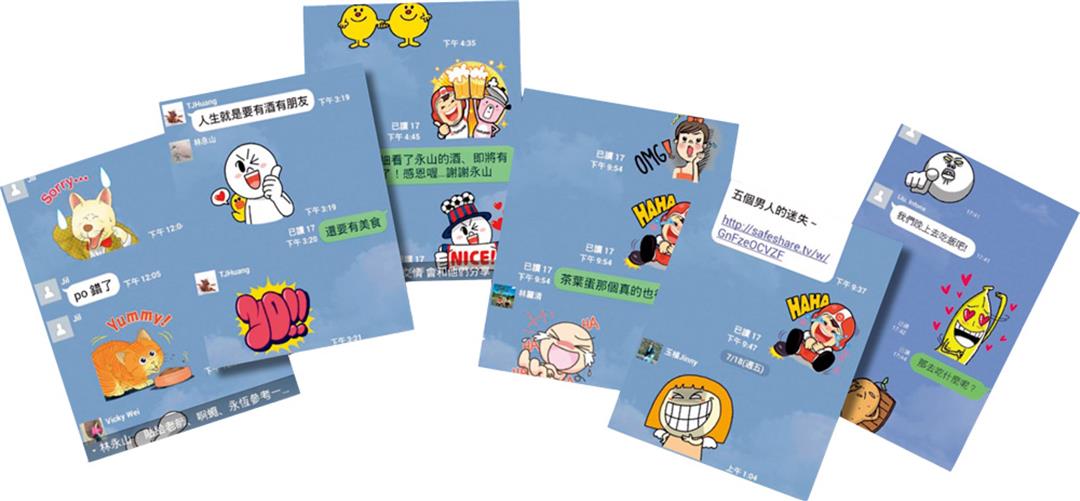
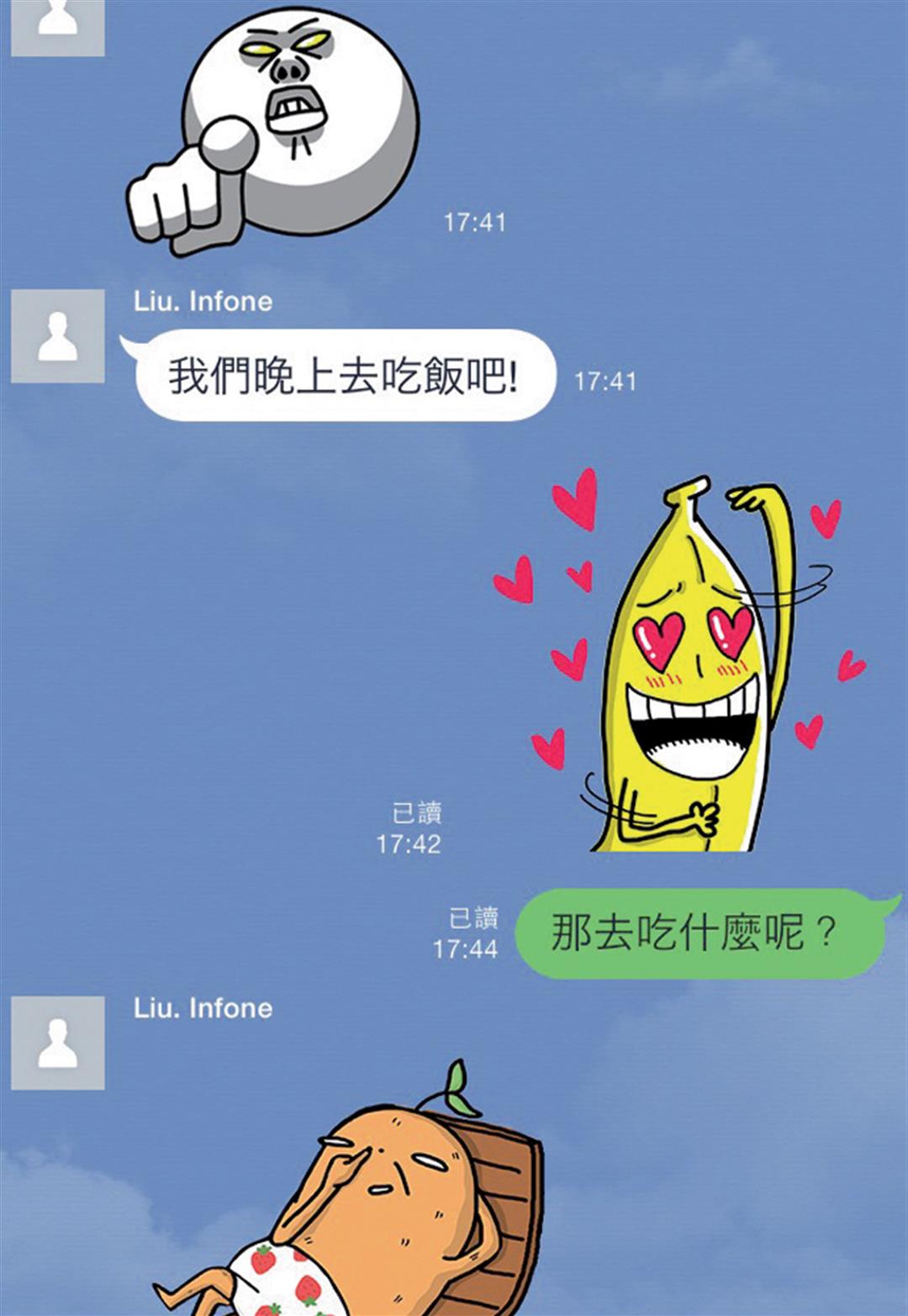
The witty, silly, over-the-top stickers from Line, an instant messaging app for smartphones, allow Internet users to easily and humorously convey their feelings. Meanwhile, artists and performers without the halo effect that comes with widespread name recognition can leverage Facebook’s fan groups to disseminate their thoughts and creative efforts.
The tremendous connectivity of social networks is having a growing impact on social and political movements both in Taiwan and abroad. In 2011 social networks such as Twitter and Facebook played a major role in both the Jasmine Revolution in Tunisia and the Occupy Wall Street movement in the US. In Taiwan the 2006 movement to preserve the Losheng Sanatorium and the 2009 Wild Strawberries movement, as well as recent opposition to the Fourth Nuclear Power Plant and this year’s Sunflower Student Movement, have all demonstrated how Facebook’s “share” and “check in” functions can bolster connectivity to mobilize around political issues.
Moreover, because these new technologies are simple, fun and interactive, they are shepherding across the digital divide a new group of Internet users: the elderly. As seniors share stickers and photographs with young people, they are broadening the base available for social action. George Liu, the founder of Mr. 6 Inc., a provider of Facebook-based marketing services, says that users may at first be somewhat wary of offering political opinions in social groups on Facebook, but once the issues have time to ferment, these groups can bring people together to work toward real-world change, turning Internet users into “netizens.”
Over the last 20 years Internet technology has seeped into every aspect of human life. Today the Internet revolution is moving faster and faster. How can Taiwan stir up the ripples that become the next Internet waves?


Liu explains that Taiwan’s Internet industry has developed bit by bit. In the 1990s the Internet was mostly about social conversations. In 1995 news sites and web portals grew rapidly, spreading globally to Taiwan and enticing figures from various industries to seek their fortunes on the web.
In 2000, with the popping of the dot-com bubble globally, entrepreneurs grew more cautious. They lowered their ambitions and returned to the Internet’s starting point of information exchange between individuals. To this end, they launched a variety of new platforms, including video sites such as YouTube and blogging sites like Blogger and Wordpress. Taiwan’s Internet industry entered Web 2.0 with sites such as Wretch and Pixnet.
Liu points out that today’s users are moving from passivity to initiative by putting their own videos, information and content online. The web is bursting with well-known blogs that demonstrate true individual character. The American pop artist Andy Warhol’s comment that “in the future everyone will be world famous for 15 minutes” is apt.
Since 2006, with the appearance of social media such as Twitter and Facebook and the introduction of 3G technology and smartphones, Internet users have become able to access information at all times. Says Liu: “Everyone has adopted the functions of satellite news gathering vans.”

Amid a wave of global innovation, today lively bulletin board systems (BBS) such as PTT, Internet forums such as Mobile 01 and more recently popular social networks like Facebook are coexisting regardless of their vintage, offering a glimpse at the history of Taiwan’s Internet development over the past 20 years.
Mario Yang, editor-in-chief of The News Lens and an expert on Internet trends, believes each major Internet site has its own irreplaceable functions. He notes that PTT, Taiwan’s leading BBS, has earned the appreciation of web users through its space for free discussion and its abundant text-based information. Bahamut, which ranks among Taiwan’s top three sites offering original content, converted in 1999 from an academic BBS into a commercial web forum, focusing on the needs of fans of video games, cartoons and manga. Mobile 01, a tech consumer forum site, was launched in 2000. Back then articles looking at tech consumer products from a lifestyle angle represented a major departure from the typical tech product forums of the day, which were the exclusive province of hardcore users steeped in technical terminology. Mobile 01 offered a whole new style of discussion.
Though Internet development in Taiwan has moved in step with global trends, Taiwan never developed a major social network platform of its own. Consequently, in 2008, when Facebook, which was all the rage in America and Europe, entered Taiwan and allowed people to reconnect with old acquaintances and play social network games, it quickly established a foothold and gained lots of users.
Internet users have changed the meaning and form of consumer content and have grown used to accessing information any time, any place. Yang points out that just ten years ago people were using instant messaging software to share information with close friends. Now people everywhere are like ready-made disseminators of information to target audiences. More and more information is being transmitted at a faster and faster pace.
Liu believes small-scale B2B software for automatic targeted advertising, e-commerce platforms for exporters, wearable technology, and the Internet of Things will be bright spots for innovation in the next stage of Internet development.
Although 3G technology has greatly transformed how people live, quite a few users are limited by bandwidth and hardware issues. This will be mitigated by the introduction of faster LTE 4G technology. “But the future won’t just be about raising the level of current technology,” says Yang. “It will also be about disruptive concepts and innovations.”