Children’s Literature Goes Local
Chang Chiung-fang / photos Jimmy Lin / tr. by David Mayer
April 2015


When you walk into the children’s literature section of Eslite’s flagship bookstore in Taipei’s Xinyi District, you will notice that children’s literature in Taiwan covers many different genres, including picture books, chapter books, detective fiction, classical literature, foreign literature, and more.
Although imported and translated books account for a majority of the picture books at the store, the number of picture books authored in Taiwan has been on the rise in recent years. One local picture book illustrator after another has been selected to exhibit at the Bologna Children’s Book Fair in Italy, and some have won awards there.
“The emergence of picture books is closely related to economic development,” says Chen Yu-chin, author of children’s literature and adjunct assistant professor in the Department of Language and Creative Writing at National Taipei University of Education. The 1960s and 70s represented a high water mark for children’s poetry in Taiwan. Then in the 1990s, as Taiwan grew more prosperous, expensive-to-print picture books gradually became more popular. The trend was helped along by the success of local authors at the Bologna Children’s Book Fair, and picture books today are the mainstay of children’s literature in Taiwan.
The Bologna Children’s Book Fair created an Illustrators Exhibition, where works from the world’s top illustrators are selected each year for inclusion. In the 20-plus years since Hsu Su-hsia became the first Taiwanese illustrator to exhibit in Bologna, over 30 other Taiwanese illustrators have also exhibited there. Sun Hsin-yu found success there this year with One Day in Beijing, which was accorded a special mention.
In addition to spurring local creation of children’s literature, picture books’ rise to prominence has also marked the beginning of exports of Taiwanese children’s literature.
Chen Yu-chin states: “Images transcend national boundaries. Picture books are the type of literature best suited to finding audiences overseas.”
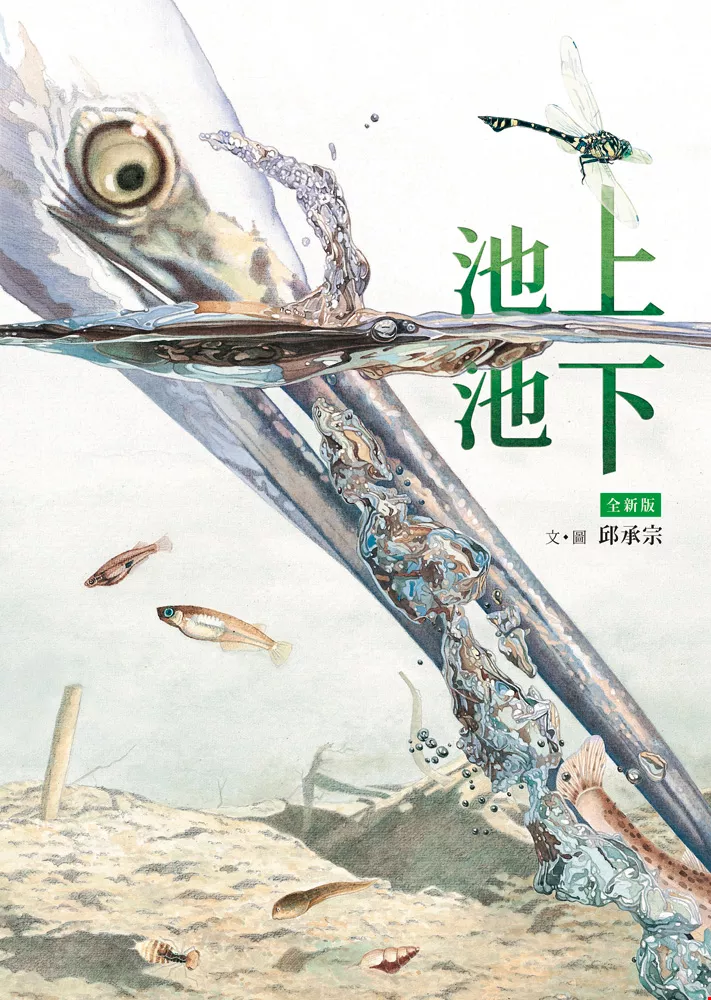
The natural habitats in the picture books of Chiu Cheng-tsung are extremely lifelike in their depiction. (courtesy of Tien-Wei Publishing)
Tsao Chun-yen, who has published steadily for over a half-century, points out that Taiwan was already importing foreign picture books during the Japanese colonial period, and this inspired some here to start producing children’s literature. But most people back then were schooled in the Japanese educational system, and after the end of Japanese rule were unable to author books in Chinese. For the most part, they could only put their efforts into illustration. The ability to create in both images and text did not emerge in a big way until the post-war baby-boom generation.
According to Chen, picture books may have been the slowest-developing area of Taiwanese children’s literature in the post-war era, but the genre has also shown the most creativity and diversity.
Poetry, nursery rhymes, and novels can all be presented in picture-book format, with considerable flexibility on how to supplement the images with text, how much text to insert, and the writing style. It’s possible to go with images as the primary element, or to put equal stress on the images and text. There are chapter books—known as “bridge books” in Taiwan—which transition children into textual reading, and there are textless picture books.
Images and text in picture books tie into each other, but there have been books where the two are telling different tales. Children’s author Lin Zhezhang mentions the example of Rosie’s Walk, in which the text tells the simple tale of a hen that walks through the barnyard, past a pond, over some bales of hay, through a fence, and so on. The pictures, however, show a fox following behind the whole way, looking for a chance to eat the hen, but failing on each attempt due to the whimsy of circumstance.
The jury at the Bologna Children’s Book Fair, upon awarding a special mention to Sun Hsin-yu’s One Day in Beijing, commented that “at first glance, it appears to be a travel guide, but at closer look, it reveals a subtle critique.” A predominantly black and white textless book, its flashes of color depict the protagonist and her real and imaginary adventures throughout the city. Says Sun: “Time and space are complexly intertwined in the story, and color would have interfered, so I decided to present the story in black and white.”
Prior to One Day in Beijing, Sun had already published two textless books. The first was A Trip from the Zoo, in which some animals from the Taipei Zoo hop on the Mass Rapid Transit and go sightseeing in Taipei. The story introduces places along the MRT routes, including Tamsui, the Miramar shopping complex, and Tianmu.

In her first textless book, Sun Hsin-yu told the tale of some animals from the Taipei Zoo that hopped on the MRT and went sightseeing. (courtesy of Hsin-Yi Foundation Publications)
In addition to their diversity of form, picture books do not necessarily have the “happily ever after” ending of so many fairy tales. They talk about the environment, about science, about life. They speak of happiness, but also of pain.
Lin notes that literature for adults can elicit tears with tales of sweeping tragedy or significance, but the reader, once finished reading and crying, will come away feeling a sense of release. Children’s literature, by contrast, takes a more comedic approach to the serious. On the surface, it’s all about eliciting a smile, but an edgy subject often lurks beneath.
One mother will always remember how her four-year-old reacted with anguished wailing after hearing the story of The Three Little Pigs. “Why do the pigs have to leave their mother after they grow up?” “Why would the wolf want to eat the little pigs?”
Little Red Riding Hood, as well, uses a wolf to hint at the topic of sexual assault. In All the Dear Little Animals, meanwhile, some kids decide to hold funerals for the dead animals they come across. In the process, the story “inoculates” children against the pain of seeing the passing of someone close. Says Lin: “Children’s literature, at its core, is quite serious, but because the audience is people who don’t have a lot of experience, it has to imply things.”
Chiu Cheng-tsung has been selected twice to exhibit in the non-fiction category in Bologna. In his Above and Under Water, Chiu introduces readers to the habitat of the dragonfly. In order to learn about dragonflies and draw them properly, Chiu went to the length of raising dragonflies in his home, where he could observe and photograph them at his ease.
“Dragonflies lay eggs in six different ways. One way they do it is by hovering above the water and dipping in their tails repeatedly over the course of about 30 minutes, laying about 700 eggs in the process.” Chiu has photographed some 70 egg laying sessions, and knows dragonflies like the back of his hand.
Tsao Chun-yen in recent years has begun using picture books to tell his life story. “Everyday lives are full of vivid detail,” says Tsao, who believes that the episodes of an ordinary life can be strung together to trace out the contours of an entire society.
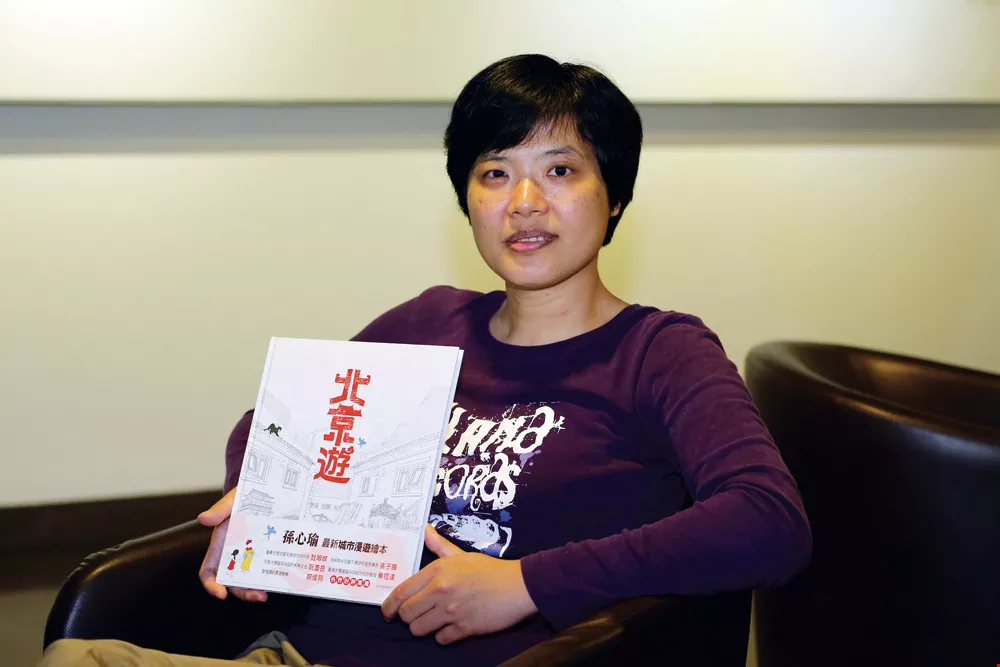
After Sun Hsin-yu made a name for herself with One Day in Beijing, which garnered a special mention at the 2015 Bologna Children’s Book Fair, people in the industry clamored for her to make similar books about day trips in other cities around the world.
Children are not the only readers of picture books. Often, an adult reads alongside. Thus the adult perspective impacts the direction in which children’s literature develops.
According to Chen Yu-chin, children’s literature in Taiwan is not nearly so imaginative and wide-ranging in content as that from abroad, because the genre here is hemmed in by a utilitarian outlook. Adults here are concerned about “getting something” from a book.
“Books, for children, are also toys,” says Tsao, who feels that the act of reading itself is both living and playing. A child should be at ease and in charge, and there shouldn’t always have to be a point to everything, he says.
Chen points outs that “looking at pictures is an exercise in attention to detail.” Under adult guidance, children slowly learn to observe, analyze, categorize, and finally to express. “Adults and children don’t look at pictures the same way. Adults are in the habit of focusing on the big picture, but kids zero in on little things, and revel in the details.”
One Winter is the result of a collaborative effort between Chen Yu-chin and Michael Leu, who spent two years conferring and editing. Impressed by the loving care that the illustrator had so obviously devoted to drawing the book’s bustling street scenes, Chen was willing to pare down the text, leaving just two sentences in the entire book.
“Drawings contain lots of detail, more than you could ever describe using text,” says Chen, who points to one particular illustration and notes: “Look at this scene. Here’s a person hanging out the laundry, and here are some people carrying parasols. Without any text at all, the reader knows it’s a sunny day.”
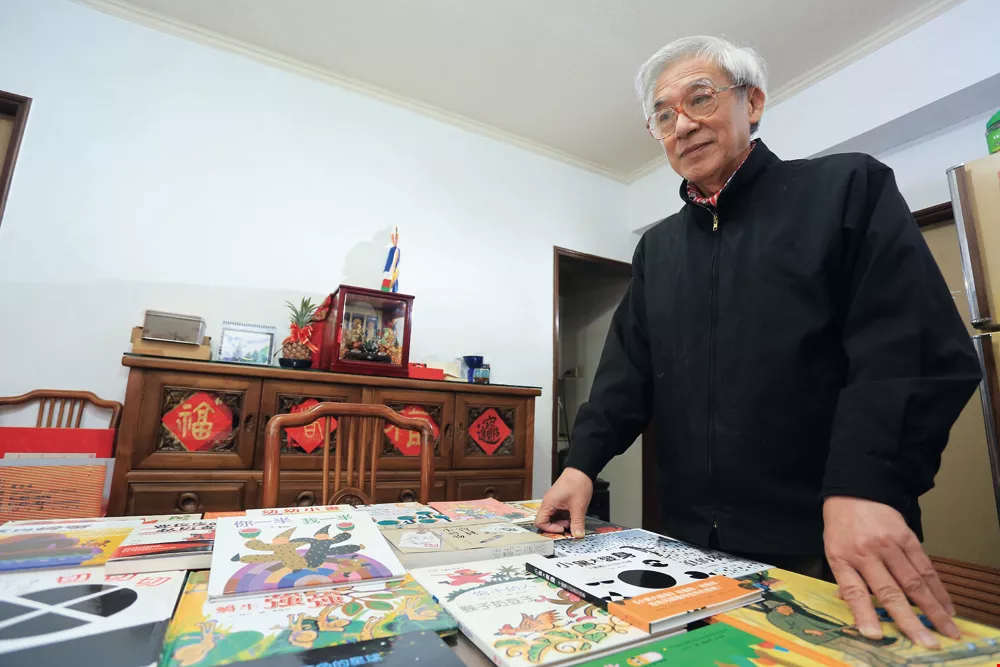
Tsao Chun-yen has published more than 200 works of children’s literature over the course of a half-century. Many of his picture books have been published abroad in translation.
Adults will always play a role in a child’s world, and this is especially true in the case of children’s literature. Chen notes that children’s literature is under adult control every step of the way, from authorship on through production, publishing, and even reading. “Adults’ attitudes toward children have a critical impact on the development and creation of picture books.”
Chen Weiping, who heads Tien-Wei Publishing Company and has published children’s literature for 30 years, recalls that in the early days over 80% of works were imported, but as readership has increased in recent years, the number of people in Taiwan producing children’s literature has also gone up.
Chen points out that reading tastes in Taiwan have become quite cosmopolitan. Much children’s literature, for example, comes from the US and Japan—especially Japan. “In their way of addressing a subject, and in their playful approach to design, the Japanese are more in sync with us in Taiwan, and do better in our market.”
But even though he’s keenly aware of the need to take one’s cues from the market and give readers what they want, what Chen really hopes to do is to cultivate local talent and attract attention, so as to change the publishing environment.
“My goal is to grow a bigger pool of local talent,” says Chen. A relatively high percentage of the works published by Tien-Wei are by Taiwanese authors, he notes, precisely because the company has long been working to cultivate the necessary people.
But why the need to develop locally based picture book talent? Chen answers by pointing to the issue of environmental protection. Even though this is an issue of globally shared concern, each locality faces its own particular problems, so the solutions are different. Here in Taiwan, therefore, we need people who can express what is particular to Taiwan.
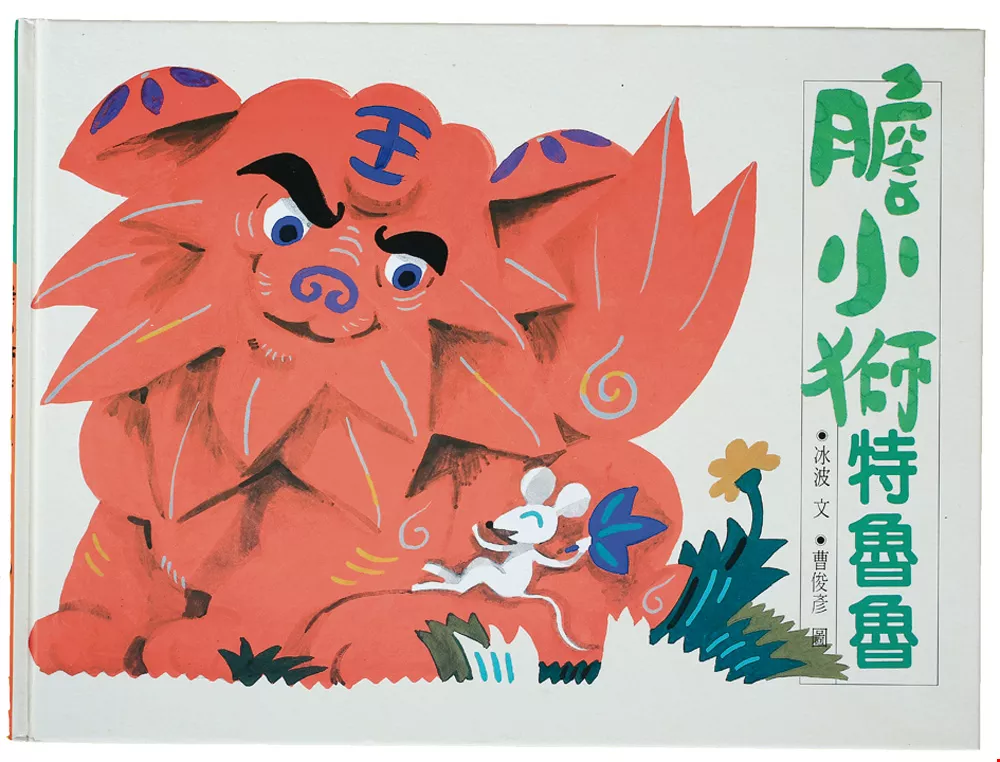
Tsao Chun-yen has published more than 200 works of children’s literature over the course of a half-century. Many of his picture books have been published abroad in translation.
But Chen frankly admits that despite a clear enthusiasm for the inclusion of images in reading material, there is a shortage of good, thought-provoking images. Most are superficial, especially in comparison with the abundance of solid prose writing.
“In our era, graphics tools and skills have shown considerable progress, and people’s perspectives have been gradually opening up. But while techniques are easily picked up, cultural depth can only be accumulated bit by bit, over time,” says Chen, who adds: “For example, suppose you go spend a couple weeks in Europe enjoying the architecture, the scenery, and how people dress. That will influence you for the rest of your life.”
Chen continues: “The principle of bad money chasing out good applies in children’s publishing. If you insist on good quality, you’ll have to be able stand against the tide. If you can’t prevent piracy, and if you can’t prevent plagiarism or copycatting, then you just have to make a better product.”
Let’s hope that the children’s authors of today will be able to produce something special for the children growing up in today’s world.
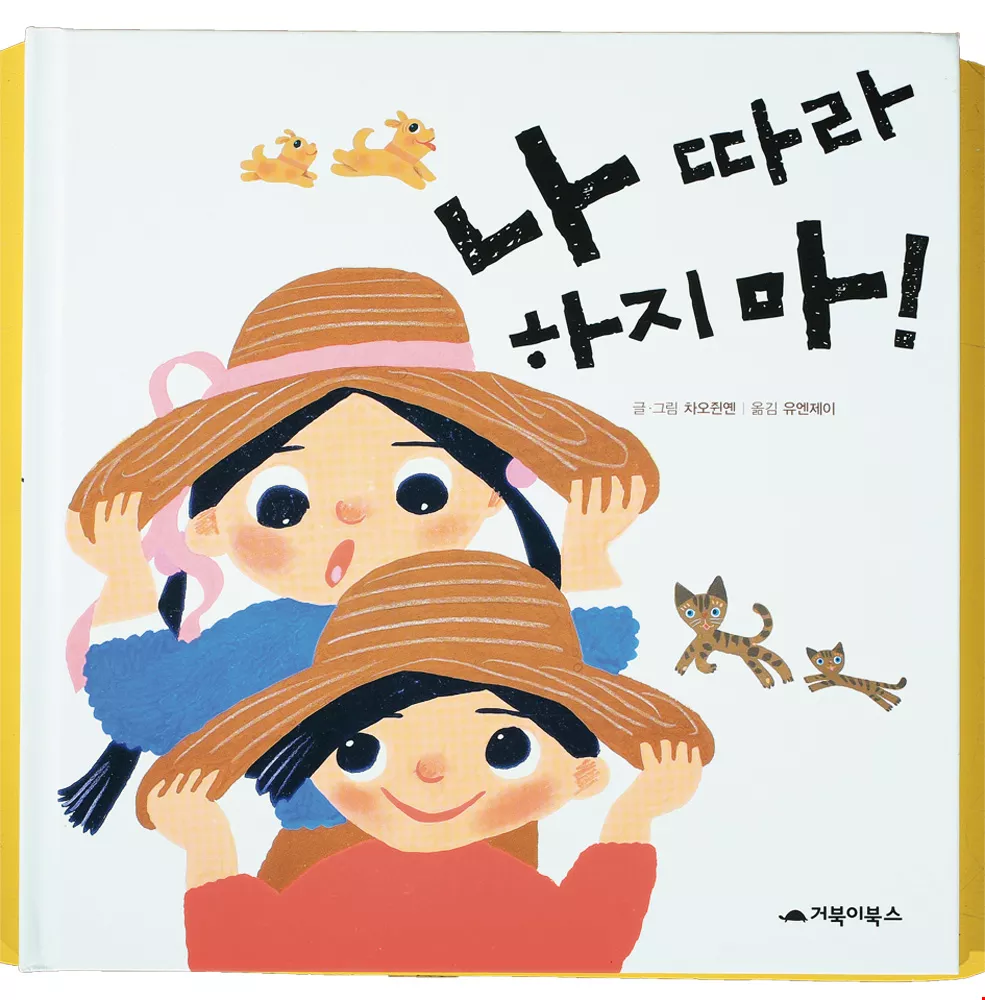
Tsao Chun-yen has published more than 200 works of children’s literature over the course of a half-century. Many of his picture books have been published abroad in translation.
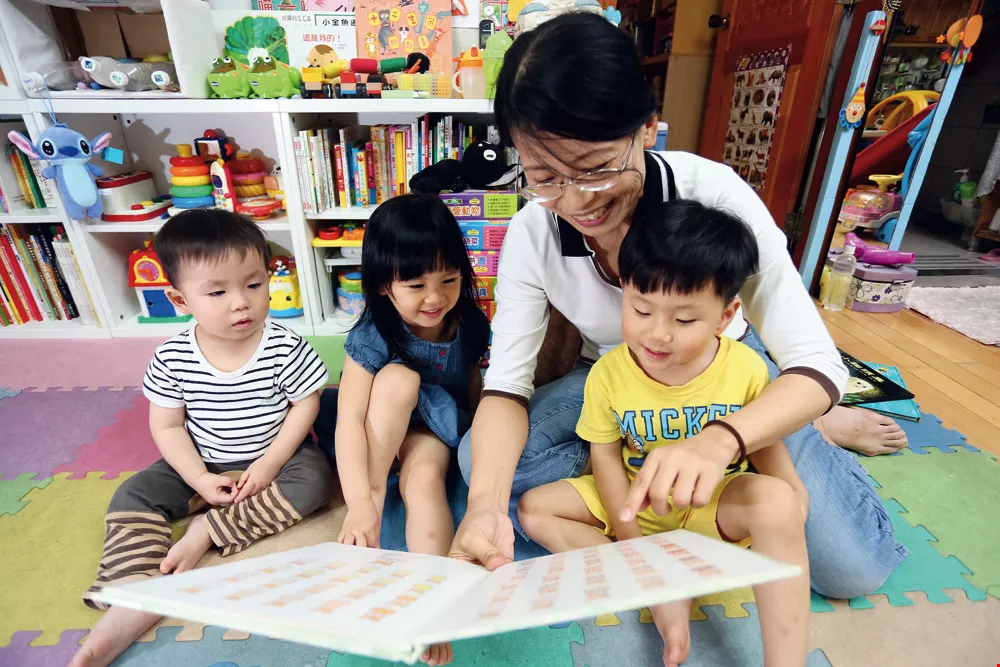
Adults and children can enjoy happy times by looking at picture books together.