Low-key luxury
At the end of 2004 the Italian luxury sports car company Lamborghini commissioned Asus to design a notebook computer. The responsibility for coming up with the design fell on deputy manager Wei Hsuan-wu, who happens to be an avid collector of model cars. After making a detailed and thorough study of his collection, he went to the Lamborghini dealership in Neihu and asked the salesperson what kind of person comes in and spends over NT$10 million for one of his cars. His goal was to determine how to best integrate the luxuriousness of Lamborghini with the staunch pragmatism of Asus.
The computer comes in either brilliant yellow--Lamborghini's signature color--or in trendy carbon-fiber black. Its appearance is as striking as the notebook with red trim made by Acer when it teamed up with Ferrari.
"After completing my illustration I asked the structural designer what he thought," laughs Wei Hsuan-wu. He answered, "However you draw it, I can make it. But when I showed him my illustration he immediately exclaimed with exasperation: 'How did you manage to draw up a computer which I can't possibly make!'"
The problem with his notebook design was the back cover of the LCD screen. Wei's design called for a black metal mesh which would allow the backlight to shine through it. It needed to be both strong and attractive without increasing the thickness of the notebook, presenting a serious challenge. After deliberating over the problem for several weeks, the structural designer finally decided to use an alloy of magnesium and aluminum, which is not only sturdy, but also maintained the attractiveness of the original design. When the king of a small African country saw the computer in Italy, he immediately bought four of them (at nearly NT$110,000 each).
"Using new materials--or using old materials in a new way--is really the basis of competitive design," says Chang. The materials lab of the design department at Asus has accumulated over 1,000 different types of materials. If one of their designers sees a new material, all he has to do is purchase it, bring it in, and apply for reimbursement. Amongst the items brought in are new perfume bottles and socks impregnated with bamboo charcoal.
Chang notes that prior to 2002 the information products made in Taiwan were more or less the same, and mostly made of plastic. Afterwards, everyone began to try out new materials, with Asus at the front.
In the field of science and technology the use of leather is uncharted territory. Thus, in order to understand and differentiate the distinguishing characteristics of leather, the company brought in a master craftsman who spent a year teaching the designers how to work with leather, beginning with how to make a leather bag. Only after a full year's training in leatherwork did they begin to incorporate leather into the design of a computer. It's estimated that the company invested over NT$10 million and 20 months in the research and training program. The result is a computer with leatherwork so flawless and exquisite that even the seams around the corners are impeccably crafted, inviting the admirer to pick it up and give it a closer look.
"Innovative design is just a process of dealing with a wide variety of risks," explains Chang. When a new project fails, your investment goes down the tubes; but when a project succeeds you get a big return. This is how to maintain long-term competitiveness.
"But," he stresses, "design is not a cure-all; if it doesn't harmonize with the company's unique constitution, it can ruin the enterprise." The purpose of design is to develop new products for the upcoming one to two years. So in order for a designer to work on two or three projects an investment has to be made, but there is not yet any return. An enterprise without substantial resources will be under a lot of pressure. Thus most companies will take the safest course: determining what are the best-selling products and designing something similar.
"The electronics industry relies on the incessant introduction of new products to stimulate sales and maintain the momentum of production. So when a sales plan still hasn't seen much results after, say, ten days, two months, or half a year, many managers will begin to have second thoughts, or even be ready to call it quits. Most companies can't allow their designers to work on the same project for very long, and don't have the patience to overcome difficulties. But we are willing to keep a record of all our failures, which we then carefully examine to gain valuable experience," says Chang.
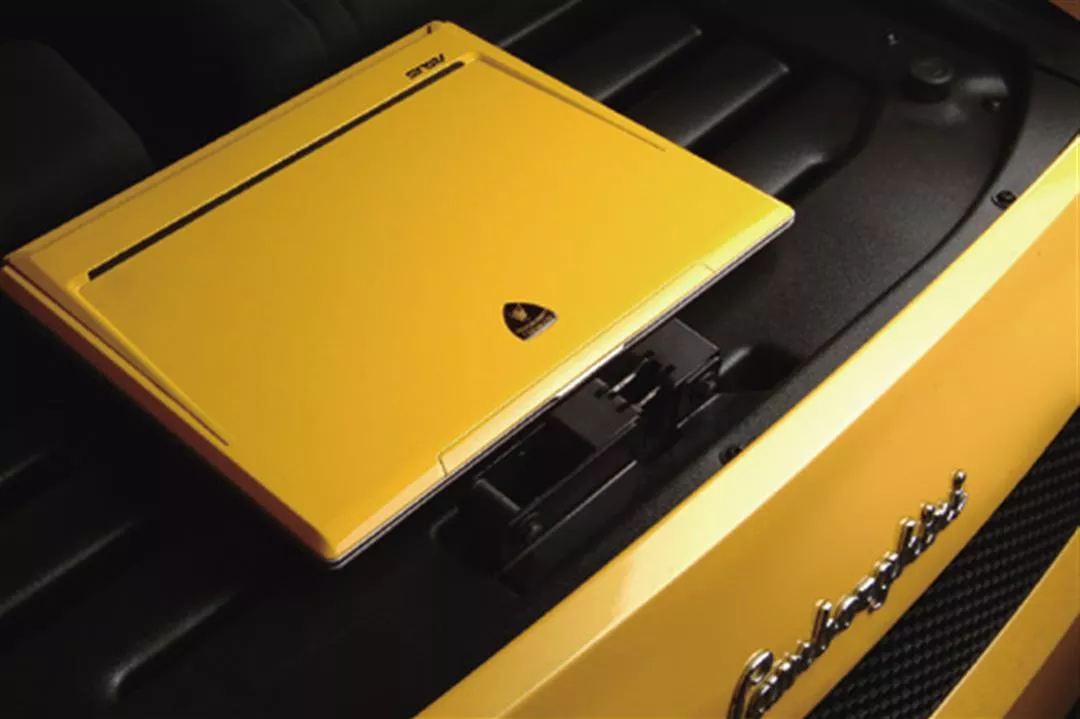
Asus has created a notebook with the fine craftsmanship and sumptuous appearance of the Italian sports car Lamborghini. Both soft to the touch and aesthetically pleasing, it comes in either brilliant yellow or carbon fiber black.