Star Wars--The Controversy over Elite High Schools
Teng Sue-feng / photos Hsueh Chi-kuang / tr. by JonathanBarnard
May 2000


To overcome the shortcomings of the joint entrance exam system, the government's education policy makers have done more than just promote multi-track admissions to senior high school. They have also come up with a system of district senior high schools, which they hope will break the rigid pecking order of schools that was a byproduct of the joint entrance exam. Some observers see these efforts as a frontal attack on "star schools." Are these highly selective schools that attract the best and the brightest students a major cause of academic pressure? Should these star schools with their long histories be forced into a system of school districts?
All students graduating from junior high in Taiwan can advance to a senior high school if they so desire. The pressures associated with this transition from junior to senior high haven't arisen from there being a lack of schools, but rather from there being a lack of "good schools."
"Most parents in this school district would never consider letting their children attend a vocational high school, for they think that only poor students go to those schools," says a Mrs. Cheng, who lives on Minsheng East Road in Taipei. Nevertheless, taking into account their son's poor marks in math and physics and the distance between their home and various schools, Cheng and her husband are willing to "let him study at Ta-an Technical High if he can't get into a good academic high school. We've heard that Ta-an Tech is a public school with good facilities. We wouldn't consider a private vocational high school for him, because they just take the students that nobody else wants."
Mrs. Cheng says that her son initially wanted no part of this plan, because his classmates were all preparing to go on to academic high schools. "Then we gave him our take on the situation, telling him how sorry we were that we couldn't have given him smarter genes, yet explaining that we didn't want him to struggle terribly at an academic high school. Much to our surprise, he said that he would give our plan a chance."
Pecking at the pecking order
Vocational high schools are almost never the first choice of Taiwan's parents and students, because the notion that "good students should receive more of society's resources" has proven hard to break.
A Mrs. Chang, whose child has yet to take the joint entrance exam, says that teachers see her daughter as a gifted student who is sure to test into Taipei First Girls High School. But Chang says that these high expectations have put her daughter under a lot of pressure. Since she began her third year of junior high (ninth grade), she has been studying until the wee hours of the morning. Her mother, who works, often ends up leaving her daughter with her books. "I'm sorry," she'll say, "but I've got to go to bed." Though Mrs. Chang can't stand seeing her daughter suffer, she says, "Since my daughter has high ability, of course I want her to enter a first-rate school."
According to Ding Gih-jen, head of the Jendo Education Society, the pressure on junior high school students is mainly a product of there not being enough academic senior high schools. Currently less than 40% of junior high students are admitted to academic high schools. Students always pick the public academic high schools first, "and the vocational high schools get the students that none of the other schools want."
In the age of the joint entrance exam, students didn't have to spend a lot of time thinking about where they wanted to go; they just filled out their school preference list in order of how selective the schools were. Students with good scores on the joint entrance exam would be able to attend schools near the top of their list. Over time this fixed the reputation of the star schools. Now that we've entered the era of multi-track admissions, students are getting into high schools by different methods, and the score on the joint entrance exam is no longer the only basis for admission. This offers hope that the rigid pecking order will begin to break down.
"When you took the joint entrance exam, you would be deemed successful only if you entered Chienkuo [for boys] or Taipei First Girls High," says Ting Ya-wen, who was once principal of First Girls and is now principal at Chungshan High. "Even kids attending Chungshan had to overcome their disappointment at not getting into their first choice." With multiple-track admissions there is no way to definitively rank the schools, and this has the effect of blurring the pecking order.
"In the past, high schools didn't need to work for students. The joint entrance exam gave them a rank of number one or number eight, and they could rest assured that this status wouldn't change," says Su Ming-tzung, principal of Chinghsing Junior High. "Now, except for the very top schools, which are unlikely to lose their reputations easily, the order is blurring."
Over the past few years, distance from home has become an important factor in students' decisions, and convenient locations and access to transportation have helped boost the popularity of some new schools. Sungshan High, which has an expansive, conveniently located campus, has been established for only about ten years, but for the last several years the scores of its students on the joint entrance exam have been running neck and neck with Chengkung High, which was traditionally the third most selective boys high school. It is remarkable how quickly Sungshan has established its reputation. This year the school has set a quota of only 40 students to be admitted on the application track. Yet it has received 5,400 applications, for a record-breaking acceptance rate of less than 1%.
One mother of a junior high student who lives in Neihu says that her son's school has 16 classes in each grade, so that 16 students could seek admission to Chienkuo High on the recommendation track. Only nine, however, went to take the Chienkuo test. "A lot of them went to apply at high schools like Neihu, Tachih and Sungshan." In addition to making honest assessments of their children's abilities, some parents are beginning to wonder if going to a slightly more prestigious school is worth having to make a long commute every day.
Teaching the best students
Yet schools at the extremes of the old pecking order don't seem to be experiencing much change in their reputation.
To attain the ideal of letting all students attend an academic senior high school if they so desire, the Ministry of Education plans on instituting community districts for academic and vocational high schools beginning next year. This will allow schools to reserve a quota of places for students living near the school. A few schools are even planning on providing scholarships or adding points to admission tests taken by locals.
Two years ago Taipei City began to move toward district high schools. Now only a few elite schools, such as Chienkuo, Taipei First Girls, Chengkung, Chungshan and National Taiwan Normal University (NTNU) Affiliated High School, don't allow a greater number of local residents to take recommendation track exams. First Girls and Chienkuo have both stated that on principle they will not participate in the high school district plan.
"There ought not to be any conflict between community and elite high schools," says Wu Wuu-shyong, principal of Chienkuo Senior High. "We ought to raise the quality of all high schools, so that we meet the needs of parents in local communities without bringing down the elite schools," he says. "When you bring elite students together, the stimulation grows exponentially, not arithmetically. Pulling down the star schools is bad for society, because putting these top students among their peers encourages them to push the intellectual envelope."
In a letter to a newspaper, a teacher at Chienkuo wrote that all the new government education reform policies seem to be aimed against the elite schools. With great passion, he argued that if students are under academic pressure because there are too few star schools, then the government authorities ought simply to turn more high schools into star schools, "instead of exerting pressure against these schools. Can it be that there aren't enough third-rate high schools?"
The principal of Chungshan Girls High School also believes that there should be no conflict between the elite and community high schools. Because the Ministry of Education has designated Taipei City as one huge district, students living in Taipei can attend schools anywhere in the city. She also points out that with the emphasis that Asian parents put on educational advancement, even if the government forces the implementation of community districts and the end of star schools, these policies won't necessarily reduce pressures on students. Ten years ago Japan was divided up into school districts by governmental decree. Not only did this plan not succeed in destroying the reputation of star schools, but it even pushed the starting age for academic pressures downward. Elementary school kids were already going to cram school, and the parents were all striving to move into districts with the best high schools. "Japanese parents have attitudes about education that closely resemble those of Taiwanese parents," she says. "They believe that entering a good high school will increase one's chances of getting into a good college or even guarantee that one will be successful in life." In her view, if raising people's abilities is beneficial to society, then what we ought to be doing is distributing economic resources evenly to all the schools.
Teaching without distinctions
Designing a system of districts for high schools doesn't pose problems, but if you want to turn star schools into district schools, that will be difficult.
"Getting rid of the star school system will be hard because the power elite are shielding the schools of which they themselves were products," says Ding Gih-jen, who believes that the reform proposal to bring down the star schools is working at cross-purposes with the "recommendation track" in multi-track admissions.
"The joint entrance exam lets students pick the schools, whereas the recommendation track, with its tests unique to each school, makes it easier to design even more difficult written tests, so that schools can have better control over selecting their students." Ding says that as long as star schools have this control, they will remain star schools.
People who actually want to break up the star schools may be in the minority, but they are no less committed to their position.
Chang Hui-shan, the director of the National Teachers' Association, ROC, argues that if you want to ease the pressures that result from competitive educational advancement, the best and fastest method is to implement a system of district high schools. "Leave the elitism to private schools. Public schools shouldn't be in the business of selecting and rejecting students."
He believes that many people have misconceptions about two educational ideals: "education to all without distinction" and "teaching students according to their abilities." The point of "education to all without distinction," he argues, is to ensure that poor students still receive adequate attention, whereas the point of "teaching students according to their abilities" is so that students realize their potential. It is for the latter reason that we divide up schools into grades and different sections. But even if students are less able, we still must give them a helping hand.
The physics and math courses at Taiwan's Japanese and American schools, and at the Forest Elementary School, include students from different grades. Some say this kind of flexibility is good for small schools, but Chang says that this kind of system would work even better at large schools because they can make more efficient use of space. The schools have got to stop being so set in their ways.
"Are the teachers and facilities at Taipei's most selective schools really that much better?" asks Chang. "The strength of the top schools is the students, not the teachers."
Competing to teach students well
Cheng Cheng-po, a teacher at Kaohsiung High, once wrote an article in which he pointed out that schools are star schools not primarily because they have an illustrious history or good location, but because of an often overlooked reason: an ability to draw from a large enough pool of students. He notes that the top high schools in small testing zones (such as Taitung High) will never become star schools no matter how hard they try, because their pool of potential students is just too small.
"When people think about students at star schools they think in terms of students who get good grades, but being a high academic achiever is not the same thing as being gifted," says Cheng. At Kaohsiung High, which is the most selective school in the Kaohsiung-Pingtung testing zone, quite a few of the students find the textbooks hard to follow. They are so difficult and obscure because their editors designed them to meet the needs of a small group of truly gifted students. He recommends that the Ministry of Education establish experimental schools for the gifted all over the island, or otherwise encourage top universities to establish affiliated high schools. In that way a small minority of gifted students could enter schools where the curriculum is specifically tailored to meet their needs. But it isn't necessary to make entrance exams exceedingly abstruse just so it is possible to distinguish these students.
"There are theoretical bases behind both district high school systems and selective high school systems, and both have their strong points," says Yang Jen-hsiao, principal of NTNU Affiliated High. "National policy must resolve this conflict." He isn't opposed to turning selective schools into district schools. Three years ago, NTNU Affiliated began to accept some students directly from its junior high based on a test administered for all students at the school. The quota, however, is small, set at only 70 this year. The parents of students enrolled at the junior high want the quota to be raised, whereas the parents outside the district are adamantly opposed. It is well nigh impossible to meet everyone's demands.
Onwards and upwards
Whether to dismantle the selective high school system is not something that the educational community is likely to reach a consensus on any time soon. But many people agree that reducing the gap in resources between public and private high schools is urgent.
"Educators ought to compete with each other to teach students better, " says Ding Gih-jen of the Jendo Education Society. The first thing that the educational authorities ought to do is to resolve the uneven distribution of financial resources. For instance, argues Ding, they should reduce the tuition gap between academic and vocational senior high schools; raise the quality of teachers at vocational schools; redesign the curriculum at vocational high schools; and remove the hurdles that prevent vocational high school students from applying to university. With such steps, vocational schools will no longer just serve as the dumping grounds for those rejected by academic high schools. The students there will have a fighting chance of furthering their educations.
The authorities now realize that most high school students in Taiwan want to go to college. Vocational high schools had been cutting the number of classes in each grade because of a lack of students. But now the authorities have been allowing some of these schools to turn into general high schools that provide regular and technical curriculums. Taipei's Chenyuan and Tali high schools are successful examples of such schools.
Huang Wu-hsiung, a professor of education at National Taiwan University, notes that one index of a modern society is a high level of class mobility. Education, he says, is the best method of promoting class mobility.
Thirty years ago, in order to meet the demand for labor, the government intentionally set a 60:40 ratio of vocational high school enrollment to academic high school enrollment. Yet Taiwan's economy is growing increasingly knowledge-based, and that 60:40 ratio no longer suits the needs of society. Since some vocational schools have already been turned into academic high schools, the ratio is now closer to 55:45, and this shift will continue.
While the star school phenomenon is not something that can be changed overnight, the pecking order among middle rank schools is already growing blurred. If high schools work together to raise the quality of education, perhaps the star school syndrome will just fade away on its own. David Lee, director of the Bureau of Education for the Taipei City Government, says that Taiwan parents used to want even elementary schools to use selective admissions. Now all elementary schools and junior high schools are in community districts. He argues that the stars will slowly lose their luster.
This will no doubt require time. But if you look farther into the future, you will see that Taiwan universities will one day begin to develop their own special characters, so that students will choose between them based on their disposition, interests, and family resources. A diverse society requires diverse choices. And "good students" require an even greater diversity of choices. Are you hoping that this age when everyone can be a star will come sooner, rather than later?
p.17
Chienkuo Senior High has a storied history of teaching the nation's best and brightest. It has long been a pillar of support for society, but now educational reformers believe that the existence of star schools is a major source of academic pressure. What do you think?
p.18
Competition between bright peers stimulates intellectual ferment. Many people believe that star high schools can coexist with a system of community based high schools. They argue that you can raise the quality of other high schools without bringing the star schools down.
p.19
There are more than a few "four-eyes" on this school athletic field. Allowing for a better balance in education is the highest ideal of educational reform in Taiwan.
p.19
The Taipei First Girls High marching band attests to the fact that students at the top schools are more than just high academic achievers. No wonder the school is the first choice of so many applying to high school.
p.21
Because attending a prestigious high school is viewed as a short cut to National Taiwan University, how many children have been forced to suffer at the cram schools on Nanyang Street? Their popularity shows no signs of abating.
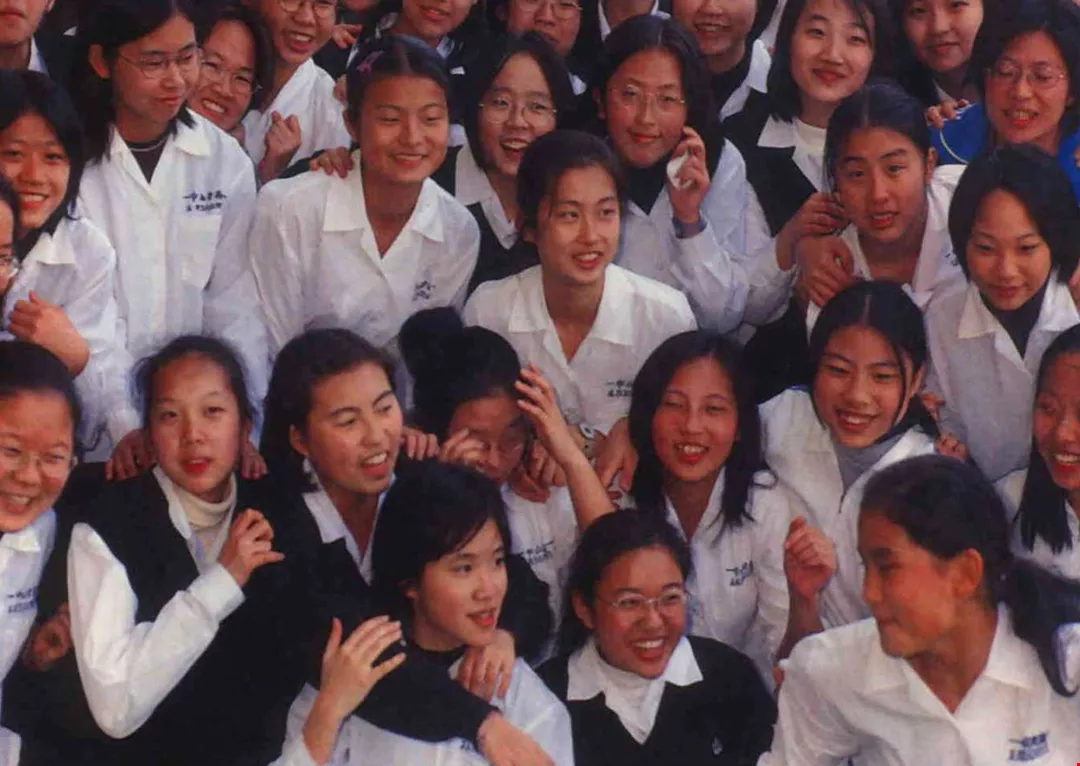
Competition between bright peers stimulates intellectual ferment. Many people believe that star high schools can coexist with a system of community based high schools. They argue that you can raise the quality of other high schools without bringing the star schools down.
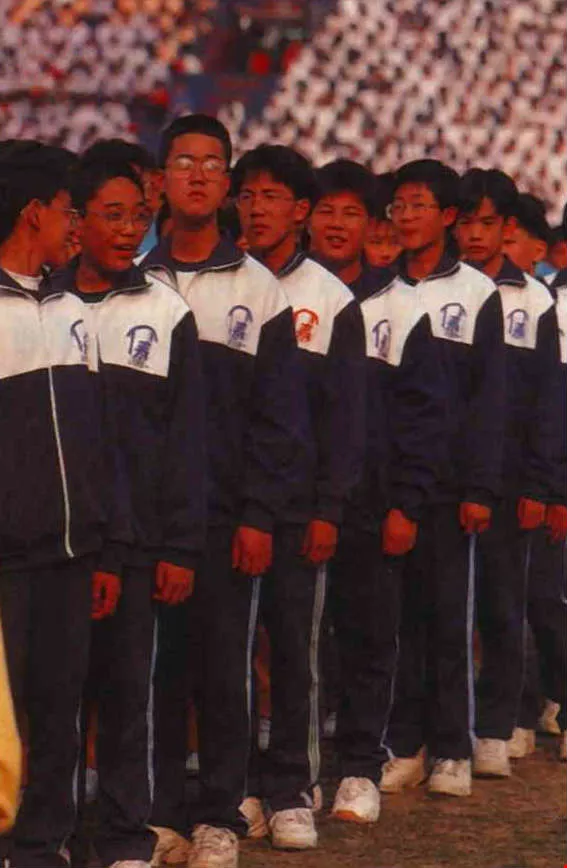
There are more than a few "four-eyes" on this school athletic field. Allowing for a better balance in education is the highest ideal of educational reform in Taiwan.
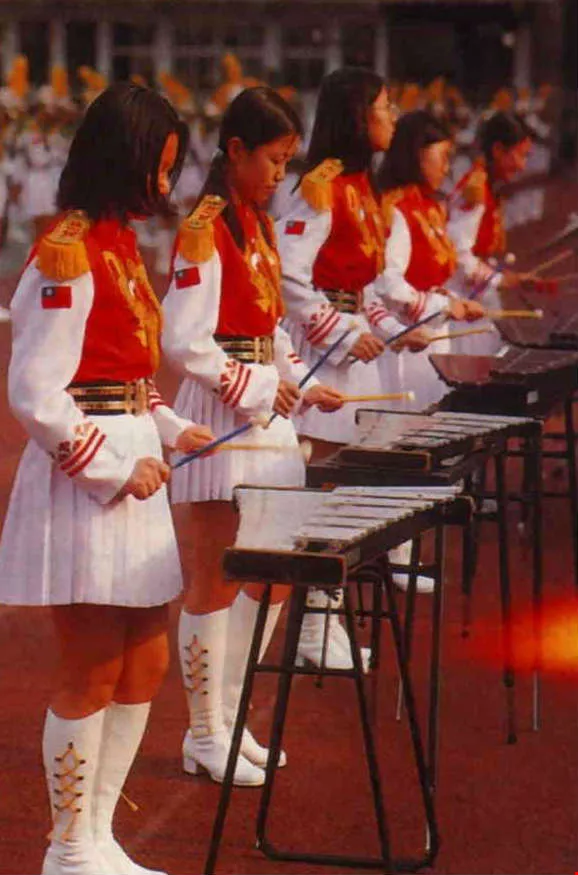
The Taipei First Girls High marching band attests to the fact that students at the top schools are more than just high academic achievers. No wonder the school is the first choice of so many applying to high school.
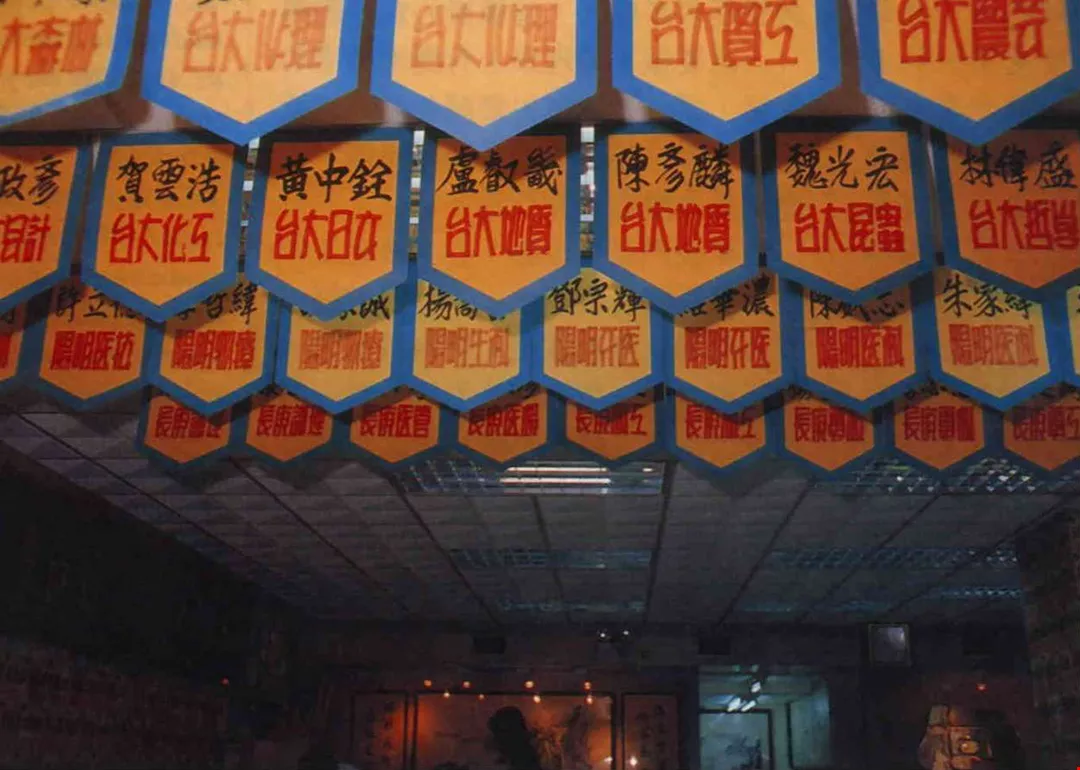
Because attending a prestigious high school is viewed as a short cut to National Taiwan University, how many children have been forced to suffer at the cram schools on Nanyang Street? Their popularity shows no signs of abating.


@List.jpg?w=522&h=410&mode=crop&format=webp&quality=80)


