Black and White Brings Color to Taichung
Chen Hsin-yi / photos Lan Chun-hsiao / tr. by Phil Newell
May 2010
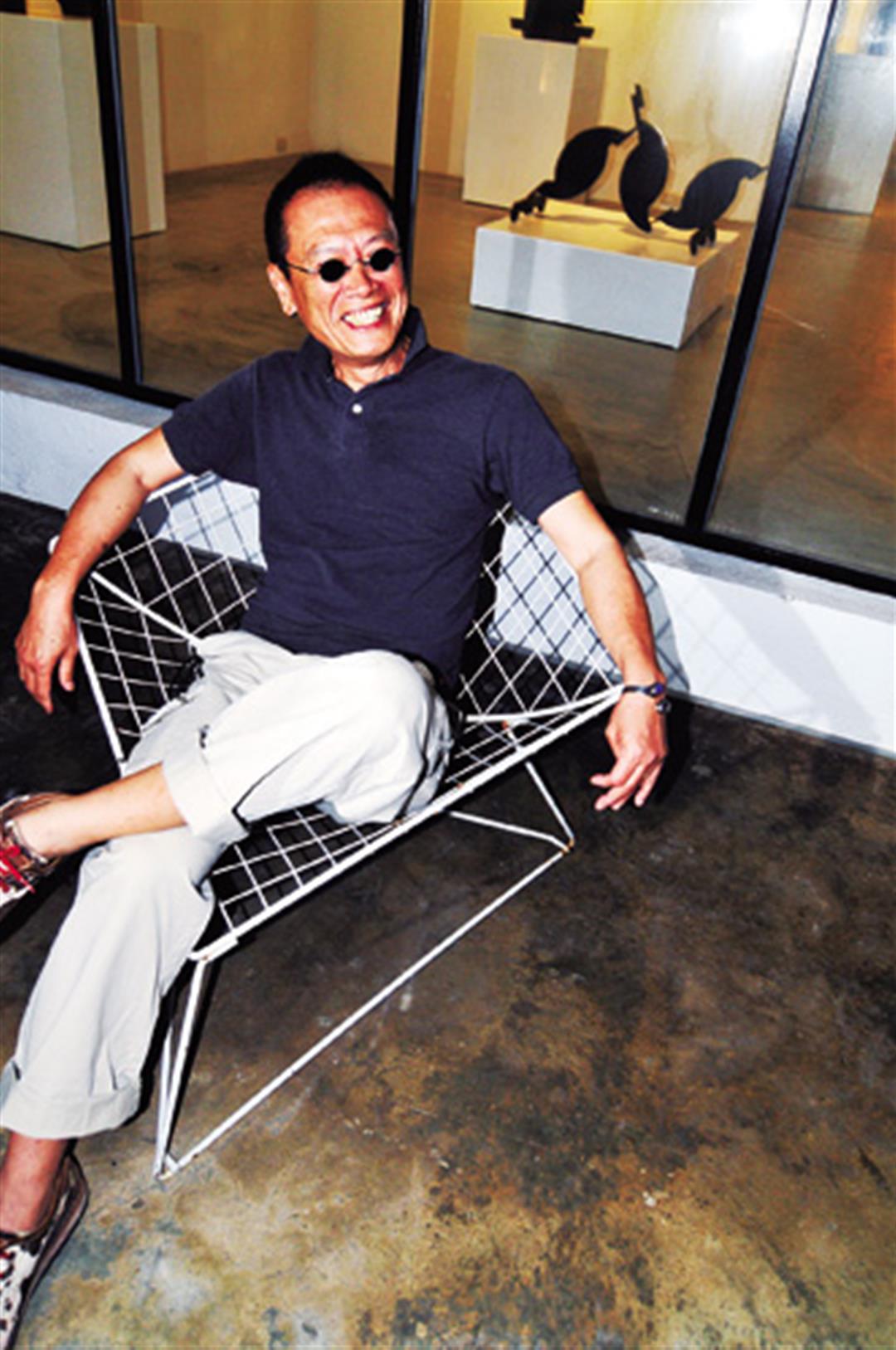
Inside Gallery 107 after closing time, owner Roy Chiu, cigar in one hand and long-stemmed glass in the other, laughing boisterously and often, looks from the garden through the full-length windows at the newest exhibition, encircled in a whitewashed wall: the works of metal sculptor Tsai Chih Hsien. Looking at this reporter and a few other late visitors, he can't help but proudly say: "This is just right. There shouldn't be more than three people at any one time, so that the people and the works will present a picture of leisurely, contemplative, personalized interaction...."
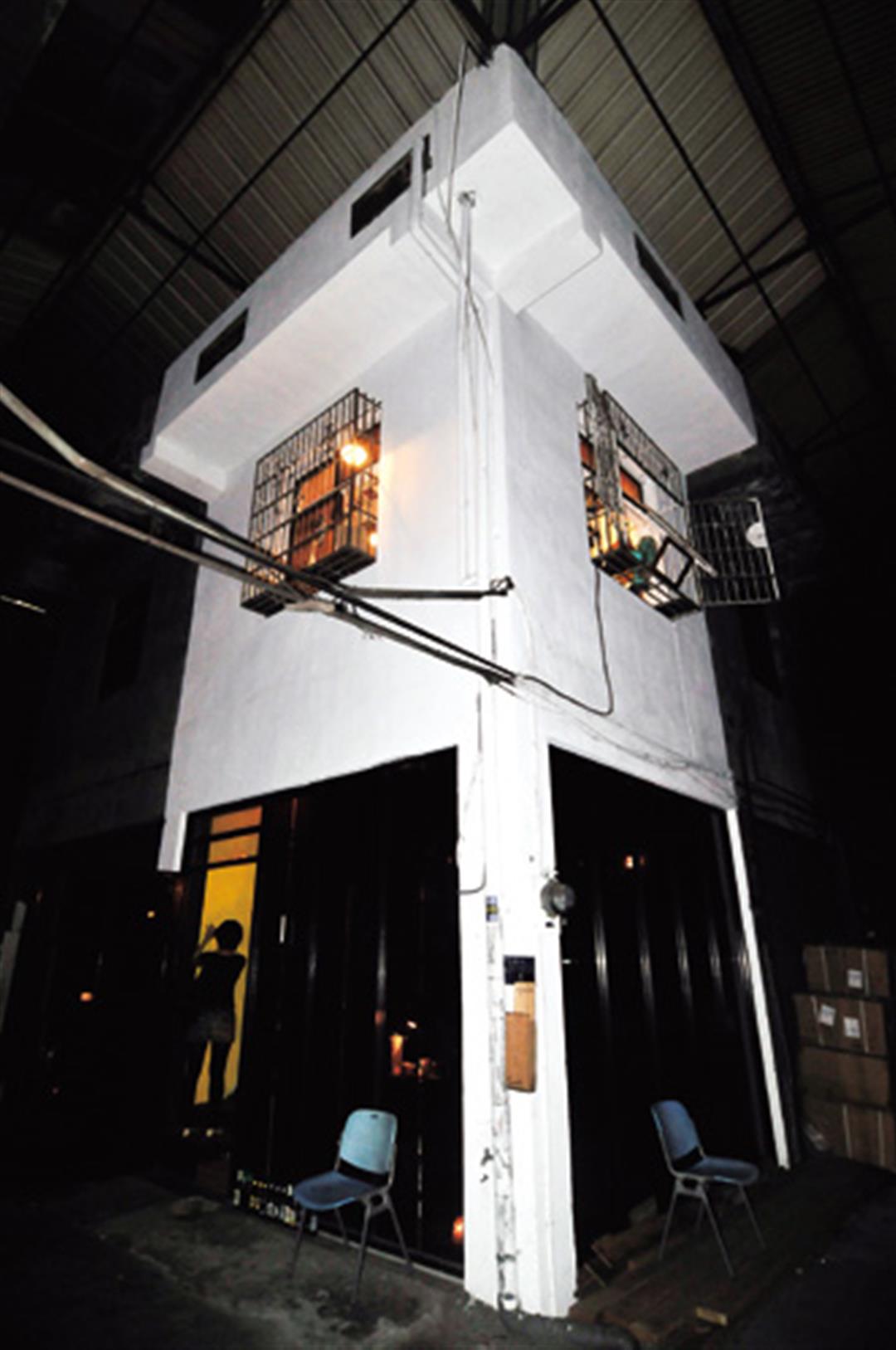
However, as soon as you ask about "Black and White" and "Z Space," located in the Zhongxin Market in Taichung, this super-cool-looking middle-aged man suddenly reveals a softer side in his tone of voice: "Oh! That's a completely different atmosphere! They are set in a very ordinary and non-artsy old market, which is casual and free from rules, and try to fit as much as possible into the surroundings."
Blogger Kamuo, one of the sponsors of Black and White, had this to say in an Internet essay introducing Roy Chiu: Most of the time, besides managing Gallery 107, when Chiu has free time he always wants to "start a revolution and conquer the world." Unfortunately, though, "He doesn't know anything about making bombs, and anyway lacks the courage to throw explosives."
As Chiu himself puts it, the thing he is best at is "marketing and persuasion." As one example, he talks about his routine visits in the morning to a nearby coffee bar that sells coffee beans. As he drinks the owner's gratis coffee, he "takes over the joint" and turns it into an impromptu intellectual salon. He engagingly chats with the customers who happen to be there, and he never forgets at the end to make a pitch for his own project Black and White. "Please donate NT$1000 each month to sponsor an on-the-street window on art." I ask him, "Does everybody buy in?" "Yes," he replies, "I back them right into a corner and make them feel guilty if they don't dig into their wallets!"

Roy Chiu worked in arts management for many years in New York, one of the global centers of art. Several years ago he returned to his native Taichung where he has continued to explore the possibilities of alternative art galleries, in hopes of stimulating more intimate connections between artists and the general public.
In this way, whether willing and delighted to help, or just afflicted by an uneasy conscience, as a result of the efforts of "Provocateur" Chiu, the number of sponsors of Black and White has doubled from the original 15 in just a year and a half. According to the rules of "Dictator" Chiu, each contributor can only sponsor one section of the space. "You can only contribute NT$1000, to prevent any one from dominating." And that is far from the only diktat: "There are no sponsors' meetings, and there is no discussion-just deliver the money." "You want to meet? Then come to Black and White and that's meeting, right?" In addition, he tries his best to maintain diversity of social backgrounds among the sponsors, "This is the best way to rope in even more new friends."
Just as behind every great persuader there is always a capable, hard-working pillar of support, Chiu, who modestly says of himself that he's just "an ideas guy," ascribes most of the real driving force behind this arts revolution to "Xiaoyu" (Tsai Chih Hsien).
Xiaoyu is a versatile artist, working in photography, fashion design, metal sculpture, interior design, and furniture making. He had originally been located in the Tunghai Arts Street, but three years ago, because of rising rents and the noise of the crowds, decided to move his women's fashion shop Rainhoe to the Zhongxin Market. "After moving here I discovered that this place is just a blast. It's a virtual wilderness in an otherwise very up-market neighborhood. A lot of people don't even realize its there, while others are afraid to come in. In fact the residents here are very friendly, and the fortress shape makes it very safe."
When given a space that he can renovate freely, Xiaoyu is said, in the words of Kamuo, to be "so excited he trembles from head to foot." First, with the financial backing of Roy Chiu, he spent three days and over NT$100,000 to complete Black and White. Then, less than half a year later, they opened Z Space. For the latter, Xiaoyu spent more than a month injecting life into the old structure. Besides continuing the bright, unadorned style established in Black and White, there are delightful surprises around every corner.
For instance, the bathroom on the second floor is itself a work of installation art. The entrance is a doorway so narrow that only a single person can pass through at a time, but the space then opens out, with elegant window grillwork and bookshelves as your companions. There is even a small monitor in front of the toilet, and you can call up a poem and read it to pass the time.
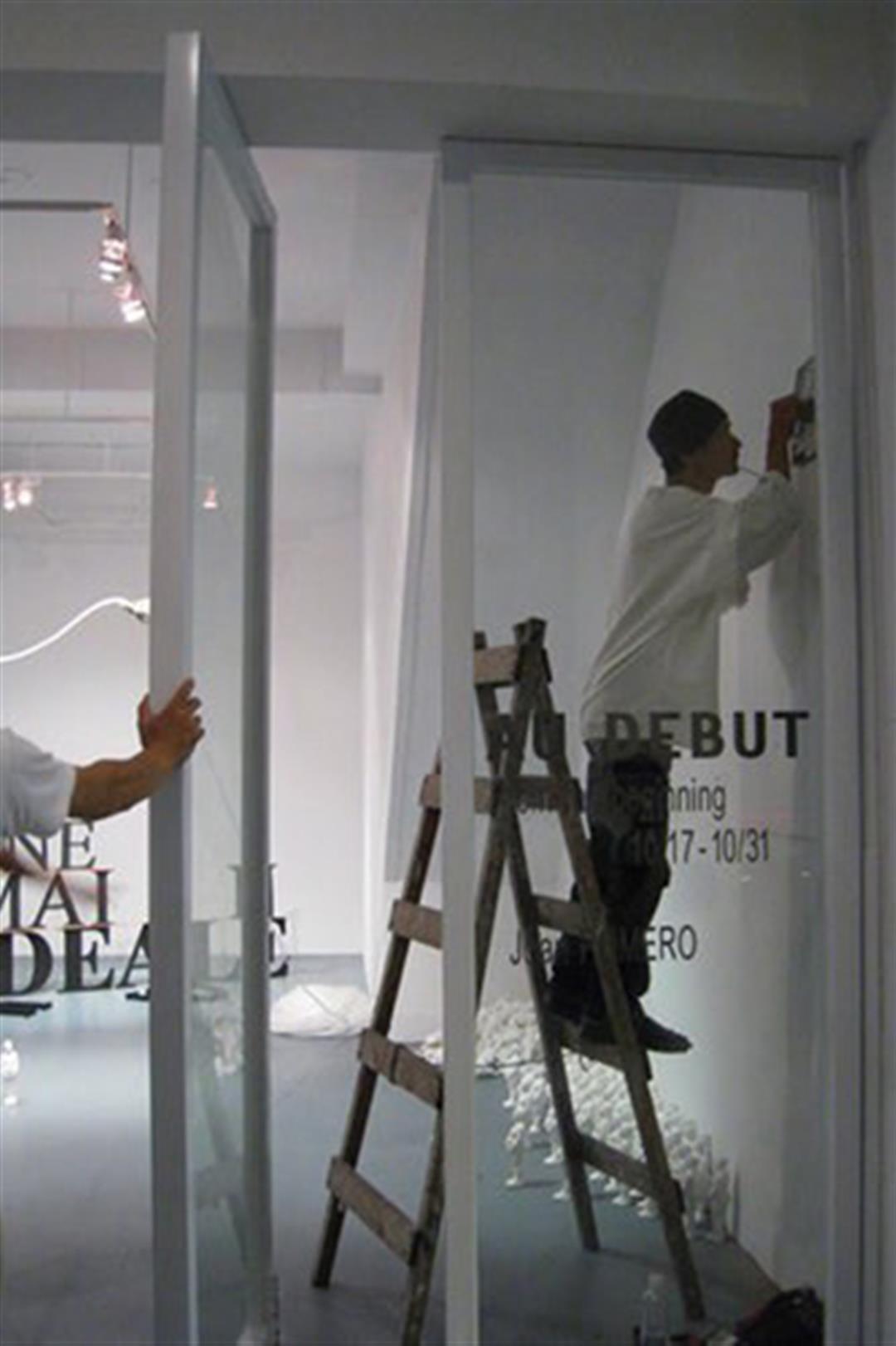
Tsai Chih Hsien, a multi-talented artist with a powerful sense of commitment to alternative spaces, single-handedly did the original spatial layout, furnishings, door and window metalwork, signs, and lighting design for the alternative spaces "Black and White" (I and II) and "Z Space." He even offers free advice to others moving in to the Zhongxin Market area.

Today, Black and White I and II and Z Space have become learning centers for students in arts departments at nearby Tunghai and Dayeh universities, and they are the hippest stopovers for people from the arts community visiting Taichung. The Zhongxin Market seems to be following in the mold of Tunghai Arts Street-after many years of obscurity, it is hosting a new wave of rethinking about arts environments that is more connected to the lifestyles and spirit of ordinary citizens.
"But actually these kinds of intellectual conceptualizations are secondary. The most important thing is that we are here to have some fun!" After taking a drag on his cigar, Chiu reveals that Black and White will soon open its third portal in Okinawa, Japan. And why? All because, for personal reasons, Chiu found himself in Okinawa for a while, and while strolling the streets was drawn to a traditional market and was struck by a sudden inspiration. The local atmosphere there is similar to that in Taiwan, and (in theory) you can take a plane there and back in one day, so he thought to himself: "Why not sponsor Taiwan artists to send their works to Okinawa for exhibition?"
When someone with this much experience is hosting the party, get ready for a seriously good time.