Living Legacies: The Homes of Three Great Men of Letters
Liu Yingfeng / photos Lin Min-hsuan / tr. by Darryl Sterk
January 2017
Amodest cottage in a yard, an oriental‡occidental hybrid blue-and-white villa, and an elegant Japanese-style lodging—these three residences of completely different styles are the respective former abodes of the champion of liberalism Yin Hai-kuang, the great Sinologue Lin Yutang, and the master of the informal essay Liang Shih-chiu, and provide a record of their daily lives in Taiwan.
Though long departed, these celebrated figures of literature and learning have left us traces in which we may glimpse the values and styles of a generation of intellectuals. Every brick and tile illuminates the Taiwan they knew.

Yin Hai-Kuang's Residence (courtesy of the Yin Hai-kuang Memorial Foundation)
A garden cottage
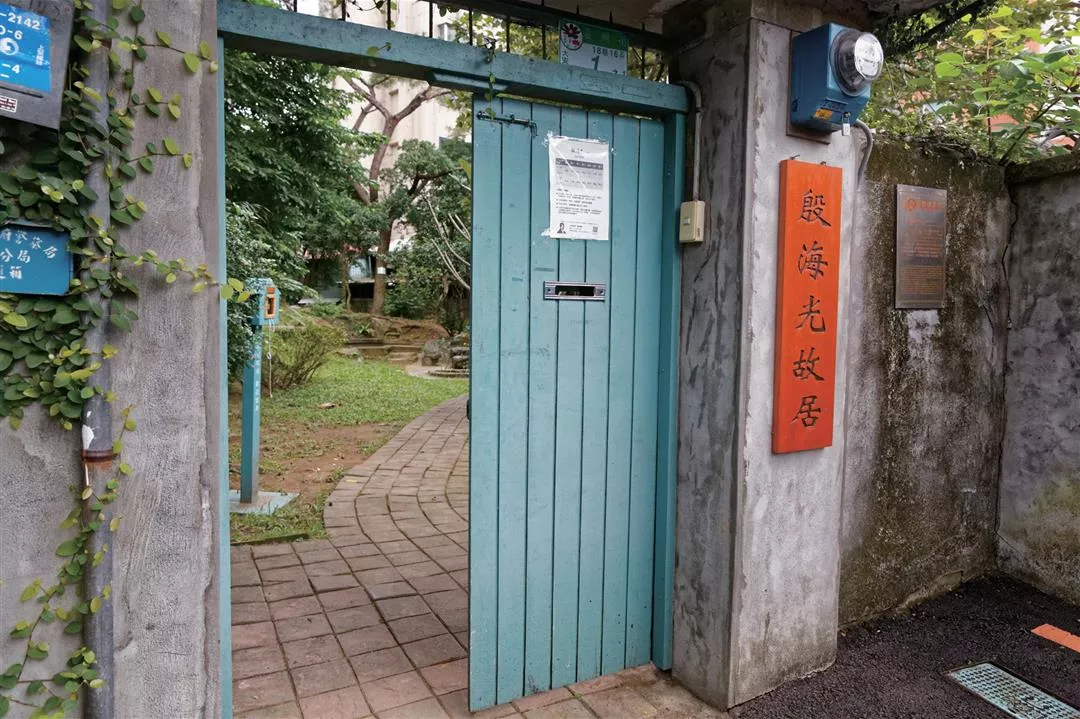
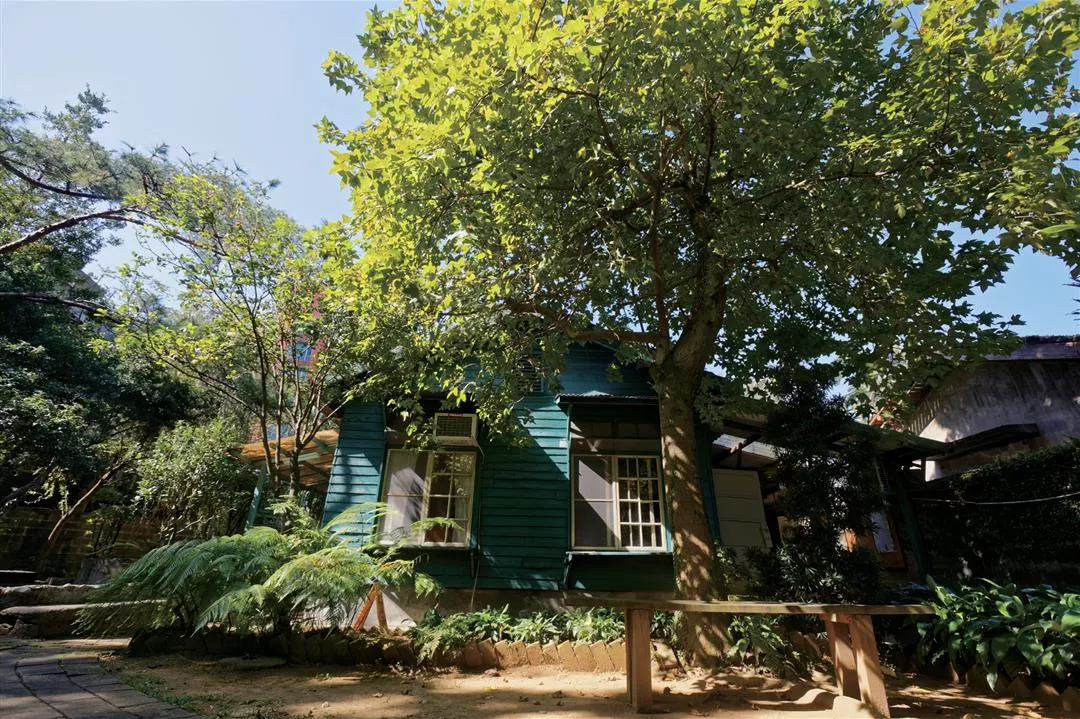
Strolling down the alleys and lanes off Taishun Street in the Gongguan area of Taipei, it is easy to miss the former home of the liberal scholar Yin Hai-kuang (1919‡1969).
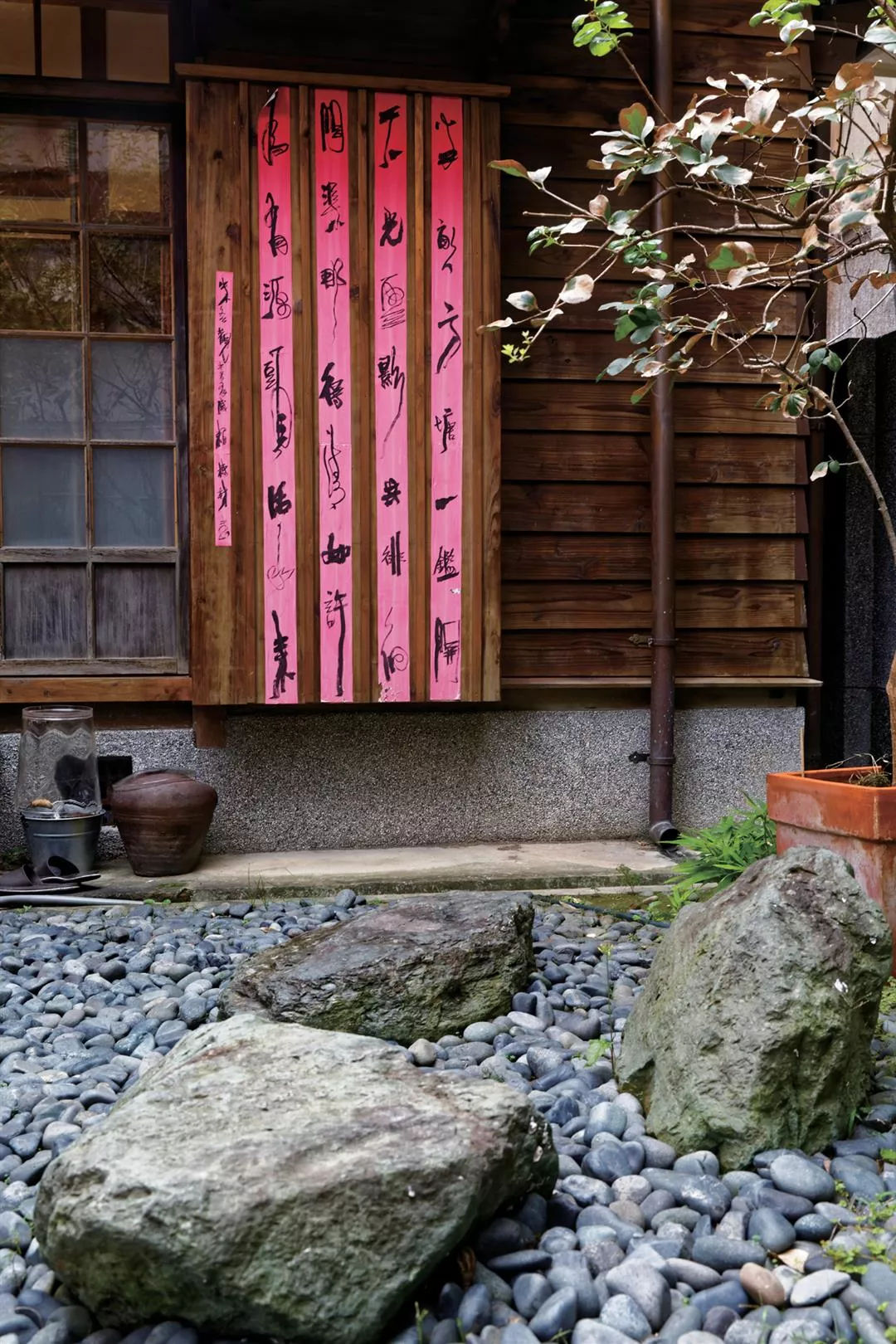
It is a Japanese-style cottage with a large yard, which Yin built by himself after applying for permission to National Taiwan University. When he passed away in 1969, this had been his longest abode in Taiwan.
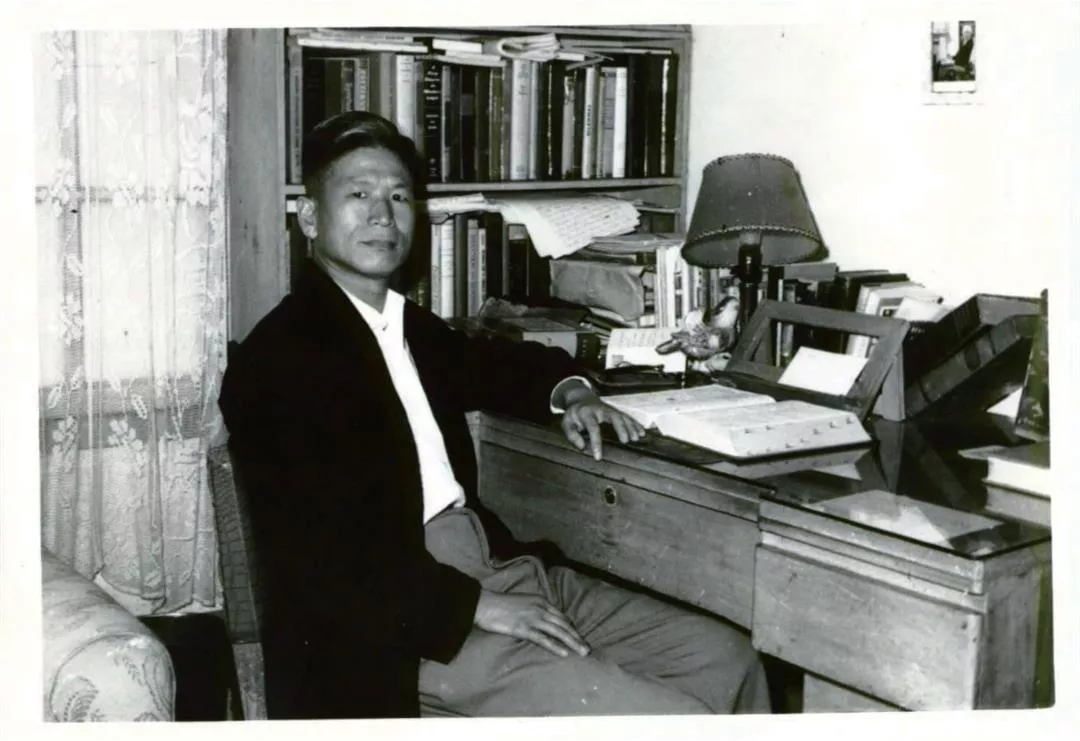
Yin Hai-kuang was a major liberal scholar during the 1950s and the 1960s, and a lifelong exponent of liberalism. Unafraid of the powers that be, he bravely voiced concerns about the social issues of his time, becoming a model for his generation of intellectuals to follow. Though he is now long departed, the example he set lives, and the traces of his daily life remain in his humble residence.
The pool in the garden was built by Yin Hai-kuang for his newborn daughter soon after the family moved in. Next to the pool is the cottage. Often mistaken for a work of the Japanese era, the house was built by Yin himself. In this nearly 100-square-meter cottage, the biggest room is Yin’s sunlit study, a place for him to indulge his passion for thinking and reading. With the passage of time, the cottage remains the same, but the décor has changed: old photographs, manuscripts and letters now bring Yin’s bygone era to life.
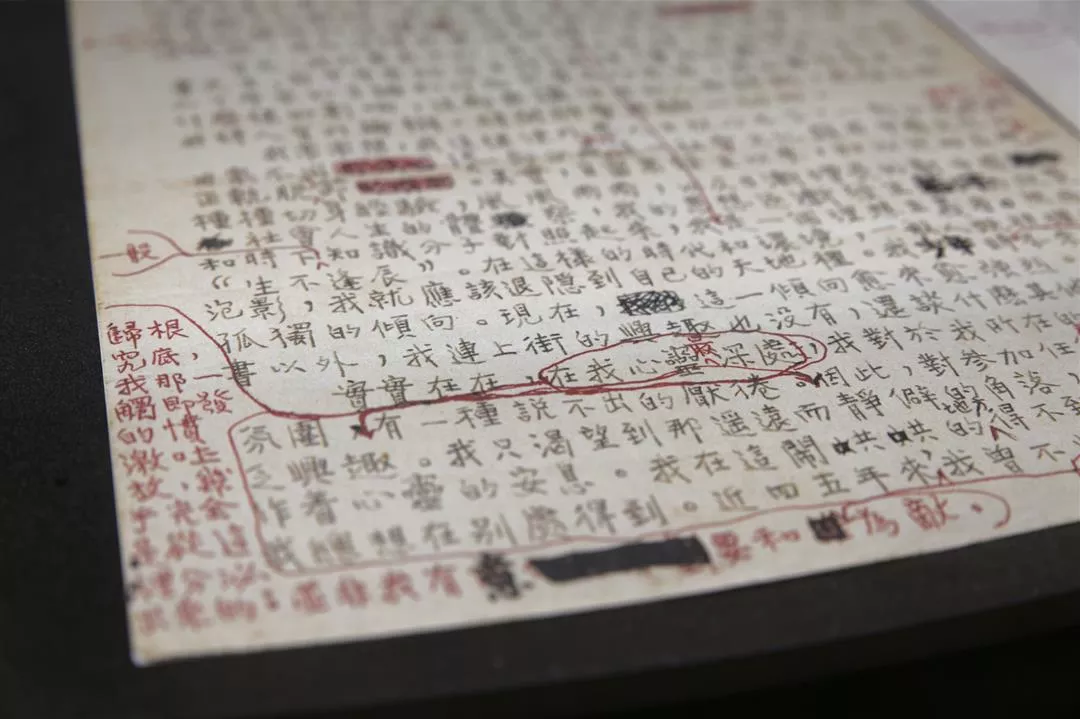
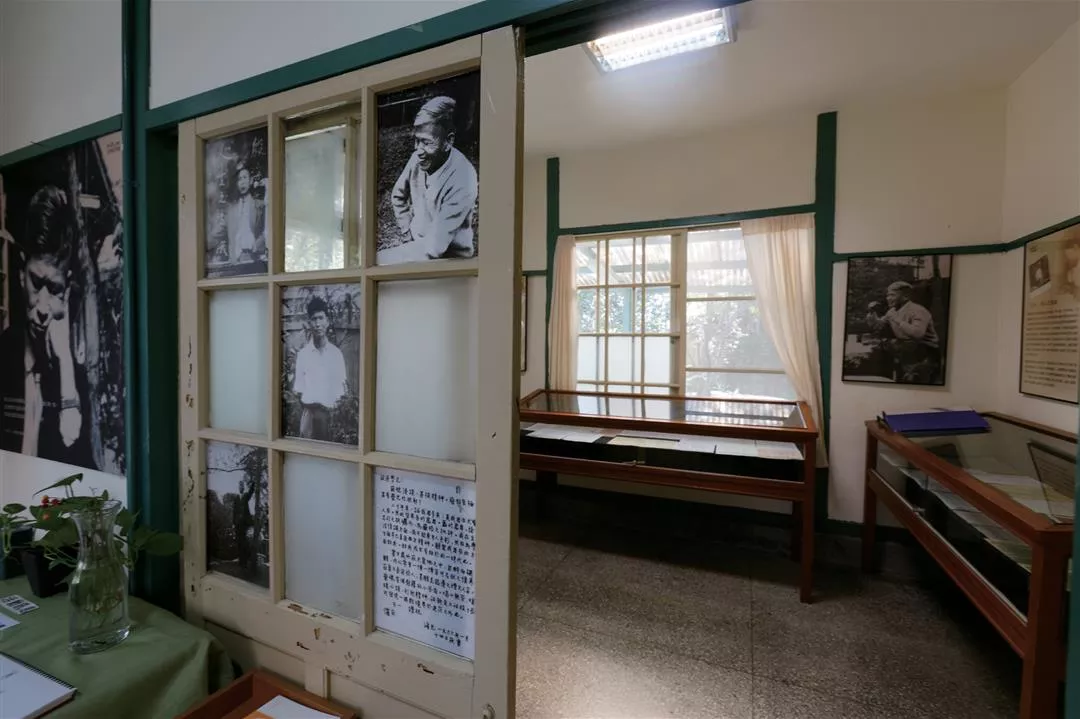
In one black-and-white photograph, Yin, wearing an undershirt with a shovel in hand, is building the paddling pool for his newborn daughter. Another is of Yin and his wife Hsia Chun-lu on their wedding day. On the other side of the room is a display of Yin’s manuscripts. Besides his letter of appointment from National Taiwan University, one can see a draft of a letter to the traditional scholar Chien Mu. The draft, smaller than an A4-size sheet of paper, is replete with red, black and blue edits, exemplifying Yin’s serious, rigorous personality.
In the letter display are examples of Yin Hai-kuang’s correspondences with Albert Einstein and Bertrand Russell. Naturally, one can also find many articles of Yin’s, published in the Free China Journal, in which he expressed his liberal philosophy.
This year, the once-tranquil former residence has been livened up. Not only has it become a gallery space for the art organization Bio Apartment, but reality adventure games, so popular among young people, have also arrived. The main organizer, Kiwi Fruit Studio, has creatively designed and released a semi-fictional “reality game” based on Yin Hai-kuang’s life. City Game Studio, a company from Tainan, has combined elements of puzzle-solving, exploration, travel and gaming to set a game here, as an invitation to the public to come treasure hunting.
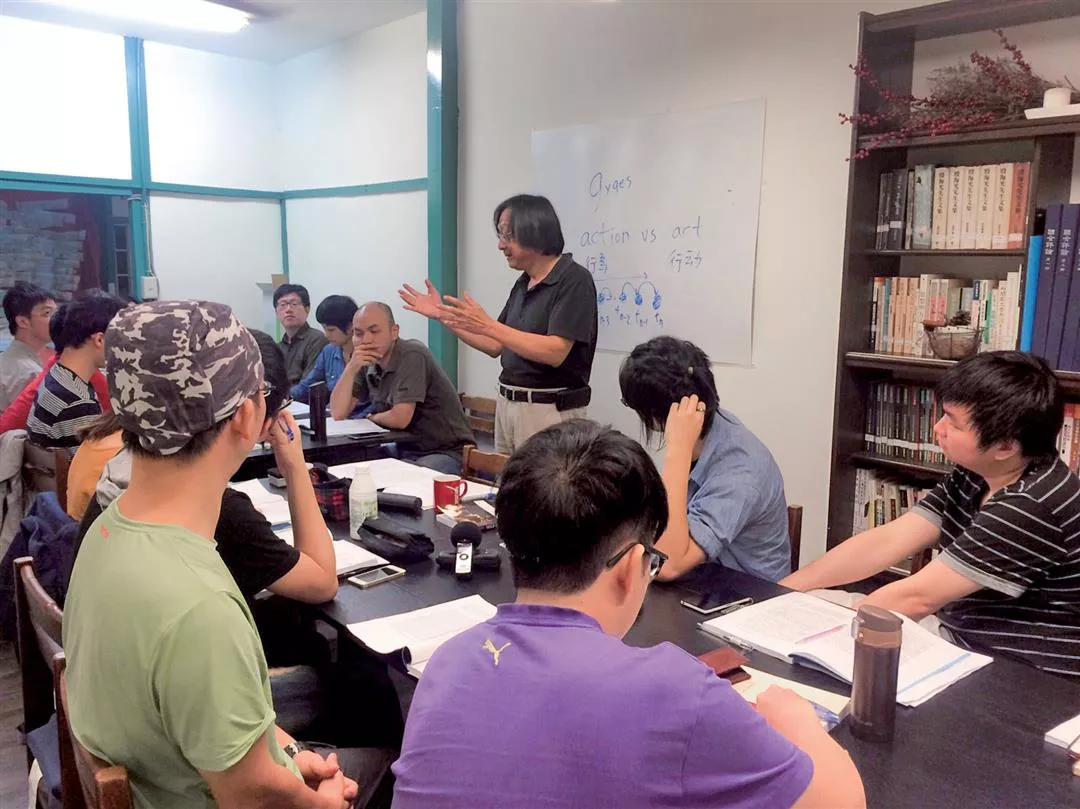
Since he succeeded as director of the Yin Hai-kuang Academic Foundation, Lu Kuei-hsien, associate professor of sociology at Fu Jen Catholic University, has tried to give the serene former residence a higher profile. Most events at Yin’s house have been held in recognition of Yin’s humanistic spirit. Besides regular lectures, a Hai-kuang Reading Group has been held once every two years, with professors from National Taiwan University and Academia Sinica meeting weekly over a period of two months to guide group discussions of works such as Democracy in America by the 19th-century traveler Alexis de Toqueville or The Pasteurization of France by the contemporary French sociologist of science Bruno Latour.
After six years of discussion and preparation, the Yin Hai-kuang Foundation officially opened the house to visitors in 2008, as part of the celebrations surrounding the 80th anniversary of National Taiwan University. The opening was particularly meaningful for the members of the foundation, who had worked hard to see this day for years. “The preservation of the house is a symbol of Yin Hai-kuang’s legacy, and it is also very important for preserving his spirit,” says executive secretary Hsieh Chia-hsin.
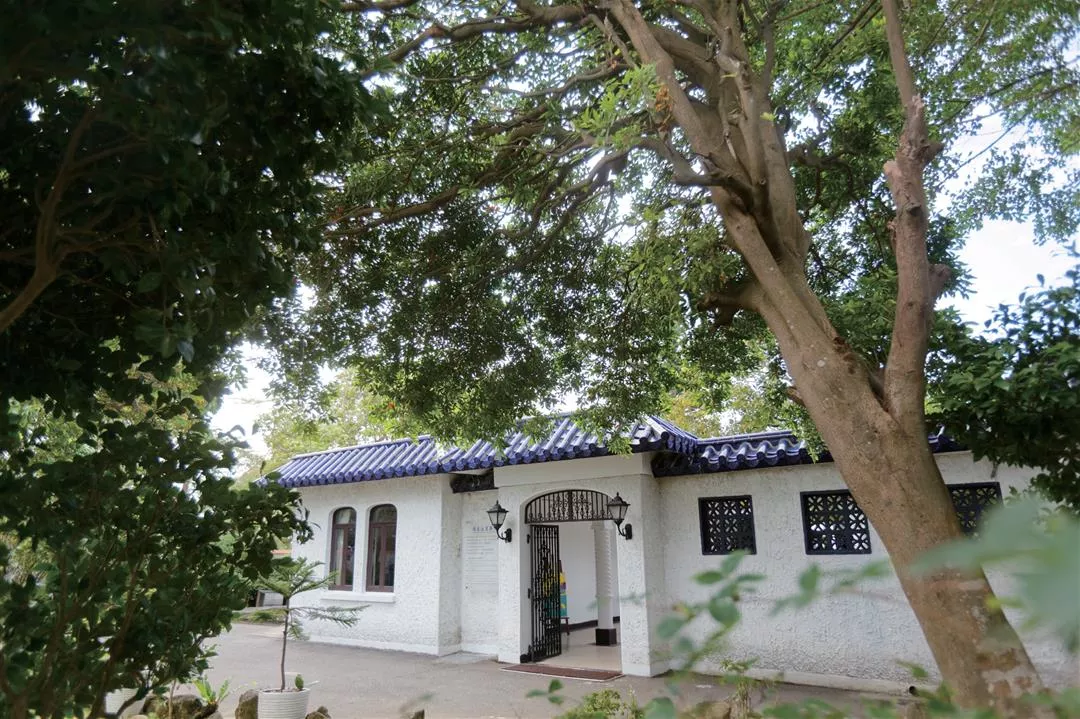
The Lin Yutang House (photo by Lin Min-hsuan)

A new look for an old villa
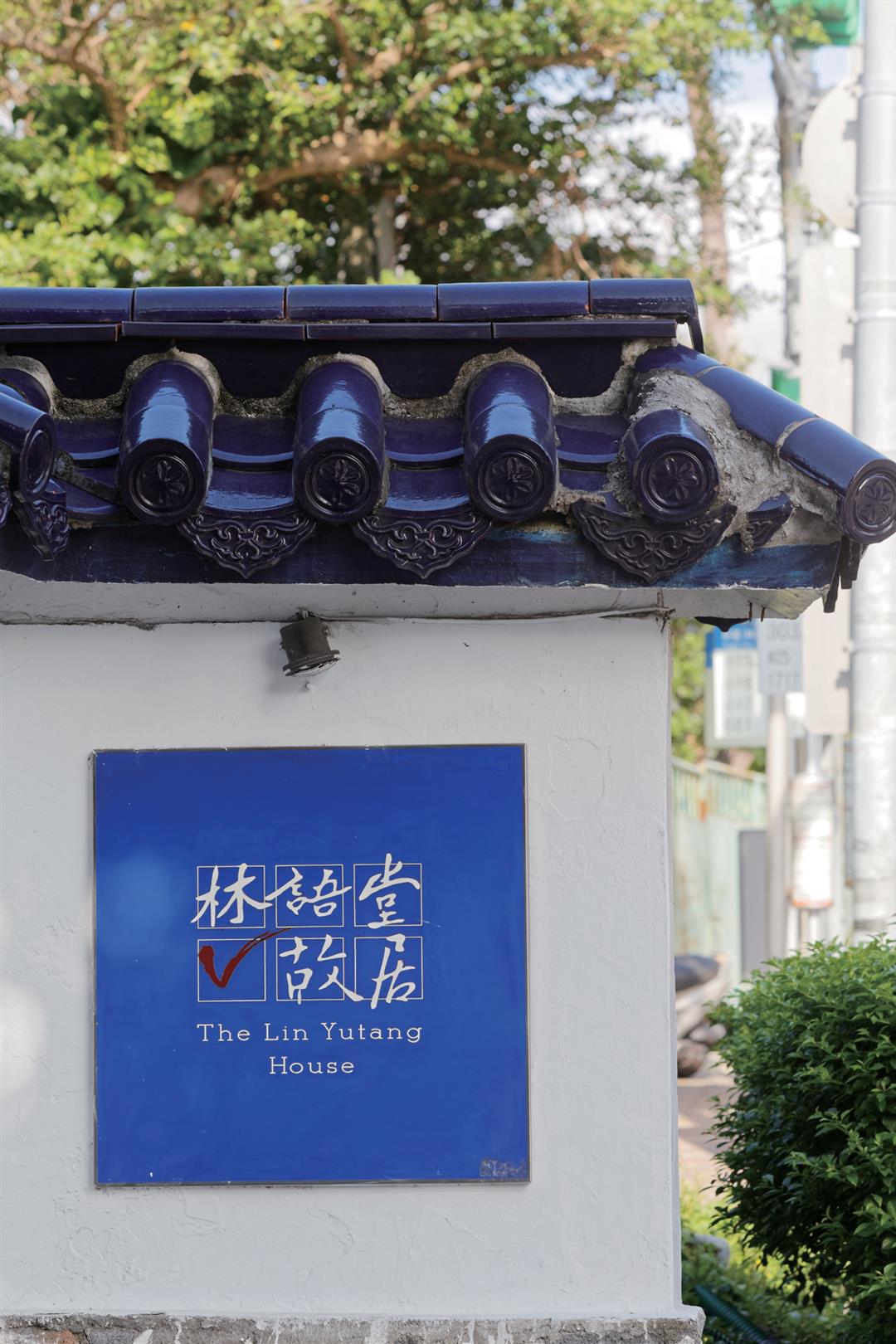
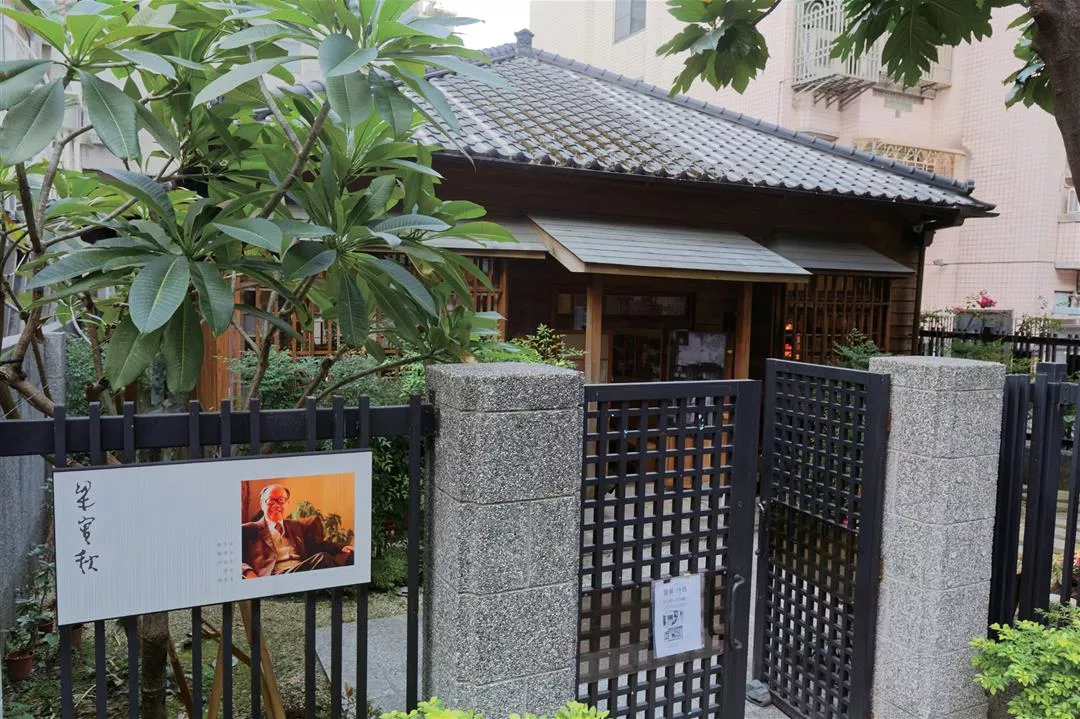
Situated on the busy Yangde Boulevard, the main way up Mt. Yangming, the Lin Yutang House is a masterpiece from the hand of architect Wang Dahong. Now, it is a place where people come to remember Lin Yutang.
Lin Yutang (1985‡1976) is known for his explanations of Chinese history and culture in books like Moment in Peking, The Importance of Living, and The Gay Genius: The Life and Times of Su Tungpo. Combining Chinese and Western humanism, the man wrote over 80 books. He was one of the few Chinese writers who could make a name for himself internationally by writing in English. While a serious scholar, Lin Yutang was also a delightful humorist.
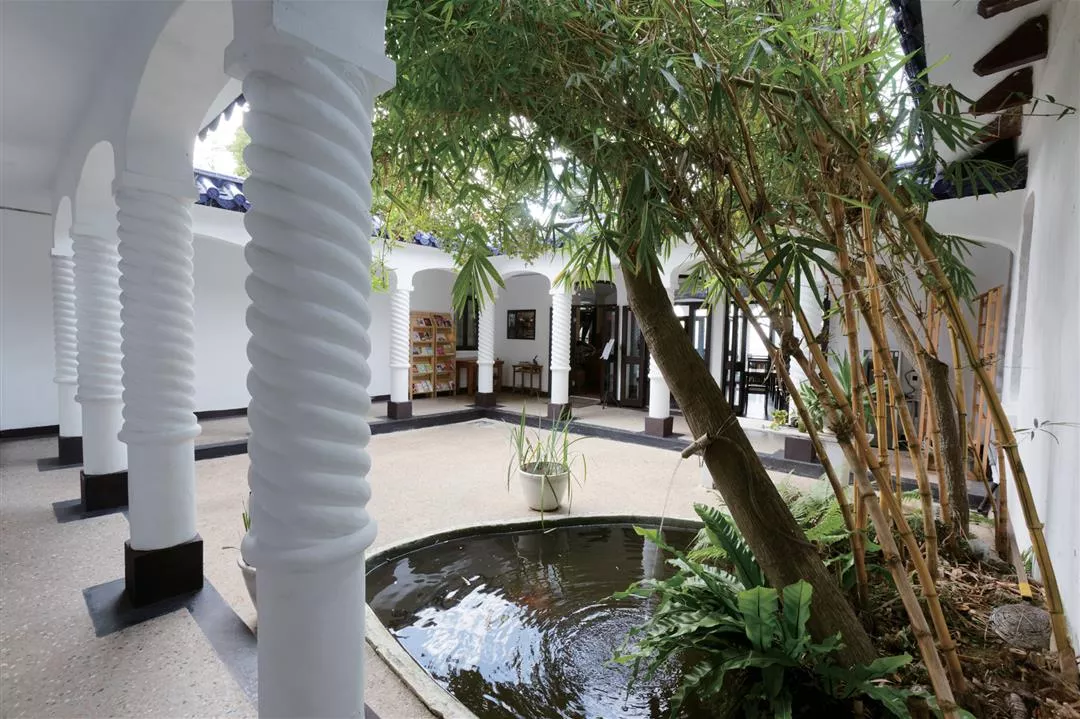
In 1969, after some years in the United States, Lin Yutang chose to relocate to Taiwan. He had this two-story culturally hybrid house built on the slope of Mt. Yangming. Unlike the aloof reserve of other such residences, the Lin Yutang House is open, capacious and dynamic, not unlike the man who lived here. Every detail of the design reflects his love of nature.
Moreover, the events held monthly or weekly in the house are usually inspired by his humorous and witty stories.
Only recently the curtain fell on an exhibit on the little things in life. It drew on Lin’s discourses on tea in The Importance of Living, allowing visitors to talk about reading and about tea while admiring the beautiful craftsmanship of Chinese tea utensils. Lin’s house also offers fortune cookies with bons mots from The Importance of Living. Visitors can enjoy desserts and be enlightened by Lin Yutang’s witty remarks.
Beside the regular activities, this year the curators of the Lin Yutang House thought up an idea involving former residences of other famous intellectuals. In the middle of next year, in cooperation with the former residences of Chien Mu, Liang Shih-chiu and K.T. Li, and the Sun Yun-suan Memorial Museum, the Lin Yutang House will hold an exhibition of “exchanged epistles.”
“The idea behind this exhibition is like an exchange of diaries,” explains Tsai Jia-fang, the director of the Lin Yutang House. These important intellectuals knew each other well, and often sent letters back and forth. Why not continue the practice between their former homes? Now visitors will be able to read Chien Mu’s letters in Lin Yutang’s house, or appreciate Lin Yutang’s handwriting at Liang Shih-chiu’s place. “It’ll be like a relay race, a surprising and pleasing encounter. Who knows who you’ll meet at a certain residence!”
Lively forums and a master Sinologue’s former residence do not at first seem to go together, but actually they do. Reading Lin’s The Importance of Living, we can learn that his philosophy of life is exactly the same as an idea that is often advocated today—downshifting. Lin Yutang was surrounded by life. He left this comment on his white stucco house with blue roof and window frames: “In the residence is a garden; in the garden is a house; in the house is a courtyard; in the courtyard stand some trees; above the trees is the sky; in the sky hangs the moon—true happiness indeed!” Visitors to Lin Yutang’s former residence might feel the same pleasure in life, the delight that does not come from without but can only be achieved within.

The Liang Shih-chiu House (photo by Lin Min-hsuan)
A shrine to Liang’s spirit
As editor of a popular Chinese‡English dictionary and a middle school English reader and as a promoter of the “KK” (Kenyon and Knott) phonetic transcription system, Liang Shih-chiu (1903‡1987) had a huge impact on English language education in Taiwan. In 2010, the house that was his residence during his days at National Taiwan Normal University (NTNU) was restored and opened to the public.
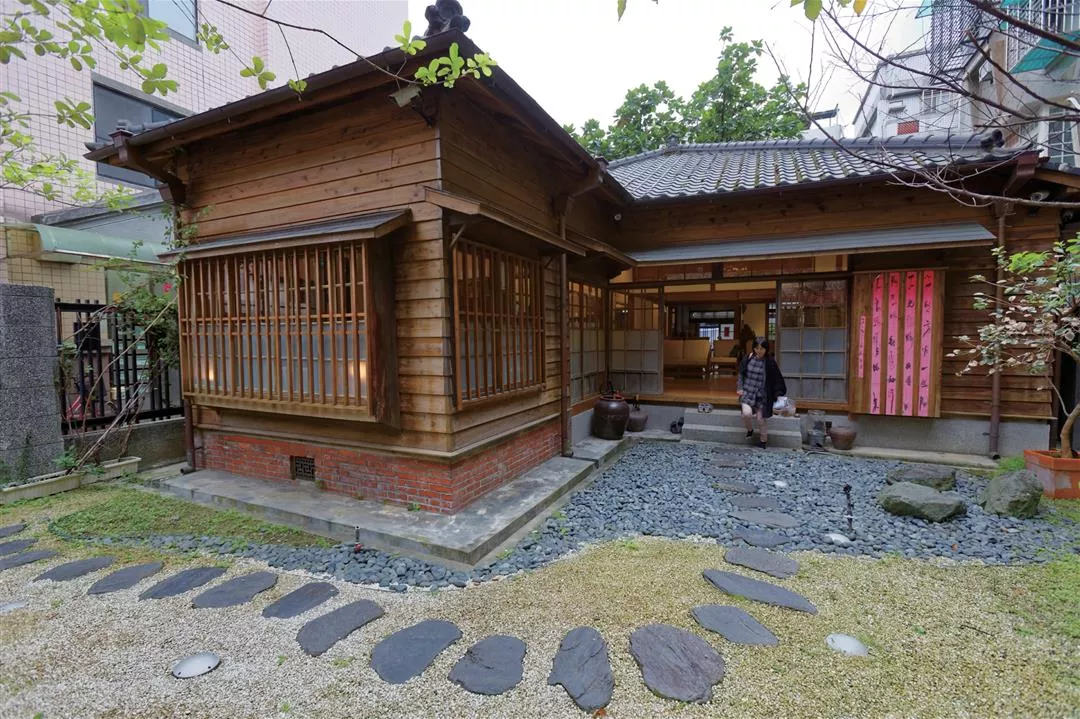
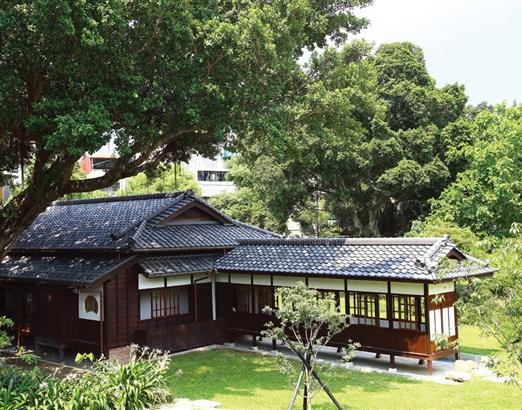
Before Liang moved in, this had been the domicile of Yoshisuke Tomita, professor of English at Taihoku High School. It was built in 1933. After the war, when many Japanese people left Taiwan, it was taken over by Taiwan Provincial Teachers’ College (today’s NTNU) to serve as living quarters for faculty.
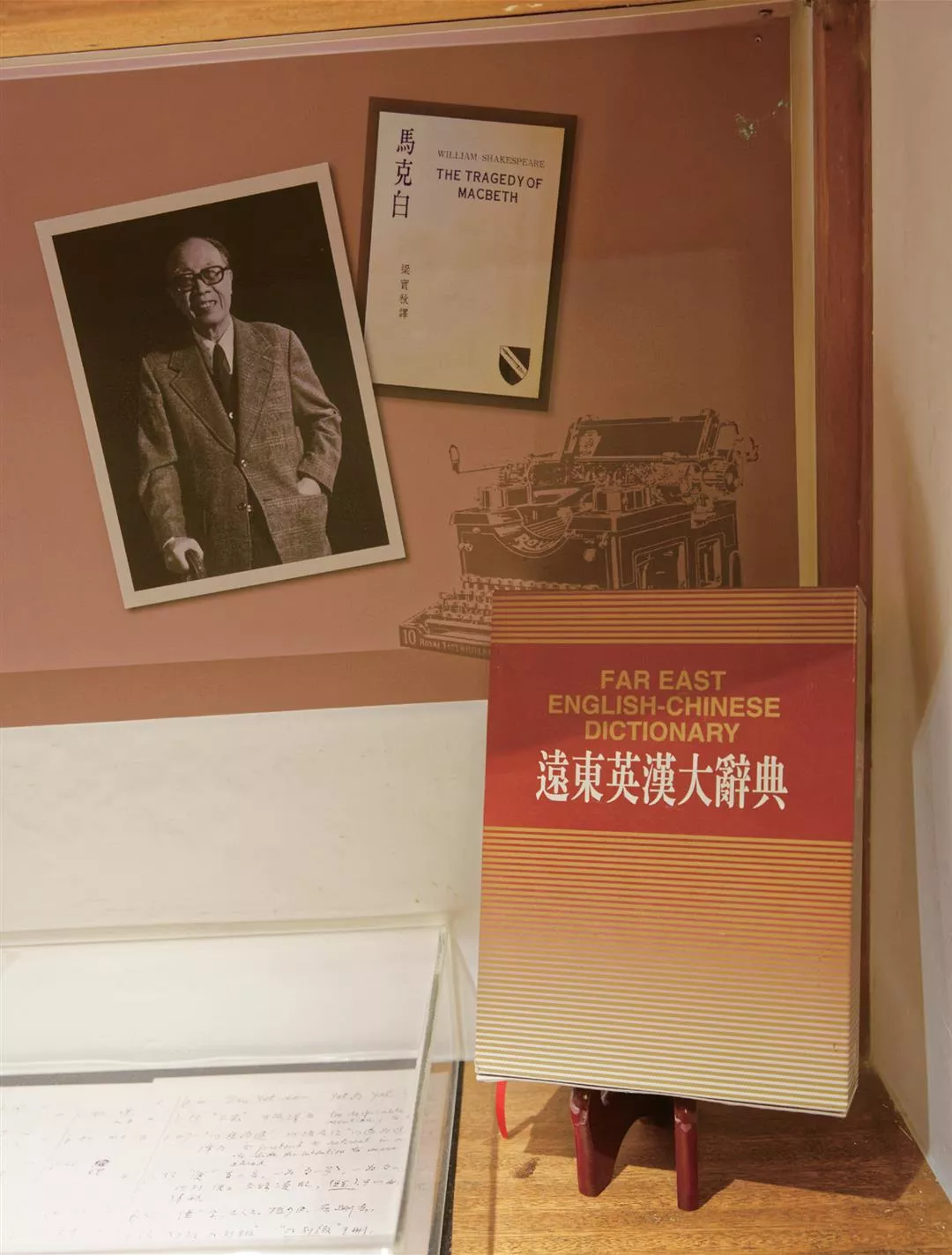
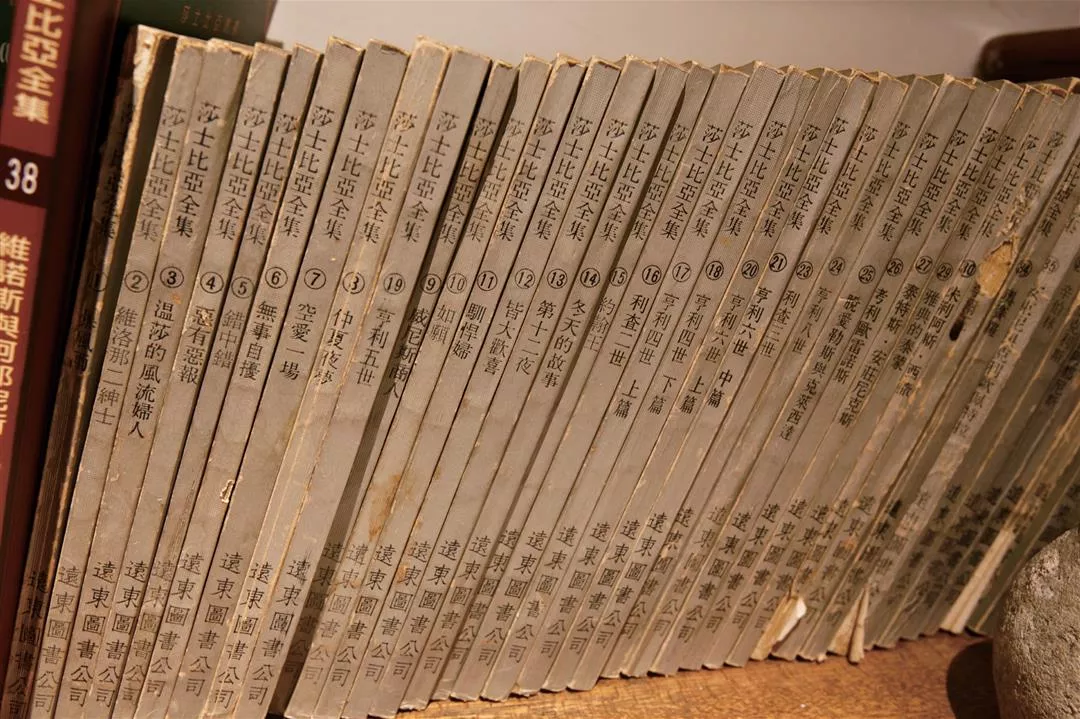
Though Liang only lived here seven years, from 1952 until 1959, when he relocated to the United States, this was where he translated Shakespeare and compiled his dictionary for the Far East publishing company. And though others moved in after, it is so important to the owner—NTNU—that Liang lived here that two years were spent rebuilding it on the original site, preserving an atmosphere of culture and books in the busy area around the university.
In charge of operations is Xiaowanzi (“mischievous child,” the nickname of Wu Tzu-ying). Two years ago, she rented the Liang House to uphold the man’s humanistic spirit by holding artistic symposiums and public workshops there.
“More important than the restoration of an old residence and its furnishings is the preservation of its spirit,” Xiaowanzi explains. That is why after two years here she still refuses to sell snacks or beverages. The sole use of the space is for lively speeches and animated seminars.
All the activities held at the Liang House are intended to express the aesthetic attitude and humanistic spirit that Liang expressed in his A Cottager’s Sketchbook.
When you visit the former residences of Yin Hai-kuang, Lin Yutang and Liang Shih-chiu, and witness the vigorous strokes of the manuscripts they left behind, the past will talk tirelessly to you.

Walking in Yin’s residence, the green sun-dappled shade of the garden seems to freeze time.

Walking in Yin’s residence, the green sun-dappled shade of the garden seems to freeze time. (photo by Lin Min-hsuan)
Yin Hai-kuang was a major liberal scholar in the 1950s and 1960s, whose commitment to liberty set an example for intellectuals. (courtesy of the Yin Hai-kuang Memorial Foundation)

The display area contains many black-and-white photographs and manuscripts, allowing the visitor to visualize Yin indulging his passions for thinking and reading.

The display area contains many black-and-white photographs and manuscripts, allowing the visitor to visualize Yin indulging his passions for thinking and reading.

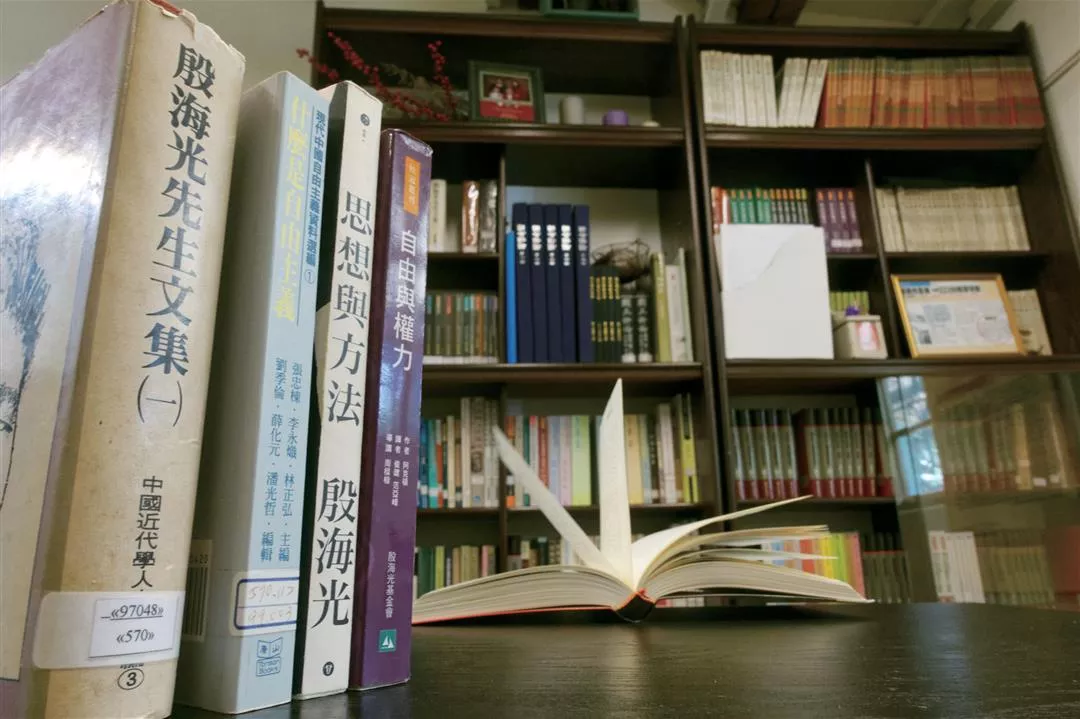
Deeply influenced by the philosophers Bertrand Russell and Karl Popper and the economist Friedrich von Hayek, Yin Hai-kuang wrote many works in his lifetime.

To carry on Yin’s humanistic spirit, a regular “Hai-kuang Reading Group” is held in his former residence, with invited scholars leading discussions of classic texts. (courtesy of the Yin Hai-kuang Memorial Foundation)

Lin Yutang House

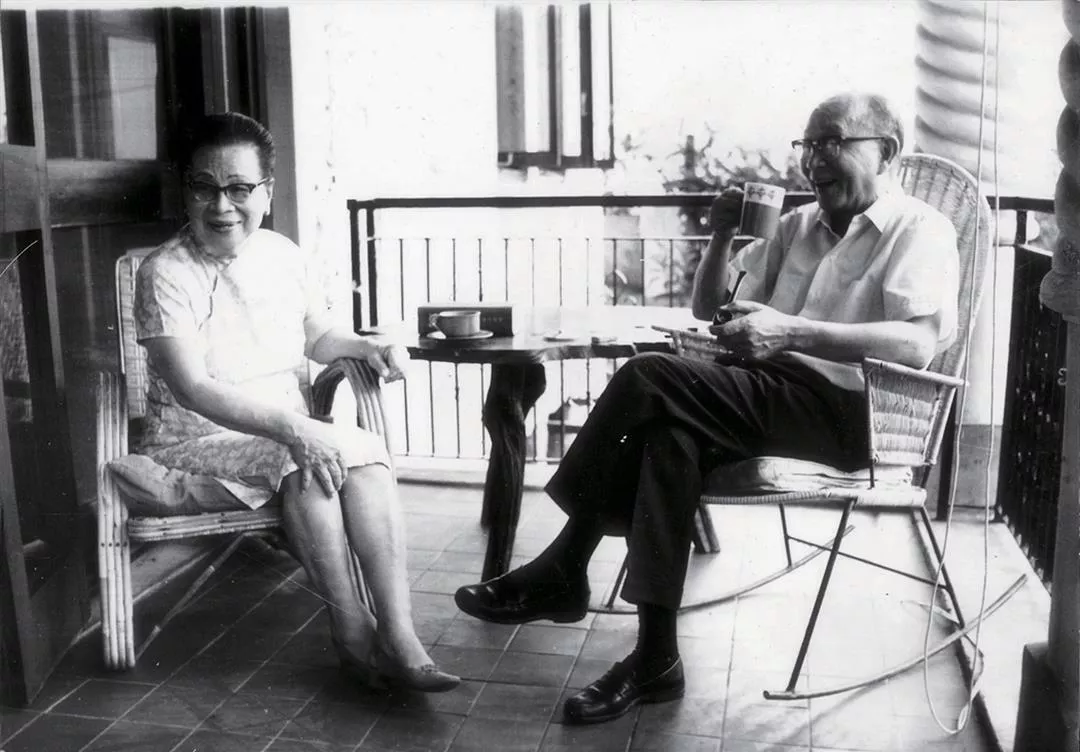
Lin Yutang and his wife Liao Tsui-feng, who were always savoring refined pleasures in daily life, are pictured here sipping tea on the balcony of their home. (courtesy of the Lin Yutang House)

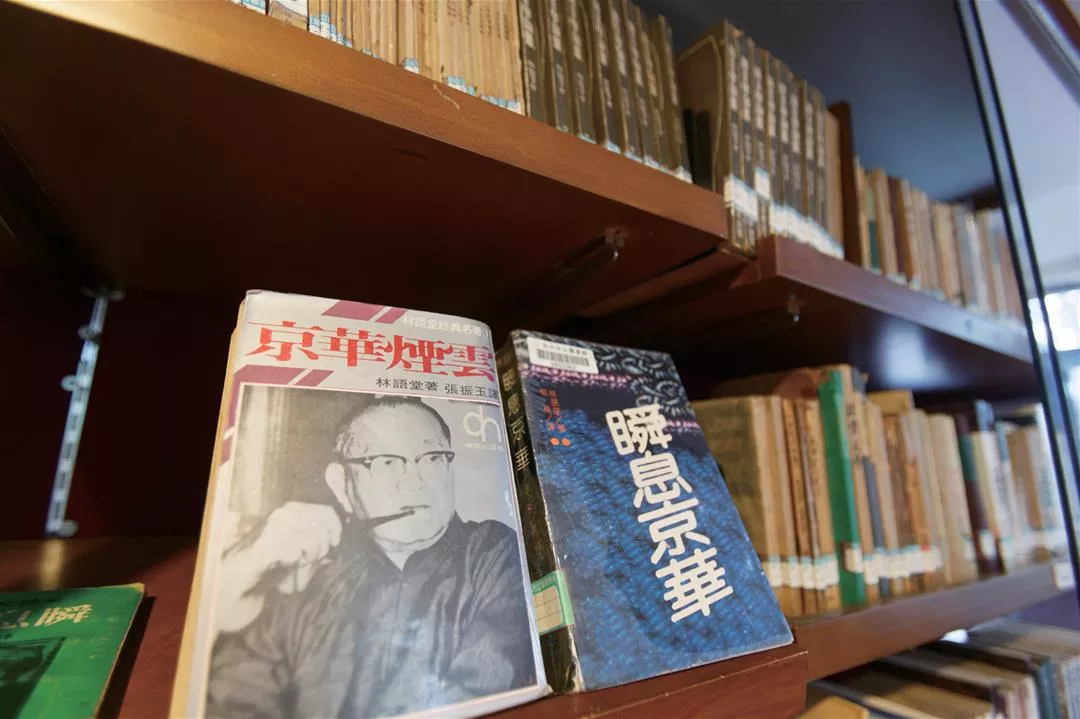
Moment in Peking and The Importance of Living are two of the over 80 books Lin wrote that made him famous around the world.

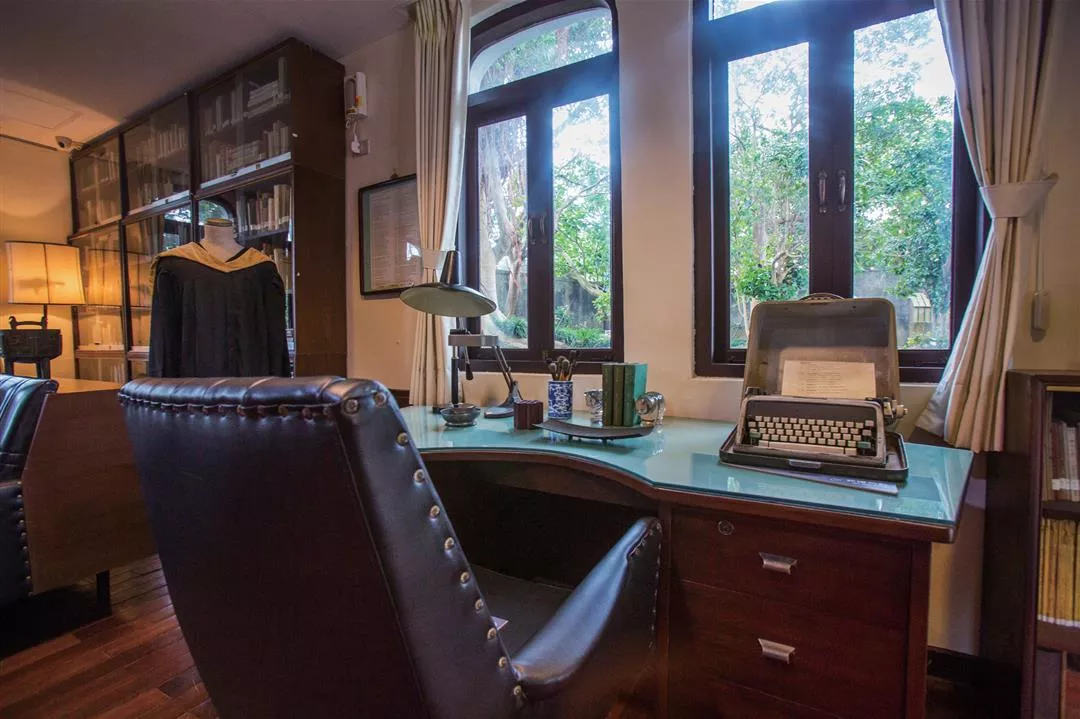
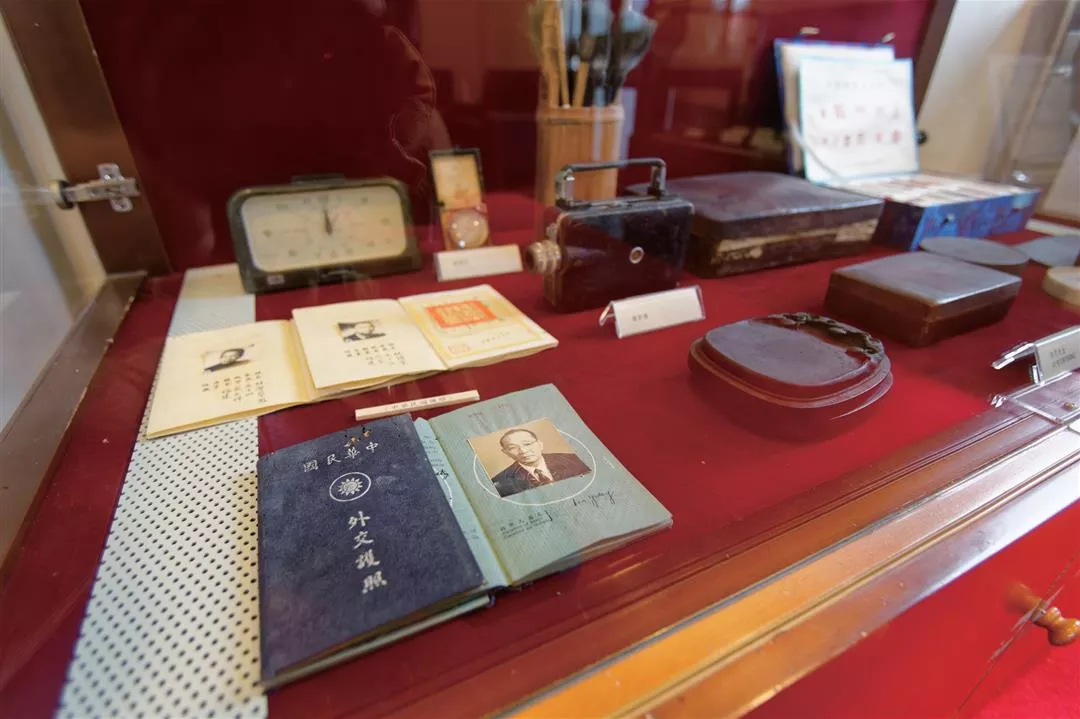
The Lin Yutang House displays material objects from Lin’s life.

The Lin Yutang House displays material objects from Lin’s life.

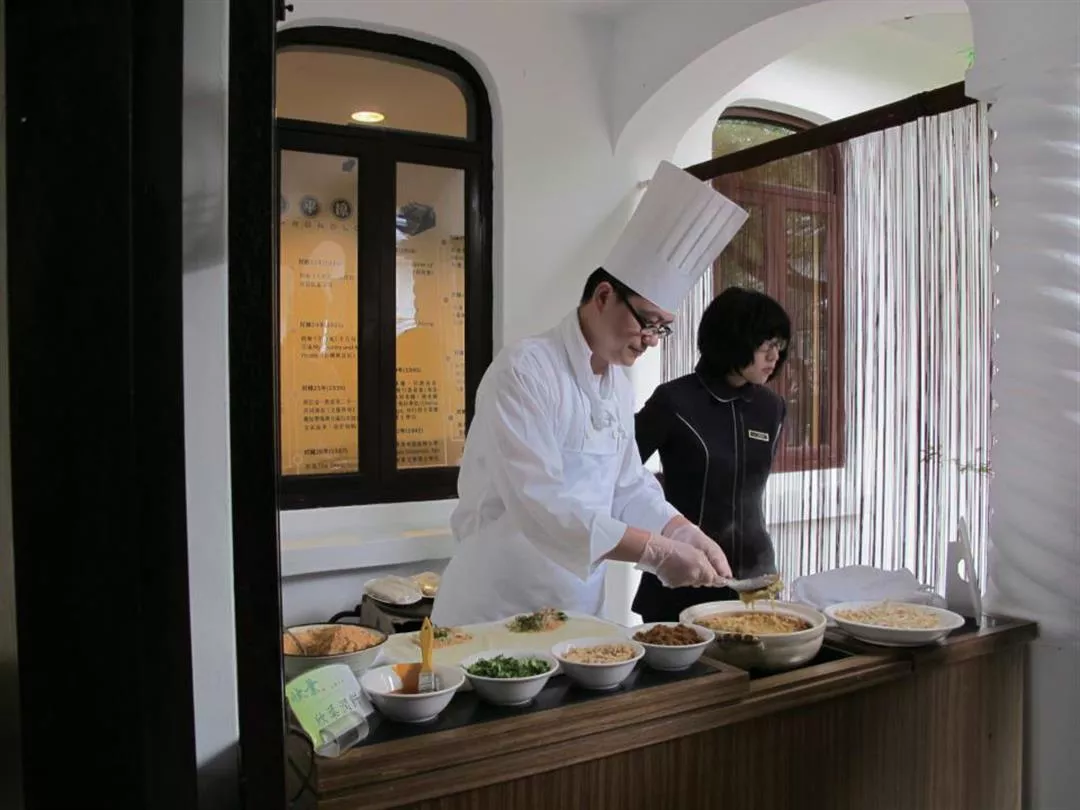
The Lin Yutang House holds regular activities, many inspired by Lin’s personal tastes. For instance, at the end of spring, a soft spring roll festival is held in memory of Lin’s love of this Chinese delicacy. (courtesy of the Lin Yutang House)

Two years were spent restoring Liang Shih-chiu’s former living quarters, to preserve a scholarly air in the bustling commercial area around National Taiwan Normal University.

The Liang Shih-chiu House

Liang’s elegant Japanese dwelling was where he translated Shakespeare and compiled his famous Far East dictionary.

Liang Shih-chiu and Shakespear

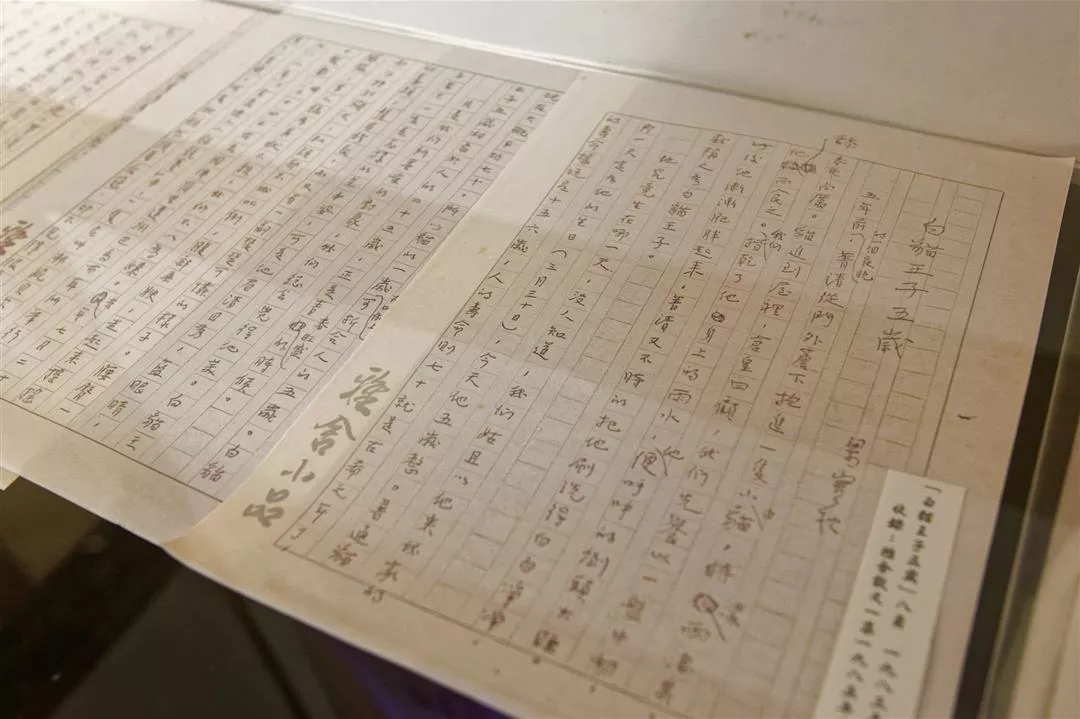
The Liang House displays many of Liang Shih-chiu’s manuscripts, allowing visitors to appreciate his literary talent.

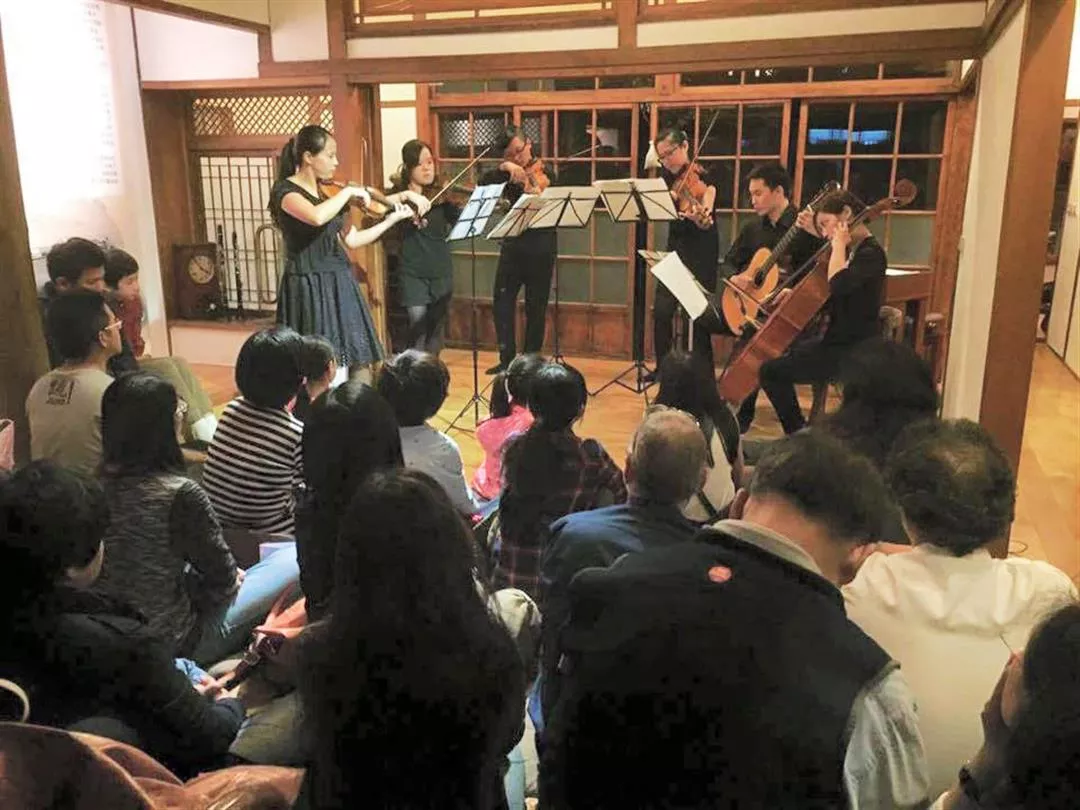
Wu Tzu-ying, the artistic director of the Liang House, has held many artistic symposiums there, filling the quiet space with music and conversation. (courtesy of the Liang House)