Traveling His Own Road-- Demos Chiang Creates a Company
Vito Lee / photos Chuang Kung-ju / tr. by Anthony W. Sariti
April 2006


Demos Chiang says he's too young, too "impulsive," not a good leader, but he still thinks nothing is impossible and has courageously struck out on his own road to creating a business.
When beginning a new business one should start close to home, in one's chosen profession, yet Demos Chiang, having majored in finance at New York University and having no background in design, strayed far from accepted principles by choosing to start a new business in the field of design. But in the eyes of his colleagues and fellow entrepreneurs, Chiang, with his rebellious spirit and his relentless assaults on convention, is perfectly suited to this industry that demands constant creativity.
Demos Chiang is part of the Chiang family that has had such an influence on China and Taiwan over the last hundred years. His father, Chiang Hsiao-yung, is the third son of the late President Chiang Ching-kuo, and his mother is current KMT Central Standing Committee member Chiang Fang Chih-yi. When in 2004 Demos Chiang launched himself into the for him unfamiliar world of design and created DEM, Inc., he certainly benefited greatly from the family name, yet there were also many people eager to see him fail. In the two years since, with an original investment capital of NT$4 million, DEM gradually has gotten on a firm footing and has seen its operating revenue grow 24-fold--and the company has established itself as a well-known brand in Taiwan's design industry. The story behind the creation of DEM is really that of the struggle of a young man setting out to travel his own road of destiny.
He's a boss who likes meetings. There has to be a meeting every day, meetings constantly. Meetings to trade ideas, to communicate desires, or just to share everyday things one has learned. Demos Chiang believes the boss shoulders responsibility for shaping corporate culture and must constantly communicate this to the staff. If discussions are not wrapped up during the day, he will frequently phone company executives at 11 or 12 at night to discuss completion dates or the next project they are bidding for. After hanging up, Chiang continues working until the early hours of the morning.
A genius with numbers, who at age 18 was already dealing in international financial instruments, Demos Chiang continues to engage in this "sideline" even after having created DEM. In the eyes of his subordinates, their boss operates like a high-precision clock.
With long hair and his top shirt button undone, he talks business with a cigarette in his mouth. The meeting ends on time and after escorting his guest to the car he jogs across the alley back to the office. Seeing a brown paper bag by the reception desk, he bends down, picks it up and hands it to a colleague. For all of his precision and authority, he's still a boss who can "get his hands dirty."

Getting to Heaven is difficult--but it's even more difficult to find the right people. To get customers and orders, this scion of a famous family with no design background showed his flexibility.
Two years ago, Demos Chiang and his younger brother, Chiang Yu-chang, who at the time had just graduated from the Parsons School of Design in New York, opened up DEM together. Unfamiliar with the Taiwan design industry, the first commission they accepted was the redo of an athletic shoe store in the Hsimenting shopping area. To get this job Demos Chiang tried everything and finally persuaded the store owner to give him the job. He had depended on his ability to "get his hands dirty."
To get design jobs, Chiang got personally involved. DEM started out with only seven employees, with no specialized sales staff. He was the company's most diligent business rep. The client list included retailers, real estate agencies, gas stations, 3C, trendy stores, interior design companies, just about everything imaginable.
Also, as a member of the Chiang family, which had had such a deep impact on Taiwan, Demos Chiang from childhood knew how to protect himself from public view. But now, for DEM, he had to do something he was loathe to do: put the spotlight on his name and, under the ground rules of not talking about family or politics, accept media interviews to "trade on his name" so everyone would know about DEM.
From the early popular T-shirts and scarves to shells for MP3 players, DEM design has maintained simple lines and lively color as its theme, and after many projects with bicycle, motorcycle and car manufacturers, has focused more than ever on industrial design. In 2005 DEM was selected by frequent F1 winner Team Renault of France to design its logo.
"That was a watershed," says Chiang. "In the early days perhaps some people looked us up because of my family background, but the Renault deal was a milestone in international recognition and proved that DEM didn't need the name 'Demos Chiang' to get a contract." Refusing to let others judge him on the basis of his family name, Demos Chiang proved himself by his own ability.
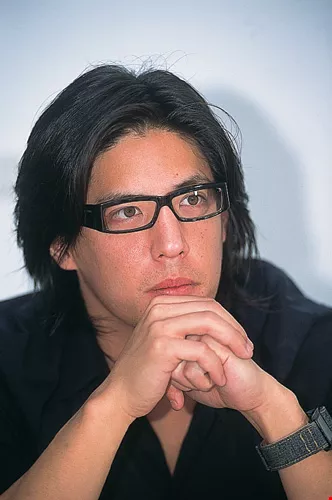
With his long hair and black-framed glasses, Demos Chiang, who learned from childhood how to protect himself from public view, now faces the camera for the sake of his business.
"Demos is really a completely unorthodox, daring and bold thinker. If someone says he can't walk, then he will fly," is how DEM's innovation strategy division director Jimmy Mo describes him. "In both image development and design, judgments based on experience are key--what is popular? What is most likely to succeed? What sells best? Old-timers in the business feel they know just about everything, but Chiang is always challenging them."
Sometimes such a high-profile approach runs into a brick wall, says Mo. "Many times Demos has not gotten a contract because he was too cocky." One of the original founders of DEM, famous British designer Michael Young, suddenly quit, leaving the company's design team greatly weakened. Young's departure was said to have been due to his and Chiang's different approaches.
"A lot of people explain this rebellious nature as the result of 15 years in the US, but actually it's part of my personality. I've been like this since I was little."
Rebellious, daring to break through convention, "daring to be No. 1," and "daring to be demanding" have, indeed, brought the company many unexpected dividends. Last year the Renault F1 Team promoted the "Art on Car" movement and solicited submissions for a logo from design companies around the world. Chiang instructed his colleagues to make every effort to win the contract. Used to having concepts drive the designers' imagination, he spent several days tirelessly holding meetings with his colleagues to spark the creative spirit, and looking back into Chinese history for ideas.
Chinese legend tells of the "Four Holy Beasts"--the Blue Dragon, White Tiger, Vermilion Bird and Black Turtle--all symbolizing the imminent appearance of sages and emperors. Chiang decided to use the Vermilion Bird concept to design a phoenix logo. "There is nothing greater than history. Selecting this logo is like selecting history and glory itself." When the competition was over, the "Guardian Phoenix" had been chosen the winner.
"This contract naturally would put a design company right on the map. The kind of publicity such a contract provides could make people very self-satisfied," says Jimmy Mo. "But Demos was still not satisfied and wanted us to get the usage rights to the design."
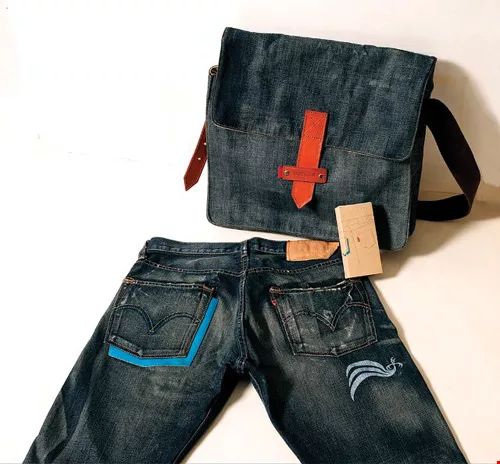
Carrying strict orders but with filled with trepidation and sure that a large international automobile company would be unwilling to accede to his request, Mo nevertheless gritted his teeth and visited France and Switzerland for negotiations with Renault and F1 racing headquarters. In the end he actually succeeded. After this, DEM took the "Guardian Phoenix" logo over to Levi's jeans for a limited, exclusive run. It was like "eating twice from the same plate" and increased the profit margin of this one design.
According to statistics of the Small and Medium Enterprise Administration (SMEA) at the Ministry of Economic Affairs, this year the design industry, which is primarily composed of micro-businesses, is a hot area for business start-ups by young people. In 2004, of those seeking information from the SMEA on starting new businesses, 5.7% said they were interested in the design industry. Influenced by the economic ferment in the cultural and creative industries and the fine arts, design services have become increasingly popular, proving that Demos Chiang's original decision to enter the design industry was in tune with the trend of the time.
"Whether it's traditional manufacturing industry facing the demands of transformation or the information industry that for so long has primarily relied on sub-contracting, all need product designs," says Wang Su-wan, a researcher at the Chung Hua Institute for Economic Research, pointing out the key to the popularity of Taiwan's design industry.
"Design is not just a matter of aesthetics, it is more a question of accurately understanding clients' needs," says Demos Chiang. To serve factories in China owned by its clients, DEM this year has set its sights on setting up shop in Shanghai.
"In theory, in the age of the Internet, an office in Taipei can take contracts from all over the world," explains Chiang. "But to really lock up clients, you have to regularly work together with them." With DEM firmly established, Chiang, who advocates the notion that "if you want to start a business, do it on a big scale; otherwise just go on working for someone else," already has his future goal in mind. "We want to be Taiwan's biggest design company!"
DEM Fact FileEstablished: July 2004Capital: NT$4 millionEmployees: 35Products and services: Design services, including architectural design, interior design, industrial design, graphic design and multimedia.
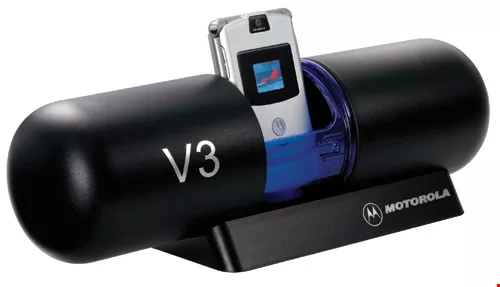
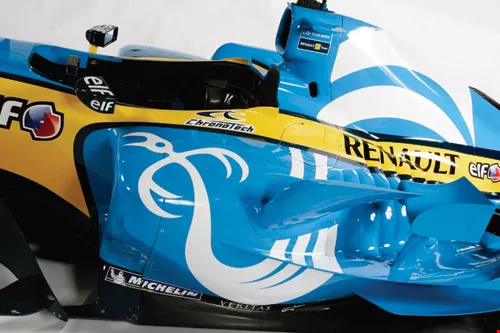
The "Guardian Phoenix" logo makes it onto the international racing circuit and DEM's influence is affirmed.


