First save the land?
When the pollution at the RCA plant came to light in 1994, the incident attracted a great deal of attention from social activists and the media. And no wonder, seeing as it involved issues of environmental protection, workers' safety, the health of local residents, government negligence, and an international lawsuit.
For the first few years, the focus was on clarifying just how much environmental damage resulted from RCA's dumping of toxic wastes, and establishing the cause-and-effect relationship between the working environment and the harm to employees' health.
However, in those days Taiwan's environmental laws had only weak punitive provisions. After General Electric (GE) and then Thomson took over the RCA plant, they declared that since Taiwan had no laws that set norms for their actions, they were not obliged to take any compensatory or clean-up measures. The Environmental Protection Administration (EPA) had no recourse but to appeal to "moral suasion"--backed up by a threat to call an international press conference and widely publicize their charges against the RCA plant, which would have a negative impact on the corporations' public image and marketing.
Subsequently, some clean-up work began in 1996. But after a year and a half, despite spending NT$200 million (over US$6 million), there had been no significant improvement in the groundwater. The concentration of trichloroethylene in the groundwater of the neighborhood was still 1000 times higher than the standard set by the EPA. That is to say, it was evidently impossible that the situation could be restored to its pre-pollution state in a short time, and it was estimated that the groundwater would only return to standard levels of water quality through natural recovery sometime around 2025.
In May of 1998, the RCA Workers Mutual Aid Association (MAA) was established. The founders invested tremendous effort in contacting former plant employees, eventually getting over 800 people to join the organization.
In October of 1998, the Control Yuan produced a report revealing that from 1975 to 1991 the Council of Labor Affairs (CLA) had conducted eight inspections of the RCA plant and discovered that it was in violation of regulations governing exposure to toxic solvents and other rules governing worker health and safety. But the CLA merely sent notifications to improve conditions. There were then no penal provisions in the law, and the CLA did not follow up its notifications, so it clearly did not do all it should have done to protect worker safety. Moreover, responsibilities were divided among the CLA, the EPA, and the Department of Health, and no one took the initiative to create a single mechanism to coordinate and determine compensation for the impact of chemical pollutants, medical assistance for sick workers, and legal assistance. The Control Yuan found that this was also a dereliction of duty.
Challenge for epidemiology
The fact that GE and Thomson admitted that that the soil was polluted and finally began clean-up work gave the MAA hope, and they assumed that once the CLA's occupational illness report was completed, workers would get medical assistance and compensation.
A year and a half later, the first phase of research was complete. It was discovered that in comparison to workers in a selected control group of textile and electronics companies, there was a high incidence of breast cancer and cervical cancer among female employees at RCA (48 cases among 703 respondents). The second phase of research would be aimed at making the connection between the pollution and the breast cancer.
But the study done in the second phase concluded that breast cancer among the women employees at RCA was probably due more to their personal reproductive histories, and that there was no obvious connection to their on-the-job exposure. This left workers deeply disappointed, sighing that "people" seemed less protected than "soil."
The study by the CLA was unable to determine whether the cancer among the workers was an occupational illness, but the report of the EPA reached a very different conclusion.
Professor Wang Jung-der of National Taiwan University's College of Public Health discovered that despite the cleanup of the RCA land, the groundwater beneath it still contained chlorinated alkanes and alkenes (CA). The risk of cancer among nearby residents was three in 1000 (against a maximum acceptable value of one per 10,000), while the risk of diseases other than cancer was 16.9 (the acceptable value should be less than one). Thus RCA's pollution had generated an enormous threat to the health of employees and local residents.
In fact, it is a very challenging and time-consuming project for epidemiologists to come up with the scientific evidence that will point to a cause-and-effect relationship between illness and a pollution source.
Take for example the case of "Minamata disease" that occurred in Kyushu, Japan in the 1950s. Because for 30 years a factory had been dumping mercury-contaminated wastewater into the sea, the people of Kumamoto Prefecture were catching and eating fish that had been eating mercury-contaminated food. Mercury accumulated in people's brains and central nervous systems, leading to illnesses which only became visible 20 years later. Symptoms included impaired vision and hearing, grossly misshapen fingers, insanity (including uncontrollable howling), and paralysis; many victims fell into a coma and died. An investigation by the Japanese government took 12 years to prove the connection to industrial pollution.
An 80-man legal team
At the end of 2000, RCA Taiwan, then owned by Thomson, relayed to the Ministry of Economic Affairs its plan to reduce its investments in Taiwan. After the news came out, the MAA and social activists went on the alert, because if Thomson extracted RCA assets from Taiwan, it would become even more difficult to get compensation. They had to act quickly.
The Taiwan Association for Victims of Occupational Injuries, which has been standing side by side with the RCA workers from the very beginning, then sought help from the Taipei Bar Association, the Taiwan Association for Human Rights, and the Judicial Reform Foundation. They were looking for attorneys with experience in public nuisance litigation and with an understanding of US law, to help the workers file a lawsuit.
In May of 2001, the staff from all the various organizations came together to form an 80-person pro bono legal team. On the one hand they began collecting evidence, to understand the working conditions at the plant, to prove that workers really were exposed to a toxic environment, and to verify the severity of the illnesses of individual workers. At the same time they began collecting information on RCA assets in Taiwan to calculate the amount of damages they could pursue.
The most urgent task was to freeze RCA's assets in Taiwan, because once the money was overseas, even if they won the lawsuit it would be difficult to collect the award.
However, in order to enforce a provisional seizure of assets, it is necessary to first post a bond with the court; normally the court asks the creditor (or obligee) to provide one third of the debt (or obligation) as a guarantee. That means, based on RCA's total assets in Taiwan of NT$2.4 billion, before the case could even go to court it would be necessary to come up with an NT$800 million bond. For a less-than-privileged group like these workers, that was an astronomical sum.
The team of attorneys then brainstormed for another year to find a way out of this dilemma, while the convener of the team, Joseph Lin, and Judicial Reform Foundation executive director Wang Shih-ssu visited the CLA several times in hopes that the CLA would provide a written guarantee that could substitute for the bond.
In July of 2002, the team of attorneys applied to the courts to provisionally seize RCA's assets and to investigate the movement of such assets. Unfortunately, the Investment Commission of the Ministry of Economic Affairs refused to divulge its information, citing confidentiality. The lawyers then turned to the National Tax Administration, only to discover that RCA's total interest income for 2000 was NT$330,000 (about US$11,000), meaning a total of only about NT$10 million (about US$330,000) in principal. They therefore suspected that most RCA assets had already been withdrawn.
Since the money was already gone, it was highly possible compensation would be unattainable. The MAA therefore decided to halt action by its team of attorneys and instead link up with international social activist groups to undertake a media campaign and file a lawsuit in the US. But after a trip to the US, they found that American lawyers expected the suit to require five to ten years to resolve, and there was little willingness to take the case. At the same time there was also a new election to replace the exhausted officials of the MAA, and everything went back to square one.
Reheating a cold oven
After a two-year hiatus, early last year the case ended up back on the desk of Joseph Lin, by then the head of the Taipei branch of the Legal Aid Foundation (LAF). "It's a complicated, challenging case, involving a lot of victims, so the effects would be far-reaching. I was very uncertain about whether to take it or not." He was also concerned about whether the lawyers who had worked pro bono on the case earlier would now be willing to again help out.
"Some workers in the late stages of cancer were still hanging on, dragging their deteriorating bodies along, because they were determined to see this through to the finish." After long consideration, Lin decided to take on this arduous task, and the LAF once again began stoking the fire under the lawsuit.
"In this case, we didn't consider the chances of winning. It was a matter of justice, so we simply had to win. We knew the case would set critical precedents within Taiwan, in terms of things like the government guaranteeing the bond, or the standard of proof for epidemiologists to establish a cause-and-effect relationship," says Lin firmly.
For instance, he says, in the past there were many shortcomings in the way the CLA approached research into occupational hazards. In particular, they grouped all the employees of an enterprise together for statistical purposes, including office staff and managers, along with the workers on the production line. But there is an enormous difference in the degree to which the two groups are in contact with carcinogens or are exposed to a toxic environment, which led to underestimating the incidence of cancer. For another, so long as all the burden of proof in an occupational hazards case fell to the plaintiffs, there was almost no point in bringing a case at all.
Because data concerning production processes, materials used, and so on is all in the hands of the company, in the US and Japan there has been some adjustment of the principle that the plaintiff carries the burden of proof in civil cases. The defending firm or plant must come up with research and statistics of its own to prove its innocence.
The judicial system may not always be the last line of defense for justice, but without this avenue, the truth may be buried and there would be nowhere at all to turn. The workers of RCA, who have been fighting for over a decade, aren't trying to make history. But it is certain that they will leave an indelible mark on the history of anti-pollution and occupational-injury litigation in Taiwan.
The RCA Case: A Timeline
1969: RCA builds a plant in Taiwan.
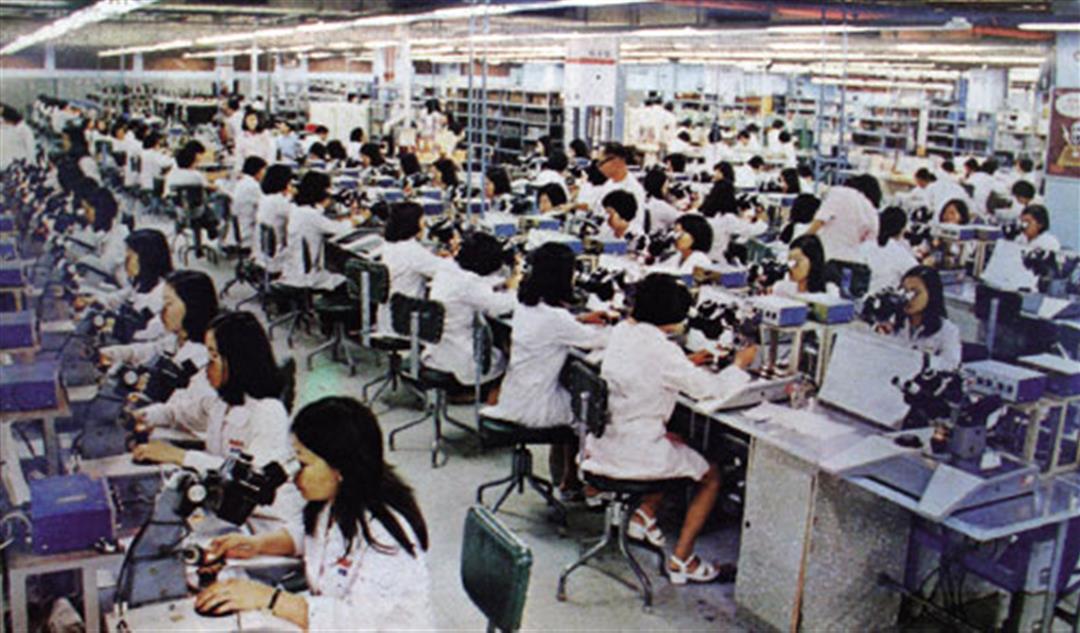
1970: The RCA Taoyuan plant goes into operation, making electronic parts for televisions. At its peak, the plant employs over 18,000 people.
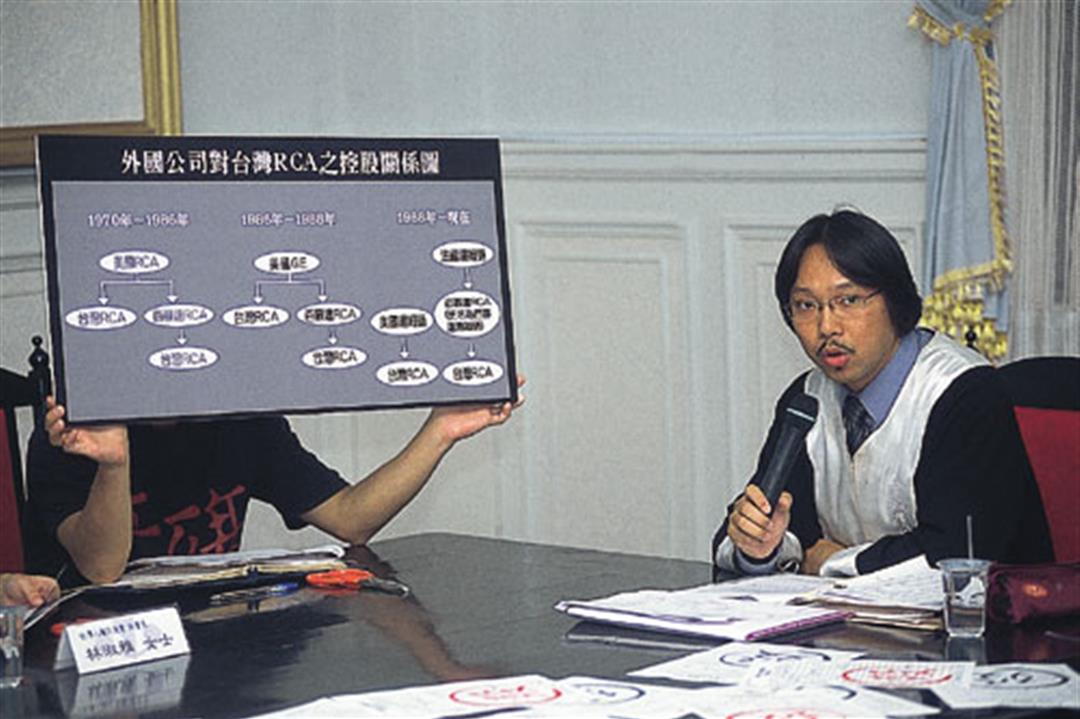
1986: The Taoyuan plant is acquired by GE, another US firm.
1988: The Taoyuan plant is acquired by Thomson, a French firm.
1992: Thomson discovers that the groundwater at the plant site has been contaminated by pollutants and closes the factory. Taiwan's Ever Fortune Group buys the land and prepares to develop a shopping center.
1994: Legislator Jaw Shau-kong reveals the pollution at the RCA plant; the EPA creates a task force to investigate.
1997: The government orders GE and Thomson to deal with the groundwater pollution.
1998: GE and Thomson issue a report declaring the impossibility of cleaning up the groundwater. Ever Fortune files a lawsuit in the US, claiming Thomson concealed knowledge of the pollution.
1998: The RCA Mutual Aid Association petitions the Control Yuan for an investigation. Victimized workers appear in person to charge that their working environment caused their illnesses. The Executive Yuan sets up an interdepartmental taskforce to coordinate research and financial support.
1999: The CLA begins an epidemiological study. The EPA begins a study to determine the impact of the pollution on the health of local residents.
2000: The Legislative Yuan passes the Soil and Groundwater Pollution Remediation Act. Hereafter, the EPA will be able to collect clean-up fees from petroleum, chemical engineering, pesticide, and electroplating companies. It is estimated that in the second year income from the fees reaches NT$1.3 billion.
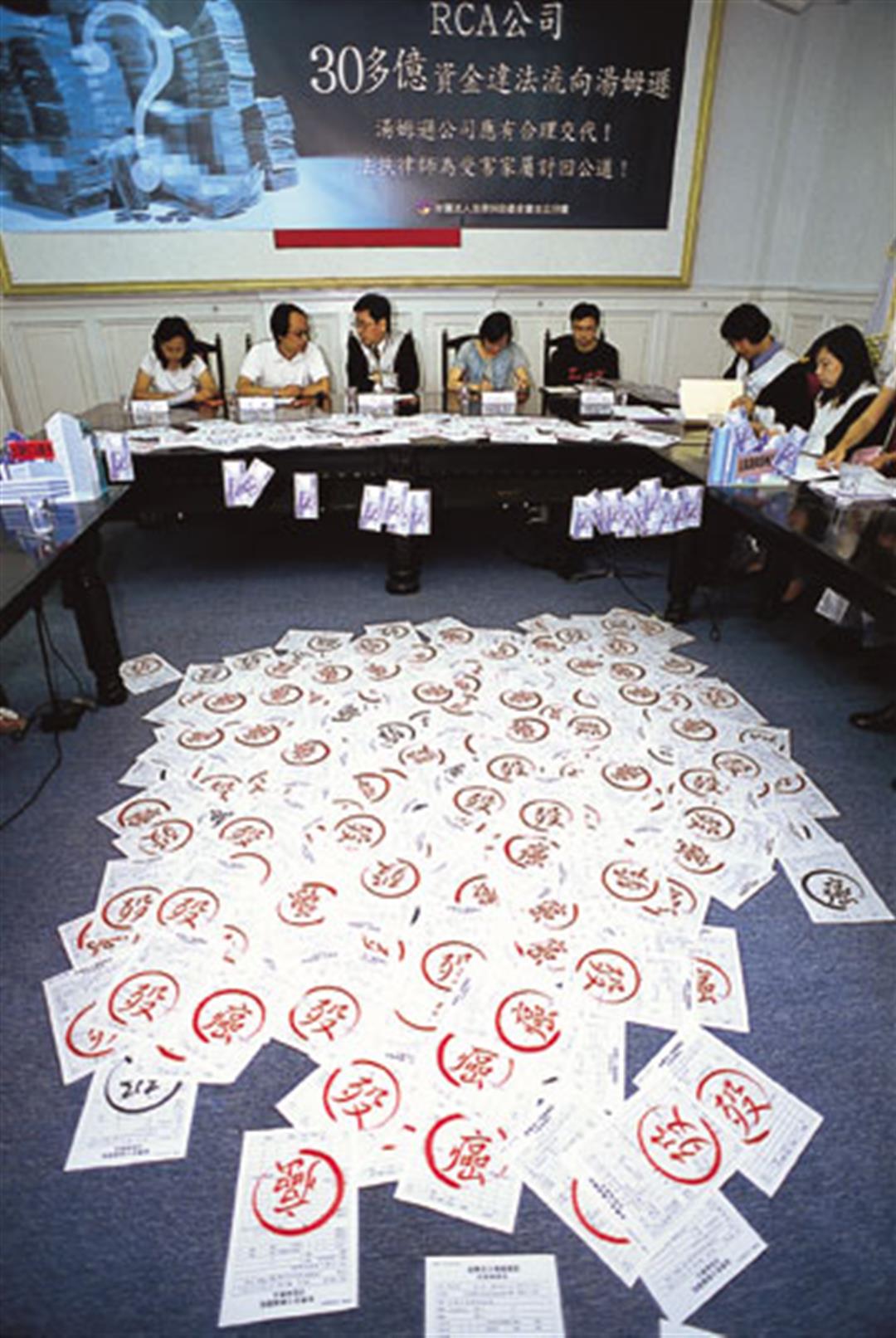
2001: Statistics show that 1375 former RCA employees have cancer; 216 of these have already died.
2002: A team of attorneys, working pro bono, is formed to help RCA workers. A civil suit is filed, but it is discovered that most RCA Taiwan assets have been extracted from Taiwan.
2003: The MAA terminates the work of the volunteer legal team.
2005: The MAA is reorganized and new officers are elected.
2006: The LAF takes the case.
2007: Thomson is added as a co-defendant, and the legal process continues.
(source: Taiwan Association for Victims of Occupational Injuries)



@List.jpg?w=522&h=410&mode=crop&format=webp&quality=80)
@List.jpg?w=522&h=410&mode=crop&format=webp&quality=80)