Let Your Heart Be Your Guide--Cheng Shu
edited by Ventine Tsai / photos Diago Chiu / tr. by Phil Newell
February 1993


Why are there casuarinaceae and acacia planted along the sides of the highway? What does it mean when there are dead dogs on the highway? What's the "Plum Flower Road"? What's the "Double Ten Fortune Entering"? Don't you know?!
The reason for planting casuarinaceae and acacia is because they are easy to plant and resistant to heat and can survive in poor soil, so they are called "vanguard trees." A dead dog by the side of the road means that there is definitely a gap in the mesh barriers on either side. The Plum Flower is the symbol used on national highways, so they are called Plum Flower Roads. Now let me ask you one: If the Sun Yat-sen Memorial Freeway is National Highway 1, then what's the number of the second north-south highway now being built? Number 2--NOT! North-south highways in Taiwan are all odd-numbered, with even numbers only used on east-west highways, so the second north-south freeway is Number 3.
As for the "Double Ten Fortune Entering," that's the Taishan Toll Station. This largest toll station on the highway has ten lanes going in each direction, with a record of over NT$7 million once collected in a single day. So naturally that's "Double Ten Fortune Entering"! Think back to 1979 when the highway was first opened to traffic--many people called it the "Detour," because it didn't go through the center of the city and you had to pay, so there didn't seem much prospect for a lot of traffic. But now it's invariably jammed every holiday, so you can see that what modern people care most about is time, not money.
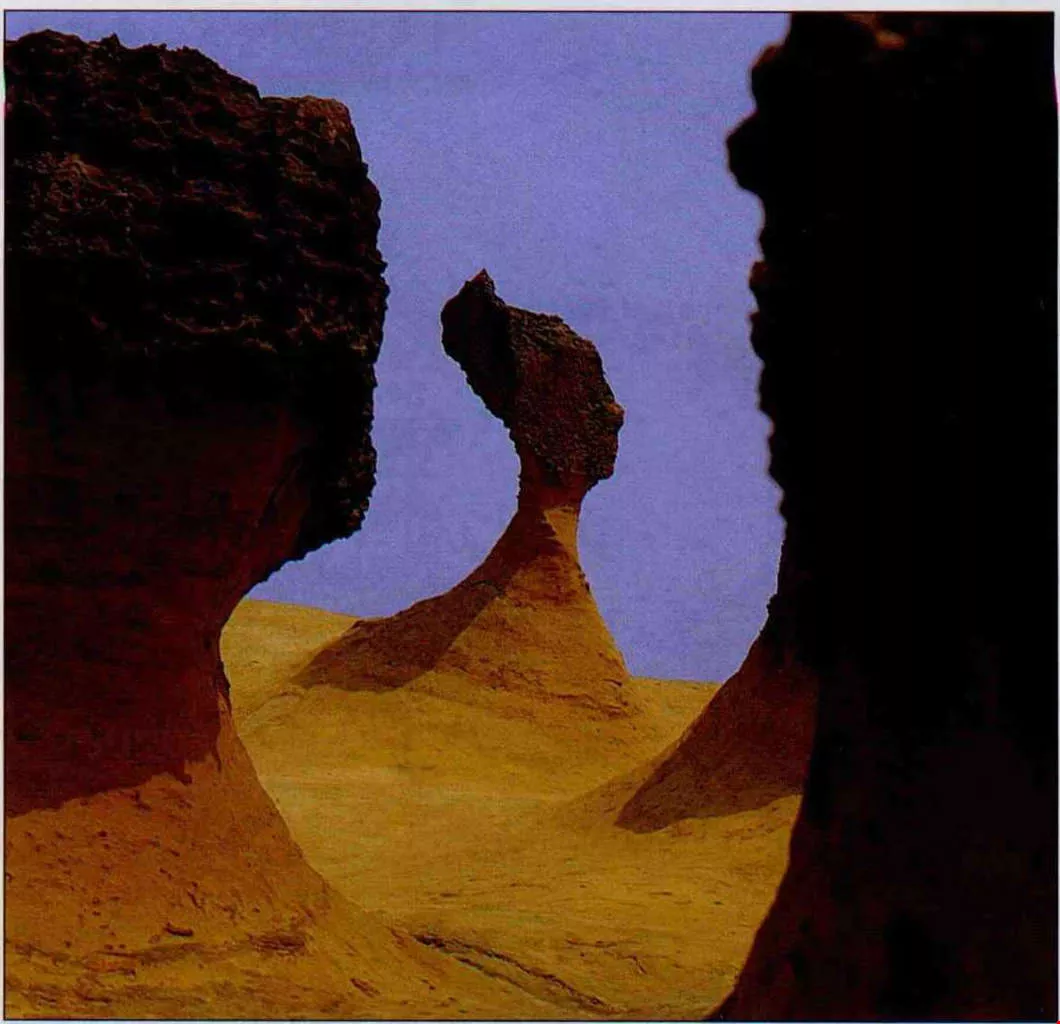
Though Taiwan is small, it is rich insights. One of the most famous sights of Yehliu is the "Queen's Head" carved out by wind erosion. (photo by ChengYuan-ching)
There's a reason for everything:
You only have to go traveling in central or southern Taiwan and you have no choice but to take the highway. Although it's just a highway, still when you go to the information center and see everything, lots of things to talk about just jump right out! "There's a reason for everything!" Whenever we go into a hotel or tourist area, I always ask the boss questions, and sometimes you can hear some pretty interesting stories.
My name is Cheng Shu. I've been leading tours since my first year in college. Now I'm a third year student in the Department of Tourism at the World College of Journalism. I've been probably everywhere in Taiwan except for Kinmen. I've been to Kenting almost 20 times.
The tour leader is responsible for explaining everything along the way, and for taking care of everything on the itinerary, and you also have to keep the group members entertained. The difference from a guide is that we don't have to have any certified qualifications. Our ranks are mostly filled by kids from the tourism departments of colleges and universities, or by people developed by the travel agencies themselves. Citizens last year took 50 million trips in the country. Besides company sponsored tours, there are also unconnected individuals who sign up to join the tours.
I study tourism, but the classes I take mostly concentrate on hotels and restaurants, and stress theory and concepts, and you could say they have nothing in common with the job of leading tours. Training for real work takes place in the "tour leader teams" organized by classmates, with the veterans teaching the ropes to the rookies and everyone exchanging experiences. Otherwise get instructed by senior tour leaders from the travel agency.
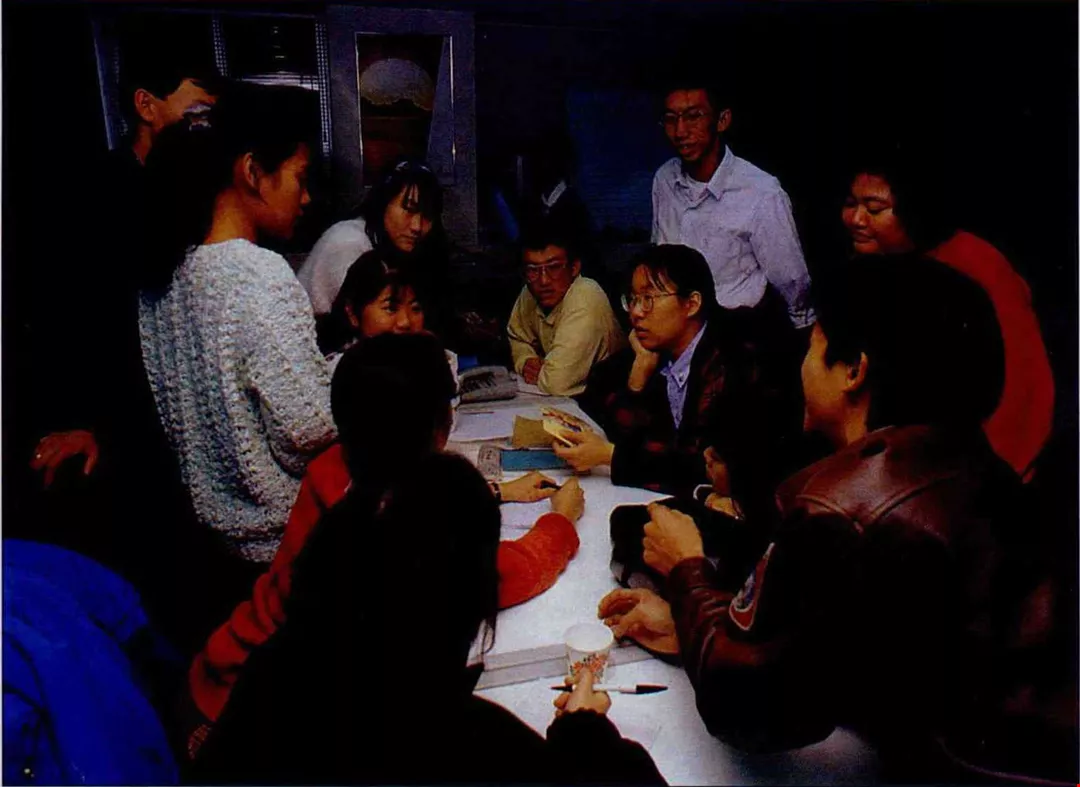
Without any special classes or any examination, the depth of a tour leader depends entirely on what each learns from the other and what each learns on his or her own.
Starting from life:
Tour leader is part of the service industry. For customers, it's not like going to class, where even if you don't want to listen, you have to listen. It's very harsh--they think, if you are boring, then you say what you want to say, I'll just sleep. Faced with a bus full of tour members, men and women, young and old, each with a different background, I mostly talk about things that are familiar to them.
Take for example the Ching-ching Tourist Farm. It exists because of the subsidiary line of the central cross-island highway. And if you talk about its founder, Teng Ko-pao, most people will immediately think of the book Foreign Land that they have read, and it seems that Ching-ching suddenly becomes a lot more intimate. Or if we go to Ilan, I first talk about Chin-liu Strongpoint. Many people have had friends or relatives do their compulsory military service there, and know a little something about it. From there you get questions like, why do so many place names in Ilan end in "strong-point," "barrier," or "walled city?" Then you can bring the conversation around to the history of the development of Ilan.
When in Wushe, every guide will tell the story of the aboriginal resistance against repression. When the group is walking into the forest there, they are hearing about how the aboriginal resistance fighters hung themselves from the trees one by one, because of the belief of the Tsao people that this way they could begin the life cycle anew. Because the trees are right there at their sides, the mood of the group members is especially solemn, and they will always associate the trees and the history together in their minds.
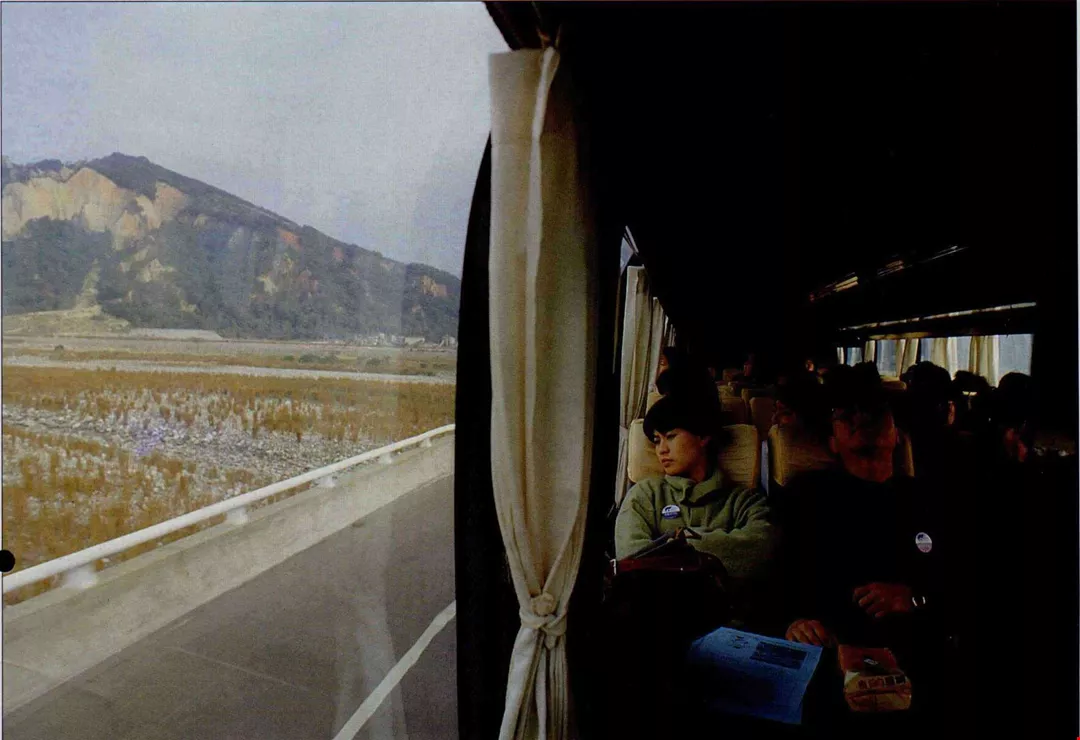
Passengers usually go to sleep as soon as they get on the freeway. How would they know that along the road are ten great manmade "wonders of the north-south highway.".
What you can't see:
Some special features are relatively easy to discover; others can't be seen with the eye. Take for example an historic old neighborhood. If you just use your eyes, it's just one dilapidated building after another. But that's not as good as seeing the architecture of Taipei City with all its strange and unusual variations, with each building being different.
Every location has its special foods. Ilan has the "four treasures": duck feet, gall and liver, golden jujube cakes, and bean jelly. Why are these all pickled foods? That's because of her history and communications. In the past, except for sea routes, Ilan's only link with the outside was an old dirt track, so it wasn't easy to get around. The best foods had to be able to stand extended journeys without spoiling, so it was best to pickle them first. The "iron eggs" of Tamsui have to be soaked until they are shrunken and hard, while Hsinchu meatballs are made up of the odds and ends of many types of meat. These things all reveal the sparing, frugal lifestyle that took shape under the pioneering character of the early residents of Taiwan.
Often office worker types will, as soon as the get to the tour stop, either start singing karaoke or play cards all night, so the next day they spend snoring away. I don't understand why they go through all the effort of coming so far just to play cards. Often older tour guides say that travelers need education. I think that most of the people on the bus are probably older than me, so I can only express my feelings and share with them. I figure if I feel moved by something, then I should be able to move others!
Take for example the hanging banyan trees in Kenting National Park. The roots of one tree hang down from the rock walls, and are very long. They have a history hundreds of years long. Ever since the first time I went there as a middle school student, I've had my picture taken with that tree. Year after year, as I've grown up, the banyan stands by my side in confirmation. In the future I want to take my children there to take their photos. It's like we have an old friend in Kenting National Park. And when the memories take root, Kenting will no longer be just a tourist attraction to my family.
What kind of place would you go back to?
I often wonder what kind of place would attract people who've already been there to go back again? If you know a little bit more about a place, if you have a friend there, then besides appreciating the beauty, you can also have some interaction with the people, affairs, and things of that place, and bring a little of that sentiment back home.
Taking a tour group to Penghu, I like bringing up the shops called "Island People Complex" and "Penghu Story Wife." The owners of the shops are all natives of Penghu who love their home and returned to start businesses. If you want to talk about the special characteristics of a place, of course the scenery counts, and so do the special foods, but people should count even more. This is because you can only see the real ambience of a place through its people. After we meet these residents, we are even more willing to pay a return visit. And I share this attitude with my tour group members.
I remember one tour group to Tungpu. One girl lived right next door in Shuili, and I asked why she had never been to Tungpu before. She loudly responded, "not only haven't I been here before, I hadn't even heard of this place!"
I was really surprised. How is it that we get so much education and learn so many things, but we don't specially learn about or see the place we are born and raised. I include myself here. I never understood why Taiwanese songs were so popular. I rarely heard anyone use Taiwanese to talk around me. And Taiping Mountain and Tsaoling aren't very far from Taipei, yet in our schoolbooks they are as remote as San Francisco or Tokyo.
I'm very happy that my work forced me to get to know Taiwan, and to introduce Taiwan to others. But I often wonder, is it only tour guides who should get to know Taiwan?
[Picture Caption]
p.114
"A guide isn't a giving a classroom lecture. You have to attract and keep the interest of the tour group. "Guide Cheng Shu likes to start off with things familiar from daily life as a way to get into the special features of Taiwan's sights.
p.115
Though Taiwan is small, it is rich in sights. One of the most famous sights of Yehliu is the "Queen's Head" carved out by wind erosion. (photo by ChengYuan-ching)
p.116
Without any special classes or any examination, the depth of a tour leader depends entirely on what each learns from the other and what each learns on his or her own.
p.117
Passengers usually go to sleep as soon as they get on the freeway. How would they know that along the road are ten great manmade "wonders of the north-south highway."