

Kinmen island was first inhabited more than 1600 years ago. And although it only has a population of about 50,000, more than 200,000 people from here have emigrated to Taiwan, Penghu and various places in Southeast Asia. Kinmen is a renowned fountainhead of the overseas Chinese. Because most of the villages of Kinmen are made up primarily of a single clan with a common surname, the entire community often counts as one big family with a shared blood line. Therefore, the local people are particularly concerned about clan relations. There are more than 160 ancestral temples, covering every single surname, the most of any county in the Taiwan-Fujian area. To this very day, clans hold a powerful sway over interpersonal relationships and political activities in Kinmen.
According to historical records, people from China's Central Plains began to move to Kinmen in the year 317 AD to escape the ravages of war. Six clans, surnamed Su, Chen, Wu, Tsai, Lu and Yen, were the first to settle on the island.
The Tang dynasty established an administrative government on the island at the muma level. The Song dynasty set one up at the dutu level. When the Song dynasty fell to the Mongols, some idealists unwilling to submit to foreign rule escaped to Kinmen. And when the Manchurians toppled the Ming dynasty, Zheng Chenggong (Koxinga) used the island as a base to oppose the Qing and restore the Ming. The people have always considered themselves to be remnants of the original Chinese of the Central Plains. Learning has also flourished on Kinmen ever since the Song Dynasty, when the famed Confucian scholar Zhu Xi, as governor of Fujian Province's Tong'an prefecture (of which Kinmen was a part), established the Yen Nan academy on the island. During China's imperial period, 43 locals passed the imperial exams to become mandarins, bringing to mind the ancient saying, "A population of less than 100 has produced 36 officials."
There are more than 180 surnames in Kinmen, and the ancestral temples are a declaration of the united spirit and territoriality of each clan settlement. This is why there are more than 160 temples, the oldest going back more than 400 years. They are symbols of clan cohesion. Before the Nationalist government retreated from the mainland in 1949, the remittances of Kinmen emigrants living in Taiwan and Southeast Asia were an important source of economic support for each clan. Many of the mansions in Kinmen Town and many of the schools in the villages were built with remittances. Overseas Chinese have also frequently donated funds to restore their ancestral temples. This is one of the reasons the island's temples are so well preserved. To this day, emigrants spread throughout the world still return to Kinmen to worship their ancestors.
In order to maintain the inner gravitational force of the clan, each clan of Kinmen still regularly refurbishes its temple. The largest Chen clan temple, located in the heart of Kinmen Town's busiest area, was completely restored to a lustrous, new appearance this summer, demonstrating that this clan has a flourishing population and a strong cohesive force.
Yang Shu-ching, editor of Kinmen Studies," estimates that over 80% of the villages in Kinmen are "one surname towns." Because all the people in each village are related by blood, to this day if any family has a wedding or funeral, it is still viewed as a big event for the village, which mobilizes to help arrange all the details. And the elders of the village still perform the function of settling agreements and solving disputes. Private family schools have also been established in many villages. For example, until a few years ago Harvest Hall, run by the Tsai clan of Chiunglin Village, was always used as a child care center. During the busy farming seasons, they would bring all the children of the village there to be looked after.
Yet relations among the various clans of Kinmen have not been entirely harmonious. According to records included in An Examination of the Southern Min Dialect, Including an Examination of the Kinmen Subdialect written by Hung Chien-you, inter-clan conflicts, either for material benefit or other reasons, often occurred from ancient times up to 1937, when Kinmen was occupied by the Japanese.
In the current day and age, competition among the clans can still occasionally rear its head, and is particularly evident during elections. The Kinmen County bureau of the Democratic Progressive Party was just founded this July 1, and county party chairman Weng Ming-chih says that the clans went into action even before internal party elections had been held. Certain individuals contended that seating in the party headquarters should be arranged according to clan. Weng recounts one joke that is popular in Kinmen: The biggest party on the island is the Chen Family Party. Number two is the Li Family Party. Only then comes the Kuomintang.
Chen Tsang-chiang, a commissioner in the ROC's Fujian provincial government, notes that all the elections for county administrator and council members only have a single winner, and during a number of election campaigns, the two major candidates have been members of the largest clan, the Chens, and the second largest, the Lis.
"Every time the gap is around 2000 votes, which is exactly the population difference between the two clans. Although no one has done a precise calculation, the people of Kinmen believe that this is related to the support everyone gives their own clan," he says. "And during this year's presidential election, Chen Shui-bian won more than 700 local votes, breaking all previous records for votes gained by the DPP. Many people believe this is because before the election, Chen Shui-bian went back to his ancestral temple in Kinmen and paid homage to his ancestors, and gained a lot of support from his distant relatives in the Chen family."
Lee Juh-feng, a New Party Legislative Yuan member who twice lost in Kinmen County administrator elections, says that although clans perform many positive functions in Kinmen society, the dominance of clans over the exercise of political power has meant that people from minor clans frequently can only play the role of junior ally or balancer and find it hard to rise to prominence themselves. The impact this has had on Kinmen is as severe as the influence of ethnic identity on Taiwan.
Yet Lee also notes that although clans have a certain influence, in the last several years, the rise of "black gold" (links between organized crime, big money, and politics) and vote buying is testing traditional clan cohesiveness. On Taiwan, urbanization continues at a rapid pace, and except in a few rural places, surname affiliation has long ceased to play an important role in society, diluting emotional ties between people within communities. Kinmen is fortunate to be able to maintain the function of traditional clan relations.
The original inhabitants of Kinmen, who strictly abided by the Book of Rites-"When handling clan affairs, a good person places the ancestral temple first, the granary second, and his living quarters last"-have been gone for many years. Now their descendants must try to develop the power of clans in a positive direction, and not allow them to be wiped out by the influence of local urbanization. They are about to be put to the test of time.
p.28
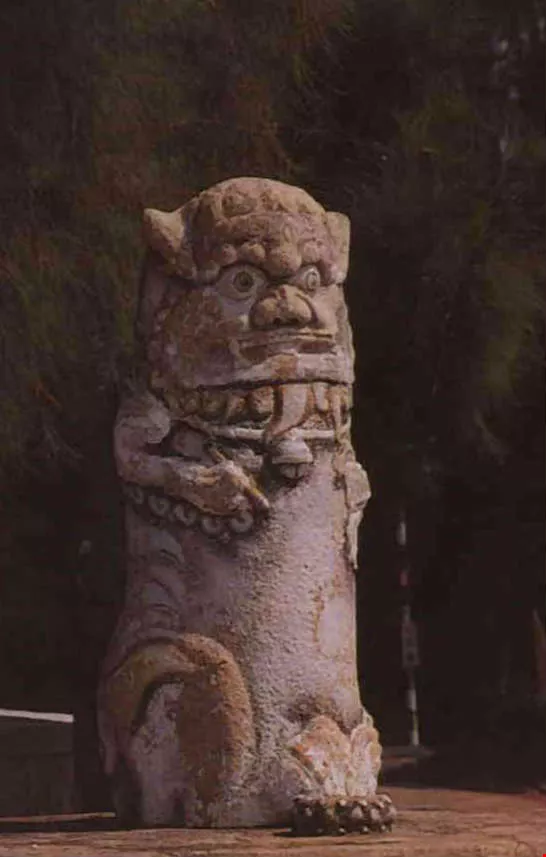
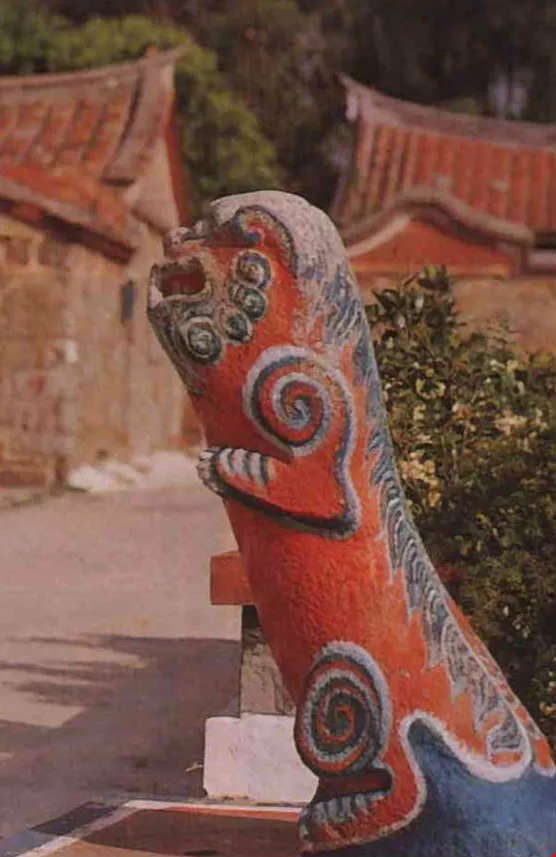
The protective lions of Kinmen come in various forms: Some are awe-inspiring, others the essence of loyal watchfulness, others cute. But they are all equal when it comes to protecting the local residents.
p.28
Chen is the most common surname in Kinmen, and the Chen clan is powerful. This shrine to Chen-surnamed ancestors has been in Chincheng for nearly 100 years.
p.30
You can see traditional architecture everywhere in Kinmen. Rural traditions help keep clans closely-knit.
p.30
In Kinmen, modernity and tradition stand side-by-side. This elderly woman with bound feet stands witness to the rich culture of clan shrines.
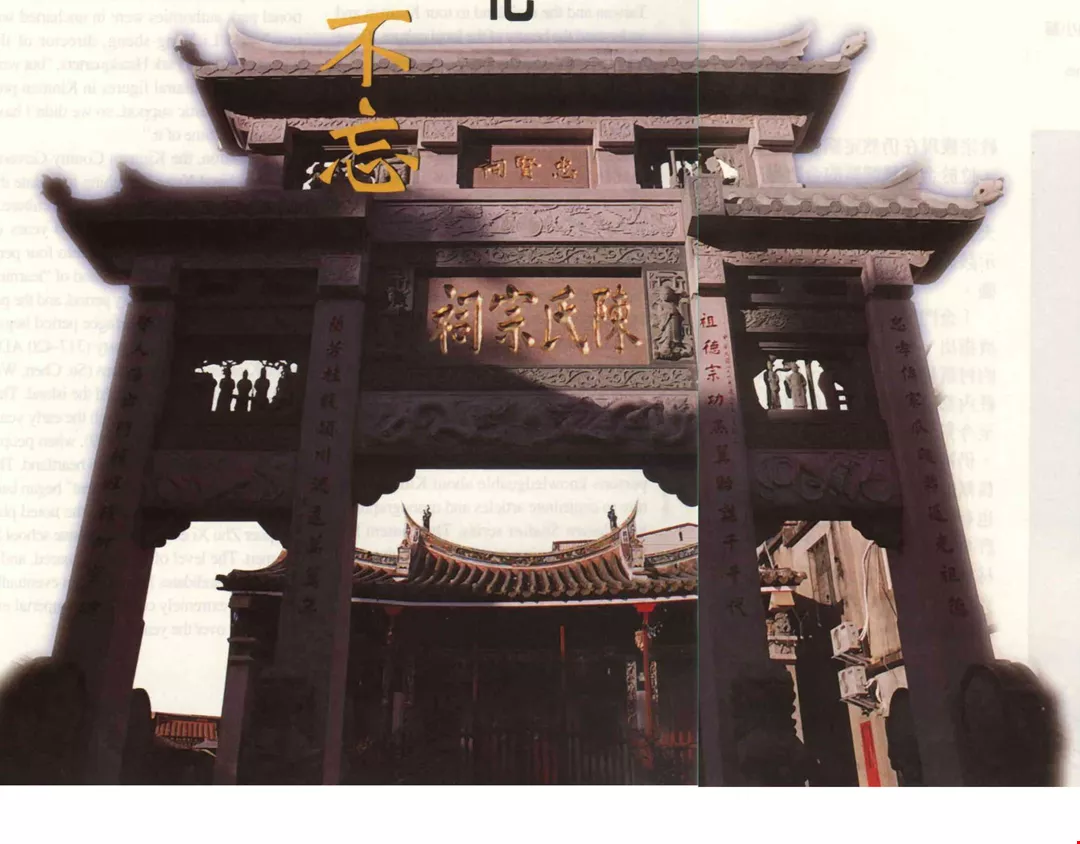
Chen is the most common surname in Kinmen, and the Chen clan is powerful. This shrine to Chen-surnamed ancestors has been in Chincheng for nearly 100 years.
Chen is the most common surname in Kinmen, and the Chen clan is powerful. This shrine to Chen-surnamed ancestors has been in Chincheng for nearly 100 years.
Chen is the most common surname in Kinmen, and the Chen clan is powerful. This shrine to Chen-surnamed ancestors has been in Chincheng for nearly 100 years.
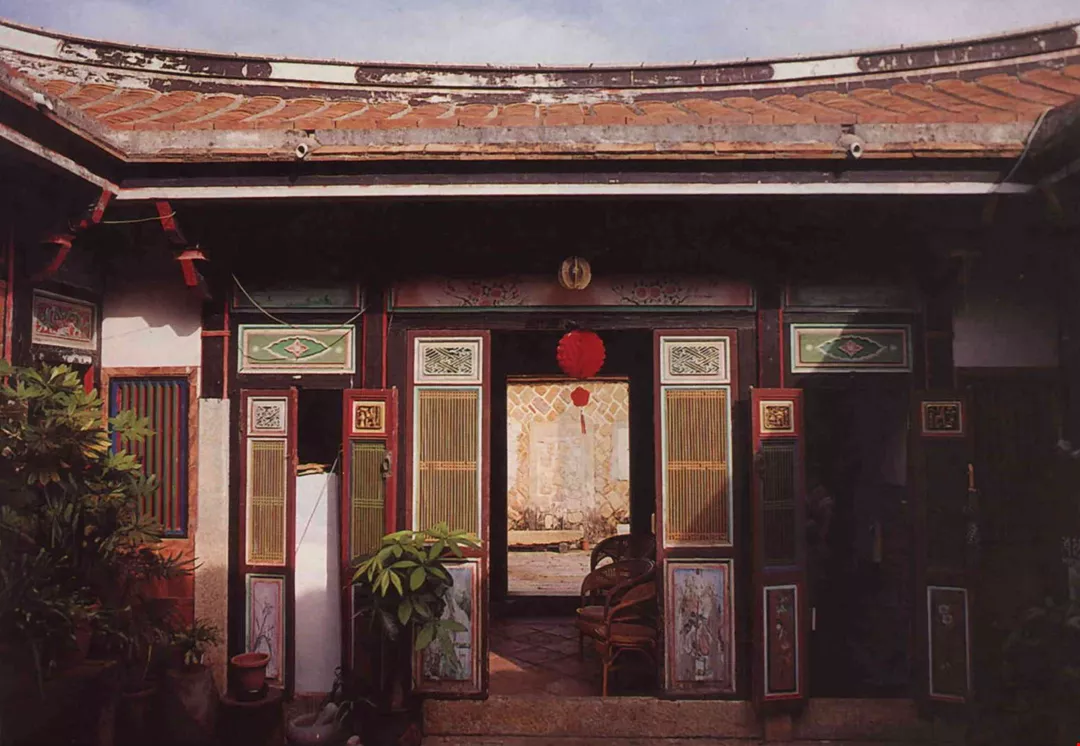
You can see traditional architecture everywhere in Kinmen. Rural traditions help keep clans closely-knit.
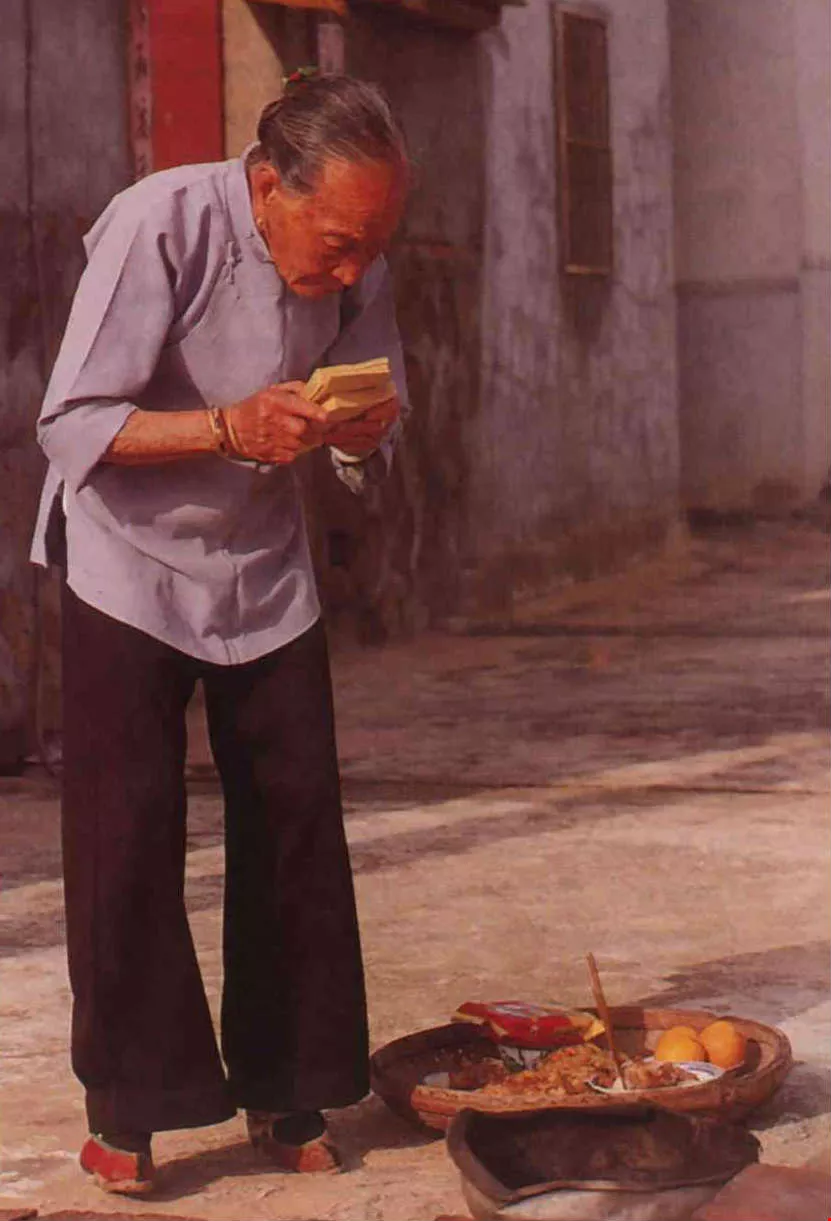
In Kinmen, modernity and tradition stand side-by-side. This elderly woman with bound feet stands witness to the rich culture of clan shrines.

@List.jpg?w=522&h=410&mode=crop&format=webp&quality=80)


@List.jpg?w=522&h=410&mode=crop&format=webp&quality=80)
@List.jpg?w=522&h=410&mode=crop&format=webp&quality=80)
