First Chemical Works
From Chemicals to Cosmetics
Kobe Chen and Teng Sue-feng / photos Chin Hung-hao / tr. by Chris Nelson
March 2013
Once filled with the pungent odors of chemicals, the shop nowadays displays high-quality, low-priced beauty products including rose water, lavender oils, hyaluronic acid creams, and copper peptide serum. First Chemical Works, a traditional chemical supply store that has been a fixture of Taipei’s Tianshui Road for 50 years, has seized a “beautiful” opportunity to transform.
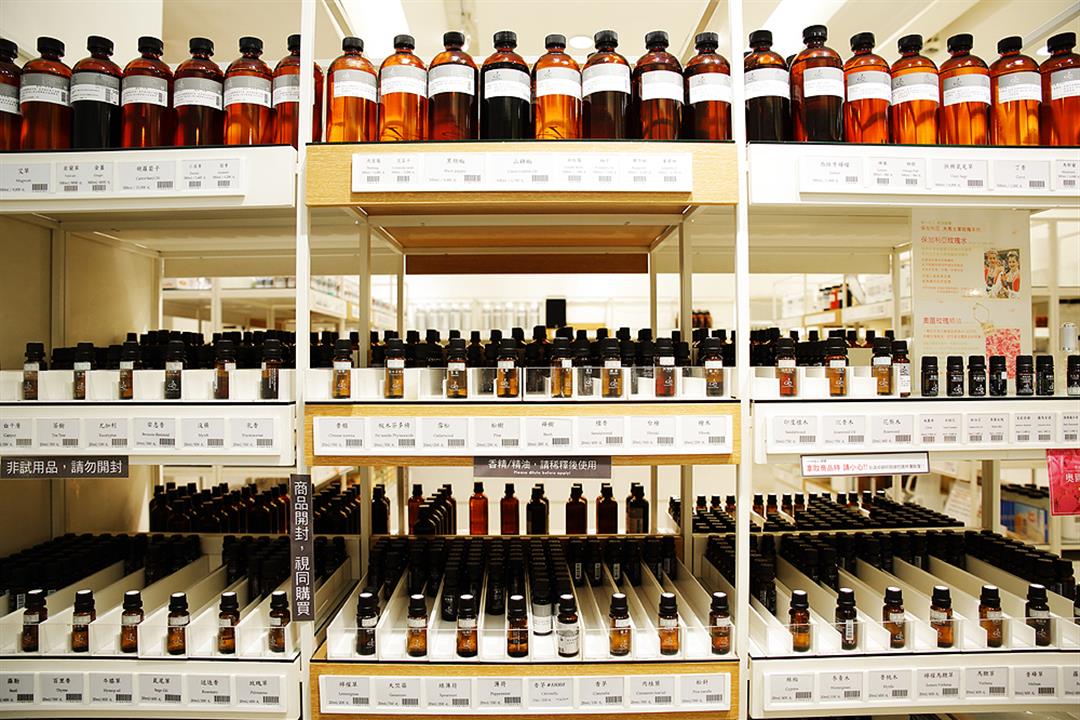
First Chemical Works’ flagship store, on Yanping North Road in the commercial district behind the Taipei train station, features large, well-lit display windows and clinical-white interior decor, contrasting with its drab exterior walls and the surrounding old neighborhood, creating an “old meets new” aesthetic.

Simple, unadorned packaging gives First Cosmetics’ myriad products a succinct beauty.
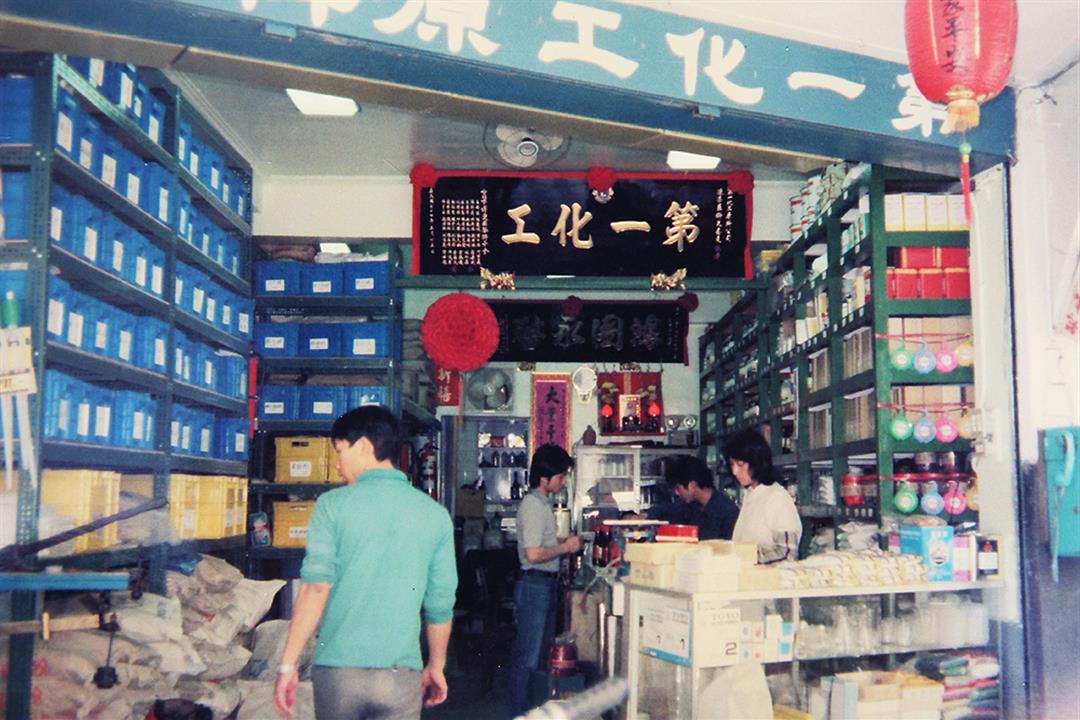
First Chemical Works, founded in 1963 by Chen Tien-yi and his wife, started out as a wholesaler specializing in industrial chemicals such as sulfuric acid and sodium hydroxide. At that time, Taiwan’s economy was just taking off, and the chemical and plastics industries boomed, churning out all kinds of everyday products. First Chemical Works’ clientele ranged from textile dyeing and finishing works, electroplating plants and restaurateurs to doctors and research labs. Because of its exhaustive stock of products, it was considered one of Taiwan’s best industrial chemical shops.
In the 1980s, Chen’s three sons returned home to help out after completing their military service. The father of Gail Huang, who is currently vice president of First Chemical Works’ subsidiary First Cosmetics Works was also an industrial chemicals importer, and because of the business ties between the two companies, Gail got to know Chen Tien-yi’s son Chen Pengzhou. In 1991 she married into the Chen family, and immediately started helping with their business.
A graduate in business administration from Fu Jen Catholic University, Huang understood well a key business principle: “to not advance is to retreat.” As the family business approached its 30th year, she started on a quest to transform and revamp the old firm, including computerization, establishing a factory, and opening new shop locations.
Recalling the appearance of the old shop on Tianshui Road 20 years ago, Huang relates how they had over 5,000 different products, but all information, including places of origin, applications and prices, was kept in her husband’s elder brother’s memory, on notepapers and in handwritten ledgers, jumbled and unsystematic.
Huang persuaded the family to computerize the product information, and started putting things in order.

During the transition, Huang had a simple intention: to clean up the general public’s ingrained negative impression of industrial chemicals.
In 1992 in Taiwan there was an explosion in a fast-food restaurant, and later a doctoral student at a national university killed a love rival and attempted to dispose of the body with aqua regia, making the headlines. “Industrial chemicals were always appearing in news stories related to crime or disaster,” says Huang with resignation. At that time, chemical supply shops had a negative social image.
Huang stresses that most chemicals are good helpers in daily life. For instance, the food service industry uses strong alkalines to clean grime off cooking surfaces. After all, ordinary sodium bicarbonate is a powerful household cleanser. “Change isn’t something that can be achieved overnight, but requires constant observation of the market, adjusting one’s strategy, and allowing things to gradually come to fruition.”
Taiwan’s switch to two-day weekends in 1998 spurred a DIY fad. In 2002, the cosmetics guru Niu Er published several hot-selling books on DIY beauty, unmasking the mystique behind beauty products, appealing to beauty-conscious women’s concerns about their skin, and building personalized beauty regimens.

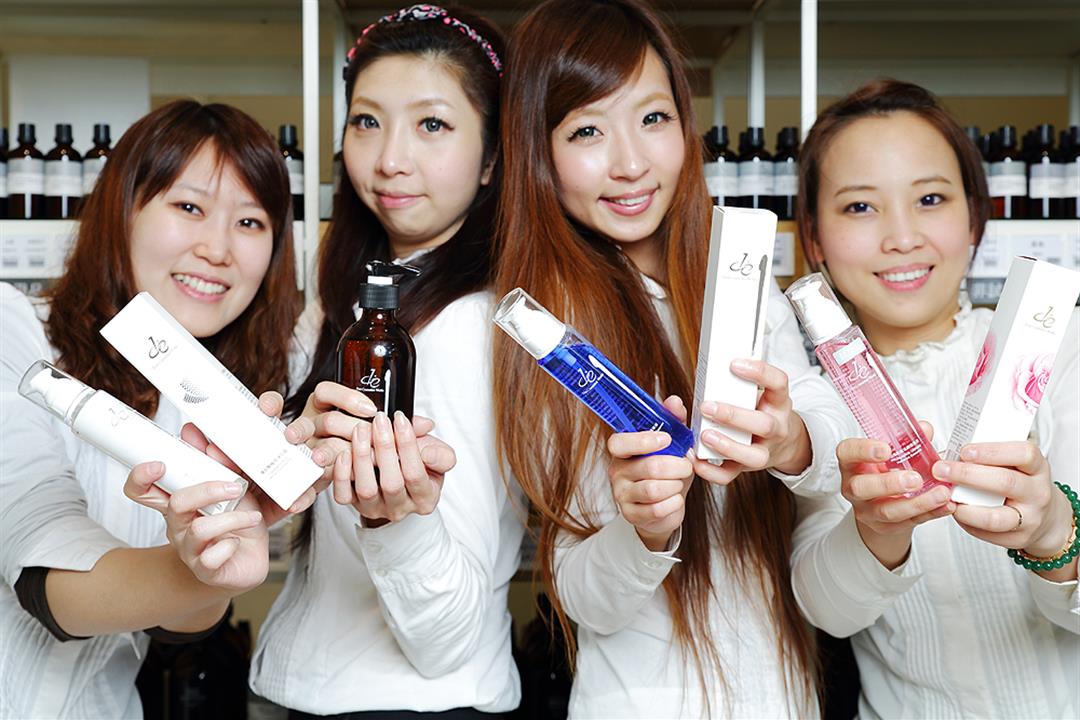
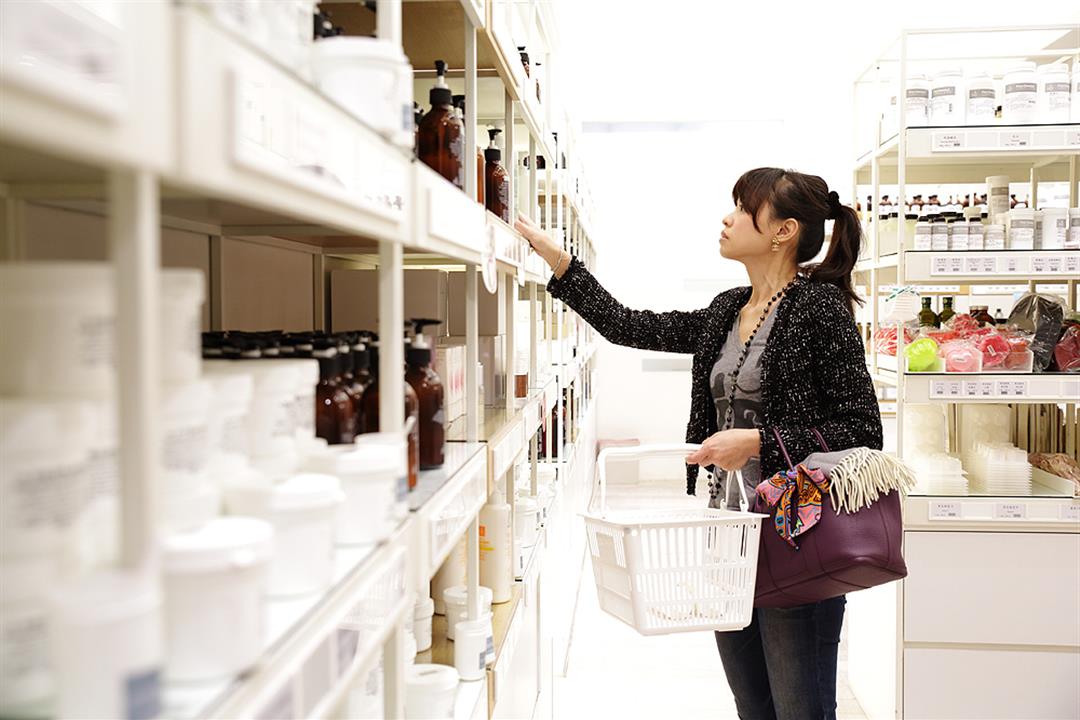
The bright, orderly store and genial sales personnel attract the patronage of numerous beauty-conscious women.
Niu Er can be thought of as a key figure in First Chemical Works’ decision to seize this “beautiful” business opportunity.
While researching his beauty books, Niu Er brought a list of raw materials to the shop. Prior to his visit he had searched high and low with mixed success, but he managed to find everything he needed at First Chemical Works. His DIY books sold well, and soon thereafter female consumers started swarming to the old Tianshui Road shop, books in hand, looking through the shelves for what they needed.
“In the early years when we imported a metric ton of a certain chemical product, we might have sold it all to just one customer; now that ton can meet the needs of over 1,000,” says Huang. To serve such a broad base of consumers, they started transferring the substances from the original 25-liter containers into 100-milliliter bottles, more suited to the amounts needed by consumers. They also provided special suggestions to different categories of people: for instance, they warned that customers with sensitive skin should avoid using perfumes and dyes.
To better serve consumers, First Chemical Works started offering an online ordering and delivery service. Thankfully, Huang had insisted on spending hundreds of thousands of NT dollars to computerize the product and storage data, or else putting thousands of products on the Web would have been nigh unto impossible.

First Chemical Works’ factory in Guishan, Taoyuan County, sports a modish exterior, as exquisite as a luxury residence.
In 2000, First Chemical Works started importing natural essential oils, carrier oils and other raw materials for beauty products from places like Austria, Bulgaria and Australia.
“Our competitiveness is in our ability to directly import raw materials, which we order by the ton. The most expensive Bulgarian rose otto costs millions of NT dollars for five liters,” says Huang. Ten years ago, when aromatherapy started becoming popular, they heavily promoted essential oils. At that time, numerous consumers felt that the essential oils sold at the shop were cheap (NT$200–500 for 20 ml) so they must be of second-rate quality. In fact it was because they imported in bulk, bringing costs down.
In 2004, Huang had the idea of building a proprietary brand in cosmetics, and in October founded “de.” The name “de” is derived from the Chinese word diyi—the “first” of the company’s name—which is pronounced like the names of the English letters “d, e.” And in French, de means “from,” symbolizing the importance the company attaches to the sources of the materials. This fits with her idea of conveying the image of naturalness, simplicity and freedom from toxic ingredients.
The company has found its niche, eschewing forceful advertising and luxurious packaging in favor of simple, down-to-earth prices and natural ingredients. Top-class Q10 balsam, for example, costs about NT$2,000 for 30 ml on the market, but at de the same grade of product is NT$1,000 for 500 ml.
In 2005, an 800-ml bottle of Bulgarian rose water from de won a national award for quality, making it a highly sought-after commodity. Rose water is a byproduct of rose oil distillation, containing numerous water-soluble compounds and no additives. It’s a simple product with excellent humectant properties.
The packaging of de products is reminiscent of the British brand The Body Shop, using brown and white glass bottles that are simple, 100% recyclable, and environmentally friendly.

Early on the old shop on Tianshui Road, like other chemical supply stores, was piled high with assorted compounds, prompting people to give it wide berth.
During early family discussions of the form of the bottles, one family member asked why the colors couldn’t be a little fancier.
“We have so many products. If we were to use more multicolored packaging, it would be too overwhelming to the eye,” said Huang.
The brand’s simple style was extended to the factory the company built in Guishan, Taoyuan County, in 2010. Occupying just shy of 2,500 square meters, the exterior of the three-story factory exudes an understated elegance.
“Our idea is to make clear plans, then proceed step by step,” she says. The factory, costing over NT$100 million to build and managed by Huang’s husband, boasts green energy exterior walls imported from Germany and ample natural lighting, while also blocking direct sunlight. The ventilation system expels hot air and stops moist air from getting in. And to maintain product stability and quality, no expense is spared on the equipment either. For instance, the water pipes are designed to prevent the accumulation of sediments: the curvature of each bend has been meticulously specified. And each stainless steel pipe costs over NT$1 million to make.

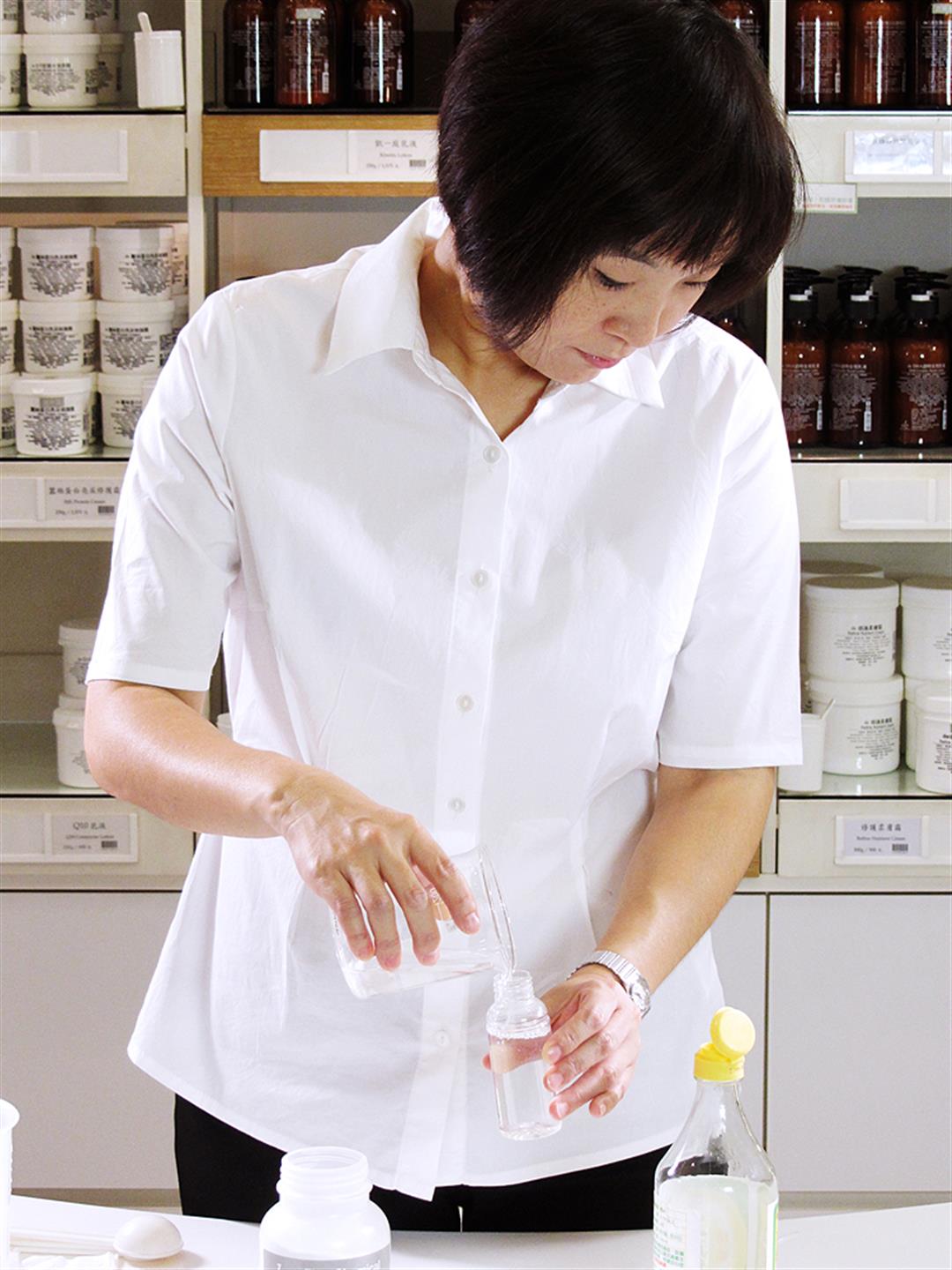
First Cosmetics Works vice president Gail Huang started in the business by learning all about the chemical industry. Now well versed in the formulation of skin care products, she aims to enable consumers too to prepare high-quality, low-priced cosmetics from simple materials.
Once the old firm had established its new reputation, department store managers came in droves asking if de was interested in renting sales counters.
In 2005, de was invited to open a counter at Global Mall in Zhonghe, but Huang, a pragmatic individual, felt that they weren’t adequately prepared, instead deciding to open their first branch on Yanping North Road as a training ground for amassing storefront experience.
When they did come to set up their first counter in a mall, with no experience in such operations, issues such as decor, product packaging, shelf stocking and employee training were entirely new to them. When they had just opened, a floor manager of the mall asked Huang what their sales targets were. Her reply of “What’s that?” quickly became an anecdote in the industry.
The annual turnover of Taiwan’s cosmetics market is estimated at over NT$70 billion. Individual product prices vary greatly, from a few hundred NT dollars for off-the-shelf items to premium beauty products going for over NT$10,000 a pop. In seven short years de, located comfortably between the upscale and downmarket extremes, has been steadily opening outlets from north to south, including in popular shopping centers such as Kaohsiung’s Dream Mall and Taipei’s Q Square. Currently there are 11 outlets in all.
Despite being a newcomer, the company’s average annual revenues per outlet come to over NT$30 million. This decade-old local cosmetics brand saw revenues of over NT$400 million in 2012, for a profit rate of over 30%. These are eye-popping figures.
A model of transition“The advantage of having a family business is greater flexibility. When we have different ideas, we can just sit down and discuss them.”
Huang says that when the brand was just established, friends and relatives were unclear about what she was doing. Seeing how much money was being spent on developing the shop, as well as its pure white interior design, people had different opinions. But they felt at ease after seeing the results. Currently the duties of the family members are as follows: Huang’s husband’s elder brother is in charge of industrial chemicals, while the brother’s wife manages finances, and Huang’s younger brother-in-law runs the shops. Huang’s husband runs the factory, and Huang herself is responsible for product development and marketing. In this way, they can work together seamlessly.
Several years ago someone asked Huang out of curiosity whether she had thought about expanding overseas. Huang said no: their goal at the current stage is to invest capital into factory equipment and employee training, in order to strengthen business competitiveness.
In 2011 the company invested millions of NT dollars in an enterprise resource planning (ERP) system to gain full control over product information from storage and sales to accounting. Last year they started working toward cGMP certification to ensure that their factory design, equipment and product purity conform to health and safety standards.
Standing on a basis of tradition and looking forward in its transition from industrial chemicals to cosmetics, First Chemical Works is riding on the beauty train. Filled with new product ideas and dreams, the old firm has found a unique position in the brutally competitive beauty products market.