Chien Chen’s Shining Take on Our Silver Years
Su Hui-chao / photos courtesy of INK Publishing / tr. by Scott Williams
June 2013


From the Oscar-winning Amour to the Hong Kong Film Awards best picture A Simple Life, works dealing with aging and the aged have attracted a great deal of both popular and critical attention over the last few years.
Chien Chen, one of Taiwan’s most important contemporary essayists, has also leapt into the fray with Who’ll Be Waiting When You’re Gray?, her recently published literary examination of the aging, illness, and death we will all eventually experience.
Having already seen the passing of many friends and family members, Chien addresses questions of life and death and society’s responsibilities in hopes of persuading Taiwan, where wheelchairs now outnumber baby strollers, to be more aware of and spend more time with its elderly.
You can’t turn back the clock. Life moves inexorably forward from one objective to the next before reaching its ultimate destination, stillness. Stillness is the endpoint of aging. Stillness is death.
Chien’s writing career has itself flowed like a stream, its headwaters pouring forth from Shui Wen, a collection of cutting-edge essays published in 1985 by the then 24-year-old writer that took Taiwan’s literary community by storm. Now that fans who were in their teens when Shui Wen came out are staring 50 in the face, Chien has hit them with Who’ll Be Waiting When You’re Gray? to remind them that old age is just around the corner.
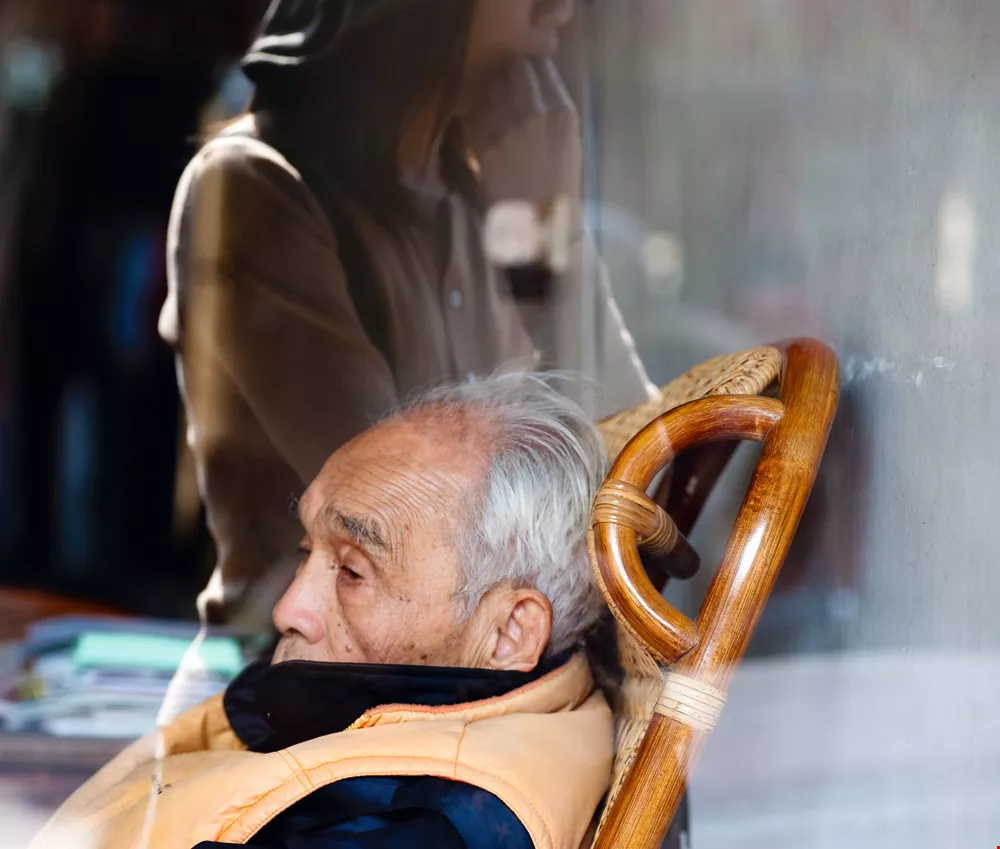
There’s no avoiding the issue of caring for the aged.
There’s no escaping the passage of time. It’s been nearly 30 years since the whip-smart young author of yore published her first book, and through the years she’s experienced all life has to offer. Though her face has hardly aged at all, it is now framed by gray hair.
The silver-coiffed Chien has brought all her prodigious experience, broad knowledge, penetrating insight, and literary imagination to bear on her most recent book, an explosive sui generis work flung at Taiwan—which will formally enter the ranks of aged societies in 2017—like a hand grenade.
Chien’s publisher describes it as a “comprehensive handbook” for the living, an “encyclopedia” for the aged, a “care guide” for the infirm,” and a “prayer” for the departed.
Authors are exceptionally sensitive to changes in their surroundings. Experiencing the city through the eyes of a writer and “amateur vagabond” unconstrained by a nine-to-five schedule is truly something different. She sets out from her Muzha neighborhood on a bus filled with grayhaired seniors, all older than she is. “My own gray hair isn’t enough to win me a priority seat on the bus,” she writes, going on to observe that wheelchair-bound seniors often cause traffic jams on the road through the market. “Three wheelchairs can paralyze a street.”
Throughout her 30-year writing career, Chien has offered up sharp observations on each stage of her life to that point, covering everything from her teen years to her marriage and experience of motherhood.
The book grew out of more than her neighborhood encounters. Over the course of just two years, Chien attended 21 funerals.
According to official estimates, senior citizens will account for 14% of Taiwan’s population by 2017 and 20% by 2025. “What can our society do to hold back the rising tide of agedness? What can you or I do? What can the government do?” She worries that the rest of us aren’t worried enough. We haven’t prepared at all and are going to have to figure it out on the fly.
Chien observes that the doubling of life expectancies has effectively turned old age into a completely new stage of life, its differences particularly apparent to those who have lost the ability to get around on their own.
After exploring the issue, she reaches this conclusion: “Aging rocks families to their core, and will rock our country in the same way. We have no savings, we have no plan, and we have done all we can to avoid facing this looming problem. When it comes, it’s going to be a disaster.”
Chien decided she was going to write a book on life, aging and death five years ago, but was determined to address the subject in more than a superficial fashion.
That led her to spend the next four years on reading and research, filling four volumes with notes on the venues in which we live, grow old, and die, before developing a structure and settling in for a year of writing. That year happened to be one of the most difficult of her life. She lost her father-in-law, saw her mother-in-law become infirm while her paternal grandmother became senile, and watched her son sit for his high-school entrance exams. She felt like a soldier, rushing to the front with rifle in hand at every alarm. In the lulls between battles, she hunkered down in the trenches and wrote. By the time she finished her book, she had also lost her paternal grandmother.
Her paternal grandmother had a difficult life, and love was the only thing that kept her going. She lost her husband while she was still a young woman, then her only son, Chien’s father, in her middle age. She then helped Chien’s mother raise a houseful of grandchildren, the two of them holding onto a few parcels of barren land in Yilan’s Dongshan Township and farming it to pay the bills.
Some people have wondered why Chien insisted on publishing the book in one large volume rather than three smaller ones.
“If you’re going to address [aging and death], you need to do it thoroughly, and you’re better off doing it all in one go,” she explains. She adds that she doesn’t like to break things up and isn’t fond of trilogies. She wanted to deal with the cycle of life, aging, infirmity, and death all in one fell swoop.
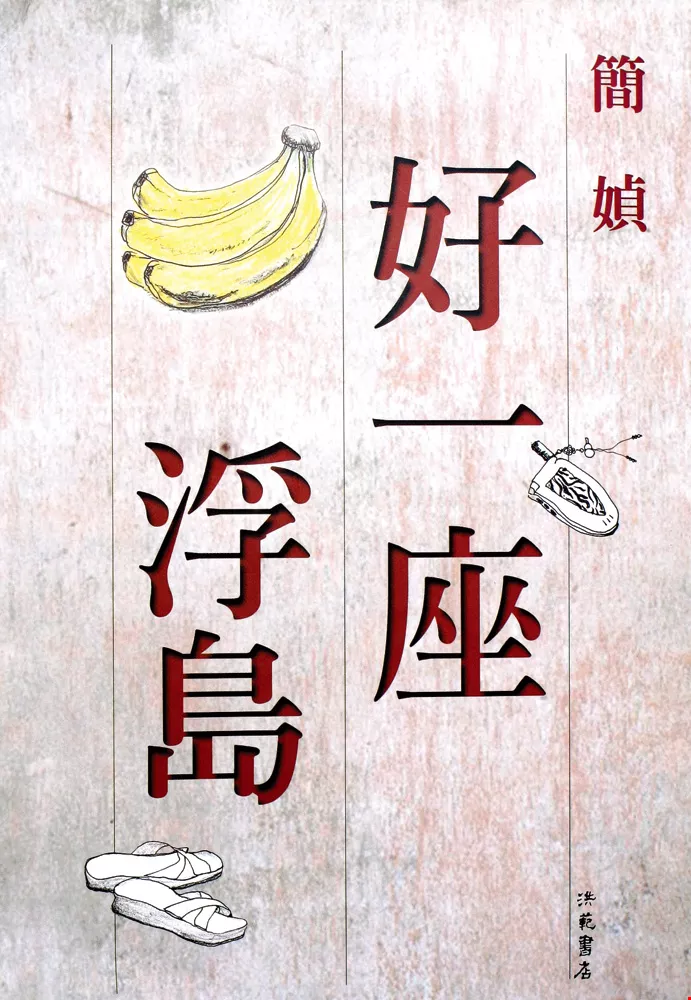
Chien’s closely observed A Floating Island offers a unique take on Taiwan in the early 2000s.
Chien’s work has flowed forth like a river since the release of Shui Wen, chronicling the stages of her life in the sediments of every bend.
She spent the decade flanking that first book’s publication alternating between composing her own pieces and holding down more mundane jobs. In those years, she compiled and published books on Buddhism, produced copy for an advertising agency, worked as an editor for various publishers, and became an omnivorous reader. She read everything she could get her hands on—conventional literature, science fiction, history, the sciences, business—and poured it all into the river of her own writing.
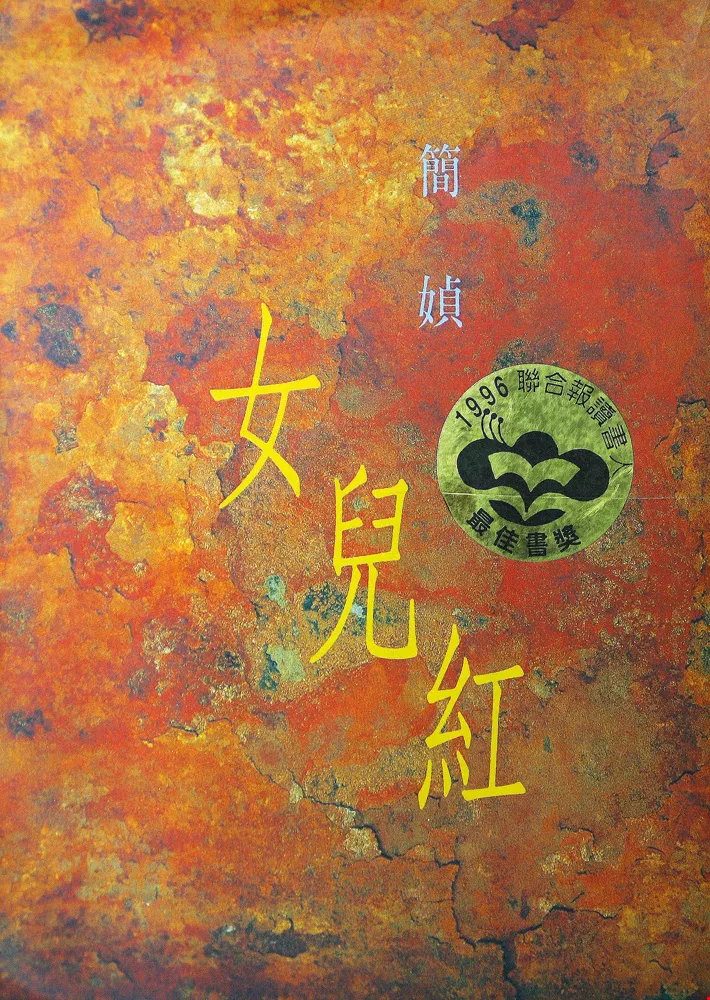
Chien published Nü’er Hong, a book said to reflect a change in her style, in 1996, one year after her marriage. It came out at a time when Chien, by then a mature woman, had met a mature man, one whom she married without any pomp or circumstance after the two had decided they wanted to grow old together. Chien subsequently announced to her family that she would neither give up her writing career nor hire a nanny, that she would instead sacrifice her freedom so she could participate in every moment of her child’s growth.
Nü’er Hong, which was largely written before Chien’s marriage, was originally conceived of as “an exploration of a woman’s inner world, a glimpse of her feelings and an expression of her struggles.” Though classified as essay, the book is more a hybrid of essay and novel. When the Council for Cultural Affairs asked the United Daily News literary supplement to name classics of Taiwanese literature in 1999, Nü’er Hong was among the 30 works selected. Chien herself was the youngest author to have a piece chosen, cementing her place in Taiwanese literary history.
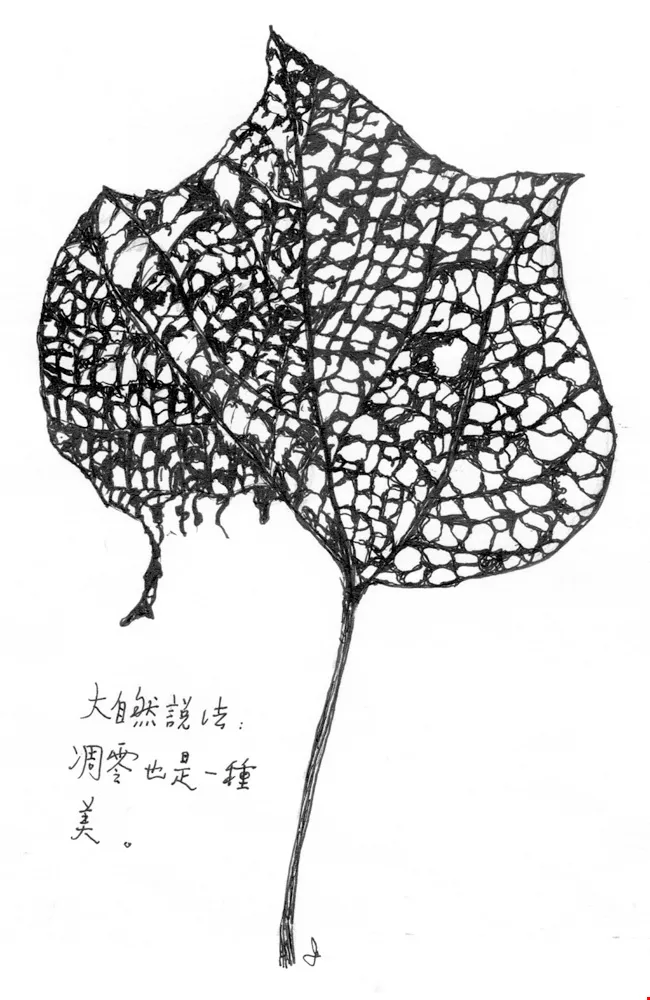
Who’ll Be Waiting for You When You’re Gray? includes sketches and illustrations by Chien herself.
Chien dedicated Red Infant (1999), which concerns a woman and her newborn child, to her mother and paternal grandmother. “They taught me everything: to put salt in the soup, and to temper love with responsibility.” Now a mother herself, Chien burned with exhaustion, bubbled with joy, and oozed humor.
Having a child strengthened her connection to the workaday world and heightened her interest in society at large. She sought to always see the good in the world and in people, but found greed, deceit, and evil everywhere. Having long judged society from a distance, she now found it broaching her walls. She was frightened, she says, “because great love always brings with it great fear.”
She chose to go digging through Taiwanese history at the library, an endeavor that led to The Ends of the Earth (2002). The book, a history of the Chien clan, Yilan, and by extension all of Taiwan, was a necessary personal exercise for this daughter of Taiwan, one that happened to come out during the standoff between the blue and green camps in Taiwanese politics when tribalist sentiments were running very high. In the book, Chien expresses dismay at the simmering opposition permeating all of society, writing, “This foul climate is depressing me.”
As Chien got older, she became more aware of “life’s dead ends,” which made her more empathetic and fed new angers.
The Chien of A Floating Island takes on educational policy and parents who don’t read, while also sympathizing with the travails of Taiwan’s foreign brides.
Her Teacher’s 12 Greeting Gifts (2007) is a bit of an outlier with its origins in the six months Chien, her husband, and their 10-year-old son spent in the US. While her husband did research, her son attended school, where he served as his mother’s eye on American elementary-school education. The stay in the US essentially handed her the subject matter on a plate.
Chien had had a reliable audience throughout her decades-long writing career, but it expanded enormously with the release of Teacher’s 12 Greeting Gifts. Loosely a book on childrearing, its publication propelled her into the ranks of bestselling authors. In fact, nearly every elementary and middle-school teacher in Taiwan bought a copy, making “Chien Chen the childcare writer” bigger than “Chien Chen the essayist” for a time.
But Chien didn’t remain in the field for long. She is an author who views essays as “transforming the dust of the everyday into the ephemera of thought,” and her river of words had to bear its burden of sediment onward. With Who’ll Be Waiting for You When You’re Gray?, that river reached the sea.
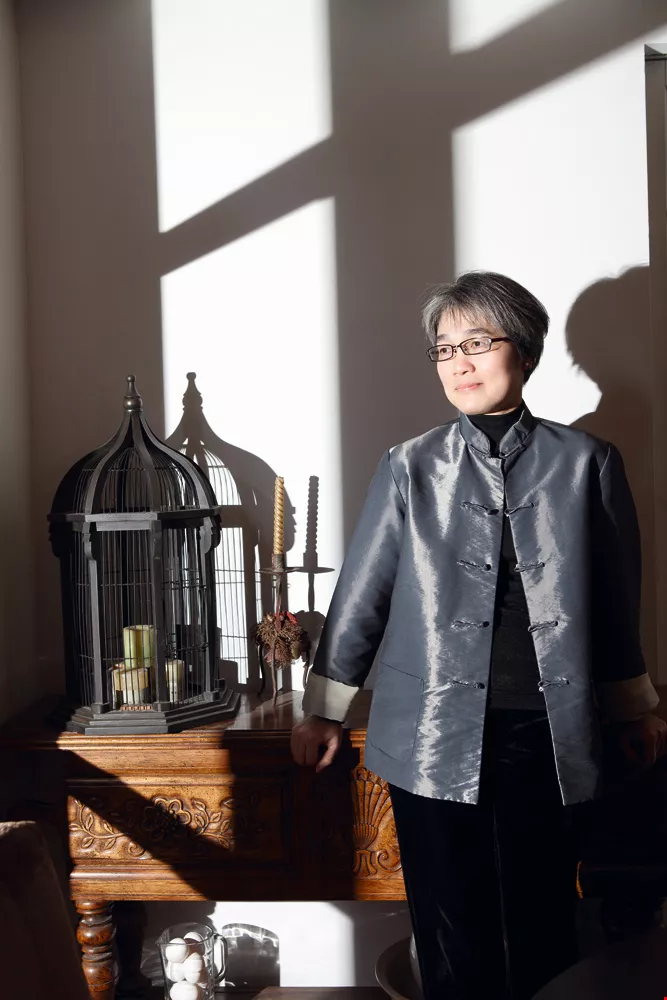
Author Chien Chen recently turned her literary talents to the problem of aging and the aged. The result, Who’ll Be Waiting for You When You’re Gray?, delves into the issue from a sociological perspective. Chien hopes it will encourage Taiwan to face what she sees as a looming crisis.
Is Taiwan capable of accepting a writer’s take on aging?
Chien’s talk in the lecture hall of the Taipei Public Library on the afternoon of March 24 was packed and felt like a film society meeting. Chien took to the podium not to discuss literature but gerontology, never hinting at the back pain she was suffering. She told her audience that the three most important seniors in her own life—her paternal grandmother, her father-in-law, and Professor Chi Pang-yuan—had taught her how to deal with the infirmities of old age and the “three treasures and five rules” for spending time with the elderly.
Her “three treasures” are to spend time with the elderly, listen, and always agree with them. The first of her “five rules” is to help them work out whether they have any regrets, promises still to keep, kindnesses to repay, or people they need to reconcile with. The second is to not say hurtful things. The third, to be someone they can trust. The fourth, to avoid giving them attitude. The fifth, to thank the person in the family doing the most to care for the older generation.
“No one who’d lived it would want a life like mine.” Her life’s first chapter was indelibly inscribed with tears and pain. The second showed improvement and the third is now underway. At 50, Chien is now strong enough and far enough removed from her childhood to look back on and write about it.
Who’ll Be Waiting for You When You’re Gray? is a literary work with sociological and psychological dimensions, but for Chien, its greatest significance was as a conversation with herself that enabled her to take stock of and reorient her own life.
She never suspected that this book on aging would help heal her.

Author Chien Chen recently turned her literary talents to the problem of aging and the aged. The result, Who’ll Be Waiting for You When You’re Gray?, delves into the issue from a sociological perspective. Chien hopes it will encourage Taiwan to face what she sees as a looming crisis.
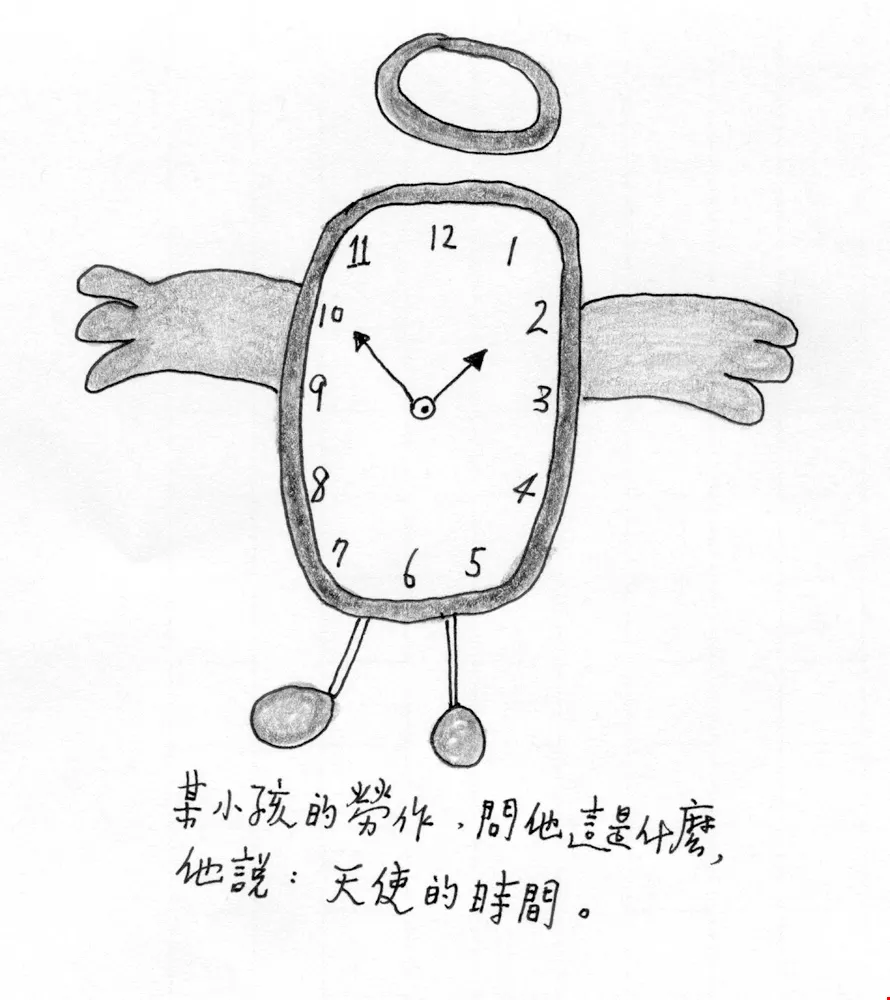
Who’ll Be Waiting for You When You’re Gray? includes sketches and illustrations by Chien herself.
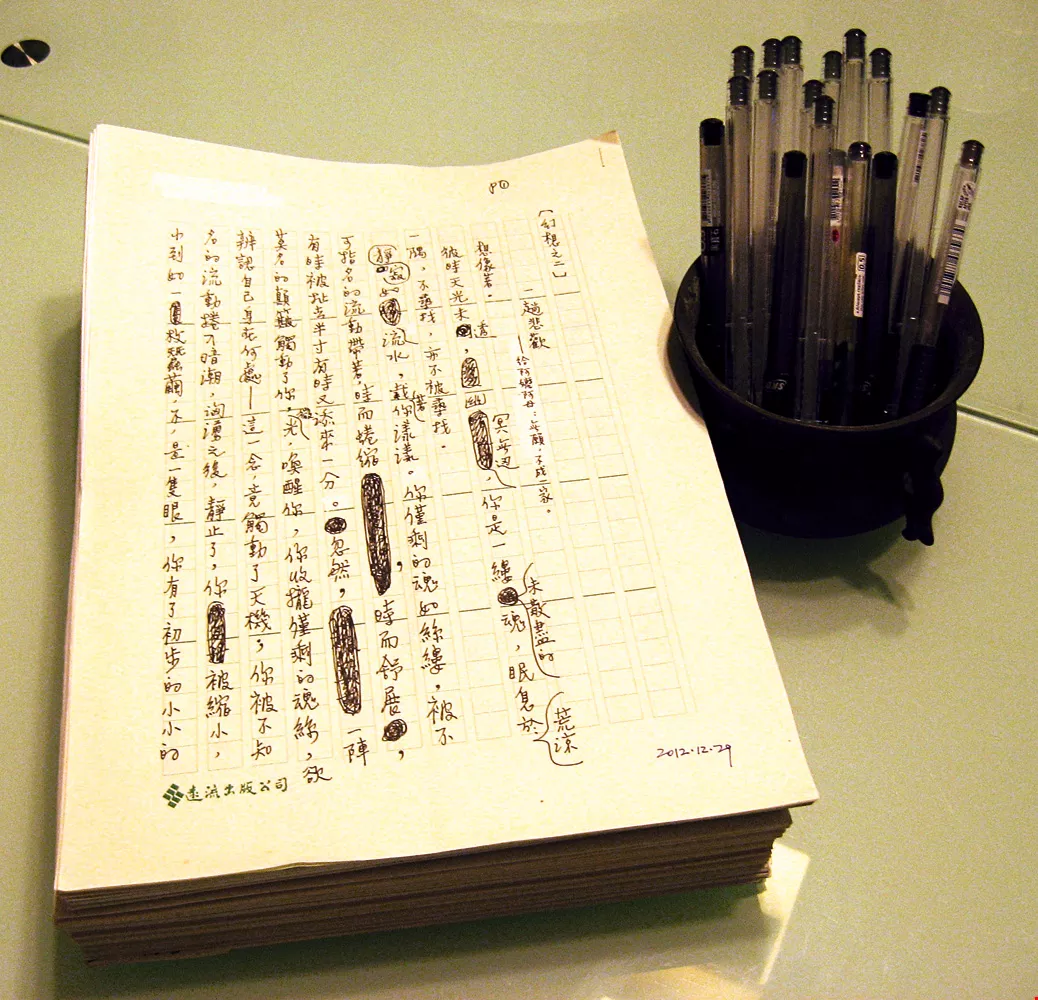
Chien carefully considered every word of her new tome before committing it to paper.
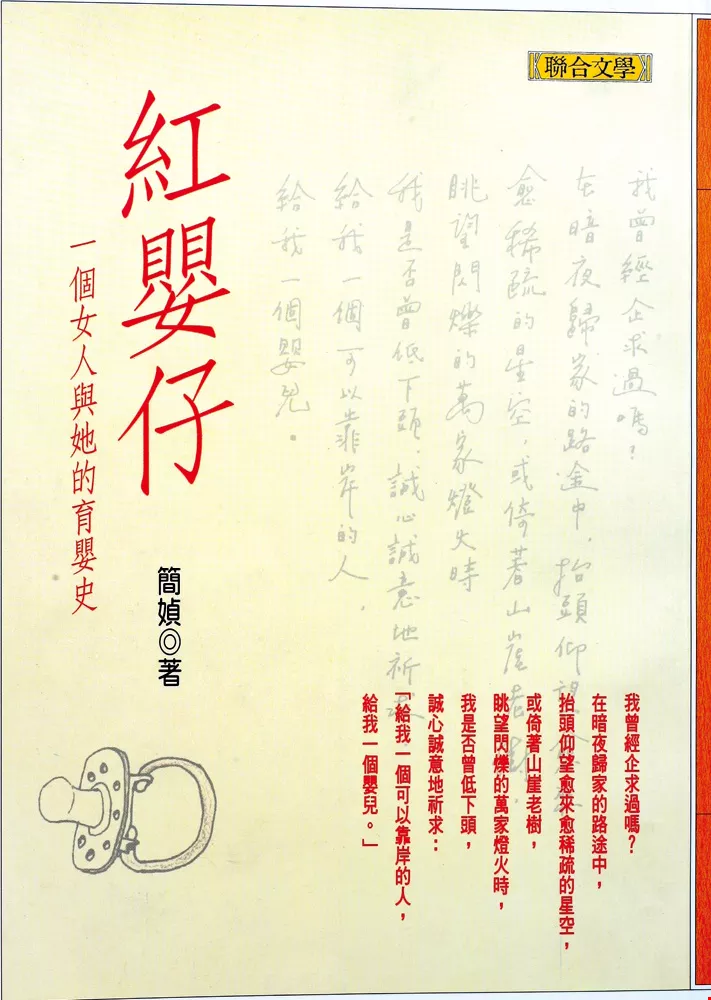
Throughout her 30-year writing career, Chien has offered up sharp observations on each stage of her life to that point, covering everything from her teen years to her marriage and experience of motherhood.

@List.jpg?w=522&h=410&mode=crop&format=webp&quality=80)

@List.jpg?w=522&h=410&mode=crop&format=webp&quality=80)


