Double-Barreled Branding--Cheng Shin Rubber
Yang Ling-yuan / photos Chuang Kung-ju / tr. by Anthony W. Sariti
June 2006


At eight o'clock in the morning a train traveling south slowly pulls into Yuanlin station in Changhua. Catching the eye of the onlooker are the chairs on the platform with bright orange cloth covers, each with a large black oval logo proclaiming in stylish letters: "Maxxis."
As one walks away from the platform, Maxxis banners are visible everywhere. Their market competitor is Taiwan's own Cheng Shin Tire. For all intents and purposes, this seems to be an arena where two major brands, one foreign, one domestic, are locked in struggle. But local residents know both brands actually belong to Cheng Shin Rubber Industry Co., Ltd. (CSRI), a company with its origins right here in Changhua.
Forty years ago CSRI was just a small-scale family operation of a dozen or so people which acted as a contract manufacturer of motorcycle and bicycle tires. It has evolved today into a tire manufacturing company ranked 13th in the world and selling in more than 120 countries with over 7,000 employees and an annual turnover of NT$38 billion. It also ranks sixth among Taiwan's top ten global brands.
In an era when most Taiwan brands still must spend huge sums of money for international market access, distributors around the world must take care lest they lose their Maxxis distribution rights. This robust homegrown brand with its small town origins is the best testimony of all to the local entrepreneurial spirit.
On March 12 the temperature in Taipei soared to 31°C and with it rose the excitement of people around the city. The last stage of the seven-day Tour de Taiwan cycle race would start here.
A few hours later the results were out. The big winner was the Maxxis team from the US, which took first in both team and individual awards. Representing the team, champion racer Kirk O'Bee broke out in a smile, his one-piece orange Maxxis riding suit constantly in the camera lens.
When April rolled around the professional baseball season opened in the US. The previous year had set a new attendance record of 73,070,000 people. Together with the international broadcast audience, one professional game can attract millions of viewers. And at the stadium of the Atlanta Braves, a team that has won 14 consecutive Division championships, the most prominent spot in the ballpark facing the fans boasts the orange Maxxis logo. And it was here where Maxxis itself was born and developed.

A new cool image
"Sport marketing" is CSRI's most important strategy for its Maxxis brand. In the shadow of the 100-year-old Western giants Goodyear and Michelin, Maxxis from the very beginning designed a youthful, cool image to burst on the scene as a new force in the industry.
Every year Maxxis is the title sponsor for over 20 open international superbike and all terrain vehicle races. Through this, images of Maxxis tires crossing the scorching Tunisian desert, moving like a whirlwind over stone and gravel or negotiating winding mountain roads as if they were nothing are burned into the public's mind. Not only does all this raise brand recognition, it has solidified Maxxis' No. 1 position in the mountain and sport ATV tire area.
Wally Chen, president of CSRI, says that 70% of the annual Maxxis advertising budget is spent on sport marketing, including sponsorship of the Houston Rockets professional basketball team with Yao Ming in the leading role, the New York Yankees with Japanese baseball star Hideki Matsui, and sponsorship also of Chinese-American figure skater Michelle Kwan and Taiwan's own golf star Candie Kung. Of course international Formula 1 and ATV races are still the main attraction because they are "traveling laboratories" for the industry. Not only can they create professional prestige, the testing the cars get in these races leads to advances in production technology. Maxxis has thus built a few million-dollar "tech trucks" that constantly are on the move heading out to top race courses to offer on-site support.
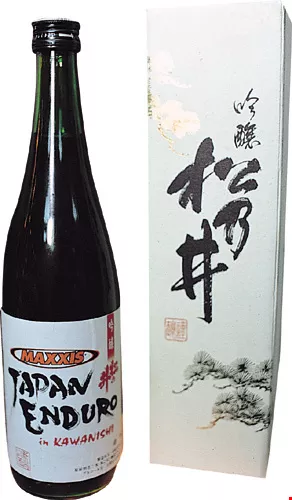
Four years ago CSRI was the exclusive sponsor of an FIM (Federation Internationale de Motocyclisme) off-road event in Japan called "Maxxis Japan Enduro." The souvenir sake became a top collectible for racing fans.
Pride of the town
Walking the streets of Changhua on the weekend one is very likely to see people wearing Maxxis T-shirts or baseball caps. They are all employees of CSRI. It is very common to find a family here where all three generations are working for CSRI. They have personally witnessed the company's gradual growth from a small contract manufacturing shop occupying a few square feet of space, through the purchase of land, expansion of the factory and finally to a major manufacturing complex occupying 20 hectares and operating around the clock. From an obscure company to one that ranks 13th in the world as a manufacturer of tires, not only is CSRI Changhua's most representative industry, it's Changhua's pride and joy as well.
Twenty-four years ago marked a turning point for CSRI. After company founder Luo Jye signed an agreement of technical cooperation with the Japanese Toyo Tire and Rubber Company, Ltd. and set up their first factory producing steel belted radial tires, he also set up New Pacific Industry Co., Ltd as a joint venture between CSRI and Toyo devoted to producing automotive anti-vibration rubber, and began to get a toe-hold in the Chinese market. Ten years later, with indirect investments, CSRI set up factories in Kunshan, Jiangsu Province, in Tianjin and in Haiyan, Xiamen. Yearly production capacity in the China factories has now reached more than 12 million units. Responding to market development needs, CSRI has set up factories in Thailand and Vietnam in a bid to win the leadership crown of the East Asian tire market.
In addition to bicycle and motorcycle tires and high-speed steel-belted tires for trucks and automobiles, CSRI products include tires and tracks for military vehicles, as well as winter tires. CSRI is also now actively developing fuel-efficient tires. In addition, to attract a young clientele, they have designed a popular artistic whitewall retro-style tire with recessed lettering. With some 20,000 different items being produced, the CSRI product range qualifies as the most comprehensive in the industry.
Of all the things about CSRI people enjoy talking about, the most outstanding is the fact that for the steady growth of overseas investments and the expansion of the company they have depended upon themselves with no outside assistance at all.
Wally Chen, the second son-in-law of founder Luo Jye, who has been the company's general manager for 13 years, says 70% of CSRI's investment capital has come from the enterprise's own funds and the rest from bank loans. They have never publicly increased capital. "To inject cash by issuing new stock would inflate the stock and dilute the earnings per share, and so affect the interests of tens of thousands of small investors. And corporate bonds carry an interest obligation, which is an additional cost."
This concept of moving ahead as the situation warrants, Chen calls the "kite theory." The initial capital investment period is like letting out the string to get the kite into the air. Once it's aloft and stabilized you don't let out any more string and the kite remains in the air. Occasionally a gust of wind might come along or the kite might flutter about a bit, then you make some small adjustments. If the overall environment is OK, or your technique improves as time goes on, the kite will fly higher the more string you give it--and the more it flies, the further it will go.
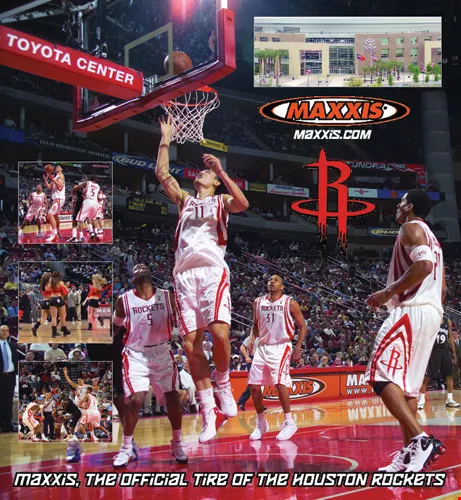
To expand in Europe and the US, Maxxis has to play to the interests of the local consumers and is sponsoring the NBA's Houston Rockets (far left) and German soccer team Hamburger SV (left).
The "death spiral"
Most people think a tire is just a piece of black rubber but in fact it is a high-tech product. It must be safe, durable, have good traction and be balanced. The rubber compound mixing machine, the "calender," a machine that presses the fabric chord into the rubber, and other equipment used in the process of making a tire require great expense, frequently several hundred million NT dollars. Especially because tires are classified as materiel for the defense industry, once there is a dependence on imports this has an inevitable affect on military strength, thus in other countries the tire industry is protected.
"It's too bad the government does not value this industry. Also Taiwan does not produce any natural rubber and the car industry here is limited by its position as a contract manufacturer and the small size of the local market, so it is difficult for it to lead the development of the tire industry." Particularly after 1980 capital needed for labor, land and environmental protection requirements rose precipitously and companies in the labor-intensive tire industry had no choice but to move their operations to China in an effort to seek out low-cost manufacturing opportunities. At that time as well CSRI's major customers were demanding lower prices but the company was unwilling give in and just went ahead and did without the orders. The impact of this incident gave rise to the idea of coming up with their own brand.
"Being a contract manufacturer is like going down on an elevator. The profits gradually decline and all you can do is just stand by and let the businesses making the orders do the cutting until finally, when you can't cut your costs any further, they just abandon you, letting you fall into a "death spiral" that you can't escape from." At this point Wally Chen stood the idea of the "elevator theory" on its head. "Why not create your own brand and take your manufacturers and customers on the elevator with you to the upper floors?" He felt that only by creating a top-flight brand could you maintain profits in the long run.
CSRI already possessed the technology so bringing out their own brand was not really a problem. The trouble was they had no predecessors' example to follow. Because in the past the US had been CSRI's strongest market, 7 years previously it had, after some careful thinking, bought the world's largest carbon black factory --the Atlanta Carbon Black Technology Research Center --in order to break into the mainstream. Carbon black is one of the key raw materials used in tire-making because it helps increase the tire's ability to withstand wear and tear. This acquisition led to a very big jump for CSRI in R&D and manufacturing capability. And the new Maxxis brand, brilliant, stylish and without a trace of the ordinary, was recognized as one of the keys of the company's success.
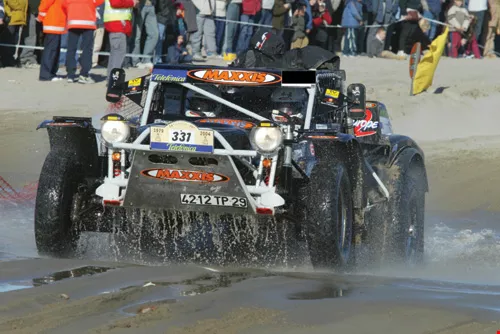
The Paris-Dakar Rally, with 28 years of history behind it, is world famous. Maxxis canvassed the globe for first-class talent and two years ago formally entered the Paris-Dakar Rally with Team Maxxis, making a brave foray into a tough race that since its inception has had only a 40% finishing rate.
Two brand strategy
To capture a bigger share of the market, CSRI retained 30% of its business as contract work while at the same time it promoted the high-quality, high-priced "Maxxis" tire brand and continued to push the domestic mid-range "CST" tire. Wally Chen says the two-brand strategy is able not only to respond to different cultural demands, it can also rely on two different price levels to respond to changes in economic cycle and thus stabilize the company's operations. With the Maxxis brand turnover in one year of NT$7-8 billion, this would equal about 35-40% of the CSRI group's total revenues. The per-unit sales price was thus more than ten times that of CST.
Currently CSRI global coverage includes overseas branch offices in the US, the Netherlands, Germany and Canada with distributors extending into the Middle East. Each distributor is just like a part of CSRI, taking the initiative to feed in information, hoping to achieve higher sales levels and working together to make profits.
The active feedback of distributors allows CSRI to take the pulse of the market. For example, that American buyers emphasize stability and comfort, that Europeans are particular about traction, that Taiwan customers demand sturdiness, comfort and quiet and that the Chinese market stresses loadbearing capacity and durability. To expand the customer base, distributors themselves also create a lot of advertisements and promotional products, even downloadable ring tones for cell phones, all of which makes a big impression on the people at CSRI.
At headquarters in Yuanlin one room is filled with products that distributors have come up with: leisure shirts, tennis rackets, balls, chocolate, leisure tables and chairs, and even bikini briefs. A Greek distributor even said he had suffered "brand poisoning," for "even my blood has turned orange!" The chief reason these distributors enthusiastically spend so much effort in their work, aside from the fact that Maxxis is their "golden goose," is that CSRI is willing to delegate authority to them and let them dash ahead on their own.
"The distributors, employees, customers--they are all part of the CSRI family. As long as it's a good idea, we're happy to share it with everyone," says Wally Chen.
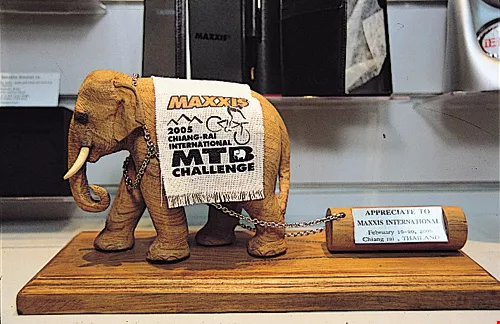
With the start-up of the factory in Thailand, CSRI began sponsoring individual cross-country racing events. The picture shows an event souvenir.
R&D the key
This year, affected by the international rise in prices for raw materials, CSRI's costs saw a great increase but operating revenue continued to grow at more than 20%. "Because tires are a necessity, and because we continue to improve our quality, this rise in prices didn't affect us very much." Although because of a program to expand overseas markets and a 20% slide in profits compared with the previous year, the value of the Maxxis brand declined 8%, the outlay was worth it. Today Maxxis has become a supplier for international automobile giants Ford, Toyota and General Motors.
A promoter of the Maxxis brand internationally, Wally Chen sees things clearly. "A brand is just a shop front. R&D is the only route to industry success."
Every year CSRI invests more than NT$1 billion in R&D to improve its products, an amount representing about 3% of the group's total revenues. They bring in a lot of advanced equipment, like 3D simulation analysis and automotive high-speed testing systems. The R&D team numbers more than 200 people divided into three groups, working on material composition, structure and tread pattern as well as indoor and outdoor testing.
Currently at CSRI Changhua headquarters they are in the process of building an R&D center that will house US$240 million worth of equipment and is expected to begin operations by the end of 2006. This represents another major investment following that in the Kunshan R&D center last year in China and the US R&D center that has just recently gone into operation. And hopes are on the R&D center about to be finished in Shanghai to become the biggest in Asia. With these tools, CSRI will forge a lasting competitive edge.
"We are quietly hard at work and hoping for government support." Wally Chen notes that tires are necessities and are consumable products, things everyone will end up using during their lifetime. This is why Maxxis spends money making reflective stickers to give to kids for their bikes, why year after year they travel the university campuses doing tire safety education, and why they have set up a computer game company to give kids who like to race cars a virtual outlet for their passion.
Like its name in Chinese, "Cheng (upright) Shin (new)," an old firm and new brand, dedicated to innovation, CSRI has continued to open up the road ahead and has created yet another Taiwan miracle--the global Maxxis brand.
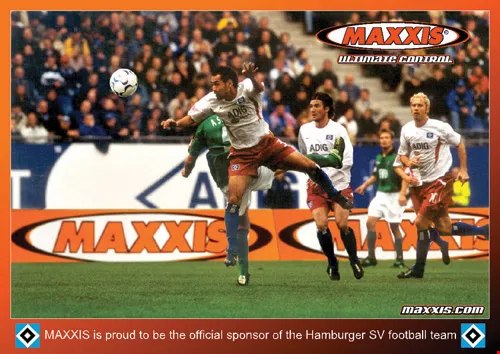
To expand in Europe and the US, Maxxis has to play to the interests of the local consumers and is sponsoring the NBA's Houston Rockets (far left) and German soccer team Hamburger SV (left).
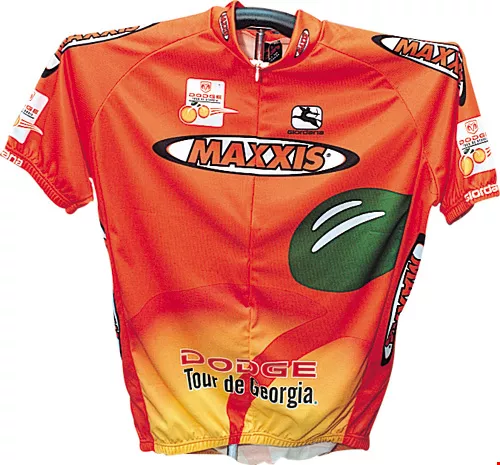
Being selected as the official tire for the Dodge Tour de Georgia not only confirmed Maxxis' position as tops in the global bicycle tire market, the team they sponsored, Team Health Net, did well in the competition. The photo shows the souvenir T-shirt.
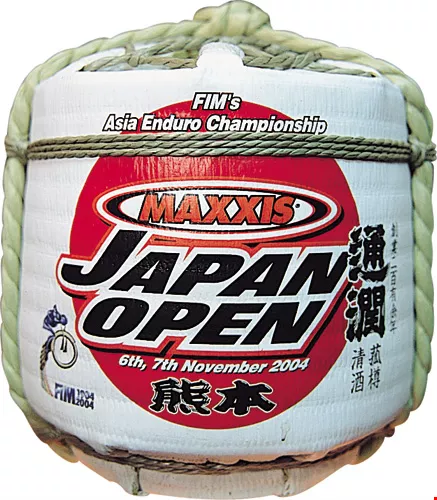
The Maxxis name reigns supreme. Even Japanese sake companies, whose bottles had never carried foreign labels, could not withstand the demands of Maxxis fans and turned out a limited supply.
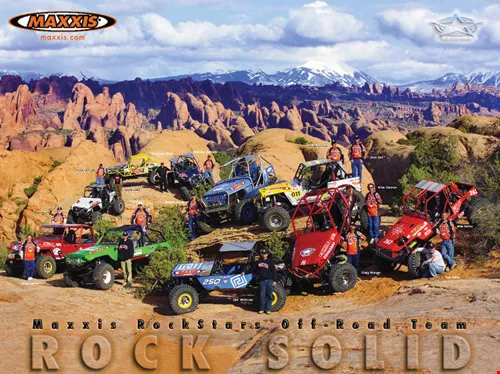
Offroad climbing races are exciting yet safe competitions that provide the ultimate challenge for vehicle tires. They have always been one of CSRI's favorite sponsored events.
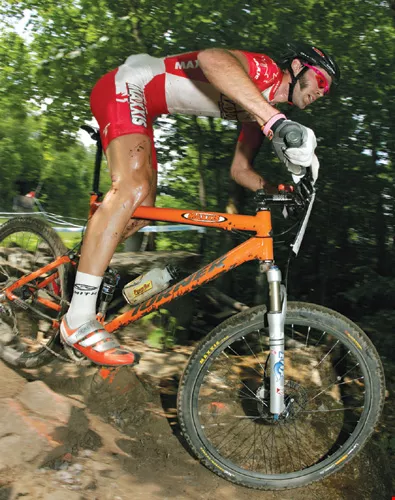
To develop its own offroad tires to the ultimate level of performance, 12 years ago Maxxis began to sponsor races in Europe and the US and to field its own racing teams in a successful bid to grab the global crown for offroad tire production.
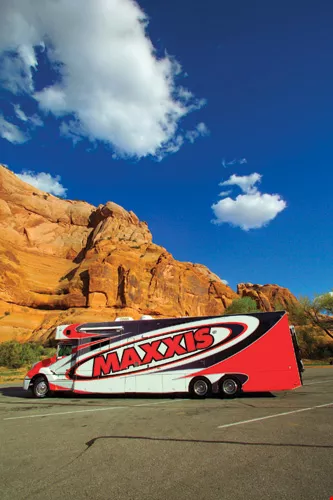
At every major racing venue a truck bearing the Maxxis logo is in evidence. The truck is fully equipped to provide spare parts and repair service.
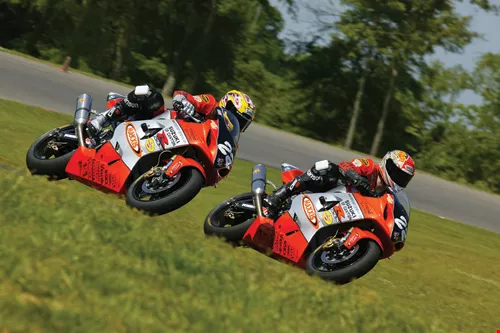
To develop its own offroad tires to the ultimate level of performance, 12 years ago Maxxis began to sponsor races in Europe and the US and to field its own racing teams in a successful bid to grab the global crown for offroad tire production.
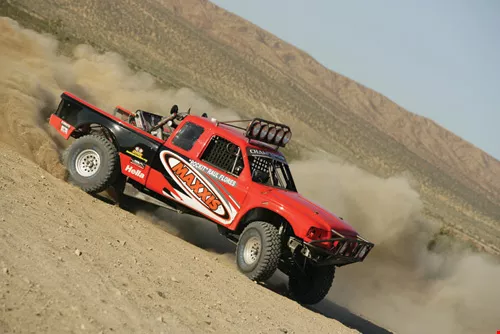
To develop its own offroad tires to the ultimate level of performance, 12 years ago Maxxis began to sponsor races in Europe and the US and to field its own racing teams in a successful bid to grab the global crown for offroad tire production.
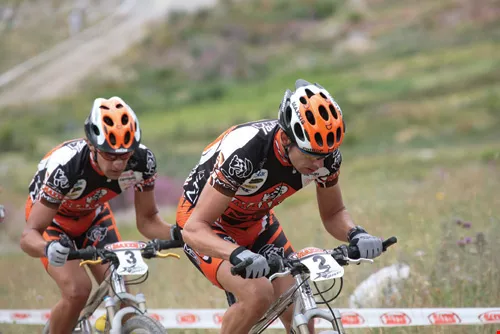
To develop its own offroad tires to the ultimate level of performance, 12 years ago Maxxis began to sponsor races in Europe and the US and to field its own racing teams in a successful bid to grab the global crown for offroad tire production.


@List.jpg?w=522&h=410&mode=crop&format=webp&quality=80)


