George Li: Gold Hunter
Tsai Wen-ting / photos courtesy of Gold Ecological Park / tr. by Chris Nelson
December 2009
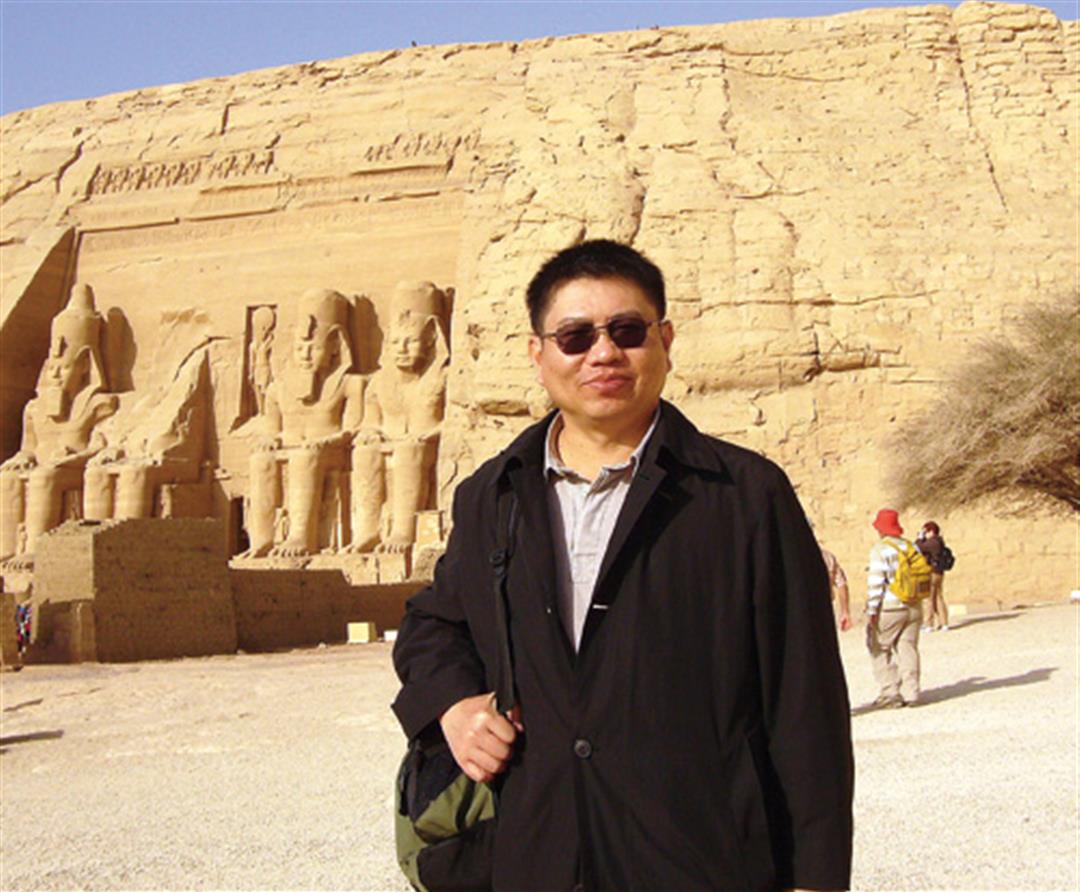
The name George Li might not ring a bell for most people, but the name of the widely acclaimed and highly rated TV show World Overview is deeply ingrained in Taiwanese popular consciousness. Li's first job was with World Overview, and because of this program, the majority of his younger days were spent running around to locales far from home. His first deed each time he entered a country was to change money; thus began his story of collecting gold coins.
True to the meaning of his Chinese given name Nianzu, George Li is mindful of his ancestors and ancestral land. In 1956, his parents left mainland China's Jiangxi Province for Taiwan, where Li was born a second-generation mainland immigrant. He reserves a special sentiment for his ancestral homeland of China, so when deciding on his college major, his first choice was Chinese. He thus entered the Department of Chinese at National Taiwan Normal University (NTNU).

Enchanted by ancient China
In college, Li studied Chinese poetry and Kunqu Opera, and indulged in the philology, histories and philosophical classics of old. In 1978, on the eve of graduation, he decided on a whim to organize a poetry reading for his fellow students. He assembled classmates who could recite poetry, and with the help of Professor Chiu Hsieh-yu, went to a recording studio where he paired the readings of Tang, Song and Yuan verse with ancient melodies. He completed the preliminary work before graduation, and the finished product, Old Verses, New Voices, became Taiwan's first audio book of poetry, important supplementary teaching material for junior-high-school Chinese teachers at that time.
Professor Chiu praised this published recording as a task made just for Li: without Li, such a set of poetry recitals could not have been published. Li soon came to a realization: he was well suited for this kind of work. The idea germinated in his mind, and later his penchant for gathering people and resources together would pay off. "Indeed, executive producing was to be my future work!" says Li.

The philippeioi, a gold coin minted to celebrate the Olympic chariot race victory of Alexander the Great's father Philip II of Macedon in 356 BC. The obverse side of the coin shows the head of Zeus; the reverse side is embossed with an image of the winning chariot. The coin is 18 millimeters in diameter and weighs 8.5 grams.
East meets West
On graduation from NTNU, most of his classmates, if not immediately becoming teachers, would continue on to graduate school. Given Li's academic prowess, many of his professors hoped he would continue his studies at NTNU. But he didn't feel like frittering away more of his life immersed in piles of ancient texts. Beyond his beloved China, he also wanted to learn about Western concepts of education, and so set aside his guaranteed access, as an NTNU graduate, to a steady teaching career, went to the United States, and entered Utah State University to pursue his master's in education.
After Li finished his master's degree, an American professor of his invited him on vacation to Hawaii. He asked Li if he was willing to continue with his studies: if so, he would provide Li with a job in the media center at Brigham Young University's Hawaii campus while he completed his PhD studies.
Standing on an enchanting Hawaiian beach lined with swaying coconut palms, Li repeatedly asked himself if he wanted to stay in this flawless paradise, working toward a coveted position as a professor and scholar. But after a night of soul searching, he decided to decline the professor's kind offer.
As he looks back at most of his life, Li says: "Every time I'm faced with a choice, I set aside what most people may consider a golden opportunity and really listen to my inner voice to find out what I actually want. I don't worry about what others think; I just face myself honestly, and then make my decision. Doing this has made my life happy and meaningful."

In the first century, the Kushan Empire, on one branch of the Silk Road between the Roman Empire and the Han Dynasty, was a force to be reckoned with. The Book of the Later Han lauds the Kushan Empire as "most wealthy and prosperous." Its gold coin, the dinar, is rich with Indian flavor, the obverse side bearing an image of the king and the reverse side showing Shiva.
World Overview
After returning to Taiwan, Li became executive producer of the Public Television Service program World Overview. It was a memorable period for him.
During his tenure of over three years, he visited more than 40 countries, stayed in "six-star" luxury hotels in the Gulf States, and even sojourned at a lodge on the heavily armed border between Turkey and Syria. One month he'd be in a tent on the Kenyan savannah listening to lions roaring not far off, the next month he'd be in the South American rainforests, falling asleep in a hammock on a boat chugging its way up the Amazon River and waking the next day to the graceful song of an indigenous woman. Once he drove more than 600 kilometers through a pitch-black Turkish night to film a traditional horsemanship contest in Turkey's Konya Province, barely making it by daybreak.
To gather adequate source materials, Li took a month or two each time he went overseas, returning to Taiwan only to immerse himself in his work, writing, editing, and doing voiceovers and postproduction.
"As project manager, I was a bridge. I used my mind and eyes to guide the audience into another land. But I wouldn't become an expert on it: it just didn't fit my personality. You see, I was always champing at the bit to go on a new trip."
After leaving World Overview, Li entered the news division at Chinese Television System (CTS), and soon transferred to the programming division in charge of purchasing programs and movies from film festivals in the US, Japan, France and the Netherlands. The world was his office. "He's been to France 22 times," adds Li's wife, former CTS news anchor Synthia Wang.
"Doraemon, Case Closed, Slam Dunk, and Hikaru no Go were all programs I successfully negotiated. I love cartoons!" laughs Li with pride. Negotiating for overseas programs enabled Li to continue his life of world travel. And as a lover of music and antiquities, when not working he would visit record stores and antique shops in different countries.
After this period, his exposure to the world's cultures and customs soon began to bear fruit. The first was a music program: Li created the program Global Music Station on the Taipei Broadcasting Station, which introduced music and culture from around the world.
In one series for this program, World National Parks, when covering South Africa's Kruger National Park, Li supplemented traditional Zulu music with recordings he made on the African veldt of the cries of wild animals. And when introducing the music of Taroko, he narrated with fervor on the culture and artifacts of Taiwan's Aborigines. This series earned a bronze medal in the International Radio Festival of New York in 1990.
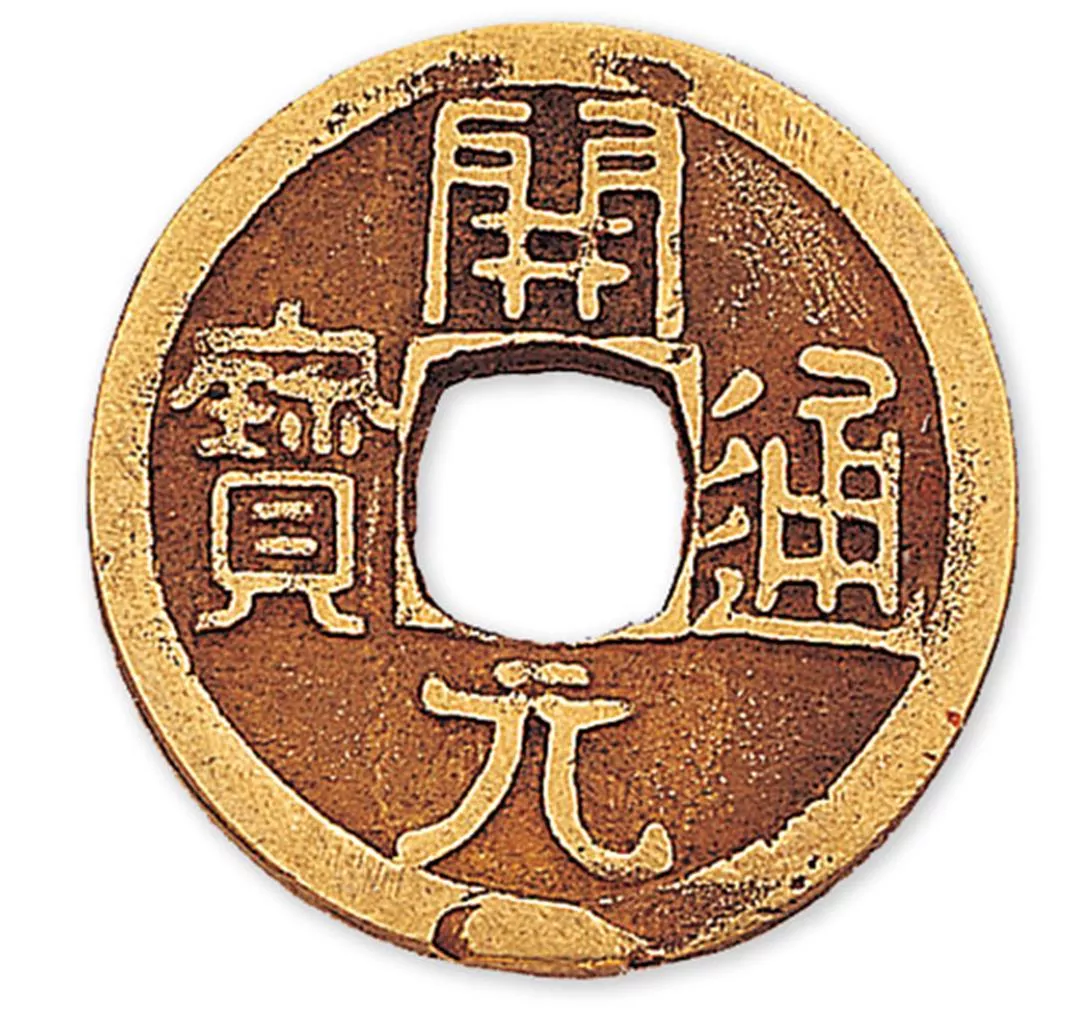
China is conspicuously absent from the splendid history of gold coins. How rare it is to come across a gold kai yuan tong bao coin from the Tang Dynasty! It was only used as imperial gifts or as offerings to gods; it did not circulate as currency.

Gold tales
From over 20 years of studies and media work overseas, with repeated border crossings, Li's wallet has been filled with every currency one would expect: US dollars, Japanese yen, French francs, British pounds, and even pesos, kroners and Deutschmarks.
At first, Li collected money from different countries as souvenirs. But one day while he was shooting in Turkey, serendipity sparked his interest in old coins.
He was walking amongst some Roman ruins one day, when a Turkish boy approached, clutching a bronze coin he wanted to sell. The boy had dug it out of a mound of dirt. As Li carefully examined the ancient, mottled bronze coin, the ruins before his eyes seemed to come back to life. A scene from the heyday of the Roman empire played out before him: "Render therefore unto Caesar the things which are Caesar's; and unto God the things that are God's," was the wise reply of Jesus to a questioner wondering if the devout should pay taxes. It was as if the scene had appeared in his mind from the archaic inscription on the coin.
Unlike money circulating today, "These precious old coins symbolize the power of an era; they are witness to the peak of an ancient civilization."
Says Li, gold was never rare in China, but after the introduction of Buddhism, vast quantities of gold was diverted to make religious statues. With the exception of heavy gold ingots to store value, practically no gold coins circulated. But it was different in the West: in Western history, the fantastic tales of ancient empires expanding their territory all feature the glitter of gold coins.

A gold stater, minted by Alexander the Great. The obverse side bears the image of Athena, and the reverse side depicts winged Nike.
The first gold coins
Looking at Western history, we see that gold urged empires to cross oceans and sack cities; it was the financial engine for arms, armor and expansion.
In the 19th century, gold was the medium of international exchange and the basis for settling accounts (the gold standard). Earlier, during the Age of Exploration, maritime powers such as Spain, Portugal and the Netherlands engaged in colonization and trade activities around the world, and this was closely connected to the quest for gold. For instance, Columbus discovered America while searching for gold, and the Portuguese sailed far and wide for the sake of the three G's-Gospel, Glory and Gold-their chief objective being gold.
By examining coin after shiny gold coin, Li traverses the span of history. When on the topic of ancient civilizations, he eagerly recounts the stories behind the gold coins.
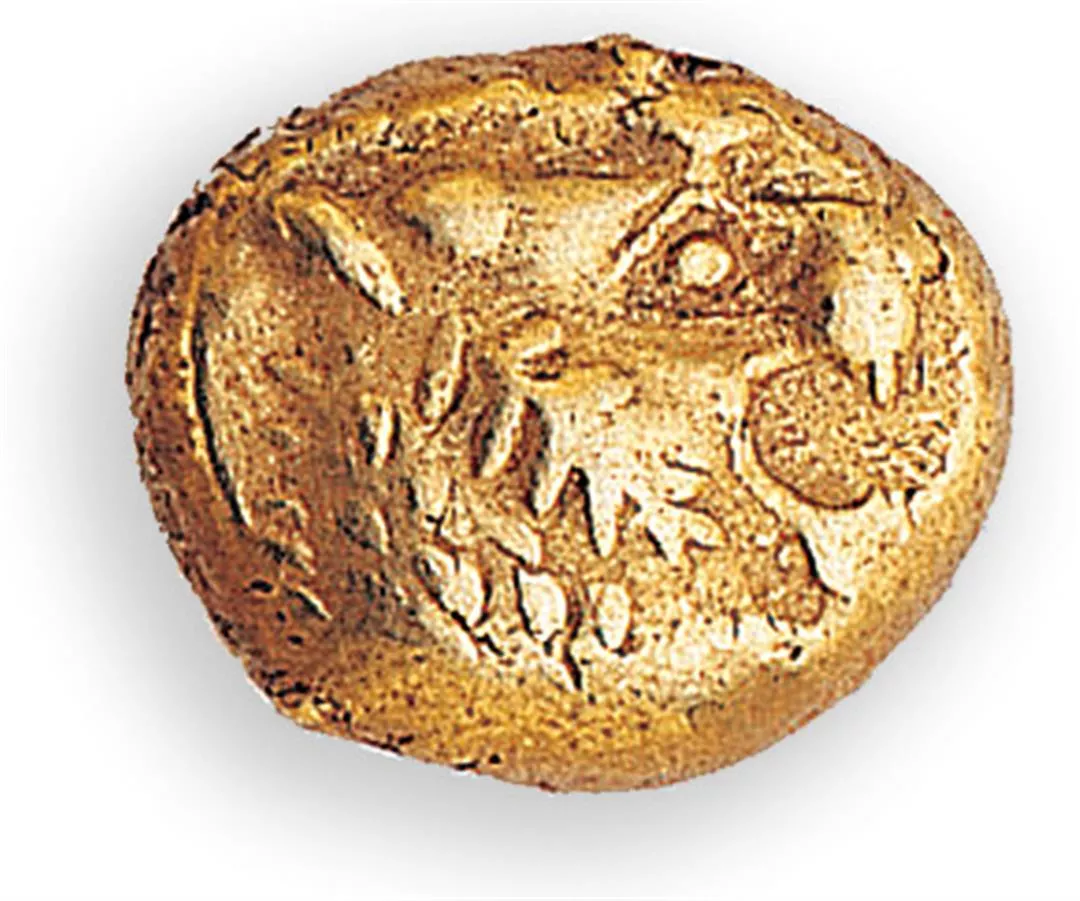
The first gold coin appeared on history's stage in Asia Minor in the sixth century BCE. Over 2,600 years ago, the Lydian king Croesus not only controlled the gold-particle-filled Pactolus River, but also mined silver to make electrum, making him the richest man in the world; hence the idiom "as rich as Croesus." The Lydians were the first in the world to mint coins, which had a lasting effect over subsequent trade.

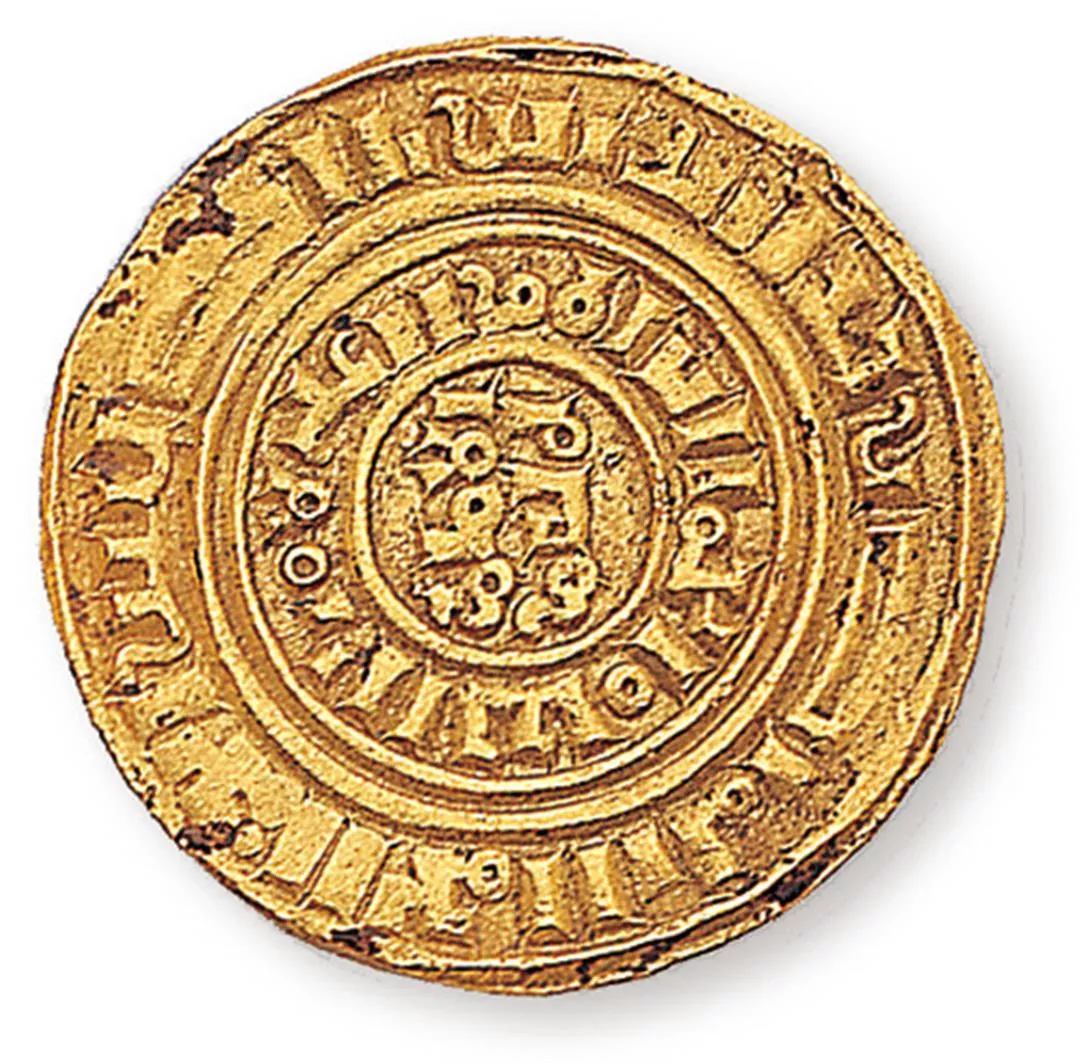
A Bezant Sarrasin coin of the Kingdom of Jerusalem, from the time of the 12th century crusades.
A symbol of might
Soon thereafter in history, the Eurasian continent was shaken by a new imperial power in the fifth century BC: the Achaemenid Empire of Persia. Persian king Cyrus the Great reigned over a territory ranging from present-day Turkey to Afghanistan, including parts of Greece and Egypt, and even as far as northern India and Pakistan.
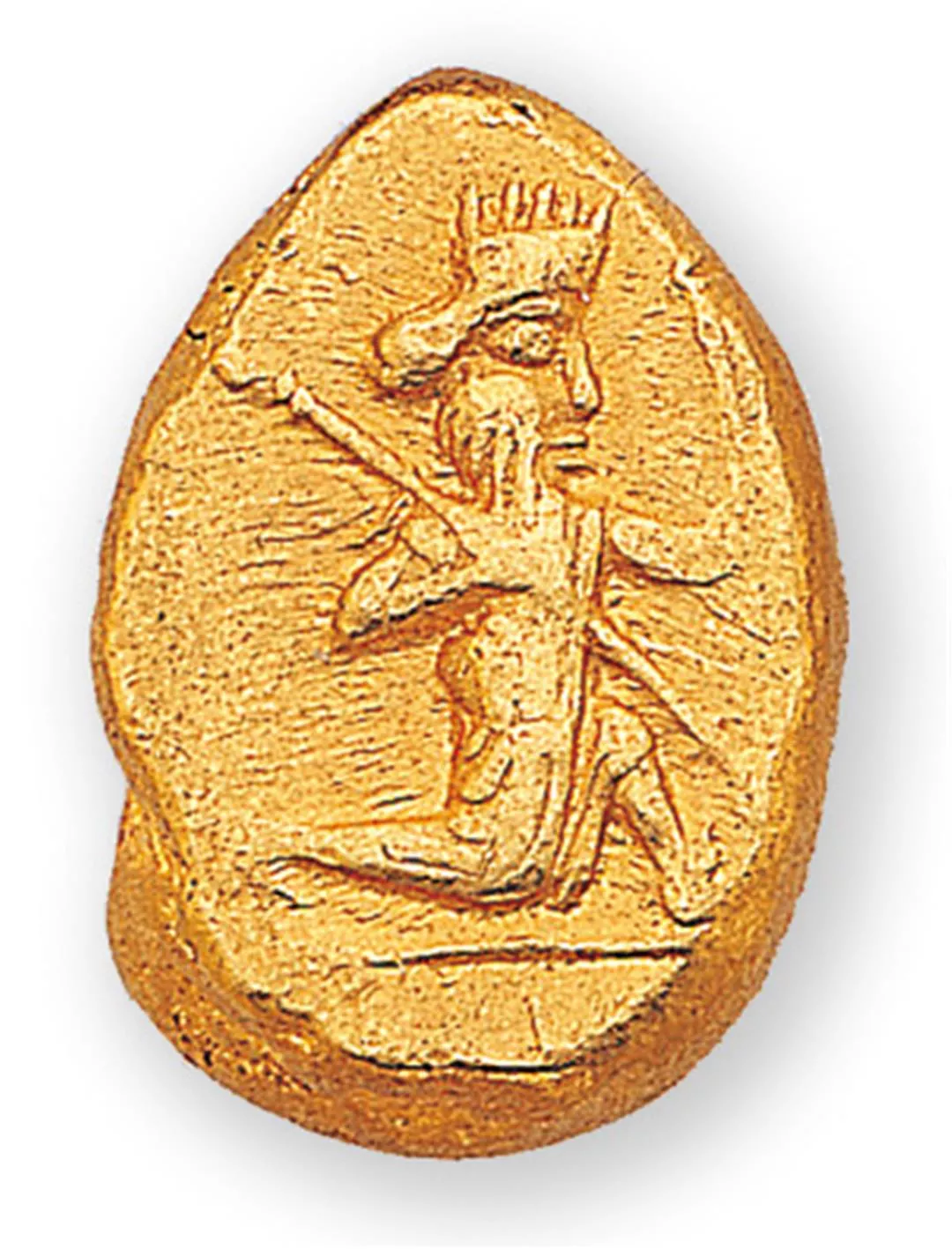
Cyrus was succeeded by Darius the Great, who first minted the daric. Darius, called the King of Kings, had his heroic image stamped on the face of this gold coin, holding a bow in his left hand and a spear in his right hand, and wearing a crown on his head, which would be seen throughout the world. The Hollywood movie 300 depicts Spartan king Leonidas I leading 300 elite soldiers against a million-strong army of Persian invaders at the Battle of Thermopylae, at a time when the daric was sweeping across Central Asia. The sacks of sparkling gold coins seen when a Spartan politician takes a Persian bribe are just such darics.
In 330 BC, another heroic figure of Western history appeared on the scene: Alexander the Great. Leading vast armies into Persia, he finally conquered the three-century-old Persian empire, and the darics, symbolizing the might of the Persian kings, were cast into the fire and re-struck as the gold staters.
Ancient records describe Alexander entering the Persian capital of Persepolis and the winter capital of Susa to find the palaces filled with gold utensils. Alexander plundered 1,000 to 1,250 tons of gold artifacts and 225 tons of darics. These startling quantities of gold supported Alexander's campaign to the end of the Earth-India-and spread around wherever he set his footsteps. Even today, staters are sometimes dug out of the ground, telling tales of the heroic deeds of millennia ago.

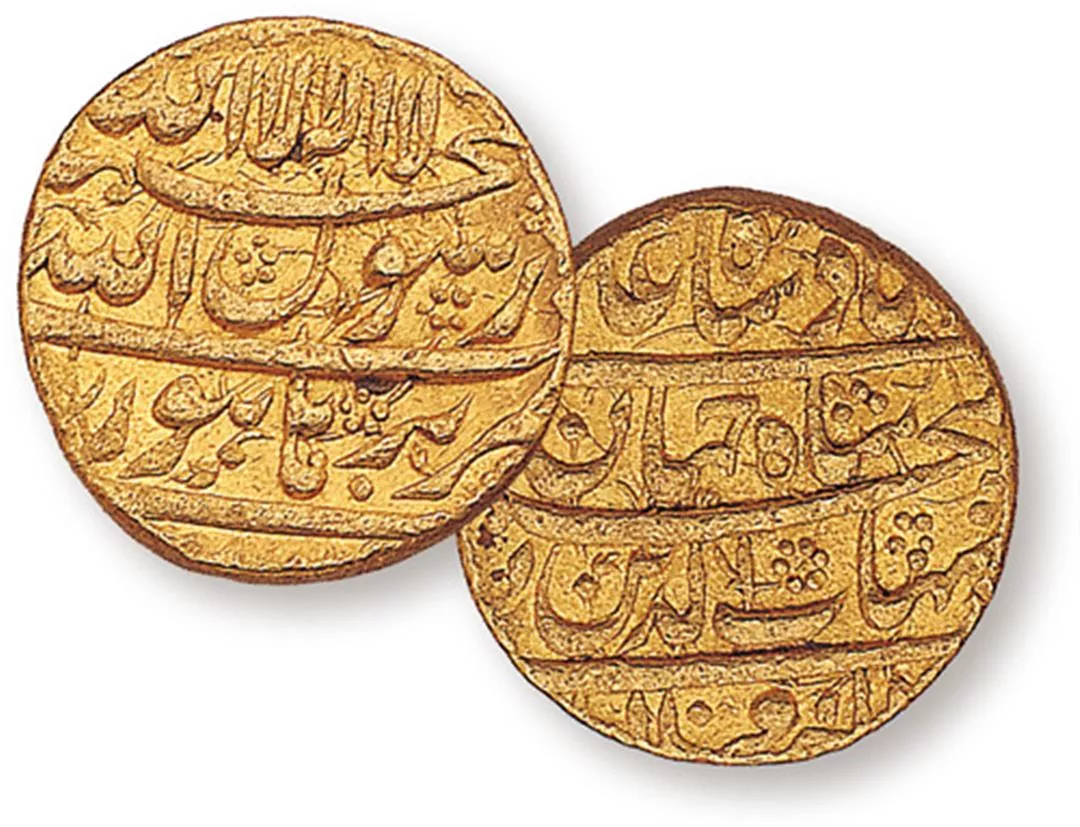
A gold coin minted by Shah Jahan I, fifth ruler of India's Mughal Empire and a descendant of Mongolia's Timurid dynasty. He is most famous for building the Taj Mahal in memory of his beloved wife.
New life for old coins
"These coins tell a moving story of world history." Li believes that without its history, gold is meaningless. Conversely, without gold, such stirring history would not have happened.
As he combs through the world of old gold, Li sees the pattern of one power replacing another. The darics symbolizing the Persian empire were re-minted as staters, the gold of Egypt's pharaohs was given by Cleopatra to Caesar, the "solidus" gold coin of the Byzantine Empire, after 1,000 years of dominion in Eurasia, gave way to the Ottoman Empire in the 15th century.
During the Age of Exploration, the Portuguese established numerous settlements in Asia, and ancient gold coins were often paid into the hands of the Portuguese rulers as tax revenue.
Another maritime power, Spain, invaded South America, where the conquistadores plundered the exquisite gold cultural treasures of the Incas, melted them into ingots, and shipped them back to Spain.
According to The Wealth of Nations by Adam Smith, Spain imported 3.8 million British pounds worth of gold a year during the middle of the 18th century. Gold from ancient spiritual artifacts plundered from Inca temples entered the marketplace after being melted into gold coins. These may look like simple coins, but through vast spans of time they have passed through many hands.

"Much have I travell'd in the realms of gold, and many goodly states and kingdoms seen," wrote John Keats. These words aptly describe George Li in his quest for gold coins, which has taken him around the world and back into the depths of history.
Embodiment of the sun
Li points out that the Incas believed gold to be the sweat of the sun, the ancient Egyptians held that gold was the flesh and blood of the sun, and in East Asia, gold maintained a romantic involvement with the sun.
In 2007, Li went to Cambodia where he saw the sun rise over Angkor Wat. As the sun ascended above the horizon, the radiant scene took his breath away, not just because of the magnificence of the sunrise, but because the scene unfolding before him looked just like the image on an ancient Funan coin in his collection.
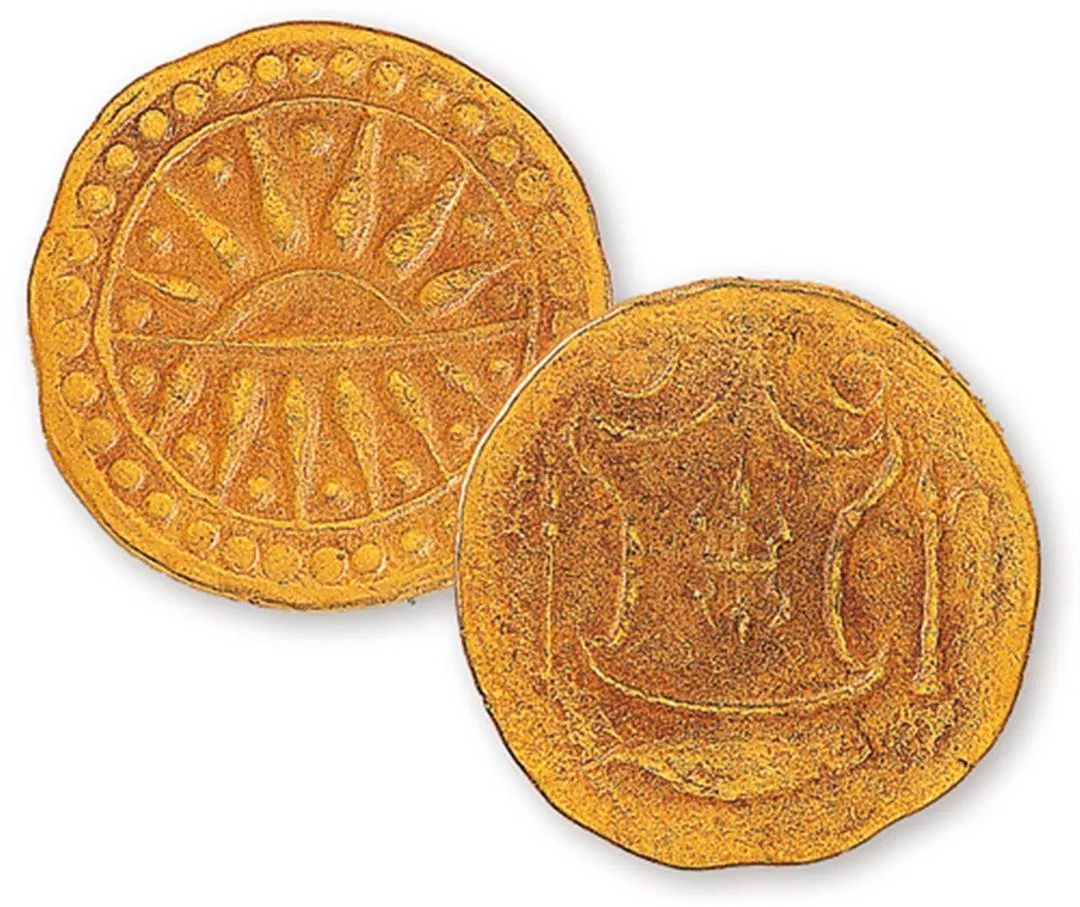
Around the fifth century BC, the Kingdom of Funan, located in present-day Cambodia, was Southeast Asia's most powerful state. Its territory covered most of the Indochina peninsula, and was an important stronghold on the sea routes of the Silk Road from ancient China. This tiny gold coin bears witness to the might of Funan and records the history of Silk Road sea trade.
Besides witnessing the tales of heroes, the rise and fall of empires, and the growth of global trade, gold has earned a sacred status for its resistance to decay.
"You see, 'gold' is very close to 'God' in English," explains Li. In coins we often see the faces of important figures, but only in gold coins do we see a greater level of sacred glory.
It's a human tendency to engrave the glorious and holy in gold: depictions of Christian icons from the walls of Istanbul's Hagia Sophia have been handed down through the generations on Byzantine gold coins, India's great god Shiva appears on the gold coins of the Kushan and Gupta Empires, and Arabian gold coins display scriptures from the Koran on both sides.
"Gold coins are a medium between the human and divine worlds," says Li.

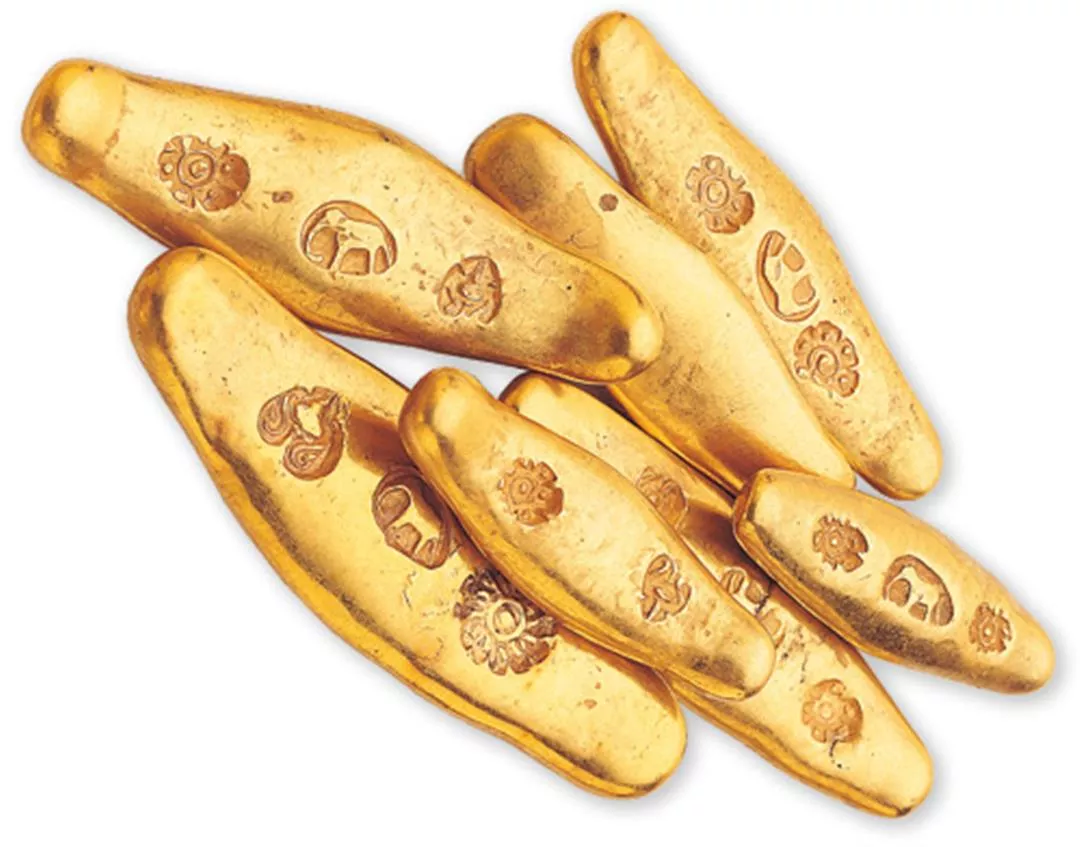
These are rare gold coins from the Lan Xang Kingdom. Shaped like Mekong River boats, they are also known as "leech money." The center bears the image of an elephant.
The quest for gold
In addition to searching the globe for traces of gold coins and poring through documents and legends for clues, Li has paid personal visits to sites historically rich in gold. The labyrinthine gold pits of South Africa's Witwatersrand, the manmade canyons created by gold miners deep in the Brazilian Amazon jungle, the ghost towns abandoned in the wake of the California Gold Rush, the mind-bogglingly resplendent Kinkaku-ji Temple of Kyoto, the ancient vaults of the Inca Empire in Cusco, the gold shops lining Ponte Vecchio in Florence... Li has been to all of them, summoned by the bewitching power of their gilded history.
When collecting gold coins, Li first contacts coin shops online. Then when on the road, he will find the opportunity to wander the back alleys to seek them out in person. Often, in tiny traditional gold shops, he will happen across the form of an ancient gold coin. And the friends he has made around the world during his travels have also become gold scouts, helping him with his collecting.
For instance, Li owns a rare, boat-shaped gold ingot once used for Buddhist rituals in Indochina. Because of its religious meaning, most owners wouldn't sell such an object except as a last resort. Li had never seen such a thing in the international gold market, and even though he wasn't entirely positive of its significance, once he was certain that it was "old gold," he invested most of his retirement funds without hesitation to buy it. Only later did he find out that it's a precious cultural relic from the peak of the Lan Xang Kingdom (present day Laos) in the 14th century.

As followers of Islam, the Turks did not worship idols. From the 16th century on, the gold coins of the Ottoman Turks bore only text and tughras; no images of kings or deities. It was only after the founding of the Republic of Turkey in 1923 that the portrait of founding father Kemal Ataturk was struck on Turkish coinage.
Doing what you love
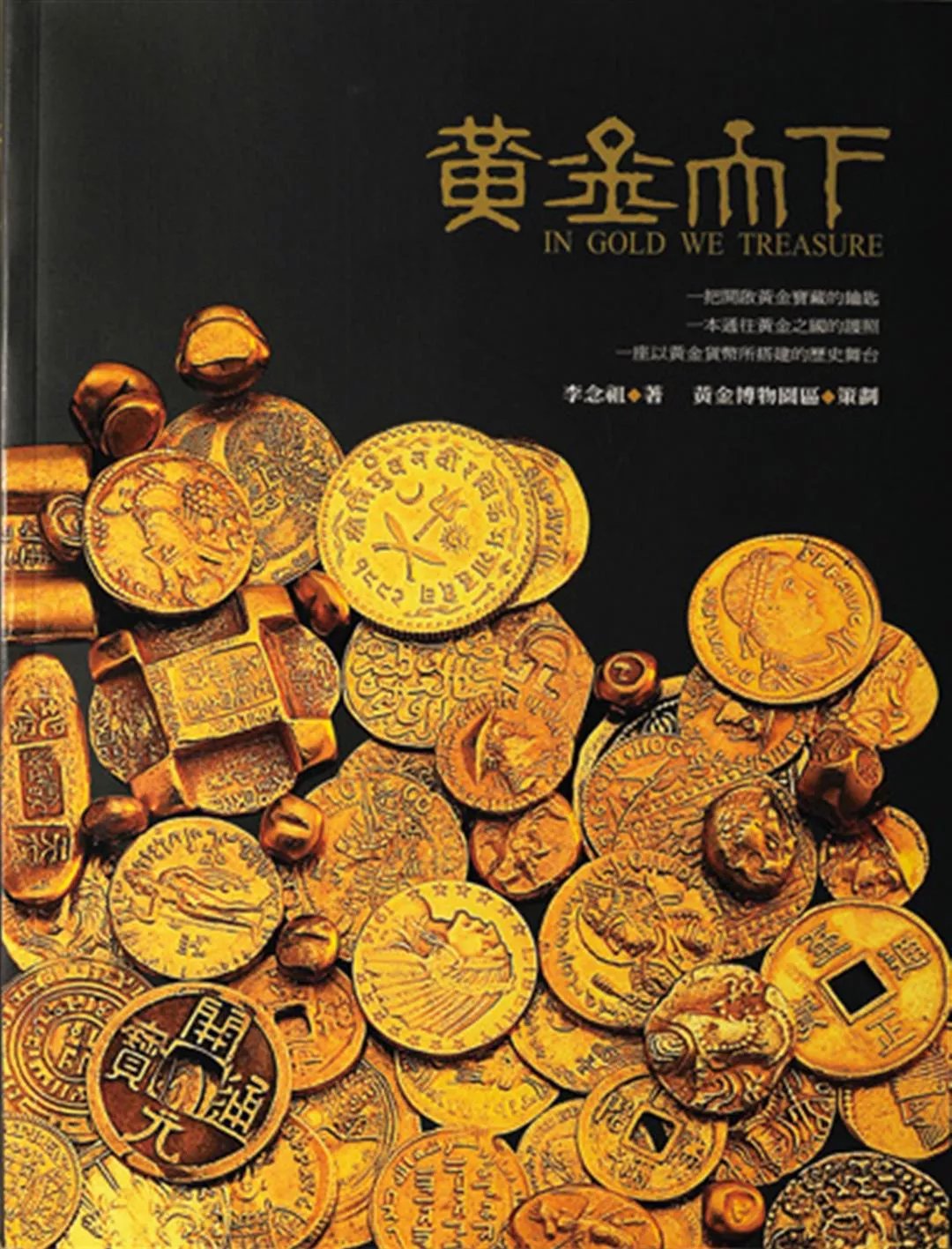
Says Li, collecting is a wondrous undertaking, frequently involving incredible karma. When he was writing In Gold We Treasure, he had collected every gold coin described in the book except for one, the world's oldest: a Lydian gold coin. To a collector, it's a source of regret not to have this coin, but he told himself to write the book anyway and to borrow a photo of this coin. "I didn't want to become enslaved by the desire to obtain this coin," he says. But as luck would have it, right before he sent the final draft to the printer, an American friend found the missing Lydian gold coin for him.
With the support of the Gold Ecological Park in Taipei County's Jinguashi, In Gold We Treasure received a prize in the 2008 National Publication Awards. Li, styling himself as an expert in ancient gold coins, started giving lectures in museums and public institutions.
But what does it mean to be an expert in ancient gold coins? What does it involve? Li speculates, "These gold coins are things I searched for, owned, studied, engrossed myself in. But my passion for gold seems to have ended with the publication of this book."
After years of collecting gold coins, Li doesn't feel that his wealth has grown with the recent rise in the price of gold. This is because these pieces of gold belong in museums. He hopes his painstakingly collected gold coins will end up in the destinations they deserve, escaping the doom of being melted and re-forged, retaining their true colors, and manifesting the true worth of gold.
Like in the Indiana Jones movies, at the end of an episode in some ancient land, there are hints of later developments. When the sequel is made, the same characters come together in a different time and place: a brand new adventure in another faraway land. As for Li's next step, it may not be as glamorous as gold coins, but it will surely be distinctive and overflowing with interest!

The joy of collecting is in the hunt and in the journey across history. Having authored In Gold We Treasure, collector extraordinaire George Li can be considered an eminent scholar of gold.

The celebrated daric, 14 mm in diameter and 8.3 grams.

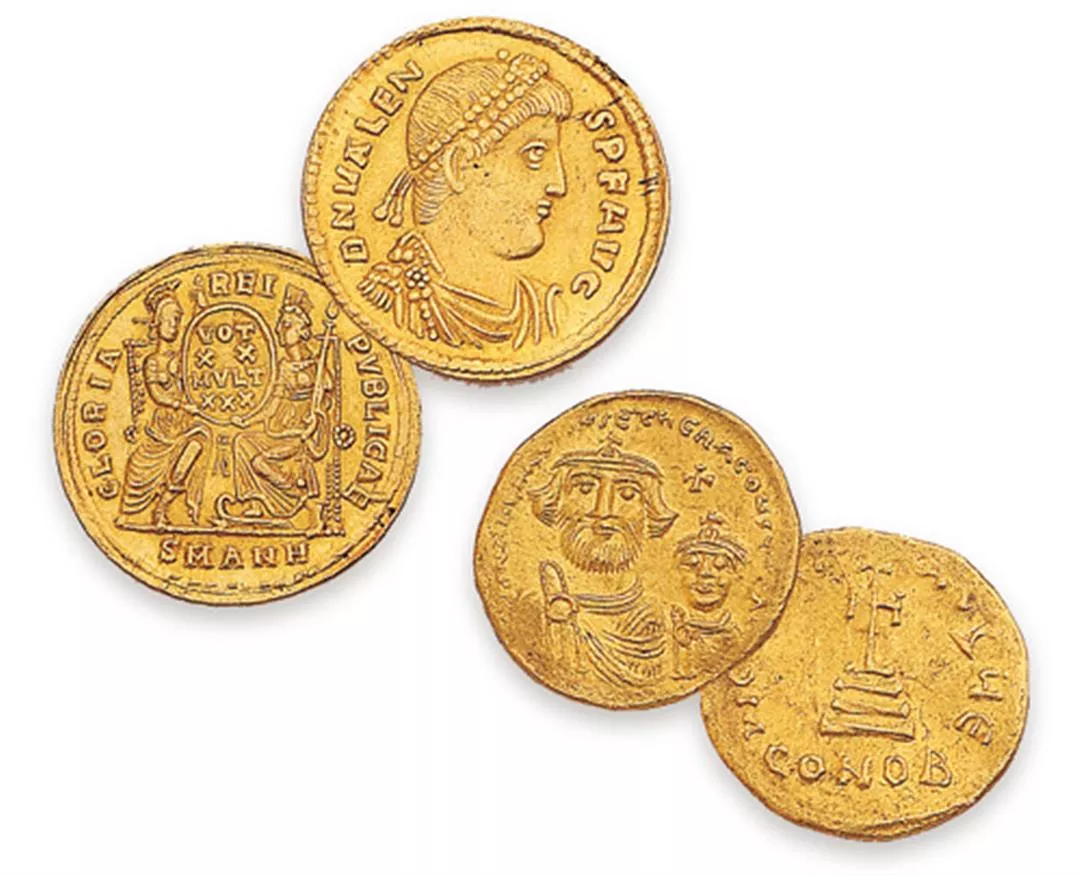
Spanning many centuries of the Middle Ages, the Byzantine Empire was long Europe's hub of trade, with a prosperous economy. The solidus circulated far and wide, having been unearthed as far away as Chang'an and Luoyang in China. On the left is a fourth-century solidus while below is a seventh-century solidus, each reign bearing its differences.

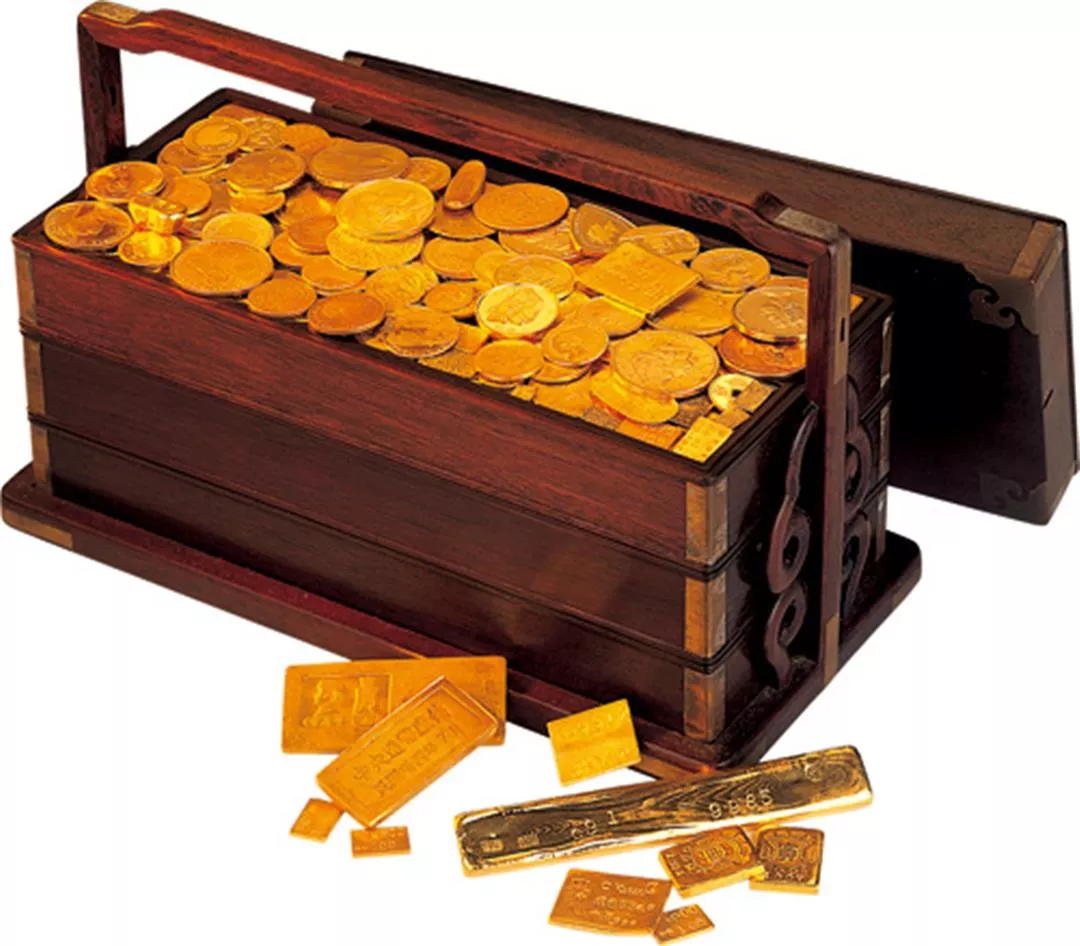
Gold coins are a symbol of imperial power. To the embattled Qing Empire, Britain and Japan were both mortal enemies: Li describes them as being "tigers" of the west and east. Among the coins shown here are gold sovereigns issued by Britain during the Opium Wars, rectangular nishu-kin of the Tokugawa shogunate, and round shin-kinka coins bearing the Japanese chrysanthemun emblem.

During the Age of Exploration, the great maritime powers issued coinage minted with gold mined from their colonial territories. From left to right: a Spanish escudo, a Portuguese 1,000 reis coin, and a Dutch ducat (as important in its day as the Byzantine gold coin had been). The Portuguese coin bears the Latin inscription of Constantine's motto "In hoc signo vinces" ("With this sign you shall conquer").

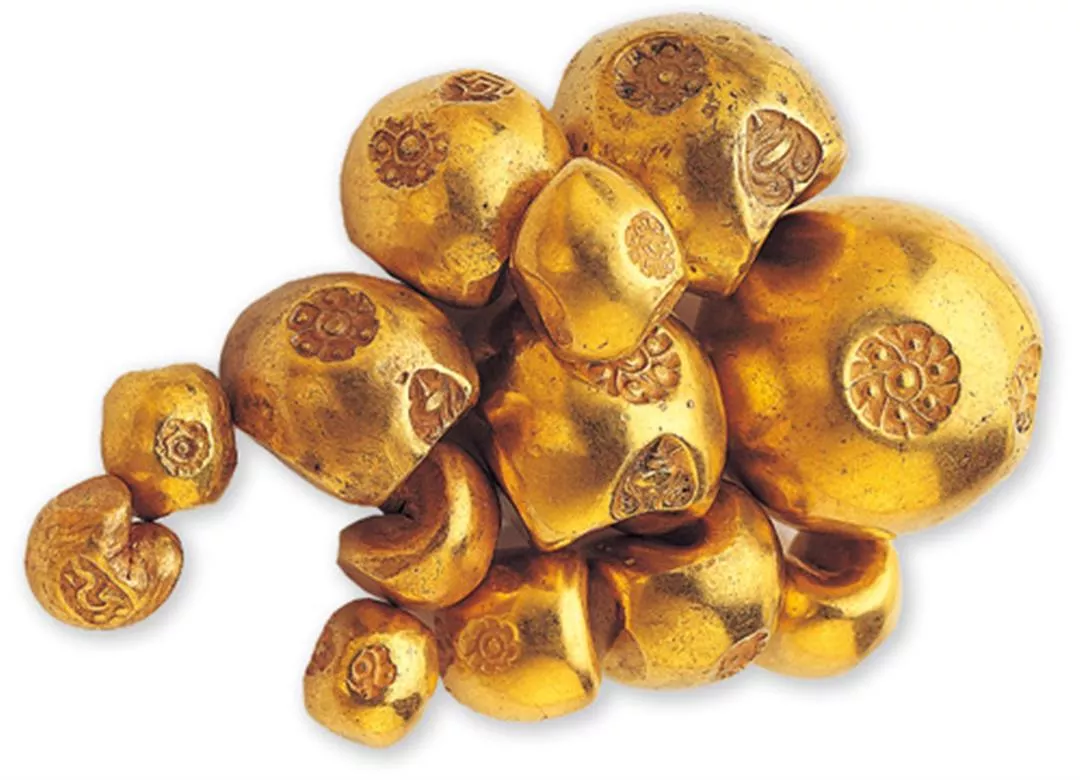
Many kingdoms have come and gone in Indochina, and the coinage from the region has taken many forms. Shown here is "bullet money" from the Ayutthaya Kingdom of Siam, ranging from four tical (two ounces) to 1/32 tical. This currency system was used from the 12th to the 19th centuries.

The name of the Kingdom of Funan derives from the Khmer word "phnom," meaning "mountain." The obverse side of this Funan coin shows the rising sun with brilliant rays; the reverse side has Shiva's incarnation as a fish under the image of a temple.

A Lydian electrum coin from the sixth century BC, the world's earliest gold-containing coin.

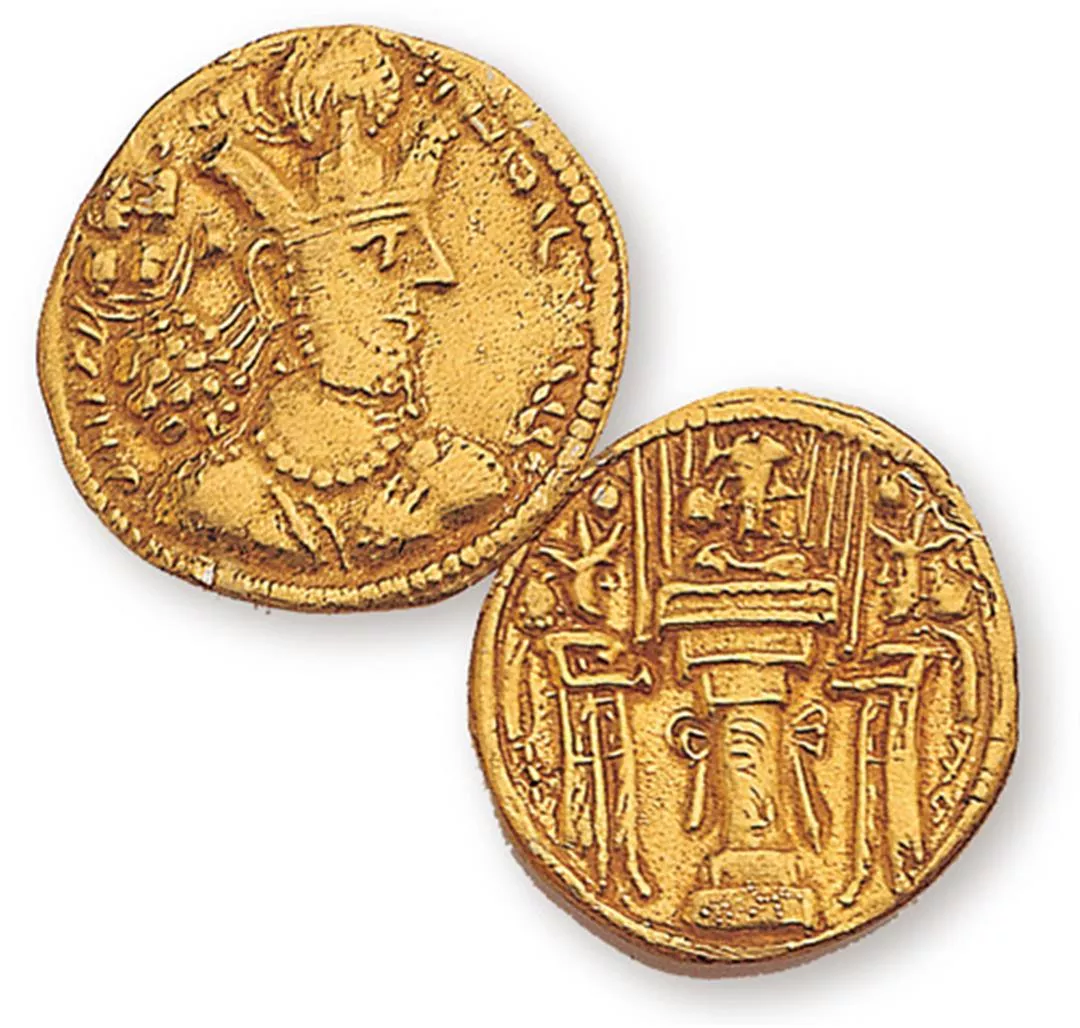
A gold coin from Persia's Sassanid Empire. Sassanid silver coins enjoyed the fame of Byzantine gold coins, but Sassanid gold coins are rarer. Embossed on the obverse side is a portrait of the monarch, while the reverse side depicts a Zoroastrian altar.