Why Drain the Goblet Dry?--The Problem of Alcoholism Among the Mountain People
Cheng Yuan-ching / photos Cheng Yuan-ching / tr. by Christopher Hughes
September 1993


All the world's ethnic minorities have to face the problem of alcohol abuse to a greater or lesser extent in the process of acculturation. It is a problem which is usually accompanied by other problems, such as those of marriage, the family, prostitution and unexpected death, and it has a great impact on the society concerned.
Anthropologists got to know this problem early on, and medics have also been striving to solve it. Yet there are very few ethnic minorities which have managed to escape the difficulty altogether. So what about the minorities of Taiwan's mountain areas?
If you go to watch the Ami harvest festival, apart from the hypnotic singing, traditional dances and exquisite ornamentation, you can also see that inside the rings of dancers there is a person whose special job is to take a bottle of wine and a cup, and go round a whole troupe toasting its members one by one. He drains the cup, then fills it again to the same level as he goes on toasting.
Doing a circuit in this way means drinking eight or ten bottles of wine. Even if you can hold your drink, it is hard to avoid inebriation. So this custom of toasting usually becomes the shared responsibility of a group of youths.
What happens if you do get drunk? It does not matter, because it is all part of the traditional festival culture--nobody will tell you off. The youths might also enthusiastically beckon on-looking guests to take part in the communal drinking, which could be too much for some travelers to digest. There are also those who do not understand the tradition and mistake what they see for a free-for-all binge!
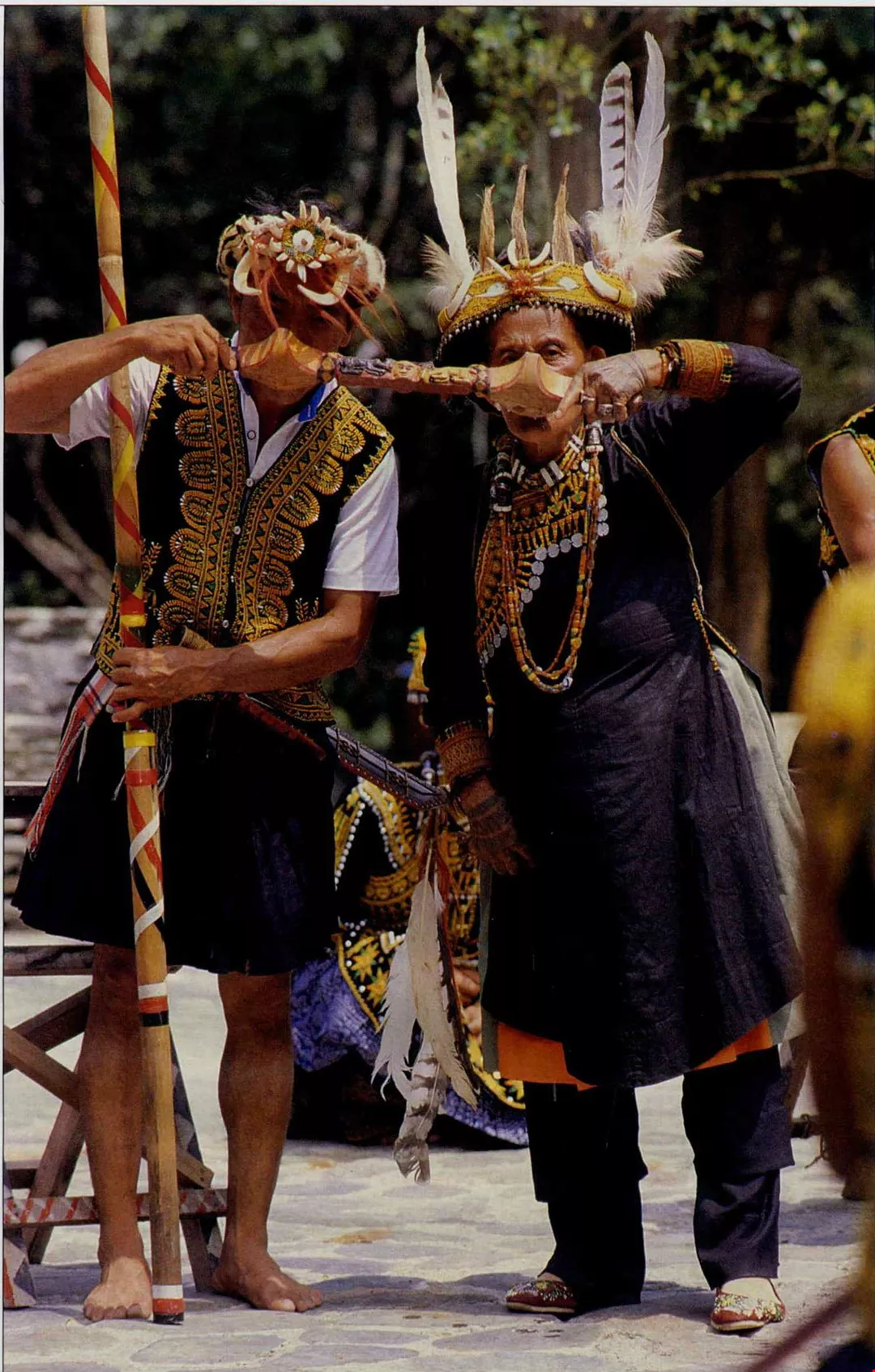
Drinking is a kind of ceremony at the festivals held by the aboriginal peoples of Taiwan's mountain areas.
Drinking as part of traditional culture:
In fact, just as with any aboriginal group in the world, drinking among the peoples of the mountains has a religious and a social significance. It is certainly not something done in isolation, but is usually part of a ceremony or wedding in which the whole tribe participates. It is something done with a lot of company and much group merriment.
Juan Chang-jui, head of the department of anthropology at the Taiwan Provincial Museum, says that apart from the Yami people of Orchid Island, all the others of Taiwan's nine aboriginal groups make their own wine. Before ceremonies and festivals they start up a fermentation, and the day the liquor is ready to drink is the time at which the activities come to a climax.
When there are no festivals they do not make wine. The Bunun, for example, are traditionally only allowed to make liquor for eight months of the year. At times of planting the fields, sowing seed, weeding, harvesting and storing crops, they will ferment one or two pitchers. For the other four months of the year they have no festivals and just concentrate on resting and building up their strength.
According to Chiu Chin-shih, the last historiographer of the Haucha tribe of the Rukai people, making wine was the responsibility of the women in traditional society. They would take millet and glutinous rice and boil it or pound it into a cake, add yeast, and put it in a container. After three to five days it would become white millet wine.
Wine is mainly used as an offering to the gods and ancestral spirits, and it is also a respectful gift. Before it is drunk, a libation must be offered by dipping the index finger in the liquid and flicking it towards the sky or earth as a toast to the ancestral spirits, and as an expression of the sentiment that when you have good wine you should not forget to share it with your predecessors. It is all part of the ritual.
As with peoples throughout the world, the aboriginal peoples of Taiwan's mountains also use liquor to wine and dine their intimates during festive periods, and they very rarely drink alone. When friends and relatives are gathered together, a bowl of wine handed round is also an expression of friendship, a fact to which the joined cups that are used as drinking vessels attests.
Wine is an essential part of aboriginal culture. There is, however, a strict taboo--children are forbidden to indulge.
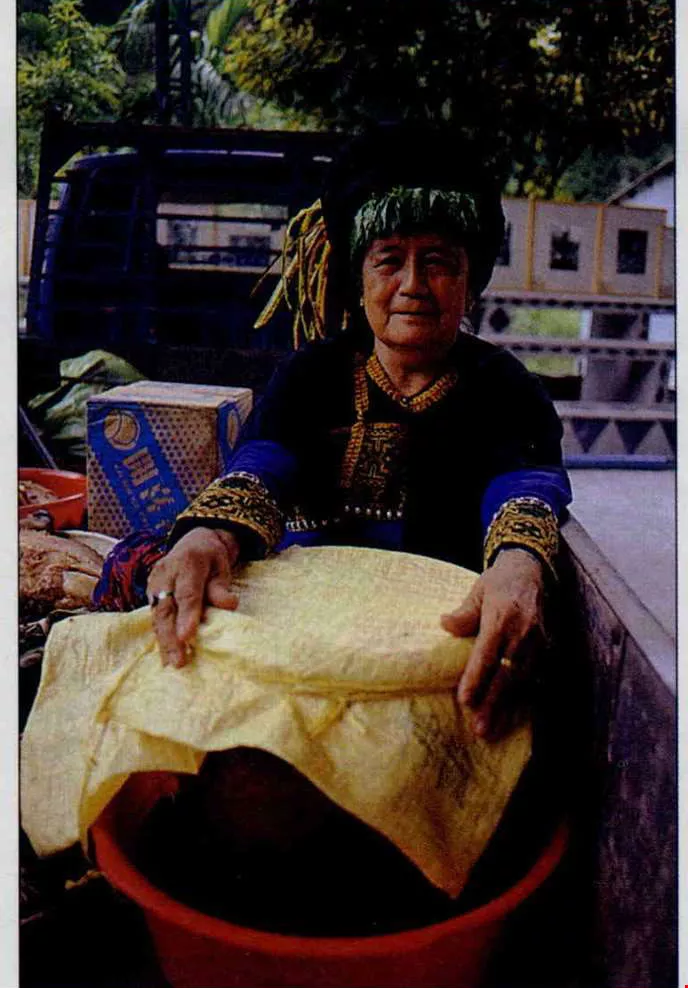
Whenever there is a festival or wedding, the women prepare wine for their tribesmen before the event begins.
An inevitable part of the process of acculturation?
Yet with the steps of modernization coming close, the traditional drinking customs of these peoples are being fiercely challenged. Incidents of alcohol abuse are now frequently heard of among the mountain peoples.
In the 1960s, with work opportunities among the agricultural population of the aboriginal peoples being limited, there was a gradual absorption into the urban industrial and commercial centers. When these low-waged compatriots took home what was really a meager income, but one which was much envied by their fellows, they also took drinking habits with them into the tribes. An anthropological survey carried out on Orchid Island at that time discovered that the bad drinking habits found among the Yami there were actually due to outside influence. This situation has continued to develop up to today when, with alcohol so easy to get hold of, abuse has become a problem that is hard to solve.
From a demographic aspect, the most obvious example of this is that the age of drinkers is getting lower. Yang Sheng-tu, the Atayal head of Hsiulin Junior High in Hualien County, says that in the past young people were restrained by the older generation and not allowed to drink. Following the dissipation of the authority of the tribes, however, the young people now also have bad drinking habits. The school has a number of students who start drinking from the early morning.
The age of drinkers is getting lower, the numbers are increasing, and the amount consumed is inevitably going up. According to a survey carried out in 1979 by Academia Sinica member Li Yihyuan, the amount of rice wine consumed in the mountain societies at that time was double the provincial average. Taking 1977 as an example, the average annual per capita consumption of rice wine for the province as a whole was 12.3 bottles; for the Atayal, however, it was 60.2 bottles, for the Puyuma 75.1, and for the Bunun 49.9. The lowest consumption among the aboriginals was that of the Ami, who averaged 27.8 bottles.
In 1987, the Provincial Fengyuan Hospital went to the Huanshan tribe and carried out a survey which discovered that around half the residents normally drank more than one or two bottles of rice wine or beer every day. Among these, around a tenth drank even more than this amount. According to these figures, some people were drinking more than 400 or 500 bottles of alcoholic beverages every year, which is a very large amount.
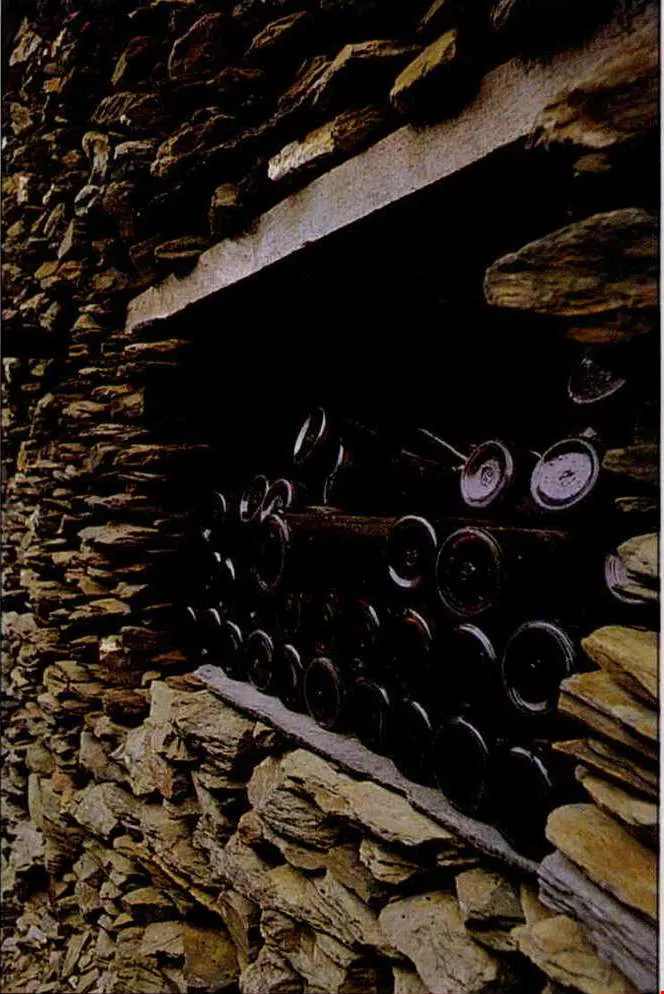
The window of a traditional aboriginal stone house is used to store empty alcoholic drink bottles--a symptom of the inroads made by modern civilization.
Adjustment difficulties lead to alcoholism:
Drinking a lot of alcohol means an accompanying increase in the risk of addiction. Recently Chen Tai-an of National Taiwan University's College of Medicine took a random clinical survey of 993 aboriginals over the age of 15, including 251 Ami, 242 Atayal, 253 Puyuma and 247 Bunun. He discovered that excessive drinkers and alcoholics accounted for 38.2% of the Ami, 45.8% of the Atayal, 42.8% of the Puyuma, and more than one half of the Bunun.
Looking at the drinking problems of the aboriginal peoples and ethnic minorities of the world, most anthropologists put them down to pressure, seeing this as a symptom of the inability to adjust to rapid cultural changes. In a situation of losing traditional culture and having no way to find one's place, it often seems best to use alcohol as an escape. But as for the real situation, there has been no decisive conclusion even today.
Atayal medic Dr. Arthur Chi-wen Kung of Hsiulin Rural Township's clinic in Hualien County, says that alcohol abuse is probably the result of many factors and is the cause of many things too.
He cites alcohol abuse and divorce as being very likely examples of mutual causes and effects. Somebody might work very hard every day and neglect to look after his family. This might lead his wife to leave him, giving him such a blow that he becomes depressed and finally sinks into alcoholic oblivion.
But it could also be that, because this person drinks all day, he beats and scolds his wife and children when he is drunk, loses his job, and leaves his wife with no alternative but divorce.
So when you see alcohol abuse and certain other social problems appearing together, unless you make a deep investigation to understand exactly what is going on, it can be very difficult to judge the relationships between causes and effects.
Nevertheless, if we put aside for a moment the problem of what causes alcohol abuse, it does seem to be a perfectly normal thing when, in a mountain village which lacks rest and recreational activities, the residents who have labored hard all day get together in the evening to have a drink and relax. Moreover, many residents of mountain villages are not mistaken in thinking that drinking can cement ties between friends and family members.
So why then is the rate of excessive drinking so high? To explain this in the most simple terms; "it is bad when you do not know when to stop!" In fact, if you can just limit yourself sufficiently, then drinking need not become abuse.
Looking at many surveys and statistics, excessive drinking among the residents of the mountain areas is truly a serious problem. The situation of these excessive drinkers and alcoholics is usually that they are repetitive drinkers who cannot limit themselves. When they are drunk they behave badly, and they produce abnormal psychological or physiological phenomena. More than half of such people give rise to dysfunction at work, in the family or in marriage. The proportion of accidental injuries suffered due to alcohol abuse is also as high as 50 percent.
Can there be some kind of automatic improvement in this situation? Dr. Hsu Mu-chu of Academia Sinica's Institute of Ethnology explains that, because it is the difficulties of adjustment in the process of acculturation which lead to the problem of alcohol abuse, it could be that following integration into the larger society there will be a gradual improvement in the situation.
Take the Ami people as an example. Originally the situation of alcohol abuse among the Ami was very serious, but following the deepening of their degree of acculturation, today the situation is already much better.
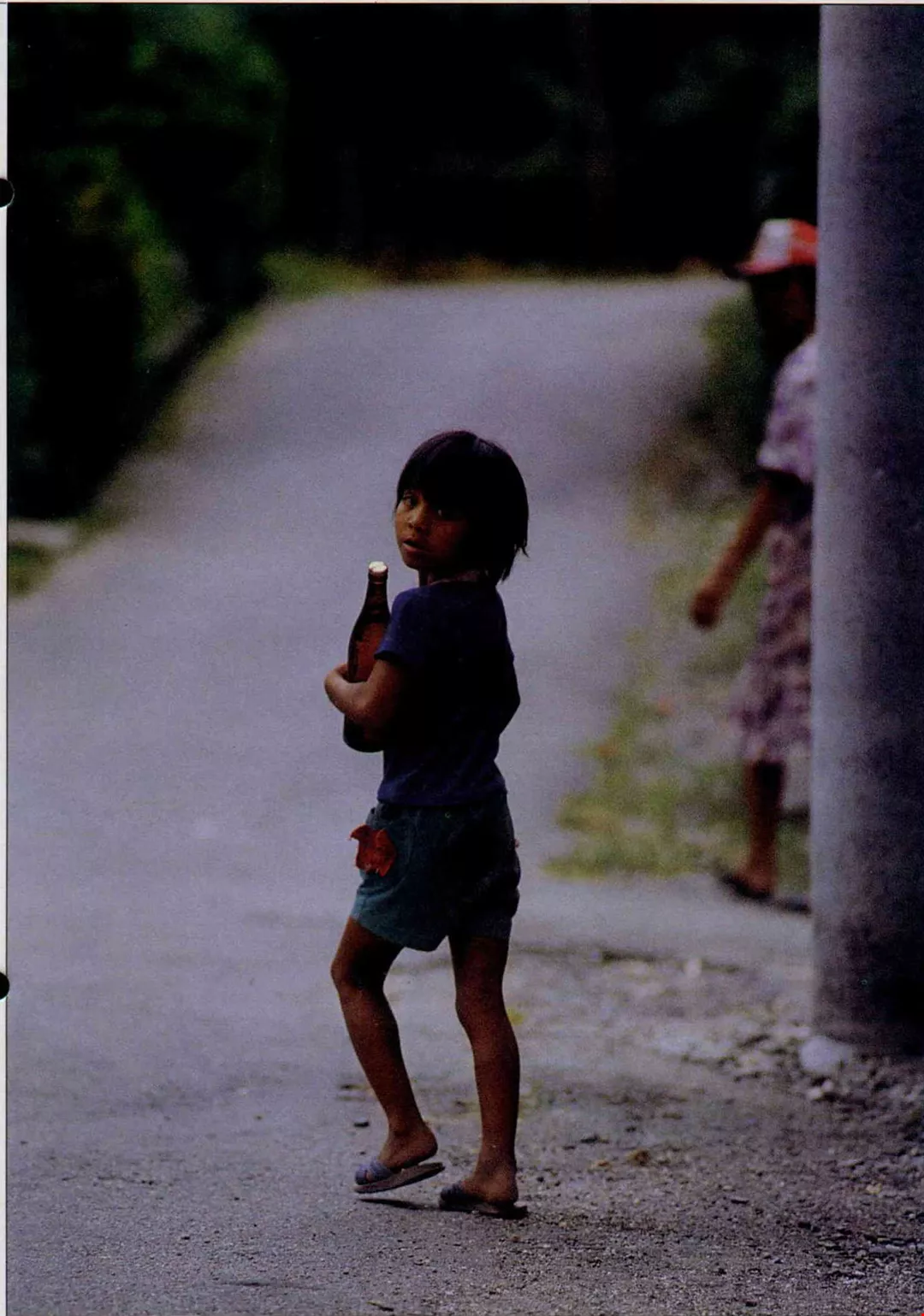
The use of children to buy drinks for their parents could influence later attitudes when it comes to dealing with the problems of alcohol.
Red cards fail to stem the flow:
Nevertheless, although the amount of research on Taiwan's mountain aboriginals cannot be considered to be very small, we do tend to see piles of research reports making it into print, being adorned with elaborate covers, then quietly getting left on the bookshelves. The result of all this research has not actually been the taking of any real action to find ways to improve on the problem of alcohol abuse.
In fact it was 1988 which saw the true beginning of the efforts that have been taken for helping and putting into effect support work. It was then that Chen Tao-ming, the director of Hualien County's Chuohsi Rural Township Clinic, discovered that the problem of alcohol abuse in that mountain rural township was really serious. Out of 77 people who died there that year, thirty cases were due to either alcohol poisoning or accidents that occurred after drinking--that is about 40 percent. Faced by such a high mortality rate, he thought up the idea of using a "red card" scheme.
In other countries, doctors can give a bracelet to people suffering from diabetes. If such people should by any chance collapse in the street due to a fall in their blood-sugar level, other people will see the bracelet and know what their problem is and send them to hospital for the right medication and resuscitation.
Chen Tao-ming thought that if he let an alcohol abuser carry a red card, when people saw it they would not ask the carrier to have a drink, and it would also allow him to kick the habit. It seemed to be killing two birds with one stone; if there was no complete prohibition, at least there would be a fall in the number of alcohol abusers.
Although Chen Tao-ming's motives were admirable, and many red cards were issued; however, they did not have any effect among the Ami and Bunun aboriginals in the area. People with the right intentions would try carrying a red card, but there would still be those in their community who would ask them to have a drink, or goad them on with dares. Alcoholics would usually not carry their cards at all. The number of alcohol abusers stayed at the old level and there were still cases heard of accidents following drinking. What is ironic is that this method which did not work in the mountain rural township, did actually find many takers in the plains who used the cards as a kind of protective charm to avoid drinking.
It was three years ago that Dr. Hu Hai-kuo of the psychiatric department at National Taiwan University's College of Medicine began research into alcohol abuse prevention in Taipei County's Wulai Rural Township. He is at present still collecting evidence and individual case studies.
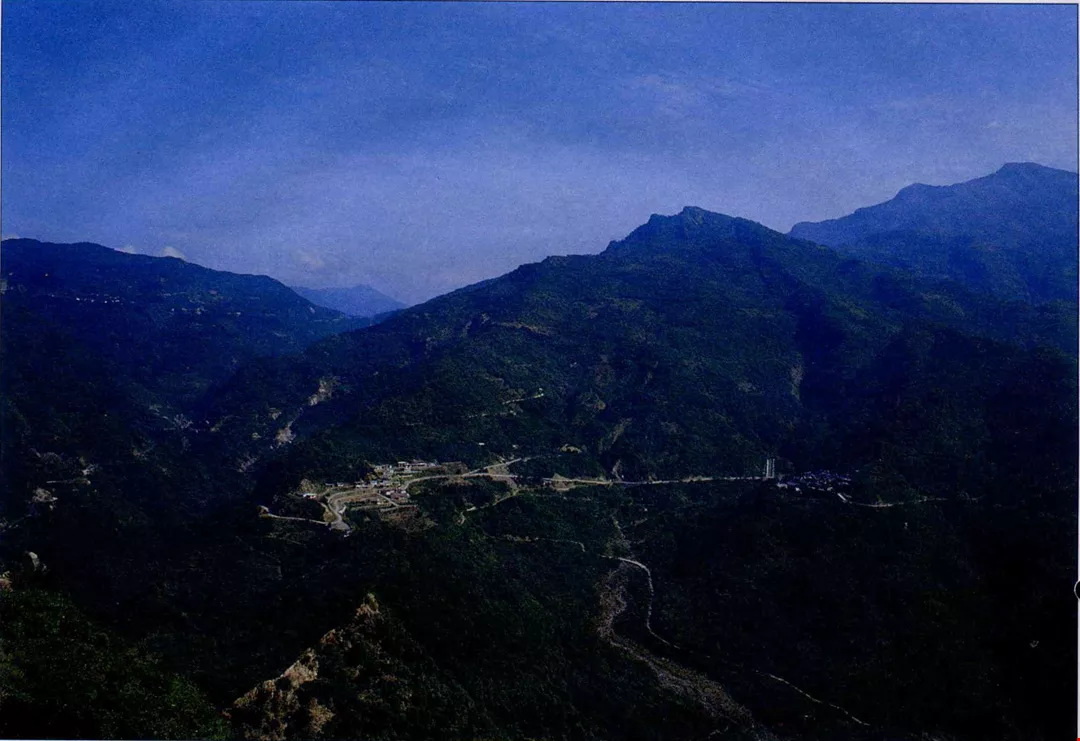
With tribes mostly located in mountainous and remote regions with bad communications and few recreational facilities, it is hard for residents to avoid getting together for a few drinks after a day's work.
Establishing the Center for Aboriginal Health in Taiwan:
Then, on February 12 this year, the Center for Aboriginal Health in Taiwan was established in Hualien under the guidance of the Tzu-Chi Medical College, as a relatively well-planned way of striving to improve the problem of alcohol abuse in the mountain areas.
Dr. Arthur Chi-wen Kung of the Hsiulin Rural Township Clinic and Wang Hao-wei, head of the psychiatric department of the Tzu-Chi Medical College, have come up with certain methods for preventing and curing alcohol abuse. They have divided their preventative work into the two modes of "elementary prevention" and "early intervention."
The purpose of "elementary prevention" is to give the public an understanding of the dangers of excessive drinking and to advocate finding alter-native forms of recreation. This mode is again divided into passive and active aspects. The passive aspect uses video to record the experiences of opinion leaders in the area or the preaching of missionaries, so as to raise the issue among the public. Other kinds of media can also be used, such as posters and slogans to explain the changes that are taking place in the culture of drinking and to cultivate a sense of the dangers of drinking, explaining that excessive alcohol can cause cirrhosis of the liver, accidental death and so on. This is working with the educational aspect.
As for the active aspect, alternative activities can be found to fill the empty hours. For example, Hsiulin village in Hsiulin Rural Township has organized its own baseball team. They have come up with the pact: "Play ball and you do not drink; Drink and you do not play ball." They play on empty land next to a cement factory and invite other teams for friendly games on weekends.
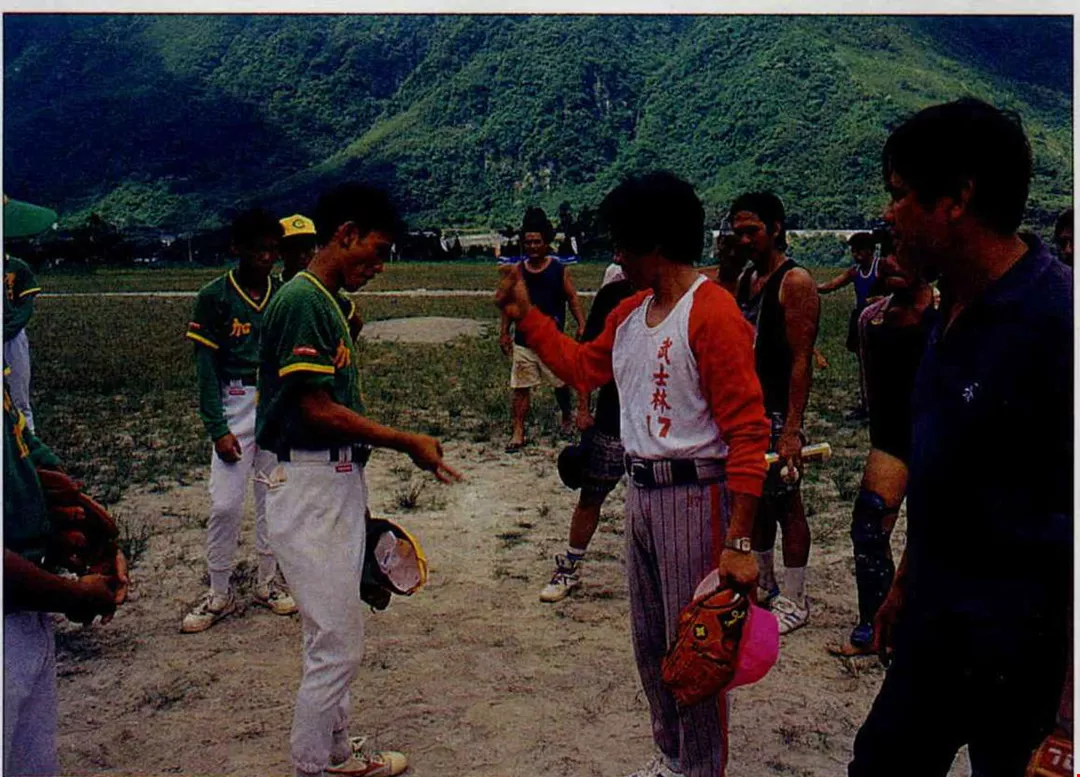
The baseball team organized by the people of the village of Hsiulin in Hualien County holds friendly matches on days off as a kind of "elementary preventative" alternative activity.
Prevention better than cure:
The mode of "early intervention" involves the selection of homes that have had a case of excessive drinking. The initiative is taken to pay special domestic calls, give counselling, and initiate teaching about appropriate quantities of drink, in the hope that other family members will not be influenced to drink too much, as well.
Dr. Arthur Chi-wen Kung, a graduate of Taiwan Unversity's Institute of Public Hygiene, says that preventative measures must measure up to the local cultural background, be able to win over the identification of local residents, and carry along the people of the community so that they take part on their own volition. Because tribal drinking is a social activity, if a local leading figure can be enlisted to set a standard and make a start by reducing quantities to a suitable level, in a short period of time results should be evident.
The Center for Aboriginal Health in Taiwan this year made a large-scale group research plan for the problem of alcohol abuse, which they further subdivided into a number of medium-scale projects. If this passes the assessment of the National Science Council and the Department of Health and gets financial support, then it can begin next year.
Because this work will be involved with the medical problems of alcohol, and will also be counselling work of a very difficult nature, the counsellors will have to have both clinical experience and experience in social organizations. They will also have to be extremely enthusiastic and will not actually be very easy to find. The idea is to bring together anthropologists and medical personnel to strive for the health of the residents of the mountain areas.
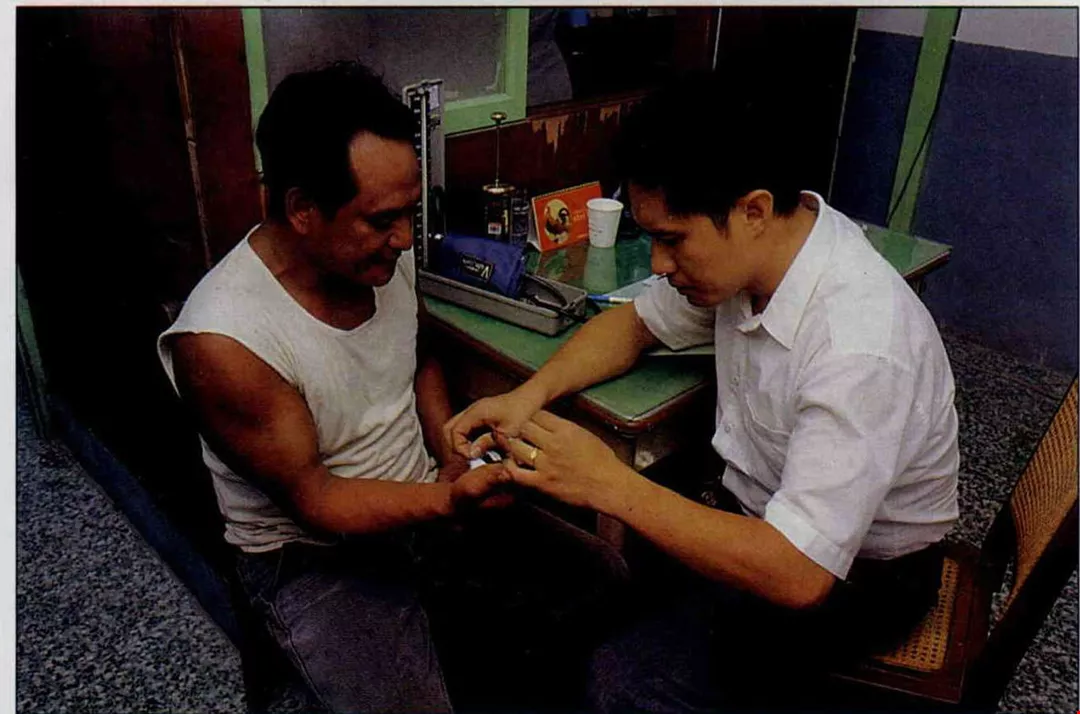
Alcoholism often erects barriers to occupations, marriage and family life, and it can lead to accidental injuries.
Combining strengths to help the weaker groups:
According to a 1988 to 1989 survey by Academia Sinica's Institute of Ethnology and the Department of Health into the health situation and needs of residents of mountain areas, alcoholism features highest in the awareness of medical risks among the mountain residents. It is a problem that requires special assistance and directness. This also reveals that the residents of mountain areas do actually know the seriousness of the problem, but just have no way of solving it.
In fact, there are many alcohol abusers who have had the experience of going on the wagon. The primary reason is their own wish to quit, then comes the fact that some cannot drink any more and take up the invitations of family members because they are sick. However, there is a general feeling that "you must drink to be able to do things," so it is exceedingly difficult to kick the habit.
It is not just that they and their fellows have no way to solve this problem. Even medical circles are not able to get much of a grip on this cross-cultural health work. Nevertheless, just as Dr. Mubg-liang Lee, chairman of the organizing committee of the Tsu-chi Medical College, says, "The treatment of the aboriginal peoples should be forever." It is better late than never.
[Picture Caption]
p.38
Drinking is a kind of ceremony at the festivals held by the aboriginal peoples of Taiwan's mountain areas.
p.39
Whenever there is a festival or wedding, the women prepare wine for their tribesmen before the event begins.
p.40
The window of a traditional aboriginal stone house is used to store empty alcoholic drink bottles--a symptom of the inroads made by modern civilization.
p.41
The use of children to buy drinks for their parents could influence later attitudes when it comes to dealing with the problems of alcohol.
p.42
With tribes mostly located in mountainous and remote regions with bad communications and few recreational facilities, it is hard for residents to avoid getting together for a few drinks after a day's work.
p.43
The baseball team organized by the people of the village of Hsiulin in Hualien County holds friendly matches on days off as a kind of "elementary preventative" alternative activity.
p.44
Alcoholism often erects barriers to occupations, marriage and family life, and it can lead to accidental injuries.
p.45
"The treatment of the aboriginal peoples should be forever." Ming-liang Lee, chairman of the organizing committee of Tsu-chi Medical College, points out that the problem of alcohol abuse among the mountain dwellers urgently awaits a solution.


@List.jpg?w=522&h=410&mode=crop&format=webp&quality=80)


