Alishan's Pnguu--An Alternative Travel Destination
Chang Chiung-fang / photos Lan Chun-hsiao / tr. by Christopher J. Findler
August 2009
What else does Alishan have to offer visitors besides the Forest Recreation Area?
Since the recreation area became saturated with tourists, the Alishan National Scenic Area Administration has been actively promoting other types of excursions featuring different themes, such as the exotic Tsou Village Tour.
With just over 6,000 members, the Tsou are one of the smallest groups of indigenous people in Taiwan. They are divided into the Northern Tsou, residing in Chiayi's Alishan Township and Nantou's Xinyi Township, and the Southern Tsou, living in Sanmin Township in Kaohsiung. The Northern Tsou of Alishan Township live in eight communities: Tapangu, Tfuya, La'lauya, Lika, Savigi, Sinvi, Caemavana, and Pnguu.

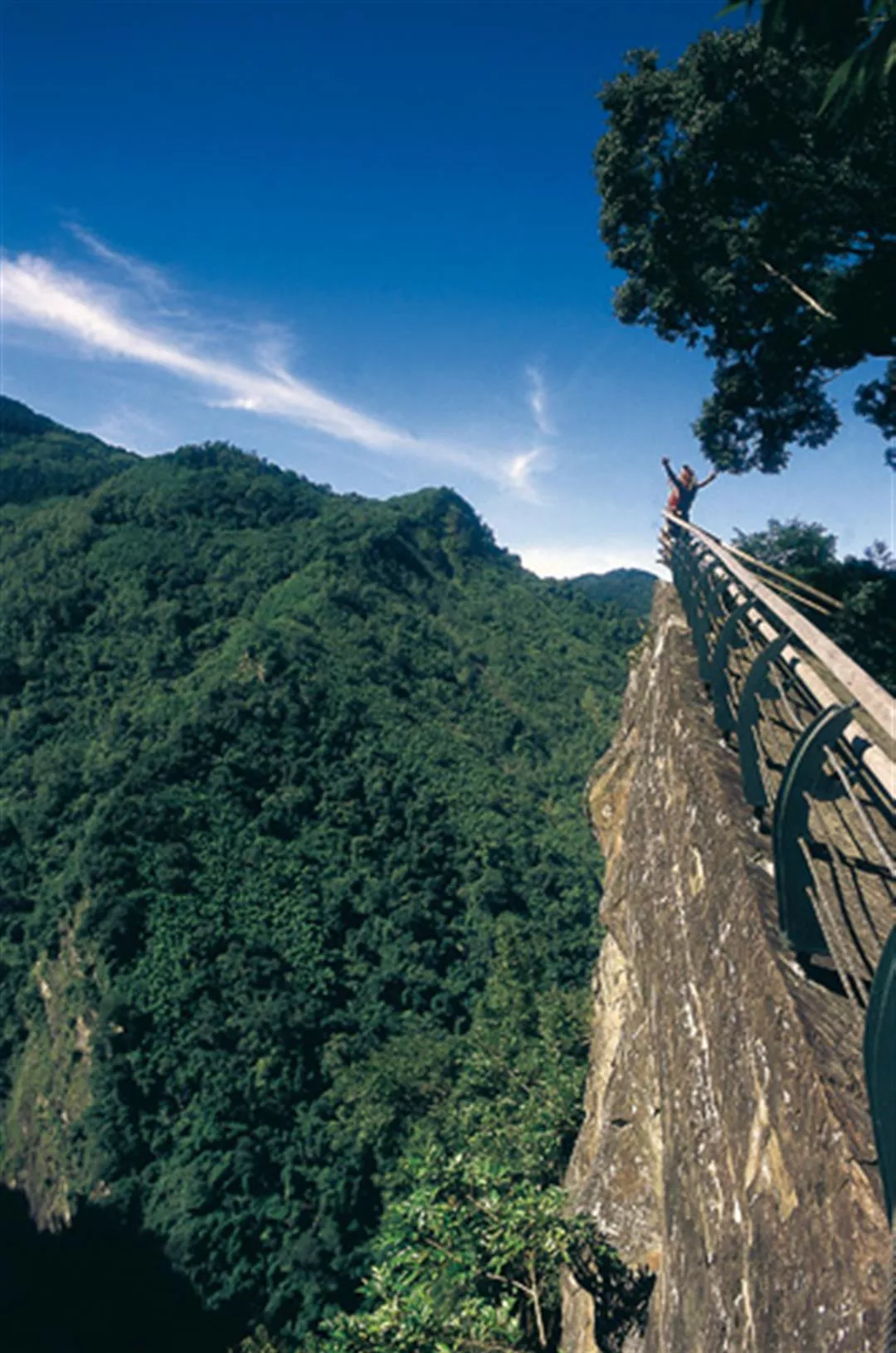
Standing atop the cliff face nicknamed "Titanic," a Pnguu landmark, sporting traditional attire, Avai displays the courage of the Tsou warrior.
The boar village
Nestled beside the Alishan River, at the foot of Tashan, the Tsou's holy mountain, is the tiny village of Pnguu with some 180 people living in fewer than 100 households.
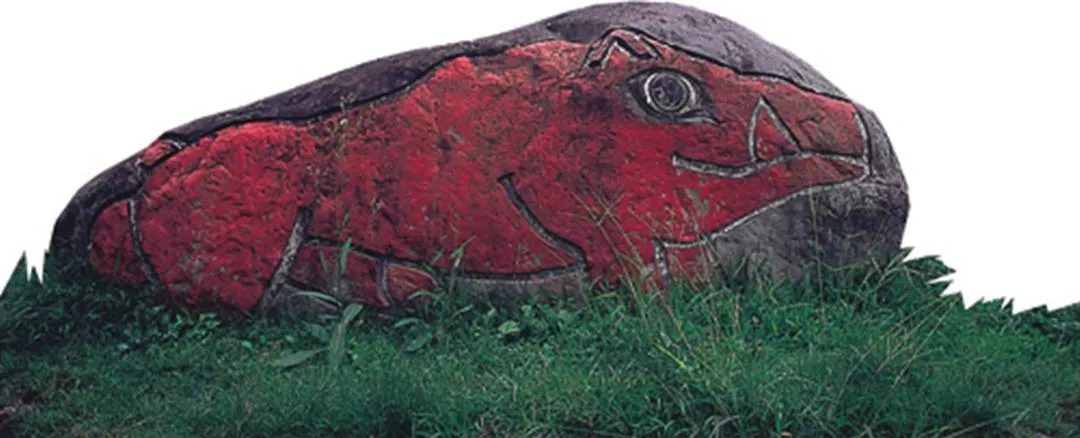
Pnguu is also known as Hamowana Boar Village. Hamowana means "colony of the gods," and the boar is auspicious to the people of Pnguu. Tradition has it that hunters pursuing mountain boar discovered the area known as Pnguu. When you see a stone red boar sculpture after you cross the Pnguu Bridge over the Alishan River, you'll know that you've reached Pnguu.
The boar is impressive, but it pales in comparison to the "Treasure that Subjugates the Mountain"-a huge carved wooden phallus taller than a man set up in front of the Tsou Cultural Museum.
Pointing at the "treasure," Avai, a member of the Pnguu Community Development Association, explains that Typhoons Nari and Toraji blasted the island five years ago, setting off severe rockslides throughout the Alishan area.
"According to the shaman, landslides are caused by goddesses sweeping the mountain and the most effective way to deal with these goddesses is to set up a phallic symbol, because they will be so embarrassed they will hide," confides Avai. He goes on to say that Pnguu hasn't experienced any rockslides since they erected their "treasure."
The phallus has been invaded by termites as of late, causing the locals to worry that its power will diminish. They're pondering carving another one.

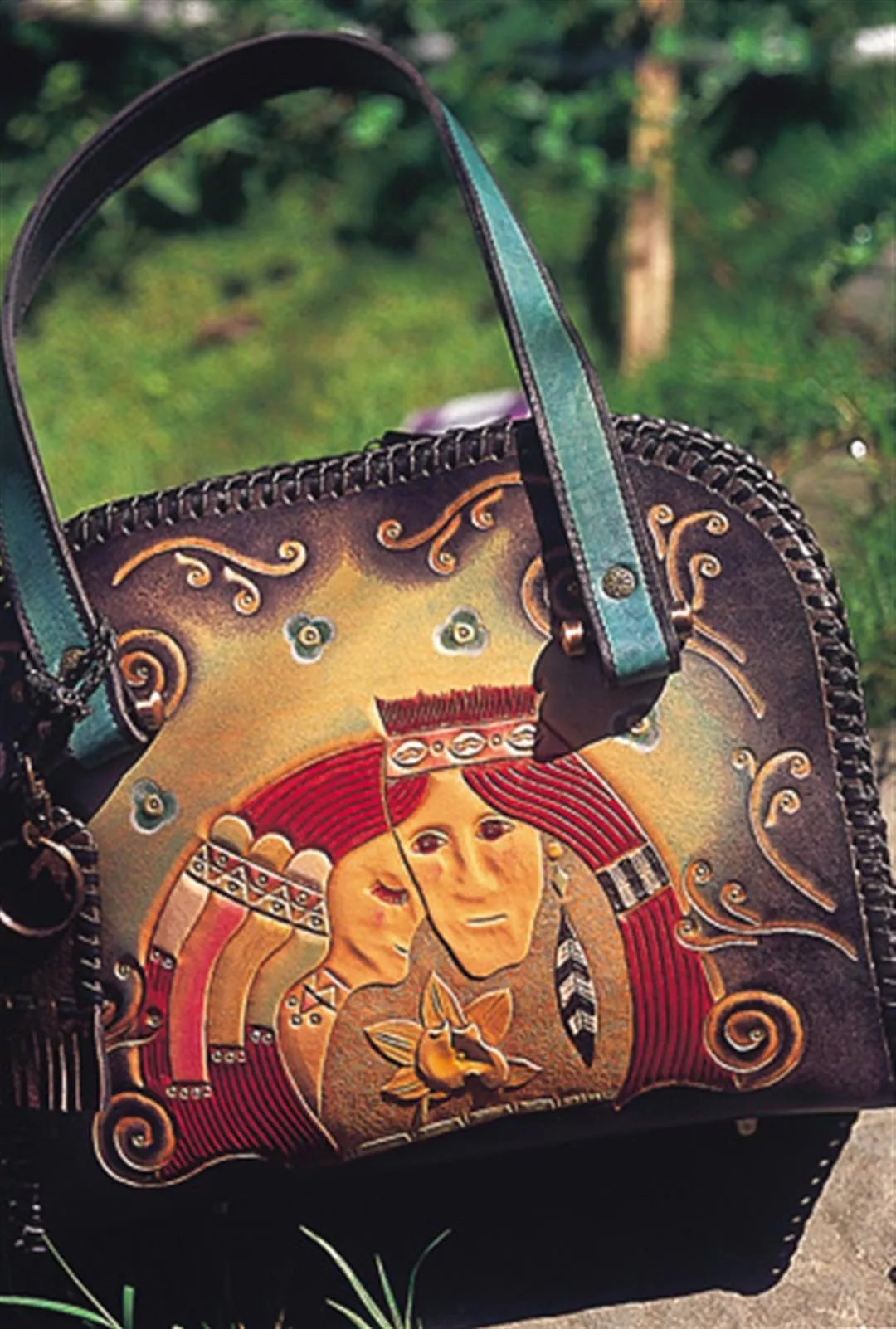
Popular with visitors, Paicu's leather sculpting incorporates both art and culture.
Dry-land Titanic
Like the Tapangu and Tfuya communities, Pnguu also has its own beautiful bamboo forest path (the Hamowana Fairy Tale Path), but the scenic spot that has been touted in travel guides lately is Sihbi Sihbi Rock, referred to by locals as the "Titanic." (Sihbi sihbi means "lots of palm grass.")
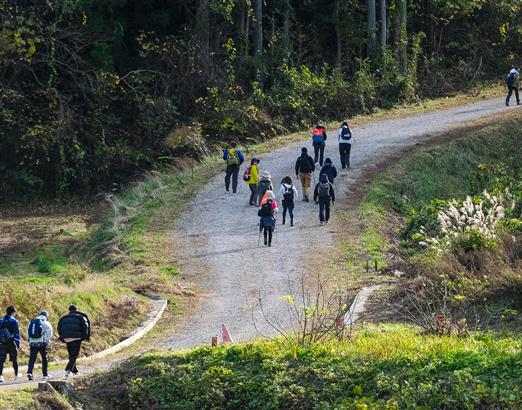
The awesome precipice, 70 meters wide and over 1,000 meters high, was formed by tectonic plate pressure and was christened "Titanic" because of its resemblance to a ship's bow. Visitors love to pretend that they are Jack and Rose from the Hollywood blockbuster. The Titanic is a must for couples having their wedding pictures taken at Pnguu, but climbing the Titanic's face can be a tad difficult for exercise-starved city dwellers. By the time "Jack" and "Rose," dressed to the nines in their wedding gear, make it to the top, they look more like refugees than newlyweds.
On the other side of the cliff wall is another of Pnguu's major scenic spots-Tianshui Falls, which crashes down from the southwest face of their sacred mountain. Enshrouded in mist year-round, it's hard to see in its entirety and looks as though the water comes streaming down from heaven, hence its name "tianshui" or "heavenly waters."
The Tsou used to depend on farming and hunting, but hunting has been illegal since Alishan was declared a national scenic area in 2001. In addition to living off of money made from raising ginger, bamboo shoots, plums, cabbage, jelly-fig, and camellia seeds, the people of Pnguu are working hard to develop tourism and cultural industries using aid from the government's multi-employment development plan.
The Pnguu Tsou have set up bed and breakfasts and developed a cuisine with an exotic local flavor. If you visit Pnguu, be sure to sample the shoveljaw carp, deep-fried stream shrimp, roast boar, steamed pumpkin, and green papaya salad.

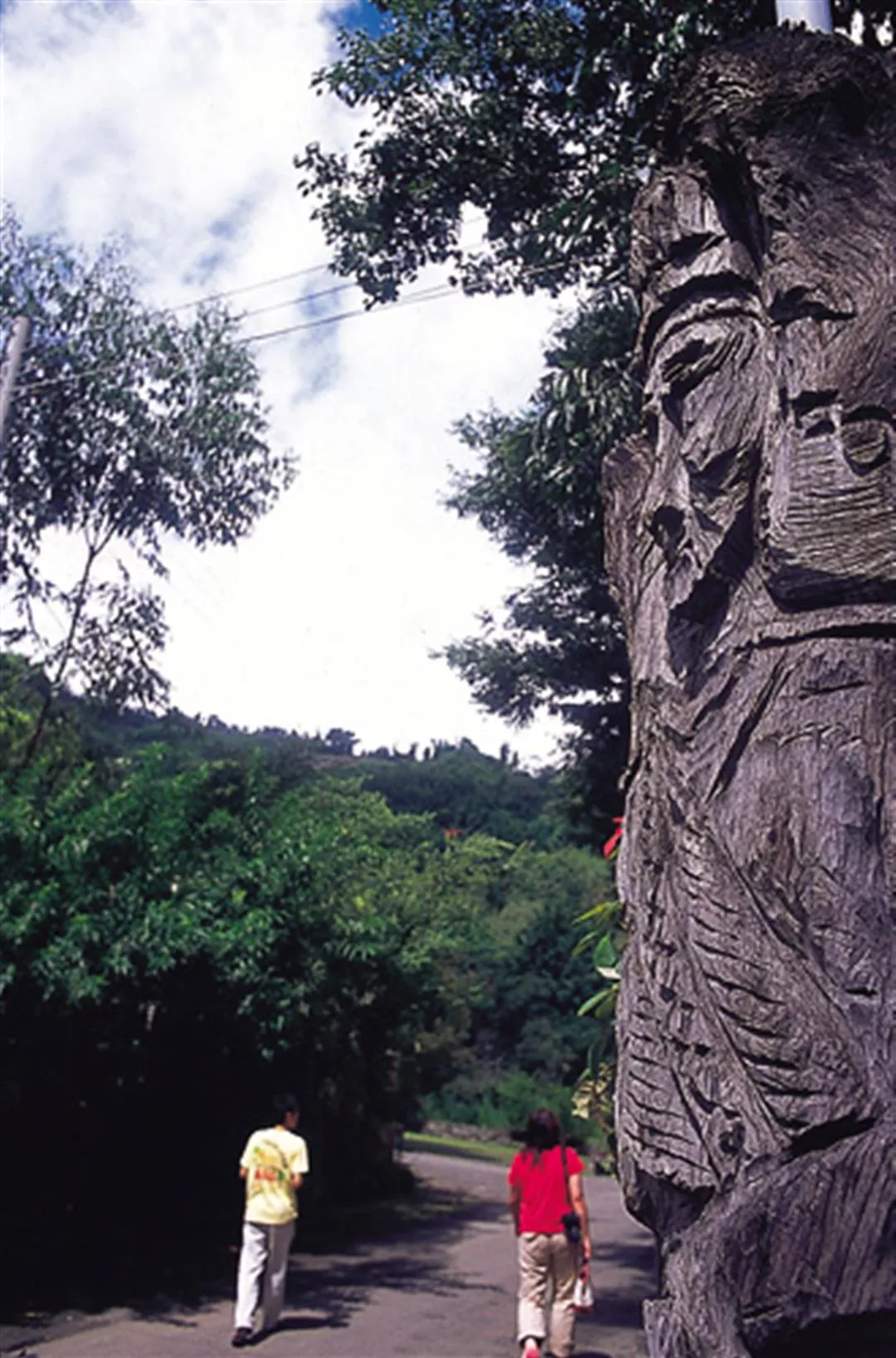
Wood carving is a traditional Tsou craft. The mountain boar (below) and this portrait carved directly into a tree (facing page) are distinctive pieces at Pnguu.
The pride of Pnguu
In the Tsou language, "Tsou" means "humans." In addition to being blessed with beautiful natural surroundings, Pnguu is rich in another precious resource-her people.
If you want to see beautiful young women or strapping young men, Pnguu won't let you down. During the period of Dutch occupation, the Tsou people "mixed" with the Dutch. As a result, the Tsou are the most beautiful of Taiwan's indigenous peoples and according to many, the Tsou living in Pnguu are the most attractive.
After he arrived in Formosa, the Netherlands Trade and Investment Office representative to Taiwan, Menno Goedhart, discovered that Taiwan's Rukai and Tsou Tribes had descendents with Dutch blood, with the Tsou having the most. Members of the Tsou tribe told him that as many as half of their people had some Dutch blood.
From children playing along the road and youngsters of marriageable age to middle aged individuals already mothers and fathers themselves, all of the residents of Pnguu have breathtakingly large, deep eyes and high, straight noses.
Director Wei Te-sheng, who became a household name when his movie Cape No. 7 became a smash hit last year, visited a number of villages recently while on his quest to find a leading male for Seediq Bale, a film about indigenous people. Men of the Tsou Tribe were rejected as being "too beautiful and not meeting the director's ideals of a rough-looking hero."
Celebrities Tang Lanhua and Tian Li are members of Alishan's Tsou Tribe. The popular Tang Lanhua, in particular, is the pride of Pnguu.
"As a child, Tang Lanhua was a scrawny ugly duckling," Yamui, an old classmate of Tang chuckles as she describes the pride of Pnguu. "Looks like our ugly duckling grew up."
Singer and actress Tang Lanhua was a superstar for a short time, but she dropped out of showbiz at the peak of her career to go abroad to pay back the huge debt that her ex-husband had accumulated. She later ran her own direct sales company selling beauty products. Despite the ups and downs of her career, Tang never forgot her hometown, returning to Pnguu every year.
If you visit Pnguu, the locals will enthusiastically point out that "that white house is Tang Lanhua's home, and that's the Lanhua Bridge that was built using money she donated..." If you're lucky, you might run into the star herself back in town to see family.

A feast of art
If you find the natural surroundings breathtaking, Pnguu's art will leave you gasping for air.
The Tsou are not only physically striking, they are natural artists. Their woodcarvings, bamboo weaving, leather sculpture, and paintings depict the legends, history, and culture of the Tsou.
Mo'o Poico Nu worked for the Forestry Bureau, maintaining railroad tracks and changing ties, for over 20 years. When he retired four years ago, he left his Forestry Bureau employee dormitory in Jiaoliping to return to Pnguu where he set up the Lahousse Studio, using funds from the government's multi-employment development plan.
In his creations, Mo'o utilizes raw materials commonly found near his village-the moso and makino bamboos. "Moso is better for carving, because it is harder, while makino is more flexible, making it better suited for weaving," he explains.
Mo'o's coarse, dark hands fly as he splits, colors, and weaves bamboo to make beautiful, lifelike butterflies and dragonflies.
Yamui, another of Pnguu's treasures, used to run a restaurant in Pnguu, but her spine was injured in an automobile accident, leaving her unable to work. It did, however, open up another door for her and her hometown.
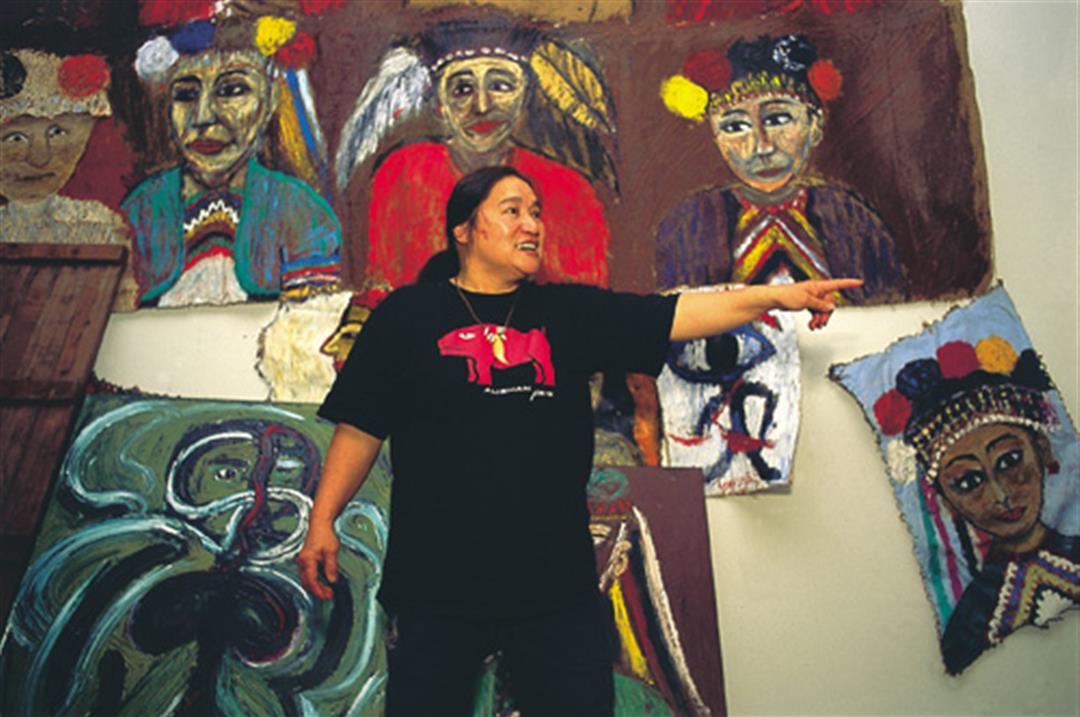
Starting some three years ago when she started drawing on a washboard, Yamui, at nearly 60 years old, began creating. Before she knew it, she had over 200 paintings to her name. Her works, which employ bold colors like the bright red and pitch black of the Tsou Tribe, have been exhibited in the Alishan Museum and in Beijing.
The fire-red boar at the entrance to the village, now Pnguu's talisman, is the work of Yamui and her daughter.
Legends in paint
Characters from traditional Tsou stories are portrayed in Yamui's paintings.
"A Man with Two Bags" depicts a legendary hunter of the Tsou Tribe whose genitalia were so large that he would carry two bags-one to tote his kill and the other for his member.
The creature with red eyes and red hair shown in another painting is a mythological spirit that emerges out of the mist. "My dad has seen it," explains Yamui in all seriousness. The reason for the existence of spirits like these is that years ago, the Tsou people employed slash and burn methods (burning forests and using the resulting ashes as fertilizer) in their agricultural practices.
Most of the characters in Yamui's paintings are nude. "I remember that into my teens, older people in our village didn't wear clothes." Members of the tribe only started wearing clothes when Christians later came to help relieve poverty.
Love Affair between Human and Spirit, The Legend of the Treasure that Subjugates the Mountain, Gift from Heaven... A self-taught painter, Yamui squeezes paints out onto a wooden board and applies them to tree bark, changing her own life as she records the legends of the Tsou in Pnguu.
The Pnguu Tsou
Paicu Tiaki'ana, who once cut an album (Paicu) named after herself, not only writes songs and performs them in her native Tsou tongue, she is also a rarity in that she is highly adept in a number of other Tsou art forms.
Blessed with the lilting voice of an angel, she also has very talented hands. She is accomplished at woodcarving, leather sculpture, weaving, and patchwork. She has integrated the life and culture of her people into her work, so that it exudes a very strong Tsou flavor.
The Tsou use animal hides more than any other indigenous people in Taiwan and are highly skilled at leather production. They scrape the flesh from the skins and dry them. To make them supple, they use a mortar and pestle to pound them or they stretch them across a smooth log and two people pull on either side. The Tsou used large quantities of leather in their traditional costumes, including gloves, boots, and cloaks, but since the government's hunting prohibition issued in the 1990s, their art has been gradually disappearing, because they have been unable to obtain the necessary raw materials locally. Paicu currently relies on imported leather for her sculpting.
A symbol of the Tsou Tribe-a wooden structure on wooden stilts with a thatched roof topped with golden dendrobium, a favorite flower of the god of war-is frequently depicted on Paicu's leatherwork.
"The kuba is more than a pavilion. It's a gathering place for welcoming and farewelling gods as well as for sacrifices and meetings," says Paicu. Only tribes with chiefs have formal kubas. In Alishan, only the villages of Tapangu and Tfuya currently have their own chiefs and their own traditional kubas. The one at Pnguu is not used as a kuba.
If you've been to the Alishan Forest Recreation Area and you don't want to fight the crowds, you might try visiting Pnguu to experience Alishan's natural beauty as well as the kindness and fascinating culture of the Tsou people.