I Don't Want to Grow Up--Toys for Grown-Ups
Lin Hsin-ching / photos Hsueh Chi-kuang / tr. by Geof Aberhart
February 2009
Playing with toys is a fond child-hood memory we all share, but today toys are no longer just kids' stuff. Now many adults are passionate about toys, collecting them and using them as a temporary escape from the worries of everyday life.
The toys these "big kids" collect all share a certain "healing" aspect. Some, for example, are cute, helping you raise your spirits or vent your spleen at an overly fussy boss or busybody colleague. As well as helping you feel like you've won a "spiritual victory," these toys can also play the role of quiet confidant, helping you get through life's low points.
It is dusk, and amidst the bustling crowds at Taipei's Breeze Center is Jacky, a fresh-faced graduate student wearing a baseball jacket, shopping with friends in the toy department of the sixth-floor store Hands Tailung. His eyes alight on a popular and recommended toy, the "infinite bubble machine," and with barely a thought he pops it into his shopping basket.
"I loved popping bubble wrap as a kid-there was something oddly fun about mindlessly prodding away at it. If you try and pull that off as an adult and anyone sees you, though, you'll catch an earful," jokes Jacky. "I never thought someone would actually invent something like this-they should totally give this an iF design award!"

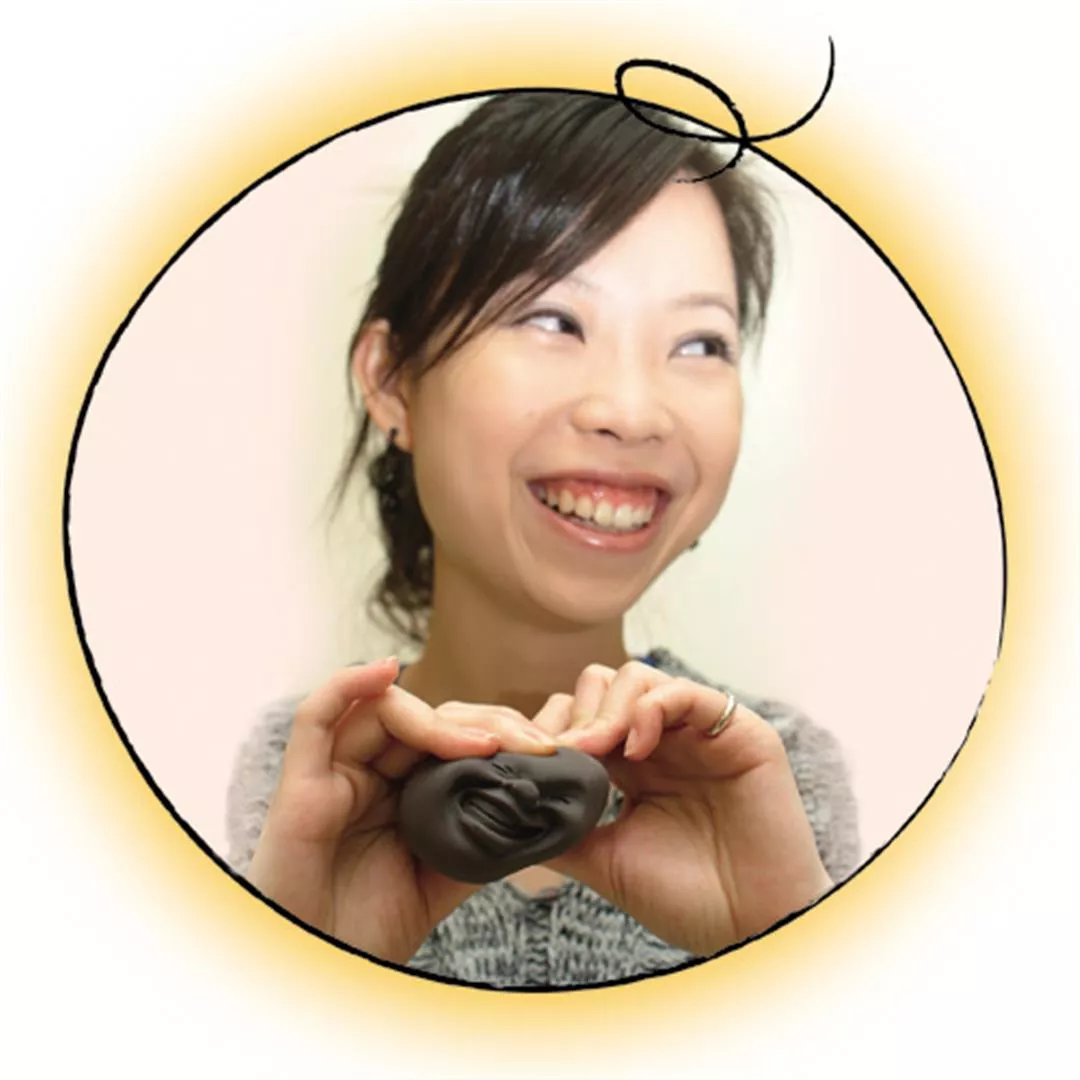
Therapeutic toys often focus on being automated and letting people vent their frustrations. This photo shows a shopper holding a Caomaru toy; these toys let you freely push, prod, and mold them into smiles, crying faces, angry faces, and other expressions, offering fun as well as a way to get things off your chest.
Forever popping bubbles
The "infinite bubble machine" Jacky bought takes its inspiration from the bubble wrap commonly found in shipping packages. The device sits in the palm of your hand and offers unlimited bubble popping, providing a means to both kill time and vent frustration, all the while accompanied by the familiar popping sound. After 100 bubbles are popped, the machine sounds a "bingo!" or similar encouragement, keeping the fun alive.
The infinite bubble machine was released by Japanese toy company Bandai in 2007, priced at ¥500 (approx. NT$180) and described as "therapy for restless hands." On the Internet, it was met by comments that it was "dumb as hell, but so fun it'll bring tears to your eyes," and on release it was met warmly by Taiwanese and Japanese consumers.
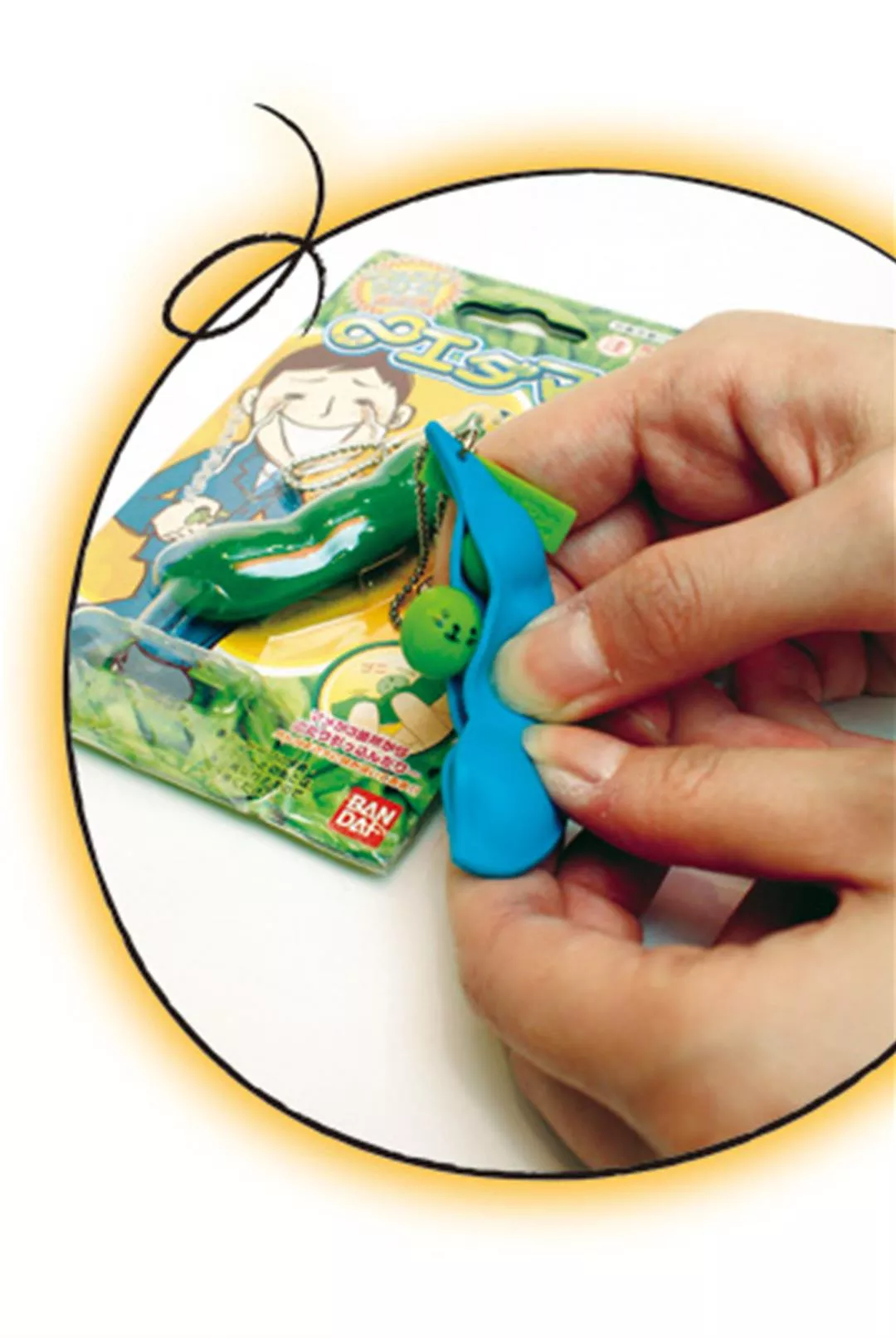
After the infinite bubble machine sold over 2 million units, Bandai followed it up with the "infinite edamame popper." Modeled after edamame, the pods contain beans with 12 different facial expressions, including depressed, crying, and sleepless, with the beans popping out when the pod is squeezed. Not only is this fun, it also provides a way to keep idle hands busy, and has sold strongly like its predecessor. Stockists, including stores known for selling "grown-up toys" like Hands Tailung and online store Zakka, have even sold out of them.

The Infinite Edamame Popper is shaped like an edamame (soya bean) pod, and with a press, one of the edamame inside will pop out and show the expression on its face, giving idle hands and bored people something to keep themselves occupied with.
Leading the pack
With the combined stresses of work, school, home, and social lives, for Jacky and other consumers these toys have become a way to let off steam. This has led to so-called "healing" toys becoming leaders in the market.
This trend of healing toys finds its origins back in late 1996. Soon after the Japanese economic bubble burst, Bandai released a toy designed to excite consumers and which turned traditional toy design on its head-the Tamagotchi. Using this egg-shaped device, owners would raise a "virtual pet," which needed them to feed it regularly, pay attention to it, and play with it. If they didn't take good care of their pet, the device would let off a series of beeps, letting the owner know their pet was angry.
The new concept of the Tamagotchi successfully earned the love of its users, creating an "emotional control" mechanism much more effectively than any toy before. Not only was it popular with Japanese youths and office workers, its popularity expanded well beyond Japan's shores.
With the success of the Tamagotchi, Japanese toy companies set about developing new toys and gadgets with new ways to soothe the soul. From earlier attempts like Sunshine Buddies (solar-powered bobble-heads that constantly nod and smile at their owners) and Flip Flaps (solar-powered plastic flowerpots with leaves that bounce around), to more modern inventions like the Infinite Bubble Machine and the Infinite Edamame Popper, several of these inventions have created massive stirs at retail.
Since 2000, these healing toys have been widely available in Taiwan through Japan-based chains like Hands Tailung, and they have proven a hit with the 20 to 35 age group.
Deputy director of Hands Tailung's Marketing and Distribution Management Department Weng Zhenyi points out that despite the global economic downturn in the latter half of 2008 and weakening Taiwanese buying power, healing toy sales grew by almost 30% in that period, seemingly unaffected by the weakened economy.

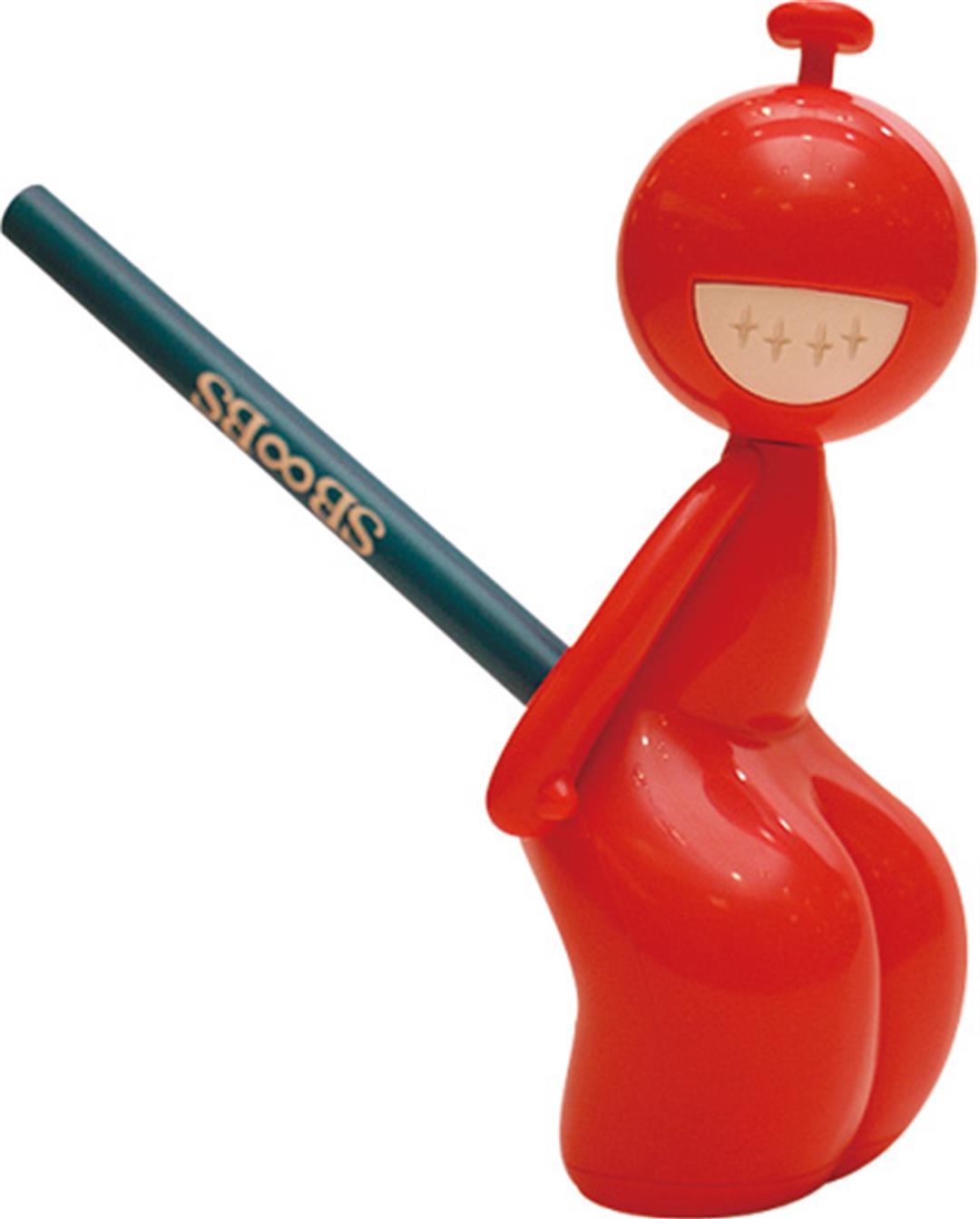
While using office supplies like the SBBS line of office toys might seem a little goofy, there is a certain fun to be found in them and their aim of letting office workers get their revenge on their at-work nemeses. From left to right we see the "Stab Me in the Back" pencil sharpener, the "Bow My Head" keychain holder, and the "Dizzy Me" tape dispenser.
Interactive stress relief
Cute design is something that is common across virtually all of toy design, and healing toys are no exception. However, cuteness aside, the main focus of these toys is interactivity and the use of this interactivity to generate relief from stress and boredom, and to make the toys seem more like confidants.
Take for example the long-selling Sunshine Buddies-with their clean, rounded designs, simple bald heads, and childlike smiles, as they nod they seem to be saying "I agree," "I understand," or "Awesome!" They are like a friend you can take with you anywhere, who will always be there to raise your spirits when you feel down and listen to you when you have complaints.
Another example is the Caomaru series of stress balls. The balls are made out of urethane resin to provide a soft, pliable feel, and are shaped into faces with one of four expressions-laughing, crying, smiling, and yawning. By prodding, pulling, and squeezing the balls, users can create their own expressions, making them excellent company whether you're in a laughing mood or a crying one.
Huang Jennjia, associate professor at Tamkang University's Department of Mass Communication, is one of the few in Taiwan researching healing toys. According to his analysis, the interactive design provides a low-key way to people's hearts as well as offering stress relief.
Huang notes that during a visit to a conference in the United Kingdom, he found the organizers giving out stress balls shaped like light bulbs and brains.
"These two kinds of toy in particular let users find inspiration when suffering mental blocks, with the shapes creating stimulation similar to their forms, encouraging creative ideas and thinking," he jokes.

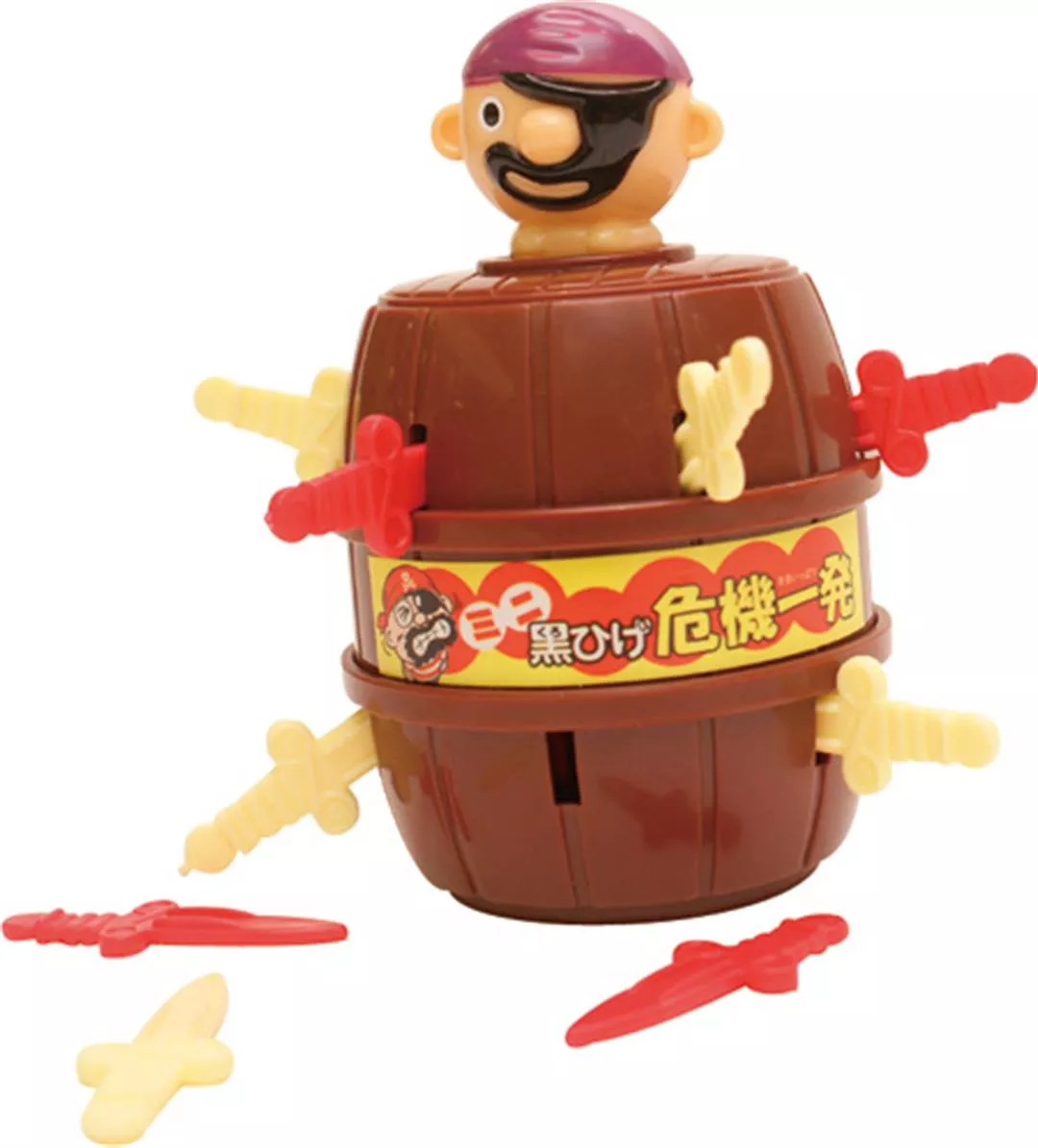
Most healing toys are something for people to silently play around with on their own, but Pop-up Pirate, on sale for 30 years now, gives people the chance to play with others. As you stab a "knife" through, the pirate inside will shake and laugh-until the killing blow, that is, when he bursts out, suprising players and lifting their spirits.
Getting it off your chest
Displacement and venting of anger are two other ways healing toys enable users to blow off steam. One of the most iconic of this variety of healing toy is the SBBS line developed by Taiwanese company Do More Idea Creative Enterprise.
Do More Idea brand strategist Mu Guanhua explains that there's always that one gossipmonger in every office who loves to kiss up to the boss, and those people are always a source of frustration and anger. It was in order to satisfy everyone's desire to see that person get their comeuppance that Do More Idea developed the SBBS product line.
The basic form of the SBBS products uses a balloon-like head with a sneaky grin to portray the sense of someone who is full of themselves and full of hot air, and ties that into a toy that gives everyone the chance to "torture" their office nemesis.
A good example is their "Kneel Down to Serve You" cardholder. This has the nemesis kneeling, as if begging for mercy, while holding your cards up high in a plea for forgiveness. Another is the "Stab Me in the Back" pencil sharpener, whose backside pokes up into the air, awaiting a pencil to sharpen, and giving users the sense of ramming a pencil right where the sun don't shine on the bane of their office existence. Do More Idea's "Dizzy Me" tape dispenser has the figure on the inside of the tape holder, spinning around and around as you pull tape, giving the illusion of subjecting him (or her) to a dizzying torture.
In a similar vein, French company Tear Prod recently released a cheeky blue "voodoo doll" of French president Nicolas Sarkozy, giving those dissatisfied with the Sarkozy administration the chance to vent their frustrations. Like Do More Idea's items, the potential uses of this kind of toy are broad, and their presence in your office is still anonymous enough not to reveal your true feelings.
Researcher into consumer behavior Liu Weigong, an associate professor at Soochow University's Department of Sociology, is more intrigued by the Japanese "Boyfriend Body Pillow." This pillow is modeled after a man's shoulder and arm, and offers users the sensation of being embraced and protected as they sleep.
"For women who either have just come out of a relationship or who have been single for a while, sleeping with this pillow is like being hugged by a lover, and this can prove an effective therapy for the loneliness of singledom," says Liu.
Scholars says that the widespread popularity of these healing toys is the best evidence of the gradual decrease in human interaction we have in modern society. These toys provide people with the chance to take a break and get their anger, exhaustion, or loneliness off their chests, and they look set to only keep growing in popularity, sales, and influence.

A paperclip holder with a variety of expressions.

While using office supplies like the SBBS line of office toys might seem a little goofy, there is a certain fun to be found in them and their aim of letting office workers get their revenge on their at-work nemeses. From left to right we see the "Stab Me in the Back" pencil sharpener, the "Bow My Head" keychain holder, and the "Dizzy Me" tape dispenser.