The Golden Horse Awards
Propelling Chinese-Language Film into the Future
Teng Sue-feng and Chang Chiung-fang / tr. by Scott Williams
December 2013


Half a century after their creation, the Golden Horse Awards are still in full stride. Inaugurated as an award for Mandarin-language films from Taiwan and Hong Kong, they have since become the global Chinese-language film community’s most sought-after prize.
Hong Kong megastar Andy Lau is a case in point. A recipient of numerous awards and accolades, Lau didn’t feel validated as an actor until 2004, when he finally took home his first Golden Horse for his performance in Internal Affairs 3.
The Golden Horses have clearly left their mark on Chinese-language film, and will undoubtedly continue to propel them on into the future.
The Golden Horse Awards are the greatest honor available to the individuals who work in the Chinese-language film industry, and a wellspring of wonderful memories to their winners.
Ang Lee had been a stay-at-home dad in New York for six years before finally getting the chance to make his first film, Pushing Hands, in 1991. When the film was nominated for a Golden Horse, he flew back to Taiwan for the ceremonies. Although Lee lost the best director award to Edward Yang, he did earn a special jury prize.
Standing outside the National Theater after the ceremonies, Lee reflected back on the difficulties he’d had filming in New York and burst into tears. “I was so moved by how well everyone had treated me at the Golden Horses. It was enormously encouraging to me.” The award validated his long-held filmmaking aspirations and made the hard times worthwhile.
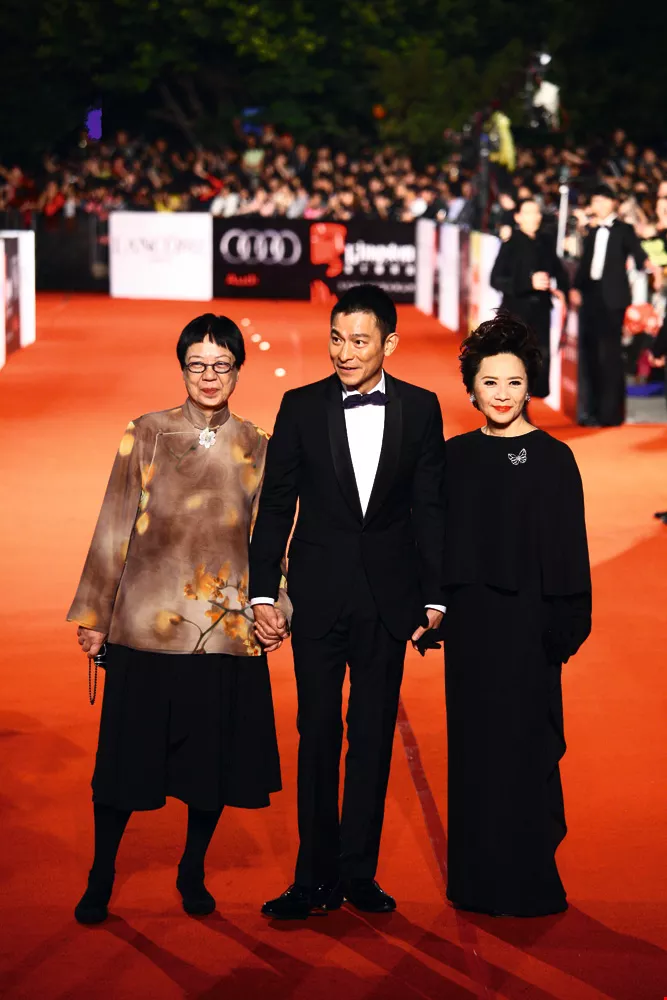
The Hong Kong film A Simple Life won several Golden Horses in 2011. Here, director Ann Hui (left) and stars Andy Lau and Deanie Ip pause on the red to take in the applause before the ceremony.
His next movie, The Wedding Banquet, earned Taiwan’s first Golden Bear at the Berlin International Film Festival and opened doors in Hollywood.
Lee remains very attached to the Golden Horses and always attends if he’s free. As chairman of the 2013 awards jury, he rushed back to Taiwan ten days early to screen nominees.
A filmmaker to the core, Lee told an awards-jury press conference that he was thoroughly enjoying watching four movies a day. “What’s tiring is the psychological pressure. Films aren’t easily described in words. They’re a mental activity, a meeting of minds with sound and visual effects. Given that, it’s not entirely fair to select the best film through verbal evaluation and debate, especially this year, when we have so many good films. I’m just doing my best to keep the process orderly.”
Also present at the press conference was mainland Chinese actress Li Bingbing, a fellow jury member and the winner of the 2009 Golden Horse for best actress for her performance in the spy thriller The Message.
“The Golden Horse Awards have their own unique character and value” said Li. “They don’t just go with the flow. I think they are the most important film awards in Asia.” In Li’s view, their value stems from their objective approach to judging films.
.jpg?w=1080&mode=crop&format=webp&quality=80)
Chen Kun-hou’s 1983 film Growing Up, which traces the transformation and maturation of a difficult child, is typical of Taiwanese New Wave cinema.
Established in 1962, the Golden Horses were the first award specifically for Chinese-language films.
Nowadays, we have the Golden Horses in Taiwan, the Hong Kong Film Awards in Hong Kong, and the Golden Roosters in mainland China. Though these are considered the big three awards in “Chinese-language-film,” the HKFAs focus on Hong Kong films and the Golden Roosters are exclusive to mainland films. In other words, the Golden Horses are the only awards covering the entire Chinese-language film industry, making them in effect the Oscars of the Chinese-speaking world.
The number of films submitted to the Golden Horses is a testament to the awards’ standing within the Chinese-language film industry. A record 265 films participated in this year’s awards selection process, which also included a record number of Chinese-language films produced outside of Taiwan.
“Many people think that because the Golden Horse Awards are held in Taiwan, the majority should go to Taiwanese films,” says Wen Tien-hsiang, CEO of the Taipei Golden Horse Film Festival’s executive committee. “But that’s just too narrow a vision. The Golden Horses are known as the Oscars of the Chinese-speaking world precisely because their impartiality has earned them respect.”
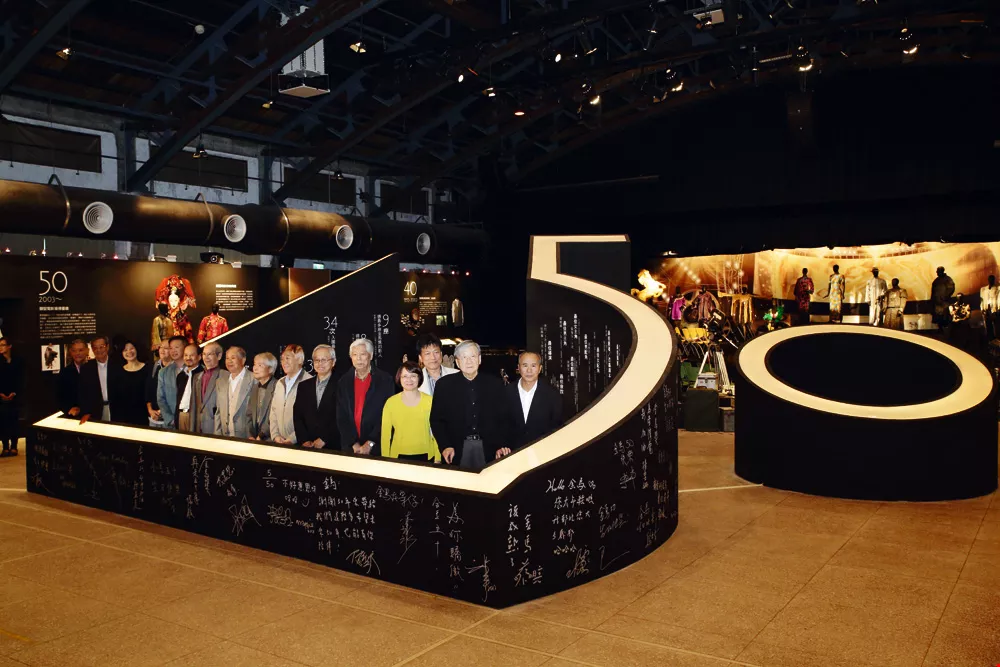
To celebrate the 50th anniversary of the Golden Horse Awards, the Golden Horse executive committee has put a variety of memorabilia, including movie posters and wardrobes, on display at Taipei’s Songshan Cultural Park. Director Lee Hsing (second from right), director Hou Hsiao-hsien (right), and other veteran filmmakers gather together at the opening.
Now an important forum for individuals from throughout the Chinese-language film industry, the Golden Horses were originally intended to honor Mandarin-language films. But they weren’t limited to Taiwanese movies even then. In fact, Taiwanese and Hong Kong movies having been vying for Golden Horses from the outset.
In the old days, Taiwan’s film industry produced primarily Taiwanese-language films. Veteran director Lee Hsing, the child of a Shanghai literati family, has spent 60 years of his life in Taiwanese film. He got into the business directing Taiwanese-language comedies like Brother Liu and Brother Wang on the Road in Taiwan, and didn’t switch to making Mandarin-language films until Our Neighbors, a 1963 movie about ordinary people.
The government’s concerted efforts to promote and encourage Mandarin-language movies in that era gradually succeeded in mainstreaming Mandarin-language film.
Meanwhile, the Hong Kong of the 60s had become home to many of Shanghai’s filmmaking elite. The combination of that talent pool with the city’s deep pockets resulted in large numbers of high-quality films, and enabled well funded studios such as MP & GI and Shaw Brothers to dive into the production of period pieces.
When the first Golden Horses were held in 1962, Mandarin-language films from Hong Kong were active participants. In fact, a Hong Kong film, the wartime love story Sun, Moon and Star, took home the best picture, best actress, and best screenplay honors.
When Shaw Brothers released the classic The Love Eterne in 1963, the film broke Taiwanese box-office records and launched Ivy Lin Po, the actress who played the male lead, into stardom.
It wasn’t until the third Golden Horses in 1964 that a Taiwanese film—Lee Hsing’s Beautiful Duckling—garnered best picture honors.
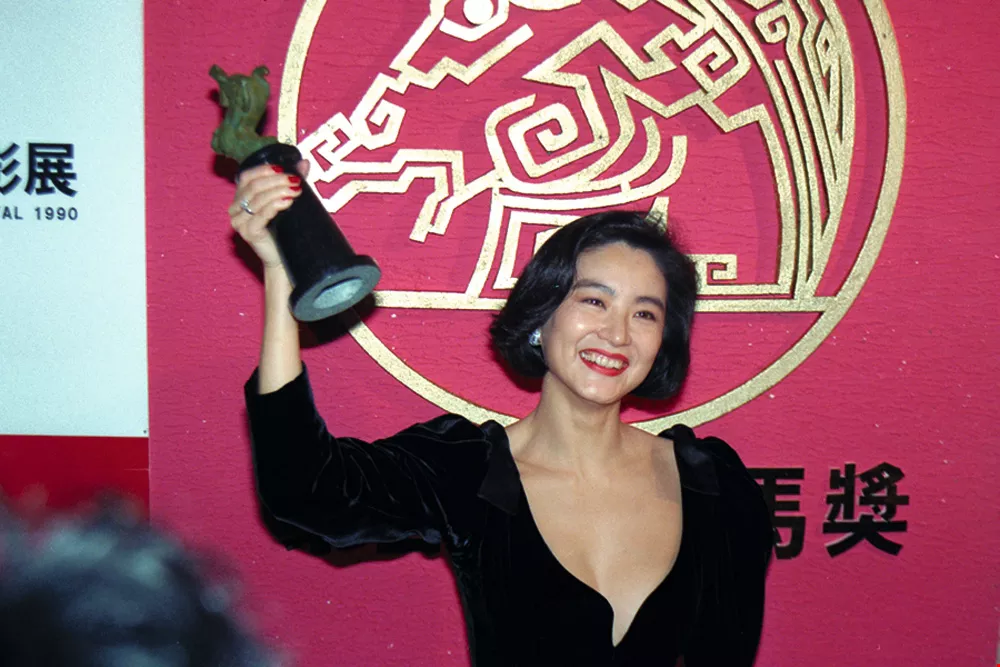
Brigitte Lin, one of the most brilliant stars in the history of Chinese-language film, made some 100 films in her 22-year career. She won the 1990 Golden Horse for best actress for her performance in Till the End of the World.
The Golden Horses encapsulate the history of Chinese-language film, and mirror Taiwanese society’s progress and evolution over the last half century.
The Golden Horses’ name, Jin Ma in Mandarin, was originally a tribute to the fighting spirit of the soldiers on the Kinmen (Jinmen) and Matsu (Mazu) front lines. Not surprisingly, the awards carried a good deal of ideological baggage during the era of “resisting the Communists, rebuilding the nation.”
Though the “healthy realism” of movies from Central Pictures Corporation and Lee Hsing in the 60s continued to have a heavily propagandistic flavor, the films of the period also began to evince a specifically Taiwanese realism.
According to film critic Huang Chien-yeh, the cooperation between Lee Hsing and Central Pictures Corporation marked the start of the golden age of Taiwanese film, characterized by large numbers of love stories and patriotic films, while also inculcating a more professional approach to film in the industry as a whole.
When the three-part The Wheel of Life (co-directed by King Hu, Lee Hsing, and Pai Ching-jui) lost out at the box office to The Sandwich Man (co-directed by Hou Hsiao-hsien, Wan Ren, and Tseng Chuang-hsiang) in 1983, it marked the end of an era in domestic film.
Huang says that the baton passed to the younger generation, but finds it unfortunate that the industry in Taiwan stopped seeking to improve its filmmaking skills, noting that they were clearly in decline by the late 70s. With the younger generation of filmmakers effectively going it alone and Taiwanese film developing an arthouse character in the 80s, the weakening of the industry’s foundations became a source of real concern.

The fact that Hong Kong films have been participating in the Golden Horse Awards since their inception has made the awards the event of the year for Chinese-language film. The photo shows a poster for Hong Kong director Wong Kar-wai’s The Grandmaster.
By 1983, the new generation’s films were approaching new heights of artistry, but ticket sales were extremely poor. “But Golden Horse juries slowly came to recognize the new wave’s significance,” says Huang. A City of Sadness’ Golden Lion at the 1989 Venice Film Festival was also an important milestone.
After garnering attention and awards at European film festivals for several years, Taiwanese films went into a slump in 1995. The malaise was evident at the Golden Horses as well, where Taiwanese films went five years without a best picture prize. The number of releases, and their box-office receipts, also declined.
Films from Hong Kong and mainland China surged into the void. They began to dominate the major awards categories, where Taiwanese movies had once been able to hold their own. The Golden Horses of this period catapulted a number of Hong Kong actors and directors to the top of the industry, providing them with not just honor, but also greater fame and prestige.
Wen Tien-hsiang says that Maggie Cheung won her first Golden Horse in 1989 in large part because Full Moon in New York was not dubbed into Mandarin for screening in Taiwan. “Maggie Cheung doesn’t have a great voice, but it’s expressive. Her native Cantonese speckled with English added layers to the movie.”
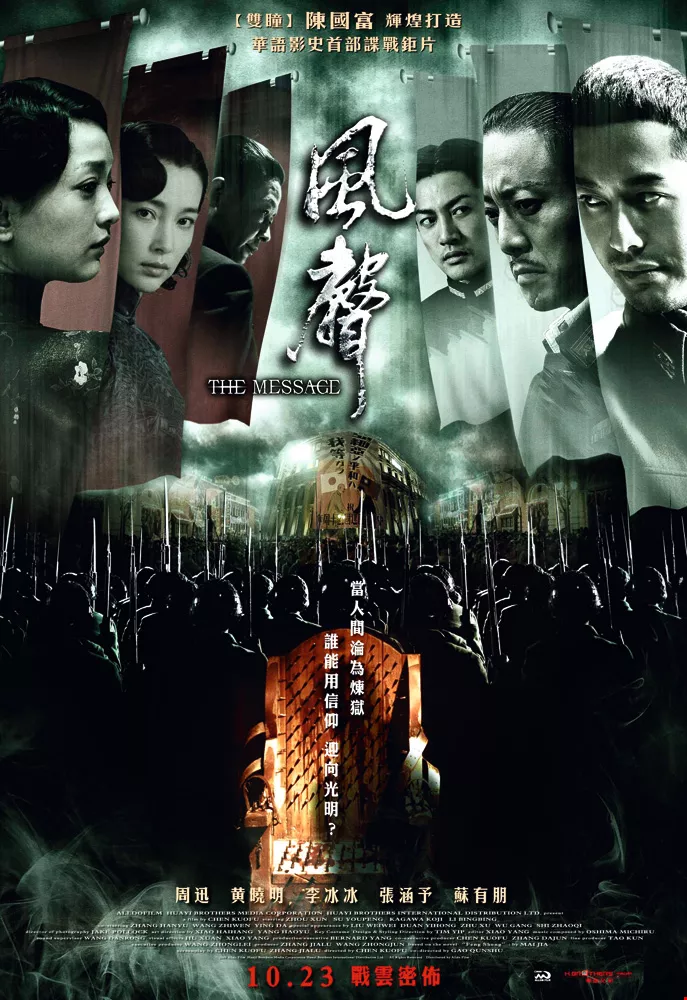
The Message was a mainland Chinese–Taiwanese coproduction. A big-budget spy flick, the film was funded by mainland investors and directed by Chen Guo-fu, a Taiwanese director who had worked in the mainland.
The Golden Horses created two awards specifically for Taiwanese film in 1997 to offset some of the tilt towards Hong Kong: the grand jury award and the special jury award.
As Taiwanese film began to recover, the Golden Horses decided that special treatment was no longer needed. In 2011, they dropped one of their two special awards for Taiwanese film—outstanding Taiwanese film of the year—retaining only the prize for outstanding Taiwanese filmmaker of the year.
“It’s not so much that we’ve eliminated the protections for domestic film, but that we’ve acknowledged the arrival of the coproduction era,” says Wen. “The definition of a ‘Taiwanese film’ simply isn’t that clear cut anymore.”
Back in the mid-1990s, the Golden Horses had also wrestled with whether to open submissions to mainland Chinese films.
Mainland Chinese star Jet Li highlights one of the problems the awards were seeing. Li frequently starred in Hong Kong director Tsui Hark’s martial arts extravaganzas. As a Hong Kong resident, Li was eligible for the Golden Horses. Other mainland actors were not so fortunate.
To remove the complications that arose from eligibility requirements based on geographic location and nationality, the Golden Horses were opened to mainland Chinese in 1996. The mainland authorities initially demanded—for political reasons—that mainland Chinese nominees withdraw from the competition, undermining the Golden Horse’s efforts to become a “festival of Chinese-language film from around the world.” But as cross-strait relations warmed and exchanges became more frequent, the mainland authorities softened their stance.
“The Golden Horses’ importance within the industry stems from their attitude,” says Wen. He argues that the 2000s were a crucial period in the industry’s internationalization, and that it was at precisely this moment that the Golden Horses transformed into a venue in which individuals from throughout the global Chinese-language film industry could meet and talk shop. Given the industry’s increasing preference for coproductions and greater commercial focus, film lovers thrilled to see the Golden Horses continue to bestow awards on independently made films, such as 2009 best picture No Puedo Vivir Sin Ti.
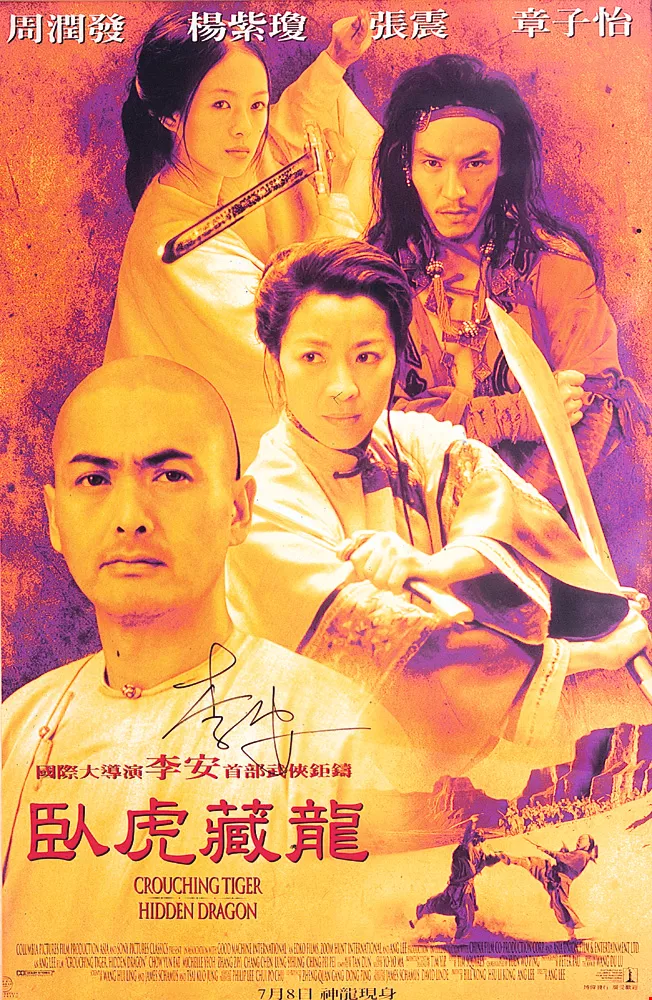
Chinese-language films are becoming ever more rich and varied. Crouching Tiger, Hidden Dragon (2000) was jointly produced by companies in mainland China, Hong Kong, Taiwan, and the US. The film not only won several Golden Horses, but also picked up the Academy Award for best foreign-language film. (courtesy of Deltamac
Movies are expensive to make. Seeking to get more good stories and scripts onto the silver screen, the Golden Horse executive committee initiated the Golden Horse Film Project Promotion (FPP) in 2007 as a means to provide backing for the preliminary stages of production.
Executive committee chairman Hou Hsiao-hsien has also established the Golden Horse Film Academy to cultivate the talents of emerging filmmakers from Chinese-speaking regions. A training ground for young directors and cinematographers who have made at least two short films, the program brings in internationally renowned filmmakers to offer insights and guidance.
Wen says the FPP is intended for filmmakers and works that have been overlooked in spite of their potential, the idea being to place them in contact with investors from around the world who are interested in Chinese-language film. Filmmakers and investors then arrange their own meetings to discuss projects. According to Wen, the number of such meetings has grown rapidly, rising from 102 at the FPP’s inception to 591 in 2012.
Now entering its seventh year, the FPP has achieved fantastic results. Ilo Ilo, the 2013 best feature film, is a case in point. A 2010 FPP selection, the film was 29-year-old director Anthony Chen’s feature-length debut. The fact that Chen himself attended the Golden Horse Academy is just the icing on the cake.
Ilo Ilo depicts the moving friendship between a Singaporean family and their Filipino maid. Critically acclaimed, the film won a Camera d’Or at the 2013 Cannes Film Festival and will vie for the 2014 Academy Award for best foreign film.
Still more interestingly, the mainland Chinese filmmaker and investors behind 2012’s Golden-Horse-winning Design of Death met at the FPP. Domestic films including Seediq Bale and Black & White also secured their financial backing through the FPP.
.jpg?w=1080&mode=crop&format=webp&quality=80)
Taiwanese films had great success at international film festivals in the 1990s. The Wedding Banquet (1993) won Taiwan’s first ever Golden Bear at the Berlin International Film Festival, opening doors for director Ang Lee in Hollywood and establishing his international reputation.
At the Golden Horse jury press conference, an Associated Press reporter suggested that for all their importance to the Chinese-speaking community, the Golden Horses are not well known internationally. The reporter asked Ang Lee how he thought the Golden Horses should go about increasing their influence to make Hollywood take notice.
“There’s no need for any kind of deliberate effort,” answered Lee. “I think that the Chinese-language film market is going to surpass Hollywood in 10 years.” He went on to point out that there are four times as many Chinese speakers as English speakers in the world, and that the influence of the Golden Horses will grow as the market grows. Lee sees this as something that will happen naturally, and therefore believes there’s no need for the Golden Horses to do anything.
A character in Wong Kar-wai’s The Grandmaster famously repeats the old saw: “If something is kept always in mind, others are sure to respond.” Much the same could be said of the Golden Horses. For all their many highs and lows over the last half century, the awards have always held a place in the hearts of Chinese-speaking filmmakers and film lovers. Always in mind....
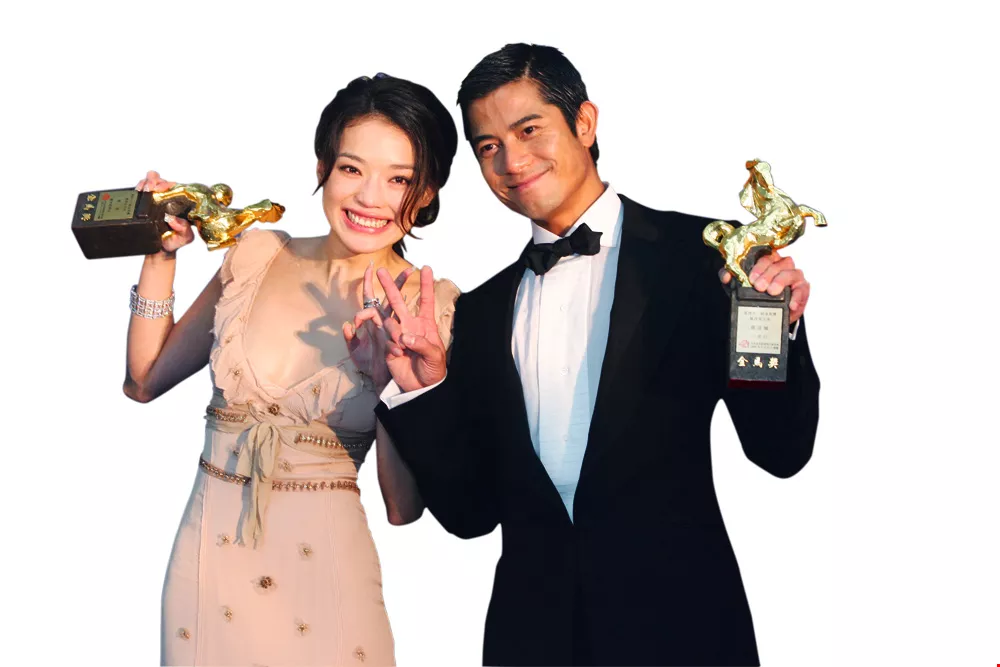
Hong Kong film and recording star Aaron Kwok won the 2005 Golden Horse for best actor for his portrayal of a down-and-out cop in Divergence. Her acting chops honed by director Hou Hsiao-hsien, Taiwanese star Shu Qi took home the best actress prize for her performance in Three Times.
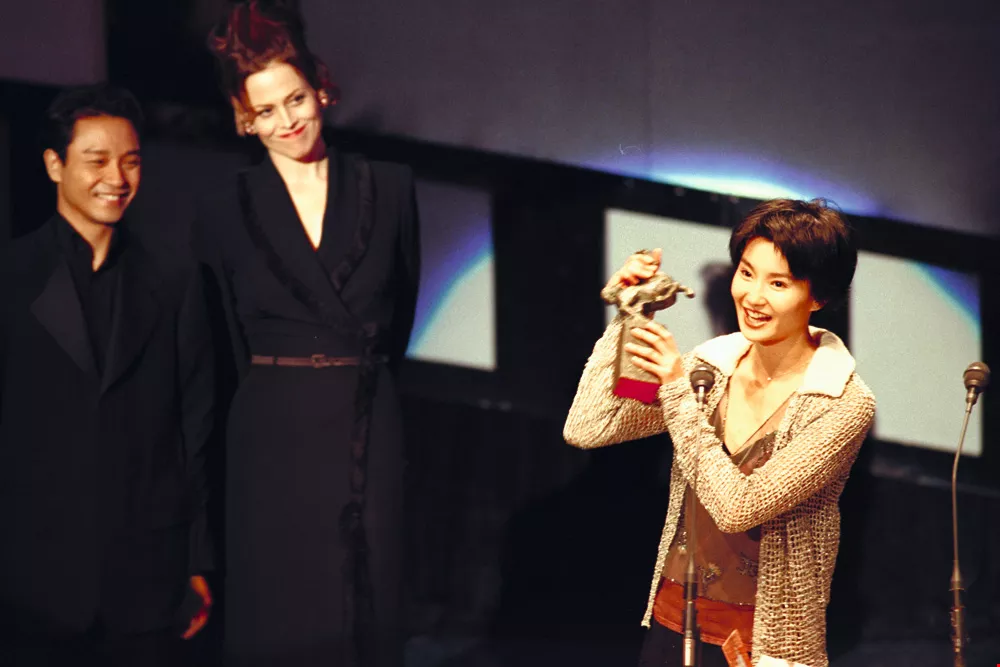
Leslie Cheung and Sigourney Weaver present Maggie Cheung with her third best-actress Golden Horse in 1997.
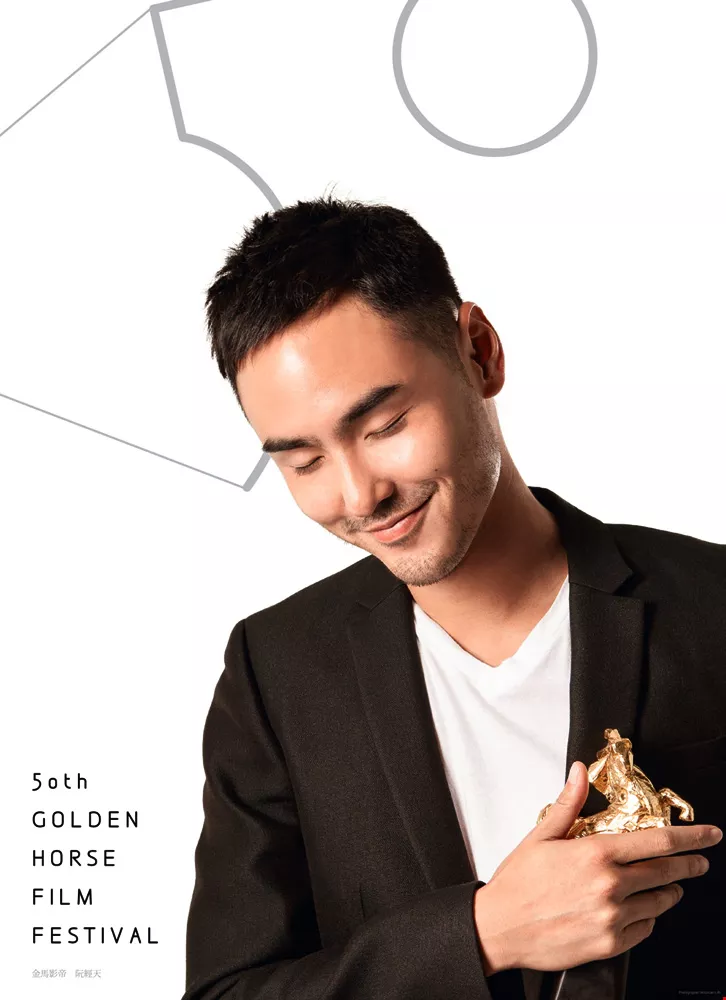
Hot new Taiwanese star Ethan Ruan got his start on television before making the leap to the silver screen. His performance as a budding gangster in Monga earned him the 2010 Golden Horse for best actor. This award broke an 11-year slump for Taiwanese performers.
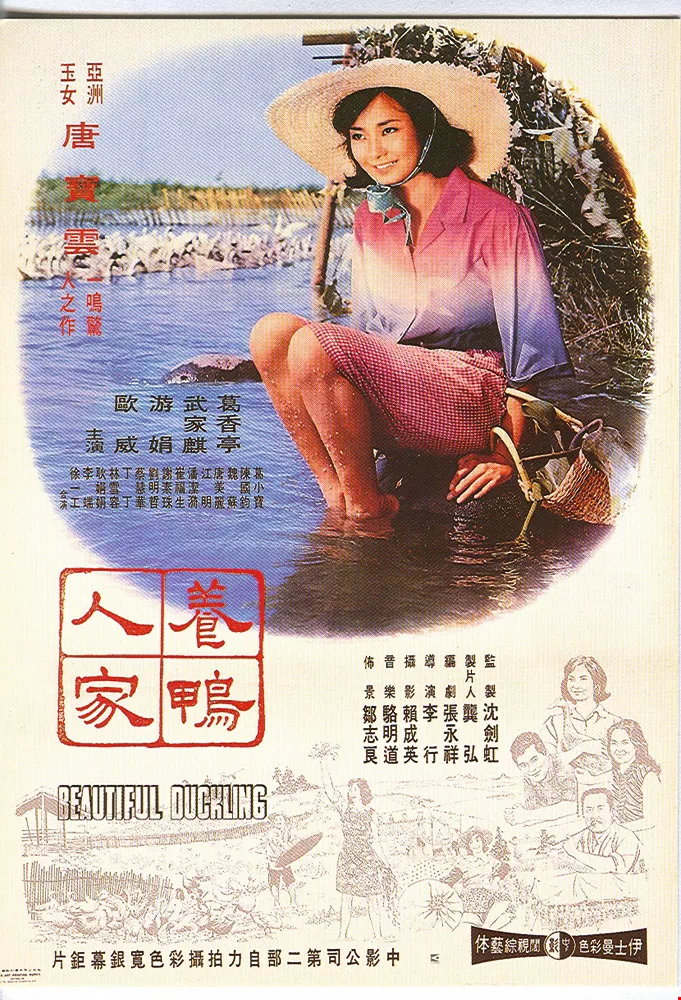
Lee Hsing’s Beautiful Duckling (1965) started the “healthy realism” trend in Taiwanese film. The film was also a tremendous success, earning that year’s best picture, director, and actor awards and propelling its leading lady, Tang Pao-yun, to stardom.

@List.jpg?w=522&h=410&mode=crop&format=webp&quality=80)


