Where the Artists Lived
Places of Sculpture, Dance and Song
Cathy Teng / photos Jimmy Lin / tr. by David Mayer
January 2017


The sculptor Pu Tian-sheng struggled through illness in his high-ceilinged atelier to execute a sculpture in memory of kindergarten teacher Anita Lin.
Songwriter Li Lin-chiu completed the lyrics for the pop classic “Pining for the Spring Breeze” in his traditional Minnan-style home, accompanied by shaojiu wine and the sweet scent of tuberose flowers.
In her wood-floored studio, Tsai Jui-yueh choreographed one dance after another that would rank among the classics in Taiwan.
Can our shared beliefs live and breathe within a building? How many people’s common memories can fit into a given space?
Much of what an artist does over the course of a lifetime will have been done in the residence where he or she has lived. After the artist passes away, that residence becomes the focus of nostalgia and memory.
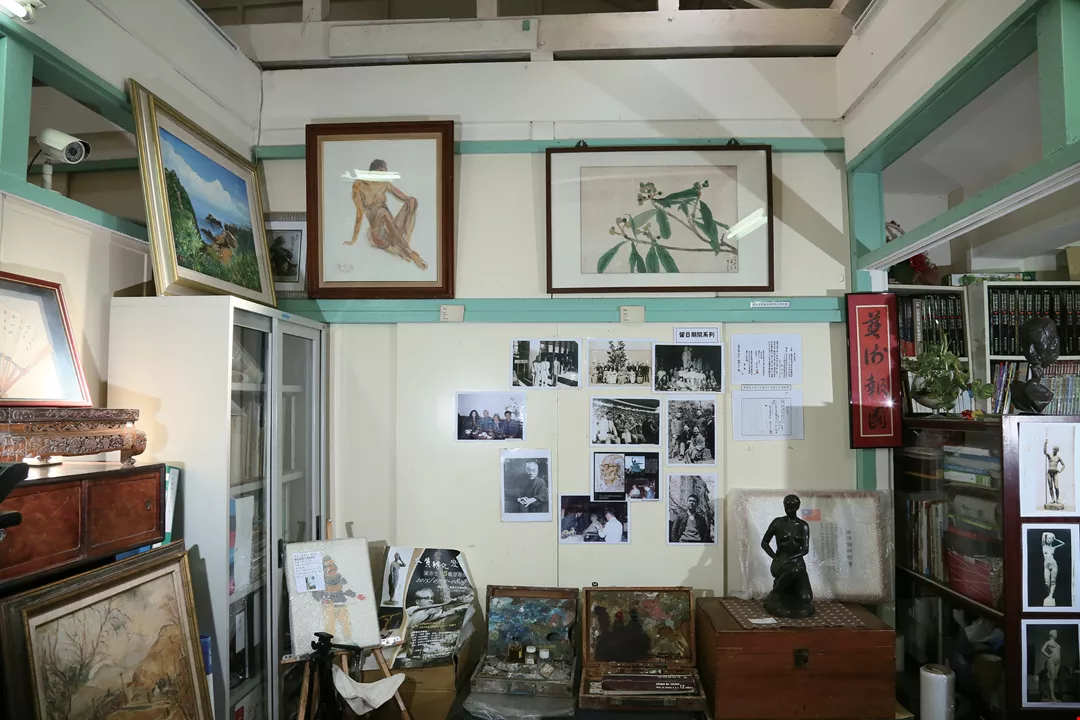
All the preserved details, both large and small, of an artist’s former home speak volumes about the person who lived there, and beckon the visitor to pause and think.
Recording Taiwan in sculpture
Anyone who turns into Lane No. 9 off Linsen North Road in Taipei can’t help but notice an equestrian statue of the Qing-Dynasty official Wu Feng. Located in the front yard of a Japanese-style house that was once the home of sculptor Pu Tian-sheng (1912‒1996), it rises a full foot higher than the perimeter wall behind which it stands.
One of Taiwan’s most important modern sculptors, Pu learned his craft from the great Japanese master Fumio Asakura. In 1941, Pu bid adieu to his master and returned home to contribute what he had learned. Once back, his father-in-law (the painter Chen Cheng-po) connected him up with a client who commissioned Pu to execute Taiwan’s first bronze statue of Dr. Sun Yat-sen. Even in the hazardous political climate of that time, Pu never compromised on his artistic principles, and was thus unwilling to put a military cap on a bronze statue depicting Chiang Kai-shek in otherwise full military regalia.
However, an artist does have to make a living. The only way to support a family is to accept commissions from wealthy politicians and business leaders. Pu’s father-in-law was a victim of the February 28 Incident because he had used art to fight against the rampant lies and slander of the day. Pu’s family members used the method most familiar to them—art—to get over their sadness and move on.
Pu’s eldest son, Pu Hao-ming, is also an active sculptor whose works have been selected for five Salon Exhibitions in France, and his granddaughter Pu Yi-chun began showing precocious abilities at the age of eight. Her avant-garde works have now been selected for six Salon Exhibitions in France.
Pu’s third son, Pu Hao-chih, since retiring has taken over as head of the TSP Sculpture Memorial Museum. After spending five months going through all of his father’s works, Pu Hao-chih opened the elder Pu’s home to the public as a sculpture museum. On display there are the man’s paintings, and the beloved rocking chair where he would down a Taiwan Beer every day, along with sculptures from three generations of Pu-family artists. Hanging on a wall of the atelier is an image of Pu Tian-sheng and Pu Yi-chun working clay together. Pu Hao-chih, with evident pride, showed us a sculpture done by his father in which the six-year-old Hao-chih is depicted hugging a dog.
Under Pu Hao-chih’s leadership, the museum once organized a program in which visually impaired people had the chance to try their hand at sculpture. It has also helped National Taipei University hold an activity that offers course credit, and Pu even managed to persuade the Chimei Museum to acquire the works in his father’s “Sports Series.” He also reworked his father’s The Poet into a new piece of art by removing the hands and head to show a man deep in thought. The piece achieves an odd sense of balance despite the disembodiment of its subject. Expanded to over two meters in height, the new work is named Part of a Poet, and stands as a piece of public art on the Kuang-Fu Campus of National Cheng Kung University.
The Pu family now has a base where its art can be passed on from generation to generation, but more important still is the task of familiarizing more people with the spirit of Pu Tian-sheng.
Four years after the museum opened to the public, a marker was added to maps of the Taipei Mass Rapid Transit system to indicate that the “Former Residence of Pu Tian-sheng” is located not far from the Shandao Temple station. But the Pu family has a loftier vision than that. Plans for a fine arts museum and a sculpture park are already in the works, and people are looking forward with eager anticipation.
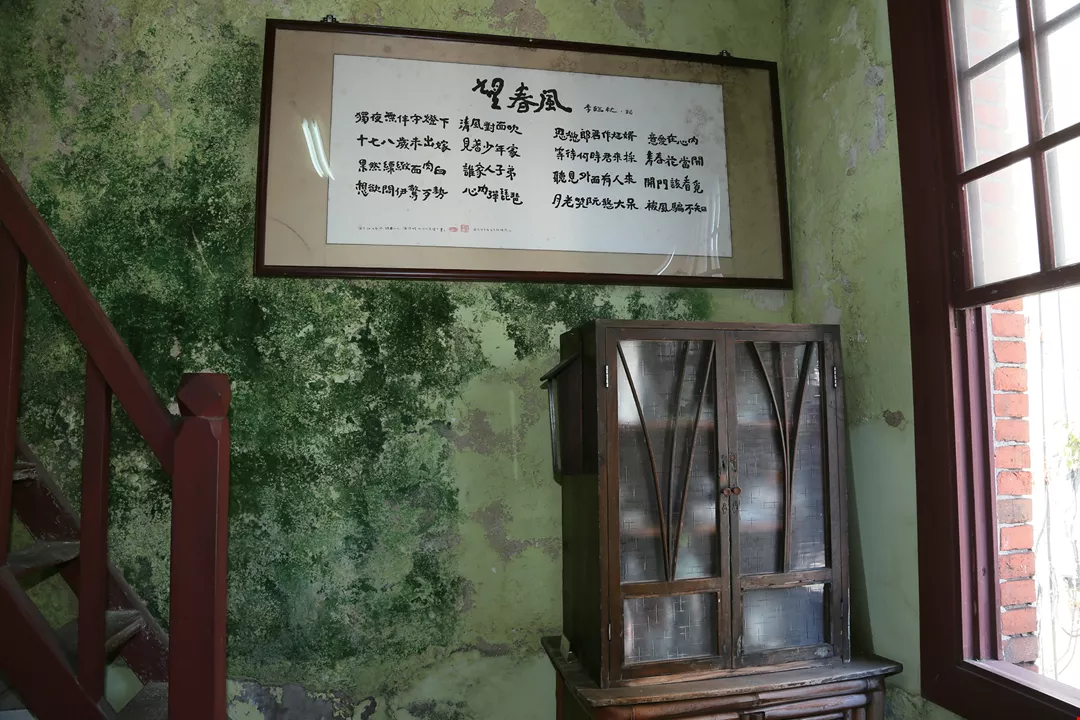
All the preserved details, both large and small, of an artist’s former home speak volumes about the person who lived there, and beckon the visitor to pause and think.
Writing lyrics in the night
Li Lin-chiu (1909‒1979), one of Taiwan’s best-loved songwriters of his day, is especially well known for the lyrics of “Pining for the Spring Breeze”: “Lonely evening, sleepless under the light / As the spring breeze blows in from across the way / A lass of 17 or 18, unmarried yet / Gazes upon a young man....” This tale of a lovesick girl has remained a popular classic for generations. Even many Taiwanese people living abroad have no problem singing the whole song from memory.
Li grew up in Taipei’s Dadaocheng, in those days a flourishing tea export district, where the Taiwan Cultural Association was founded. Young people living there in the 1930s, deeply affected by the intellectual stirrings of the day, yearned for freedom, democracy, and equality. Li wrote the lyrics to “Pining for the Spring Breeze” in 1933 at the age of 24. The song describes a young girl longing for love in a traditional society where gender equality doesn’t exist and young people have little say about who they are to marry. In 1947, as he neared age 40, Li wrote the immensely popular “Mending a Broken Net.” In a time of deep social divisions following the February 28 Incident of 1947, Li’s song subtly hinted at Taiwan’s recent history and expressed hope that the power of educated young people could bring about better days for the country. The song ends on a hopeful note, declaring the fisherman’s intent to find the tools he would need to fix his broken net. In effect, Li was encouraging the people of Taiwan to gird themselves for the struggle to achieve a better life.
The oft-heard description “three parts elegant, seven parts low-brow” applies quite aptly to Li’s songwriting style. As a member of a highly educated family, he had a deep mastery of the Chinese language; at the same time, his concern about the well-being of others prompted him to write with everyday people in mind. In 2009, to mark the 100th anniversary of his birth, a statue was placed in Dadaocheng Park depicting Li sitting on a bench writing song lyrics and enjoying the sunset over the Danshui River. Children playing in the park today often scramble onto Li’s shoulders, and one might almost think he was giving them a piggyback ride. The scene is heartwarming, just like Li’s songs.
Guided tours are available by reservation at Li’s former residence on Xining North Road. His son, Li Xiujian, has faithfully preserved the original design and weathered look of the old home. The old wooden staircase creaks when you ascend it, and the everyday household items of a bygone day afford visitors a feel for how people used to live.
On the day this reporter visited, we sat around the very table where Li wrote the lyrics to “Pining for the Spring Breeze” as Li Xiujian spoke about the rituals involved in his father’s work routine. Whenever their mother went out to the market to buy his wine and flowers, the kids knew that papa was planning to write song lyrics and they would therefore have to bathe and go to bed early. On display at the home are the artist’s wine-warming cup together with its accompanying outer and inner pots; he would fill the larger pot with hot water and fill the smaller inner pot with wine. After pouring a cup, he would cover it for three minutes, and when he lifted the lid the aroma of the wine would fill the air. Taking a ratty old pencil in hand, and sipping his favorite Hungluh Chiew (a liquor made from red yeast rice), he would set about the task of transforming everyday life experiences into verse.
The Dadaocheng area where Li Lin-chiu spent his entire life has declined markedly from its prosperous heyday, but it still exerts a powerful enchantment upon visitors. People never tire of recounting the stories of “old Taipei,” and the former residence of Li Lin-chiu is an indispensable part of the tapestry of the place.
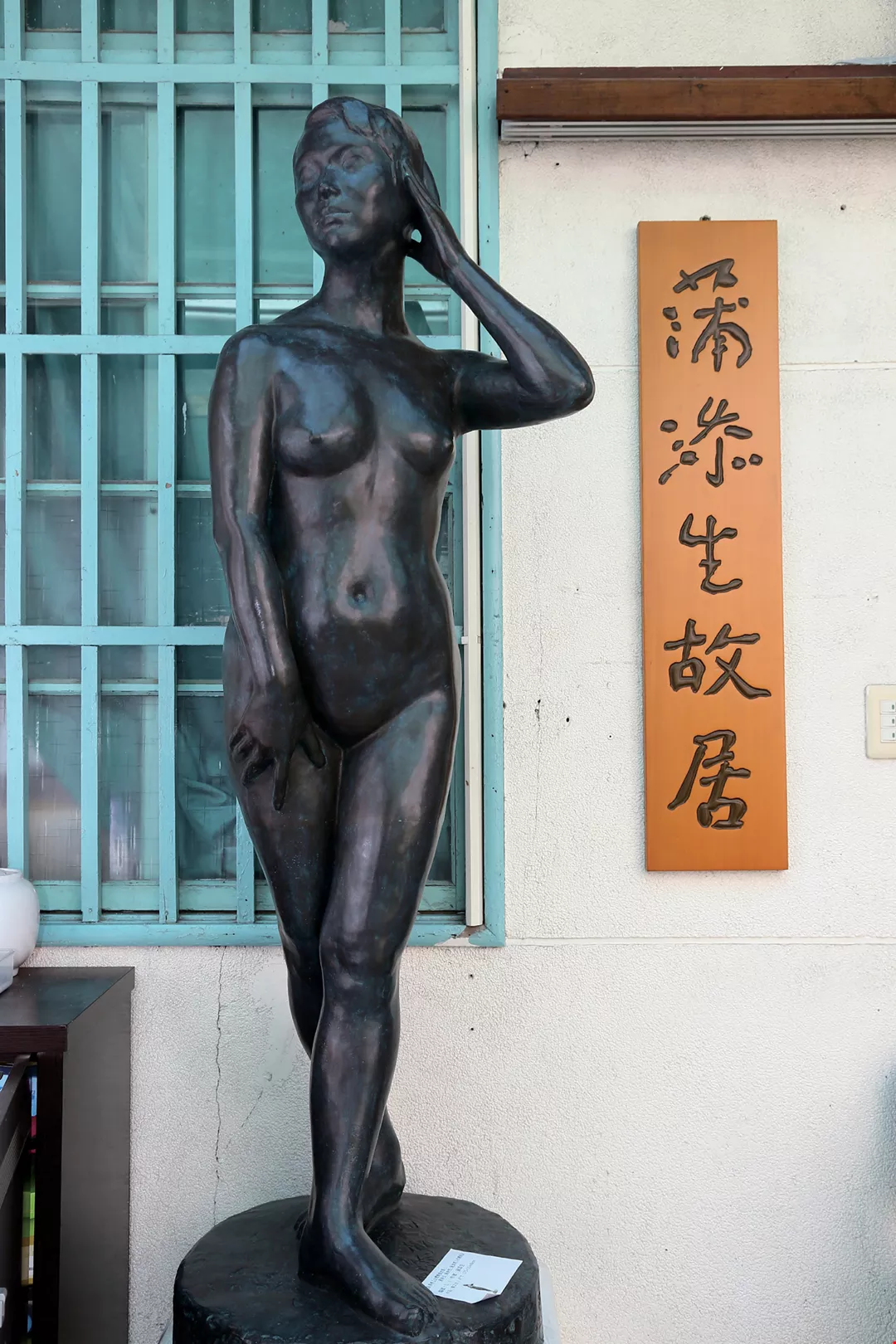
Shown here in the former residence of Pu Tian-sheng is Light of Spring, a work that he entered in the 1st Japan Fine Arts Exhibition in 1958.
Dance as life
In a little lane off Zhongshan North Road Section 2 sits an old Japanese-style residence topped by black roof tiles. It is the former home and studio of the pioneering dancer Tsai Jui-yueh (1921‒2005).
At the age of 16, Tsai went to Japan to study modern dance. While there, she became determined to return one day and promote modern dance in her native Taiwan. After the end of World War II, she boarded a ship bound for Taiwan, and while aboard she choreographed and performed Song of India and We Love Our Taiwan. These works brought the people of Taiwan in contact with modern dance for the first time ever.
But Taiwan was a treacherous place in those days. Her husband Lei Shiyu was deported to China for political reasons, and Tsai soon afterward was thrown into prison. After her release, she went back to earning a living as a dance instructor, and continually choreographed new dance pieces. By alluding in the performances to her own experiences, she was able to use her body to protest against the government’s human rights abuses. The authorities monitored her constantly, until at last she emigrated with her son, Lei Dapeng, to Australia.
In 1994, after the Taipei City Government ordered the demolition of Tsai’s dance studio, the cultural community rose up in protest, calling on the city government to preserve the site as a historic landmark. But just days after the Tsai Jui-yueh Dance Studio was declared a historic monument in 1999, it was deliberately set ablaze. Tsai, who had returned to Taiwan from Australia to devote herself once again to modern dance, was reduced to tears as she surveyed the charred remains of the studio: “I feel as if I had lost a daughter.”
But Tsai, a resilient survivor of great hardships, kept right on teaching students amidst the blackened ruins of her studio. Chan Tien-chen (a.k.a. Yogi), who performed in Song of India and was directed by Tsai, recalls how Tsai, who had limited mobility due to arthritis, would sit in a chair and trace out dance motions with her arms, evincing the same excitement and passion that a much younger Tsai had shown the world upon her return to Taiwan from Japan. On Tsai’s 80th birthday, Yogi (still quite young at the time) was deeply moved when the artist suddenly got the urge to dance and started turning in circles in the street. That’s precisely who Tsai was—a dancer who had endured much tragedy, yet wanted only to dance, and was prepared to enjoy it at any time or place.
The reconstruction of Tsai’s residence was unfortunately not completed until after she passed away in 2005. Friends and supporters named the rebuilt structure the Rose Historic Site in commemoration of one of her best known works, The Prison and the Rose.
In 2006, the Tsai Jui-yueh Dance Foundation held the Tsai Jui-Yueh International Dance Festival and the Tsai Jui-Yueh Cultural Forum for the first time. These events continue to go strong today, and were each held for the eleventh time in 2016. The foundation and the forum are very concerned about such causes as judicial reform, social justice, freedom, and democracy, and are big supporters of people in all fields who are fighting for the causes they believe in. The idea is to use dance to ensure that the Taiwan Tsai loved so deeply can become a better place.
The most powerfully moving works of art are invariably those born of bitter pain. When visiting the homes of the artists of yesteryear, we have an opportunity to revel in the beauty of their craft. At the same time the strength of their commitment to their beliefs and ideals can give a person courage to carry on. Therein lies the significance of the preservation of such sites.
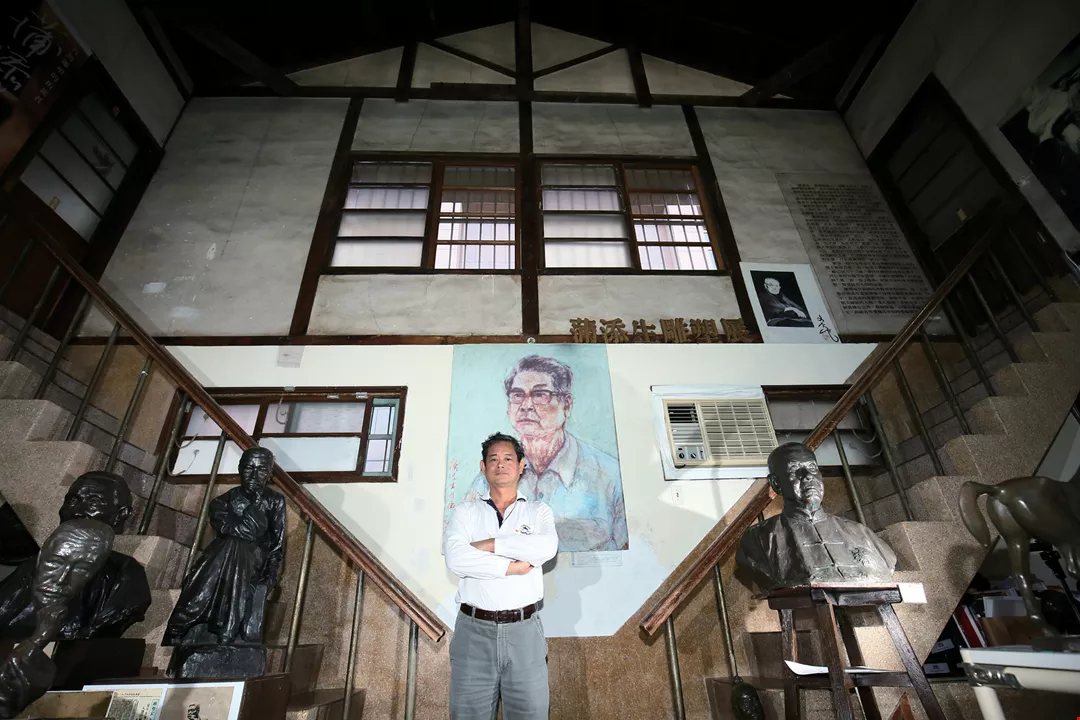
Pu Hao-chih poses before a self-portrait painted by his father, who executed many outstanding works of art in this spacious atelier with its 7.5-meter-high ceiling. (photo by Jimmy Lin)
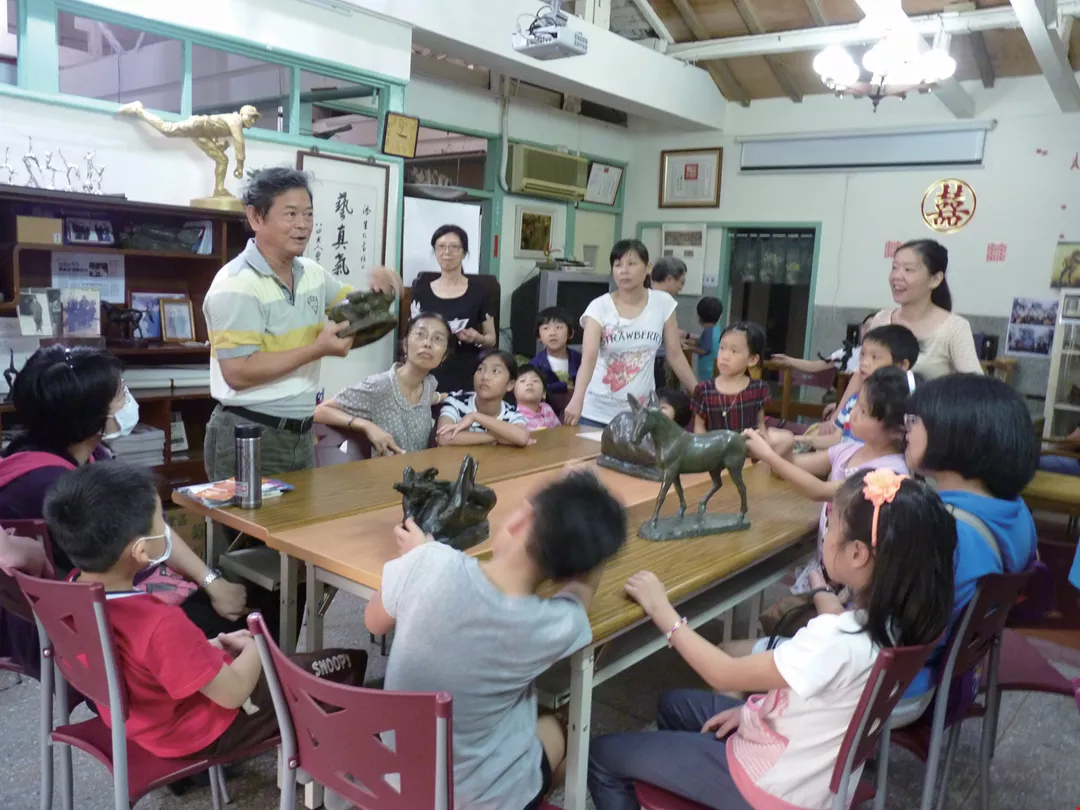
Pu Hao-chih, director of the TSP Sculpture Memorial Museum, works hard to promote art education. (courtesy of TSP Sculpture Memorial Museum)
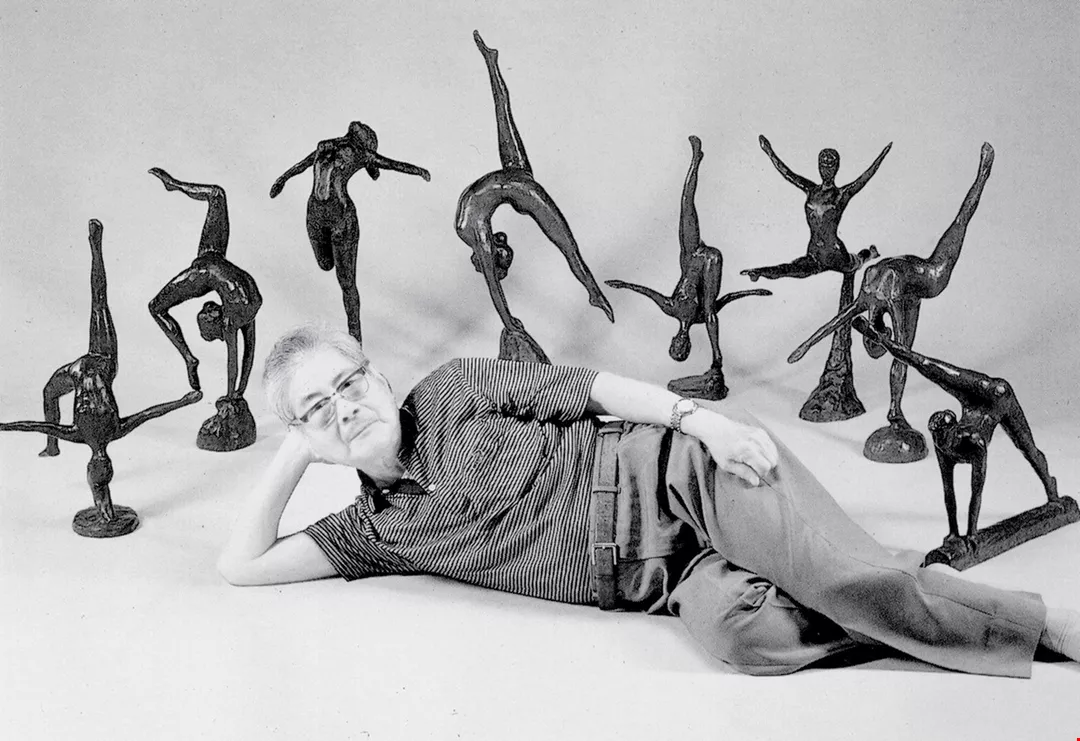
Pu Tian-sheng lying down in front of some sculptures from his “Sports Series” that depict gymnasts in motion. These works put Pu’s technical mastery on full display. (courtesy of TSP Sculpture Memorial Museum)
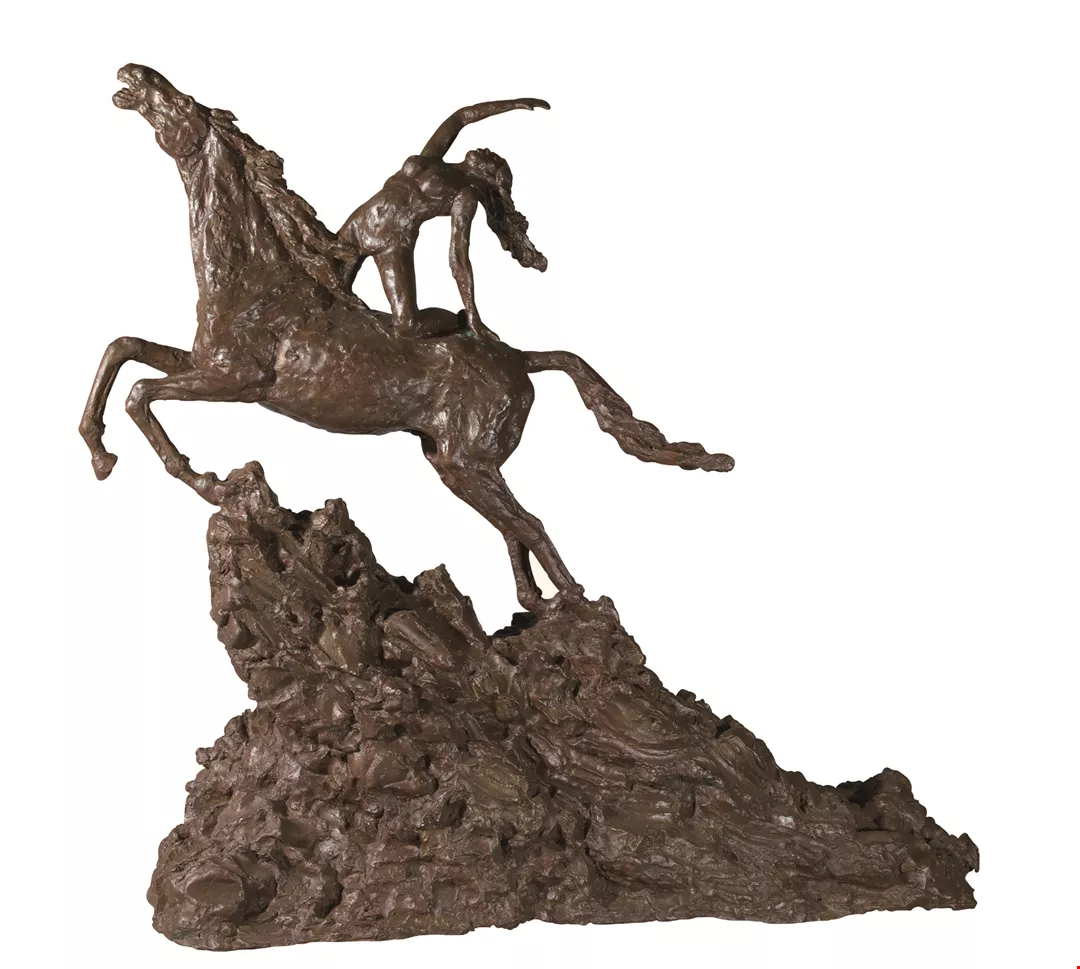
The Pu family has produced three generations of sculptors. Shown here is Pu Hao-ming’s Female Rider. (courtesy of TSP Sculpture Memorial Museum)
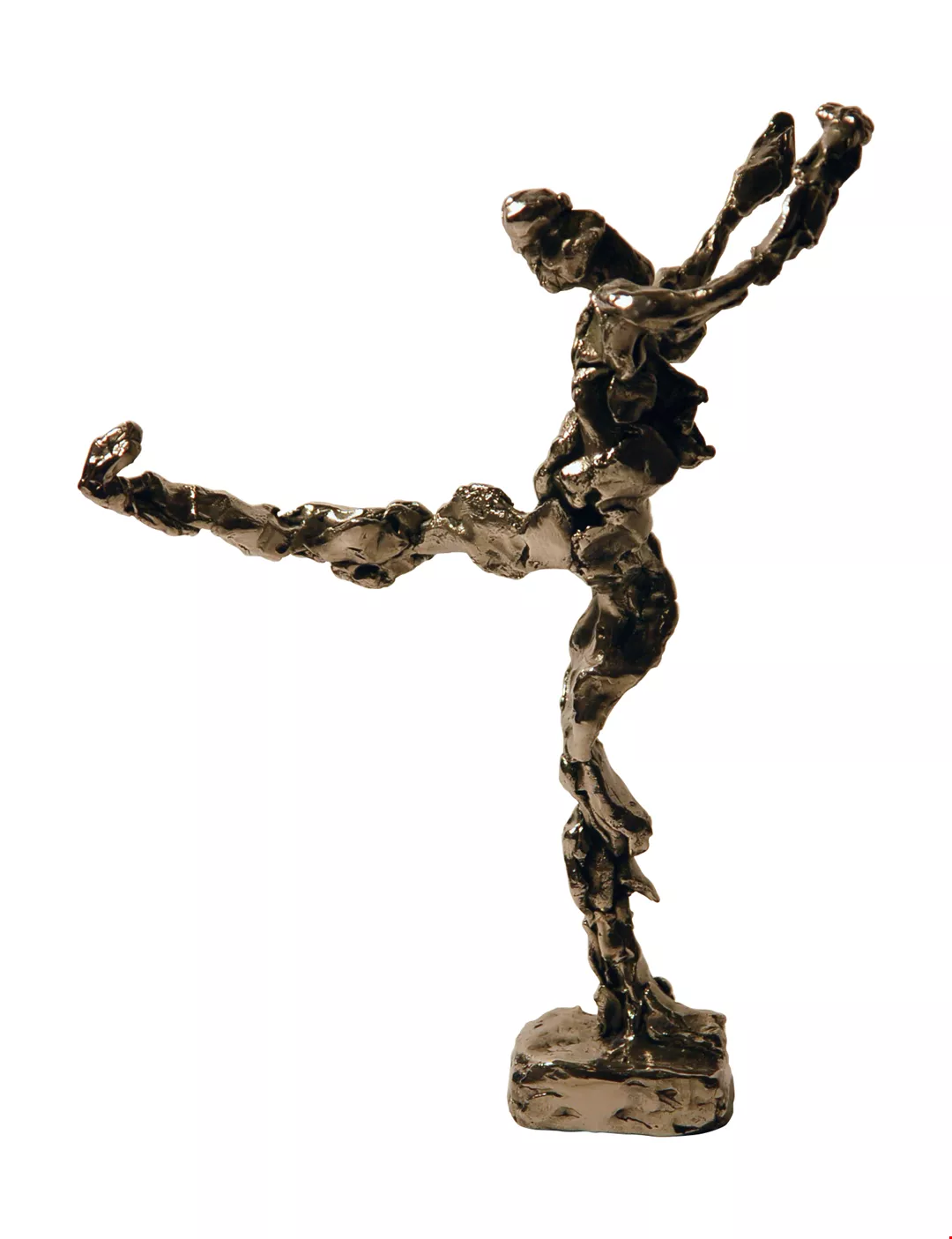
The Pu family has produced three generations of sculptors. Shown here is Pu Yi-chun’s Little Dancer Series, No. 1. (courtesy of TSP Sculpture Memorial Museum)
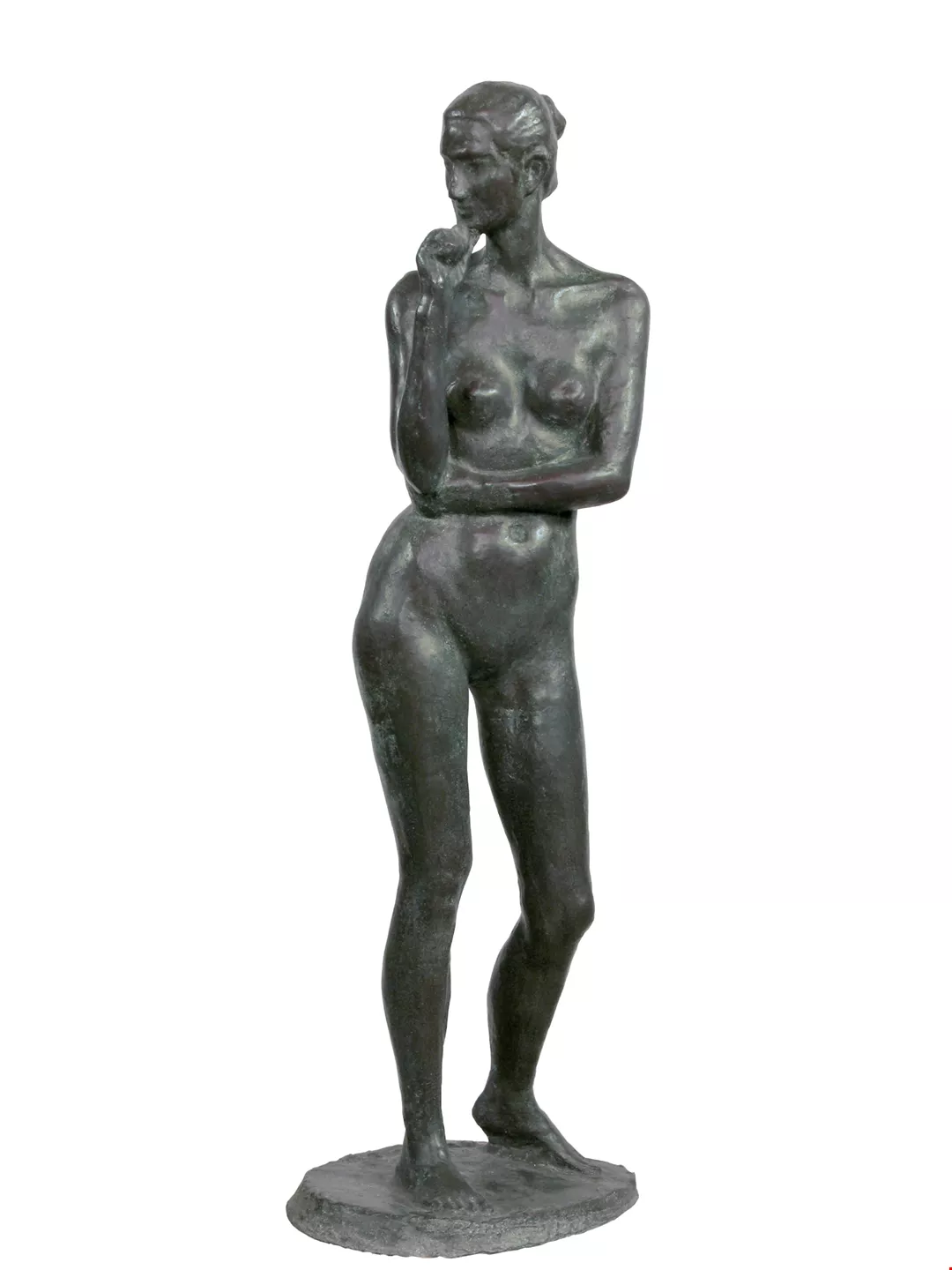
The Pu family has produced three generations of sculptors. Shown here is Pu Tian-sheng’s In Fond Memory. (courtesy of TSP Sculpture Memorial Museum)
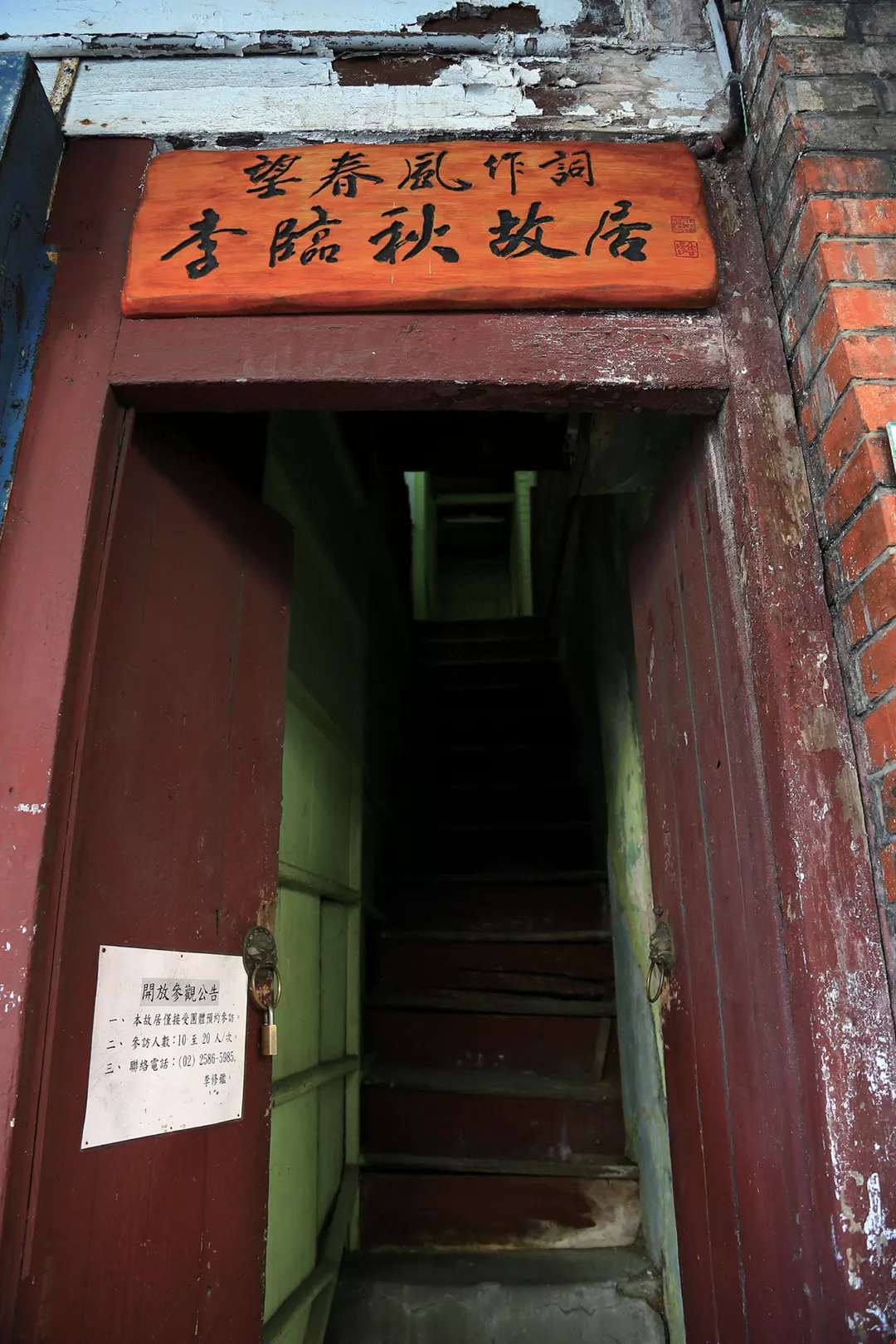
The former residence of Li Lin-chiu, located on a narrow lane off Xining North Road in Taipei, is open to the public. But Li had to sell the first floor years ago to pay off debts after he invested in an unsuccessful film, so visitors must climb a narrow wooden staircase to get a look at the home of one of Taiwan’s finest songwriters of the 20th century.
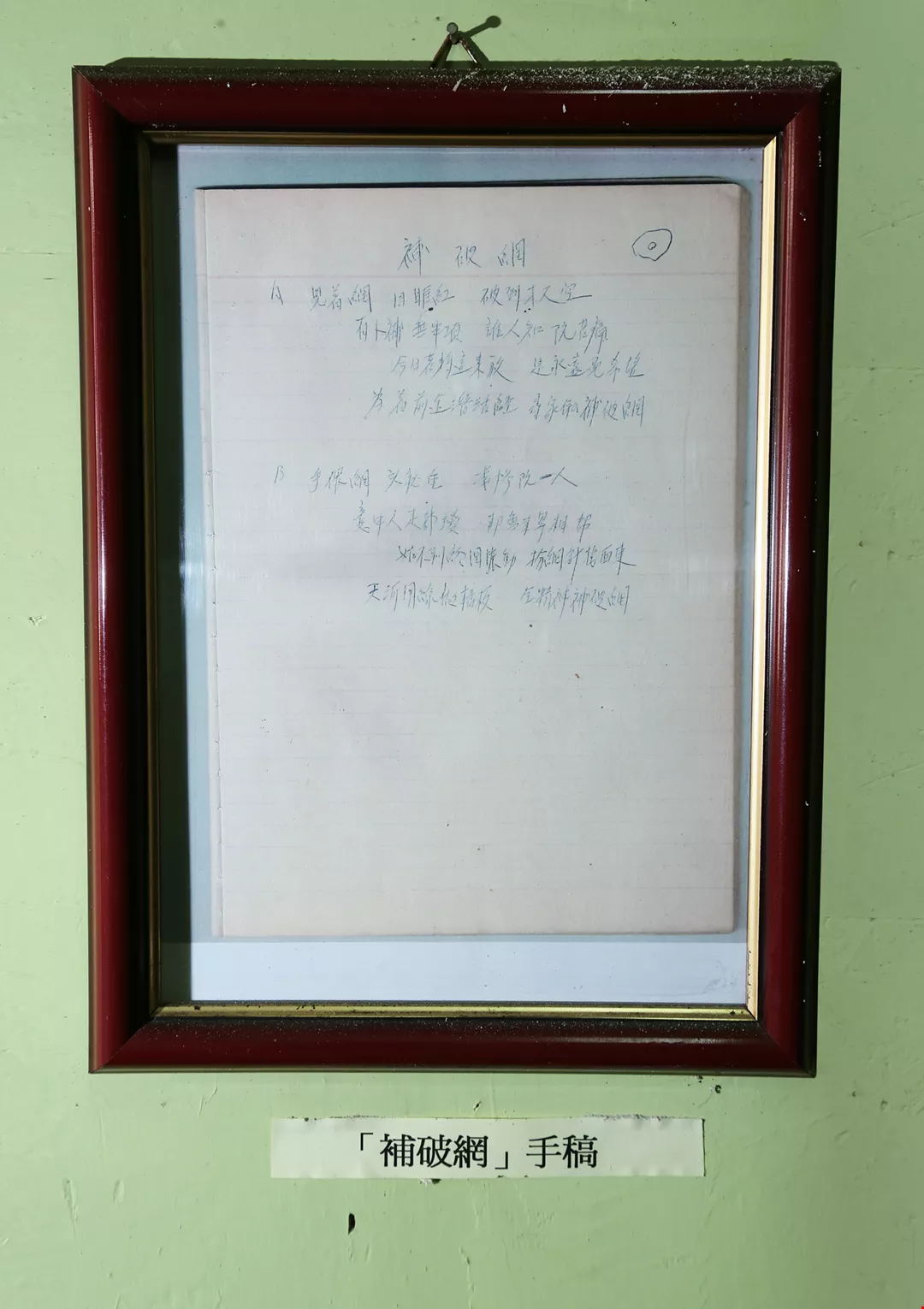
The original manuscript of “Mending a Broken Net.”
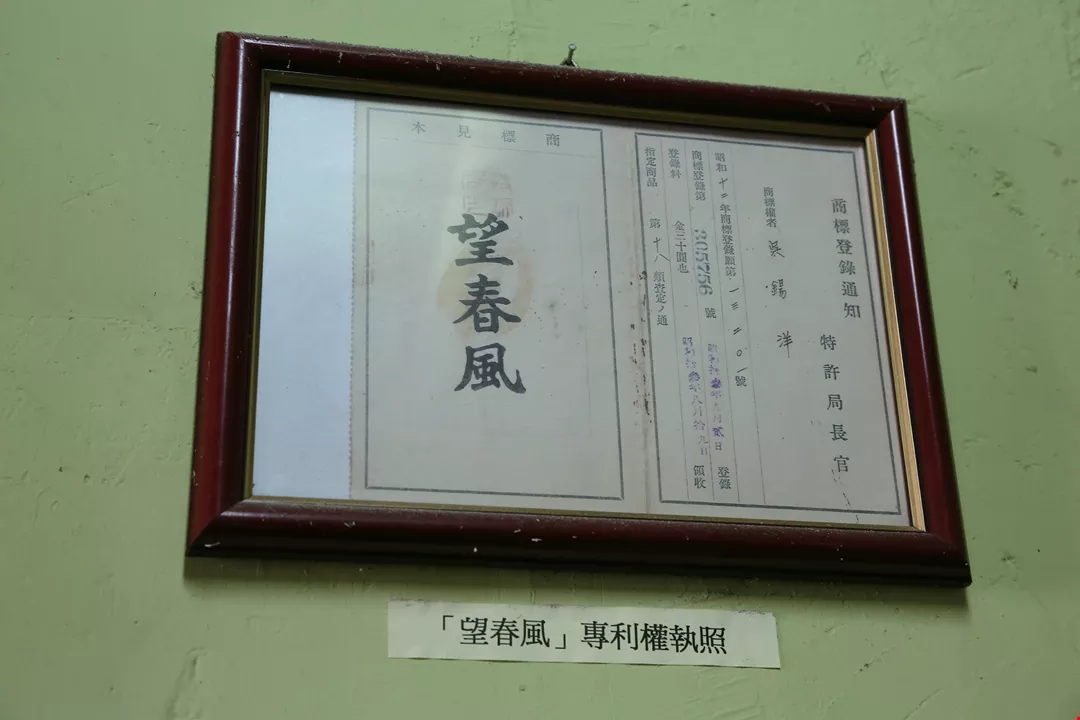
The trademark registration certificate for Li’s “Pining for the Spring Breeze,” dated 1937.
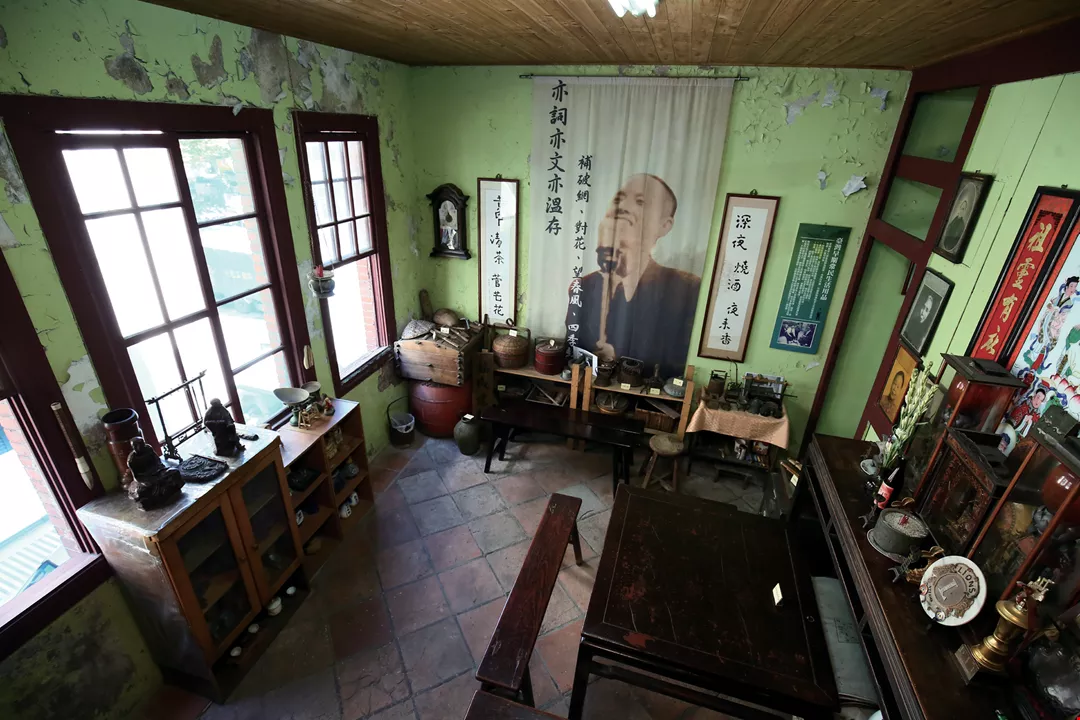
The table in front of his family’s ancestral shrine was where Li Lin-chiu wrote the lyrics to the pop classic “Pining for the Spring Breeze.”
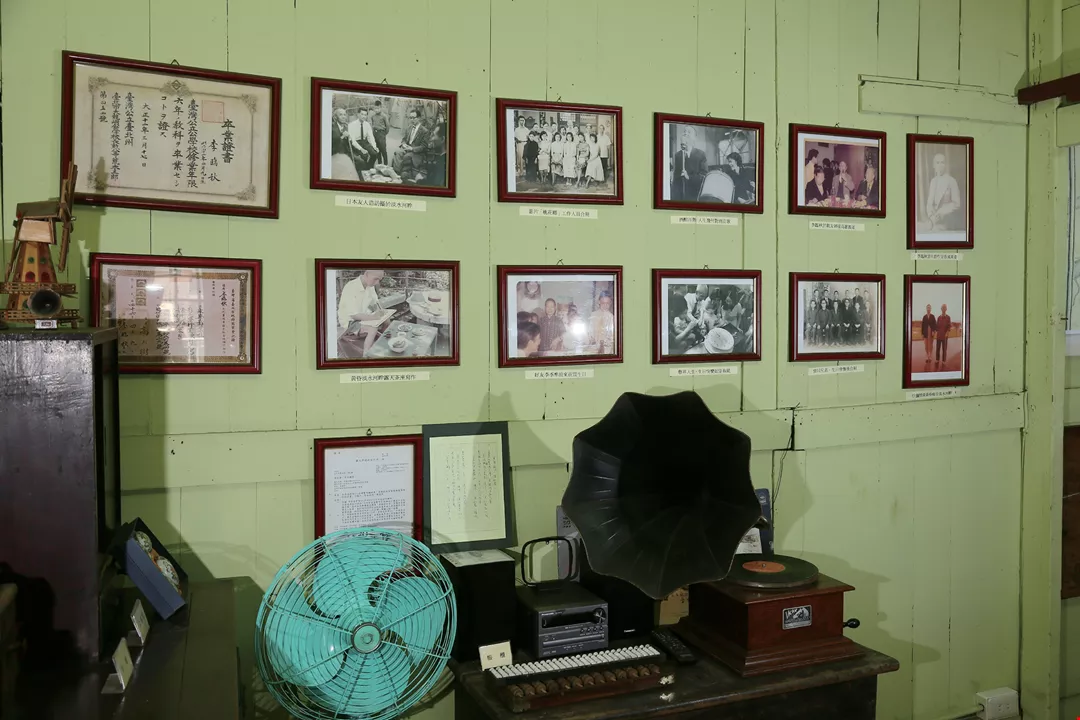
Old photos and a graduation certificate offer insights into the life of Li Lin-chiu.
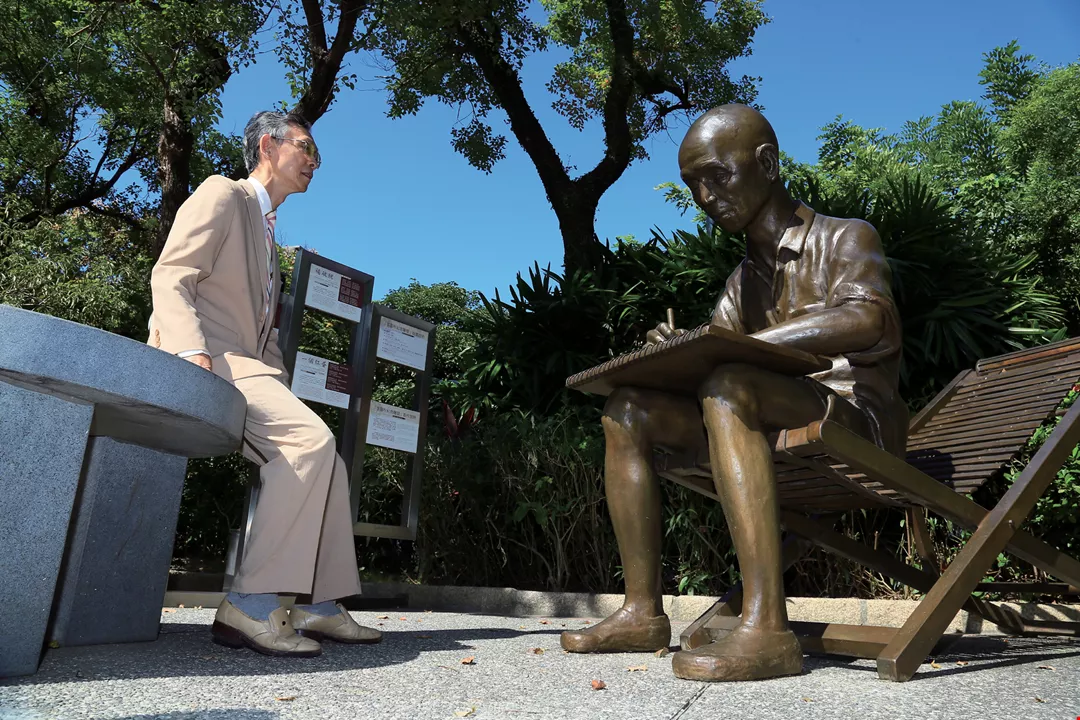
Li Xiujian sits across from a statue of his father Li Lin-chiu in Dadaocheng Park, as if the two were having a conversation. Li Xiujian has preserved his father’s old home so that people will always keep singing “Pining for the Spring Breeze.” (photo by Jimmy Lin)
.jpg?w=1080&mode=crop&format=webp&quality=80)
This is what the Tsai Jui-yueh Dance Studio looked like before an arsonist put it to the torch. (photo by Yang Shizheng, courtesy of the Tsai Jui-yueh Dance Foundation)
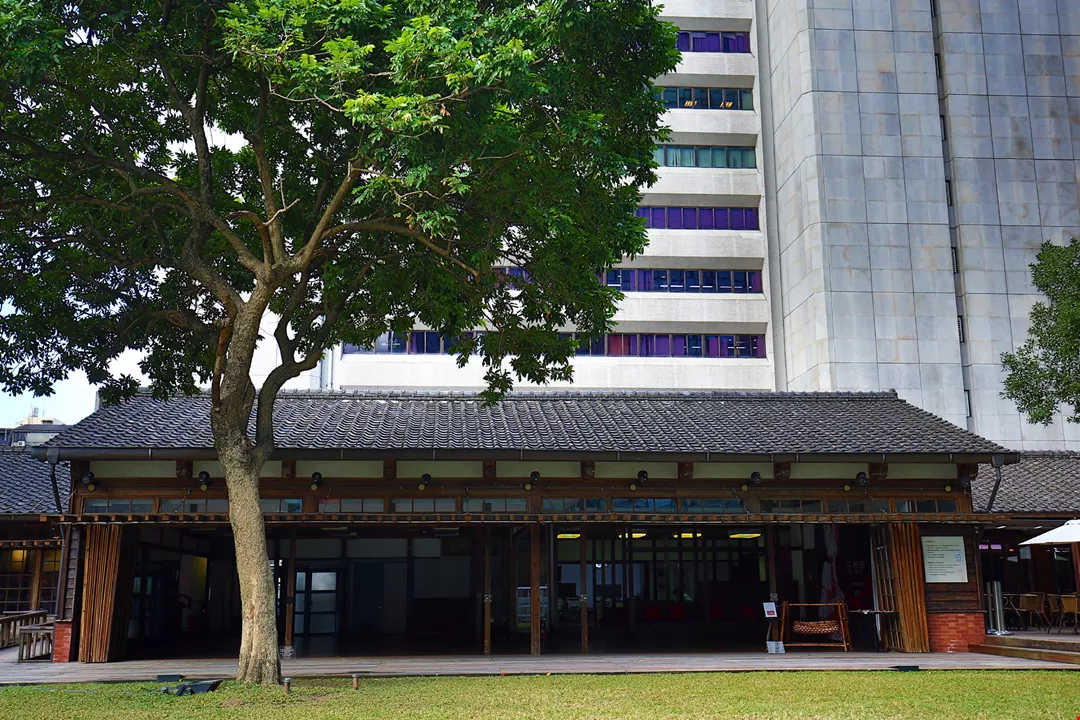
The Tsai Jui-yueh Dance Studio is the first dance studio in Taiwan to be declared a historic landmark.
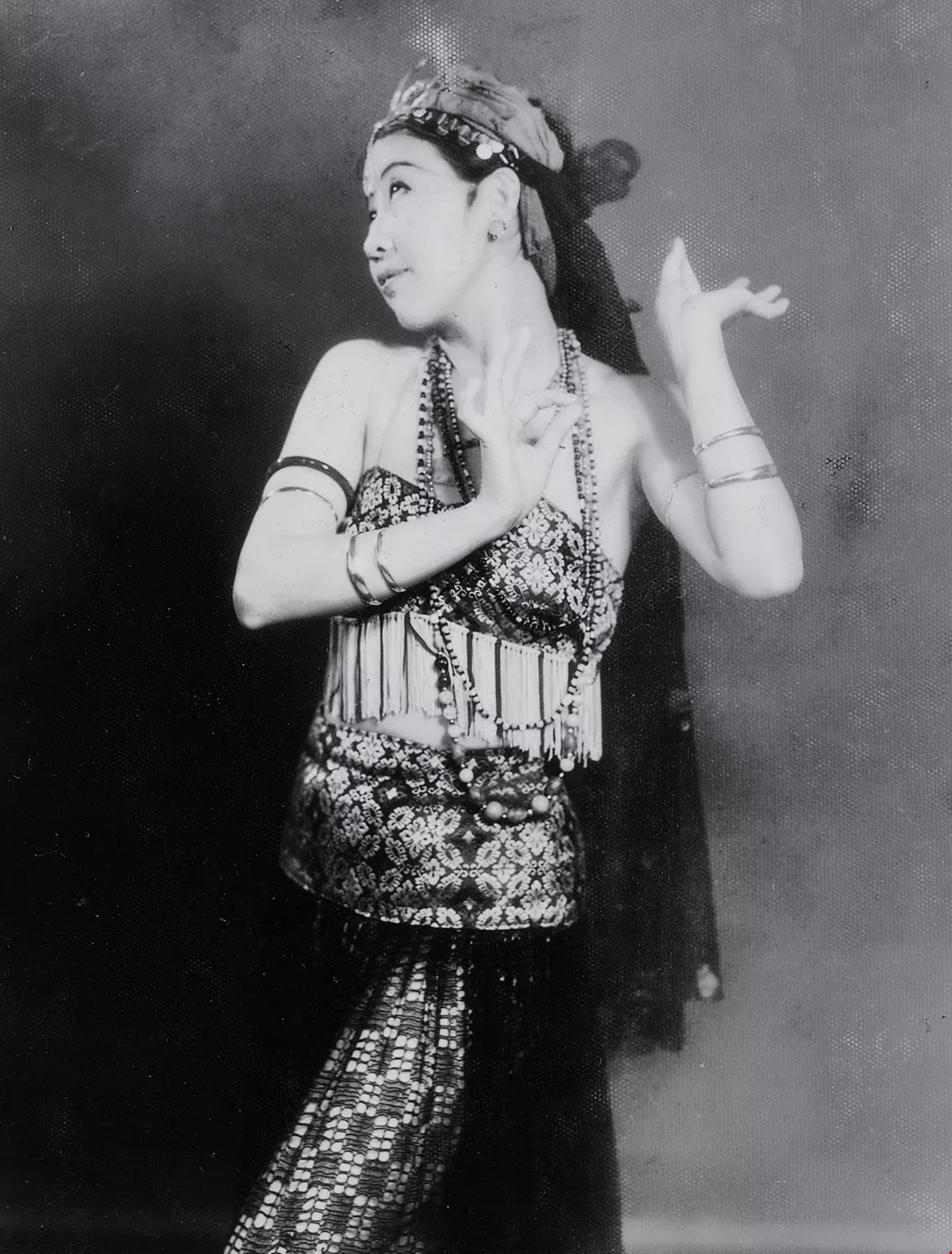
Tsai Jui-yueh was Taiwan’s first modern dance artist. She is shown here wearing a costume used in Song of India. (courtesy of Tsai Jui-yueh Dance Foundation)
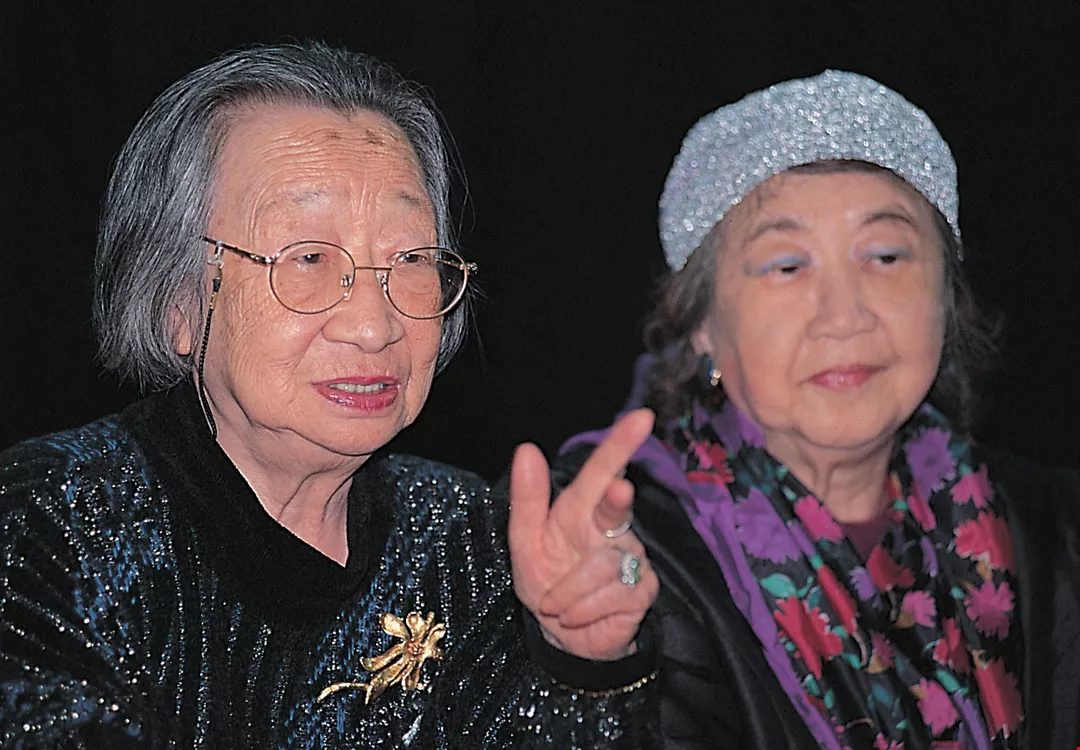
Tsai Jui-yueh (right) met in Taiwan in 1998 with her old friend and former teacher Shi Jinglü. (Taiwan Panorama file photo)
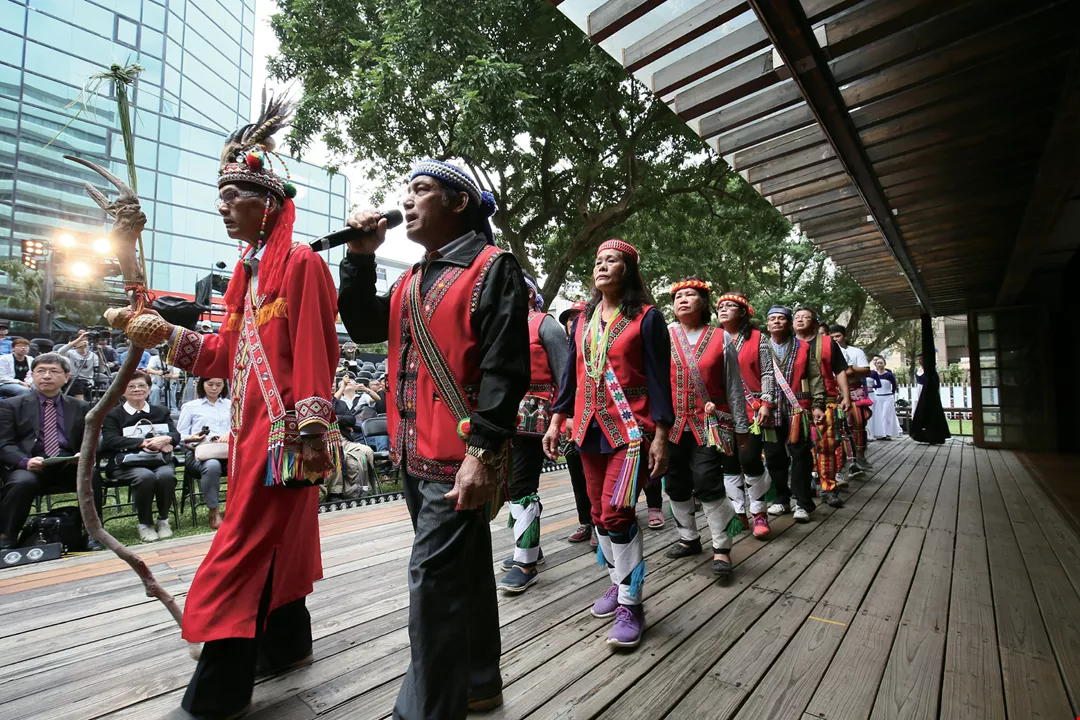
A dance troupe from the Sa’owac indigenous community is shown here taking part in a ceremony at a press conference at the Tsai Jui-Yueh International Dance Festival.
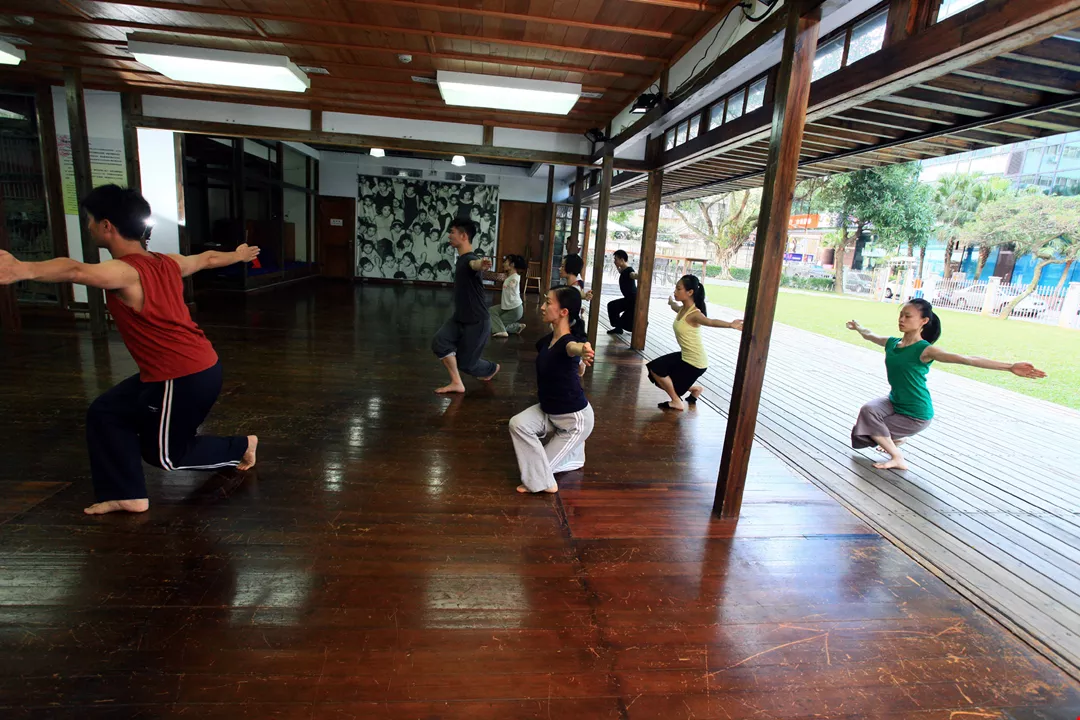
Young dancers today continue to practice their art at the Tsai Jui-yueh Dance Studio, the “cradle of Taiwanese dance.”

@List.jpg?w=522&h=410&mode=crop&format=webp&quality=80)


