One step at a time
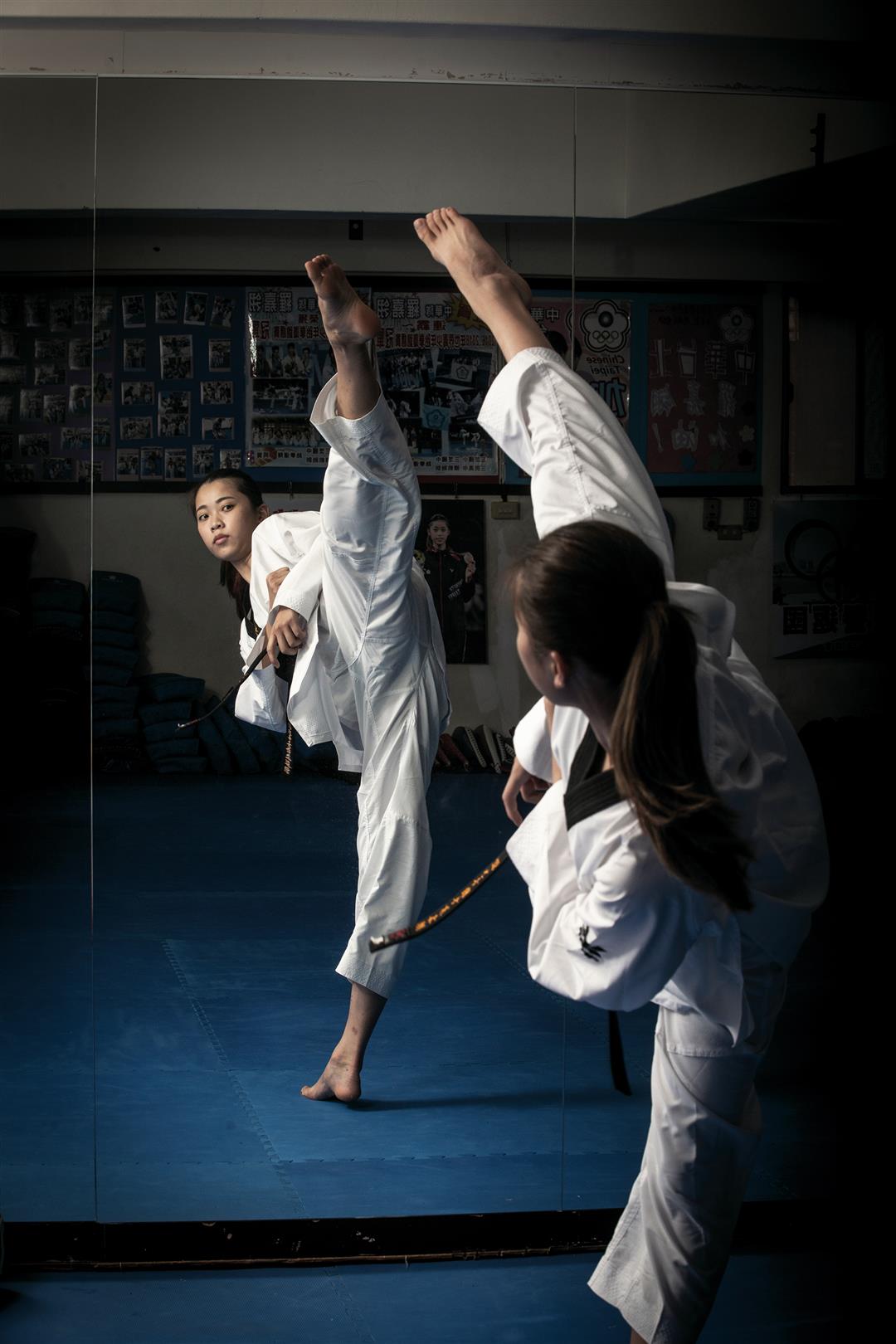
When not wearing her dobok (Taekwondo uniform), Lo looks like an ordinary 19-year-old university student. As a middle-school student, she missed her class’s graduation trip because she was competing overseas, so her classmates made a life-size photo cutout of her to take along with them so that she could stay “in the frame” in videos and photos. But Lo was already 180 centimeters tall even then, so they only made the portrait from the waist up. “I’ve always held on to that cutout, and each time I see it I think about how sweet their gesture was, but also I feel terrified,” she says, unable to keep from laughing out loud.
“Some people are envious that I’ve been able to visit so many countries, but in fact I’ve never had a chance to travel or have fun in a competition host country. There is only training, sparring, and competing.” Lo won a series of medals when she was still quite young, and became a member of the national team, but behind the burden of medal expectations was a girl who had missed out on many important moments in life. “I feel regret because after all, many things only come around once in life—but I made my choice.”
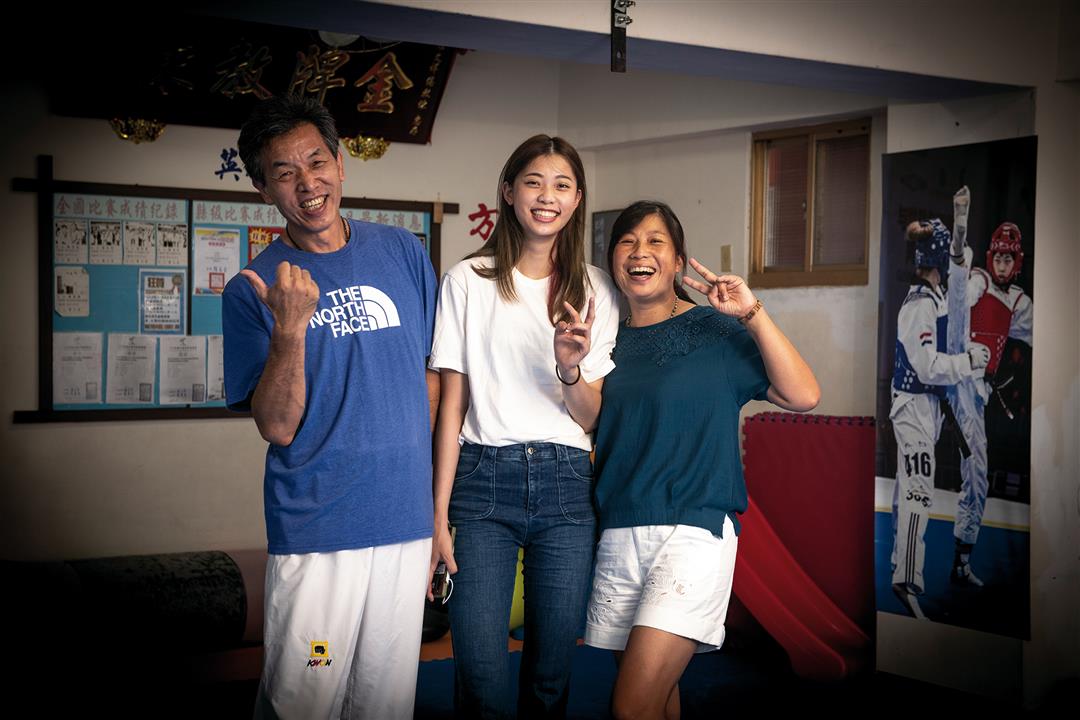
Thanks to her father’s training Lo learned how to “compartmentalize,” and through Taekwondo training cultivated her indomitable personality. “The reason I can be so ‘self-contained’ when it comes to training and competitions is that I can rely on the strength of my family.”
Lo is the first woman in the history of Taekwondo in Taiwan to win consecutive titles at two World Taekwondo Junior Championships. At age 17, in order to train for the Asian Games, she formally joined the adult category and entered the National Sports Training Center (NSTC) in Zuoying, Kaohsiung City. Faced with the markedly higher capabilities of people training with the national team, who except for her were all highly skilled university students in their 20s with abundant competition experience, her outcomes declined dramatically. Lo, who had often been the champion in junior Taekwondo events, admits that it was difficult for her, then still in high school, to stop worrying about wins and losses. Tormented and bewildered, she often cried and genuinely thought about quitting.
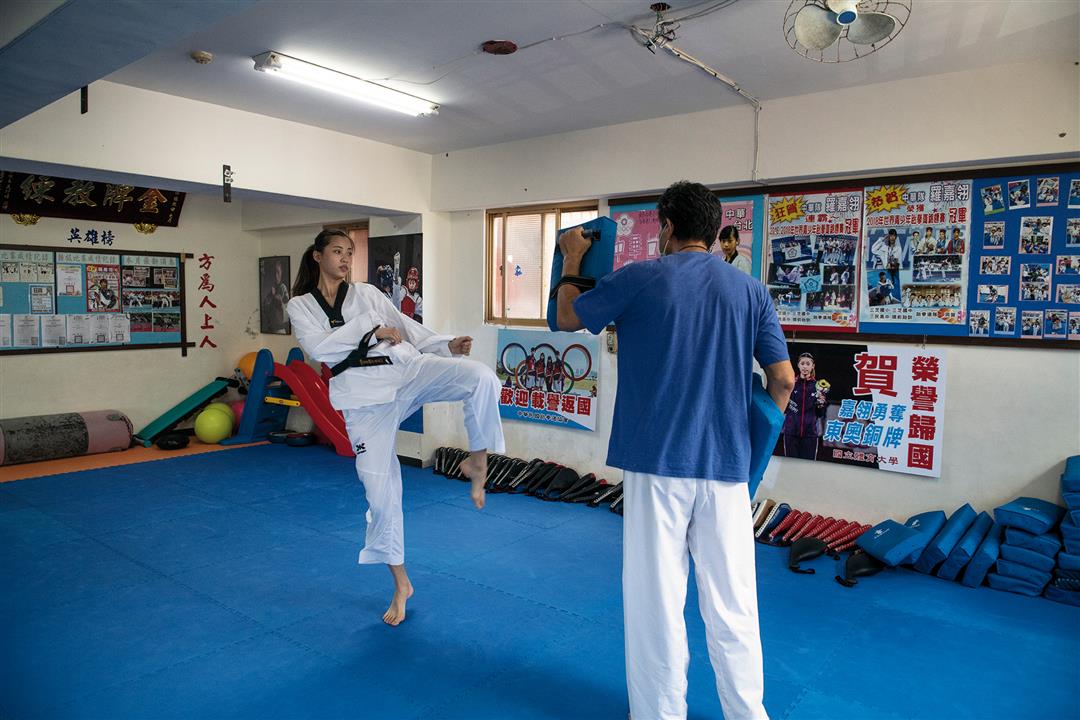
“That was the biggest hurdle I’ve ever encountered, and I was really uncertain about whether to leave or stay. My parents said, ‘Never mind, just come home, that’s OK.’” Her family’s unconditional acceptance gave Lo the strength to keep training. After Lo Wenhsiang asked Coach Liu Tsung Ta for help, Liu went to the NSTC and took on the task of helping Chia-ling get through her difficulties. Later, as Lo trained for the Tokyo Olympics, Liu brought his whole family south to Zuoying.
The Sports Development Promotion Foundation recorded the following data on the training that Lo undertook for the Tokyo Games: 700 kilometers of running, 1000 hours of weight control, 10,000 kick repetitions, participation in more than 50 formal competitions and more than 250 bouts, 1820 hours of competition time. Amid such hard training, and given her extremely high demands on herself, Lo says, “In the process of constantly failing and getting up to try again, I gradually learned to stop worrying about winning or losing. I simply thought, ‘I will make a few adjustments and be better next time.’” Lo’s optimistic and straightforward personality became her greatest strength in overcoming the pressure that athletes put on themselves and that so many of them cannot transcend.
Time, limits to natural talent, and bad luck are the natural enemies of athletes. The solutions that enable them to pursue their careers are training, diligence, and self-adjustment.
Tokyo Olympics: Neither starting point nor endpoint
The Olympics are the most prestigious event for full-time athletes. “In fact, just qualifying for the Olympics was already the realization of my dream for the current phase of my career,” says Lo bashfully. “Probably no one thought that in a single day I would fight my way into the quarterfinals and then the semifinals, and win a bronze medal.”
Lo treated every appearance in Tokyo as a chance to practice against world-class athletes. She didn’t put herself under pressure to win a medal, and this enabled her to coolly seize every opportunity to score points and disrupt the rhythm of her opponents. After a defeat which left her just shy of the gold medal and a decisive victory that enabled her to win a bronze, Lo was able to walk away from the ring having matured a great deal.
Next up Lo faces countless domestic and international competitions, and in three years she will have the chance to compete in the Paris Olympics. Lo has taken her bronze from Tokyo and refound her original motivation: “I want to devote myself entirely to my career as a professional Taekwondo athlete and not have any regrets.” Lo understands that the career of every professional athlete is limited. She says with a mischievous smile: “When I’m forced to leave this occupation, I will choose a job that has absolutely nothing to do with Taekwondo!”
“Each time I feel tired and really want to give up, I try to push myself a little more. Looking back later, I discover that these obstacles that I thought I could never get past were the basis for the times when I achieved breakthroughs and made the fastest progress.” For Lo Chia-ling, Taekwondo has not only given her competition successes and countless medals to hang on her wall, even more importantly it has engraved a set of values of honor and righteousness in her mind, and brought out in her a determination that goes beyond victory or defeat.