Much to learn
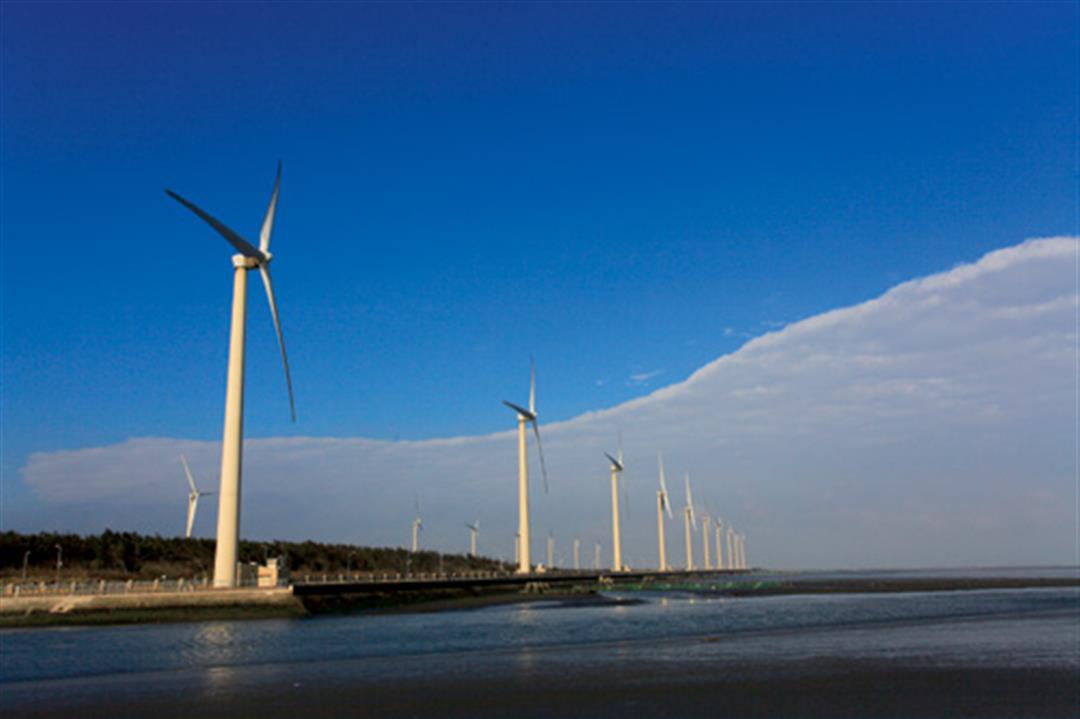
Chen Bin-kwie, a professor of electrical engineering at Ta-tung University, says a successful wind farm requires more than strong winds and high full-load hours. The wind must also be steady. For example, when he evaluated some locations, he found that though the winds were strong, their direction and strength were variable. That can fatigue the metals from which the turbines are made. Frequent repairs to and replacements of turbines mean higher costs, making the project less economically attractive.
Chen says that In-fra-Vest is in a great position relative to the other players in Taiwan's wind power industry. "It has German technological support, excellent sites in -Miaoli, Tai-chung, and -coastal Chang-hua County, and high-quality equipment." He notes that while Tai-power has spent a good deal of money learning the ropes and is gradually getting up to speed, it needs to further improve its wind-farm operations to be competitive.
Infra-Vest sees Taiwan as having great wind resources, but lacking the "political resolve" to develop them. In its view, our government is taking too conservative an approach to renewable energy, and underestimating the feasibility of developing our resources. But that's hardly unique to Taiwan.
Natalie Wang, Infra-Vest's vice general manager, says that forecasts tend to underestimate the extent to which renewables can be developed in every nation. Take Germany, for example. A renowned research institute predicted that renewables could not provide more than 4% of Germany's total power generation, yet last year they accounted for more than 16%.
Infra-Vest, which has invested tens of billions of NT dollars into Taiwanese wind farms since 2000, raised its profile in 2009 by threatening to pull out of Taiwan in response to the delays in passing the Renewable Energy Development Act. The company's biggest policy complaint was that Tai-power's NT$2/kWh purchase price was unreasonable, and that even the NT$2.38 that the passage of the statute would have raised it to provided little incentive. The company has never complained about wind power's high installation costs, and says that its focus has always been on proving that wind power will work in Taiwan.
But some people say that In-fra-Vest has had government assistance in acquiring low-cost leases to prime land from the Forestry Bureau and the National Property Administration. And when firms located in the Chang-hua Coastal Industrial Park opposed the company's installation of a wind farm at the site, the government intervened on In-fra-Vest's behalf. The fact is that in spite of the company's complaints, it has received numerous incentives from the government.
Even so, there's no denying that In-fra-Vest was the first company to develop wind farms in Taiwan, that its facilities far outperform Tai-power's, and that it is driving positive competition in Taiwan's wind power industry.
However, Taiwanese wind power, though clean and cheap, does suffer from one serious drawback: demand for electricity is highest in the summer, yet that's when the wind is weakest. Strong winter monsoonal winds are of little help during our peak-demand summer season. What are we to do? In-fra-Vest argues that even our relatively poor summer winds are better than those in Germany. Moreover, the company says, renewable energy's great strength isn't its ability to supply electricity to the grid directly, but to lower demand for electricity from the grid. The hours of the day in which Taiwan generates the most wind power correspond perfectly to peak demand: the wind rises at about 8 a.m. and begins to fade around 5 p.m., making it ideal for reducing the burden on the grid.
Rebuilding the grid
At the present time, Taiwan produces little wind power, far less than the 15-20% of total power generation that would begin to affect the stability of the grid. But the move toward more distributed power generation requires that we begin rebuilding our grid.
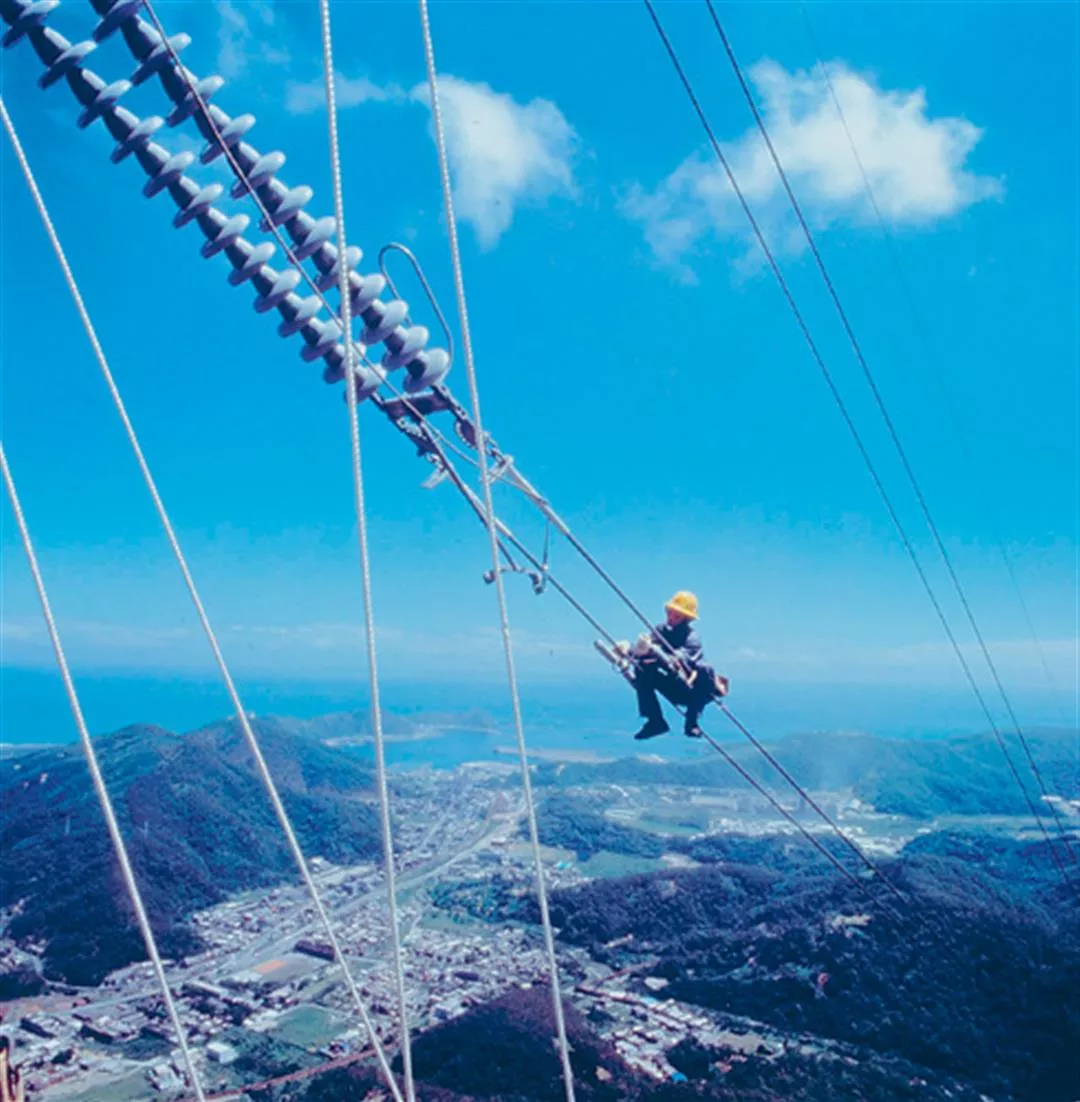
Tatung University's Chen Bin-kwie explains that Taiwan's current power grid comprises generation, transmission and distribution facilities, with centralized thermal, nuclear, and hydroelectric power plants, the power from which is stepped up to high voltages for long-distance transmission, then reduced to low voltage by local transformer substations for distribution to end users. The system's dense transmission network operates something like the veins, arteries and capillaries of the human body.
The problem is that the intermediate transmission network and the terminal distribution network each have capacity limitations. When renewable energy sources, whether small or medium-sized wind or solar, are connected to the distribution network, if the electricity generated surpasses the network's capacity, the quality of supply deteriorates. Meanwhile, additional transmission lines may have to be built to get the large amounts of power from centralized wind farms through the high-voltage transmission network.
Reliability issues
Once you resolve the transmission issue, you still have the problem of the wind's variability. When the wind stops blowing, you must rapidly bring other power sources online to make up for the power that wind farms are no longer generating. Otherwise, the grid's voltage and frequency will become unstable.
If grid voltage falls too low, lights dim and electric motors lose power. If the current strays from around 60 Hertz, the frequency variations can affect how machinery operates. If such instabilities occur while certain industries' production lines are in operation, they can affect the quality and volume of the goods produced.
Taiwan's grid is large and centralized. Problems at any of the power plants connected to the system can cascade into widespread effects. Chen believes Taiwan should begin building distributed "microgrids" to more effectively manage its system because microgrids can operate both as part of the larger main grid and independently. Were a microgrid-connected wind farm to suddenly stop generating power, the effect would be limited. Chen further sees the construction of microgrids as a necessary stepping stone to a Taiwanese smart grid.
Turbines vs. the environment
Though many are looking forward to the development of wind power with great anticipation, concerns do exist. Environmental groups have reservations about the rollout of large turbines in particular.
Germany's six most recent renewable energy project proposals involve spending some 5 billion to install large turbines offshore in the North Sea and the Baltic Sea, and on land in various locations around the country. But Germany's Green Party argues that the towers, over 100 meters tall, will destroy the quiet and the beauty of the German countryside, and is preparing to demonstrate against their construction.
"Taiwan has the second most diverse array of wildlife in the world," says Pan Han-shen, spokesperson for Taiwan's Green Party. "We are practically the Galapagos of Asia." He points out that Taiwan is on the routes used by the migratory birds of both Siberia and the Southern Hemisphere, and argues that the air currents created by row upon row of giant turbines along our west coast would disrupt the birds' transit and selection of resting places. He also objects to offshore installations, arguing that they threaten the survival of the endangered Chinese white dolphin.
Pan is also opposed to the government's plan to build an expensive undersea cable to bring power from -Penghu to Taiwan, arguing that it goes against the local, distributed, small-scale ethos of renewables.
If large turbines are inappropriate, what about so-called "small wind." Is it better suited to the flexible, distributed spirit of renewables?
The definition of "small wind" varies widely. In the US, it generally refers to turbines of 100-kilowatt capacity or less. In other nations, it refers to systems in the 10-50 kW range. Systems of less than 10 kW capacity are referred to as "micro wind."
Jacken Chen, general manager of micro turbine developer and manufacturer Hi-VAWT Technology, says that the biggest difference between large and small turbines is that the large ones are used for centralized power generation. Such systems require expert management because the voltage of the power they generate must be increased for transmission in the grid, then lowered again before use. Small turbines, on the other hand, are typically utilized with distributed power systems. They output 110 or 220 V current that can be used directly (though they also require expensive batteries for power storage), or sent to the grid.
Small wind's grid-independence really shines in remote areas where the national grid doesn't reach. Mainland China, for example, uses small wind to light remote regions of Mongolia. Small wind is also well suited to areas with strong winds and dense populations, such as Linkou in New Tai-pei City.
Tomorrow's star
Chen says that where Europe's renewable energy plan calls for ending its reliance on fossil fuels, adopting the forms of renewable energy most appropriate to the conditions in each country, and using subsidies to encourage the development of the green energy industry, Taiwan's renewable energy policy has been a mess. Because power from large wind turbines is intermittent, the government was not eager for very many to be installed. But that permitted In-fra-Vest, a foreign firm, to gain an early lead in the market. By the time Tai-power tried to catch up, Taiwan was unable to compete in large turbine technology. We could have simply imported the devices we needed, but the government chose instead to spend money on large turbine development, rather than investing in other renewables.
"Small and medium-sized wind turbines are the trend of the future," says Chen. "And complementary wind--solar systems are providing more stable energy supplies." Jacken Chen says that Hi-VAWT has now received the world's first international certification for a vertical-axis wind power system. Taiwan owns many of its small wind technologies and has a solid supply chain in place, which means we are well placed to develop and establish our own -niches. He hopes the government will notice this advantage.
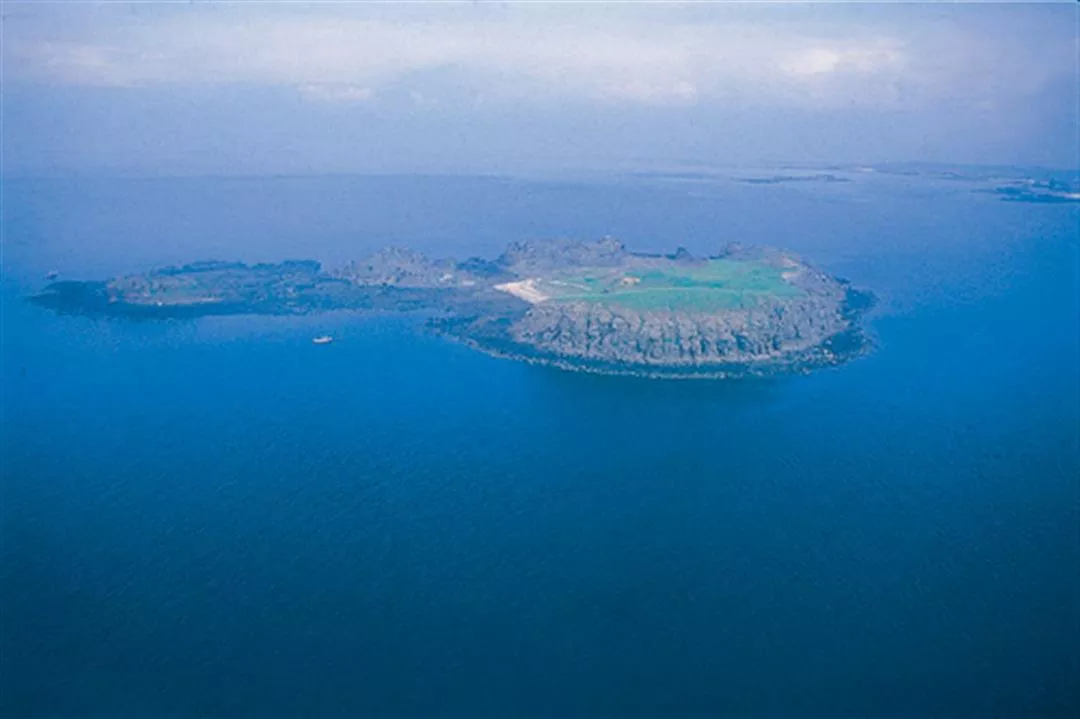
With the installation of offshore power near -Penghu, "it will rain money every time the northeast monsoon blows," say residents. Monsoonal winds tend to keep tourists away from -Penghu in the winter. In the past, that meant that residents' incomes were limited to what they could make during the summer tourism season. But with -Penghu's "windy island" dreams soon to be realized, boundless wind and solar power will bring wealth and environmental health to Taiwan year round. l





@List.jpg?w=522&h=410&mode=crop&format=webp&quality=80)