The Imperial Palace and the three footed horse:
Huang Po-yen, an engineer in the Number 7 Engineering Office of the WCB, has been taking measurements along the coast for more than a decade. Summarizing his long period of observation, he points out that even on days when the wind and waves are calm, in places where dikes have been built, because there is no strip of land to moderate the force, the waves strike high and with considerable power. The more powerful the backwave, the faster the base will be washed away. Given this vicious cycle, both dikes made of steel reinforced concrete or "breakwaters" made up of huge concrete tetrapods dropped into the ocean off the coast are both are basically weak structures that require continual repair. Dikes must be periodically raised and new concrete tetrapods laid down.
Over a long period of time, dikes end up taking on the shape of a pyramid. This is because the part of the dike under the sea cannot be broadened, so to prevent the structure from becoming top-heavy, the additions at the top can not be broader than the parts below them. "The higher you build them, the more these dikes resemble the famous Imperial Palace in the outskirts of Taipei with extremely thin and brittle tops, " describes Wu Chuan-an, a technician at the Construction and Planning Administration of the Ministry of the Interior. In the end, the dikes are like the tip of an iceberg and are unable to fulfill their duty of protecting the coast.
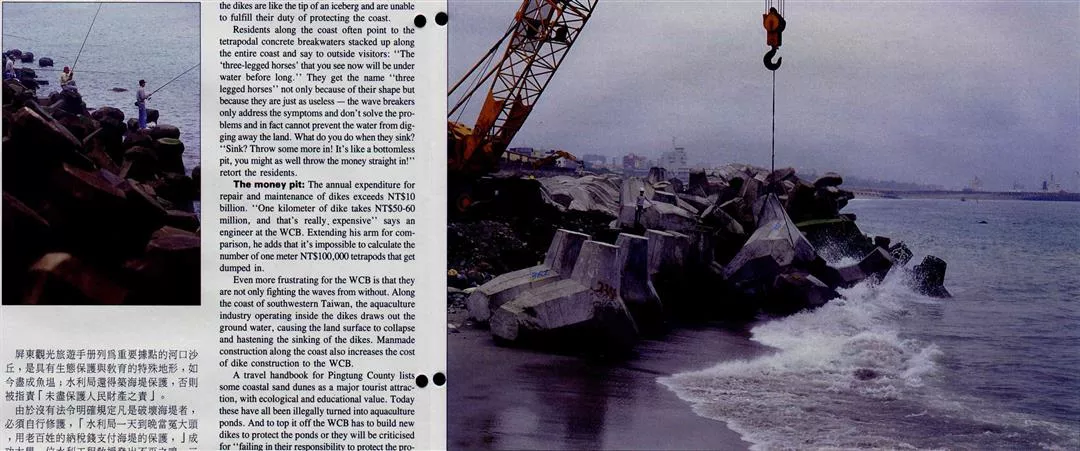
Residents along the coast often point to the tetrapodal concrete breakwaters stacked up along the entire coast and say to outside visitors. "The 'three-legged horses' that you see now will be under water before long." They get the name "three legged horses" not only because of their shape but because they are just as useless--the wave breakers only address the symptoms and don't solve the problems and in fact cannot prevent the water from digging away the land. what do you do when they sink?" Sink? Throw some more in! It's like a bottomless pit, you might as well throw the money straight in!" retort the residents.
The money pit:
The annual expenditure for repair and maintenance of dikes exceeds NT$10 billion. "One kilometer of dike takes NT$50-60 million, and that's really. expensive" says an engineer at the WCB. Extending his arm for comparison, he adds that it's impossible to calculate the number of one meter NT$100,000 tetrapods that get dumped in.
Even more frustrating for the WCB is that they are not only fighting the waves from without. Along the coast of southwestern Taiwan, the aquaculture industry operating inside the dikes draws out the ground water, causing the land surface to collapse and hastening the sinking of the dikes. Manmade construction along the coast also increases the cost of dike construction to the WCB.
A travel handbook for Pingtung County lists some coastal sand dunes as a major tourist attraction, with ecological and educational value. Today these have all been illegally turned into aquaculture ponds. And to top it off the WCB has to build new dikes to protect the ponds or they will be criticised for "failing in their responsibility to protect the property of citizens."
Because there is no law that clearly stipulates that those who damage dikes must repair them, "the WCB ends up working from dawn to dusk spending the tax money of ordinary citizens to cover the cost of preserving the dikes," says a water conservancy engineering professor at National Chengkung University, sounding the warning. For example, three year ago work began on a coastal natural gas liquification plant for the China Petroleum Corporation. That part of the project that extended into the sea affected the replacement of sand in the area, causing the complete collapse of a five kilometer long dike in a neighboring village. Although the WCB protested, they had no legal standing to insist that CPC pay compensation, and they had no choice but to reach into their own pockets for NT$200 million to repair the damage.
The side effects of the failure of the dikes are increasing daily. "This proves that there are limits to the extent that man can conquer nature," contends Hsu Shih-hsiung. The maintenance and replacement of this "Great Wall " each year is often wasted effort. "The policy of surrounding the island has created a tremendous problem for the WCB, and the time has come to reassess the idea of lavishing money to build dikes," he concludes.
Sandfill:
In fact, many countries around the world have learned similarly long and painful lessons in protecting their coasts. Thus they spare no effort in improving dikes. For example, today dikes in the West are built in the shape of sand dunes with considerable extension inward and outward, broad and moderately inclined. As a result the waves gradually dissipate over an extended distance and there is little backwash. However, the area required for these dikes is correspondingly large--and in Taiwan land is calculated in cost per inch. "Each time a dike is rebuilt, the local representatives always ask that it be built farther out and it is nearly impossible to bring the dike line back in," points out Lin Yung-teh in his report A Discussion of Methods for Defending Against Erosion on the Taiwan Coast.
Considering domestic and foreign experiences, it is evident that the best dikes for protecting inland areas are natural beach and coastal forest. Thus, besides dikes that imitate natural sand dunes, it is also necessary to come up with manmade beaches.
Today many countries must tame the sea, but very few are working on how to build higher and firmer dikes. The emphasis is on how to revegetate destroyed beach area, how to compensate for beaches that have been eroded, and how to fundamentally solve the problem of large areas of erosion caused by reservoirs built in the upstream portions of rivers. Today it is no longer popular to resist nature, says Hsu Shih-hsiung. The main method for protecting land is to not destroy existing beaches. And in the face of coastlines heading inland, the idea is to avoid as much as possible using concrete facilities which will alter the appearance of the coast.
Holland, which is the leader in reclaiming land from the sea, uses manmade sand dunes and beaches to serve as a buffer between land and water. But in Taiwan, where gravel extraction and the blocking of sand flow by reservoirs upstream have created a shortage of sand along the coast leading to a loss of coastline, the only solution is to have "cultivated beaches" where people would replace as much sand as the waves carry away.
In recent years, several countries such as Japan, the Netherlands, and the United States have been making great efforts to build "soft-engineering" manmade beaches. And this is not only because beaches take responsibility for protecting the land.
A swimming pool at the beach:
Six years ago Taiwan had still not lifted martial law, and strict controls over beach areas hindered the chances for intimacy between the sea and this island people. Today most of the restrictions on approaching coastal areas have been removed, but now we are cut off from the sea by dikes we have built ourselves.
In hopes of closing the barn door before the horse escapes, the WCB often constructs dikes where there are still beaches. At the beach playground at Mashakou in Tainan, a half-storey tall dike was built right on the golden beach. Those operating the recreational area figured they might as well put up a swimming pool inside the dike--and there ended up being more people playing in the pool than on the beach. If dikes continually expand, it's obvious that swimming pools at the beach will no longer be a curiosity.
In order to avoid destroying the natural scenery and cutting people off from the beach, many countries take sand from other areas to fill in damaged coastline. People can thus continue to snorkel, play in the waves and splash about.
In the Global Conservation Strategy stipulated by the United Nations, coastal wetlands, like prime agricultural lands, are seen as the highest productivity belts on earth. The continual churning of the coast by waves and the matter carried down from inland areas make beaches rich in nutrients. Add to this that the water is shallow and there is a great deal of sunlight, so there is a rich variety of life that lives and swims there, attracting shrimp and fish. Nearly 90% of fish fry are concentrated here. These areas are also popular stopovers for migratory birds, like the rare black-faced spoonbill, which loves to look for food in marshy land.
Forests reclaiming land from the sea:
Besides having the functions of recreation and moderating natural disasters, coastal wetlands can also clean pollutants from upstream waters. Thus various nations spare no effort in their preservation and are trying in every way to "cultivate" beaches and coastal forests through human effort.
In the single year of 1986 the American state of Florida spent nearly NT$1 billion to cultivate forests on the coast at a cost of US$250,000 per hectare. It was foreseen that future generations of the trees would continually grow out toward the sea, having the function of creating new land. Many aquaculture areas in Indonesia have been created by the "vanguard" of trees moving out to sea.
Taiwan at present could spend vast sums of money each year to build dikes trying to resist the unstoppable force with the immovable object. In Britain, similarly an island entity, today sixty percent of the coast is threatened; but because the costs of coastal maintenance are extremely high and the government has fiscal problems, many locations can only do what the citizens of Tsukuan did, which is to watch their homes be devastated. Recently a hundred-year-old castle on the English coast collapsed into the sea. "Taiwan should take the opportunity to supplement its resources and think of diversified ways of coastal protection," believe scholars. Only in this way can manmade beaches have the possibility of restoring former coastline. For example, there are many such seashores in the Netherlands, yet there is no way for the people walking among them to know that they are in fact dikes.
No trees please. we prefer concrete:
Ten years of experience, ten years of lessons. When the WCB first discovered coastal problems in the 1970s, they began to send people abroad to study and to learn new methods for controlling the sea. Hsu Shih-hsiung was a member of the first group to go. Today, "the WCB is more and more averse to doing fixed concrete construction which permanently destroys the coast," he says.
In fact, in 1976 Lin Yung-teh put forth a plan for manmade beaches: This consisted of taking sand from well off the beach and depositing it on the badly eroded Hsihsi coast in Kaohsiung and planting broad areas of trees to stabilize the sand. After ten years the loss of sand was limited and there was almost no need to compensate with other sand. However when the locality saw that the WCB was postponing building a dike, they destroyed the trees." What the elected officials wanted was a concrete dike that you could see. That's the only thing that represented a political achievement to them. So in the end the WCB could only build them their dike, " says Lin Yung-teh, not hiding the reason why the beach idea came to its untimely end.
Many people believe that the biggest problem for manmade beaches is where to get the sand. Lin Yung-teh believes that today, with waste soil piled up everywhere along the coast, this problem shouldn't be very hard to overcome.
Let's call the whole thing off?
What Hsu Shih-hsiung is even more worried about is that even if the WCB wants to comprehensively address coastal problems, these days the coastline has already become coveted by many contenders.
Take the case of Taichung Harbor. Some scholars suggested that silt dredged up from ports could be used to make manmade beach on the seriously eroded dike to the south of the harbor. Not long thereafter a power station took over the area, bursting that bubble.
Hsu raises the case of the coast at Pali, which is continually retreating. Although the retreat has reached one hundred and fifty meters at its farthest point, the WCB has anyway abandoned protective engineering at the site, "because we have been constantly preserving while people have been constantly destroying. Like the Eight Immortals Amusement Park. One day we would fill in here and the next day they would dig up there. Often people would dig up tens of millions of dollars in construction in a matter of days. This was a waste of effort and very exhausting for the WCB," he concludes. It was better just to stop the merry-go-round and invite scholars to study the situation with regard to beach erosion, changes in the shape of the beach, and upstream destruction of the river, and then undertake a comprehensive protective plan. But has anything come of this?
Today the Ministry of Transportation and Communications plans to build a sand port here, the Construction and Planning Administration says they want to set up a waste-soil dumping site, the Environmental Protection Administration is mapping out the Pali garbage dump, the coastal highway people are scheming to construct a large bridge across the river here . . . . There are at least seven or eight units that want their cut of the Pali coast line, but none have thought of the side-effects of their various projects. The WCB can do nothing but accept the responsibility for maintaining the dikes and cannot prevent development by the other units.
Two thousand years ago, the Emperor Yu tamed the rivers. Two thousand years later, the Water Conservancy Bureau tames the sea. Times have changed, but in fact the logic of channeling nature rather than walling it in has not. The problem today is that, compared to the old days, things seem a bit more, well, complicated.
[Picture Caption]
p.44
Wavebreaking manmade tetrapods piled up on the natural topography are becoming an increasingly common sight in Taiwan.
p.46
"My children and grandchildren will have no beach to play on," worries a high school teacher.
p.47
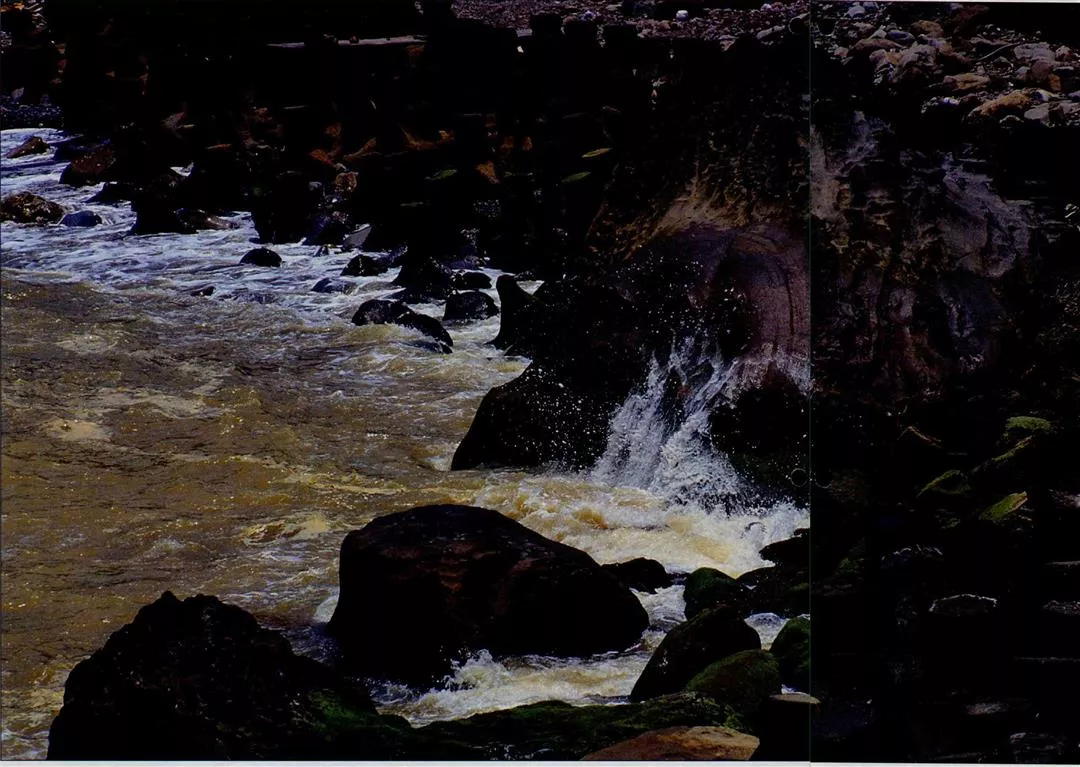
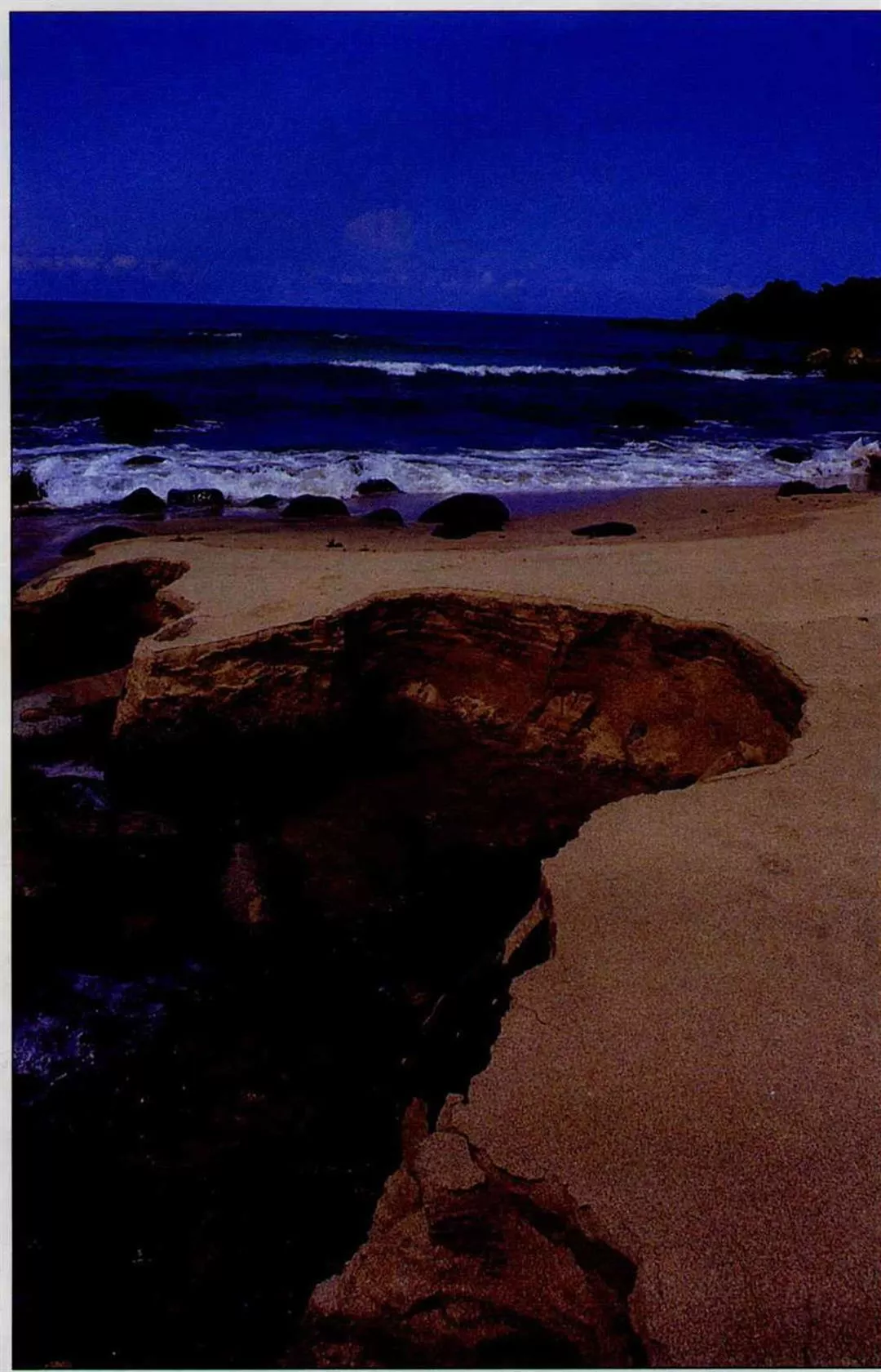
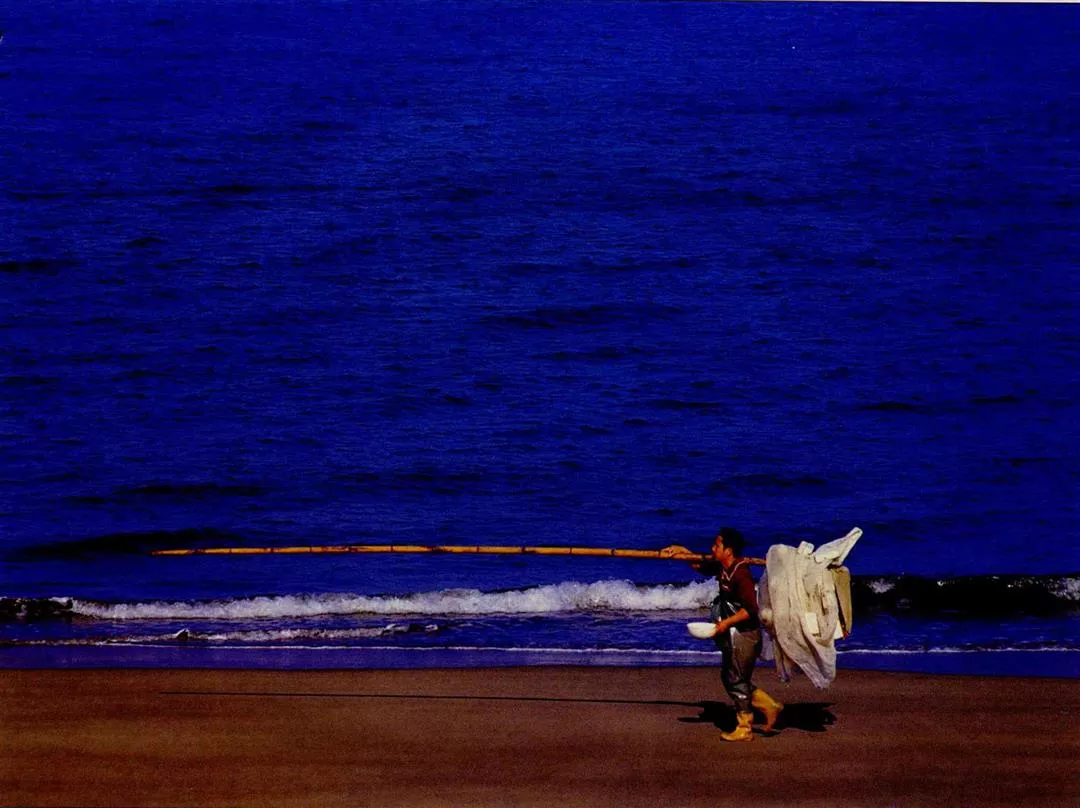
Smoothly undulating beaches have left many people with warm memories of the shore. But these are disappearing--not the memories, the beaches.(Sinorama file photo)
p.49
(left)(right) These wavebreaking tetrapods gradually are swallowed up by the earth, and provide no permanent protection to the realm. They are ridiculed by coastal dwellers as "three-legged horses."
p.51
Sand beaches and wind obstructing tree lines can tame the waves, and make the best of all possible dikes naturally.(photo by Cheng Yuan-ching)


@List.jpg?w=522&h=410&mode=crop&format=webp&quality=80)





@List.jpg?w=522&h=410&mode=crop&format=webp&quality=80)