Celebrating a Century of Taiwanese Baseball
Andre Huang / photos courtesy of Chinese Taipei Baseball Association / tr. by Geof Aberhart
April 2008


As Taiwan's baseball team advanced to the 2008 Beijing Olympics with a record of five wins and two losses, a detailed and informative exhibition on the history of the sport in Taiwan opened at the National Taiwan Museum, located in Taipei's 228 Memorial Park. With 2008 marking the centennial of the museum, this is the perfect time to review the history of Taiwan's national sport, and this exhibition is made all the more significant by the fact that 228 Memorial Park was the site of Taipei's baseball park between 1907 and 1957.
Running from March 4 through May 1, Home Run-The Glory Age has on display a range of artifacts and equipment, taking visitors on a journey through the development of baseball in Taiwan since 1906.
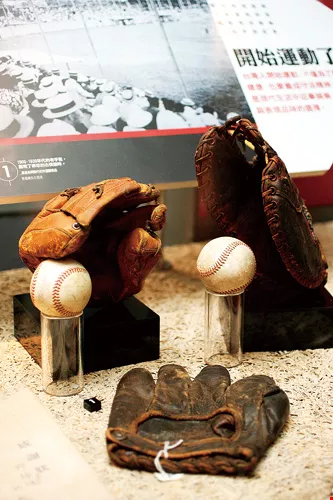
These relics now sit peacefully in display cases, but in their day they witnessed astonishing and glorious moments in Taiwanese baseball's history.
Looking back over the century
Baseball first began being played in Taiwan while the island was under Japanese rule, with the first team formed at what is now Taipei Municipal Jianguo High School in 1906. The first team composed entirely of Taiwanese students was formed 23 years later at Taichu First Senior High School in the city now known as Taichung. In 1931, 25 years after baseball was imported to Taiwan, a team from Kagi (Chiayi) School of Agriculture and Forestry traveled to Japan to take part in the Spring Koushien high-school baseball tournament, placing second and setting a new high-water mark for Taiwanese baseball.
After the end of World War 2 and Taiwan coming under the rule of the Republic of China, the first national team was established in 1951, symbolizing the reinvigoration of baseball in post-war Taiwan. This not only further solidified baseball's position as Taiwan's national sport, but also coincidentally became a source of national pride, something which has remained true to the present day.
In 1968, a group of school children from the Bunun tribe of Aborigines in a remote part of Taitung set up the Red Leaf Little League Baseball Team, practicing with whatever they could, often using stones for balls and sticks for bats. Through tireless practice, the Red Leafs were able to see off the visiting Japanese team Wakayama, Little-League world champions at the time, in a 7:0 whitewash, doing much to stir up national sentiment.
In 1969 the Golden Dragon Little League Baseball Team set off to participate in the 23rd Little League World Series at Williamsport, Pennsylvania. Around Taiwan people listened intently to their radios, following the games deep into the night. When the Taiwanese team ultimately won 5:0, streets throughout Taiwan burst out into loud cheers and barrages of firecrackers. President Chiang and government officials of all levels flooded the team with telegrams of congratulations. Following on from the Golden Dragons, a succession of other Taiwanese teams made their mark on the global baseball stage, including winning the Little League, Senior League, and Big League tournaments in 1974 and 1977. As Taiwan endured the dark days of the 1970s, just after the nation's ejection from the United Nations, the performances of their young baseballers provided a much-needed source of comfort and relief for people across the island.
The 1970s were also the glory days of Japan-based Taiwanese player Wang Chen-chi, whose unique "scarecrow" batting style shook up the league. In 1973 and 1974, Wang swept the Japanese league individual records, taking out titles for his batting average, home runs, and RBIs (runs batted in). On September 3 1977, Wang hit his 756th career home run, setting a new world record. The National Taiwan Museum's exhibition includes memorabilia from Wang's career, reminding visitors of those halcyon days.
In the 1980s, Taiwan's former world-champion little, junior, and senior league players continued to perform well at international level as they moved into the amateur and professional leagues. In 1983, Taiwan, competing as Chinese Taipei, took first place in the Asian Baseball Championship for the first time, and the following year the team took third place at the Los Angeles Olympics after beating South Korea in a 14-innings marathon. At the 1992 Olympics, the first Olympiad where baseball was officially a medal sport, Chinese Taipei earned the silver medal.
In 1990 Taiwan's professional league, the Chinese Professional Baseball League, was founded, starting with four teams and later expanding to seven. The establishment of this league solved the long-standing issue of the lack of a development track for new players, and made Taiwan the third country in Asia (behind Japan and South Korea) and the sixth country in the world to set up its own professional baseball league. The CPBL also ushered in a new era in Taiwanese baseball history.
The CPBL set off with a bang, with ticket sales breaking 10 million in 1997. As the league's popularity grew, so did players' pay and ability to make a living from the sport. People began paying more and more attention to baseball, and both baseball and softball teams began popping up around Taiwan. The Taiwan Major League was later established, providing competition for the CPBL in the growing baseball market.
Between 1996 and 2005 match fixing became a growing problem, which caused the fever for baseball began to cool, and teams found themselves hitting financial problems. In 2003 the two leagues found themselves forced into merging, which went some way to solving the financial problems, but the old madness for baseball seemed gone for good.
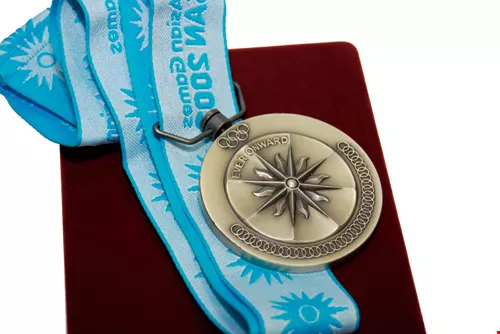
These relics now sit peacefully in display cases, but in their day they witnessed astonishing and glorious moments in Taiwanese baseball's history.
A new hope?
In the past two years, New York Yankees pitcher Wang Chien-ming has given baseball a much-needed shot in the arm in Taiwan, but the onslaught of Major League Baseball games being aired on Taiwanese television has in turn stolen much of the audience for CPBL games. Taiwanese people are as mad about baseball as ever, but now the top players are being lured by big money from the American and Japanese leagues, with Taiwanese baseball going from the home of national heroes to a breeding ground for players in the international scene.
Looking over the yellowing photos, fraying balls, and tarnished trophies from the old days of Taiwanese baseball, visitors to the National Taiwan Museum's exhibition may feel not only nostalgia, but also a renewed hope that Taiwanese baseball will go on to enjoy another glorious century.
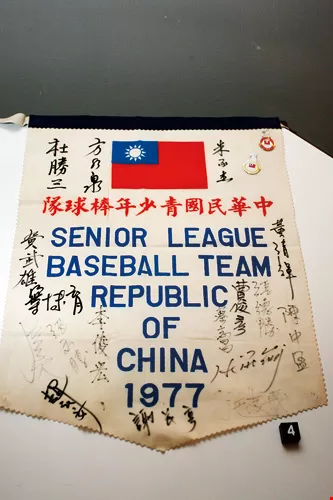
These relics now sit peacefully in display cases, but in their day they witnessed astonishing and glorious moments in Taiwanese baseball's history.


@List.jpg?w=522&h=410&mode=crop&format=webp&quality=80)


