"If voices could have faces, Huang Fei's would have its mouth upturned in a sweet smile; her interpretations of Taiwanese tunes have a surprisingly down-home feel, combining the appeal of one's own dialect with that of a sweet young woman." This is just one example of how music critics view the voice of Huang Fei.
With her song "An Extraordinary Woman," Huang cemented her place amongst the pantheon of budaixi (glove puppet theater) theme singers and as an heir to the legacy of Xi Qing. With a voice as sweet as her smile, she has shaken off the image of the "woman of sorrow" so stereotypical amongst Taiwanese-language singers.
But even more impressive and unusual is how she has managed to remain so down-to-earth and true to herself even after years in the music industry.
With so many everyday folk taking their shot at stardom in American Idol-lookalike shows, how does one stand out and break out? Part of doing so is having a distinctive voice and singing style.

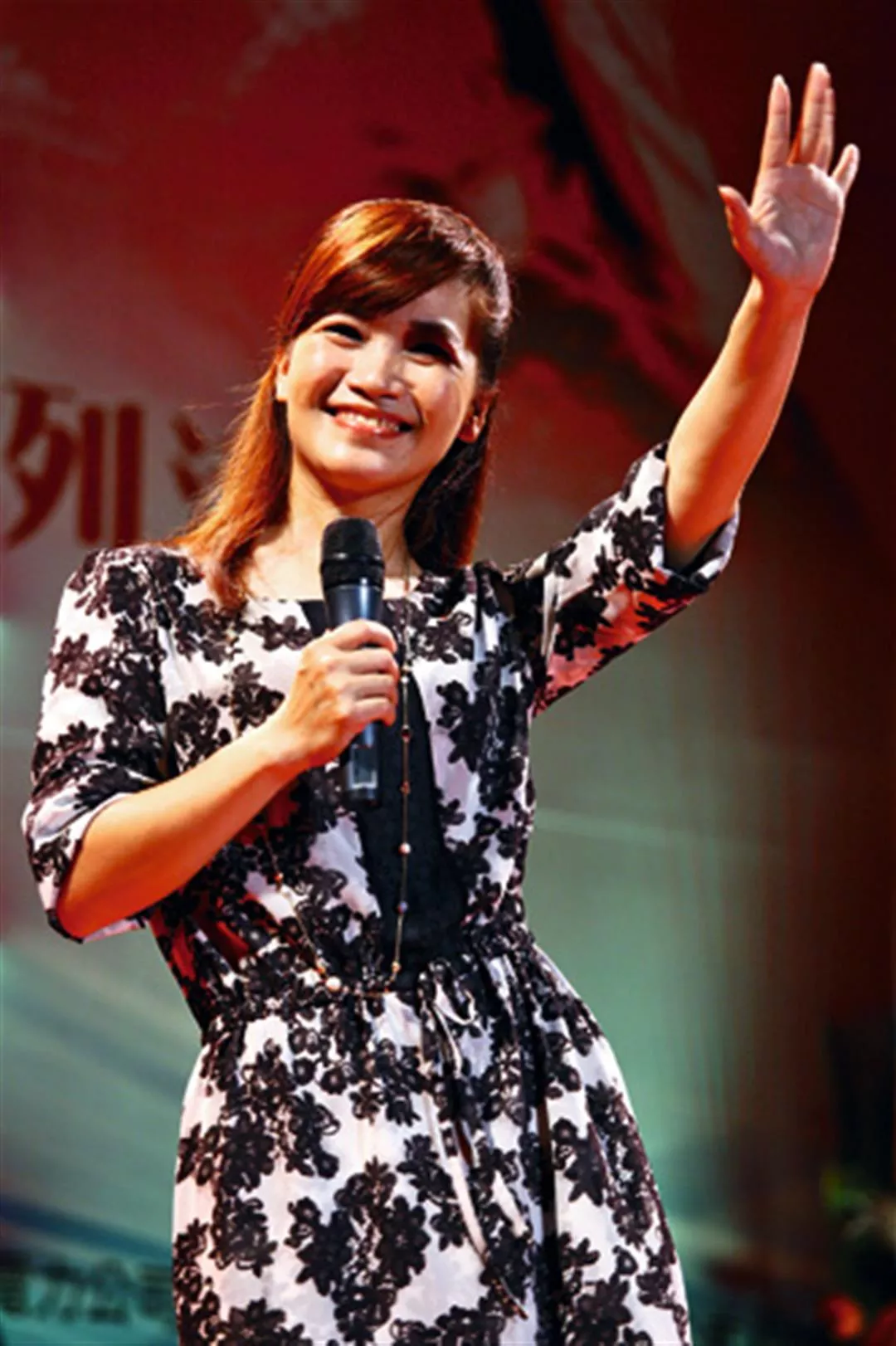
Winner of the Best Taiwanese Female Singer award at the 2011 Golden Melody Awards, Huang Fei has staked her claim on the Taiwanese music market with her distinctive voice. This photo shows her during a performance at Fisherman's Wharf in Tamsui this July.
Huang Fei started in the music business at just 18 years of age, when her brother-in-law signed her up for a local singing contest. After he tricked her into believing that if she didn't go on stage they wouldn't get the NT$1000 registration fee back, Huang dived in, not wanting to waste the money, and ultimately walked away with first place and the interest of record companies.
Fresh out of vocational high school and newly signed to a label, in 1996 Huang recorded the eponymous theme for the character of "An Extraordinary Woman" in the Pili Multimedia series Phantom Arrow Part 2, astonishing budaixi fans with her performance.
Handsome men are a dime a dozen / Rich men, get in line / I only fall for the fearless / Oh wind / Blow my love to the heavens / Let it rain down on the one who is unaware of my feelings
An adaptation by Pili producer Huang Chung-hua of a Japanese song, "An Extraordinary Woman" was chosen as the lead single from the soundtrack album; on its release, the album shocked with its sales numbers, selling over 100,000 copies. The music video for the song featured only puppets, with the real singer's face unseen by all; all the public knew was that this skilled singer with the unique voice was called Huang Fei.
Huang's start in the music industry was not a smooth one, though. With no real media training or assistance from her record company, she often found herself having to deal with questions on her own. Not skilled at formal situations like these and left with no-one to turn to for help or encouragement, Huang had difficulty adapting to the entertainment circuit, becoming disenchanted and scared of something she once had been tremendously passionate about.

Huang's clear, beautiful voice has injected a new vibrancy into Taiwanese-language music.
Not even 20 at the time, Huang was working as a hairdresser before entering the glitzy world of showbusiness.
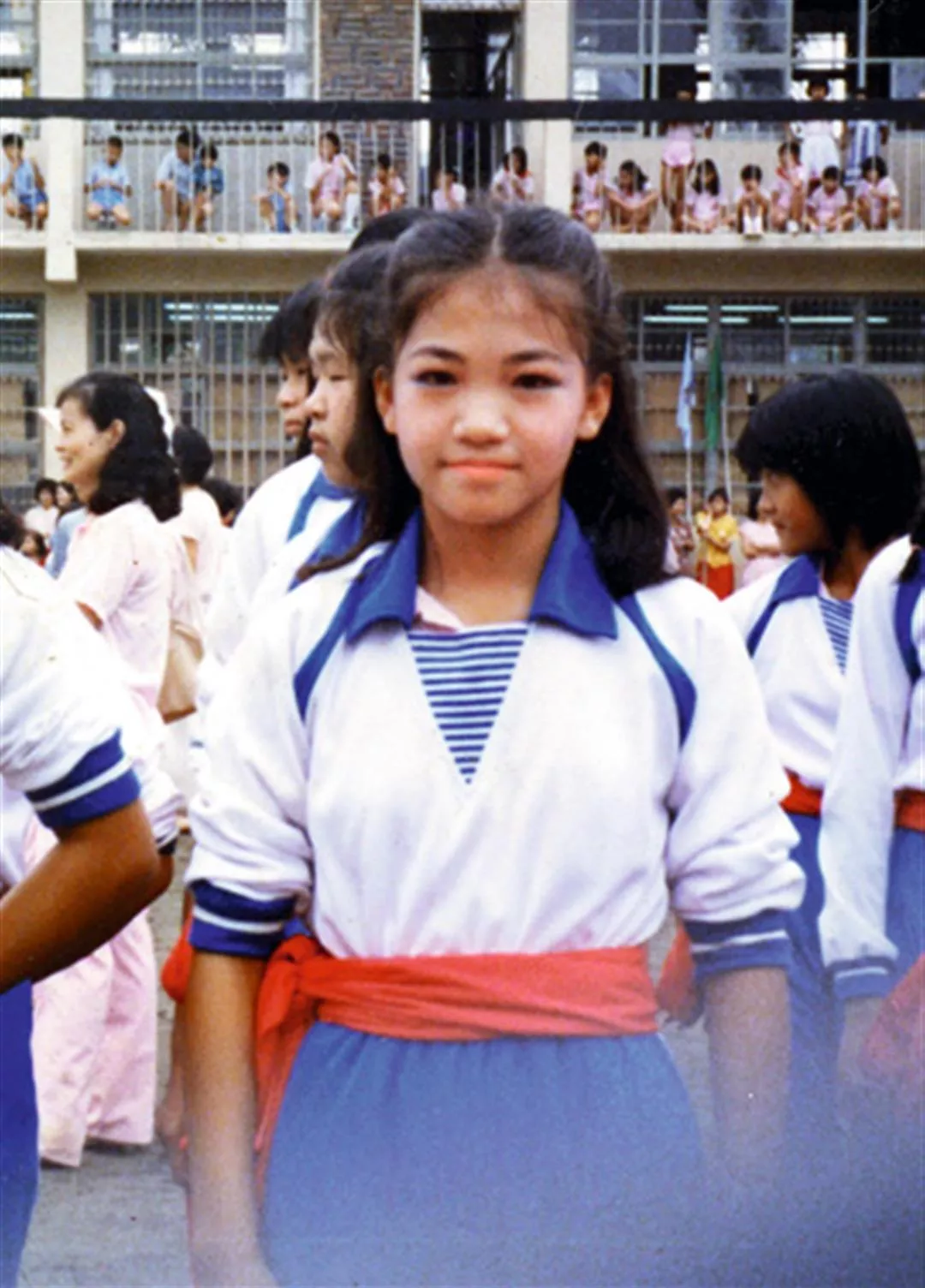
Born in Gushan District, Kaohsiung, as Huang Lihua, Huang Fei is the youngest of seven children. "All I could ever really remember of the area around my home was about a 200-meter radius-beyond that and I'd get lost," she says.
Although the young Huang may have seemed a little muddle-headed, her mother, who had her own talent for song, fostered a passion for Taiwanese music in her youngest through her humming of classic tunes. Although her mother wasn't well educated, she had a strong memory, and even hours after watching a Taiwanese Opera performance, she could still sing songs from virtually all of the characters. Influenced by this, Huang Fei grew up with a love of singing. It was as though performance was in her genes, and when, for example, her brother brought home comrades during leave from his military service, she would entertain their guests with song and dance.
In junior high, she discovered her interest in hairdressing, which was a respite from the boredom she found in her studies. What finally inspired her to study hairdressing was seeing a few women from the neighborhood start their own hairdressing salon. Watching them go from having to rent their salon to owning both their own home and salon made Huang envious, given her own family's financial problems.
"Dad was slaving away at a ship-breakers, trying to raise seven kids on a miniscule paycheck, and when it came time to pay for tuition, Mom would always be worried," remembers Huang. Seeing her brothers and sisters finish their compulsory education and start supporting the family through work, Huang Fei began planning her own path, decided to study hairdressing with her sister after finishing junior high and then eventually open her own salon.
Sure enough, after junior high she and her sister apprenticed at a neighborhood salon, starting off washing hair. "Apprenticing is hard work," she says, recalling the reprimands and disapproval she received in the early days, when her skills were still rough. Customers would often demand someone else wash their hair, and all she could do was hide away in the bathroom and cry.
Later, when the Ministry of Education began promoting cooperation between academia and business to encourage young people to study part-time, Huang enrolled in hairdressing classes at Shu-Te Home-Economics and Commercial High School, working by day and studying at night. It was a simple, but fulfilling life.

A born performer who inherited a talent for song from her mother, Huang Fei would sing and dance to entertain guests at her family's home.
She carried on like this until recording "An Extraordinary Woman" and finally making it big, meeting a man with a keen eye for talent along the way-famed producer and musician Chen Ming-chang.
In 1998, Chen happened to hear Huang sing the aforementioned song, and he was immediately drawn to her bold yet sweet voice. He finally tracked Huang down in Kaohsiung, before spending almost a year trying to convince her to step back into the spotlight.
"At times, Huang Fei's voice has the power of the wandering warrior women of old, and at times, it has the sweetness of a young maiden," says Chen.
Unlike many other Taiwanese-language singers, who tend to run with more folk- or enka-influenced styles in their singing, Huang takes a more pure approach, eschewing such embellishments. Hearing her sing, Chen was convinced of the flexibility of her voice, capable of spanning a good three octaves.
He headed south, intent on getting Huang to sign with Magic Stone Records. Although she still felt a little disenchanted with the celebrity world, Huang still loved singing, and when Chen promised her she wouldn't have to chat on stage, she agreed to sign.
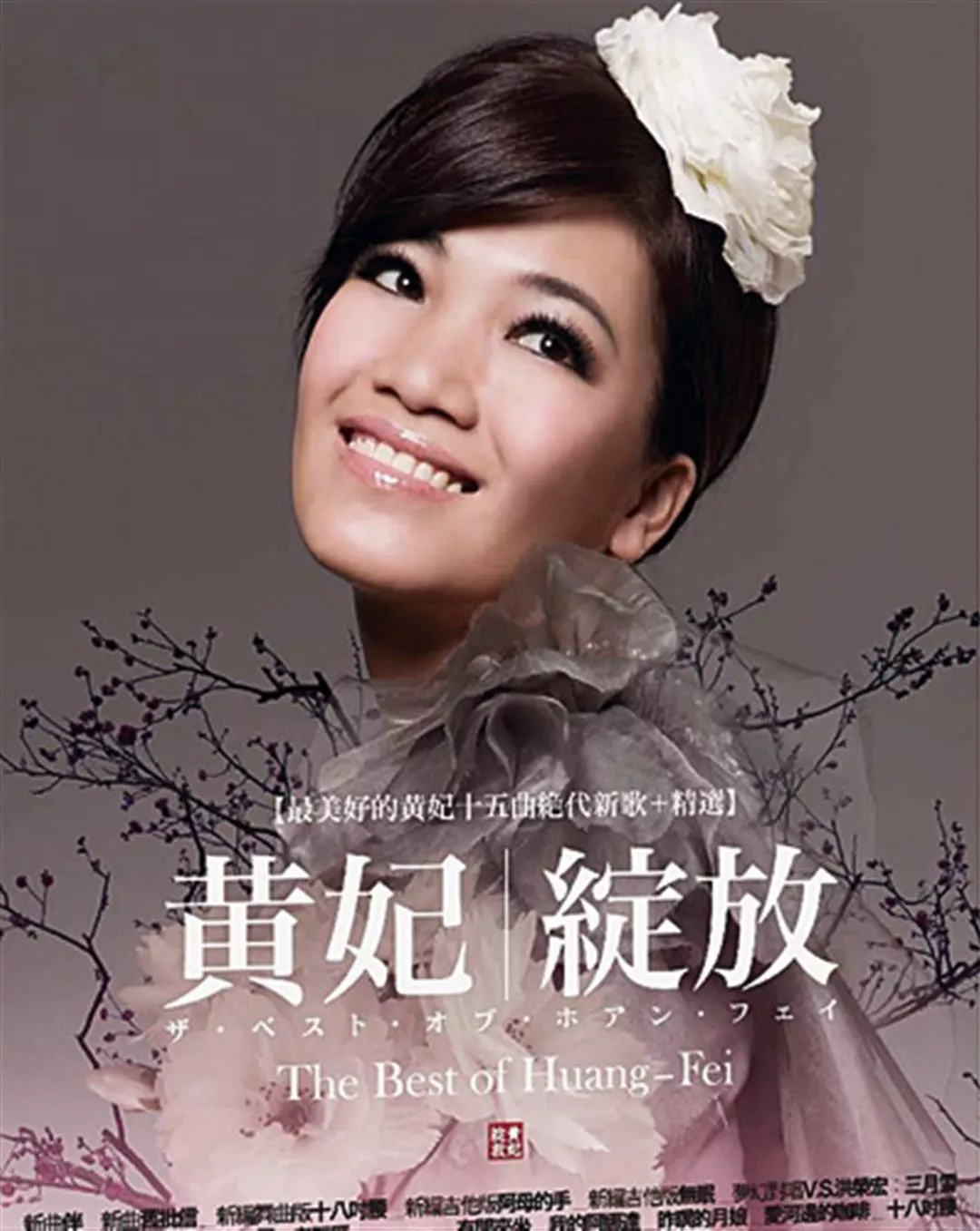
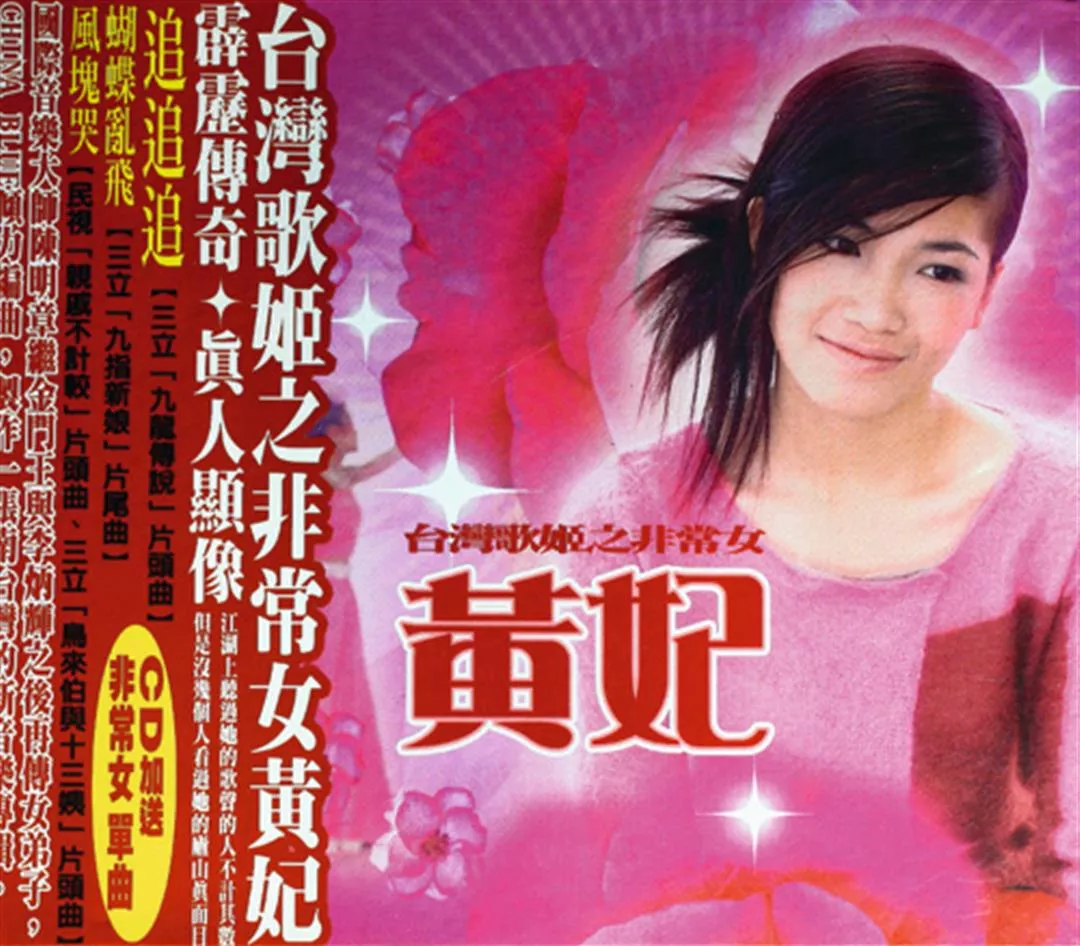
In 2000, Magic Stone Records issued Huang's first solo album, a self-titled effort produced especially for her by Chen. The label spent NT$1 million on the video for the lead single "Chase, Chase, Chase," shooting a video with spectacular backup dancers, beautiful outfits, and a simple-yet-powerful performance by Huang. Coming out front-and-center after having hidden away with "An Extraordinary Woman," Huang finally hit it big, her popularity sweeping across Taiwan.

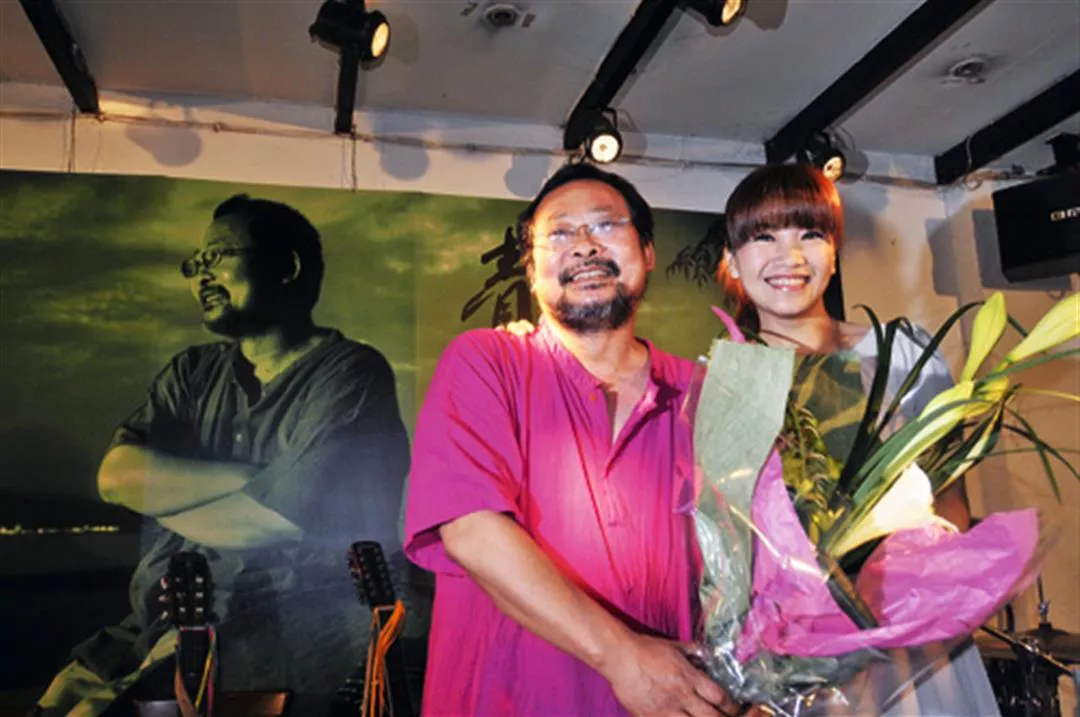
Huang Fei's patron in the musical world, Chen Ming-chang has produced songs and albums especially for her, helping her find her place in Taiwan's musical world. This photo shows Chen at an album launch conference, with Huang Fei presenting him with a celebratory bouquet.
When she first saw the dense lyrics, Huang recalls, she very nearly called it quits then and there. Memorizing things was what she was most worried by at school, she jokes, so how on Earth could she remember all that?
Across the rivers / Up to the moon / A thousand boats passing by / Over the mountains / I'm the prettiest / In all the country. / The far-away moon / A thousand-mile wall / Endless sorrow / Through all kinds of illusions / And the vicissitudes of life / I'm the most gorgeous.
What kind of killer look / What kind of man / What kind of hero / Makes me chase him to the end of the world?
With a gentle, confident a cappella start, the song moves up a gear as the chorus kicks in, powerful but evocative, every word in its place, the whole thing carefully orchestrated. The song was a challenge, as she had to enunciate each word, slicing them apart from one another with the precision of a surgeon.
"She had to sing it many times to get the pattern and style down," says Chen.
In order to get her on board, Chen first sang the song for her himself, unaccompanied. While she had trouble at first, after practicing and practicing for a week, she finally finished the recording.
Her unrestrained and uncommon melismatic style gave the song a lasting appeal, and with its combination of loneliness, power, and emotion, "Chase, Chase, Chase" was a bold reinterpretation of budaixi music, becoming Huang's signature tune.
For another song, "Crying Wind," Chen specially taught her how to use head voice, and even gave her the chance to drop some English in the track. With its driving rhythm and brisk interpretation, coupled with a touch of tragedy, it quickly became a hit with the younger crowd.
The album is highly experimental, breaking away from the traditions of Taiwanese music. So strong was Huang's performance on it that when she was nominated for Best Taiwanese Female Singer at the 12th Golden Melody Awards, the well-established Taiwanese songstress Jody Chiang said that Huang was her biggest competitor that year.

A born performer who inherited a talent for song from her mother, Huang Fei would sing and dance to entertain guests at her family's home.

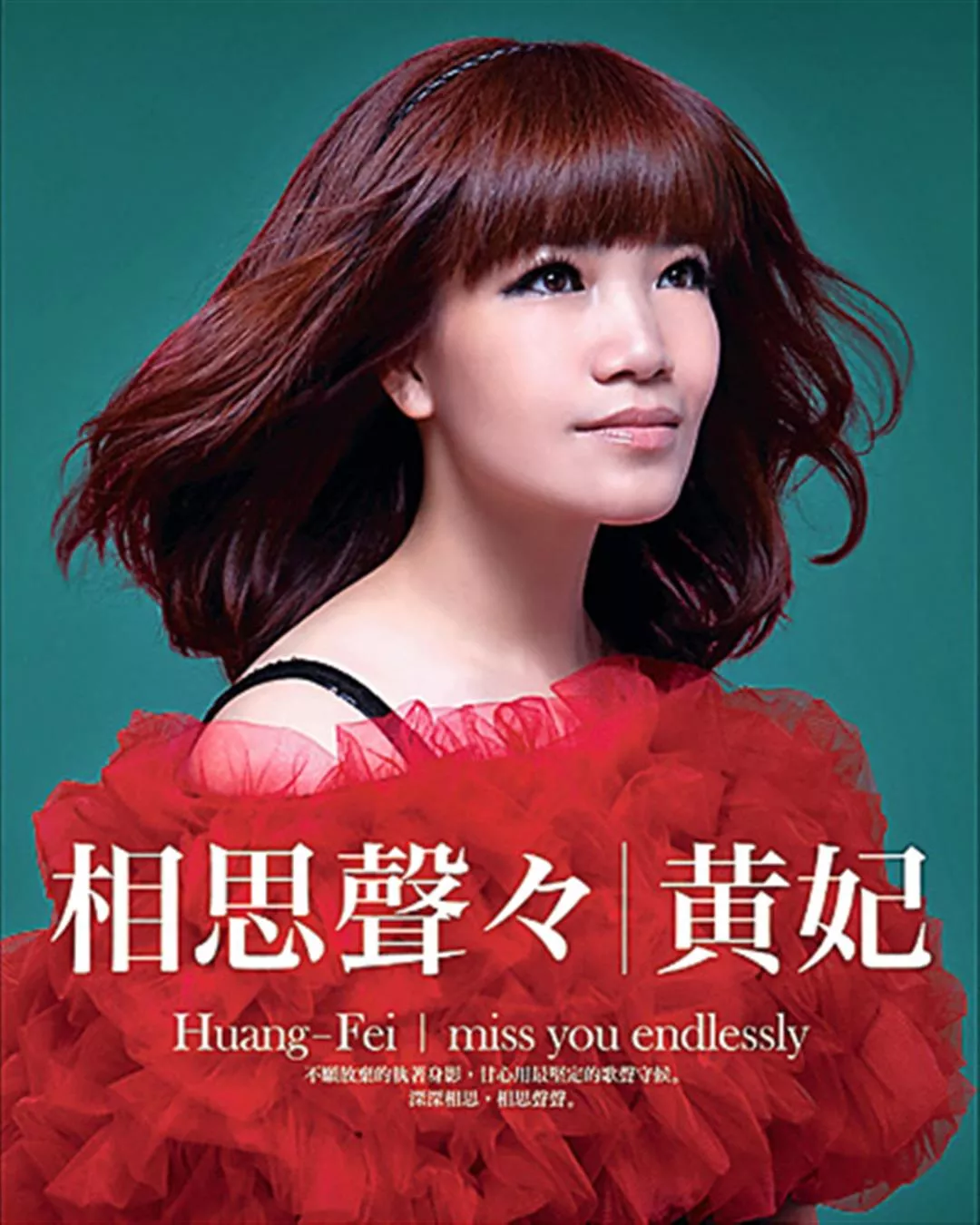
Breaking away from the budaixi style of "An Extraordinary Woman" and "Chase, Chase, Chase," in 2001 Huang put out the album Queen of Hearts, which mixed cha-cha and tango with more modern electronic music. On top of this, Chen once again tailored a song for her entitled "Sleepless Youth," an electronica-influenced piece he created together with Hao Zhiliang.
In 2005, she worked with Chen and Wu Xiong on the album Red, offering moving songs performed with a new level of skill, successfully crafting a personal niche as "Taiwan's sweet sister." "I took a kind of actorly approach to each song, playing a role in each and trying to convey that character's emotions," explains Huang.
Whether it's a young girl reflecting on her personal inadequacies, but also immersed in a world of love, in "Dress Up"; or a sweet-voiced new bride looking forward to her future in "Tung Flower Bride," Huang's characterizations are unfettered and unpretentious.
Tung blossoms on the branches / Are like my wedding veil / The falling blossoms dance in the wind / I will follow you forever.
While recording, Chen half-jokingly said to her that she was ready for marriage; in fact, at the time she had a long-time boyfriend outside the celebrity circle, but the two had never discussed marriage. Later, when his younger brother was desperate to marry, her boyfriend's parents insisted that their eldest had to marry first, and so the two rushed to say their vows. This whole affair cut into her promotional work on the album, and Huang jokes that "at the time I felt like a tung blossom floating on the wind, getting blown this way and that with no say over where I was going."

Huang's clear, beautiful voice has injected a new vibrancy into Taiwanese-language music.
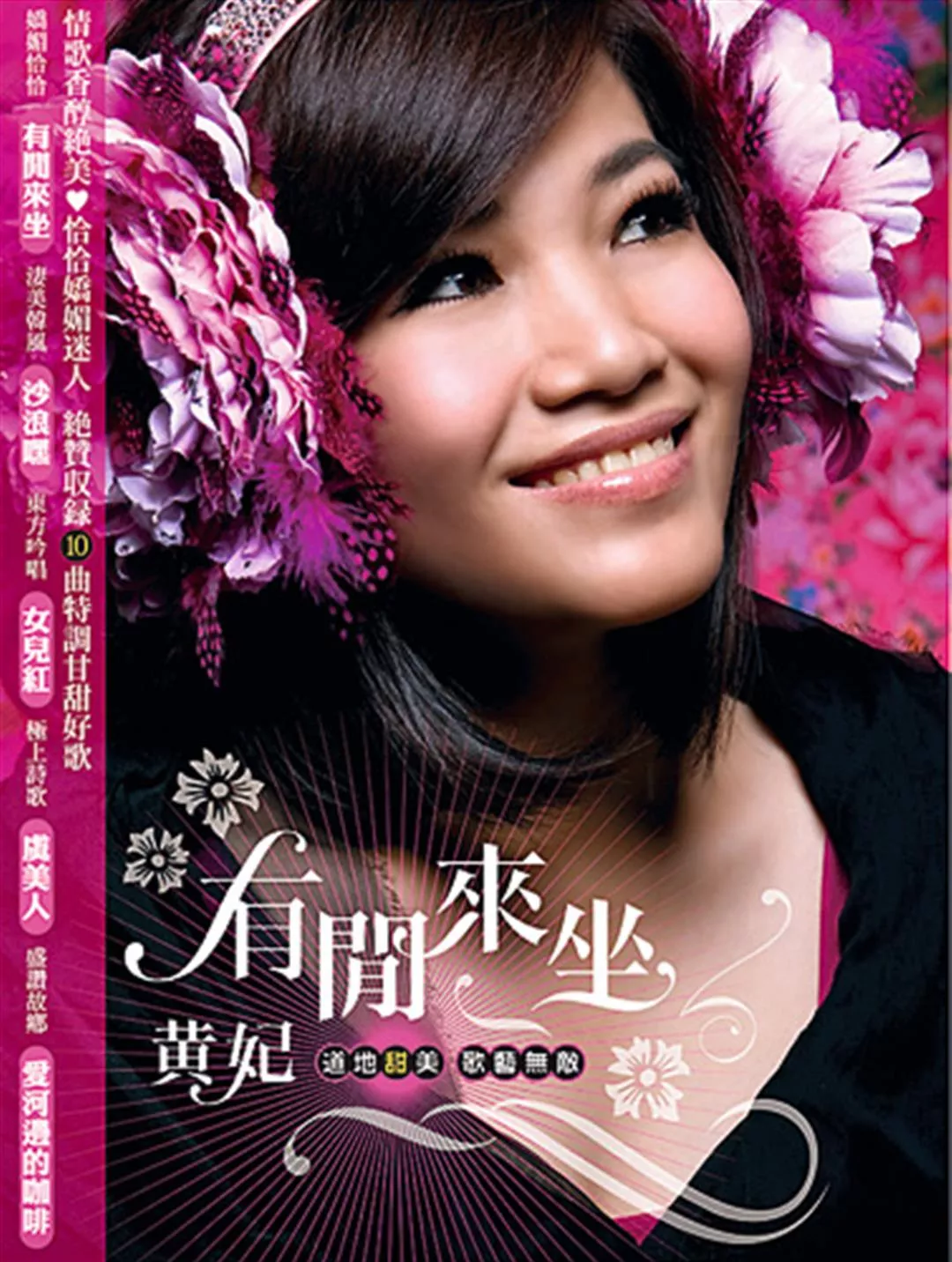
After wrapping up her fourth album, Huang had to deal with marriage and negotiating a new contract. All of this meant that she spent three years in relative silence, returning to the scene in 2008 with her album Come for a Visit. Having been out of contact with the market for so long, returning to the spotlight was stressful for her.
"I'd been gone so long I was afraid even my old fans wouldn't remember me," Huang says.
Her home life wasn't 100% easy either. She had hoped to give her husband's parents a grandson, but fate seemed to be mocking her. she suffered several miscarriages, but continued to remain positive, working to become stronger and healthier for the future.
After returning to the spotlight, she was worried that she wouldn't be able to find the energy to keep up with the demands of the busy entertainment world. Things changed when she was on a radio show and the host said: "Singing should be fun!" With that, she was struck by a realization-she loved to sing, so why not just have fun while it lasts?
Since breaking into the big time, Huang has remained a star, while also maintaining her simple, down-to-earth nature, not putting on the airs of celebrity. When she's finished appearing on television in Taipei, she'll head straight back home to Kao-hsiung; she spends little time hanging out with the stars and isn't one for gossip. The only celebrity idol she has is Jody Chiang, and when she bumped into Chiang at the record company, she was star-struck.
Her beautiful natural voice has helped her get nominated for Best Taiwanese Female Singer each time, finally winning this year. She remains at ease even in the face of this long-awaited recognition, and says that it doesn't matter if she's a big name in Taiwanese music or a hairdresser, she'll always love singing. With this simple, positive approach, Huang Fei truly is an extraordinary woman.

Huang's clear, beautiful voice has injected a new vibrancy into Taiwanese-language music.

Huang's clear, beautiful voice has injected a new vibrancy into Taiwanese-language music.