Conservation and Wise Use:
Restoring Taiwan’s Wetland Ecosystems
Esther Tseng / photos by Kent Chuang / tr. by Phil Newell
October 2024


In November of 2024 the Society of Wetland Scientists (SWS) will hold its annual meeting in Asia for the first time since its founding 44 years ago. At the meeting, to be held in Taipei, the documentary Wild Wetlands will be shown, showcasing Taiwan’s achievements in wetland conservation to the world, as well as the unique scenery, flora and fauna of its wetlands.
“Look, there are many beautiful damselfish and blue devilfish swimming around in the ocean, and you can also see clownfish, anemone shrimp, and coral reef fish species.” At Longdong Bay on Taiwan’s Northeast Coast, an area with a well-developed coral reef ecosystem, Fang Wei-ta, director of the Graduate Institute of Sustainability Management and Environmental Education at National Taiwan Normal University (NTNU), and a group of students, are scuba diving around the reefs. Filmmaker Lo Li is filming the dive. Their observations of changes in wetland and reef ecosystems can also serve as a basis for government management of the marine environment.
The site of another field survey is the mangrove forest at Guandu in Taipei’s Beitou District. Students and teachers are wearing waders, but with their first plunge into the swampy terrain they immediately sink into the mud up to their thighs. When they raise their feet, at least 50 mudskippers jump up from each of the holes they leave behind, along with large numbers of fiddler crabs.
Taiwan’s distinctive vertical wetlands
Similar wetland scenes are included in the four-part documentary Wild Wetlands, which took Fang Wei-ta and director Feng Chung-lung ten years to make. It is a record of the magnificent scenery and precious flora and fauna of Taiwan’s wetlands, from the high mountains down to the sea. Fang hopes that as well as making a record, the film will introduce Taiwan’s wetland scenery to foreign audiences. In the future he plans to publish a book on Taiwan’s wetlands.
The English-language version of this documentary won a “Best of Best Award” presented by the Ramsar Regional Center for East Asia (under the Ramsar Convention on Wetlands) and the SWS Asia Chapter. In April of 2024, then SWS president Susan Galatowitsch made a special trip to Taiwan to present the award, and the documentary has been broadcast in the US, Korea, and Thailand.
The Society of Wetland Scientists was founded in the USA in 1980. It works worldwide to promote the understanding, conservation, protection, and restoration of wetlands and encourages their sustainable, science-based management.
The United Nations’ Convention on Wetlands (the Ramsar Convention) was signed in 1971 in Ramsar, Iran, and has 170 signatories.
Fang Wei-ta, president of the Asia Chapter of the SWS, says that while the proportion of Taiwan’s territory occupied by wetlands cannot compare with wetland powerhouses like the UK and Argentina, Taiwan boasts a wide variety of wetland types.
Former SWS president Ben LePage confirms that “vertical wetlands” are unique to Taiwan, and are something that Taiwan can be proud of. Fang explains that when it comes to wetlands, people generally think of level marshlands, lagoons, and mangroves, and the academic definition of wetlands has never included “vertical wetlands.”
Fang offers this definition of vertical wetlands: “They can be mountain cliffs or rock crevices inclined more than 30 degrees, with plants that rely on surface water; waterfalls, or rock walls with seepage, located in mountain forests; or even the algal reefs found along Taiwan’s coastline. All of these, from the high mountains down to the sea, are vertical wetlands.”
LePage points out that the Laomei Green Reef in New Taipei’s Shimen Township, and the algal reefs on the coast of Taoyuan, protrude vertically from the sea and therefore can also be seen as vertical wetlands. Moreover, this type of wetland ecology has extremely important research value because blue-green algae (cyanobacteria) may have been the first oxygen-producing organisms on Earth and from them we can explain the biological origins of life on Earth.
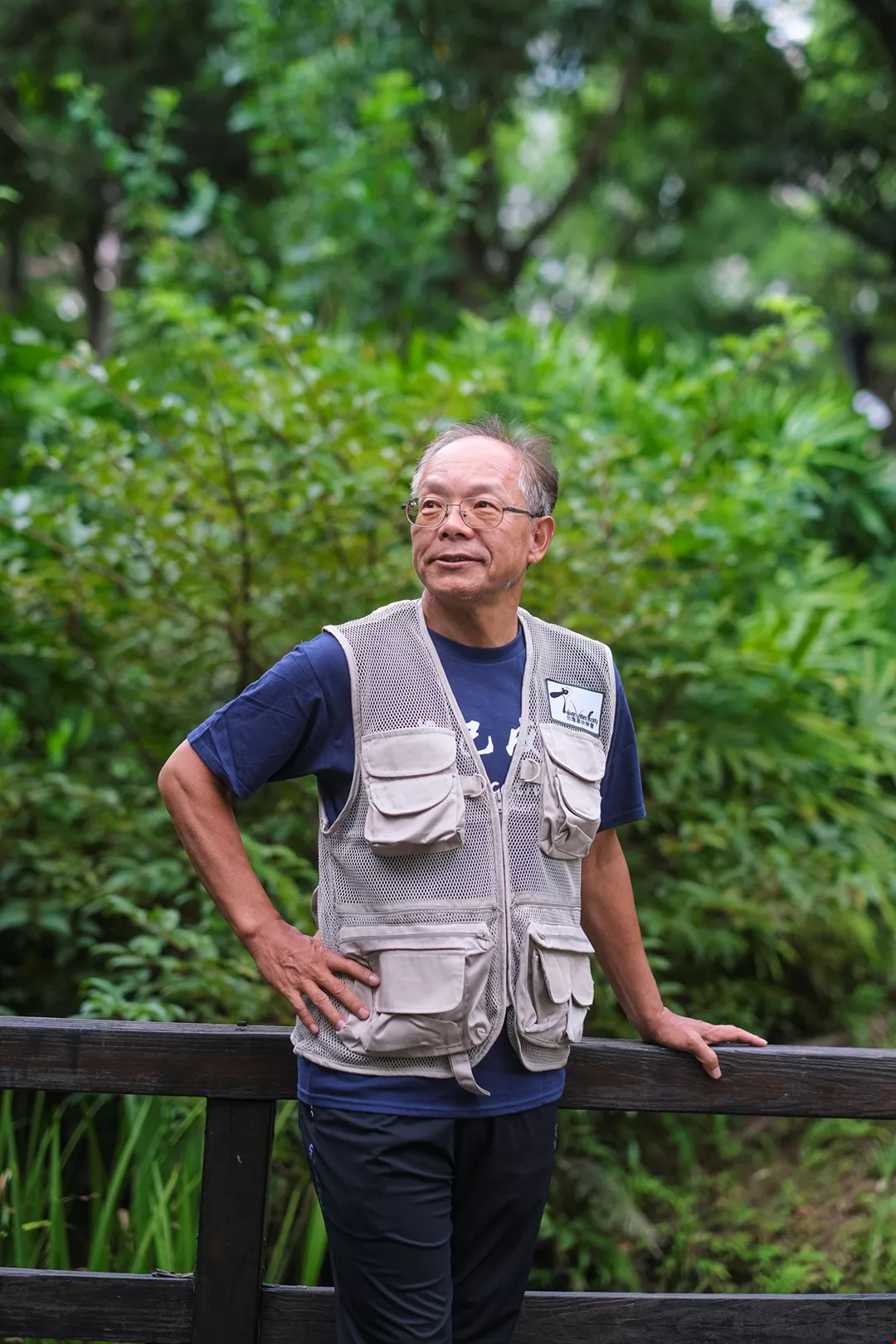
Fang Wei-ta, president of the Asia Chapter of the Society of Wetland Scientists, notes that Taiwan has a rich variety of wetlands.

The Taiwan quillwort, a protected species of national importance, is a rare wetland plant that is found only at Menghuan Pond on Yangmingshan. (MOFA file photo)
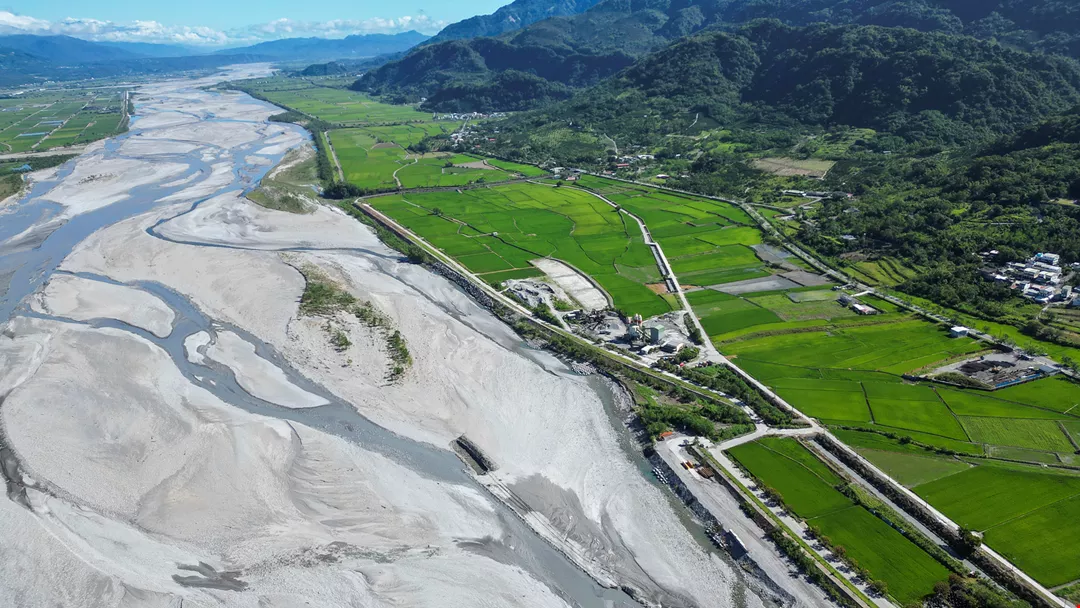
The regions where Professor Fang Wei-ta of NTNU studies wetlands include the mountains of the Coastal Range in Eastern Taiwan. (courtesy of Fang Wei-ta)

A male pheasant-tailed jacana incubating eggs. This bird species symbolizes the achievements of ecological restoration in Taiwan. (courtesy of Fang Wei-ta)
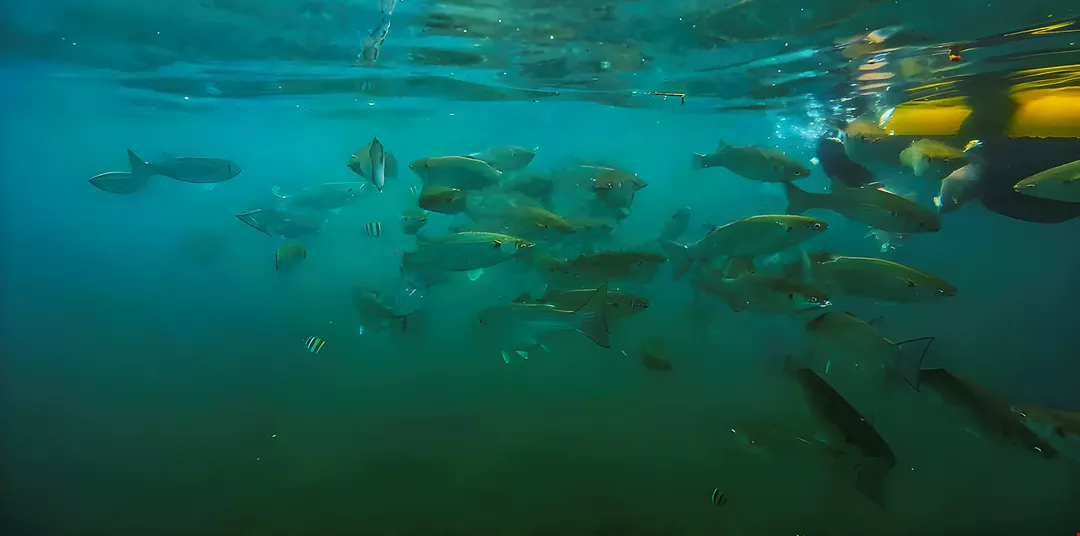
Fang Wei-ta’s team conduct an underwater survey in Longdong Bay to better understand the arrival of migratory mullet fish with the spring tide on the 15th day of the seventh lunar month. (photo by Fang Chengshun)
Support for biodiversity
Looking around the globe, Taiwan’s wetlands are also special for their biodiversity. For example, Taiwan’s native salamanders and the Formosan landlocked salmon, which are relict species from the ice ages that today live in the upper reaches of mountain streams, are testimony to the ability of wetlands organism to evolve and reproduce despite severe climate change and precipitous terrain. Alpine lake wetlands such as those in the Yuanyang Lake Nature Reserve in Northern Taiwan and at Lake Shenmi in Yilan County boast endemic or rare aquatic plants such as Sparganium fallax, a type of bur reed. The Taiwan quillwort (Isoetes taiwanensis), a protected species of national importance, is another rare wetland plant that is found only at Menghuan Pond on Yangmingshan.
Meanwhile traces of the crab-eating mongoose, an important protected wetland species found along waterways in low-elevation mountain areas, can be seen in and around the terraced rice fields of Gongliao.
Fang Wei-ta points to the pheasant-tailed jacana, a migratory bird that summers in Taiwan, as an example of a species saved by wetland management. This avian, most of whose habitats were destroyed some time ago, was declared in 1989 to be a “rare and valuable” protected species. When the route of the Taiwan High-Speed Rail (HSR) was planned in 2000, the design called for it to run through the major remaining habitat of the pheasant-tailed jacana, which by then was down to a population of less than 50 individual birds. Fortunately, thanks to the efforts of the agencies developing the HSR, local governments, and conservationists, land that had once been used by the Taiwan Sugar Corporation for growing sugarcane was turned into a wetland—today’s Jacana Conservation Park in Guantian, Tainan—and the birds were assisted in relocating there. Because restoration efforts have been so successful, there have also been reports of rising numbers of jacanas in Kaohsiung, both in the Zhouzai wetland of Zuoying District and in Qishan District.
“Many birds have entirely disappeared from some Asian countries or have gone extinct, but in Taiwan the populations of protected bird species have been growing.” Fang cites the Chinese crested tern, which was once thought to be extinct but was rediscovered on Matsu by filmmaker Liang Chieh-te. Another case in point is the black-faced spoonbill, which winters in Taiwan every year. In 2024 the number of black-faced spoonbills in Taiwan increased to 4,135, making Taiwan the world’s leading wintering ground for this bird. A further example of the successful restoration of wetland species is the Formosan sika deer, which enjoys grazing among aquatic grasses and has been released into the wild on Matsu’s Daqiu Island and in Kenting’s Sheding Nature Park.
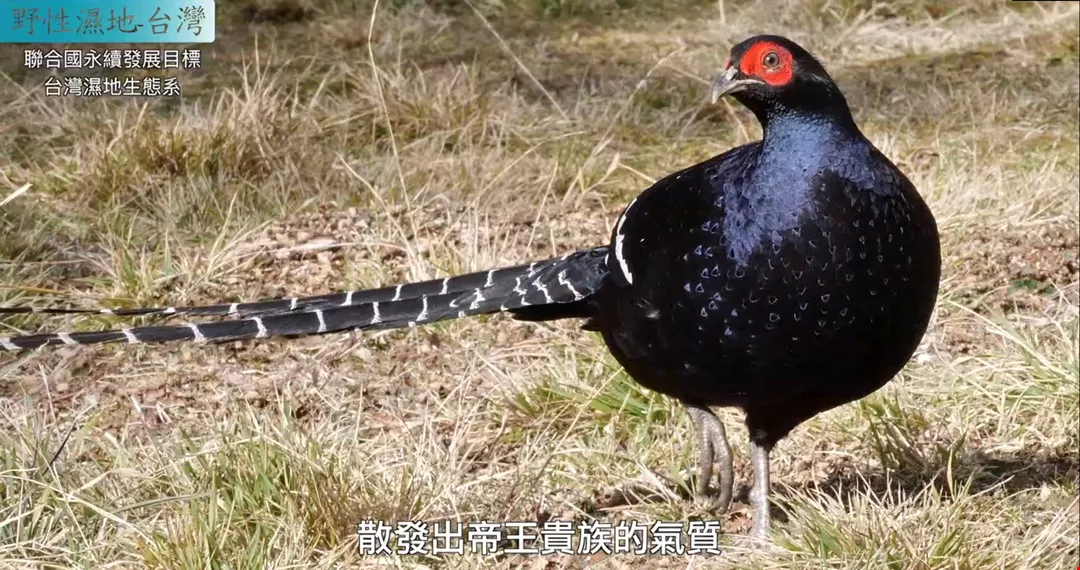
Filmmaker Feng Chung-lung stayed in one particular spot in the mountains for 23 days just to get a shot of the Mikado pheasant. (screenshot from Wild Wetlands, cinematography by Feng Chung-lung)

The terraced rice paddies of Gongliao in New Taipei are a manmade wetland. (screenshot from Wild Wetlands, cinematography by Feng Chung-lung)

The mangroves in the wetlands of Taijiang National Park act as a carbon sink and also retain water, mitigating both floods and droughts.
Carbon sequestration and flood control
Because of global warming, there are now more typhoons, floods, and droughts than in the past. Green carbon stored in forests and blue carbon stored in algae, seagrass beds, and mangrove forests, as well as the so-called “blue-green carbon” of freshwater wetlands such as the water caltrop fields of Guantian, are all important carbon sinks. Through photosynthesis, wetland plants can absorb carbon dioxide from the atmosphere and mitigate climate warming. Mangrove forests, for example, are considered one of the most effective ecosystems for carbon sequestration, and while the world faces the crisis of a decline in the land area covered with mangrove forests, in Taiwan the area has been continually increasing.
This year, the record rainfall that accompanied Typhoon Gaemi caused massive flooding in Kaohsiung. This involved the “hungry water” effect, which occurs when upstream dams and reservoirs trap sediment from a river, removing the water’s normal sediment load. After heavy rainfall, a surge of such sediment-starved water from the river’s upper reaches can cause scouring and erosion of the river bed and banks further downstream.
Fang appeals for expanding the area and functions of wetlands, which have the effect of storing floodwater. During Typhoon Nari in 2001, water poured into the tunnels of the Taipei Metro system, turning the Banqiao–Nangang Line into a huge flood detention basin. Subsequently the Yuanshanzi flood diversion project created a tunnel to divert floodwaters during heavy rains, preventing downstream areas of the Keelung River from flooding due to heavy rainfall in the river’s upper reaches. However, it should be noted that the Yuanshanzi flood diversion zone was originally a wetland that had been filled in for urban development, making the area vulnerable to flooding during typhoons.
Looking ahead to 2050, a combination of sea-level rise and land subsidence may mean that when typhoons come, Taiwan will need houses built on stilts as a way to survive. The theme of the 2024 SWS Annual Meeting is “Wetlands and Global Change: Mitigation and Adaptation.” It is clear that only with the wise use of wetlands, the restoration of wetlands, and coexistence with wetlands can we prevent the prophecy of having to live in houses on stilts from coming true.
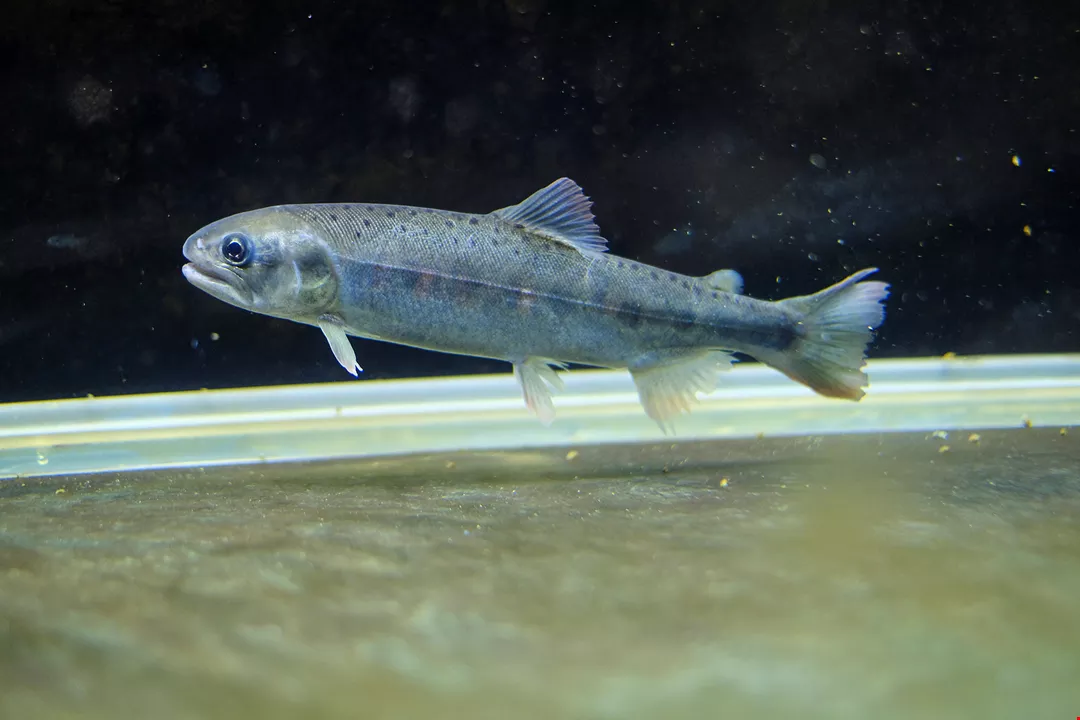
The Formosan landlocked salmon, an example of successful wildlife restoration, is a relict species from the ice ages.
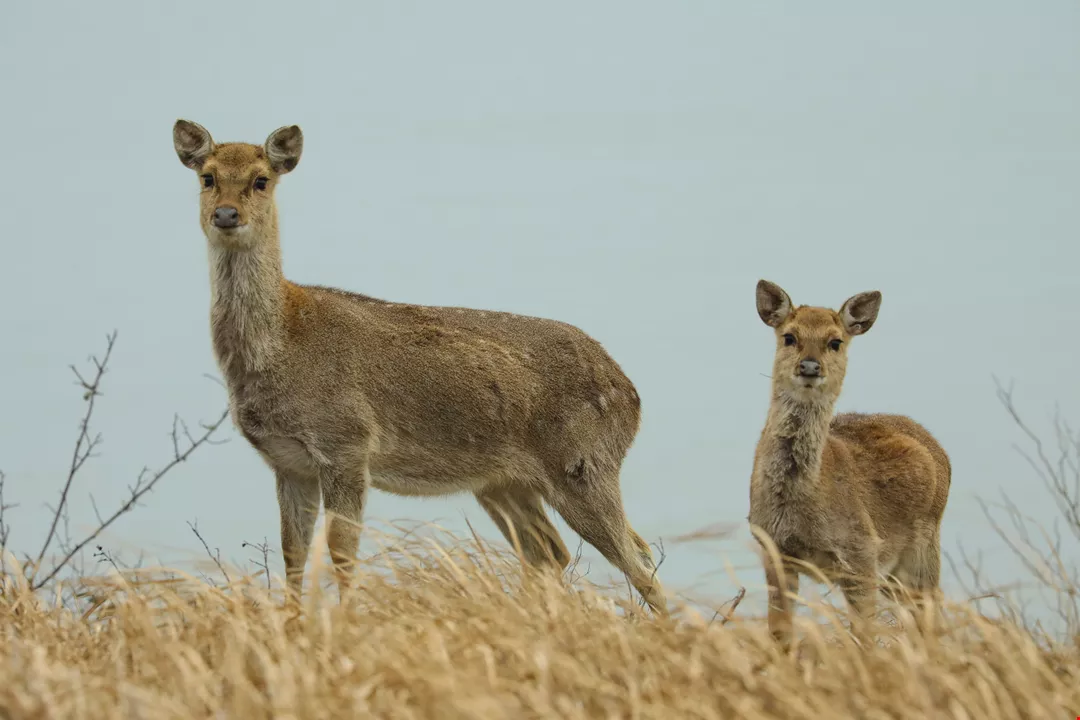
The Formosan sika deer on Matsu’s Daqiu Island exemplify the success of restoration efforts for this creature. (photo by Jimmy Lin)
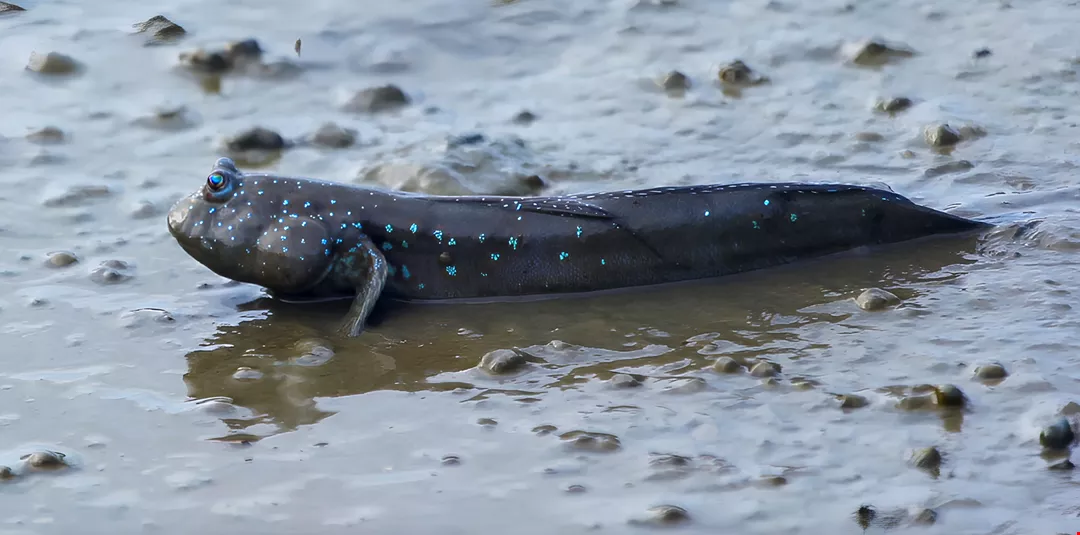
A mudskipper wriggles unhurriedly through a mangrove in Tamsui, New Taipei City. (screenshot from Wild Wetlands, cinematography by Feng Chung-lung)
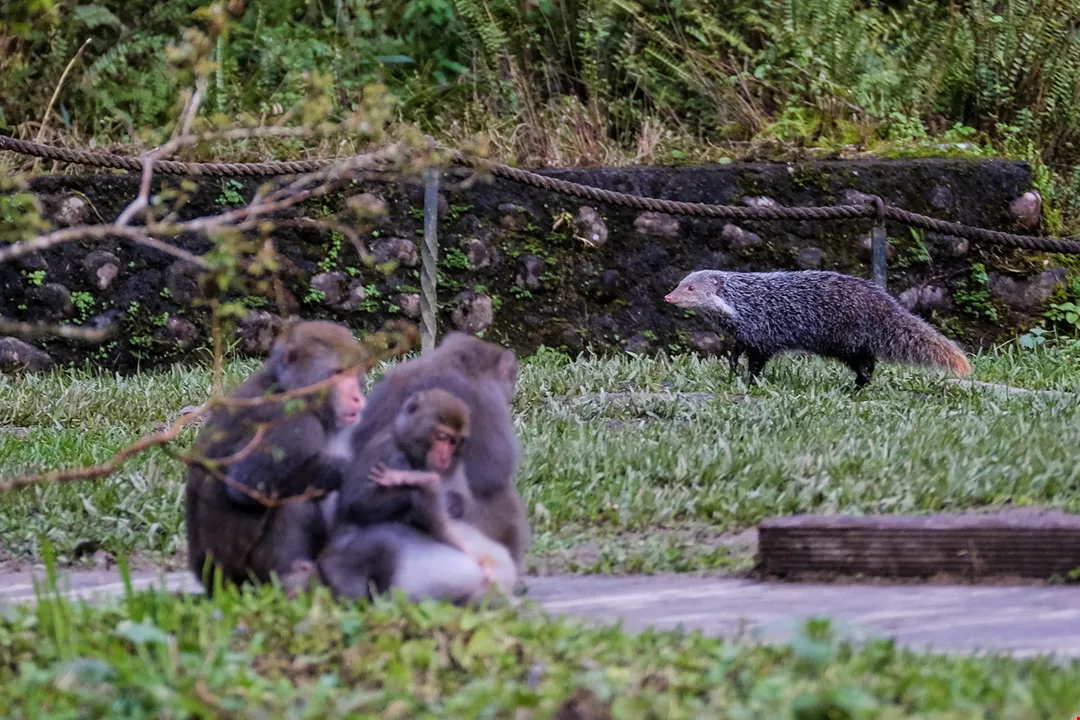
This crab-eating mongoose (right) in the Fushan Botanical Garden testifies to the rich ecosystems preserved in manmade wetlands.
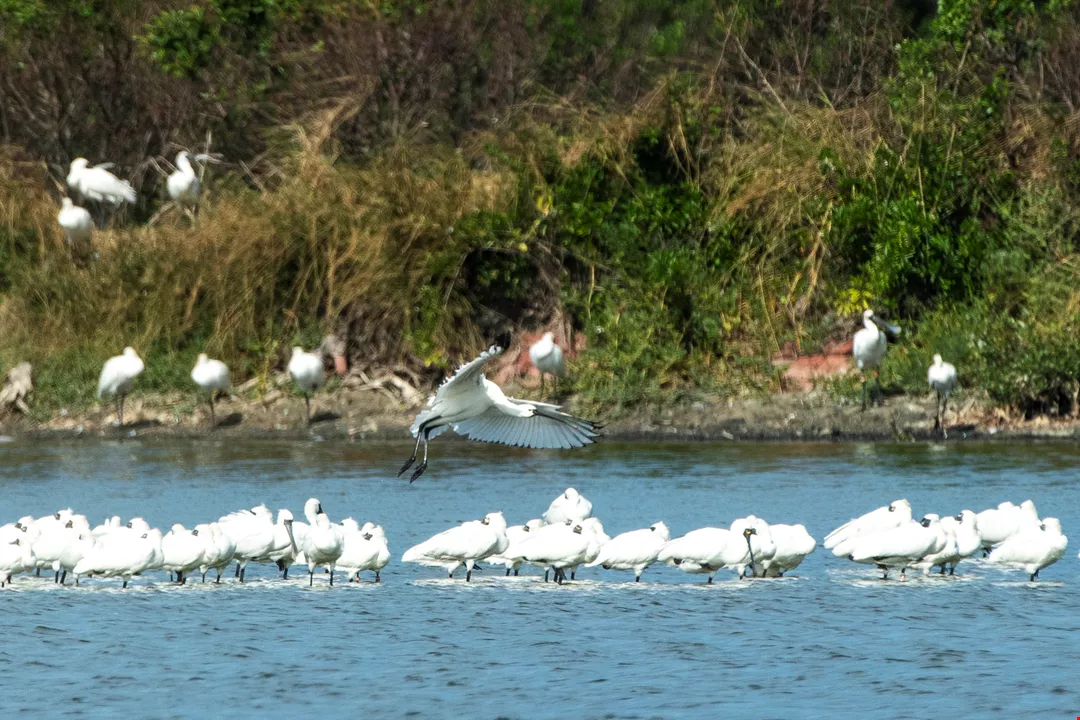
This photo shows black-faced spoonbills in the Qigu Salt Pan Wetland. Taiwan now hosts the largest number of wintering black-faced spoonbills anywhere in the world.
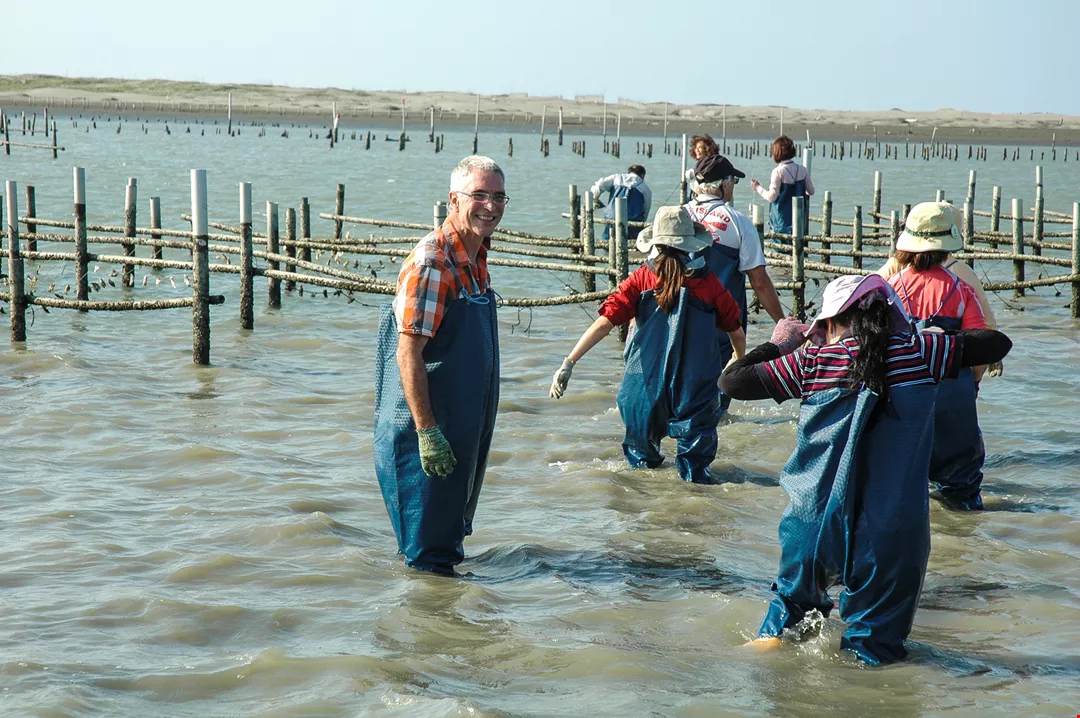
Taiwan’s coastal wetlands, such as the Qigu Lagoon, offer wetland researchers and aficionados both ecological interest and beautiful scenery. (courtesy of Fang Wei-ta)