Taiwan's Love Affair with Early Republican-Era Romance
Jackie Chen / tr. by Jonathan Barnard
March 2000


Public Television's The April of Humanity has already been rebroadcast three times, but it still attracts large audiences. Xu Zhimo, Lin Huiyin, Zhang Youyi and Lu Xiaoman are played respectively by Huang Lei, Chou Hsun (right), Liu Jo-ying (center), and Yi Neng-ching (left). (photos courtesy Zoom Hunt International Productions)
In this first winter of the new millen-nium, a television drama about Xu Zhimo's love life and marriages during the early Republican era, has the men and women of Taiwan under its spell. What is this series all about? Why do people find it so compelling? Are there differences between the Xu Zhimo of this drama and of history? Why has it obsessed people so?
"'Who does Huiyin love the most?' I've thought about this question before, and I feel that the answer is herself. . . ." (from the National Taiwan University Coconut Grove website)
In this, the first winter after the turning of the third millenium, Taiwan is caught up in discussions about the love life of Xu Zhimo, a famous writer from China's early Republican era. The phenomenon has its roots in the Taiwan Public Television's broadcast of the drama series The April of Humanity, which is based on Xu's marriages and love life. It immediately attracted a large audience that has only grown. The passion with which students discuss April on university Internet bulletin boards is unprecedented. Their posts revolve around the three leading ladies of Xu Zhimo's love life: Lin Huiyin, Lu Xiaoman, and Zhang Youyi. Each character has her own fans, who engage the others' in passionate debate. Busybodies ask men who would they choose from among Huiyin, Xiaoman, or Youyi, and who the women would chose from among the three leading male characters: Wang Geng, Liang Sicheng and Xu Zhimo.
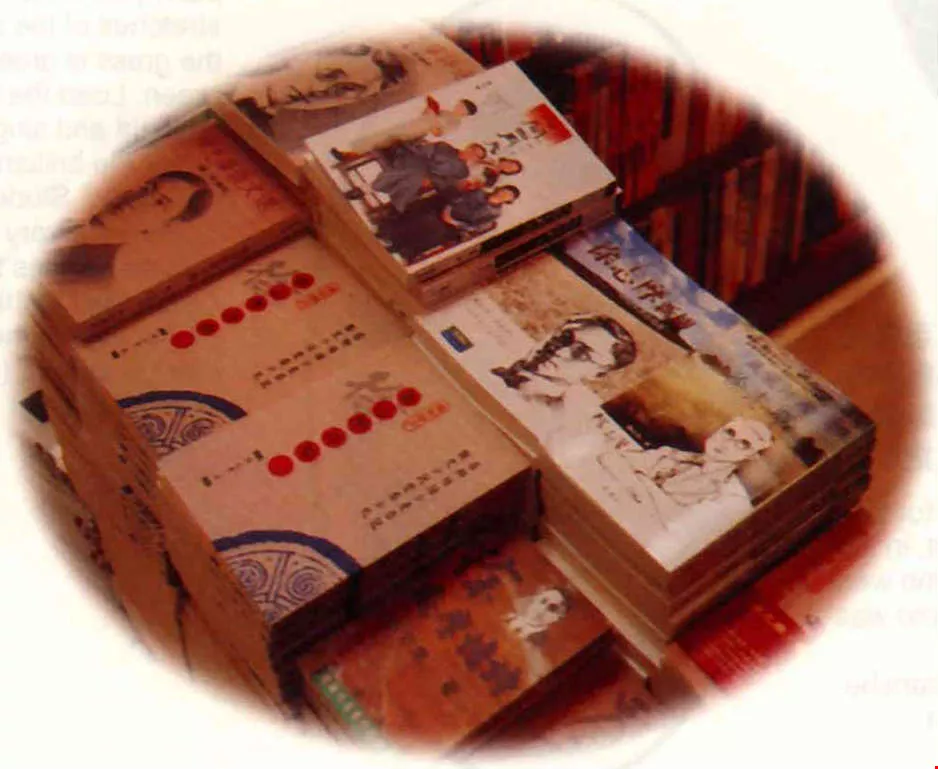
Taiwan is obsessed with Xu Zhimo. As soon as The April of Humanity hit the airwaves, it spawned a Xu Zhimo book craze as well. The photo shows the Eslite bookstore on Tunhua South Road. (photo by Jimmy Lin)
Love and friendship?
Who would you choose? Wang Hui-ling, the scriptwriter for The April of Humanity, said she took the mountains, the sea and the wind to symbolize the three women around whom the story revolves: "Zhang Youyi bears insults and remains chaste like mountains. Lin Huiyin floats back and forth like the wind. Lu Xiaoman is as wild and restless as the sea. And after the whole story is over, I still feel as if the three are like a sea amid the mountains, wind over the sea, and mountains in the sea. All are unique individuals with their own distinct characters."
"The sea amid the mountains, the wind across the sea, the mountains in the sea." How elegantly Wang Hui-ling, who herself has such a refined air about her, puts it. Do women of a more self-reflective bent see themselves in these characters? Senior reporter Wang Mei-chuen holds that this series shows a deep understanding of women's feelings (or at least their longings). This is one of the reasons it is so compelling.
Before April was broadcast, Wang Hui-ling wrote an article in a supplement to the United Daily News discussing what inspired her to write this drama: "That Lin Huiyin's husband Liang Sicheng, Xu Zhimo's first wife Zhang Youyi, and Lu Xiaoman's first husband Wang Geng would be able to encounter people in their lives who could understand them and were equally brilliant, and then would be willing to bow out and not stand in the way of a friend being with their own true loves. . . that kind of magnanimity truly moved me."
This kind of tolerance is the central axis around which this story exploring love in the early Republican era revolves. Wang Huilin believes that Xu Zhimo's story brings up questions about the morals that have prevailed in Taiwan since the 1980s. "Back in the early Republican era people lived in a very moral society. Morality was ingrained in people's psyches, and we could see true feeling and tolerance in the stories of their lives," says Wang Hui-ling. But in today's society, morality has been eroded. Affairs and extra-marital sex are commonplace, but in the battle between morality and feelings, people aren't necessarily any more tolerant.
In that past era, when a new culture was just unfolding and the first gust of romantic love between soulmates blew, it came up against the authority of parents to arrange marriages. Battles between ceremony and morality are a recurring theme of this series. Take this incident:
Xu Zhimo, who is already divorced, wants Lin Huiyin "to commit to a future together." He courageously says, "Let me bear the cross of public opinion as the guilty party."
Lin is already engaged to Liang Sicheng, and although Xu is divorced she also knows that Zhang Youyi is pregnant and all alone overseas, so she responds to Xu's request by asking, "Could you then bear for me the great weight that I would feel inside? It would be like two tons bearing down on me for the rest of my life."
Xu Zhimo doesn't give up, solemnly retorting, "Just so as to meet the demands of an illusory morality?" To which Lin Huiyin says, "Well at least I will know that I have lived honestly and above board and will have an easy conscience."
"Morality isn't a ball and chain, but rather taking responsibility for how you live," Lin says as if to draw the discussion to a conclusion, before uttering in literary manner: "I didn't refuse to come; it's just that I am not fated to stay!"
At another point, just after Xu Zhimo and Lin Huiyin have had a lengthy debate about morality, Zhimo says, "I now finally understand how how little you esteem me." Huiyin responds: "Between two hearts there can be friendship as well as love."

"Looking for your dream? Take a punting pole, and push your boat to the stretches of the river where the grass is greener than green. Load the boat full of starlight and sing out loud under the brilliant Milky way." Students in Taiwan are very familiar with these lines to "Farewell Cambridge," which Xu Zhimo wrote when he first met Lin Huiyin. (photo by Vincent Chang)
What's important is really living!
Independent producer Tsai Teng-shan, who previously filmed Authors' Silhouettes, has in the wake of The Humanity of April's popularity published a collection of essays under the same name. These deal with the love lives of early Republican-era writers, such as Xu Zhimo, Hu Shi, and Yu Dafu. Tsai believes that April succeeds by blending the goose-pimply maudlin with the refined and literary. Aptly conveying both the demurely refined and overwhelmingly powerful aspects of love, the series has caused a sensation among the people of our era, who are less gifted with words than people of that past age.
The figures involved in the May Fourth Movement, Tsai points out, faced enormous challenges in that era of cultural conflict between new and old, not only by showing great tolerance in their love lives, but also by resisting the marriages arranged by their parents and courageously seeking true love.
Take Liang Sicheng, one of the central characters in the series. When his wife Lin Huiyin fell in love with Beijing University philosophy professor Jin Qiulin, she told him, "like a sister telling her older brother." Liang's reaction: "For quite some time I could not even utter a word, as if overcome by some indescribable pain. I felt as if my blood were congealing, and I could hardly breathe." But at the same time he "felt grateful to Huiyin for her honesty and trust, and for not trying to play him for a fool." Liang Sicheng tossed and turned in bed that night, and after thinking about it all night long told Huiyin, "You are free to do as you see fit. If you choose old Jin, I will wish you eternal happiness." (The above passages come from the book The Architect Liang Sicheng.)
Of course, Liang Sicheng, though willing to step aside, doesn't in the end have to give up his wife and love. The incident comes to a conclusion when Jin Qiulin, unwilling to steal a friend's wife, says to Huiyin, "It appears that Sicheng loves you, and I won't hurt someone who truly loves you. I should back off." Jin Qiulin was never to marry.
How about Xu Zhimo, a man who was willing to throw his all into love? "If I can find my true soulmate in the sea of humanity, how great my fortune. If I can't, chalk it up to fate." The people involved in the production saw him as "being true to his feelings." "The most important thing for people is that they truly live." This line, which is often uttered between Xu Zhimo and Lu Xiaoman in their verbal sparring, has already become a common expression among Taiwan youths. Wang Huilin holds that Xu Zhimo's approach to feelings is always "to face the tiger and never to try to hide." Liang Sicheng, another important male character, adopts another method: "He holds on tight and never lets go." The two are both "very serious" when it comes to love.
"If the show has had some impact on Taiwanese society," Wang Hui-ling says, "it has been because people have been moved by this emphasis on truth and authenticity. I often think that in post-modern Taiwan everyone is very weak emotionally. Scared of expending feeling, people are 'shallow inside and shallow outside' and they carry light burdens. The April of Humanity reminds everyone that there are other possibilities."
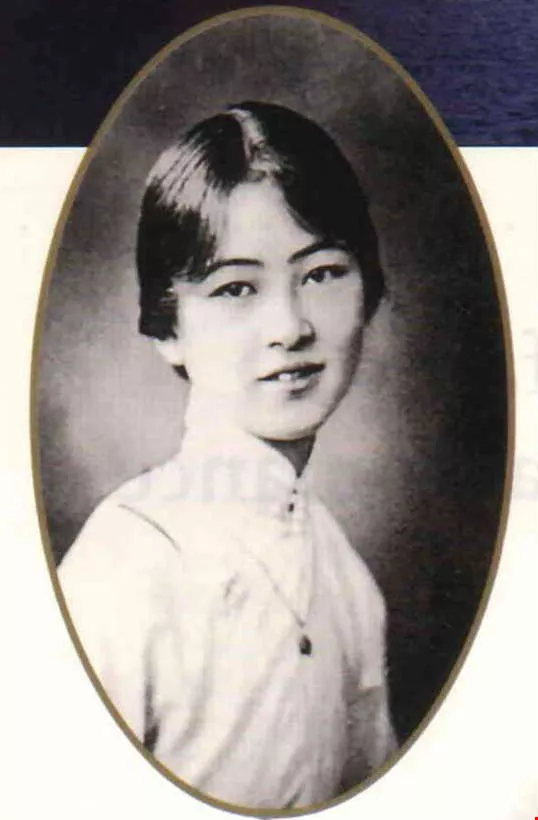
"I say that you are the April of humanity, laughing like April's breeze as she dances nimbly in the spring light." These lines are from Lin's "The April of Humanity." Xu Zhimo first met Lin Huiyin in 1920. (from The Collected Lin Huiyin, Commonwealth)
Embroidered pink shoes
Since ancient times tragedies have best been able to capture eternal truths. Humanity's limitations are always exposed in them, which is why such stories as Romeo and Juliet and China's cow herder and weaving maid continue to capture people's attention. While Xu Zhimo and Lin Huiyin, who was regarded as "the most talented woman in China," may have been thought of as a match made in heaven, because Lin Huiyin eventually chose Liang Sicheng, today's Internet chat room critics tend to think that Huiyin should take the blame for Xu Zhimo's love life turning out tragically. Xu after all was going to Beijing to hear Lin lecture when he died in a plane crash. As a result Lu Xiaoman ended up passing her remaining days smoking opium in Shanghai with Wen Ruiwu. Responsibility for this entire series of tragedies can be laid at Huiyin's feet.
Why does Lin Huiyin choose Liang Sicheng? At the beginning of the series, Sicheng and Huiyin are on a boat and just about to sail abroad when Sicheng asks Huiyin, "Why did you choose me?" To which Huiyin replies, "That would take a lifetime to answer."
Historical materials from the last two decades and the answers passed down from people of that era suggest that Huiyin's choice is connected to her family experiences. The book Lin and Liang by Wilma Fairbanks, wife of the American sinologist John Kenneth Fairbanks, points out that Lin Huilin's mother was only her father's second wife, and that when her father married for a third time Huilin could sense her emotional anxiety. She "could never imagine entering into a relationship where she would take the place of a cast-aside earlier wife."
This Chinese New Year, Lin Huiyin's eldest son, the mainland environmental expert Liang Congjie, was interviewed by United Daily News editor-in-chief Chang Tso-chin. Liang said that his mother chose Liang Sicheng because "although Lin Huiyin completely understood Xu Zhimo's inner needs, Xu Zhimo, on the other hand, did not understand all of hers. . . . If Lin Huiyin had married Xu back then, we would have at most had the literary figure Lin Huiyin, but because she married Liang Sicheng, we have both Lin the writer and Lin the architect."
From the perspective of Liang Congjie, the coolly intelligent Lin Huiyin could already see through to Xu Zhimo's other side. "She once told my sister that Xu also had his vulgar side. He would be attracted to the kind of woman who would wear pink embroidered shoes," Liang Congjie believes that Xu's eventual marriage to the socialite Lu Xiaoman is also proof of his vulgar side.
Shen Zhongwen, the late mainland Chinese writer, once noted that in the mainland they view Xu Zhimo as having been somewhat of the perpetual child: "It is always acknowledged that he was supremely talented, but he is ultimately regarded as being a spokesman for the decadent capitalist class, little more than a spoiled dandy." From Liang Congjie's recollection of his mother's criticism of Xu and from Shen's statement above, you get a sense of the mainland perspective. Liang Congjie is of course a Liang, and his view of Xu will reflect that of his family.
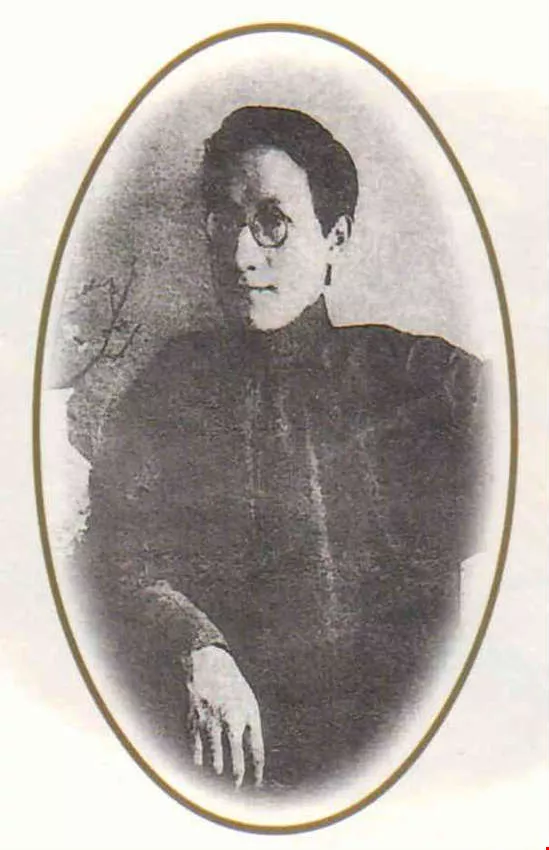
To put his feelings for Lu Xiaoman to the test, in the fall of 1925 Xu Zhimo went to Europe. This photo was taken in the USSR. (courtesy of Shinchanshe Cultural Enterprise)
Happily married?
For a TV drama on literary and historical topics, should the goal be to accurately reflect history or to create the strongest drama regardless of the facts? This is the eternal question. The writer Chang Ta-chun believes that the love lives of these central figures in the May Fourth Movement involve all the usual complexities of human nature. "For instance, Zhang Youyi's older brother Zhang Junmai recommended Xu to the influential writer Liang Qichao, who played a key part in assisting Xu's rise in the literary world. But despite all this help, Xu would burn his bridges behind him and dump Zhang because her traditionalism made her unpresentable within the circles that he traveled." Chang explains that literature and history do not necessarily have to be echoed perfectly in a television drama, but you cannot oversimplify history either, or change things around just so that the audience won't be disappointed.
Why did Xu Zhimo have to cast aside his first wife Zhang Youyi? In the past the explanation was always that he had married Zhang Youyi under his parents' orders only later to find his one true soulmate. But recently uncovered historical materials shed new light on the matter.
From Youyi's autobiography Little Feet and Western Clothes, one can see that unlike many old-fashioned women, Zhang not only didn't have her feet bound, but she also studied the Chinese classics with her brothers, and demanded that her parents let her enter a school in Suzhou to study geography, math, literature and history. With this kind of background, she and Zhimo "may not have liked each other, but it wouldn't have been a case of them having nothing whatsoever to talk about," believes Wang Meijuan. Tsai Teng-shan also holds that in the poem "Babe," which Xu wrote after the birth of his son Xu Jikai, you can see the love he once held for Youyi.
Chiang Fu-tsung, former director of the National Palace Museum (and Xu's cousin), wrote the essay Anecdotes about Xu Zhimo, which describes the couple as being "very close." Tsai Teng-shan takes this to mean that Zhimo and Youyi were not without strong feelings for each other.Wu Mingneng, who earned his doctorate at Beijing University and now teaches at Yuanchi University, agrees that the tone of Xu's writing shows that he still had feelings for Zhang Youyi until he went abroad, "but he stopped liking her on the night of their wedding."
Tsai believes that Xu later fell out of love with Zhang because of the arrival of the beautiful and talented Huiyin. What's even more important is that Xu was deeply influenced by his years studying abroad. "Zhimo went to London to see Bertrand Russell, who had been fired from his post at Cambridge because he was a pacifist and had been divorced," says Tsai. "And look at what Xu wrote after studying abroad. The Englishmen he admired, such as Russell, Byron and Browning each had a crazy love life and had been divorced at least once. At the time Romanticism was all the rage!"
When the young Xu returned to China after throwing himself into the tides of personal liberation, he finally brought up the idea of divorce with Youyi in March of 1922: "He told her that they shouldn't continue with their married life in which they had 'neither love nor freedom.' He described it as a way 'for us both to rediscover the light of life, a rare honor.'" (from Remembering Zhimo by Hu Shi)
The paradox of history is that Zhimo, "who wanted freedom for freedom's sake," appeared never to be truly free. After he wed Lu Xiaoman four years later, because she was addicted to opium and couldn't change her profligate ways, Xu was forced to teach in several schools and bang out his writing for paychecks. Before he died, he described his own life as a failure. Hu Shi and other friends felt very sad for him. In memorial essays, some even wrote that for Xu, who had lived on the edge of decadence while alive, death was "the liberation of a romantic poet."
Meanwhile, Zhang Youyi, Xu's first wife, ended up studying hard in Germany and returning to China to become vice president of the Shanghai Women's Commercial and Savings Bank. She also set up the Yunshang clothing company, for which she served as general manager. The cudgel of divorce not only didn't defeat her; it spurred her to develop as an independent woman.
As far as Lu Xiaoman is concerned, though she got Zhimo's passionate true love, she could not escape a second act of "being lonely until death." According to Little Feet, Western Clothes, in the five short years they were married Xu and Lu hardly had a family life. "Because it was easier to obtain opium in Shanghai, Xiaoman refused to move to Beijing, forcing Zhimo to shuttle back and forth between the two cities. . . Xiaoman could thus be viewed as being responsible for his death." But the Taiwanese writer Chang Ta-chun believes that when Zhimo's teacher Liang Qichao cursed Xu and Lu at their wedding, this made it impossible for Lu Xiaoman to set up residence in Beijing, and thus, much to her consternation, she had no choice but to move to Shanghai.
Sinorama contributing editor Wang Jia-fong, who has delved into the history of this era, is of the opinion that Lu Xiaoman may have spent her last days smoking opium with Weng Ruiwu because of bitterness about her fate in life.
She may have been bitter because she did not obtain the love and approval of Xu's parents, or because Xu was still thinking about Lin Huiyin. Whatever the case, Xu and Lu did not live happily ever after their marriage.
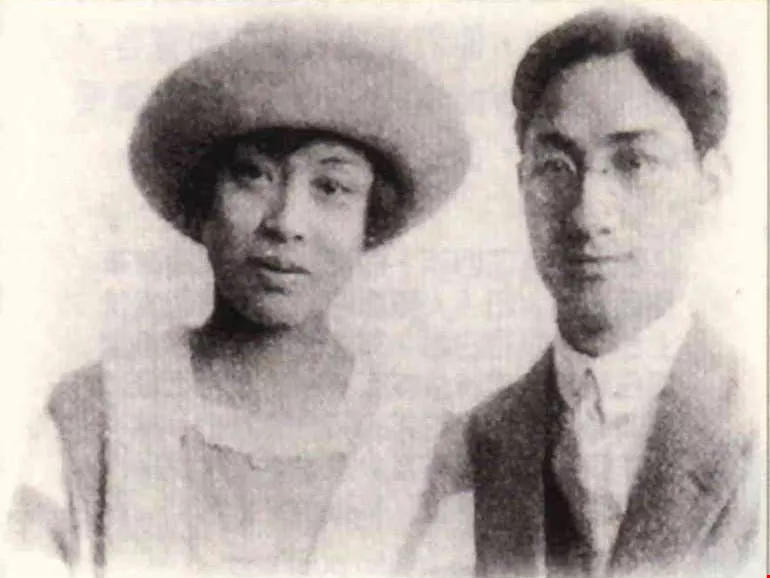
The first photo of Zhang Youyi and Xu Zhimo together was taken in Europe in 1921. Look how fashionable their clothes were! The following year the two were divorced. (from Small Feet and Western Clothes, Triumph Publishing)
The art of tears
"Romantic love has one readily apparent feature, which is that it can be seen but not held. One is eternally one step behind it, in pursuit of something that seems dear and holy but floats alone in a void. As soon as romantic love is realized, as soon as you are freely united with the beautiful woman that is your heart's true desire, the fantasies are smashed. And what was originally love becomes hatred, and what was freedom becomes shackles, and thus you start all over again in pursuit of your mind's perception of 'love, freedom and beauty.' And you go through the same performance time and again, until you die. . . ." This eulogy, which the writer Liang Shiqiu wrote for Zhimo in 1931, seemed to see in Xu's death the curtains drawing on a whole generation.
"If I find my true soulmate in the swirling sea of humanity, how great my fortune. If I can't. Just chalk it up to fate." In an age in which friendship, devotion, and the love between parents and children are weak, only the spiritual love between two soulmates can really move people. That Xu's line about finding his true soulmate still resonates so bears witness to this notion.
On a cold and wet winter's night in Taipei, you open up a book of poetry written 70 years before by Xu and Lin to find the poem "That Night" written by Lin, who was 27 at the time. She wrote it for Zhimo three years after her marriage to Liang: "One day, when you hear a song as beautiful as singing birds, that will be me quietly waiting for your praise. One day, when you see messy shadows of flowers, that will be me trespassing upon the borders of that age." Now read the poem "You Go" that Zhimo wrote for Huiyin as she was recovering from illness: "You go. I'm going too. It's time to part ways once again. Don't worry, just go. When you come upon that road with its string of lights leading to the edge of the sky, just follow that shining trail! You go first. I'll stand here watching. Tread softly, so as not to stir the dust. I want to see your silhouette receding clearly, until it's too far in the distance to make out. . . ." Now read this recollection by Xu's nephew Chen Congzhou, about how Xiaoman repeated over and over as she neared death that she wanted to be buried next to Zhimo. For a moment, let's forget all the specifics involved in the many lives that make up this tangled story of love. Perhaps the best footnote to it are these lines: "What is love, that people are willing to promise each other their lives for it?"
And read this passage from Huayi Qianshen, which was written about the relationship between Hu Lancheng and Zhang Ailing: "Chinese focus their concentration on what is active and readily apparent right there in front of their eyes. Anything outside this realm is suffused with sadness. While the materials and details may be joyful, the main theme is always pessimistic. The Chinese think that a story only ends well when one is in control and does not exceed one's limits. That is because both in life and art, the hardest thing is to know when to stop. . . ."
"Tears roll from my eyes as I return these pearls to you." This line of verse is immortal because although Luo Fu felt love for the man who gave her the pearls, she was able to stop the affair in time and leave. What The April of Humanity leaves us with is not regrets, but rather the clear brightness of mid-spring, as well as that season's tender attachments. In reflecting upon the outstanding individuals of that era, apart from marveling at the authenticity of their lives, what else does everyone see?
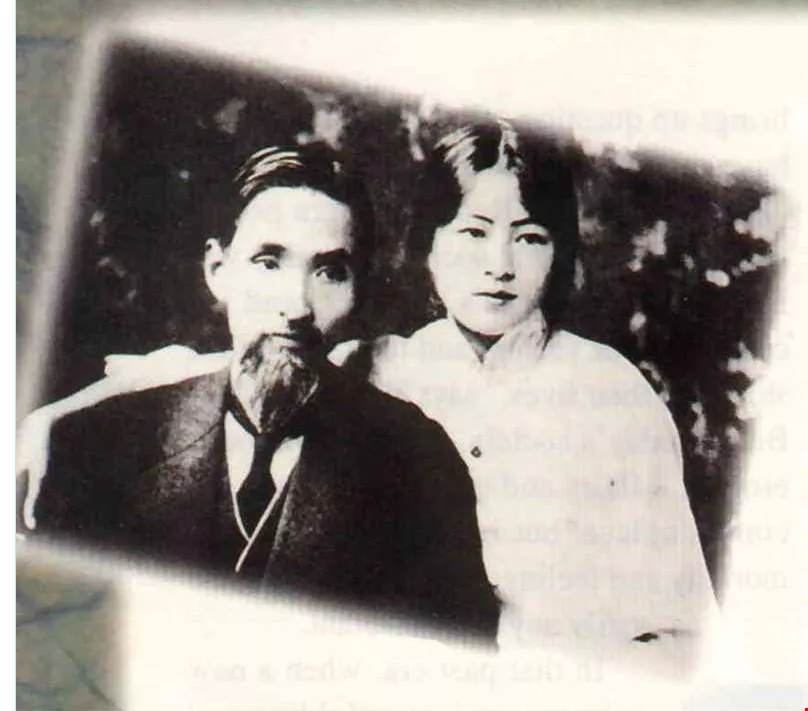
When Huiyin was 16 she went to Europe with her father, the diplomat Lin Changmin. Lin, a "new school" literary figure in his own right, arranged it so that his beloved daughter could both travel and study, thus cultivating an understanding of the world beyond China. (from The Collected Lin Huiyin)
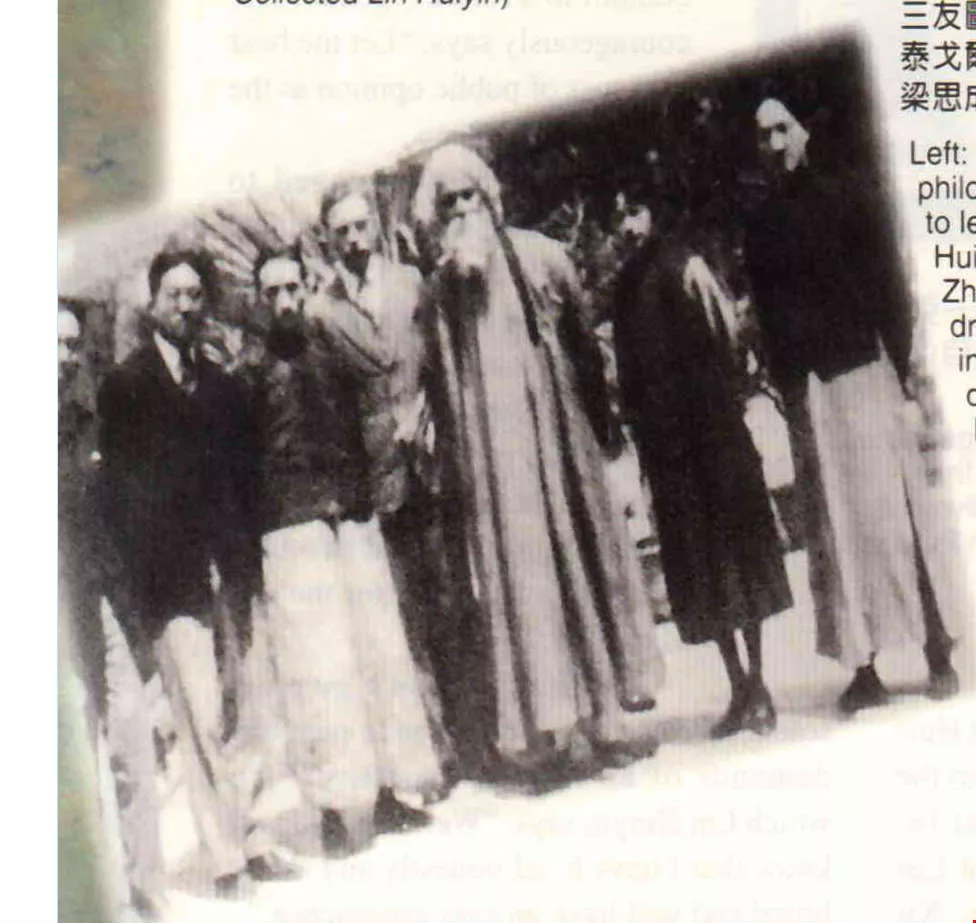
Left: In 1924 the Indian poet and philosopher Rabindranath Tagore came to lecture in China. The "flower-like" Lin Huiyin led him on stage, where Xu Zhimo, "slender, handsome, and dressed in a long white robe" acted as interpreter. People in Beijing described them as "the pine, the bamboo and the plum"-the three unwithered friends of winter. From the left: Liang Sicheng, Lin Changmin, Zhimo's British friend L.K. Elmhirst, Tagore, Lin and Xu. (from The Collected Lin Huiyin)
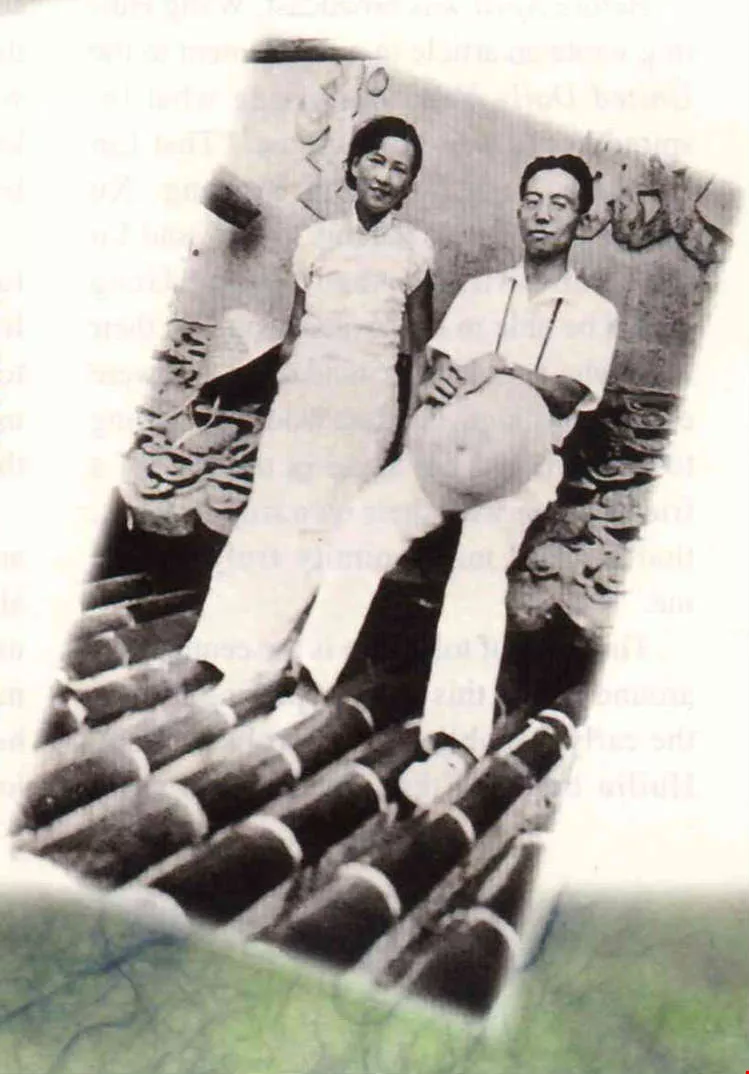
Right: When Lin Huiyin and Liang Sicheng returned to China, they conducted a survey of traditional Chinese architecture, for which they took field trips to the provinces of Hebei and Shanxi. The photo shows them at the Altar of Heaven in Beijing in 1936. (from Liang Sicheng and Lin Huiyin, Zhonguo Wenlian)
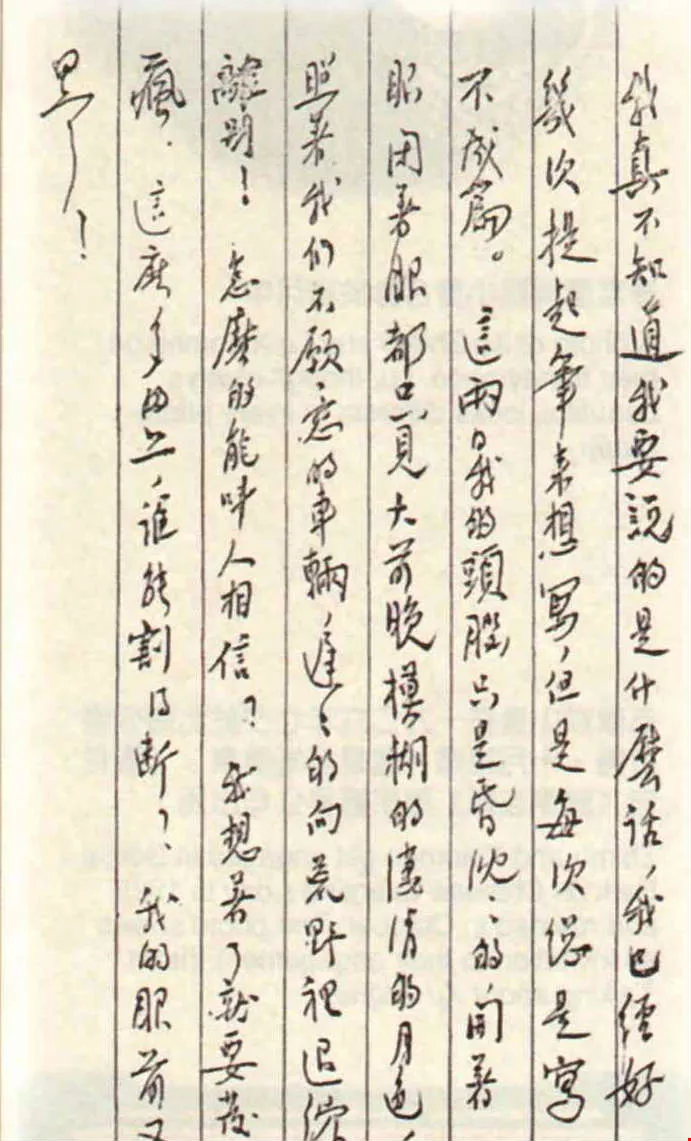
This goodbye letter that Xu Zhimo wrote to Lin Huiyin was only half-finished. Before he could complete it, his train left the station. It is the sole letter between Xu and Lin that has been preserved. "Good bye! How am I to believe it? The very thought of it makes me crazy!" Such passages reveal how deeply Xu felt about her. (from The Legendary Xu Zhimo, Linking Publishers)
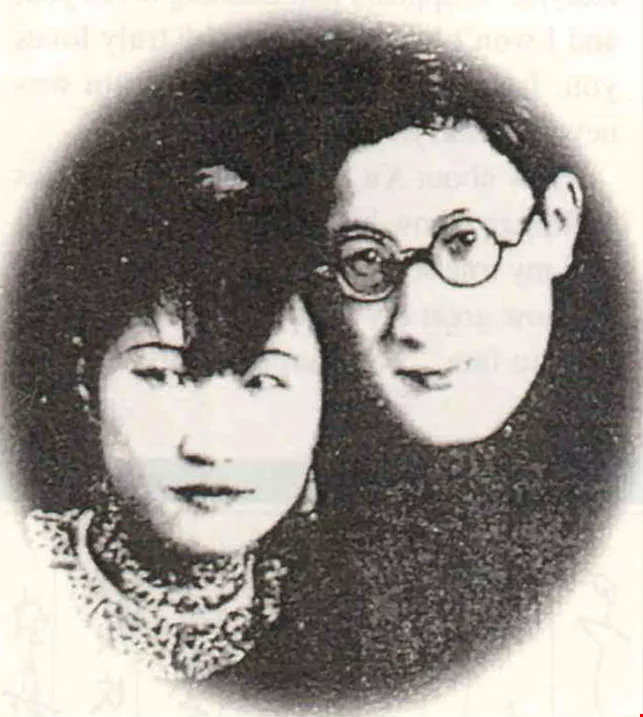
A photo of Xu Zhimo and Lu Xiaoman on their honeymoon. Lu, though always beautiful, looks different in every photograph.
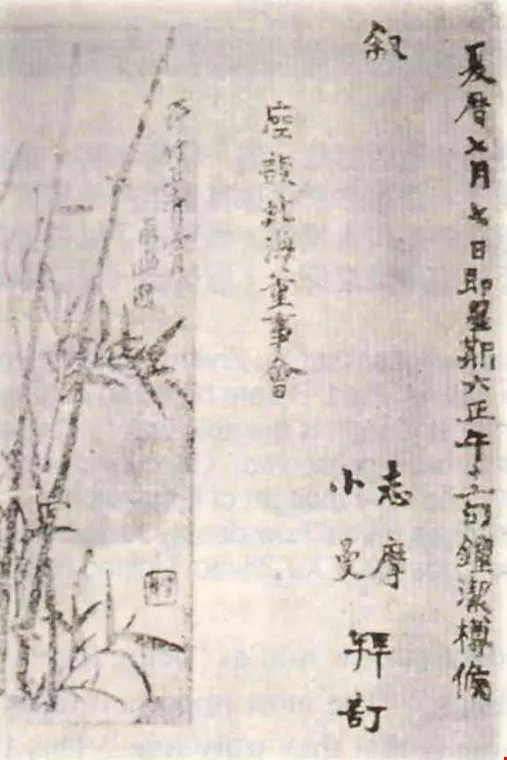
Zhimo and Xiaoman got engaged in Beihai Park on Chinese valentine's day in 1926 and married in October. The photo shows an invitation to their engagement. (from Talking about Xu Zhimo)
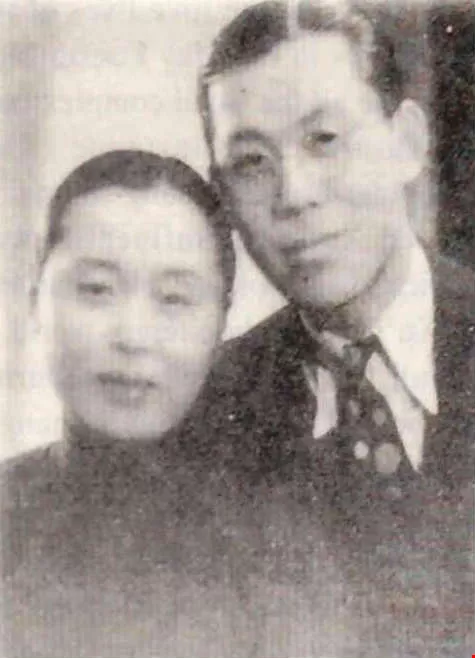
Youyi, after enduring many struggles, finally had her day in the sun. Her eldest child Jikai grew up to become a dignified and successful man, and she herself became an entrepreneur in early Shanghai. (from Small Feet and Western Clothes)
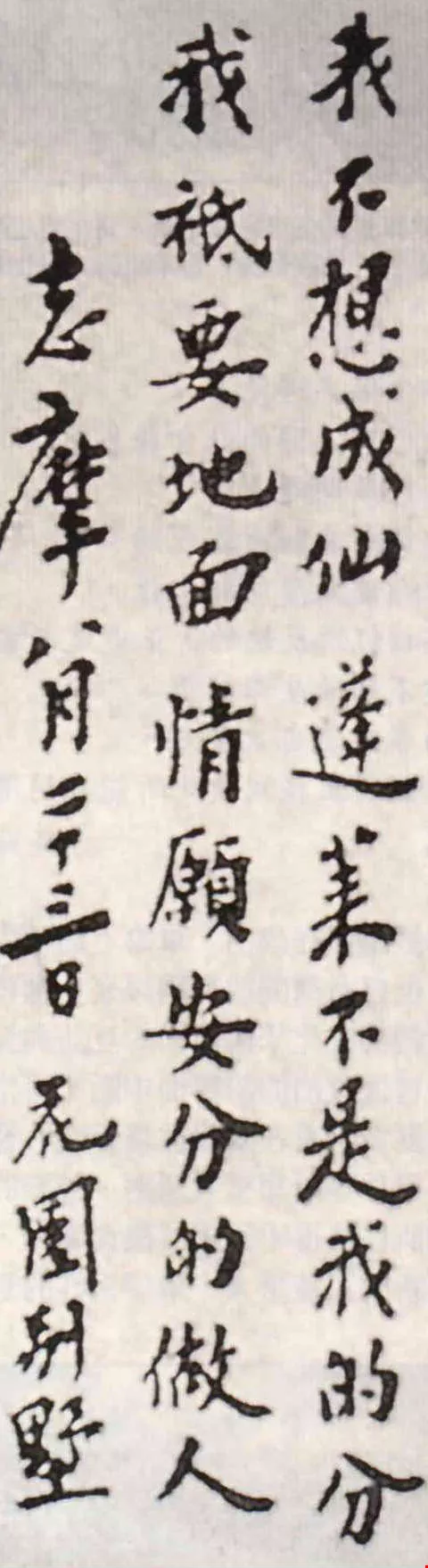
An example of Xu Zhimos calligraphy: "I don't want to be a god. A fairy island is no place for me. I want the ground under my feet and am satisfied with just a man's lot in life." Who says this great romantic never knew what struggles were? (from the Legendary Xu Zhimo, Shinchanshe)


@List.jpg?w=522&h=410&mode=crop&format=webp&quality=80)

