Xinhai Constructed Wetland:A Natural Water Filter
Chen Yali / photos Jimmy Lin / tr. by Chris Nelson
June 2012
Humans depend on water for survival, but sadly the waste we produce affects our rivers. Can our riverbanks, piled high with garbage generated by urban development, be restored to their former verdant glory?
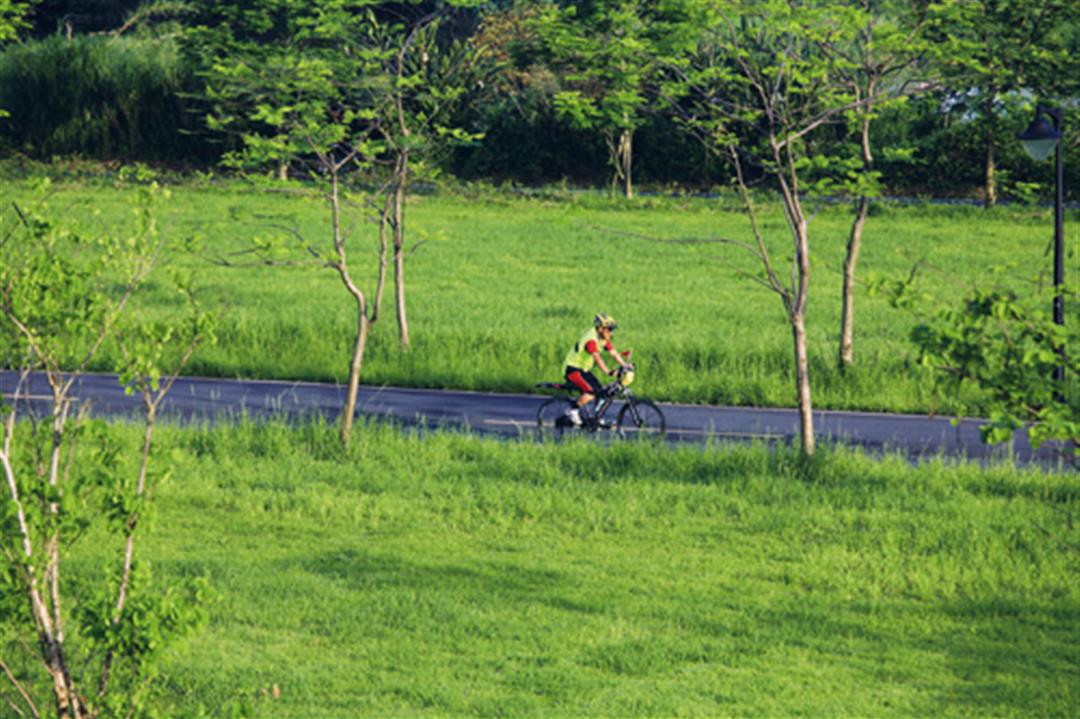
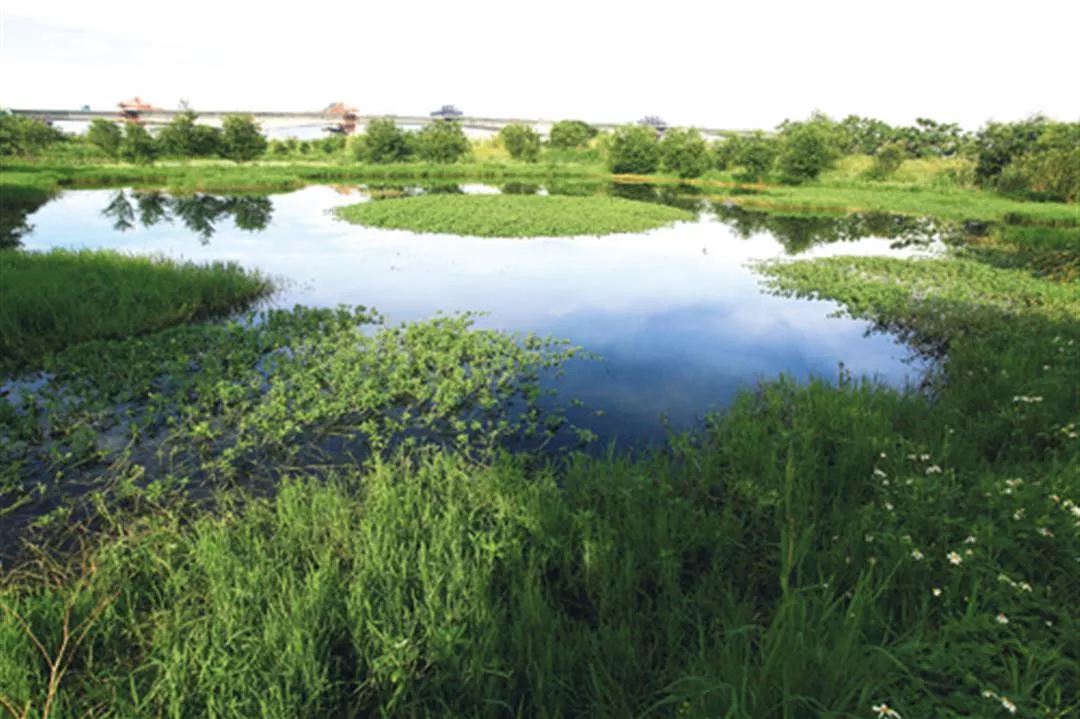
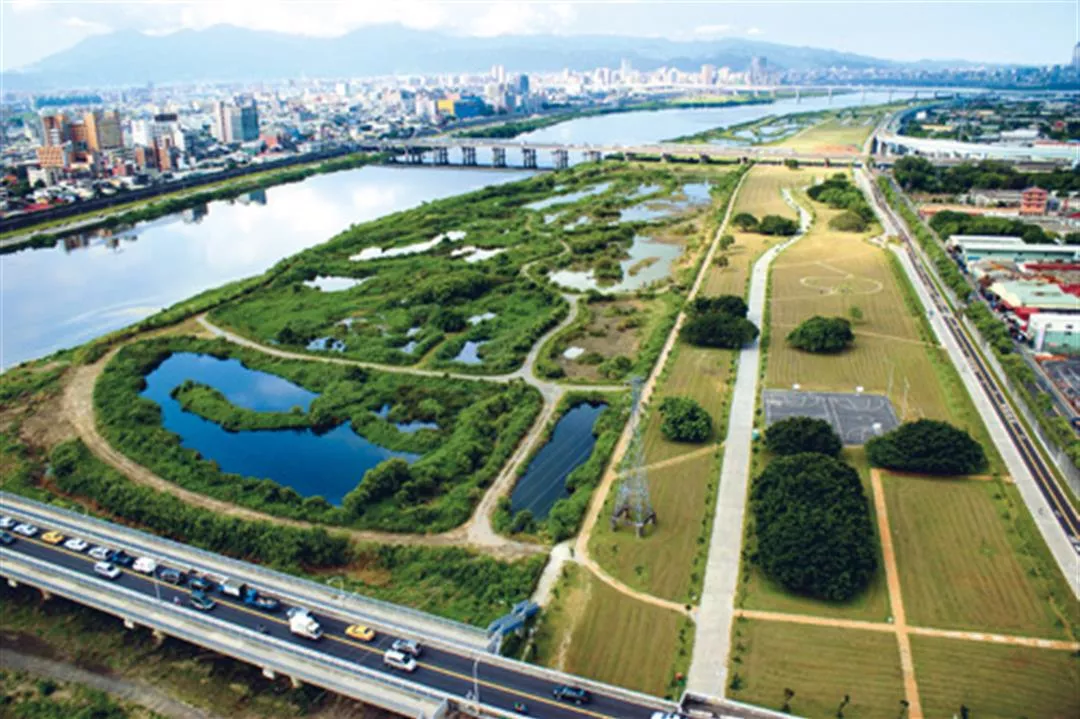
Following over a decade of reconditioning, the Xinhai Constructed Wetland, on the lower reaches of the Dahan River in New Taipei City, has become an excellent recreational area where local residents can stroll or cycle. Life abounds, and numerous migratory birds have made their wintering grounds here. How was this achieved?
Flowing past Sanxia, Shulin, Tucheng and Banqiao, the 135-kilometer Dahan River is the longest watercourse in northern Taiwan, converging with the Xindian River at Jiangzicui to form the Danshui River.
In the past half century, the banks of the Dahan River turned into garbage dumps due to growing populations and clusters of factories that were not served by suitable refuse processing facilities. These heaping eyesores not only stank to high heaven and fouled up the waterways, but when it rained they would severely obstruct the flow of water. During the torrential downpours of Typhoon Herb in 1996, drifting garbage clogged the river course leading to disastrous floods, a true nightmare for residents along the banks.
To protect the public from suffering such flooding and to improve the river’s water quality, in 1992 the then Taipei County Environmental Protection Bureau launched a project to relocate the old garbage dumps lining the Dahan River. The cleanup was not completed until April 2004.

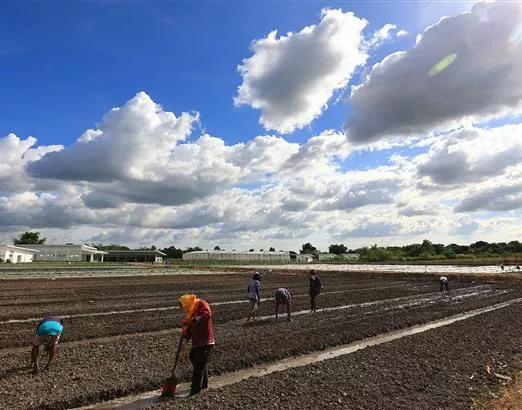
The third section of the Xinhai Constructed Wetland is an aquatic cash crop zone that serves as a means of improving water quality. It also doubles as a venue for extracurricular education.
Wetlands volunteer guide Wu Liyun grew up in Banqiao. She recalls that after the garbage was cleaned up, the county government first built a riverside bikeway, and then spent six years building the three sections of the Xinhai Constructed Wetland on the lower reaches of the Dahan River. This would bring a major change in Banqiao residents’ lives.
“When the third section of the constructed wetland was finished in 2009, it was unique in that it was designed to be a rural rice paddy environment, giving urbanites more chances to experience country scenery,” says Wu.
The design also featured zones for eight crops: paddy rice, wild rice stems, water spinach, foxnut, marsh calla, water caltrop, lotus and crested floatingheart. Besides helping improve water quality, it also serves an educational purpose.
Parents and teachers can bring kids to explore this constructed wetland hidden within the city. As they walk through the trails among the fields, they’ll learn that paddies are a form of wetland.

The expansive Xinhai Constructed Wetland, situated at the lower reaches of the Dahan River, cleans up 15,000 cubic meters of wastewater each day. It’s an oasis of rural greenery in the heart of densely populated New Taipei City.
What are constructed wetlands, and how do they improve water quality?
Yang Lei, professor of Marine Environment and Engineering at National Sun Yat-Sen University and director of NSYSU’s Center for Water Resource Studies, explains that a constructed wetland is an ecological engineering method for treating water pollution, applying engineering technology and artificial techniques to reinforce the ability of wetlands to eliminate pollutants and attain the goal of improved water quality.
In the 1960s, the United States began to apply the concept of constructed wetlands to wastewater treatment, entering a practical stage in the 1970s.
Some 20 years later, this new ecological engineering method was introduced to Taiwan. To study the efficacy of aquatic plants in purifying wastewater, Chia Nan University of Pharmacy and Science first set up a small-scale constructed wetland in 1996 on the banks of the Erren River in Tainan’s Rende District, where changes in water quality could be empirically observed.
In 2001, following the joint research of domestic academia, institutions including National Cheng Kung University, National Taiwan Ocean University, and NSYSU submitted recommendations to the Environmental Protection Administration (EPA), stating that constructed wetlands could serve as an additional option for controlling water pollution. However, the EPA, believing at that time that constructed wetlands might violate the Soil and Groundwater Pollution Remediation Act, did not adopt them.
According to Yang, the concept of ecological engineering was introduced to Taiwan not long before the 921 Earthquake of 1999. In 2002, with backing from the Public Construction Commission, the EPA changed its stance and started subsidizing local governments to build constructed wetlands. The first section of the Xinhai Constructed Wetland, completed in 2004, was a trial run. Due to the positive results, the Taipei County Government expanded upon it, building second and third sections close by, which became operational in 2006 and 2009 respectively. Now there are eight constructed wetlands along the banks of the Dahan River.

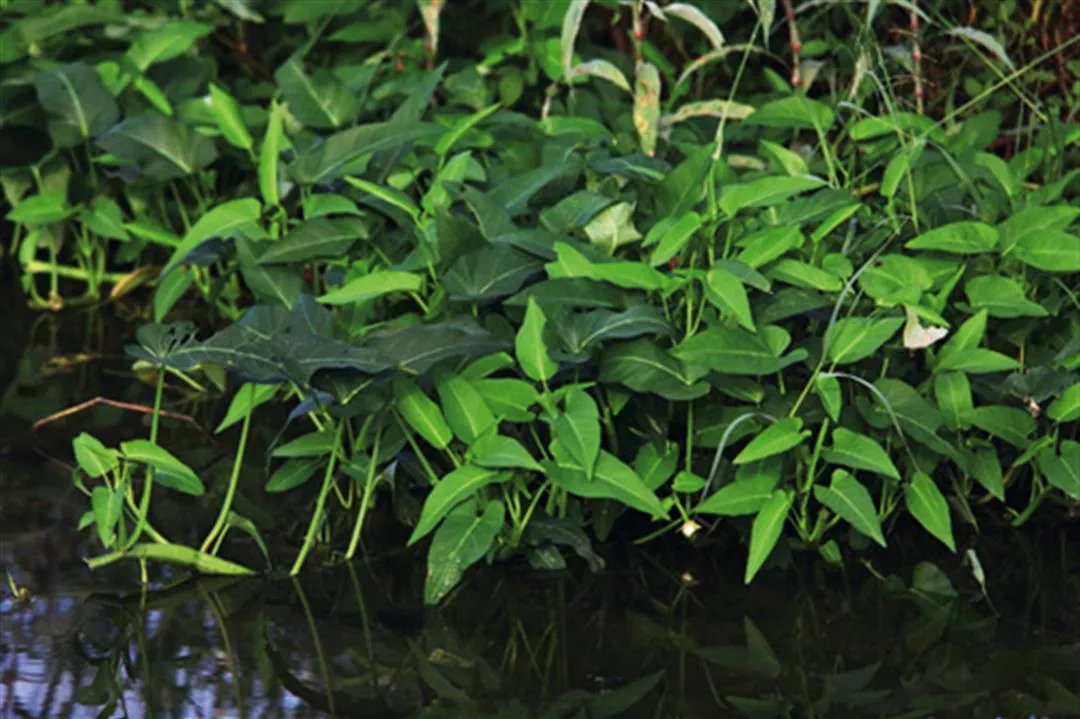
Water spinach.
The advantages of a constructed wetland over a traditional wastewater treatment plant include low construction and maintenance costs, conserving energy, and reducing carbon emissions. However, a disadvantage is that high concentrations of water pollutants require greater wetland surface areas to achieve the desired water purifying effect.
In 2005, the Dapeng Bay National Scenic Area Administration was planning to build two wastewater treatment plants, but the estimated construction costs amounted to NT$5 billion. Yang suggested to the administration that it could build six constructed wetlands for only NT$150 million. Costing 33 times less than the original proposal, this solution was both economically and environmentally sound, a win for all sides.
“However, constructed wetlands can’t completely replace wastewater treatment plants. They’re just a stopgap measure to reduce pollutants,” Yang reminds us.
Wastewater treatment plants are effective at removing high concentrations of heavy metals and other pollutants from water through aeration, precipitation, disinfection and other methods, but they consume quite a lot of power and are unable to remove nitrogen or phosphorus. Constructed wetlands, on the other hand, are chiefly used to treat household wastewater, but their drawbacks include limited capacity. However, aquatic plants absorb nitrogen, phosphorus and other nutrients from the water through the process of photosynthesis. Water purified in this way is discharged into the rivers without causing eutrophication.
Yang points out that in the US, however, with a higher land-to-population ratio than Taiwan, wastewater treatment plants are commonly built adjacent to constructed wetlands. Treated water flows from the treatment plants into the wetlands, and together they’re much more effective at improving water quality.
In 2000, after collating research findings on constructed wetlands, the US Environmental Protection Agency published the Design Manual: Constructed Wetlands Treatment of Municipal Wastewater to share its experience with other countries, advocating a three-stage flow design for water purification (Zone 1 fully vegetated, Zone 2 an open-water surface zone, and Zone 3 again fully vegetated). After 30 years of implementation, the US has over 500 constructed wetlands.

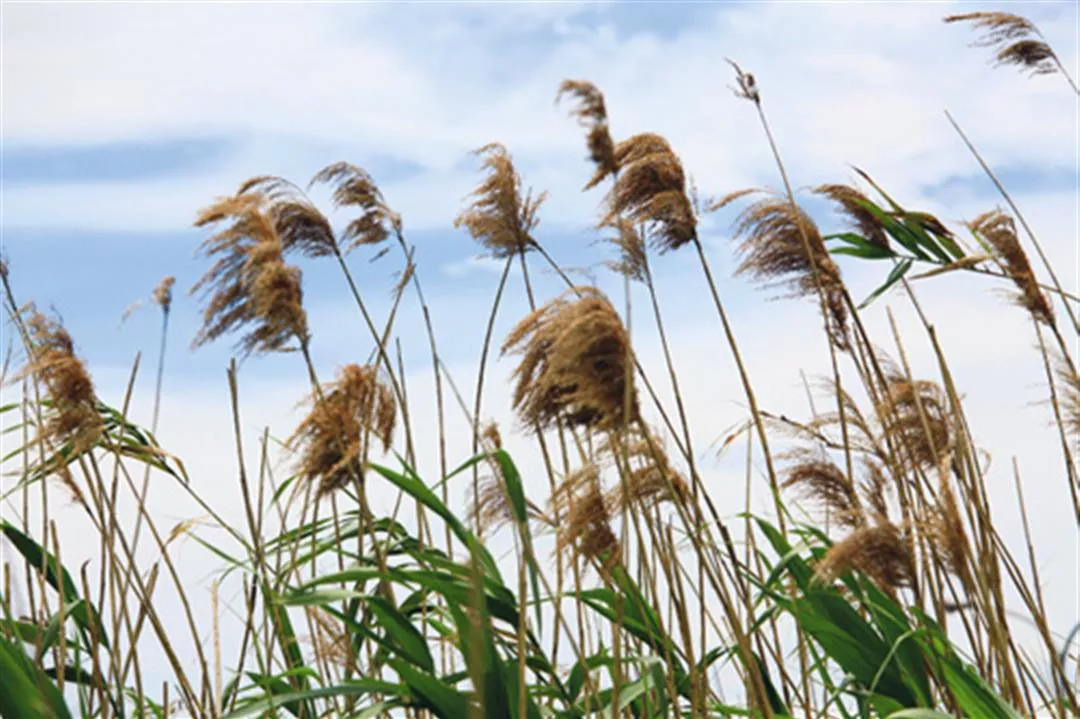
Reeds.
In Taiwan, with its small land area and dense population, it’s hard to find suitable locations for wastewater treatment plants. The wastewater purified by most constructed wetlands is not first processed by treatment plants, so the method used is to allow polluted wastewater to first sit temporarily in a primary settling pond and a grit pond within the constructed wetland; this performs the heavy metal removal duties of a wastewater treatment plant and allows suspended solids and grits to settle out. Next it flows, in turn, into the fully vegetated zone, the open-water surface zone and the eco-pond, where microorganisms and aquatic plants decompose organic materials and absorb nitrogen and phosphorus, cleaning up the dirty water before it flows into the river.
That is how water is purified in the first and second sections of the Xinhai Constructed Wetland. Household wastewater is converted into clean water in four to six days, and then flows into the Dahan River, replenishing the river’s long-deficient volume and sending cleaner water flowing into the Danshui River.
However, for the constructed wetlands, whose primary water source is wastewater, regular maintenance and monitoring of changes in water quality are imperative for good operation.
For instance, harvesting is required if aquatic plant growth obstructs water flow. Then, if concentrations of wastewater pollutants are high, increasing the burden on the constructed wetlands, it is necessary to reduce the input volume of water, adopt a longer hydraulic retention time (the average number of days that water remains in the wetland), or lower the hydraulic loading rate (the volume of wastewater processed per square meter of wetland per day). Usually, for any given input flow volume, the longer the hydraulic retention time, the greater the improvement in water quality.
According to the New Taipei City Environmental Protection Department, 90% of wastewater produced in New Taipei City is household wastewater and 10% is industrial wastewater. And the Xinhai wastewater pumping station in Banqiao pumps a total of 45,000 cubic meters of wastewater a day.
“The water entering the three sections of the Xinhai wetland comes from household wastewater pumped out of drainage channels by the Xinhai pumping station. Every day, the three sections handle 6,000, 4,000, and 5,000 cubic meters of wastewater respectively,” explains Chen Mei-ling, chief of the Water Quality Protection Division of New Taipei City’s Environmental Protection Department.
The EPA estimates that each person in Taiwan produces 200 liters of wastewater per day. The Xinhai Constructed Wetland can treat 15,000 cubic meters of wastewater each day, equivalent to the wastewater volume of 75,000 people.
Chen notes that if we compare the cost of treating one cubic meter of wastewater, a wastewater treatment plant costs NT$5, while a constructed wetland costs only NT$0.2 to NT$0.7. This is far more economical.


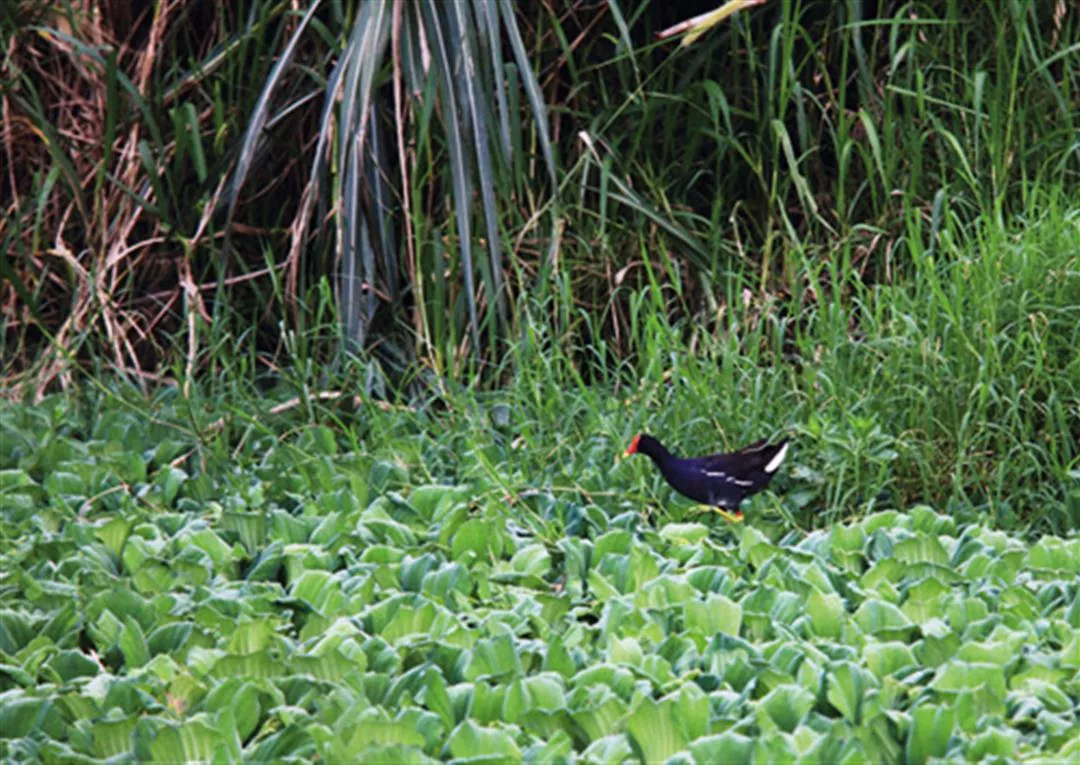
Common moorhen.
Some areas within the constructed wetlands look like choking growths of weeds, but don’t underestimate these aquatic plants. They’re natural filters, champions at purifying water!
Selecting which aquatic plants to use requires the consideration of experts. “When it comes to results, reeds and cattails are first choices for improving water quality,” notes Yang.
Reeds and cattails are the primary plants in the fully vegetated zone. These are emergent aquatic plants, with roots growing deeply into layers of soil under the wetland, interweaving like a spider’s web, and are able to trap suspended solids and pollutants in the water. Moreover, they’re pollution tolerant, they grow vigorously, and they’re quite hardy, able to quickly regain their normal state after flooding. This makes them an indispensable part of a constructed wetland.
Emergent aquatic plants also include marsh calla, water spinach and wild rice, which are highly effective at removing nitrogen and phosphorus, and are also common foods.
But Chen reminds us, “The purpose of these plants is to purify wastewater. Water spinach in particular is able to absorb high levels of heavy metals such as mercury, cadmium and lead. People shouldn’t gather these plants for food.”

The primary settling pond is the first part of the constructed wetland, allowing suspended solids to sink out of the polluted water.
After eight years, following improved water quality, the Xinhai Constructed Wetland radiates with an abundance of life, with birds foraging and preening among the reeds. Some migratory birds have even made them into permanent sites; even the cotton teal, rare in Taiwan, has been seen residing here.
“Every fall and winter the skies here teem with activity. Birds come to perch and forage here because the environment has improved so much. I even had the good fortune to see a greater painted snipe, which surprised me to no end,” says Wu excitedly.
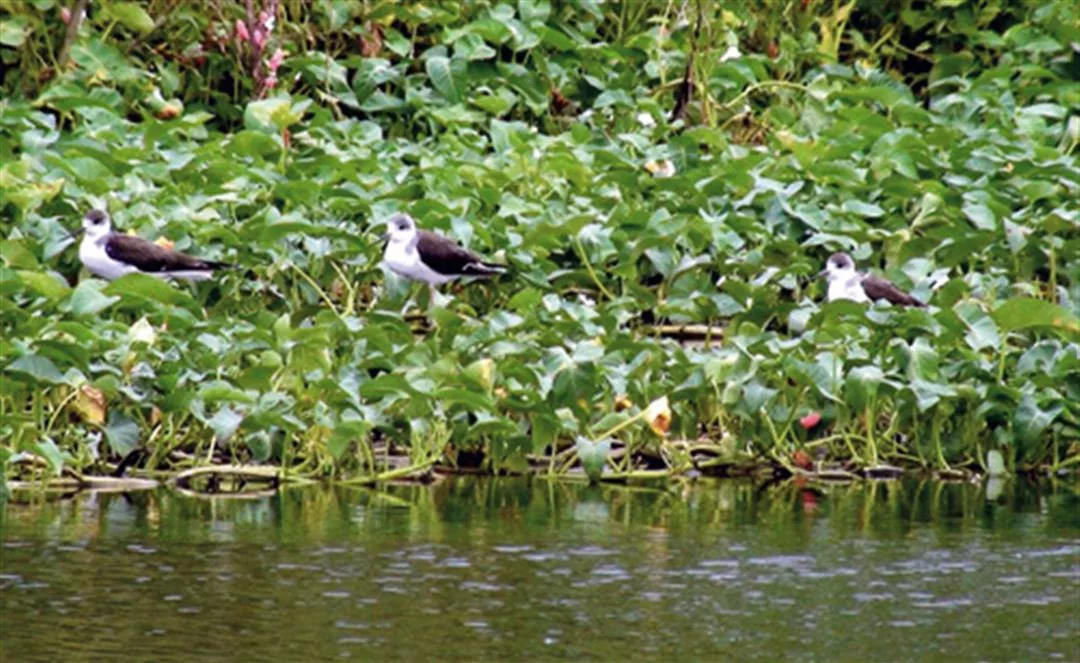
The spot-billed duck is a winter migratory bird that’s quite common in Taiwan. After this species first appeared here in 2004, by the following year they had made it a breeding ground. The black-winged stilt has also chosen to stay, with seven or eight egg-filled nests quickly appearing. Even in April or May, one may occasionally see a delightful brown shrike or Eurasian teal that has decided not to fly back north. Most surprising of all is that kingfishers, which love clean water and well-drained areas, have appeared, demonstrating that the water quality here has improved significantly.
The Xinhai Constructed Wetland occupies a broad expanse of land, and a great way to tour the scenery here is by cycling. Along the way, you’ll hear the incessant chirping of birds, see aquatic plants swaying in the wind and turtles lazily sunning themselves on logs. The rich idyllic scenes are a sensory feast for those wearied by the urban rat race.

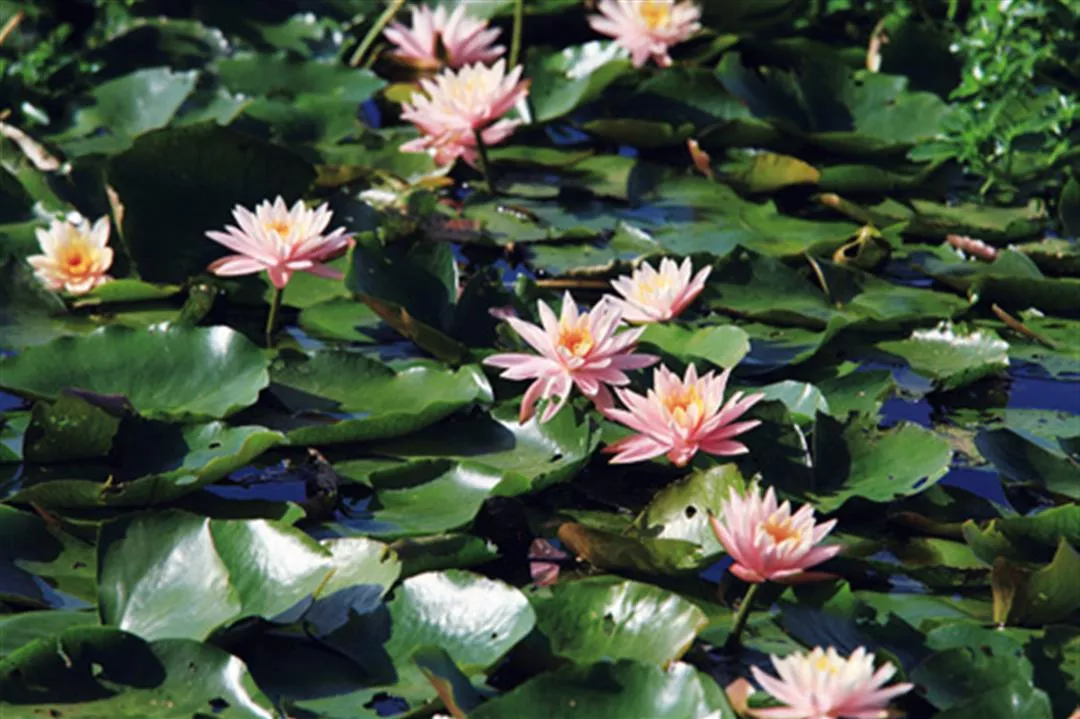
Water lilies.

Black-winged stilt.