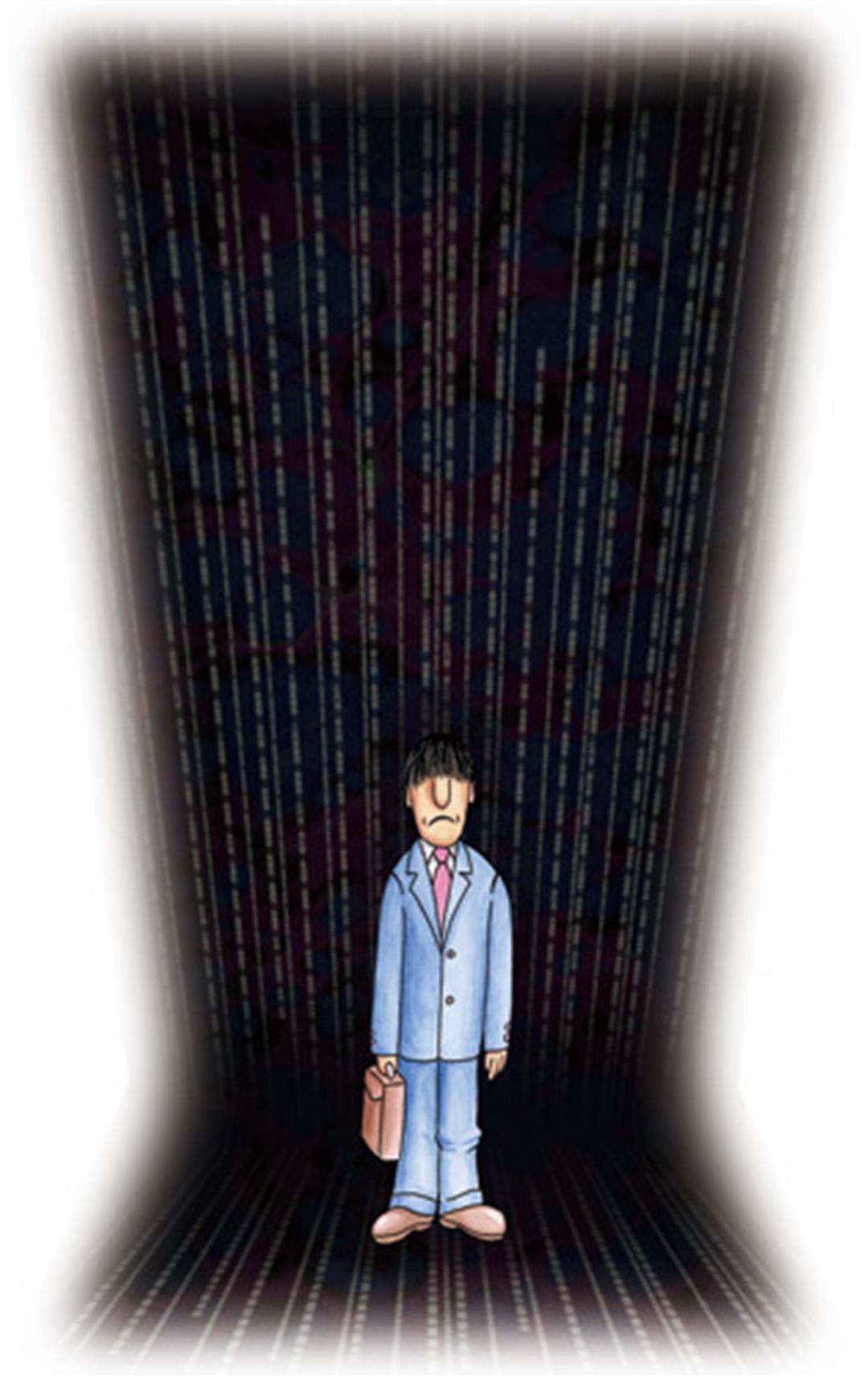
"My maternal grandmother died from oral cancer," writes a 27-year-old woman on an online message board. "Could my bad breath be related to that?" Adding that she has smoked cigarettes, drinks alcohol once a week, and is always thirsty, she wonders whether she too has oral cancer.
There are two terms for an unreasonable fear of cancer: cancerophobia and carcinophobia. People who suffer from this condition don't actually have cancer; they have anxiety about cancer, anxieties that are driving a growing market in cancer prevention.
Where does their fear and anxiety come from? In 1933's New Introductory Lectures on Psychoanalysis, Sigmund Freud identified several types of anxiety, including "realistic anxiety," which he described as a reaction to an anticipated injury.
According to the Department of Health, three of every ten deaths in Taiwan in 2007 were caused by cancer-malignant neoplasms accounted for 28.9% of all deaths. Given numbers like this, a fear of cancer seems eminently reasonable.

No illness to lament?
"When fear becomes extreme, it can give rise to strange physical symptoms," says Dr. Lin Geng-li, an attending physician at Taipei's Song De Psychiatry Clinic, commenting on his clinical experience. Lin says that the anxieties of people with cancerophobia often manifest physically as headaches, dizziness, tightness in the chest, shortness of breath, and a weak heartbeat.
"Most of these patients have become extraordinarily worried about their own health after seeing a family member suffer through cancer," Lin explains. He recalls the case of a male patient of about 40 who began complaining of chronic pain in the upper right part of his abdomen two years after his father died of liver cancer. The man was terrified that he too was having liver problems.
"Generally speaking, liver disease doesn't show symptoms in its early stages," says Lin. "But this man continued to experience liver pain even after every possible test confirmed that his liver was completely healthy."
Some of those who suffer from cancerophobia have no physical symptoms, but are instead simply unable to accept the fact that they don't have cancer. Clinically speaking, this is a form of hypochondria.
Freud first proposed the existence of hypochondria in a letter to his good friend Dr. Wilhelm Fliess, a German ear, nose, and throat specialist, calling it a variety of chronic anxiety neurosis. Later, in his essay "On Narcissism," Freud described it as a kind of withdrawal: sufferers withdraw their interest and libido from the outside world and turn them inwards towards themselves.
Freud argued that hypochondriacs worried about their health to such an extent that the slightest symptom would have them imagining the direst of diseases. Yang Tsung-tsair, director of the Department of Psychiatry at Cardinal Tien Hospital, explains that hypochondria can be triggered by major changes in people's lives, such as the loss of a family member, the end of a relationship, or the loss of a job. They find the blow too much to accept and withdraw from the outside world, losing their interest in people, objects, and events. Instead, they obsess over their health, seeking medical treatment for the most minor symptoms or abnormalities. Yang says the condition is most common among women in their 30s and 40s, especially those who are poorly educated.
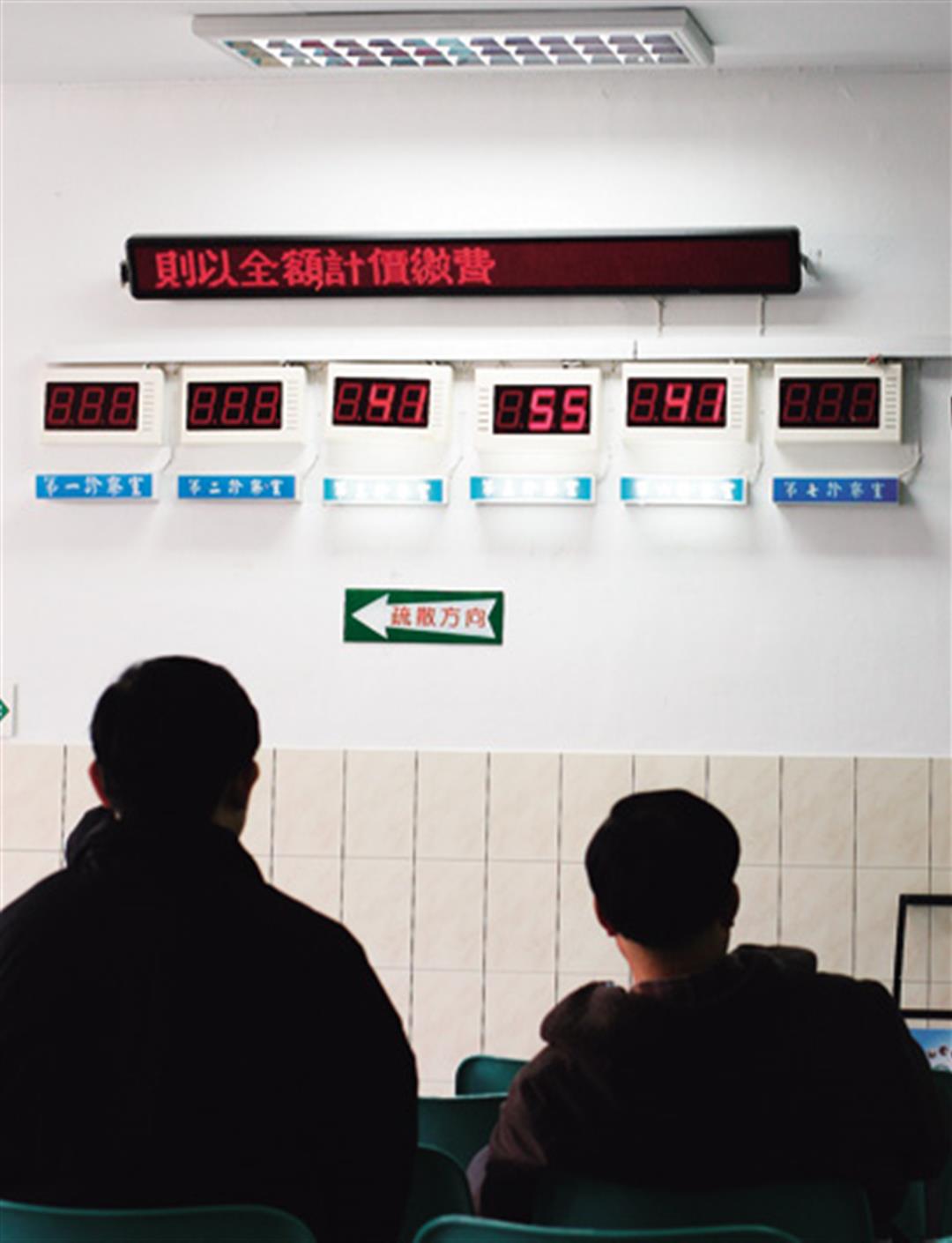
As their turn approaches, hypochondriacs who fear they have cancer look forward to their diagnoses with both anticipation and more than a little fear.

Spreading fear
People afflicted with hypochondria most often fear either cancer, heart disease, or stroke, and those worried about cancer are most commonly women concerned about breast cancer.
The incidence of breast cancer is strongly correlated to genetic factors. A woman whose mother had breast cancer has a two to three times greater chance of suffering breast cancer than the average woman. In other words, family medical histories are crucial risk factors. It's hardly surprising then that when Dr. Wang Cheng-shu, director of the cancer center at the Keelung branch of Chang Gung Memorial Hospital, diagnosed one female patient's breast cancer, all her female relatives, including cousins and even close friends, begged to have their own breasts checked.
Wang says that in his more than a decade of medical work he has never seen a family member of a cancer patient suffer cancer at the same time as the patient. But no matter how thoroughly he explains this, family members continue to wonder why they can feel lumps in their breasts. Wang says the reason is that the tissue in Asian women's breasts tends to be denser than that in Western women's. As a result, the hormones released during ovulation can cause the breast to feel "less smooth." Such explanations do nothing to soothe women suffering from hypochondria, who often turn to the quiet consumption of large volumes of supplements to ease their minds.
Wang also recalls a middle-aged male patient whose headaches had him worried about a brain tumor. The man traveled the length of Taiwan, visiting almost every major hospital between Taipei and Pingtung in his quest for treatment. He ultimately spent nearly NT$600,000 on tests and examinations in pain-management, oncology, and internal-medicine departments.
But cancerophobia isn't limited to individuals. The mass media can also incite widespread fear in the public at large.

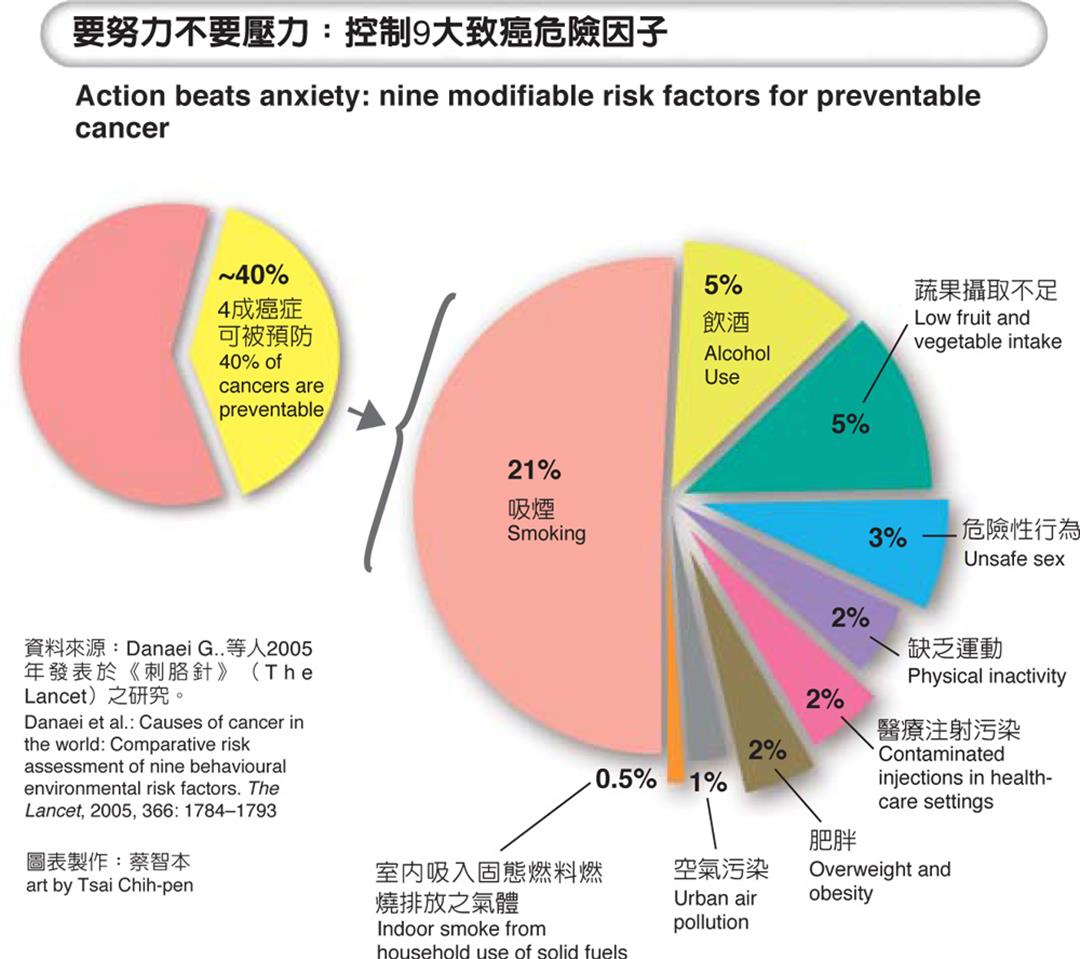
Action beats anxiety: nine modifiable risk factors for preventable cancer
Mediated fear
Every year, the Department of Health publishes lists of Taiwan's ten most prevalent causes of death and ten most prevalent cancers. Originally intended to raise public awareness of cancer prevention, the simplification of the data and the media's sensationalistic coverage of the reports has turned cancer awareness into cancerophobia.
For example, since the Apple Daily entered the Taiwanese market, the island's other news outlets have followed its lead by emphasizing the health and medical beats, paying particular attention to cancer news. But the media's sensationalistic "XXX May Cause Cancer!" story format, focus on the experiences of individuals, and emphasis on the ubiquity of carcinogens has created the sense that cancer is a pressing threat.
Commenting on the media's approach, Lu Zxy-yann, a professor with the Institute of Clinical and Community Health Nursing at National Yang Ming University, notes that although the medical community's knowledge of the causes of cancer is limited, the media often rushes to report correlations between risk factors and cancers as if they were causative. A report will state, for example, that a woman engaging in a variety of sexual behaviors will inevitably get cervical cancer. Worse, it ties the result, cancer, back to just a few specific factors. This turns the public into nervous wrecks who fear to eat this or come in contact with that.
Similarly, the cancer-prevention slogans employed by departments of health and private institutions are well-intentioned efforts that have instead induced anxiety.
Lu says slogans like "five servings of fruit and vegetables a day keeps the cancer away" and "the 5-7-9 fruit and vegetable rainbow" (five servings of fruit and veggies of a variety of colors every day for children, seven for girls over 12 years of age, and nine for boys over 12) are problematic because they make people believe that they will get cancer if they fail to follow these simple, pithy formulas. "We've got people worrying every day about whether they've had their five servings, living in terror that they might have missed one," says Lu.
"People worried that they might miss a serving have developed a new strategy-blending everything into a juice and drinking it," says Lu. Like Ms. Chang, a mother of one, many concerned homemakers end up shelling out more than NT$20,000 for a juice-maker heavily promoted on TV. By joining the ranks of those "preventing cancer with fruit and vegetable juice," they feed the revenues of the juicer market, which are estimated to be roughly NT$500 million per year.

Action beats anxiety: nine modifiable risk factors for preventable cancer
Using drugs and psychotherapy
Body and mind are closely connected, and anxiety sufferers often experience physical symptoms that include headaches, ringing ears, heart palpitations, bad breath, and digestive disorders. The severity of these conditions varies from person to person, but treatment is possible. Dr. Yang recommends treating the root cause-helping patients develop more healthy ways of thinking and encouraging them to improve personal and professional relationships worsened by their anxieties. He also advocates the use of anti-anxiety medications to alleviate suffering during panic attacks and bouts of acute anxiety.
Yang emphasizes that hypochondria reflects an individual's frustration with the real world and lack of understanding of his or her own body, as well as society's preconceptions about certain diseases. For example, a cancer diagnosis is often thought to mean certain death. Yang argues that when dealing with such disorders, "The love and support of one's family is crucial. Most patients who are able to renew their passion for life and regain confidence in their health can get their lives back onto a normal track."