Ancient treasures
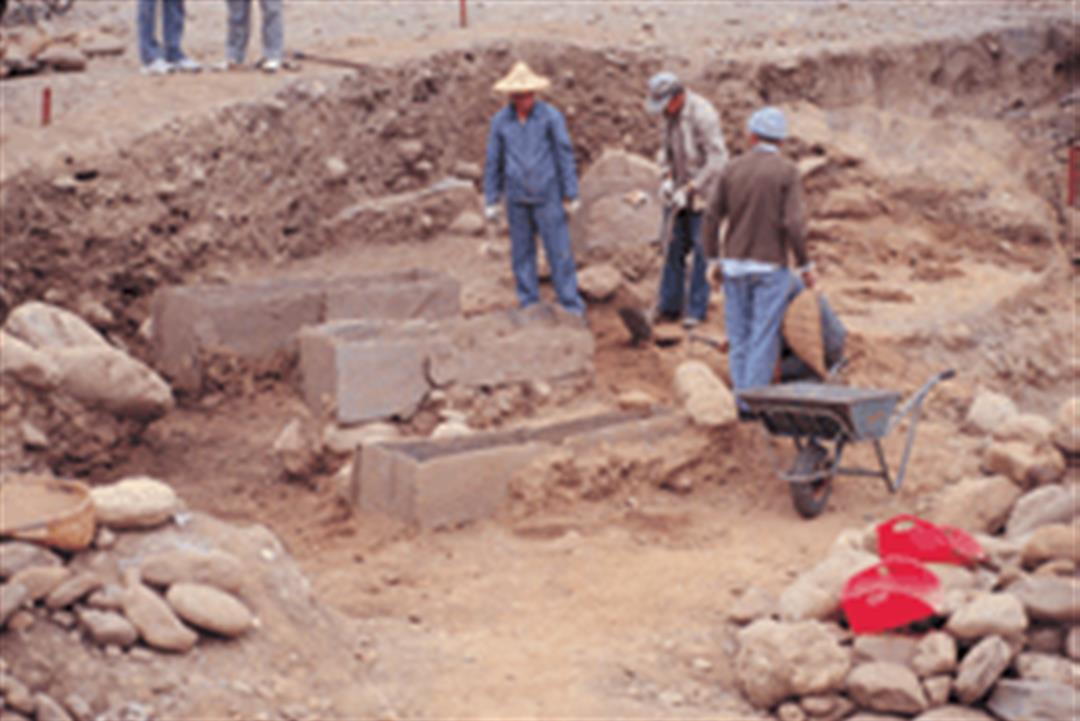
For ten years the archaeologists have worked to save the prehistoric artifacts, afraid that the site might be destroyed by the construction of the South-Link Railway. Probing and digging, carefully cleaning and recording what was found at each layer, they have brought to the surface a settlement buried for thousands of years. Large and small sheets of black slate pressed together to form a floor, gravel piled to form a stone wall, round storage cellars. . . it is easy to imagine the rooms of a house and how these ancient people lived.
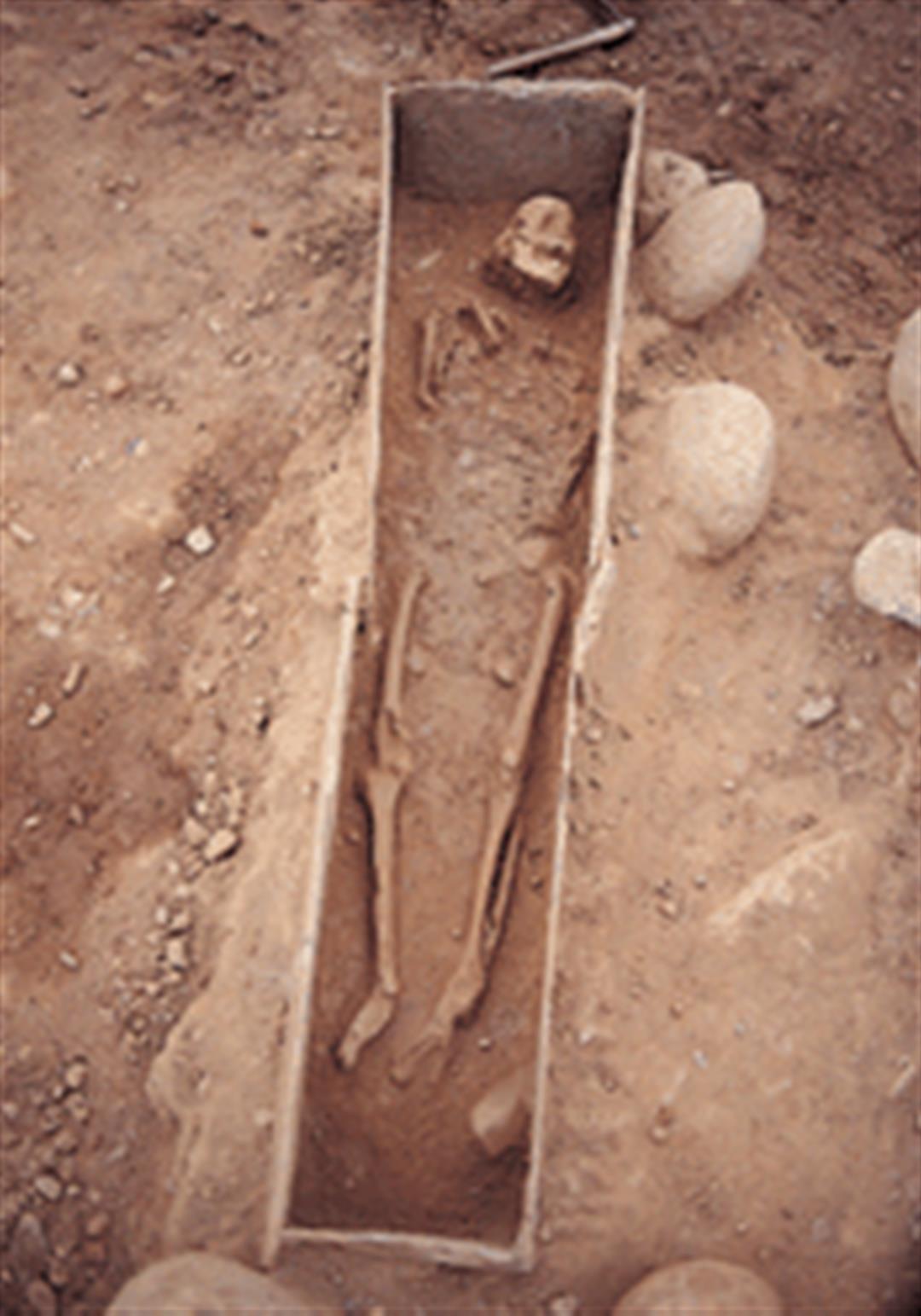
Groups of stone sarcophagi lie one level further down. Over 2,000 have been uncovered. The sarcophagi appear to be individually constructed and are all oriented northeast-southwest and facing Mt. Tulan. Most of the sarcophagi contain one body laid out straight and facing upwards. A few of the sarcophagi hold the remains of several people, up to fifteen, who are possibly the members of a clan buried together over time. The biggest difference among the sarcophagi is the number of fine funerary items found, which indicate differences in social status.
The Peinan relics have received so much attention not just for their scale and completeness-they also raise questions about how these early people acquired the slate. Moreover, the sarcophagi also contain many finely made items of jade, which says a great deal about the culture and the intelligence of these people.
At the Peinan Culture Park's on-site excavation area, archaeologists, equipped with small spades and brushes, kneel within each pit and carefully remove the soil from around the relics. Next to the site, workers clean the thousands of pieces of pottery and stone tools that have been removed.
The workers carefully handle each piece of rock. "Whatever you do, don't underestimate the importance of this slate. It was not dug from the nearby coastal mountains. It comes from the central mountains, quite a distance away, which is an important clue in judging these relics," explains Yang Shu-ling, a research assistant for the Culture Park. How did these people from prehistory enter the central mountain areas, and using simple tools, bring such large pieces of stone to the coastal Peinan area? Researchers conjecture that they used the Luyeh River to transport the slate.
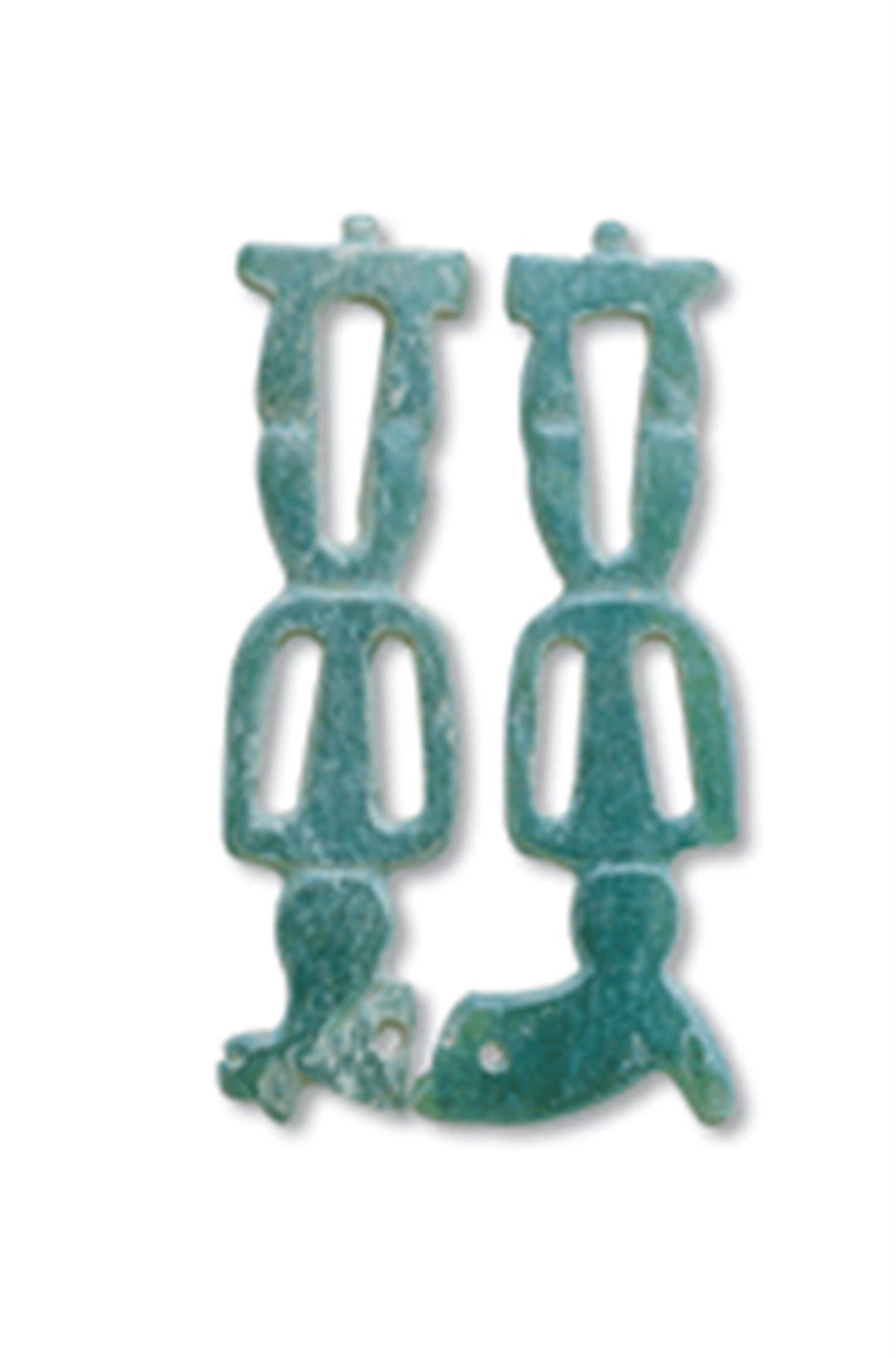
The museum also houses a very special "human-animal jade ornament," which has the form of two humans whose heads are connected by an animal shape, conveying a sense of communication between humans and animals. The ornament is exquisitely made and it is valued as a national treasure. Similar jade ornaments have appeared at archaeological sites in southern and northern Taiwan. The people of Taiwan's prehistory may have had commercial contacts and perhaps marital ties. The large number of jade artifacts that have appeared at the Peinan site include bracelets, trumpet-shaped armlets, tubes, bells, and hairpins. The level of artistry is a sight to behold.
Prehistory in Every Step
Standing in the Peinan Culture Park's observation tower and looking about, you see an expanse of green grass that's like a mat. "Walking over this ground you realize that just below is a human settlement from 2,000 to 5,000 years ago!" The National Museum of Prehistory's Tsang Chen-hua hopes that people bring a little imagination when they visit Peinan Culture Park.
The artifacts tell us that this once was a flourishing riverside settlement. The ancient people of Peinan would transport slate from the Luyeh River, and store it at their settlement for further processing. They would travel to the coastal mountain ranges and gather soft volcanic rock to chisel into large stone mortars, or to Hualien and find raw jade to produce their exquisite ornaments.
Living in communities, the Peinan people raised millet, hunted, and used stone to make tools. A custom was for adults to remove their canine teeth, and 95% of the remains are missing two canine teeth. Relatives who passed away would be buried in the area of their homes, so that their spirits would keep company with the living.
The artifacts of Taiwan's earliest inhabitants answer many questions about their lifestyles, but many other questions remain. Where were they from? How are they related to the aboriginal peoples in Taiwan today? The Peinan Culture is not just a part of Taiwan's prehistory but of that the whole Austronesian language group.


@List.jpg?w=522&h=410&mode=crop&format=webp&quality=80)
@List.jpg?w=522&h=410&mode=crop&format=webp&quality=80)