Myths and controversy
Yet, even with the theory of multiple intelligences and neuroscience affecting childhood education for more than 10 years, numerous controversies still plague the field. Among them are the following:
1.Most of the human brain isn't used. Isn't it a shame just to let it go to waste?
Some child educators proclaim that we only use of about 10% of our brain cells in daily life. If only we could find the right method, they say, we could unlock the potential of the entire brain. This is what's called "developing the potential of the whole brain."
In response, Hung notes, "We make use of every part of our brain, and we're constantly adjusting their functions. There's no part we don't use, and there's no 'extra' part of the brain left for us to develop its potential." Nevertheless, the brain does bear similarities to a trained muscle: "Use it or lose it." Areas that are in frequent use grow larger, and areas that are neglected become appropriated for different purposes.
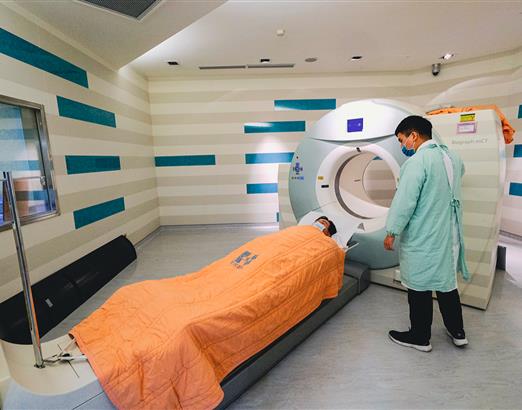
For example, there was an experiment conducted in the United States, for which university students were asked to come to a lab to learn how to juggle balls like acrobats. The subjects first had their brains scanned, and then they practiced juggling three balls at the same time. They weren't allowed to stop until they could juggle them for a full minute. Then their brains were scanned again, and the subjects were sent home and asked not to touch any balls before coming in to have their brains scanned a final time three months later.
When the experimenters compared the three brain scans, it became clear that in the second scan the blood flow to the area of the parietal lobe that controls spatial manipulation had increased and that the area had enlarged. Then, after not being exercised for three months, the area shrank.
"That study showed us that success is one part inspiration and nine parts perspiration," Hung says. "Successful people aren't necessarily highly intelligent, but they are all show great determination and perseverance."
2.Since the first three years of life are the "key period for learning," is it too late once you miss that opportunity?
A century ago Santiago Ramon y Cajal, who is known as the father of neurology, established a biological doctrine: "When a neuron dies, it cannot be reborn." Even though science has disproved that notion-new brain cells are in fact continually created, and people can learn new things even in old age-Cajal's followers down to the present day still promote the idea of a "key learning period." They find evidence in the fact that the number and density of synapses (neural connections) peak at three years of age. Consequently, they argue that the first years of life are essential for education.
And many businessmen in the field play on parent's anxieties and intentionally harp on the idea that "after three it's all over" in order to hawk all manner of curricula aimed at developing infants' intellectual potential. They urge parents to shell out for these items so that their children "won't lose the race at the starting blocks."
In this regard Lee Kang, an assistant professor in the Department of Curriculum Design and Human Potentials Development at National Dong Hwa University, believes that the emphasis on "age three" is just a gimmick. In reality, neural development may focus on different aspects during different periods, but "it's continuous." From birth onward, all of a child's interaction with his environment and with his parents-or, for that matter, with anyone-will have long-term impacts. But going from there to say that "the earlier you start studying, the better" is moving into the realm of myth.
Wrongheadedness
Many parents grow anxious about whether they should send their children to music and art lessons. On that subject, Lee offers the following three suggestions:
First of all, parents should ask about their own motivation: "Am I sending her to these lessons ultimately to fulfill my own dreams and satisfy my own desire for glory? Or am I doing it really because I want to develop the child's own potential?"
Secondly, what are the child's motivations for studying? Is he reluctant, going only to please parents?
Thirdly, what methods does the teacher use? Are freedom and creativity encouraged? Or are rote exercises the norm?
"If the child isn't interested, than all learning is twisted." Lee cites this example: Even if a child is very talented musically, it doesn't follow that she necessarily wants to become a musician. It's key that parents "respect a child's choice."
With regard to the proliferation of music and arts lessons for young children, Lee stresses that people learn by starting out "holistically" and then slowly moving toward "differentiation." For instance, ages four and five are a peak period in the development of children's sensory organs, but it's also a period when their learning is focused on "synthesis." Thus, for example, by leading children to sing, dance and role-play all at the same time, you can simultaneously develop their senses of sight, hearing and touch, and also give them exercise. At the same time, they can explore their relationships with other people. But that doesn't necessarily happen when a child is forced to endure sitting still on a piano bench, focusing exclusively on his sense of hearing, and "shutting off" his other senses.
"Children are by nature curious. Unfortunately, their natural interest in things is often quashed by adults!" Lee points out that one of the surest ways of getting children to lose interest is to set various targets: telling them to learn one piece of music a week, say, or asking them to write about their own thoughts on a story book after finishing it. And if there is no supportive environment after the learning takes place-for instance if there is no one to speak English with at home after attending a bilingual nursery school, the educational gains will be hard to be maintain, and the sole result of the reluctant educational head-start will be that the next time the student encounters the subject, he will feel that it is one big hassle. "I've already learned it! Why do I have to study it again?" Like with a rubber band, stretching a child to learn can wear out his resilience, causing a natural deterioration in educational results.
3.Since "potentials development" is a specialized field, shouldn't it be provided by experts who have a proper grasp of its theories?
This is in fact the biggest myth about developing brainpower. Whether in Taiwan or abroad, more and more professional educators advocate that an excellent home and good parent-child interaction is the best way to promote the development of a child's brain.
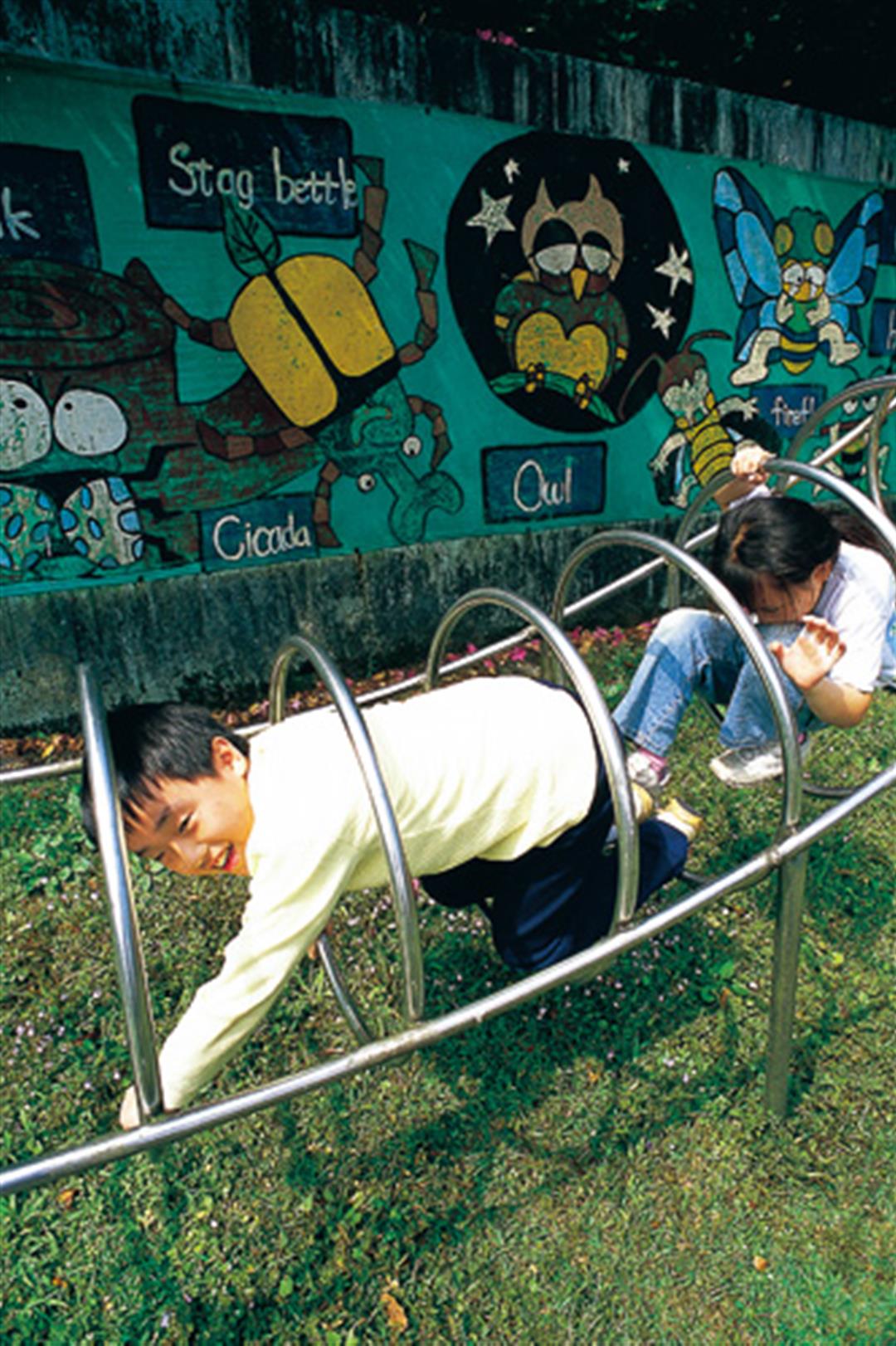
"From a neurological standpoint, memory, creativity and logical reasoning alike involve the firing of neurons, and the experiences of running around and playing are enough to establish dense neural connections," Hung says. Therefore, instead of pushing your children to go to cram schools for extra classes and working yourself to the bone to pay for it, wouldn't it be better for children to discover their own passions: "Children's mission is to play. They need free time!"
Li Yiling, who frequently lectures about parent and child education and art education, believes that one doesn't need to intentionally "develop" the brain's potential. Instead, just let things take their natural course and children will develop their strongest talents.
And modern parents can get lost amid the vast array of products and curricula aimed at developing their children's potential. Wouldn't it be better to take back some of that time and make decisions for oneself. Really listen well to what your children are saying; tell them stories; let children grow up surrounded by love and compassion, so that they have a sense of security and confidence and so that you can let them explore the world by themselves and find their own way in it.
Li Yiling even more earnestly offers this advice: "Doing housework can also exercise your brain!" That's because doing housework involves planning and arrangements connected to time, space and physical action. It not only cultivates a sense of responsibility but it also stimulates brain cells in the frontal lobe that are connected to logic and decision making.
Just as there are 10 trillion synapses in a human brain, the field of potentials development has all manner of diverging paths. It is full of various kinds of pitfalls and pleasant surprises. But its basic principles are unchanging: to provide appropriate and multifaceted learning opportunities that involve creativity and exploration and that respect a child's own choices. With the right soil, the seeds of potentials development will naturally sprout and grow strong!




@List.jpg?w=522&h=410&mode=crop&format=webp&quality=80)




@List.jpg?w=522&h=410&mode=crop&format=webp&quality=80)