Hou Wen-yeong, “Dangerous” Producer of Best Sellers
Su Hui-chao / photos Chuang Kung-ju / tr. by Scott Williams
December 2012


Hou Wen-yeong has been described as mainstream, a brand, a paragon of success, and a savior, but all such pronouncements badly miss the mark.
In fact, Hou has always stood far outside the mainstream and the system.
In his view, we live in a troubled world. “If it were trouble free,” says Hou, “I couldn’t write. There’d simply be nothing to write.” It is precisely because he sees problems with the world, because his beliefs differ from those of the mainstream, that he chose to become a writer. “Authors can’t be mainstream. It’s not that they deliberately sing a different tune, it’s that they just don’t believe in the mainstream.”
On this particular evening, Hou has just finished speaking to a group of students at Taipei’s Jianguo High School. The 47 Jianguo seniors, all of whom hope to become doctors, began writing him letters in 2011 inviting him to give a lecture at the school. The talk now over, he leaves, mulling thoughts that will burn in his mind for years to come.
Hou initially assumed that the letters were nothing more than form letters that each student had signed, but on looking more closely he realized that every one was different. Each described how that particular student had been introduced to Hou’s work, what he had gotten from it, and how much he hoped that Hou would accept their collective invitation.
“I’ve always believed in one thing: being sincere,” Hou told the students in his Jianguo audience. “By responding to your sincerity with sincerity, we were able to create something together. When we reach the end of the line and have nowhere else to turn, we have to trust in the strength of sincerity.”
“We connected, not because I pandered to them but because I understood their situation.” As he was leaving, the students presented him with a Jianguo uniform shirt inscribed with his name and covered with their own signatures and expressions of gratitude.
Did the students identify with him simply because they viewed him as one of their own?
Hou answers with a story.
A mother, the product of a single-parent family, who had dropped out of school as a kid because she couldn’t keep up and had never read a book for pleasure, told him that one day her father gave her a cassette tape to listen to. The tape struck a chord with her and left her marveling that such people existed in the world.
Feeling as if the tape—Hou’s At a Turning Point—had opened a long-locked door, she sought out his other work and devoured it. Hou’s writing revolutionized her understanding of books and, by the time she was 17 or 18, brought her to a turning point of her own: she wanted to return to school. She began studying with a group of seniors in an adult education program. There, her intelligence, diligence and good grades prompted her teacher to suggest that she continue her studies at a business college. She eventually earned her accountant’s license, found a job, and married.
Years passed and one day she noticed her daughter reading Hou’s Irreverent Stories collection. Inspired by the memories it brought back, she posted her story to Hou’s Facebook account. Hou says it brought tears to his eyes.
As a young man, Hou was among the best and brightest products of our educational system, the kind of spirited thoroughbred who leaps ahead in our testing horserace then gallops down the mainstream track.
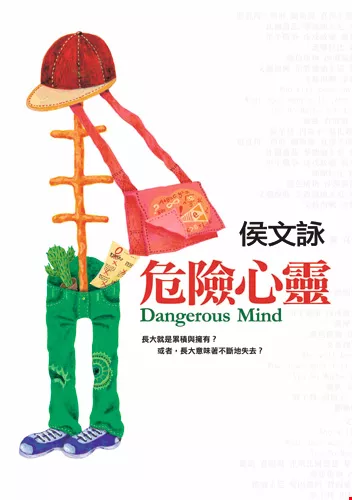
Hou has produced a rich body of work that includes everything from humorous essays to short and long-form fiction. His every publication stirs debate, and works such as The Hospital and Dangerous Mind have even been adapted for television.
In spite of the notorious difficulty of gaining admission to one of Taiwan’s medical programs, Hou managed to test into Taipei Medical University, where he met and married the girl of his dreams. In many ways, the couple epitomized conventional ideas about success: both were successful doctors; Hou had added a PhD to his credentials; and they had two sons.
As if that weren’t enough, Hou was also a successful author. In fact, he chose his specialty—anesthesiology—with his writing in mind. Anesthesiologists have a slightly less grueling workload than most other doctors at National Taiwan University Hospital, allowing him to squeeze in three hours of writing seven or eight days per month.
“People say that you can’t be both practical and idealistic,” says Hou, “but I thought I should give it a try. I figured at worst I’d lose some sleep, and that time would tell whether it was possible. If it wasn’t, I’d admit it and move on.”
Some people say that Hou seems to produce his books effortlessly, but Hou counters that he works himself to death and back on each.
“Would you believe that I use only one out of 100 ideas?”
Others say that he writes only for the sales. “Seven Year Love sold only 4,000 copies over a two-year period during which I was making more than NT$50,000 per month as a doctor,” recalls Hou. “How could anyone construe that as writing for money?”
At the age of 36, he put down his stethoscope to become a fulltime author. Hou says that in spite of his love of writing, he had devoted the previous 36 years to more material matters. He argues that the overriding principle of a material life is competition. Success in competition brings you more material goods, the accumulation of which is supposed to make you happy. But at some point, you hit a ceiling and that ceases to be true. “You can put in two or three times the effort to no effect.” At 36, he paused to ponder the issue.
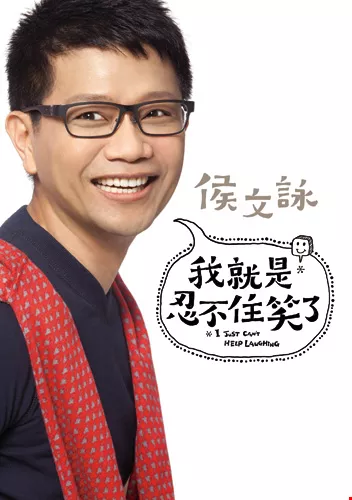
Hou has produced a rich body of work that includes everything from humorous essays to short and long-form fiction. His every publication stirs debate, and works such as The Hospital and Dangerous Mind have even been adapted for television.
Having seen more than 500 cancer patients pass away, Hou recognized that what people care most about, what they least want to let go of at the end of their lives are their personal relationships. Our parents, partners, children, friends and relatives comprise the core of our lives, but those of us caught up in the material don’t give these relationships the attention they need.
He thought further that if the spiritual world were illusory, then why did he feel so happy when other people laughed at his jokes? That happiness was so real and fulfilling that he wondered further whether it could grow and spread.
He concluded that if you can’t take the material with you, and the physical body is certain to sicken, suffer pain, and ultimately die, then “people should live in a pragmatic way.”
“I’m not what you’d call a religious person,” says Hou. “Instead, I’m trying to work things out pragmatically, to figure out what human life is and find a way to live it that makes sense. Is it more practical to earn a lot of money, buy the best things, and give your kids the best education, or to live happily and joyfully? If I’ve already done my best, if I’ve already competed in all the races I was supposed to and won most of them, why don’t I feel the happiness and good fortune I expected?”
At the age of 36, Hou resolved to wake up happy every morning and live joyfully. But in those days he was still working on his approach. It wasn’t until he’d moved a good way down his new path, then carefully reexamined the way he’d come, that he was able to fully flesh out his philosophy of life.
Taking up writing professionally was a risk, and Hou had no idea where his decision would lead. His idea was that he would write a book a year, focusing on novels rather than attempts at best sellers.
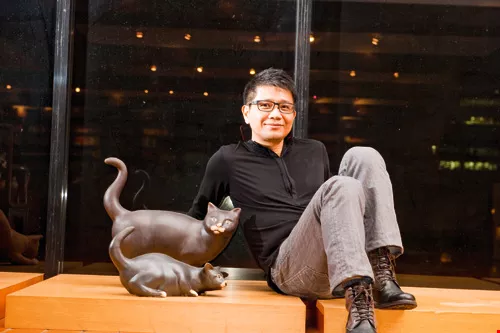
Hou admits to being both dangerous and irreverent, and says his philosophy of life is simply that one size never fits all.
If Hou hadn’t changed course at 36, it’s likely he still would have produced My Brilliant Dream, Disobedient, and I Just Can’t Help Laughing, but it’s unlikely he would have written his most powerful works—The Hospital, Dangerous Mind, and Souls Embracing—or his The Plum in the Golden Vase, which seems almost to have come from another planet.
Hou has authored realist fiction on four themes—power, education, fame and money. The Hospital is a story about battles for power in the hospital setting in which he used to work. Hou sees it as a study in human pathology.
When readers ask him why the protagonist of the book doesn’t marry, Hou says, “He had to have regrets. I wanted him to be unaware of where his choices were taking him, for him to move towards the accumulation of power while gradually losing all the things he loved most so that he would end up alone in his tower, weeping.”
The Hospital was his first book after leaving medicine, as well as the first after his transition to fiction. Crown Publishing president Ping Shin-tao warned him that its sales weren’t likely to be good, telling him: “Wen-yeong, this book isn’t going to sell as well as your earlier ones. You need to be prepared for that.”
Hou shrugged and said he didn’t care. His work in the hospital had trained him to be passionate but clear-eyed. He just wasn’t concerned about the ups and downs of his book sales.
His second novel, Dangerous Mind, took on an even more sensitive and knotty subject, one most contemporary writers have avoided like the plague: education.
He modeled the book’s protagonist on a real person, a ninth grader preparing for his exams. This young protagonist, Xie Zhengjie, is smart and has a mind of his own, but his grades are all over the place. He is sent out of his math class when his teacher catches him reading the Sanctuary comic in class. Similar punishments are meted out on a daily basis in Taiwan, but no one bothers reporting them. But Hou wanted Xie to come into conflict with the system and push for what he feels is right. This conflict eventually leads Xie to organize a street protest. The book depicts the figures within the educational system who harm students, and their victims too, and sets them on a collision course.
Dangerous Mind continues to be influential nearly 10 years after its publication, and Hou invited a high-school student to the Crown offices for a meeting just last month.
The girl’s mother had posted on Hou’s Facebook page saying that her daughter had read the book as an eighth grader. The mother included the text of the letter her daughter had written to the Minister of Education. “The letter was shocking.” After reading it, Hou decided that he needed to meet with the girl without her mother present and asked an assistant to contact her privately.
During that meeting, Hou largely just listened as the girl spoke. At some point in their conversation, they bonded.
Hou feels that his Facebook relationships with readers are genuine. He doesn’t engage with them for show; he treats them very seriously.
He says he’s also learned from his oldest son, who showed him that children of Taiwan’s professional classes struggle with society’s expectation that they do as well as their parents.
Hou’s oldest son decided early on that he didn’t want to study medicine because he didn’t want to be measured against his parents. But when he did far more poorly than he’d expected to on the university entrance exams, he found himself at loose ends.
But Hou just told him, “That’s great.” And, “It’s good to experience this kind of thing when you’re just 17 or 18.”
What concerned him was whether his son had a sense of what he wanted, and what decision he would make once he did: whether to retake the exam, study at a school he was less enthusiastic about and then try to transfer, or get his military service out of the way then study abroad. Hou assured him that whatever his decision, he’d find him someone to talk to who taken a similar path through life.
After thinking it over, his son chose to get his military service out of the way. True to his word, Hou found a friend for him to talk to who’d completed his military service, gone abroad to study, and was enjoying success in his present career.
“Congratulations! If you hadn’t done so poorly on the entrance exam, you wouldn’t have had this opportunity to go abroad! When you look back on this at the age of 30, you’ll be glad you did.”
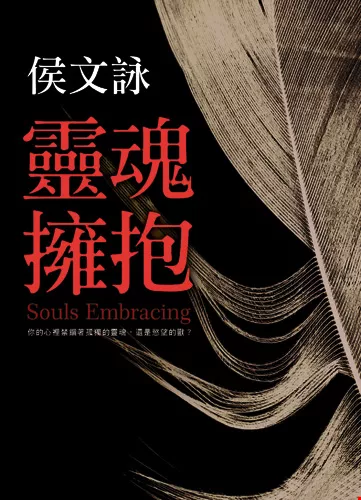
Hou has produced a rich body of work that includes everything from humorous essays to short and long-form fiction. His every publication stirs debate, and works such as The Hospital and Dangerous Mind have even been adapted for television.
Hou’s The Plum in the Golden Vase is something altogether different, his personal, 300,000-plus-character take on the classical novel The Golden Lotus.
Hou had read The Golden Lotus as a teenager, drawn to its “pornographic” reputation. He reread it again a few years ago during a period in which he changed his style of reading from something purposive and directed to something more akin to a stroll. In so doing, he found his teenage titillation had given way to the cooler intellect of middle years and that there was much to appreciate in the book.
“What sexually explicit acts haven’t we seen in the Internet age?” asks Hou. “Is the world that middle-school students see today any cleaner than that of The Golden Lotus?” When Hou peeled back the book’s layers of sexuality, he found surprises everywhere. One of the greatest was its depiction of a society very similar to that of contemporary Taiwan.
According to Hou, the likenesses included close ties between business and government, dreams of acquiring wealth, competition to curry favor, and a focus on pleasure, entertainment and sexual games. In his view, present-day Taiwan is very much like the port town on the Grand Canal depicted in the novel: an anything-goes kind of place lacking ideals and a sense of justice. Hou claims that pulling back the veneer of morality reveals the naked human desire lying just under the skin, a desire that devours everything. Reading The Golden Lotus and watching Taiwan’s television news, he decided he had to write something about the book.
Hou decided to push The Golden Lotus into contemporary pop culture, to refresh its moral and idealistic sensibilities. “If I couldn’t do it, I couldn’t see anyone else pulling it off.”
Simply put, Hou decided to accept the fact that he really is a bestselling writer, one capable of competing with TV, pop music, athletes and computer games for a bit of teenagers’ attention.
“Good sales are inarguable,” says Hou. “Is there an author out there who actually wants to be known for not selling books?” All Hou can do is try to distance himself from the more negative aspects of being a “bestselling author” by not repeating himself, not being deliberately “commercial” and actively seeking to create works with depth. “Every book must first pass muster with me.” But The Plum in the Golden Vase ended up selling very poorly indeed, and many parents didn’t want their children reading it at all.
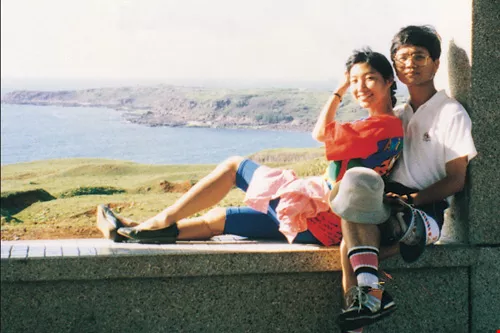
Hou, who married fellow doctor Zhang Yali, found inspiration for some of his early work in their life together. The photo shows the couple in Penghu in 1989.
Hou is regarded as an intelligent, upstanding, optimistic, humorous, and warm writer, which is precisely why many parents feel comfortable letting their kids read his books. They also often beg favors: “You’re a doctor and a famous author. Can you persuade my child to work harder so one day he’ll be as successful as you are?”
In reality, however, the subject matter of Hou’s realistic novels isn’t the least bit mainstream. He used Dangerous Mind to indict the educational system and present his ideas about what constitutes an ideal school, namely, one which attends to the needs of every single student and helps each one to understand him or herself. In fact, he believes this is the most important objective of education.
Meanwhile, his The Plum in the Golden Vase was something of a bet that many of the people who are uncomfortable reading The Golden Lotus nonetheless want to understand it better.
Disobedient, on the other hand, is aimed at a generation of Taiwanese readers who grew up in a period of tumultuous change. The book explores “culture” and its power, and seeks to broaden its audience’s worldview.
In all of his books, Hou attempts to present his readers with a philosophy. “I tell them what I believe.” In this regard, Hou truly is dangerous. When a child starting to be self-aware stumbles across Hou’s work, it can set alight passions that parents find hard to control.
When Hou says, “I’m dangerous,” he means it.
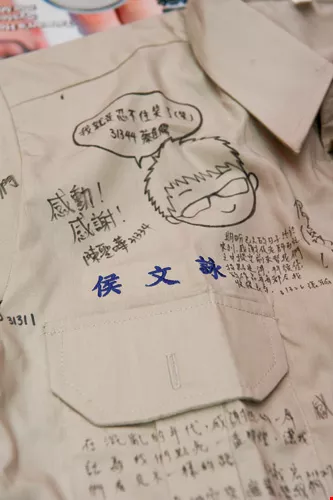
Reflecting Hou Wen-yeong’s influence and popularity with Taiwan’s young people, a group of students from Taipei’s Jianguo High School wrote personal letters to the author in an effort to persuade him to speak at their school. After his talk, they thanked him with a school uniform shirt with his name on it.
.jpg?w=1080&mode=crop&format=webp&quality=80)
Hou, who was trained as a doctor, gave up medicine to pursue writing full time. In his work, he seeks to break down worldly, materialistic values and offer his own take on the “real world.”
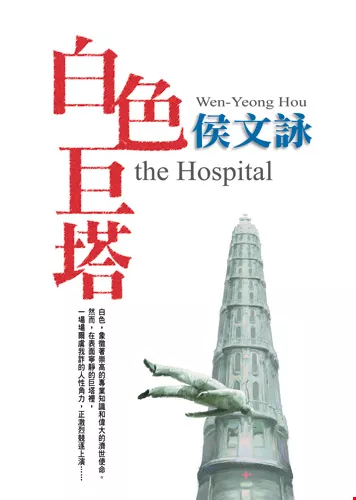
Hou has produced a rich body of work that includes everything from humorous essays to short and long-form fiction. His every publication stirs debate, and works such as The Hospital and Dangerous Mind have even been adapted for television.


@List.jpg?w=522&h=410&mode=crop&format=webp&quality=80)


