Namasia’s Mountain Stronghold: Minquan Elementary School
Coral Lee / photos Jimmy Lin / tr. by Jonathan Barnard
July 2012
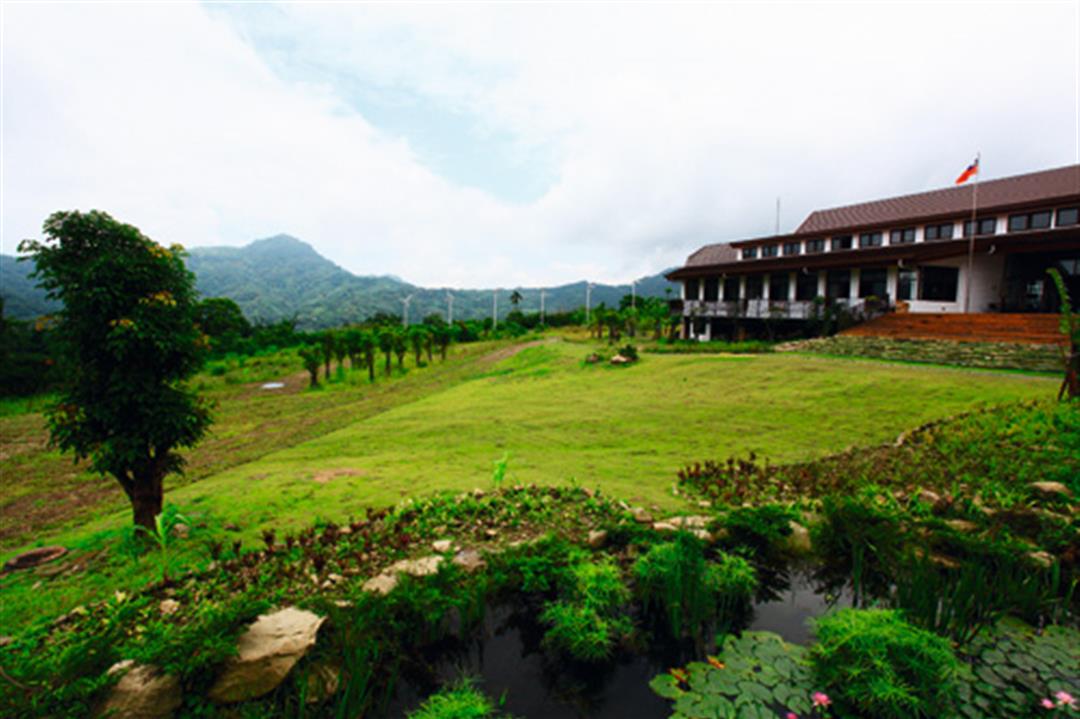
It has been three years since the flooding and landslides from Typhoon Morakot ravaged Kaohsiung’s Namasia District. The old site of Minquan Elementary School, which was buried by debris during the disaster, now sits abandoned and overgrown with weeds. But on a plateau 200 meters above Maya Village, the newly rebuilt school bubbles with vitality.
Built with grants totaling NT$250 million from the Delta Electronics Foundation, the diamond-class green buildings here were designed by the renowned green architect Kuo Ying-chao to fit in well with their natural surroundings. Possessing all the beauty and resilience of mountain lilies, the school was also designed to be employed as a temporary evacuation shelter during the flood season—a function it served this year during the heavy rains of June 11.
If they were not hidden away on the narrow winding road from Maya Village (formerly Minquan Village) to Minquan Elementary, surely more people would bear witness to how much the beautiful buildings resemble a high-end resort.
The decision was made to rebuild the Minquan Elementary School here, on the site of the old tribal village, after tribespeople discovered that the plateau had escaped Morakot’s ravages unscathed and a subsequent expert safety assessment also turned out positive.
“Geological drilling determined that bedrock underpins the entire plateau,” explains Wu Ting-yu, principal of the school. “It couldn’t be any safer for constructing buildings. The results instilled respect for the tribe’s wisdom in originally selecting that site.” And because the surrounding mountain slopes are quite far away, the threat of landslides is low.

Building on stilts helps to increase ventilation and lower temperatures. The specially strengthened concrete footings will be better able to withstand rockslides—should they occur—without damage.
On June 11, 2012, when torrential rains were hitting Taiwan, the Council of Agriculture announced a red alert for landslides in Namasia. More than 200 people from Maya Village and local government offices took shelter at the school. Citizens slept in the classrooms, and consumed the water and the dry and canned foods that had only recently been stocked as emergency supplies. Volunteers prepared meals in the school’s kitchen.
The chairman of the Minquan Reconstruction Association, Sun Ronggui, explains that other nearby elementary and junior high schools used to be employed as shelters during disasters. Because those schools were at lower elevations and not far from where local residents were living, the residents didn’t feel they would be any safer there than in the comfort of their own homes, so whenever the government ordered an evacuation, many would take a wait-and-see approach. Residents, however, had long known that the Minquan Plateau was completely safe. What’s more, the new school is comfortable and well equipped. Compliance with evacuation orders has jumped dramatically.
Most importantly, evacuees in the new school don’t have the same sense of the wind and rain’s severity. That helps to lessen the anxiety and even terror these residents have felt during strong winds and heavy rains ever since Morakot.
“The Morakot floods taught us a lesson: Mankind needs to coexist peacefully with nature,” says architect Kuo Ying-chao. “Consequently, we didn’t want to rebuild with structures that would only be destroyed again next time around. Instead, we wanted to construct buildings that would co-exist with nature.”

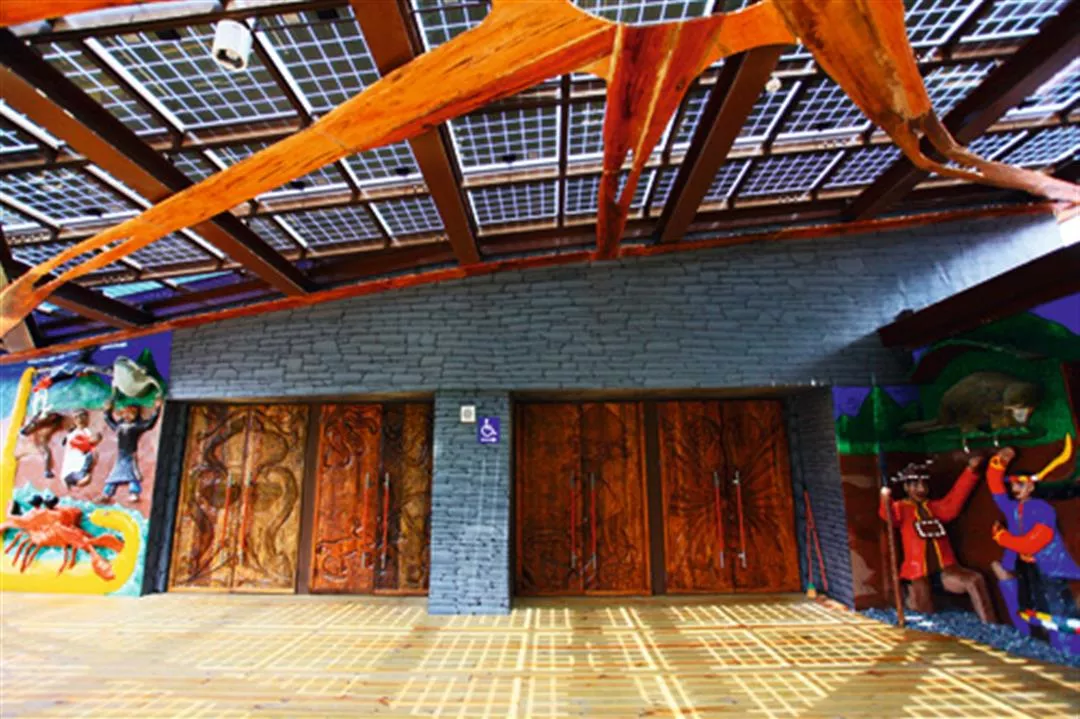
The entrance to the school was designed by the Namasian artist Ming Youde and features imagery from the flood myths of the Bunun, Tsou, Paiwan and other tribes. The totems of various tribes on its four pairs of doors are clear and unique demonstrations of the area’s Aboriginal cultural heritage.
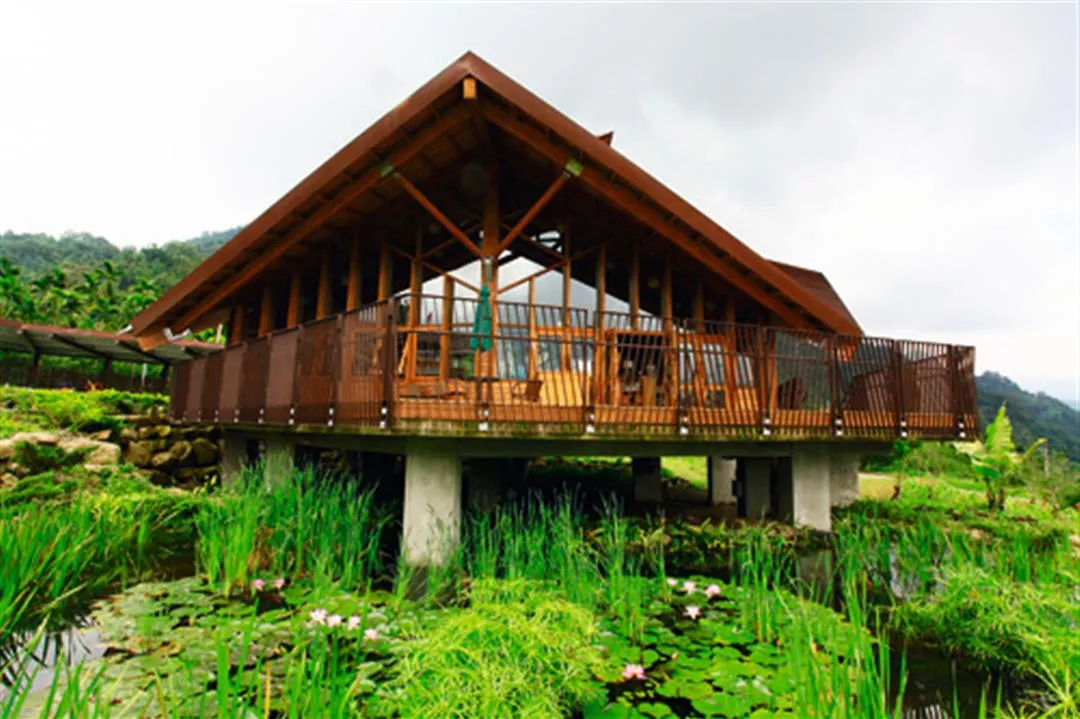
A harmonious blending of built and natural environments is found throughout the 2.4-hectare site of Minquan Elementary. As soon as you enter the campus, you notice that the very ground you are standing on is covered either with stone or permeable brick pavers. These materials allow for the ground to absorb water like a sponge. Meanwhile, the buildings have been put up on concrete “stilts” in the Aboriginal style in order to accommodate the sloping topography. Apart from providing greater ventilation and lowering temperatures, the stilts would also help to prevent structural damage in the event of a landslide.
With its beautiful architecture and gorgeous natural environment, the campus offers a series of surprises for visitors. First of all, the school has no exterior fence, and even finding the front entrance proves to be somewhat difficult. It turns out that the school has two entrances. A boardwalk that cuts diagonally across the slope brings you to the main entrance, whose doors are covered with Aboriginal carvings. Otherwise, you can walk around the building and up a grassy terraced plaza to a second entrance.
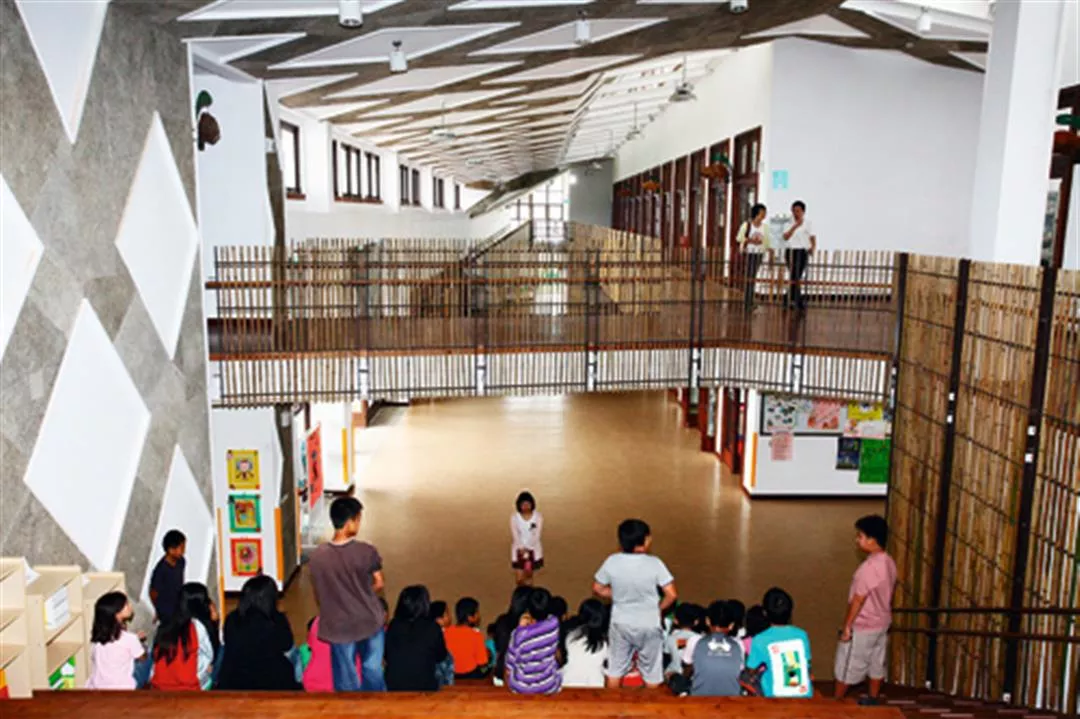
The two-story classroom building has pairs of classroom doors facing each other across a central hall that is 10 meters wide. The high-ceilinged classrooms feature French doors with wooden frames that can be folded open to allow for ventilation. The design also allows for light to enter the classrooms from both sides. The railings on the second story are made of the woven bamboo that is an indigenous handicraft hereabouts. Woven ramie covers some of the walls, which are also embellished with painted rhombuses that represent “the eyes of our ancestors.” The spacious school provides ample room for 74 students (including 20 in kindergarten and preschool) and a dozen or so teachers.

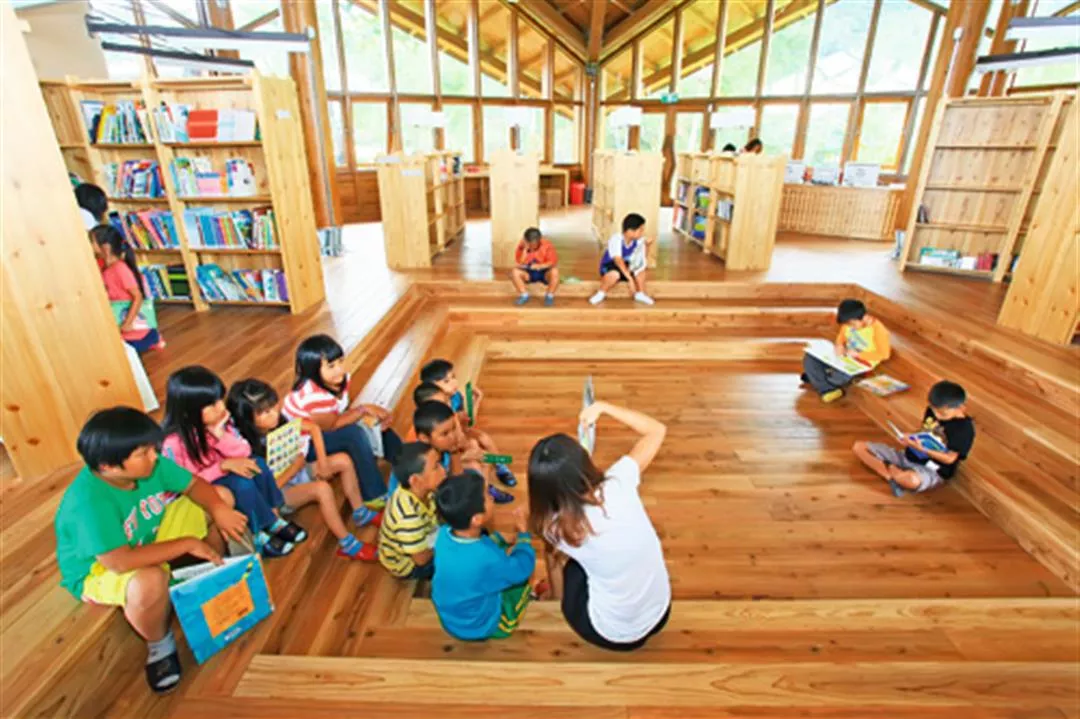
With its evenly dispersed natural light and real wood, the comfortable library is a wonderful place for children to experience the joys of reading.
“If you look at traditional Bunun and Tsou architectural spaces,” says Kuo, “you can see that they are based on the extended family and communalism.” Consequently, Kuo designed the classroom buildings like Bunun great halls. The classrooms on either side are like spaces for small nuclear families, whereas the large communal space in the middle can be used to foster solidarity.
The “great hall” is the children’s open classroom and activity center. It is also the space provided to members of the community when their houses are threatened by flooding. Up and down, the space is highly irregular, providing joy in the unexpected like that found when navigating a maze.
From the classroom building, a winding boardwalk leads downhill to the library. Kuo explains that the library is built in the shape of a Datura flower. Its concept was borrowed from the men’s lodges of the Tsou tribe, where old hunters would impart their knowledge and experience. The lodges were like temples of knowledge for the tribe, so the architectural reference is meant to symbolize the transmission of tribal culture.
The library is made of Japanese cedar that was taken during a commercial thinning of managed forests. The design employs many energy-saving features. Originally, Kuo envisaged small skylights for the sake of aesthetics, but Delta Electronics Foundation hired Lin Hsien-te, a professor at National Cheng Kung University whose specialty is green architecture, to run simulations on sunlight angles. He discovered that the skylights would make the light in the central reading area of the library too strong, creating uneven illumination and hindering reading. Consequently, they revised the design, widening the skylights but using light-diffusing, rather than clear, glass. The end result offers much more gentle lighting. Light-reflecting material was also installed on the eaves, so that the interior is consistently filled with diffuse reflected light.
“The campus is interconnected with stairs and paths that cut diagonally across slopes so as to blend in with the topography,” says Kuo. “These are the result of the intentional choice not to level the land.” If they had decided instead to bring on the bulldozers, they would have had to construct retaining walls. And in low places, they would have had to supplement with fill, which wouldn’t have provided as firm a footing for the buildings. With the natural slope to the land, the place has a free and unrestrained feel.

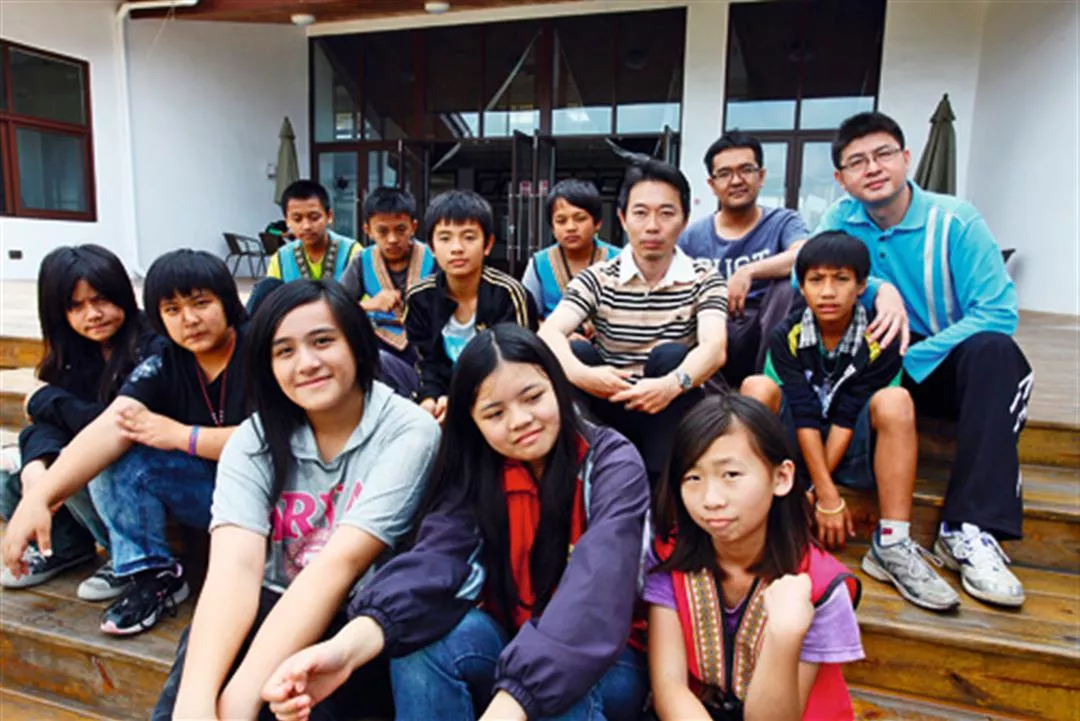
Just opened in February, the Minquan Elementary School is already much loved by students and faculty. Principal Wu Ting-yu is fourth from right in the back row.
The meticulously planned green campus allows students and teachers to remain calm and relaxed. When this reporter visited in June, the classroom windows offered hazy views of mountains that brought to mind Tao Yuanming’s poetry: “Plucking chrysanthemums under the eastern fence, I gaze serenely at southern mountains.” In the arts and humanities class, the smiling instructor asked students about their knowledge and impressions of Egyptian culture. The students eagerly raised their hands, and the room was filled with the sound of laughter.
Meanwhile, during a reading class in the library, some students from the lower grades lined up to return books, and others, having selected new volumes, went to sit and read together in pairs on the steps up to a small stage. Others meandered around the octagonal space, finding quiet, sheltered spaces between the shelves, where they lost themselves in the world of the written word. Awash with natural light, the library brimmed with the joy of reading.
This enviable picture of campus life is the end result of a two-year process of fits and starts, during which time many obstacles had to be overcome.
Located along the upper reaches of the Nanzixian River, Namasia was ravaged during Morakot’s floods. More than 10 major landslides buried its small villages and destroyed Provincial Highway 21, which had been cut along the sides of various mountains. The Ministry of Transportation and Communications determined that rebuilding the road would take many years and consume tens of billions of NT dollars. Consequently, it elected instead to provide access to this mountainous area via steel bridges along the riverbed.

The expansive and bright classroom building is modeled after a Bunun “great hall.” The classrooms on either side resemble spaces for nuclear families, whereas the large central hallway functions like a communal living room.
Entering the mountains from Qishan, one needs to cross more than a dozen temporary bridges along the riverbed to reach Namasia. The trip takes about two hours and poses quite a challenge when bringing in large equipment and materials. What’s more, any heavy rain makes the river dangerous and closes the road. Sometimes landslides necessitate urgent repairs, which may cut off access for weeks at a time. Dependent as it was on the whims of the weather, the entire construction process proceeded in fits and starts.
“The remote location is the main reason this school was so expensive to build,” says Julia Yang, project manager for Delta Electronics Foundation. Yang explains that although some people mistakenly blame its high price tag on the green architecture, the reality is that Taiwan’s construction industry has rarely built something in so remote a location. Transport costs were three times normal, and some firms even held taboos against driving past forest villages where people had died in the floods. It was hard to find firms to do the work and bids were high. What’s more, workers had to be accommodated for months at a time in the mountains, and proceeding with work during the typhoon season proved dangerous. All of these factors combined to raise costs dramatically.

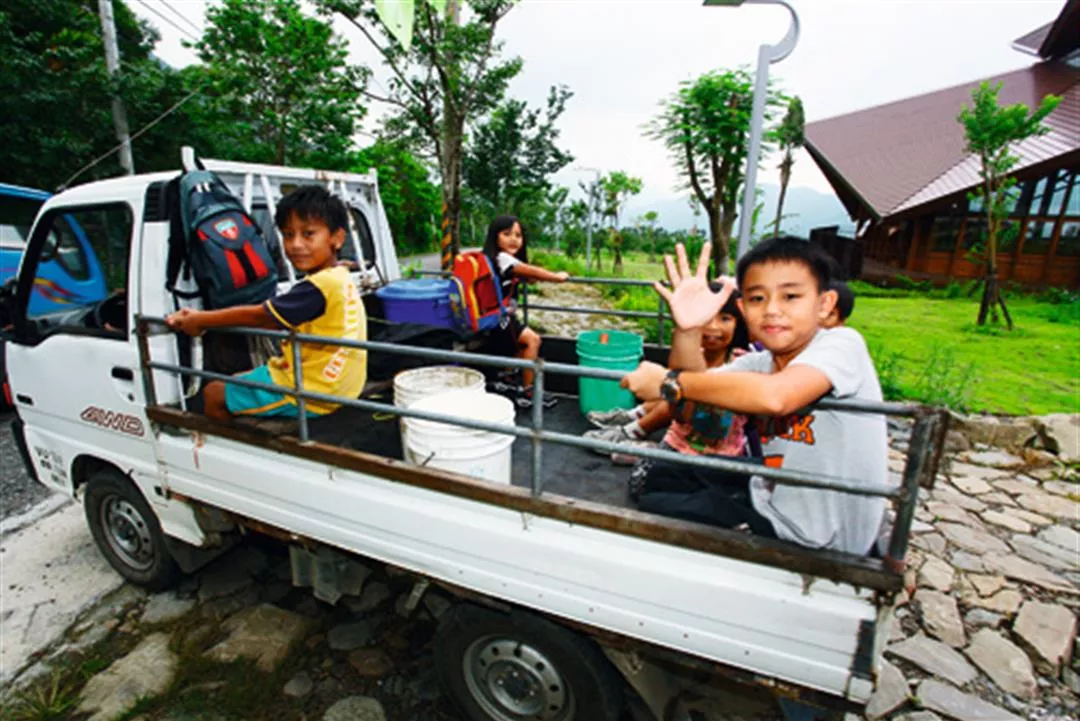
School’s out! Parents must arrive on time to pick up their children because the narrow road up to the school doesn’t allow for cars to pass each other. When students are released for the day, police officers direct traffic so as to ensure safety.
To enable the elementary school to serve as an evacuation center for the residents of the village, the school’s earthquake resistance was strengthened. The buildings, which are raised up on pillars off the ground, employ footings of concrete that extend far underground and have been treated with flood-resistant grouting. Each small pillar has to be able to withstand a loading of 240 pascals—that’s seismic resistance equivalent to supporting the weight of two trucks.
What’s more, an evacuation center must have a reserve power supply. Delta Electronics, known for being on the environmental cutting edge, suggested that the school install solar panels and wind turbines. But they had to consider that those backup power sources would be called upon during typhoons when winds might be blowing at 150 kilometers per hour. Hence, there were fears about turbine blades shearing off and solar panels cracking.
In response, Delta Electronics asked engineers to go to the school to assess how to design renewable energy sources that suited the specific environment. They came up with wind turbines that have specially designed blades and solar panels that are protected with strengthened glass, thus overcoming worries about adverse weather conditions.
Currently, the school has six three-kilowatt wind generators, for an installed capacity of 18 kW, as well as 10.5 kW of solar panels, for a total capacity of 29 kW. That’s not a lot, but it typically does provide about 17% of what the school regularly uses.
After the site for the new school had been selected, land acquisition proved to be a thorny problem. The plateau consisted of privately owned plots that had been in families for generations. “The senior Aboriginal owners held a great reverence for their ancestors and were largely unwilling to sell,” says Wu Ting-yu. Wu had to travel all across Taiwan tracking the owners down and convincing them to change their minds. Eventually, all 13 of them came around.
There were numerous equipment problems and construction issues during rebuilding. The onerous process featured one setback after another.
Morakot had scattered the school’s students: some went to shelters and others to the homes of friends or extended family. First, the principal gathered the children back together and held classes in rooms borrowed from Qishan’s Guanting Elementary at the foot of the mountains. After one semester there, they returned to the mountains, making use of the covered playground at Sanmin Junior High. With simple partitions, the space was turned into temporary classrooms. The two moves required the principal to constantly soothe the frayed nerves of parents, who felt unhappy about the instability of their children’s education.

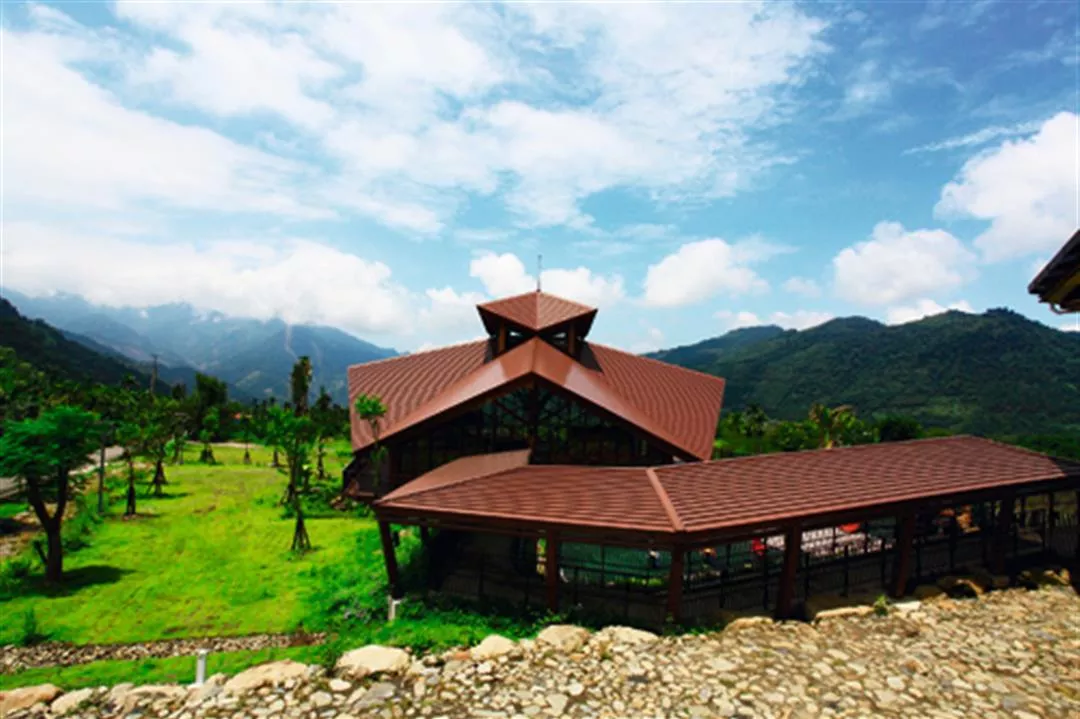
Surrounded by blue sky, white clouds and green mountains, Minquan Elementary features heavenly scenery. The architecture has been designed to coexist with nature, and the school provides shelter for members of the community during natural disasters. The photo shows the library, which is designed in the shape of a Datura flower.
After construction, as the school prepared to open, many parents, “out of fears about the condition of the road up to the plateau,” began to voice opposition to their children attending, explains Wu Ting-yu. Back when selecting a site, the parents hadn’t expressed any objections to building the school on the plateau. But some had come to feel that dropping off and picking up children there was too inconvenient, and they also worried about the children’s safety on the road up and down. In response, Wu was able to get the road widened and paved with concrete. He also worked to establish a personal bond with parents. Later, the local government decided to build another road up to the plateau, allowing for a smooth school opening in February of this year that was free from parental objections.
“Everyone had to be of one mind to get it done,” says Wu Ting-yu. During those two and half years when the school lacked a home of its own, the educational environment was poor and there were so many varied tasks to attend to. The moves were particularly rushed, and if not for the all-out mobilization of the school’s faculty, they couldn’t have been accomplished. In the process the teachers forged bonds of “revolutionary brotherhood.”
Having overcome those obstacles, the teachers now declare that they feel “blessed” and “joyful” to be teaching at the new campus.
Lin Shuhui, a 30-year-old Bunun teacher, says the children are happy to be learning in a spacious and creative learning environment. What’s more, the school is well outfitted with all the latest equipment. That too has helped to raise the quality of teaching.
In particular, the beautiful library has increased students’ interest in reading. In the mountains children’s homes typically have few reading materials, but the library currently has 5000 volumes. The school is encouraging students to take books home, and to share what they gain from reading. Most of the children have developed the habit of borrowing books to take home.
“What we aimed to reconstruct wasn’t the past, but rather the future,” says Kuo Ying-chao.
Reconstruction is complete, and the new campus, which takes its cues from nature and the wisdom of Taiwan’s Aborigines, has already sown green seeds in Namasia, where it is serving as a bastion of support for the tribal settlement’s children and grandchildren.