BenQ--"Success Means Being Yourself"
Yang Ling-yuan / photos Yang Wen-ching / tr. by Minn Song
May 2006


In March of this year Renaldo, the Bra-zilian star forward for Spanish soccer team Real Madrid, appeared in ads around the world as a spokesperson for a mobile phone. As expected, the ad campaign resulted in torrid sales and product shortages. The brand of the phone--BenQ-Siemens--drew on the charisma of this sports superstar to rapidly establish itself throughout the world.
Fifteen years ago, K.Y. Lee relinquished his position of vice chairman of the Acer Group, requesting that he be assigned to Acer Peripherals--now BenQ--which at the time had annual revenues of NT$2.6 billion, or just one-sixth of the Acer Group. He followed the example of Acer founder Stan Shih by boldly creating a new brand and pressing toward the upper end of the "smiling curve" that Shih had used to illustrate the sources of value in the IT industry.
The BenQ brand was officially launched in 2001 and its value has grown from NT$6.756 billion three years ago to NT$11.6 billion last year. BenQ has also been responsible for a number of Taiwan firsts, from GSM, CDMA, and 3G handsets to a two-megapixel CCD camera phone. Moreover, BenQ has won recognition with a number of international awards for its product designs. Last year, after acquiring Siemens' mobile phone unit, BenQ immediately won the design world's equivalent of the Oscar, a 2006 iF Design Award, collecting a total of 17 individual citations, the third-highest of any vendor in the world. The dual BenQ-Siemens brand created after the acquisition has became one of the world's top five in terms of units shipped.
It is 7:30 in the morning, and nearly 100 new BenQ employees are gathered in front of the Taoyuan train station. On their first day of work, they are not going to their new workplace, but rather to Aspire Park, a combination industrial park and residential community built by Acer in nearby Lungtan. Regardless of their backgrounds or new job titles, these newcomers, who will work in different departments, must stay here for six days. Through teamwork, they must pass a series of physical and mental challenges, gaining from them an understanding of the company's culture and task management know-how. Only when they have faced and passed an evaluation of their ability to make the right judgment at the "moment of truth," will these newcomers be reborn as true BenQ people.
.jpg?w=1080&mode=crop&format=webp&quality=80)
Prizing innovation
At the new employee boot camp, named Wincamp, of which more than 60 have been held, BenQ's newcomers cultivate in each other a sense of revolutionary fervor. When they encounter frustrations at work, they can air their gripes and give encouragement to each other. Some people return to the training area for barbecue get-togethers, turning it into a sort of revival meeting. After the experience, quite a few people become comrades at work, good friends outside work, or partners in marriage.
"Ninety-five percent of the newcomers who have passed this test end up 'surviving' at BenQ for three months, a much higher percentage than the 75% at the typical company," says Tony Tong, senior assistant manager in the Human Resources Department at the BenQ Group. The inspiration for this boot camp, a first in Taiwan's IT industry, came from BenQ chairman K.Y. Lee's visit to Korea's Samsung to observe its operations. The visit left him with a powerful sense that in the era of the knowledge economy, human talent is the decisive factor in determining whether a company succeeds or fails. Lee therefore insisted that a plan be formulated so that outstanding people would find opportunities to rise in the ranks along two tracks that ran in parallel--management and technical. This concept marked a break from the tradition wherein promoting someone to an executive position was the only way to recognize and reward outstanding achievement.
Because Lee considers "the right people" to be the company's greatest asset, he does not stint on investing in employees. Not only does he budget NT$10 million annually for educational expenses, to provide employees with a lecture series, reading club, and specialized continuing education courses, but the benefits they enjoy are the envy of counterparts at other companies in the industry.
Besides the standard benefits, BenQ has created the "Sunny Day" system, under which two-thirds of employees can use all their vacation time in one block during early July to take their family for an extended holiday. To encourage employees to seek true love, it has implemented an "engagement holiday" of one day--another rarity in Taiwan's business world. And the "happy company" project proposed by the Human Resources Department has turned the company into a virtual mall, where employee needs during the day, such as for exercise, stress relief, cultural events, lifestyle services, and family-related services can be taken care of. This novel arrangement allowed BenQ to win the first National HRD InnoPrize awarded by the Council of Labor Affairs in 2005.
.jpg?w=1080&mode=crop&format=webp&quality=80)
Shaping a brand
When one walks into the lobby at BenQ's headquarters, a banner with the message "Conveying the beauty of the information lifestyle" written in calligraphy is displayed prominently. This was created by former National Palace Museum deputy director Chiang Chao-shen at the invitation of K.Y. Lee. Lee hopes that the vision expressed will be deeply ingrained in employees' minds.
At a press conference in Suzhou, China in late 2001, K.Y. Lee formally announced the creation of the BenQ brand, and BenQ's departure from the Acer family. Lee stressed that building a brand was the only option for Taiwanese companies, and just as Acer had promoted its own Taiwanese brand worldwide, so would BenQ. Behind the short half-hour declaration lay a decade of effort, with each step painstakingly completed.
The choice of the rather flamboyant name BenQ ("Bring Enjoyment and Quality to Life") was the result of a wide-ranging process that saw all the company's executives participating in the selection process, and the completion of a number of steps such as dispatching people to check on whether it conflicted with any trademarks in use elsewhere in the world. The purple used for the brand color was selected by a specialist, starting with the brand concept of "enjoyment matters" and blending the red of passion and the blue standing for technology to create the distinctive hue. Then in 2003, the idea of butterfly wing patterns was added, providing a perfect analogy for BenQ's refusal to repeat itself, while stressing its uniqueness and sense of originality.
"Putting so many financial and personnel resources into establishing a brand was quite unusual for a home-grown Taiwanese company," recalls Tong, who like Lee got his start at Acer. When Acer was devising its name, he recalls, everything was decided based on A being the first letter in the alphabet and the meaning of the word "ace." The process was very simple.
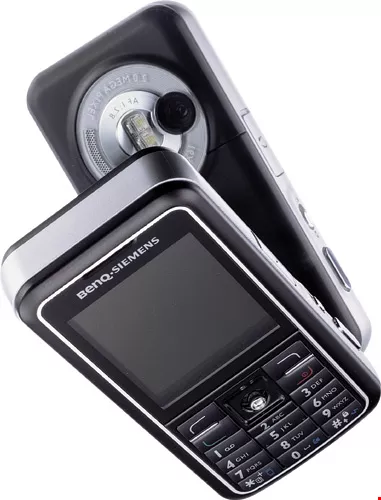
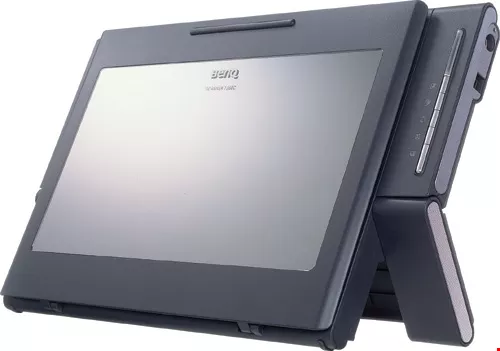
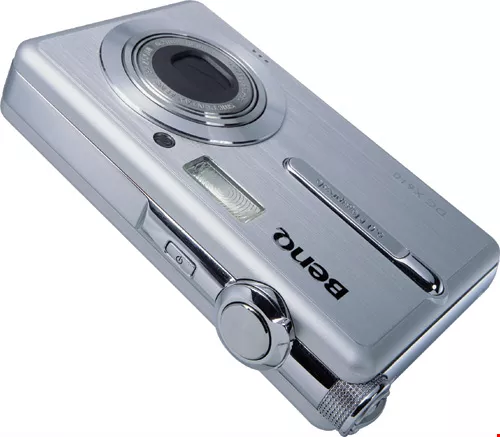
Winning designs
After the brand was created, the even more important task was to bring it to life. In order to understand the unsatisfied needs of consumers, BenQ set up its Consumer Research Center and collaborated with outside organizations such as a Parisian research center specializing in popular trends, in the hope that it could foresee the direction of trends in consumer taste. An example of an area of research was color, which seemingly has no relationship with a product's functionality, but does have the crucial effect of evoking particular emotions and guiding consumer reactions. After extended analysis, the research team predicted that as humanity entered the 21st century, life pressures and an overabundance of material goods would lead to a desire for a return to nature. Therefore, green and yellow would become the mainstream, and BenQ's product designs incorporated this finding into its planning, with the aim of enhancing their appeal to the new century's consumers.
Another source of pride for people at BenQ is the Lifestyle Design Center, which has expanded from its original staff of eight people to 120, all of whom are now part of a group that has had a string of notable achievements. Whether it is the multifunctional color printer that won a gold medal at the Symbol of Excellence awards in June last year or the upright scanner that took a 2006 iF Design Award, the designs of the Lifestyle Design Center evince a concept combining Asian style, German craftsmanship, and Chinese design that is increasingly making itself evident in design competitions around the world. In a short four years, BenQ has won a total of 114 international design awards, such as iF, IDEA, and G-Mark, getting itself on the cover of Business Week in the process.
Another big move that stunned observers was the way that BenQ followed up on its several years of sponsoring important sporting events around the world by committing US$100 million to two five-year sponsorship programs to support Spain's Real Madrid, the soccer team that boasts Brazilian national hero Renaldo and British superstar David Beckham. BenQ has made it difficult for Europeans to overlook BenQ-Siemens.
.jpg?w=1080&mode=crop&format=webp&quality=80)
OEM or brand?
Driven by Lee's determination, BenQ has pursued branding vigorously. However, the path to a global brand has never been free of setbacks and challenges.
In promoting its own brand, the first aspect of BenQ's business to suffer an impact was its OEM operations, which had been its most profitable. Although Motorola had placed an order for 1.6 million phones with BenQ in 2004, as BenQ gradually raised its international profile, and developed into a competitive threat, US vendor Motorola ended its contract manufacturing relationship with BenQ. Consequently, BenQ's mobile phone shipments declined sharply to just 1 million in a quarter, forcing BenQ to develop other product lines, such as digital cameras, thumb drives, and LCD TVs to make up for the loss in mobile phone OEM orders.
BenQ also faced the difficulties of re-engineering its corporate culture, as it was necessary to shift employees' thinking from the cost-oriented outlook appropriate for a company working on narrow margins and the need to compete for orders, to a market-driven outlook that emphasizes service and satisfying customer needs. After all, a brand is all about "adding value," and to make products more attractive in appearance and imbue them with eye-catching style requires creating additional molds. While this adds to costs, the added value is increased too. However, to get employees who were accustomed to the OEM vendor's thinking in terms of how to shave costs, to be able to boldly propose innovative ideas without being deterred by cost considerations was not something that could be accomplished overnight.
Subsequently, BenQ faced the problems of introducing its brand in global markets. BenQ's mobile phones were in fact based on largely mature technology. However, name recognition was restricted to the Greater China region. To break into Western markets with their many prominent mobile phone brands posed formidable challenges. In order to field a globally recognized brand, BenQ had to come up with a bold approach.
.jpg?w=1080&mode=crop&format=webp&quality=80)
The old and the new
After considerable thought, and close examination of its financial statements, Lee came to believe that though Germany's Siemens--one of the world's top communications companies in terms of its commitment to R&D and the breadth of its patent portfolio--had consistently posted losses, this underperformance was due to its slowness in introducing high-end phones, and the resultant lack of an enthusiastic response from the market. Another factor behind the losses was that the mobile phone unit at Siemens had seen its CEO changed seven times in three years, so that there was no sustained operational approach. In addition, while outside observers considered the 6,000 Siemens employees in the mobile phone unit a burden for any company that might acquire the unit, Lee instead believed they should be considered a valuable asset because of their solid technological know-how, and that BenQ should act positively to affirm its intention not to close plants or lay off workers. Another question was whether Siemens' somewhat unusual traditional channels (with 70% of sales relying on telecom network operators) would be able to accept the new BenQ-Siemens approach. This became yet another test for BenQ. Though alarms were sounded from all quarters, it cannot be denied that the Siemens acquisition is a shortcut for BenQ as it seeks to put itself on the global business map.
In the second half of 2005, just five years after it was founded, BenQ acquired the mobile phone unit of Siemens, a company with a 158-year history. This deal did not entail BenQ spending anything, but on the contrary had Siemens committing to providing 250 million to aid the transition. BenQ gained the right to use the joint BenQ-Siemens brand for five years, along with patented core technologies in the GSM, GPRS, and 3G fields. After the acquisition, BenQ-Siemens' annual mobile phone shipments should reach 50 million, with mobile phones' share of BenQ's total revenues jumping from 18% to 42%. This restores BenQ to its position as a major mobile phone vendor.
In the future, the all-new BenQ-Siemens brand will follow a strategy of focusing on Asia and Europe, with the aim of achieving equal shares for shipments for these two regions. This year, BenQ became the world's fourth-largest mobile phone vendor after Nokia, Motorola, and Samsung, and also achieved the fastest growth in brand value among Taiwan's top ten brands for the second year running. From its #6 ranking two years ago, to last year's #4, the value of the BenQ brand has grown by a hefty 35%.

Over many objections, K.Y. Lee has made decisions from casting his fate with BenQ and entering the wireless telecoms and flat panel display businesses, to creating the BenQ brand and acquiring Siemens' mobile phone business. The son of a rice mill owner, Lee spent his childhood hefting loads of rice, and believes that "success means being yourself."
Dark days
BenQ projects that until 2008, more than 40% of growth in the global mobile market will be in Asia. Currently, BenQ maintains five mobile phone production sites worldwide, with plants in China's Suzhou and Shanghai accounting for 45% of overall mobile phone production, that in Germany for 30%, and that in Brazil for 15-20%. The Mexico plant, where mass production just recently came online, is mainly for supplying North American and Latin American markets. A new plant in the Czech Republic will supply European Union markets.
At present, BenQ's global workforce has reached over 20,000 persons in more than 70 countries. Moreover, with the Taipei headquarters as its center, BenQ's presence stretches west to Germany's Munich and east to Brazil's Sao Paolo, spanning the three continents of Europe, America, and Asia.
BenQ continues to expand in scale, but in mid-March of this year, the enormous losses revealed in the financial results for the first quarter after its acquisition of Siemens' mobile phone unit were stunning. BenQ's stock price immediately dropped by close to 20%.
Tong explains that although the fourth quarter of last year saw post-acquisition revenues reach NT$66 billion, more than double third-quarter revenues, operating expenses and various other costs also rose--more than tripling in fact--resulting in an operating loss. For 2005 as a whole, the losses reached NT$9.97 billion, marking the first time since it had gone public in 1996 that BenQ (then Acer Peripherals) recorded a yearly loss. Many large international securities firms project that BenQ's losses this year will exceed NT$9 billion.
On the third day after the financial results were announced, Chairman K.Y. Lee sent a long letter to employees, in which he urged them not to be discouraged, telling them that the painful period after the acquisition would eventually pass, and BenQ would continue the battle to create a global brand. The facts show that while before BenQ took over, Siemens' mobile phone unit was losing an average of NT$200 million per day, losses have now been reduced to NT$100 million per day. It is reasonable to expect that BenQ will be able to resurrect itself.

From competition to cooperation
Quite quickly, BenQ made another move. On April 7, the BenQ Group's AU Optronics, Taiwan's biggest LCD panel maker, announced that it was acquiring Quanta Display. Once the acquisition is complete, production capacity at the new AU Optronics may reach 20% of the global market, close behind that of Korea's Samsung and LG, and putting it within reach of the world number-one ranking. Then, three days later, BenQ Corporation--Taiwan's second-biggest optical drive vendor--announced that it was outsourcing the production of its optical storage products to Lite-On IT, Taiwan's largest optical drive maker. Through this strategic arrangement, Lite-On IT, part of the Lite-On Group--will this year become the world's largest vendor in the optical storage business.
K.Y. Lee stated that the partnership with Lite-On IT enables BenQ to better focus on the production of its core products, while strengthening brand management for its 3C and optical storage products. He is glad to see a domestic competitor turn into a partner, benefiting both parties. In the future, will such a cooperative approach--in which two companies each retain their respective strengths while supplying each other with what each needs--lead to a sea change in the crowded, cutthroat environment that currently characterizes the domestic IT industry? This is question that bears watching.
Lee once said that since ancient times, civilization has advanced through ceaseless questing and exploration, so "keep exploring" has become the BenQ-Siemens brand message. This phrase has also become the best summation of BenQ's process of expanding its worldwide presence. Encompassing eight major companies, the BenQ Group is a thoroughly Taiwanese vendor that is exploring the boundless possibilities of creating a worldwide brand.

The athletic meet that BenQ holds once every three years is as boisterous as a carnival, especially the inventive two-hour-long opening festivities. From various costumes to the procession of horsemen entering the stadium, the event gives employees an opportunity to demonstrate their creativity, and draws the voluntary attendance of nearly 70% of the workforce.
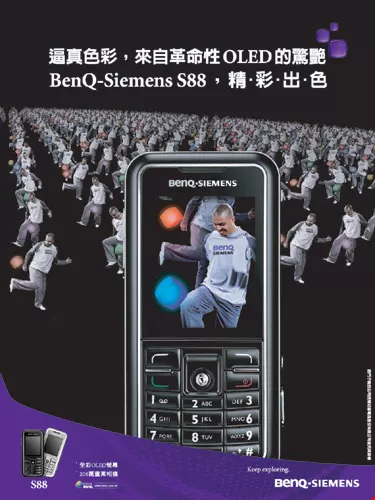
BenQ-Siemens invited three-time "Footballer of the Year" Renaldo to be its worldwide mobile phone spokesperson, in which role he perfectly conveys the character of the new brand.
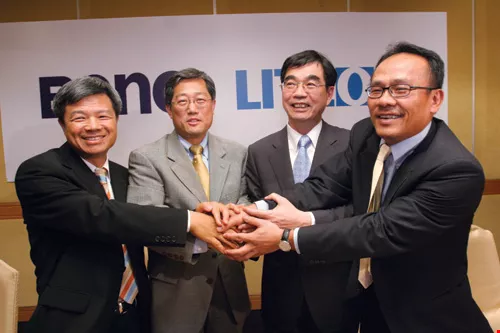
After announcing its acquisition of BenQ's optical disk drive manufacturing operations, with its monthly production capacity of 2 million units, Lite-On IT, which itself produces roughly 5 million optical disk drives per month, will increase its global market share to 27%. The photograph shows a press conference where the agreement was signed, with BenQ chairman K.Y. Lee second from the left and Lite-On IT chairman Song Kung-yuan third from the left.
.jpg?w=1080&mode=crop&format=webp&quality=80)
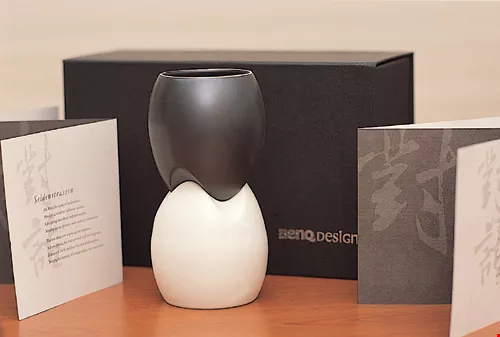
BenQ's products reflect a philosophy of "blending opposing elements"--harmonizing and transforming combinations of rationality and sensibility, technology and humanism, work and play, Eastern and Western. The photo shows a custom tea mug produced by BenQ's design center that artfully melds understatement and boldness.


