A River and the Remaking of Xinzhuang
Coral Lee / photos Chuang Kung-ju / tr. by David Smith
February 2012
“There’s a River Outside my Home” is a well-known children’s song that describes a stream with white geese frolicking in its waters. Such a scene is a rarity of rarities in today’s overdeveloped cities, of course. In big metropolises and small towns alike, what one generally finds nowadays are dark, fetid slurries that force people to hold their noses as they scurry past.
The Zhonggang Main Drainage Channel of Xinzhuang, on the western edge of the Taipei basin, was just such an eyesore for quite a long time, but the government of Taipei County (renamed New Taipei City in December 2010) has undertaken a big cleanup project and turned the situation around.
Now that the channel runs clean, how are we to change attitudes, so that people will see waterways as pleasant places for recreation? Will the cleanup of the drainage channel turn scruffy Xinzhuang into “the pearl of the Dahan River?”
Just a few days into the new year, Xinzhuang has seen a lot of happy news—the cleaned-up Zhonggang Main Drainage Channel was opened to the public, and the Mass Rapid Transit (MRT) system’s Xinzhuang Line started operating. All of a sudden, the urban atmosphere there has changed dramatically.
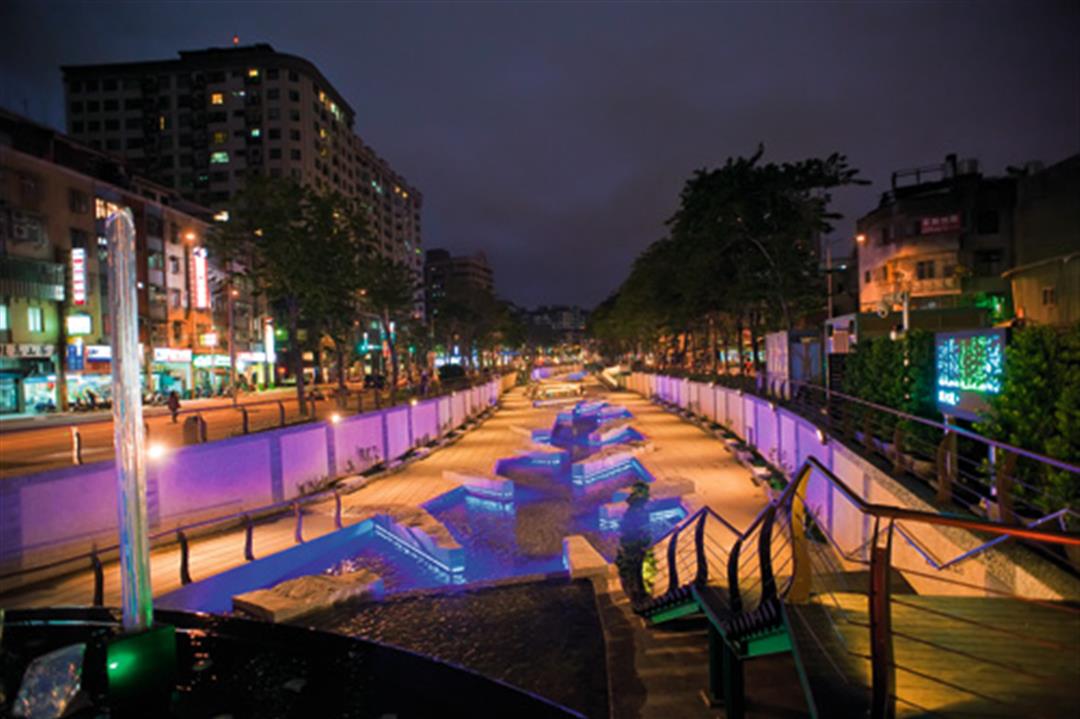
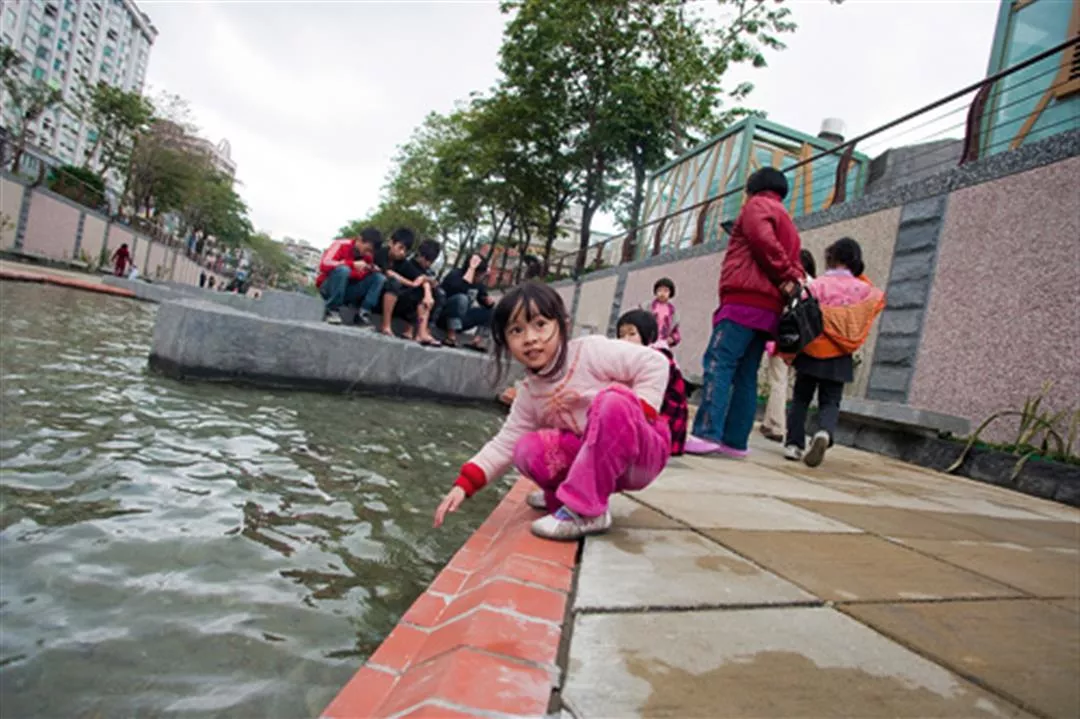
At twilight on January 1st, local residents are out strolling alongside the winding channel, water gurgling over the pebbled channel bed. The meandering walkway generally hugs the shoreline, but at times crosses from one bank to the other. Reeds and other riparian plant life adorn the scenery, while a waterfall fountain and lights add a romantic note. The downstream stretch of the channel, which passes through the Fuduxin area, features docks and a rowboat channel. One visitor who travels often to South Korea enthuses that the new Zhonggang Main Drainage Channel is every bit as lively and attractive as the noted Cheonggye Stream in downtown Seoul.
One market vendor proclaims with pride: “Now that the area has been cleaned up, I hope the quality of the residents will also go up.” A hotel proprietor who grew up in Xinzhuang and lived overseas for several years says he is very enthused that the government has been willing to spend over NT$2 billion to beautify an old and densely populated part of town.

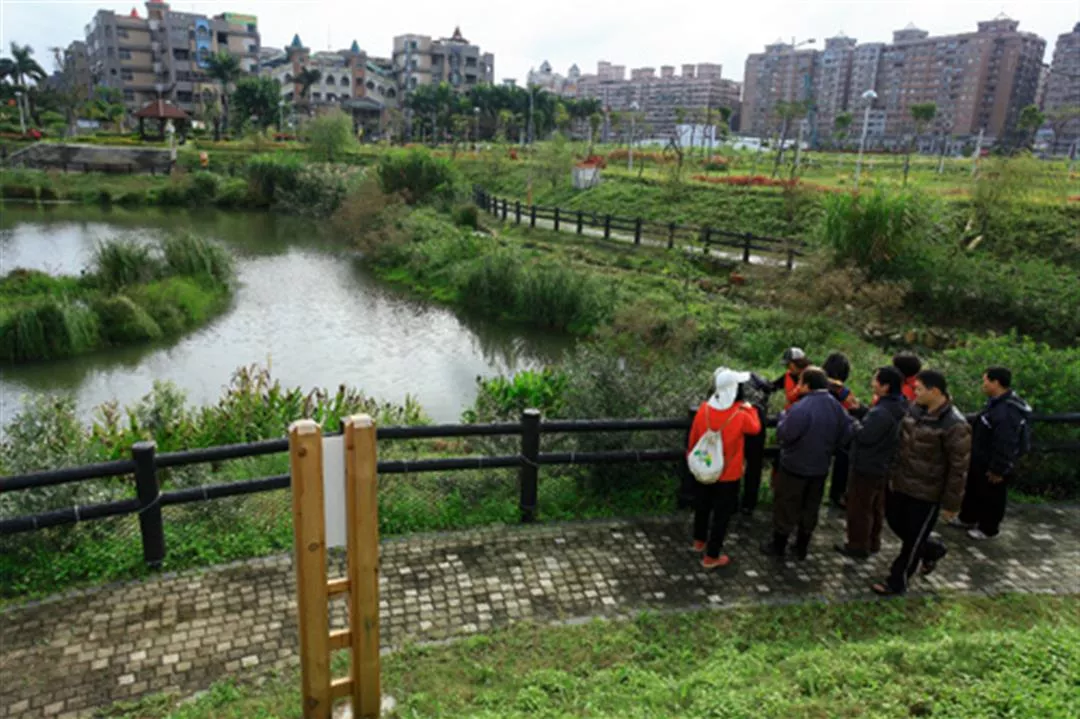
Hsin-Chuang Community University has taken responsibility for maintaining the flood retention basin at Wenzidi Park, and after three years the ecologically thriving basin shows excellent species diversity. A group of volunteers is shown here being trained at the community university.
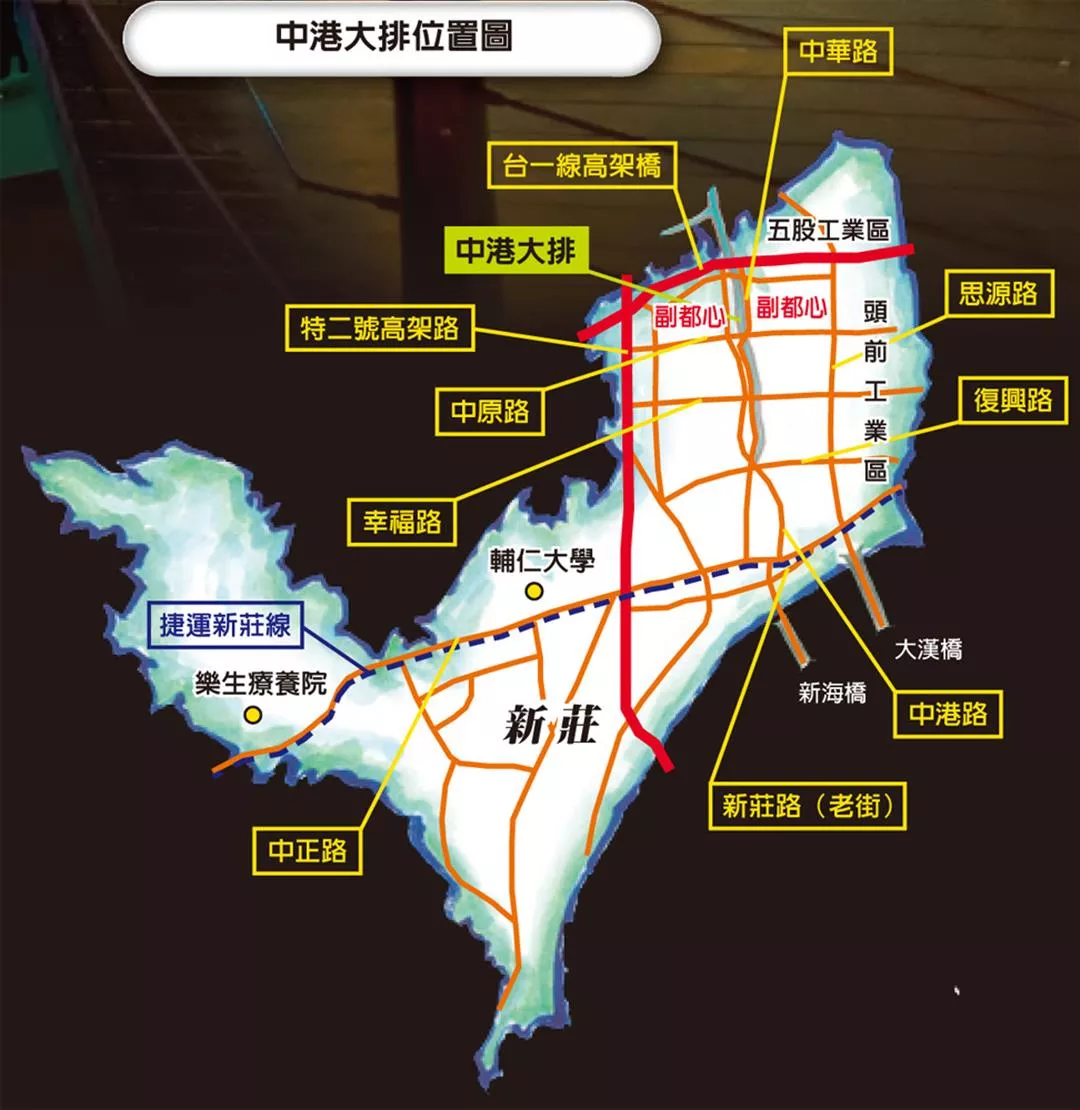
On the map, Xinzhuang shows up as an L-shaped 20-square-kilometer swatch of land along the Dahan River, with Fu Jen Catholic University acting more or less as a boundary between upper and lower Xinzhuang. The area developed earliest is upper Xinzhuang. It is located near Dahan Bridge where the old river port used to be, and slopes downward ever so gently to the north. This is the most densely populated part of Xinzhuang.
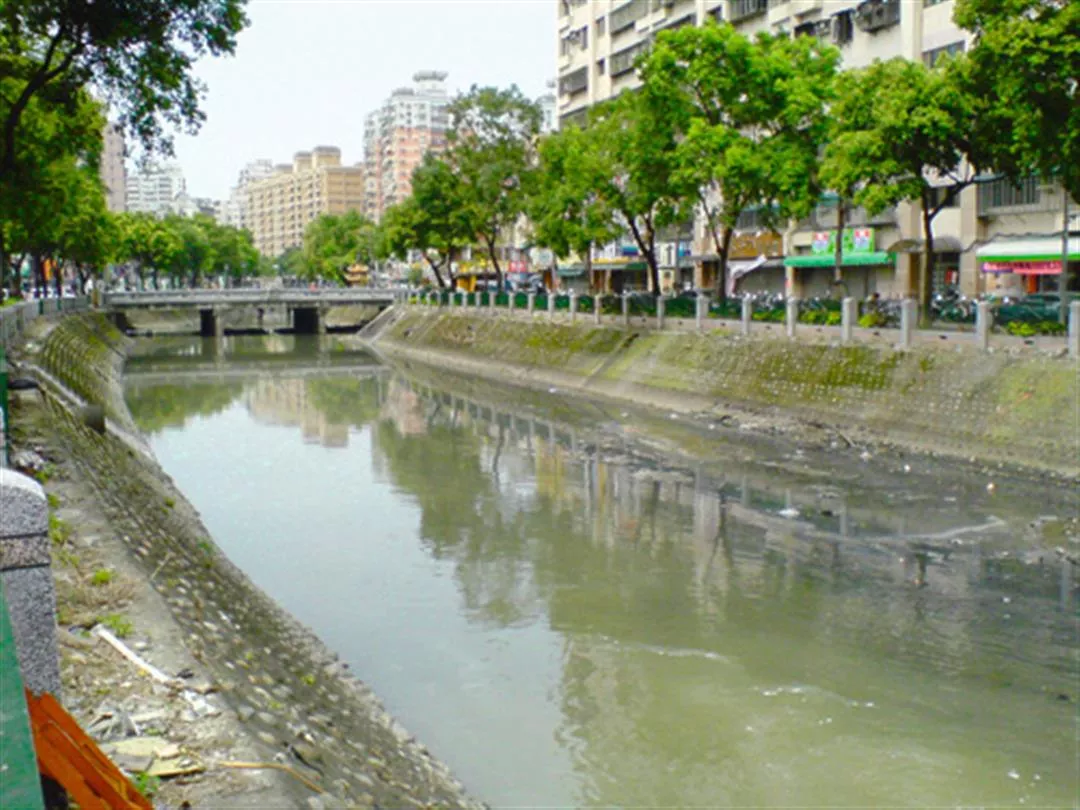
Floods are frequent in upper Xinzhuang, which is why the Zhonggang Main Drainage Channel was dug in the 1980s. Then the Touqian Industrial District and Wugu District were developed in the 1990s, attracting many factories and workers to the area. More new residents streamed in after the Dahan Bridge opened to traffic and provided a direct link to Banqiao and Taipei. The rapid growth in factories and population overwhelmed the Zhonggang Channel and turned it into a stinking mess. Some commented sardonically that “you could use the water as calligraphy ink.”
Apart from the foul water quality, another problem with the Zhonggang Channel is the fact that the gentle slope of the land makes simple gravity flow insufficient for the purpose of drainage.
The drainage channel, which empties northward into Dakekeng Creek, doesn’t drain much water when it gets backed up, which used to happen often. Dredging was required frequently, and even then it invariably flooded each time a typhoon hit. Local residents sometimes complained to their elected representatives about the situation, but high costs posed a daunting obstacle to anyone who might have tried to address the problem. Nothing happened for a long time.
But things changed after Lee Hong-yuan, a water resources expert and professor in the Department of Civil Engineering at National Taiwan University, became a deputy magistrate of Taipei County.
“Six or seven years before joining the Taipei County Government, I began thinking that I’d love to be in charge of a drainage channel cleanup project,” says Lee, who explains that almost all drainage channels in Taiwan have the same sort of problem that plagued the Zhonggang Channel, but the public has always just put up with such problems without realizing that it is possible to clean up polluted waterways. Cleanup projects in Japan and the West have shown that it is not a very difficult engineering feat to divert polluted water into a treatment plant and then return clean water to the channel; the difficult thing is how to carry out urban renewal after waterways have been cleaned up, and how to build public consensus and participation.
On the subject of flooding, Lee for many years has called for “comprehensive water resources management.” The task of flood prevention requires more than just technology; it must also include land management and planned use of urban space. To achieve that, it is necessary to take an integrated approach that addresses urban development, land administration, transportation, economic development, and water conservancy.
It is true that the problems posed by Zhonggang Channel are not as complex as those associated with natural rivers, which traverse forests, mountain slopes, and cities, but the principles involved are the same. Cleanup of the channel was first identified as one of the county government’s four flagship projects during the term of former Taipei County magistrate Chou Hsi-wei, and work got underway.
This charmingly illuminated evening scene along the Zhonggang Main Drainage Channel today bears scant resemblance to the stinking open sewer of three years ago.

The first question facing the county government was how to use engineering as a means to clean up fouled waterways.
Li Rongwei, former head of the county government’s Water Resources Department, was in charge of engineering design. The cleanup project started upstream at Zili Street and continued 2.3 kilometers downstream to the point where the Zhonggang Main Drainage Channel and Guizikeng Creek converge. The project had a number of special features. For one thing, two underground culverts run parallel to the channel along its entire length, one on either side. Both culverts run to Dakekeng Creek, one carrying sewage and the other stormwater. From Dakekeng Creek the water flows to the Bali water treatment plant before being discharged into the sea. And at the mouth of the creek, where the channel often clogs up, a bigger pumping station was built to ensure that sewage and stormwater can be smoothly drained.
When a typhoon hits, the entire channel, including the parts that are normally above the water level, serves as a floodway. Together with the two culverts, this arrangement provides a total of three channels for drainage purposes, which increases the waterway’s flood handling capacity to 1.6 times the original amount. That is why there have been no floods in the last few years.
Secondly, a big stormwater retention tank has been buried underground at Aowan Pier with a capacity for 733 cubic meters of water. Rainwater and groundwater are the sources for replenishment of the drainage channel, and when this is not enough the channel can be fed with highly treated water from the Wugu industrial district.
Thirdly, bicycle and pedestrian paths have been put in atop the banks along the entire length of the project, and permeable paving is employed to increase the amount of water that percolates into the ground.

Since the channel was opened to the public on January 1st this year, local residents strolling alongside the new footpaths have become a common sight.
In order to achieve the goal of public participation in the process, Lee Hong-yuan set up a task force composed of six to eight members to serve as a communications platform.
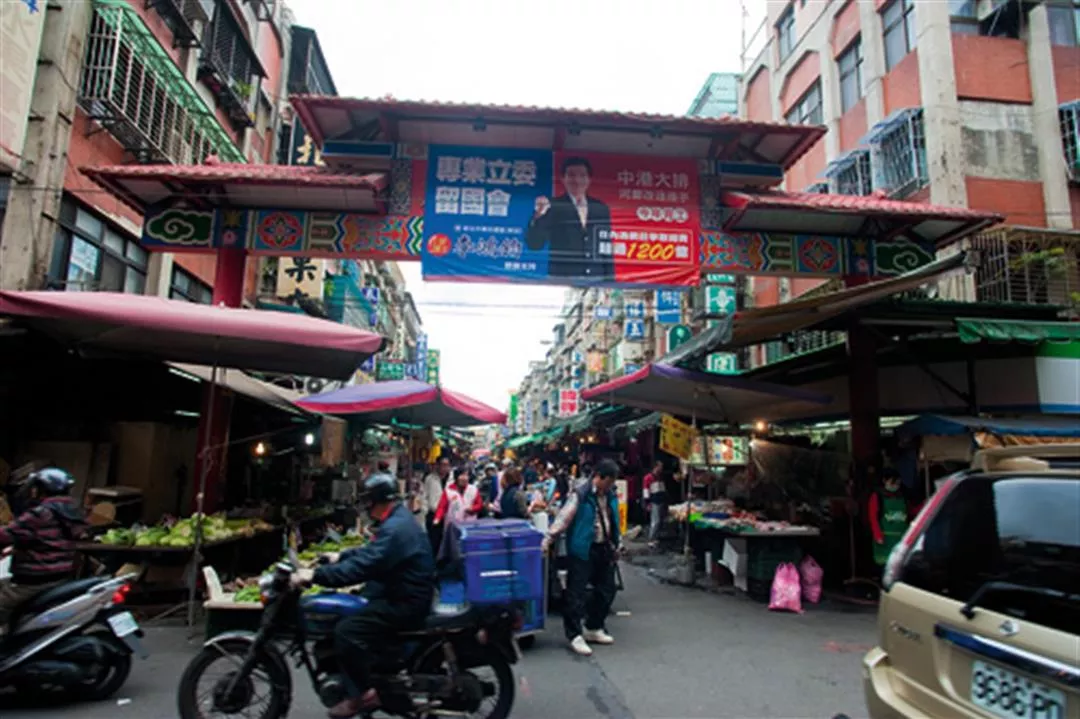
According to Liang Shixing, former head of the county government’s cleanup task force, the cleanup of a drainage channel that flows through a crowded urban area is like altering a business suit while the person is wearing it—quite a headache, in other words. He mentions as an example the Hongtai Market, located near the upstream end of the channel. This being the largest traditional market in all of Taipei County, with hundreds of stalls and over a thousand customers milling about at any one time, problems with parking and traffic were nettlesome in the extreme. The channel had been covered over in one place to make space for a parking lot, and people were up in arms when they learned that the cleanup project included a plan to get rid of the parking lot. Fortunately, however, the county government patiently communicated with all parties, and eventually a consensus formed in support of building a multistory car park a 10-minute walk away, with 400-plus parking spaces.
But not all problems were related to physical infrastructure. Promoters of the project also had to make an active push to ensure good inter-agency cooperation.
Each month, the project task force held a coordination meeting for 26 different departments and divisions to deal with difficult problems. The Department of Transportation was responsible for reconfiguring trafficways during the construction period, and put top priority on reducing traffic headaches to a minimum. But the chief objective of the Water Resources Department was to keep hurried construction from resulting in quality problems. To straighten out a bend in the channel, the department wanted to relocate a fire station, which required the fire station’s support. And to maximize the channel’s peak flow during flood conditions, the Water Resources Department needed for the Public Works Department to tear down over a dozen bridges and rebuild them to different specs. All sorts of problems of this nature had to be resolved.

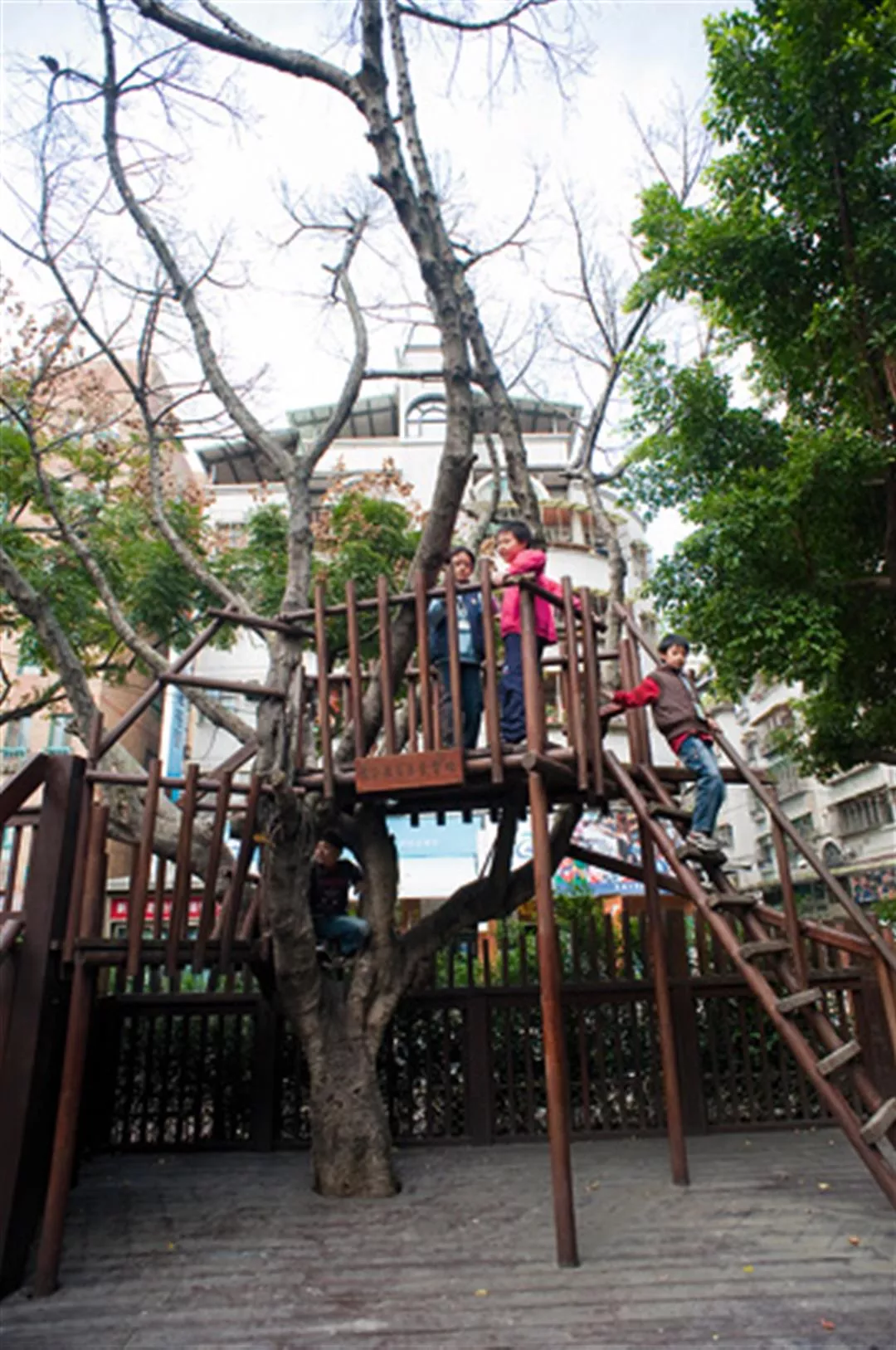
A year was spent completing greening projects at six elementary schools bordering on the Zhonggang Main Drainage Channel. Concrete walls surrounding the schools were torn down, bringing the schools more closely in contact with the surrounding community. Shown here is a treehouse at Changlung Primary School.
Lee Hong-yuan stresses that the Zhonggang Channel project was intended to drive urban development in Xinzhuang. Many people couldn’t understand at first what was so complex about a drainage channel cleanup project, that it should require the participation of the Economic Development, Education, and Cultural Affairs Departments. After a couple years, however, a “spirit of communication” had changed the culture of the county government.
“What must be done to bring about a better, healthier Xinzhuang?” Lee Hong-yuan continually brought up topics related to this basic question at the coordination meetings, and instructed the departments and divisions to get back to him with their thoughts on such matters. His task was to put everyone’s ideas together, like a jigsaw puzzle. The Economic Development Department responded by putting forward a plan for revitalizing the image of the local shopping district. The department hoped to work with local merchants and business organizations to encourage a gradual switch to something more upmarket than the auto repair shops, “mom and pop” dry goods stores, and other such establishments that abounded in the area. The idea was to facilitate the emergence of a tourism and leisure atmosphere that the county government hoped to establish along the channel. The Urban and Rural Development Department proposed a district-wide “facelift” for the motley collection of old buildings and illegal structures facing the channel. The Cultural Affairs Department called for a cultural survey of the local area in the hope of incorporating local culture into the project.
The Education Department proposed tearing down the walls enclosing six elementary schools bordering on the banks of the Zhonggang Channel and replacing the walls with shrubbery to link up with the greenbelt of the channel and create a much more pleasant street scene, while at the same time introducing more greenery into the schools.
But all these plans required the support of local residents, and to build that support the county government held over 100 town hall meetings and other such activities. It hired OURs (The Organization of Urban Re-s) as a community planner, and distributed a Zhonggang Channel Community Newspaper. Yet sadly the Education Department’s greening plan was the only proposal that led to concrete results. Success in this area was attributable to the fact that the schools sit on public land.
Tsai Wenhua, seconded to the county government’s cleanup task force from Hai-Shan High School, laments: “Members of the public may have ideas about what could be done with the channel, but don’t seem to realize that they themselves need to make some sacrifices if anything is to get done.” He explains what became of the Urban and Rural Development Department’s proposal to renovate aging facades in the area. Hongtai Market is housed in a 300-meter row of old buildings, with illegal sheet-metal structures slapped up all over the place. The county government offered 100% subsidies for renovations, but illegal structures built up to 1996 enjoyed “grandfather” protection, while the law bars the government from demolishing those built since 1997 unless a private individual files a complaint. The department abandoned its efforts after a year.

The Hongtai Market near the upper end of the channel is a beehive of vendor stalls, and foot traffic is heavy. To create a different atmosphere here, more effort will be needed to remake the environment and change the pedestrian and vehicular traffic flow.
Two years of work toward a shopping district renovation yielded no concrete results other than a survey of the types of businesses operating in the vicinity of the channel and establishment by local businesses of a “Zhonggang Channel Shopping District Development Association.” But the channel cleanup project hadn’t been completed back when the plan for revitalizing the image of the local shopping district was proposed, so most shop owners adopted a wait-and-see attitude.
It would also appear that the parochialism of government bureaucrats won’t be going away any time soon. The cleanup task force held a couple of two- to three-day events in which the general public, government officials, experts, interested parties, and private-sector organizations were invited for in-depth discussions aimed at developing solutions.
One focus of the events was the possibility of building walkways to make it easier for children to get to Si Xian Elementary School and Changlung Primary School, where bad traffic, a crowded food market, narrow streets, and obstacle-filled pedestrian arcades force children to negotiate all sorts of challenging and dangerous situations just to get to school.
But shops located along the pedestrian arcades were opposed. The typical reason went something like this: “We’re just running a small business here. If you force us to move our stuff out of the arcade, how are we supposed to make a living?” But this opposition was not why the idea of a walkway for schoolchildren was abandoned; rather, it was because, after local residents called on the government to clear the streets of cars and scooters to make room for a walkway in certain stretches, the county government refused on the grounds that this was not a top-priority concern.

The state of the Zhonggang Main Drainage Channel prior to the cleanup pretty much describes the condition of drainage channels throughout Taiwan.
Urban redevelopment efforts met with resistance, yet some very nice things were accomplished over the course of three years. An excellent case in point is the flood retention basin at Wenzidi Park.
The new park, in the Fuduxin section of the channel, was nearing completion before the channel cleanup was launched, and Deputy Magistrate Lee saw it as a good place for a retention basin that would double as a wetlands park. The Public Works Department was initially unenthusiastic about the idea, but came around after Lee promised it wouldn’t cause any delay to the cleanup project.
Once the decision to put in a retention basin was made, Hsin-Chuang Community University stepped in to take responsibility for maintaining it. With experts from the Society of Wilderness lending assistance, the school after three years has got a rich assortment of plant, bird, and insect life thriving at the park.
Liao Xiuchun, chief secretary of Hsin-Chuang Community University, reports that “lesser grebes and moorhens are nesting on the man-made island in the retention basin, and you can see entire broods of young chicks swimming behind their mothers.” She explains that the school set up a Xinzhuang Wetlands Volunteer Brigade in 2008 to survey animal populations in the park, maintain the habitat, and act as guides. An average of 30 people have volunteered each month over the last three years, and the excellent state of the park today is all thanks to them.
Says Liao: “As a member of the community, our school isn’t just a participant in public affairs. We must also oversee the conduct of our government.” The school has suggested ideas on how to develop sources to replenish the channel, put forward criteria for the water quality required to ensure contact with skin is safe, and made suggestions for reducing power consumption at the cleaned-up channel. On all these fronts, the community university continues to carry out monitoring as it pushes the government for further improvements.

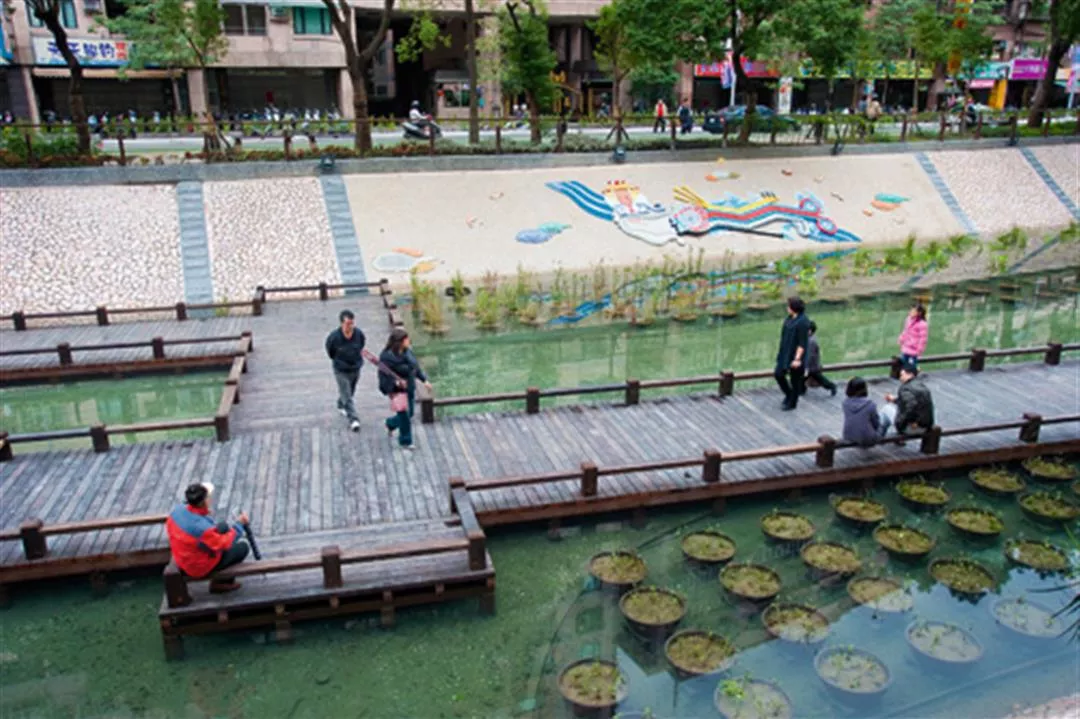
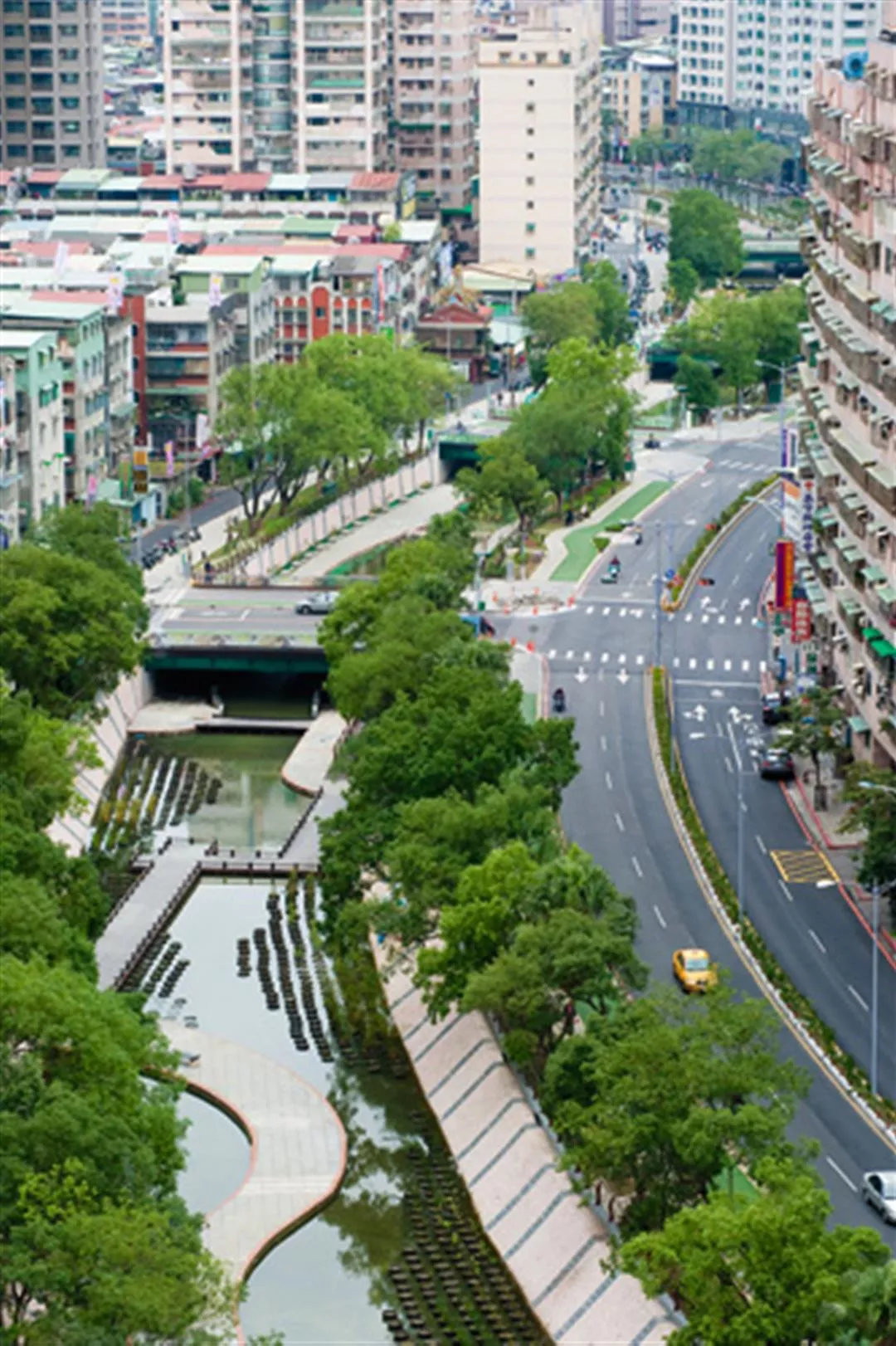
The Zhonggang Main Drainage Channel, which runs through the bustling urbanity of upper Xinzhuang and the Fuduxin district currently under development. Once a sluggish waterway that frequently flooded, it has now been completely cleaned up and has 1.6 times its former drainage capacity.
As well as the retention basin, public participation has resulted in the rescue of lots of 30-year-old camphor trees—200 of them!
Li Rongwei recounts that plans to lay culverts along either side of the channel threatened the camphor trees growing there because of their extensive root systems. To preserve these trees, the culverts would have to be moved out four or five meters away from the channel. This would greatly compound the complexity of design and construction, and extend project-related traffic snarls by an extra half-year.
Instead of repositioning the culverts, Lee Hong-yuan decided to transplant the camphor trees elsewhere and move them back again after completing construction.
But in the opinion of Zhao Jialin, formerly a professor in the Department of Landscape Architecture at Fu Jen Catholic University, “We should be reconfiguring the environment to accommodate trees, not the other way around.” The camphor trees would have to be pruned way back before transplantation to ensure that the downsized root systems could supply sufficient water and nutrients to the remaining branches, and Zhao was upset that even if the trees survived the replanting, they might not live very long.
He was distressed that roadside trees are the first thing to be sacrificed every time a street is widened, which is why, other than Ren’ai Road and Dunhua South Road in Taipei, it is so rare to see a street in Taiwan lined with tall shade trees. In London, by contrast, there are plenty of roadside trees that have survived through two world wars, standing tall while bombs fell and buildings collapsed all around them. When Zhao found out about Lee Hong-yuan’s plan to transplant the camphor trees, he led a petition drive at Fu Jen Catholic University to oppose the plan, and succeeded in reversing it.
“In retrospect, the decision not to move the trees was clearly the correct one,” says Li Rongwei as he walks along a verdant pathway beside the channel.

The proximity of a beautiful channel running right through local neighborhoods has made the environment in Xinzhuang something special.
The NT$2.5-billion cleanup project lasted four years and bridged the terms of a county magistrate and the mayor who succeeded him. There were criticisms that construction quality suffered from a rush to make progress before the end of the magistrate’s term, and that project quality fell far short of design specifications. But such shortcomings do not negate the project’s considerable achievements.
“On a scale of 1 to 100, I’d give the drainage channel 30 points prior to the cleanup, and 60 after, but it has the potential to go to 90.” Private citizens like Zhao Jialin and Liao Xiuchun see considerable room for improvement in the intangible aspects of the channel’s operation. A lot more effort is needed from a lot of people.
Liao suggests that the channel could incorporate more local flavor, such as by holding puppet theater and drum performances, for which Xinzhuang is noted. And elementary and junior high school orchestral groups could also perform there on the weekends.
There are earlier examples of successful river cleanups in Taiwan, including the Love River in Kaohsiung. Today, boats ply the waterway there and strollers meander along the banks in a scene that has come to be representative of Kaohsiung. The Zhonggang Channel is not yet sufficient in itself to turn Xinzhuang into a big tourist destination, but it seems safe to say that the people of Xinzhuang have good reason to expect more good things to come.

The motley disarray of structures across from the upper end of the Zhonggang Main Drainage Channel present a stark contrast to the newly redone channel. The county government did offer 100% subsidies to support renovation of building facades, but it was virtually impossible to get all the owners in the multi-unit structures to come to agreement and take action.