Taiwan's Garden for the Spirit--Hualien
Chen Hsin-yi / photos Hsueh Chi-kuang / tr. by Scott Gregory
January 2009


Can money buy happiness? Will suc-cess last forever? As the shockwaves from the economic recession hit, CEOs are frantically looking for assistance, penthouses are being foreclosed on, and workers are struggling day to day under the threat of unemployment. When financial and material goals suddenly seem unattainable, people need spiritual consolation and nourishment more than ever. For Taiwanese, Hualien is a spiritual garden right in their backyard, a place to relax and recharge before setting out once again into the world.
In recent years, Hualien has consistently ranked among Taiwan's most rapidly shrinking local economies. Surprisingly, however, it also ranks at the top in surveys of residents' reported quality of life. It's also a favorite getaway spot and the epicenter of Taiwan's "LOHAS" (Lifestyles of Health and Sustainability) movement.
What is Hualien's attraction? What is the lifestyle that this place and its people have created, and what sort of vision does it inspire in the minds of modern people?
Hualien is located on Taiwan's east coast, an area known to islanders as "beyond the mountain."
Three million years ago, tectonic shifts pushed the coastal and central mountain ranges closer together to form a valley two to seven kilometers wide. To the east there formed sea cliffs. The warm Kuroshio Current, flowing northward from the equator, brings a bounty of fish to the waters there. To the west lies Taiwan's central mountain range. In the summer, seasonal southeastern winds trap warm air fronts, which rise along the slopes of the eastern mountains and condense into rains. The rainwater brings life to lush forests and forms streams that have cut out magnificent gorges.
This is the land that inspired its indigenous people to create the myth of a giant who can call up winds and rain occupying the Meilun Mountains, and that led seventeenth-century Portuguese sailors to name the island Formosa, the beautiful.
Immigrants during the Qing Dynasty who crossed the straits in boats passed by the Qilaibi Point. They saw how as the river water flowed into the ocean waves the currents would eddy, or "huelian" in Hokkien. This is the origin of the name Hualien.
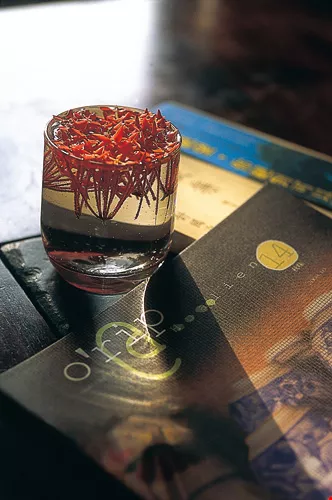
Cafe Jade has published a local periodical called o'rip@Hualien for two years now, and its fame is spreading. When President Ma came to Hualien recently, he purchased a subscription as a birthday present for his wife, Chow Mei-ching.
Romantic frontier atmosphere
Separated from the western plains by the natural barrier of a long mountain range, Hualien has managed to remain relatively unspoiled by manmade pollution. It lacks many of the amenities of the big city and has little commercial entertainment. Its nickname "beyond the mountain" still carries a connotation of disconnectedness and backwardness.
Professor Wu Mingyi of National Dong Hwa University, the award-winning author of Butterfly Way and So Much Water So Close to Home, says that students who come to Hualien from the big city fall into two groups. The first group quickly find themselves feeling out of place without karaoke clubs, omnipresent coffee shops, a convenient subway system, and a 24-hour Eslite bookstore. They curse themselves for not having studied hard enough and being "sentenced" to study there.
The second group fall in love with the place and over their years there fall into a relaxed pace of life. They spend their afternoons staring into the sky and waiting for the clouds to descend from the mountains, or sitting on the shore watching the waves come in. As for Wu, he hikes along the rivers and seashore to regain his inspiration to write.
Travel writer Shu Guozhi recalled his years of wandering around Taiwan's countryside and described Hualien as "precious for its blandness": "Its mountains and sea are so conspicuous and its culture so unmarked that the people there aren't burdened by the land. It's so fresh and relaxed." Whether teacher, Tzu Chi follower, veteran, soldier, Aborigine, runaway, or eloping couple, "This could be heaven."
It's definitely true that in recent years the number of people heading to this heaven on earth has been on the rise, answering the call of the film Cape No. 7 to "shake off the limitations and depression of being an average, workaday Taiwanese" and to "get lost in the feeling of lying on a beach at once familiar and foreign," in the words of Shu Guozhi.

When you come to Hualien, open your heart and slow down your pace. You'll naturally have an experience that encompasses all the senses.
The simple life
And in comparison to other capes, Hualien might be a bit more calm than Pingtung, a bit more elusive than pristine Yilan in the northeast, and a little more refined than Taiwan's outlying islands.
To trace Hualien's relaxed culture, we need to look back 20 years to the era when a newly wealthy Taiwanese society began evaluating the price it was paying for economic development.
In 1983, 42-year-old Qu Jifu quit his high-paying job at Formosa Plastics in search of an escape from the emptiness and toxicity of industrialized consumer society. At first he wandered the globe, visiting international environmental protection groups. Then he ended up in Hualien County. He set up a "Pure Land" home of his own in Yanliao Village to provide a simpler alternative to the materialistic, consumerist, profit-seeking lifestyle of the big city.
Qu believes that the fewer desires people have, the freer they are. In his everyday life, he uses no petroleum products or electrical items. He lives by collecting water and firewood, fueling his stove, planting vegetables, and collecting things. He even goes to a wholesaler's to pick up the day's discarded vegetables. He calls this a "creative, multifaceted lifestyle" and spends less than NT$1000 a month.
Over the last 20 years, Qu has been putting his personal experience to paper. His numerous books have drawn tens of thousands to Yanliao to see it for themselves. Though Qu is now spreading his minimalist philosophy in Hong Kong, the association of Hualien with simple living still remains.
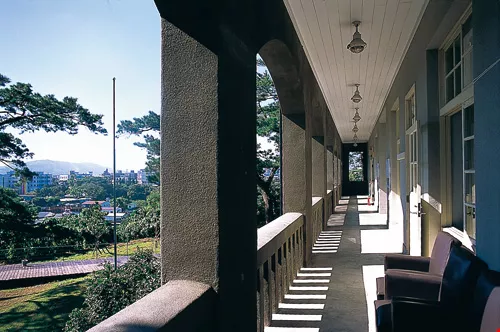
Pine Garden is on Meilun Mountain, an area the Amis used to call Palik. In Amis myth, it was a sacred mountain that was off limits. Pictured above is the second floor of the main building at Pine Garden, which looks out over Hualien Bay and the Meilun Creek running into the Pacific. On the facing page are two views of the garden.
Culture and nature
Another cultural idealist who's landed in Hualien is fisherman, writer, and social activist Liao Hongji. He remembers more than 20 years ago when he was first on his own, he wasn't well educated and he was still young and inexperienced. He'd often feel frustrated, and he'd head to the seashore to seek some solace. "I always felt like I was entering new grounds," he says.
He fell in love with the sea and roamed the coast, and at age 35 became a fisherman. At 39, he founded the Whale Patrol and published Taiwan's first work of ocean-themed literature, The Fisherman. Also the founder of the Kuroshio Ocean Education Foundation, Liao has introduced many people to the many faces of the ocean. Also, through literature, he has called people of all walks of life to come to Hualien to commune with and protect the sea.
Many other Hualien artists maintain those principles of living a simple life. Cape Workshop owner Huang Tianyou has been carving wood in Yanliao for many years, and once served as a "tourism ambassador" at the request of the county government. He believes that "ecological art" that follows nature is the kind of art that best expresses Hualien's local spirit. He makes driftwood into furniture, offers woodworking classes to tourists, and occasionally takes travelers out to camp on the beach, where they can experience the vastness of the sea and sky for themselves.
In July and August 2001, several Hualien artists held a driftwood installation art festival in the Meilun Mountains' Pine Garden building. It caused many community groups and citizens to take notice of this unused space, and they joined forces to petition that Pine Garden not be sold off by the government.
Looking out over the mouth of the Meilun Creek, the 7,300-square-meter Pine Garden was built toward the end of World War II. It was originally used as a Japanese naval base and, under ROC rule, it has been an army headquarters and a veteran affairs office before being abandoned.
In 2006, the county government's newly redesigned Pine Garden Annex opened to the public. It's an open, meditative space that lends itself to the annual Pacific Poetry Festival held there. It's a new landmark that embodies the spirit of Hualien.

Back to the land
In recent years, there's been a noticeable "return-to-nature"-style cultural trend in Hualien, in which writers going through a "life restructuring" head to Hualien and even end up staying there. Also, the several universities in the area draw cultured people to Hualien.
Local writer Lin Yiyun says that his preference for the quiet life is something he developed at a young age. His life philosophy is, "In a small town, don't do anything big." Writing in a big city, for example, you have to worry about the pressure of all kinds of critics. But in a small town you can get published in the local paper. It doesn't pay a lot, but it's enough, and no one tells you what to do. It's more free.
Wang Yuping, who was once an editor at Han Sheng publishing and for years worked as a manager at China Times Publishing and Eslite Books, married a man from Hualien. There they set up a coffee shop called Cafe Jade. She admits, "At first I wasn't used to the Hualien lifestyle and felt my roots were still in Taipei." It wasn't until she gave birth to their second child that she felt like a local and began to adapt her interests to the context of Hualien. She put together an arts workshop, held lectures, and edited a periodical.
Now, Cafe Jade is Hualien's underground culture center and a favorite among the intellectual crowd.
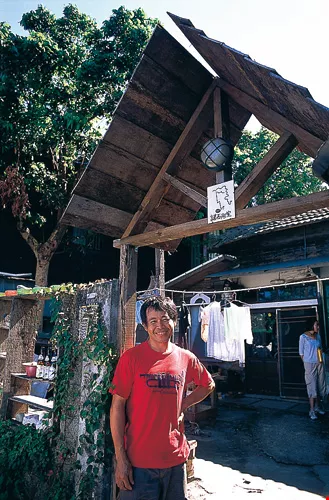
Amateur artist Ah Bao, who's been in Hualien for decades now, calls his workshop the Nuoshi Abao Museum. It's open to the public and also available to backpackers for overnight stays (NT$350 a night, with a guided tour if you're lucky). Recently a team of archaeologists from Academia Sinica made their base here-the workshop became a dormitory and was temporarily closed to the public. Ah Bao is excited about the prehistoric findings on Mt. Huagang, a source of stories and artistic inspiration.
LOHAS
Recently there's also been a wave of LOHAS-style idealists moving in. Some are retired people. Some buy land, build a house, and live the farm life. Some start a small business and live contentedly. There are also a number of young people, either singles or young couples, without families or obligations who end up living there. They don't forget to participate in society, though, and are passionate about making a contribution.
At the end of 2007, during the controversy over the Suao-Hualien highway project, 30 specialty shops formed a "Slow Hualien" alliance and drew up a "Slow Charter" pledging to "earn quality through slowness" and "respect Hualien's natural and historical environment." They exchanged views, assisted one another, and made plans to expand the movement.
"We wanted to embody the values of slowness and get more people to acknowledge that without building the Suao-Hualien highway or working on the economy we can still have a high quality of life," says one of the alliance's founders.
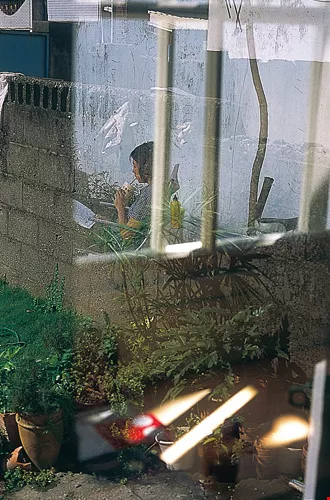
When you come to Hualien, open your heart and slow down your pace. You'll naturally have an experience that encompasses all the senses.
Changing values
In modern times, busy people need a nearby place of spiritual retreat. This is tied to the new importance of a sense of place in times of sweeping globalization. Globalization has transformed local economies, and people have weak connections to the places in which they live. They don't get involved in or identify with their communities. Desiring warmth and authenticity, many people head back to the land looking for sources of history, memory, and experience. They also seek to create new values and a sense of community in order to oppose the modern environment of fragmentation and vacuity.
Whether seeking simplicity or sustainability, a better individual lifestyle or the betterment of society, Hualien has attracted a group of idealists who want to grab the opportunity to take charge of their own lifestyles, and seek inner peace. They are practicing a minimalist revolution in everyday life.
Looking to the future, Hualien's attraction will continue to be its mountains, rivers, and sea. In recent years, the Hualien County Government has been working on introducing pesticide-free agriculture and hostel tourism in order to further highlight Hualien's special character. If it can manage to make effective use of its human resources in promoting its local spirit of simplicity and sustainability, then perhaps Hualien can be more than a "back garden" for Taiwanese and people from around the world will pay a visit.
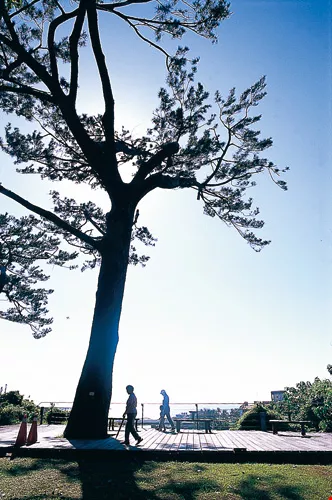
Pine Garden is on Meilun Mountain, an area the Amis used to call Palik. In Amis myth, it was a sacred mountain that was off limits. Pictured above is the second floor of the main building at Pine Garden, which looks out over Hualien Bay and the Meilun Creek running into the Pacific. On the facing page are two views of the garden.
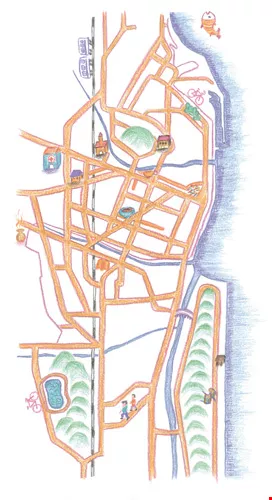
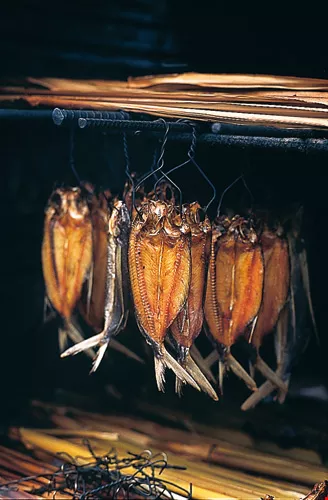
When you come to Hualien, open your heart and slow down your pace. You'll naturally have an experience that encompasses all the senses.
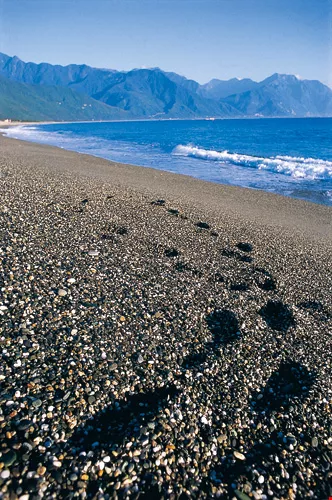
From "huelian," or "eddying currents" to the modern Mandarin name "Hualien," from the old road to the era of the highway, Hualien has retained its image as a place for soul-searching "beyond the mountain."
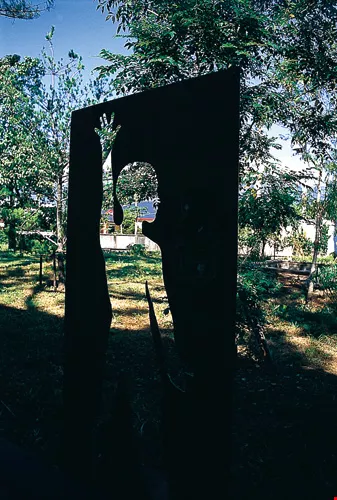
Pine Garden is on Meilun Mountain, an area the Amis used to call Palik. In Amis myth, it was a sacred mountain that was off limits. Pictured above is the second floor of the main building at Pine Garden, which looks out over Hualien Bay and the Meilun Creek running into the Pacific. On the facing page are two views of the garden.
@List.JPG?w=522&h=410&mode=crop&format=webp&quality=80)

@List.jpg?w=522&h=410&mode=crop&format=webp&quality=80)


