

Lee Juh-feng, a national legislator from Kinmen, remarks bitterly, "People from Kinmen were the first wave of 'foreign laborers' in Taiwan."
Over the past century, more than 200,000 people have left the island (current population: 51,000) for Taiwan or the Penghu Islands.
When the Kuomintang government retreated to Taiwan in 1949, it fortified the island of Kinmen to serve as Taiwan's first line of defense. Warfare, or the threat of it, has afflicted the island ever since, stifling the local economy and forcing local residents to move away. Youth drain has been an especially severe problem, with students electing to attend school and eventually find employment on the main island of Taiwan. Over 100,000 have left Kinmen for Taiwan since 1949.
Tight restrictions on travel to and from Kinmen, furthermore, made it extremely difficult for those who left the island to get back for a visit during more than four decades of military administration of the island (martial law wasn't lifted in Kinmen until 1992, five years after it was lifted on Taiwan). The enforced separation made people from Kinmen pine all the more intensely for the place where they grew up.
Pop singer Ah-teh, a native of Kinmen, put the sentiment to music:
Standing on a windy ship deck,
I don't know what to think.
I'm leaving my war-torn land,
but who knows where I'm headed?
At the core of my dreams for the future
is a feeling that I've betrayed someone just to survive.
Ah! What have I done?
Ah-teh is one of two big pop music stars in Taiwan who hail from Kinmen. In the music of each man, one can hear the pain of a wanderer forced from home by war.
Before martial law was lifted in Kinmen in 1992, travelers between Kinmen and Taiwan had to go through the same entry/exit procedures as anyone going abroad. Travel documents had to first be approved by the Bureau of Immigration. Even a native of Kinmen living in Taiwan had to go through the application process just to visit home. Adding to the difficulty of returning was a dearth of transportation. The only people allowed to fly in or out of Kinmen were senior military officials and persons in need of emergency medical treatment. A Kinmen native living in Taipei had to first spend two entire working days completing the paperwork, then take a day traveling by train to the southern port of Kaohsiung. From there the traveler boarded a military landing craft for a choppy trip back home lasting more than ten hours.
Ah-teh recalls the loneliness he felt after coming all by himself at the age of 15 to study at the Tatung Institute of Technology in Taipei. Holidays were always a low point, for he often found himself completely alone in the dormitory after his classmates had headed for home. "Even people who had come from elsewhere on the main island would get homesick at night and cry, so you can image how I must have felt."
He was only able to go home once a year, during the lunar new year. On every trip home his mother would always take him to the family shrine on his last evening of vacation, and the two would kneel and pray to the gods and the family's ancestors. His mother would ask them to look after her son during the year while he was away from home. Ah-teh still remembers wandering out to a pond late at night and staring forlornly into his own reflection in the water. When he took a stone and shattered the reflection of the moon, he thought to himself that surely only the moon of his own hometown could understand his feelings of rage and grief.
They say that it's the same moon no matter where you go, but it didn't feel that way to Ah-teh.
According to Yang Shu-ching, the editor of Kinmen Studies, "Maybe people from Kinmen are so attached to home because they feel like they've been forced away from it by war."
A tale of two islands
Politics first started forcing people to leave Kinmen for Taiwan in 1949, after the Kuomintang government retreated to Taiwan from the mainland and made Kinmen and Matsu its front line of defense. The exodus peaked after mainland China bombarded the island for over six weeks beginning in August 1958. Within a few short days, nearly 20,000 people left the island.
According to elementary school teacher Chen Lien-hsing, the Battle of the Taiwan Strait (as the 1958 bombardment has come to be known) came without warning. On the first night of the bombardment, he and his family had no time to run for the bomb shelter, and could only crouch under a big table and wait for the fearsome rain of bombs to end. "There was a soldier billeted in every single home back then. The soldier who had been in our house was caught outdoors when the bombs started falling that first night. He grabbed a couple of kids and ran for the bomb shelter, but they never made it. A bomb tore him to pieces. One of the kids was killed too, and the other was left an orphan." Listening to Chen, the grisly terror of 1958 comes to life as if it were yesterday.
After the bombardment commenced, the government evacuated all junior and senior high school students to southern Taiwan. Chen Lien-hsing was among them. "No one else in my family could come along with me. It cost NT$5,000 per person to evacuate, which was a lot of money back in those days. The more people there were in your family, the more you had to spend. Anyone who could afford it, evacuated. Anyone who couldn't, just had to stay behind."
A totally different fate lay in store for a young man who had graduated from a teacher's school in Taipei just before the bombardment got started. That young man was Li Hsi-chi, who has since become a noted painter.
After graduation Li had made plans to return home to Kinmen, and he had in fact been on the point of boarding a boat in Keelung Harbor when for some reason he decided to wait for the next boat. Little did he know that the bombardment of Kinmen would start before the next scheduled departure. His family soon moved to Taiwan, and Li no longer had a home in Kinmen to go back to.
Chen Lien-hsing's family stayed on in Kinmen, so Chen went back to the island after graduating from high school to attend teacher's college. He eventually took a job as an elementary school teacher and learned to live with mainland China's regular shelling of Kinmen on every other day. Li Hsi-chi, in the meantime, took up a rootless existence in Taipei. "I was very much wrapped up in the anti-communist thing," says Li. "It was more than just the shelling of Kinmen that had me upset; it was the loss of the entire mainland. My painting was the only vehicle I had to express my feelings. I painted lots of scenes from the mainland."
A tough row to hoe
On the front lines, everyone is a soldier. Ah-teh recalls, for example, the guns that used to hang on the wall of his home. During civil defense drills, the entire family would take up arms and head out to participate in the training. They would hurry home for a quick meal, and then hurry back for more training. Even little children had a role to play, running through the woods as messengers.
"Before I went to Taiwan," says Ah-teh, "I thought all of that stuff was just a normal part of everyday life. After I got to Taipei, though, I learned how easy life was away from the front. Although I felt pride that we in Kinmen were preserving the peace for all of Taiwan and Penghu, I also began to feel that it was very unfair."
In 1987, President Chiang Ching-kuo lifted martial law in Taiwan, but not in Kinmen or Matsu. Resentment at their disadvantaged status grew, and a movement to demand the lifting of martial law in Kinmen and Matsu was born.
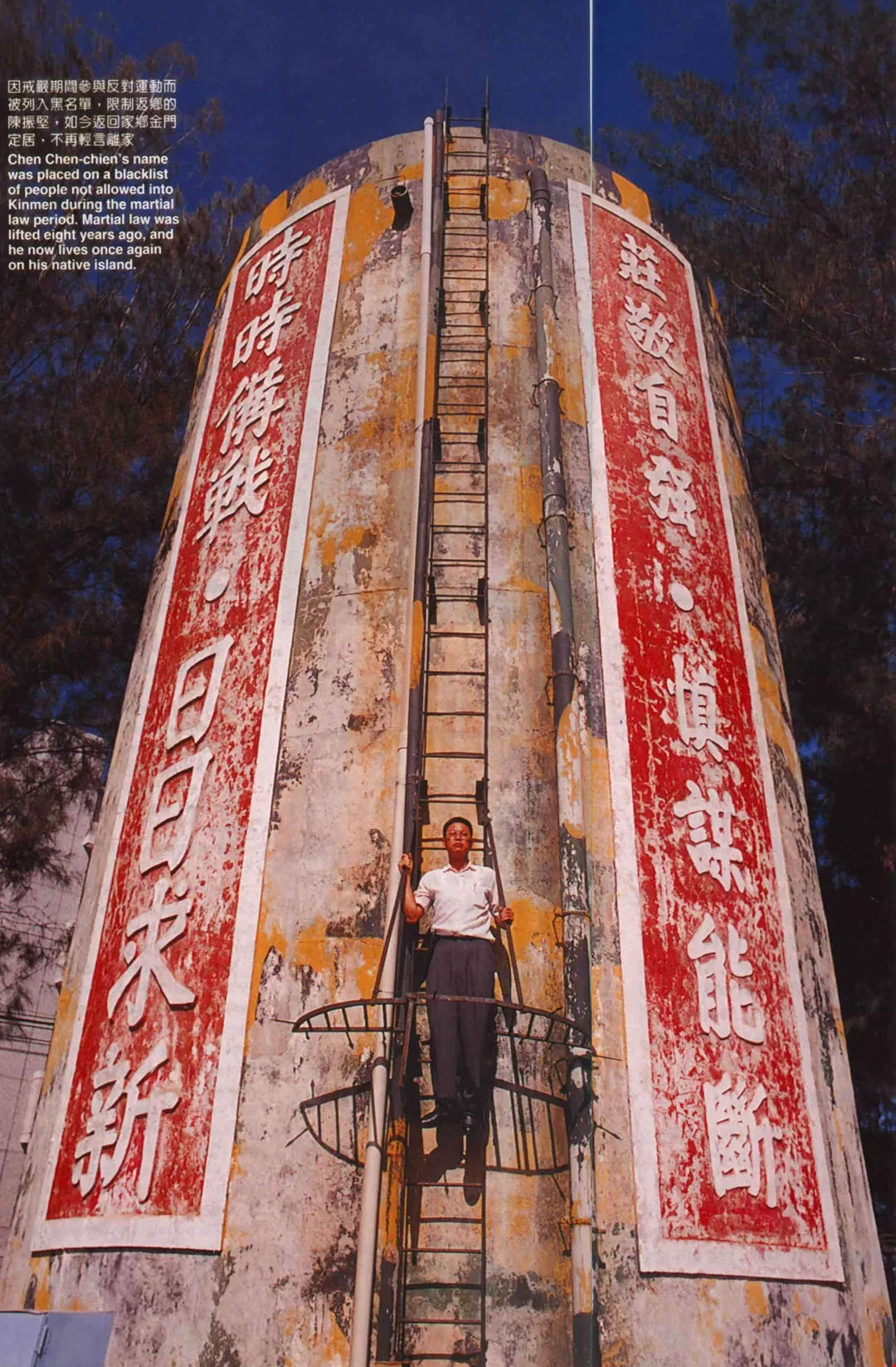
Weng Ming-chih, Chen Chen-chien, and Wang Chang-ming established an organization in August 1987 to press their case. The three men, who were already active in the opposition movement in Taiwan, marched to the Fujian provincial government headquarters in the Taipei suburb of Hsintien and demanded an end to martial law and establishment of self-rule in the islands. They showed up wearing banners with the slogan, "I want to go home!" This constituted the first wave of political dissent in Kinmen.
The names of all three men were immediately placed on a blacklist of persons not allowed to return to Kinmen or Matsu.
"The Taiwan Association for Human Rights tried to get us removed from the blacklist, but the Ministry of National Defense said that Kinmen and Matsu were in a war zone and martial law could not be lifted there. They said that we were being used by radical separatists, and that we could not be allowed to return to Kinmen." Their activism, however, focused attention on the human rights situation in Kinmen.
In September 1987, the legislator Jaw Shau-kong called an emergency interpellation session at which he argued that the denial of basic human rights in Kinmen constituted discrimination.
Winds of change
Jaw listed a number of onerous regulations: unusually burdensome restrictions made it very difficult for the residents of Kinmen to come to Taiwan or travel overseas; the number of Kinmen natives in Taiwan allowed to visit Kinmen was subject to a quota; Kinmen residents were expected to take part in militia drills, but they were not provided any monetary compensation for their participation, nor were they given meals on drill day; anyone taking an electrical appliance to Kinmen had to pay a customs duty upon arrival; anyone requiring medical treatment in Taiwan had to have a written statement from a physician certifying the need for such treatment before being allowed to fly (in the case of acute illness) to Taiwan; patients with chronic illnesses requiring treatment in Taiwan had to travel by boat; Kinmen natives were not allowed employment in Taiwan unless they were hired before leaving Kinmen, and once in Taiwan they were not allowed to change employment at will; phone calls between Taiwan and Kinmen were not allowed; passenger service between Taiwan and Kinmen was limited, thus making it difficult for Kinmen natives in Taiwan to return home for visits; average incomes were far lower in Kinmen than in Taiwan, while electricity was much more expensive in Kinmen; etc.
Rights taken for granted in democratic nations were already enjoyed by people on the main island of Taiwan even before the lifting of martial law, yet the people of Kinmen suffered under many restrictions clear into the early 1990s.
In 1989, Weng Chih-ming won the nomination to run in Kinmen as the DPP candidate for the national legislature, and his status as a candidate allowed him to return to Kinmen in spite of the blacklist. Chen Chen-chien returned together with Weng as the latter's campaign manager. "The Election and Recall Law allowed candidates to campaign for 15 days," said Weng, "but the Bureau of Immigration only gave us ten days in Kinmen."
The desire to return at will to Kinmen rose to fever pitch that year. On August 23, some 200 natives of Kinmen took part in a protest march in Taipei. Among other demands, they called for an end to military administration and legalization of direct phone calls between Taiwan and Kinmen.
"You've got to remember that the people of Kinmen are very good-natured, loyal types," says Weng. "When they took to the streets, it was really unprecedented."
In the following year, Chen Chen-chien forged fake ID documents in an attempt to sneak back into Kinmen, but he was arrested and sentenced to six months in prison. It would be two more years before martial law was finally lifted and Chen was able to move back to Kinmen.
While all this was going on, Yang Shu-ching was busy with projects of his own. In 1990 he established a community newspaper called Kinmen News. Because publishing activities in Kinmen were tightly restricted, Yang registered his publication in Taiwan, where it was edited and printed before being shipped to Kinmen.
"At the beginning, I was just trying to create a forum for public discussion in the cultural wasteland that had been created by 40 years of military administration. I never imagined that the people of Kinmen would react so strongly to the very first issue. By the third or fourth issue, the readership was already pushing us toward a more political focus." It was a product of the political climate of that time, says Yang. Interestingly, however, the magazine drew vocal criticism as well as praise, thus illustrating the complicated psychology of a war-zone community, where people longed for freedom yet rejected it at the same time. Ironically, it was natives of Kinmen living in Taiwan who were the most united in their thinking on Kinmen. While they were split on the issue of Taiwan independence, they all worked together in a united front where Kinmen was concerned. "Even a lot of KMT supporters from Kinmen who couldn't come out publicly for us," recalls Yang, "gave us private encouragement."
Cultural renaissance
Martial law was finally lifted in Kinmen in 1992, bringing a new openness that, ironically, made it clear just what a cultural disaster Kinmen's decades of military administration had been.
"Although the ban against building new houses resulted in the preservation of many traditional homes, back when soldiers were billeted in every home they covered the walls with patriotic slogans, seriously defacing the property. Moreover," says Yang Shu-ching, "cultural studies were seen as unimportant, so there was no one to carry such things out. By the time martial law was lifted, many aspects of Kinmen culture had changed and could no longer easily be studied."
Nevertheless, once the people of Kinmen had won the unrestricted right to return home, they threw themselves energetically into cultural research.
Li Hsi-chi got his initial inspiration from the inscribed wooden plaques that grace the door lintels of clan temples in Kinmen. He executed an entire series of paintings based on them before moving on to throw occasional poetry events modeled after the elegant parties indulged in by the upper classes in centuries past. Li also called on artists and writers from both Taiwan and the mainland to tour Kinmen and understand the beauty of the local culture. These activities spurred the local community to a heightened interest in cultural preservation.
"I have taken up the promotion of Kinmen culture as the main mission for me in my old age," says Li. "And the next item on the agenda is to plan a series of seminars on Kinmen. If we don't do it ourselves, who's going to do it for us?"
Yang Shu-ching started the Kinmen Studies series as a young man, spurred on by the thought that he could contribute much more in Kinmen, where his skills were badly needed, than in Taiwan, where he was just another editor. The idea for Kinmen Studies came to him after he set up Kinmen News, for in working on the news publication he began to realize that Kinmen was a living showcase of contemporary history. He started to invite persons knowledgeable about Kinmen culture to contribute articles and monographs to his Kinmen Studies series. The content has been wide-ranging, touching on such topics as Western-style buildings put up by overseas Chinese, lion figures used to ward off evil spirits, clan temples, histories of individual villages, aspects of the local language, wartime experiences from all periods of the island's history, etc.
"I was just planning on compiling about ten volumes when I first got started, but the more I delved into Kinmen's cultural roots, the more there was to write about. The project expanded to 20 volumes, and then 30. We're now planning on going to 45 volumes!"
Although the Kinmen Studies series has not resulted in any major archeological discoveries, field studies and the review of historical documents have nevertheless generated a steady stream of delightful surprises. "We've uncovered all sorts of differences in the way Minnan is spoken in Kinmen and Taiwan." Yang aims to develop a comprehensive picture of the similarities and differences between Kinmen, on the one hand, and such places as Taiwan, mainland China, and Southeast Asia. He hopes that by so doing he can win for Kinmen the respect and concern that it deserves, and that the people of Kinmen themselves will take a more active interest in their culture and history, thereby feeling their way toward new possibilities.
Steeped in history
Kinmen has many old historic sites, and in 1995 the Council for Economic Planning and Development established a national park in Kinmen, the first one in the nation based on the themes of history and culture. "This was the first national park based on a historical theme, so national park authorities were in uncharted waters," said Li Yang-sheng, director of the Kinmen National Park Headquarters, "but writers and other cultural figures in Kinmen provided enthusiastic support, so we didn't have such a tough time of it."
In addition, the Kinmen County Government has hired Yang Shu-ching to update the county gazetteer and add a chapter on culture.
According to Yang, the 1,600 years of Kinmen history can be divided into four periods: the refugee period, the period of "learning and refinement," the military period, and the period of opening up. The refugee period began during the Eastern Jin dynasty (317-420 AD), when Kinmen's six main clans (Su, Chen, Wu, Tsai, Lu, and Yen) first settled the island. This period continued on up through the early years of the Song dynasty (960-1279), when people fled here from China's war-torn heartland. The period of "learning and refinement" began later during the Song dynasty when the noted philosopher Zhu Xi established a private school in Kinmen. The level of education soared, and a total of 43 candidates from Kinmen eventually passed the extremely competitive imperial examinations over the years.
The military period began after the Mongols put an end to the Song dynasty in 1279. Loyal Song subjects unwilling to submit to Mongol rule retreated to Kinmen. Four centuries later, after the Ming dynasty was conquered by Manchus from the north, Zheng Chenggong (Koxinga) used Kinmen as a base in his attempt to restore Ming rule. The island served as a haven for pirates throughout the Qing dynasty (1644-1911). Kinmen was captured by Japan in 1937, then retaken by the KMT government in 1945. After the KMT retreated from the mainland to Taiwan, martial law was declared, and the ROC government made Kinmen its front line of defense. All in all, the military period lasted for about 800 years.
And finally in 1992, according to Yang Shu-ching's timeline, Kinmen entered the "period of opening up," a time of vigorous political, economic, and cultural growth. Yang says he feels very optimistic about Kinmen's future.
Travel to and from Kinmen has become much easier, and Kinmen natives living in Taiwan no longer need feel cut off from their home. There are flies in the ointment, of course. The younger generation doesn't seem to show the same attachment toward Kinmen that their elders have felt so strongly. Chen Lien-hsing relates that after his third daughter graduated from university in Taiwan and came back to teach at a vocational school in Kinmen, she quickly got bored with the island and went back to Taipei after just one year. Similarly, Li Hsi-chi's children in Taiwan have little affection for Kinmen. Says Li, "Taiwan is their real home."
There are still many young people who prefer to stay in Kinmen, of course. Chen Lien-hsing's youngest son, Chen Shih-ho, is preparing to take the entrance examination for junior college. "If I can test into the Kinmen campus of Kaohsiung Institute of Technology, I might not study in Taiwan. Even if I do study on the main island, I know I'll be coming back to Kinmen. I can't leave my parents by themselves at home." He points out that Kinmen actually has good prospects for economic development, especially now that the ROC government is preparing to legalize direct travel between the outlying islands and mainland China. Once that happens, it will just be a short hop across the water to the metropolis of Xiamen. He could seek a living there and still be close to home.
After decades of isolation, Kinmen is undergoing a cultural renaissance and has achieved free access to Taiwan. With legal travel to Xiamen in the offing, the island is suddenly looking very inviting to anyone in the younger generation with a mind to stay.
p.20
(above) The roof tiles of traditional homes were one of the things Kinmen natives living away from the island always thought wistfully about during the martial law period, when it took three days to return home for a visit.
p.20
(left) Chen Lien-hsing and his wife Hsieh Yu-chen live well in their traditional home, but with economic development restricted for decades by Kinmen's isolation, only eldest daughter Chen Ling-li and youngest son Chen Shih-ho remain in Kinmen. Their other three children are all working or studying in Taiwan.
p.23
New Party legislator Lee Juh-feng, of Kinmen, has long worked in the legislature to promote economic development and liberalization on his home island.
p.24
Pop singer Ah-teh's songs often betray a deep longing for his native Kinmen.
p.24
The noted painter Li Hsi-chi (right) hails from Kinmen. He has been vigorously pushing the island's cultural renaissance of recent years, inviting large numbers of writers and artists to visit Kinmen and get acquainted with the local culture here. Li is shown here this past June escorting a group of visitors through a local kiln.
p.24
Yang Shu-ching is currently compiling Kinmen Studies, the largest review of historical literature on Kinmen to be carried out in recent years. Some 20 volumes are already in print, and many more are planned.
p.26
These children just got finished with a morning of theatrical performances at a temple festival. They are now eating lunch, and will continue performing in the afternoon. Kinmen culture is taking root in the hearts and minds of the next generation.
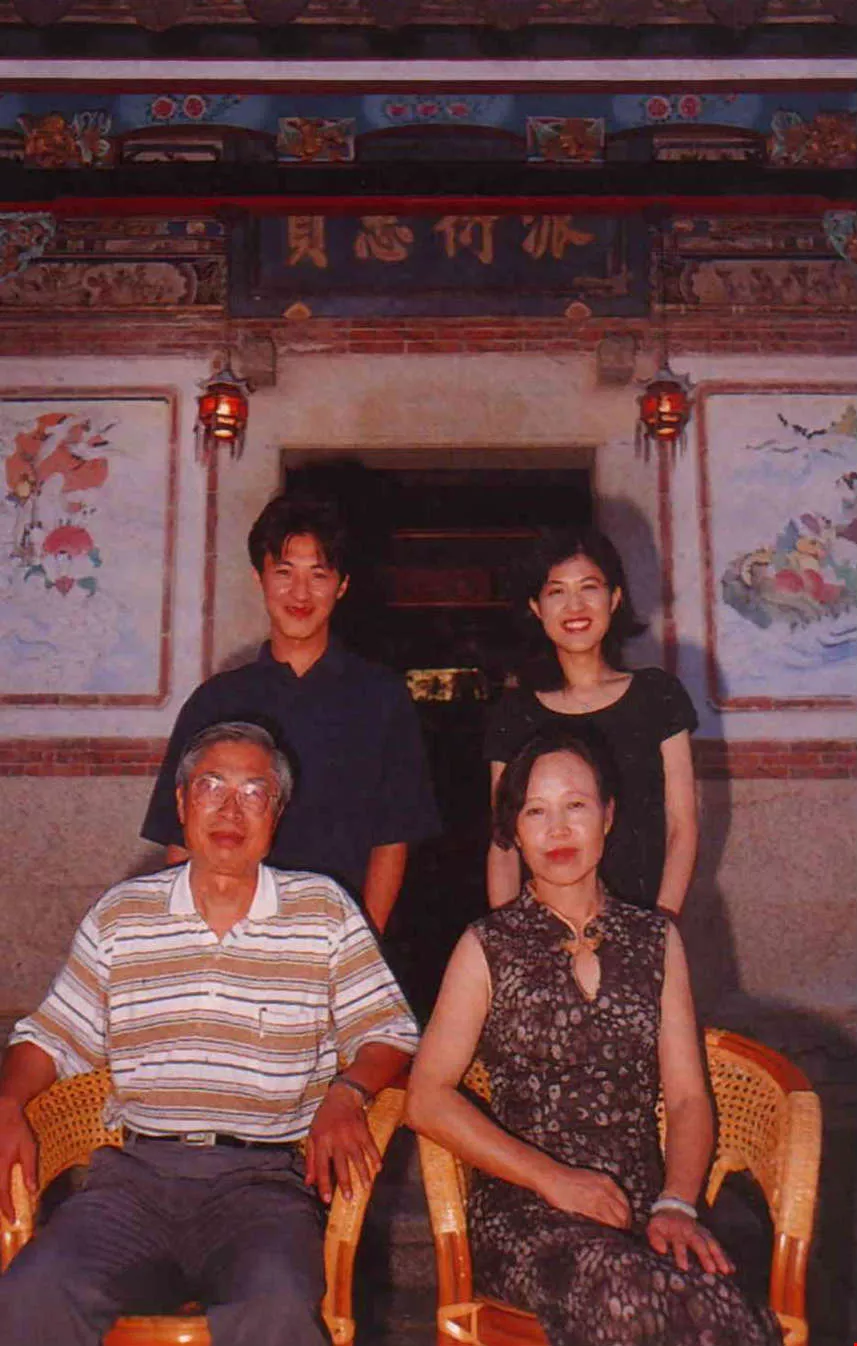
(left) Chen Lien-hsing and his wife Hsieh Yu-chen live well in their traditional home, but with economic development restricted for decades by Kinmen's isolation, only eldest daughter Chen Ling-li and youngest son Chen Shih-ho remain in Kinmen. Their other three children are all working or studying in Taiwan.
"The Taiwan Association for Human Rights tried to get us removed from the blacklist, but the Ministry of National Defense said that Kinmen and Matsu were in a war zone and martial law could not be lifted there. They said that we were being used by radical separatists, and that we could not be allowed to return to Kinmen." Their activism, however, focused attention on the human rights situation in Kinmen.
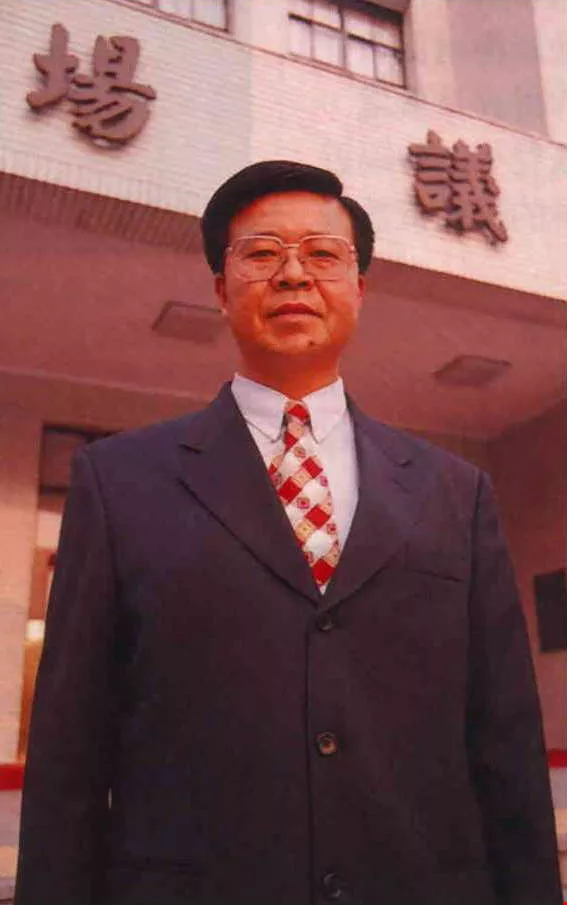
New Party legislator Lee Juh-feng, of Kinmen, has long worked in the legislature to promote economic development and liberalization on his home island.
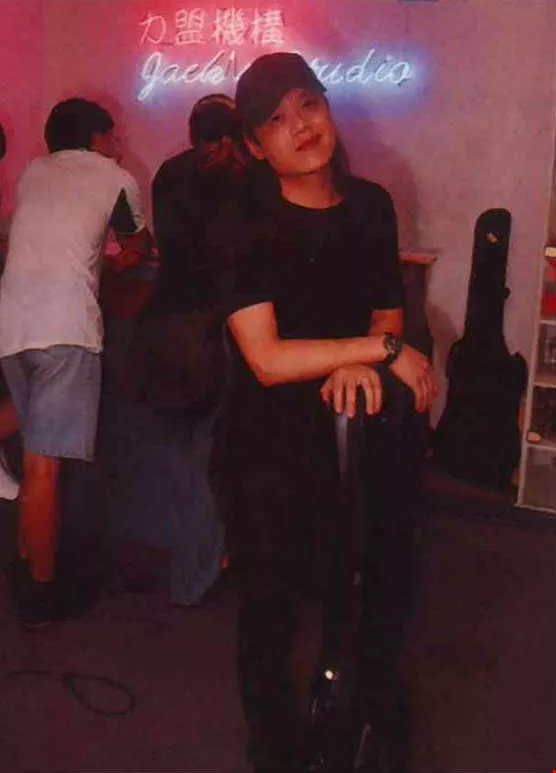
Pop singer Ah-teh's songs often betray a deep longing for his native Kinmen.
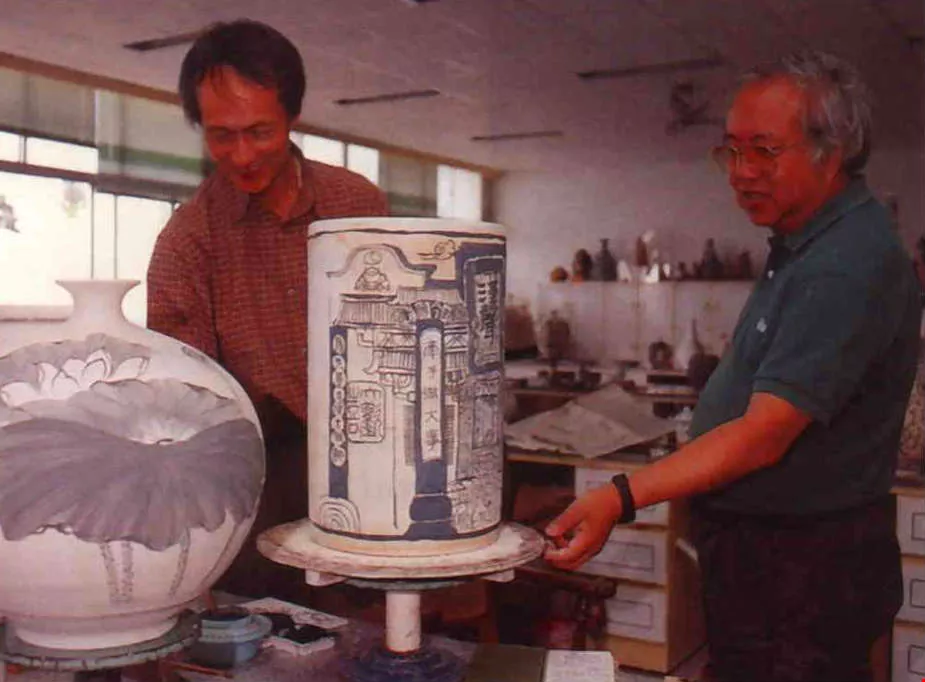
The noted painter Li Hsi-chi (right) hails from Kinmen. He has been vigorously pushing the island's cultural renaissance of recent years, inviting large numbers of writers and artists to visit Kinmen and get acquainted with the local culture here. Li is shown here this past June escorting a group of visitors through a local kiln.
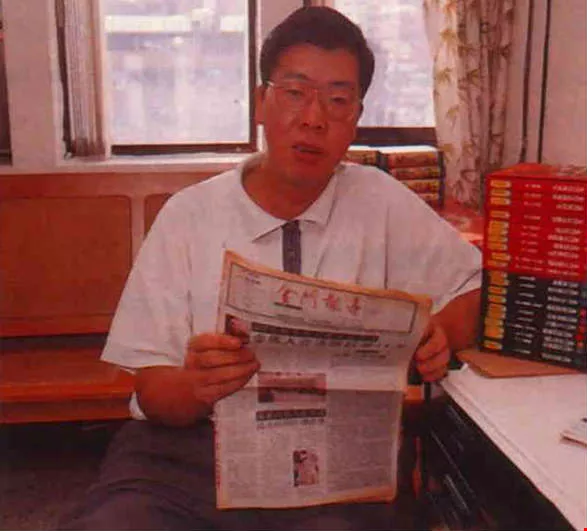
Yang Shu-ching is currently compiling Kinmen Studies, the largest review of historical literature on Kinmen to be carried out in recent years. Some 20 volumes are already in print, and many more are planned.
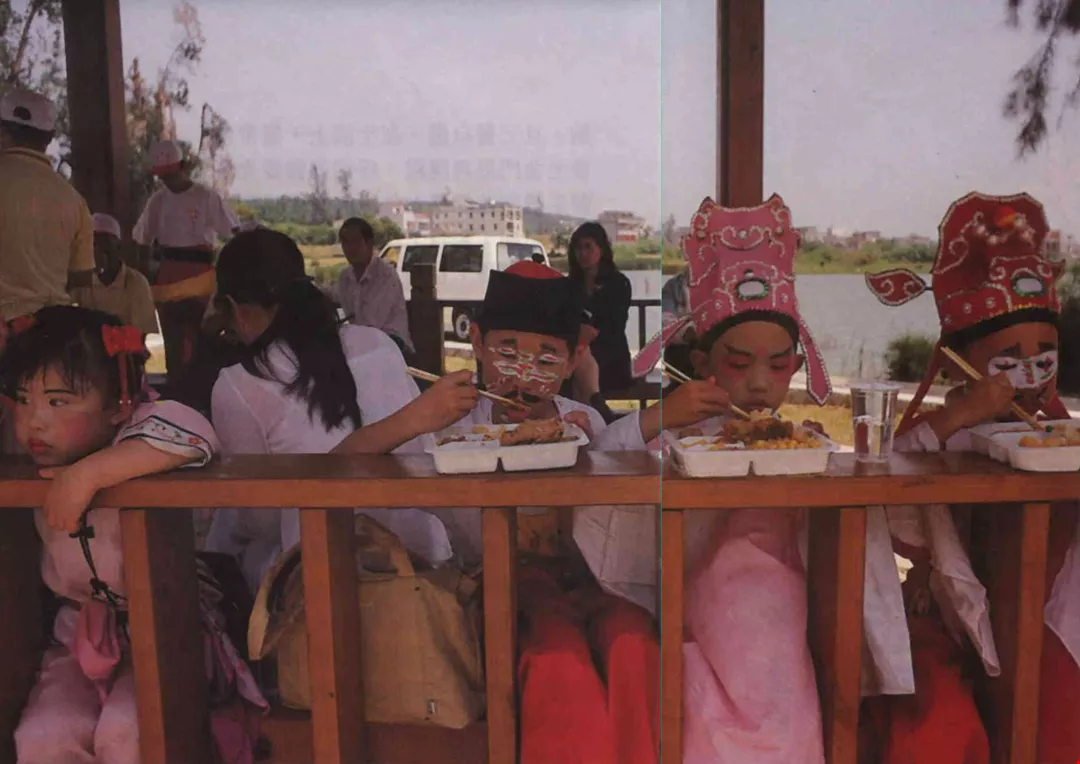
These children just got finished with a morning of theatrical performances at a temple festival. They are now eating lunch, and will continue performing in the afternoon. Kinmen culture is taking root in the hearts and minds of the next generation.

@List.jpg?w=522&h=410&mode=crop&format=webp&quality=80)


@List.jpg?w=522&h=410&mode=crop&format=webp&quality=80)
@List.jpg?w=522&h=410&mode=crop&format=webp&quality=80)
