High viewership
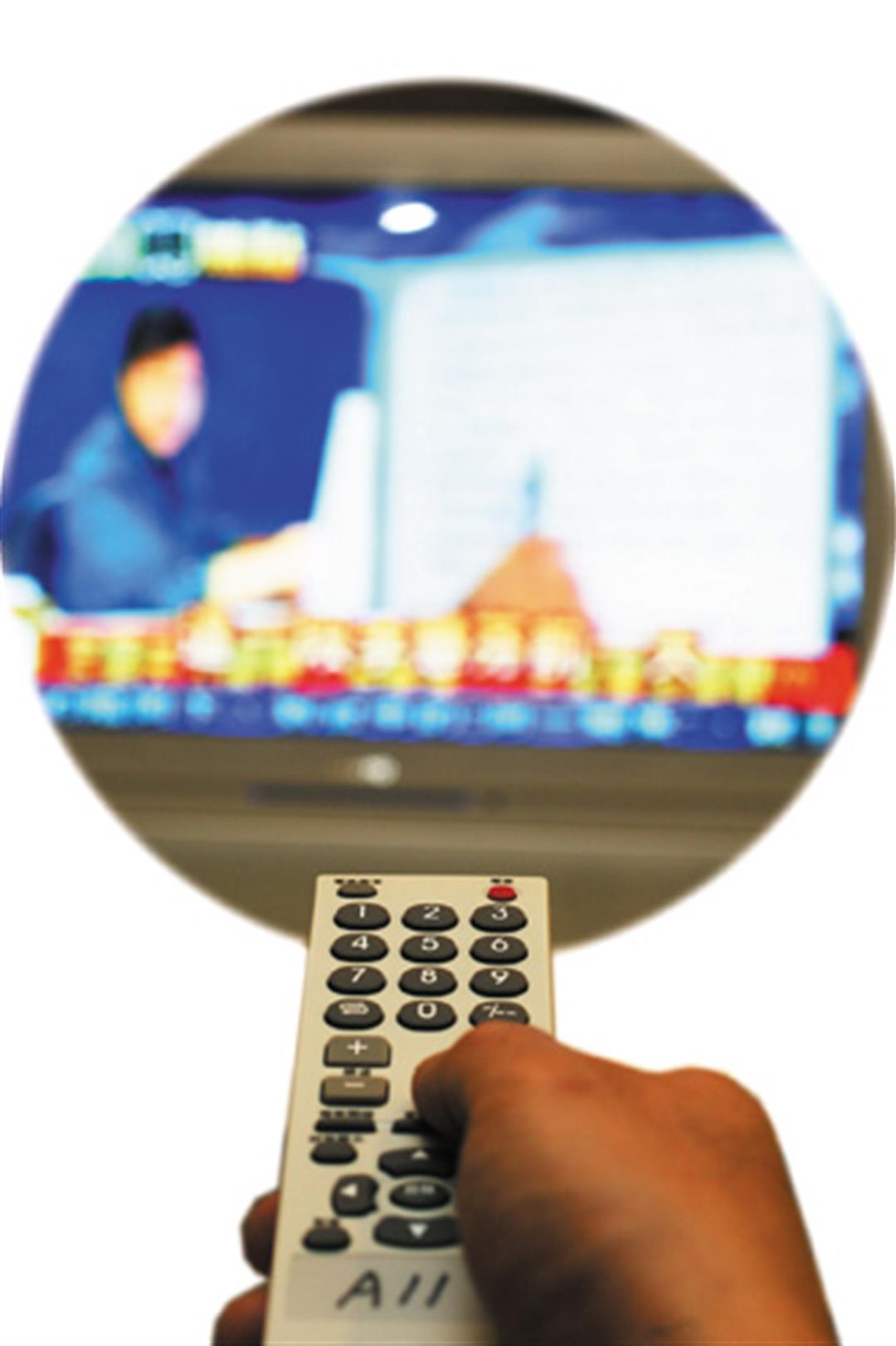
Interestingly, as people's insecurity about the political and economic situations worsened, the ratings of political talk shows ballooned.
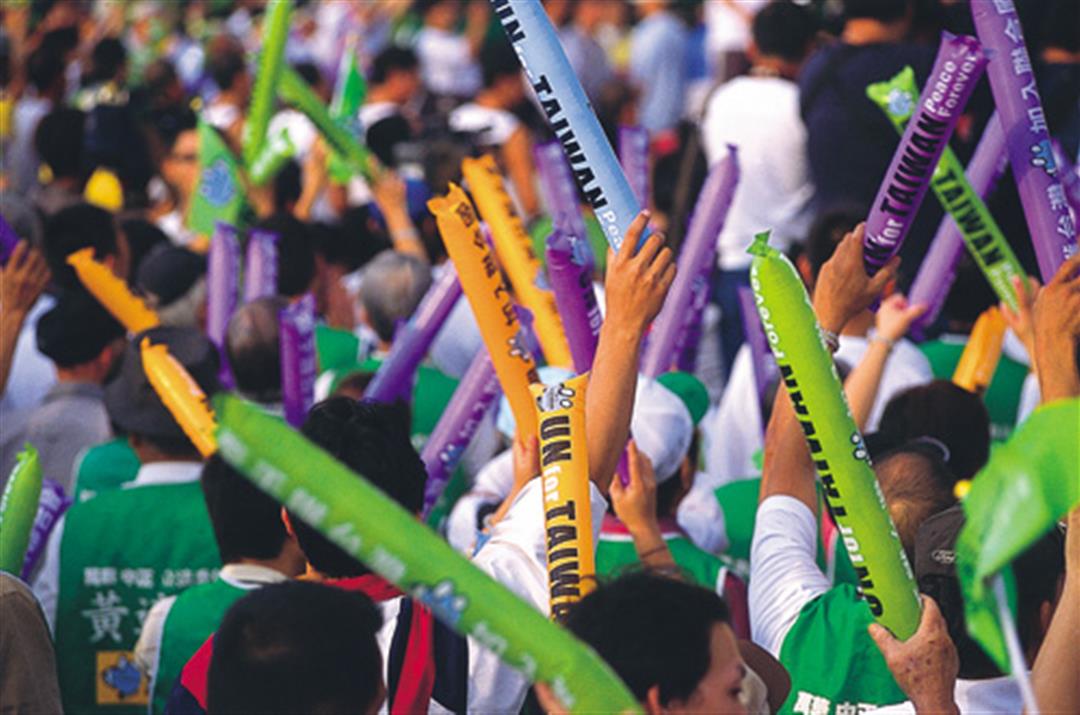
In the first half of November of 2008, for instance, there were major news stories surrounding the visit to Taiwan by ARATS chairman Chen Yunlin, who was jostled, and later besieged in his hotel, by supporters of the green camp; and surrounding the arrest of former president Chen Shui-bian. During this time the ratings of the two most partisan of Taiwan's talk shows representing the green and blue camps respectively-SET TV's DaHwa News and TVBS' 2001 The People Speak-went up 20%.
From November 3 to 7, when Chen Yunlin was in Taiwan, the average viewership of DaHwa and 2100 were 1.46% and 1.28% respectively (one percentage point represents 200,000 persons). On the night that Chen Shui-bian was arrested, DaHwa and 2100 jumped to 1.76% and 1.62% respectively. Compared to one month previously, on October 14, when there was little momentous going on, the numbers were only 1.28% and 1.21%. There is a quite clear trend showing that political talk shows get more viewers in times of turmoil. Thus some argue that the shows must in some sense have the function of providing "spiritual solace."
Solace, venting, conviction
"What?! Political talk shows are therapeutic products? Impossible! Aren't they the very ones who manufacture polarization and a sense of chaos in Taiwan?!" Undoubtedly such doubts will immediately surface in the minds of many people when they hear the argument that provocative political talk shows have a relaxing impact for viewers.
Huang Jennjia, an assistant professor in the Department of Mass Communications at Tamkang University, is one of the few scholars in Taiwan who has done much research into the "therapeutic economy." He explains that besides providing opinions and observations on news events, the hosts and commentators on political talk shows "step up to bat" for viewers in blowing off steam about politics and politicians, and people get addicted to the feeling of having "their own" say.
He points out that many of the most famous talking heads put on emotional performances in which they are excitable, demonstrative, and teeth-gnashing, to go along with their "shock jock" vocabularies. "Even if the audience doesn't fully agree with what is being said, at least the guy is putting on a good show, so people feel satisfied when they are watching," says Huang.
Lo Chih-cheng, chairman of the Department of Political Science at Soochow University, argues that we should consider it a positive thing that call-in political programs have the effect of "collective psychotherapy." Because the political talk shows in Taiwan generally have a clear partisan orientation, blue supporters who watch DaHwa or green voters who watch 2100 will very likely be infuriated or bored after just a few minutes and change the channel. But when they watch programs that stick close to their own positions and "sock it" to the enemy camp, they will feel that sense of team spirit that arises from having a common enemy, and really enjoy watching.
For example, after the KMT took over the presidency from the DPP in the 2008 election, ratings for the pro-DPP DaHwa were low for a while, because "the more you watched, the worse you felt." But when the Ma administration's policies failed to live up to expectations, and then came the global financial meltdown, there were more and more issues for DaHwa to be critical about, and ratings began to climb steadily. Blue-camp political chat shows also had a lull after the election, because there was "nothing to complain about." But as the Chen Shui-bian case developed further, the commentators and hosts found a focal point for attacks, and ratings went back up. This is because pro-blue viewers and independent voters disillusioned with Chen needed to watch these shows to confirm their sense of moral superiority and to vent their anger at him.
"Politics is an important part of life for the Taiwanese public." Lo's analysis is that "by watching these shows, people get the feeling that their political opinions are not a small minority, and they feel justified and strengthened in their partisan identification."
Release, or greater anxiety?
For one segment of viewers, perhaps political talk shows have some psychotherapeutic value. But for voters who are "deep blue" or "deep green," and who already have an exaggerated passion for politics, watching the same feverish performances-mixing fact, innuendo, and downright misleading statements-by these same hosts and commentators day after day can actually cause these viewers greater anxiety.
Psychiatrist Billy Pan of Wan Fang Hospital notes that in his clinical experience patients who are susceptible to anxiety often unwittingly "seek out" things to be worried about, making themselves even more insecure.
He states that, in some respects, anxiety is simply "thinking too much." People who suffer from anxiety worry excessively about trivial things that are not really important. Therefore, people who feel anxiety about politics are especially fond of political talk shows because they "don't want to miss out on a single bit of information." It's just that when the blood-shedding and scandal-mongering show ends, and the comments leave the impression that Taiwan is really in desperate straits, naturally the viewer will feel even worse, and therefore even more anxious.
"Therefore, every time there is an election or some big news story breaks, more people show up at the clinic with psychological crises." Billy Pan adds: "Many people suffering from anxiety or depression are adversely affected by watching these shows. As a psychiatrist, I feel that political talk shows are in fact 'anti-therapeutic.'"
The profit motive at work
So which is it? Are these talk shows like a poisoned cup of water that you thought was going to quench your thirst? Or are they political primal screaming to help release negative feelings? This is a question to which there is apparently no definitive answer, and about which different people will have different views.
Whatever the case may be, Lo Chih-cheng, who previously hosted a political talk show of his own on FTV, points out such shows have very limited impact on the average person, because in fact not very many people watch them.
Even for the two most popular programs, DaHwa and 2100, viewership is not much more than 1% each, which comes out to only about 200,000 people each. It is only around election time or after major news events that ratings can reach around 2%, which is still far behind the level for today's most popular dramatic serial (a program airing on FTV called Mom's House) which generally gets 8% and sometimes even over 9%.
Lo concludes, "You can see from these numbers that no matter whether people feel better or worse after watching, the number of people whose moods are affected by political talk shows is still a small minority."
He reveals that the most important consideration for TV stations in budgeting money to put on political talking heads is not in their ability to attract advertising dollars, but in their ability to manufacture topics. The analysis, accusations, and abuse dished out by hosts, commentators, and politicians on these programs become the focal points of the following day's newspapers, TV and radio news, and even interpellations (question time) in the Legislative Yuan. When there is a snowball effect, this can put great pressure on policy makers and those who are the subjects of criticism.
"The benefits that this intangible ability to influence and threaten bring to the operators of TV stations far outweigh the profit considerations of viewer numbers," states Lo.
Taiwan's special political environment and history have created the conditions for the popularity of political programming. Each individual viewer has his or her own reasons for watching-venting unhappiness, seeking reassurance, solidifying identity, or just getting information-and there are many different kinds of "satisfaction."
It's just that when we turn on the TV to those same fixed programs, we may all unwittingly be turning into tools used by television stations and power brokers with their own agendas. This may well be the point about Taiwan's political commentary shows that most deserves careful rethinking.





@List.jpg?w=522&h=410&mode=crop&format=webp&quality=80)