Kukeng's Coffee Renaissance
Teng Sue-feng / photos Chuang Kung-ju / tr. by Scott Gregory
February 2006


In just a few years, Yunlin's Kukeng has become synonymous with Taiwan's coffee industry. Coffee has turned the once-quiet little farming town into a booming tourist destination. This is the story of how Taiwanese coffee became a business success story.
Mt. Hopao in Yunlin County's Kukeng is a 280-meter high mountain named for its resemblance to a budding lotus flower. It's a popular leisure spot for residents of Kukeng and nearby Touliu. The temple on its peak is dedicated to the Earth Mother, a figure central to local villagers' religious beliefs who is said to watch over the coffee fields. In front of the temple, there is an imaginative statue of her sitting on top of a globe. To the side of the temple is Coffee Bar-Den, which opens every morning at 8:30. It's hard to imagine that this little coffee shop deep in the woods is what brought Kukeng its renown.
The owner, Chang Lai-en, has spent 20 years savoring the local beans, searching for the perfect cup of Taiwanese coffee.
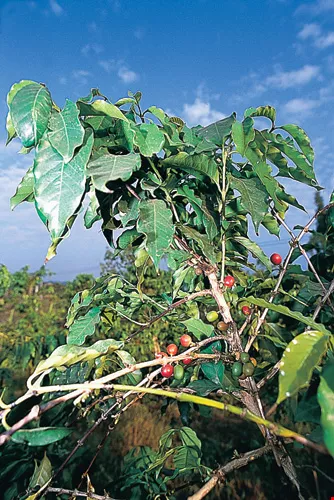
Home of Taiwanese coffee
In the latter days of the Qing Dynasty, British tea merchants plying the route between China and India made a stop at Taiwan and discovered that the climate and soil conditions were similar to those of Central and South America. They then planted 100 coffee plants near what is now Taipei County--the first to be grown in Taiwan. Unfortunately, the plants did not receive adequate care and did not successfully reproduce.
During the Japanese colonial period, the Japanese strove to promote the growing of coffee as a cash crop. At the time, Mt. Hopao had about 300 hectares of arable land, so it was made into the largest coffee plantation in the Far East. It became known as "Coffee Mountain."
The Japanese produced coffee in Taiwan for export back to Japan, and Taiwanese at the time had yet to develop a taste for coffee. After World War II, Japan handed over Taiwan to the Chinese Nationalists, and the coffee industry disappeared. Only a scattering of coffee plants remained on Mt. Hopao, untended.
Like most farmers in Kukeng, Chang's father switched over from coffee to oranges and tangerines, but he kept a few coffee plants for his own use. Those thick, round, ruby-like coffee beans are Chang's sweetest childhood memories. He recalls his father's makeshift coffee-making method: After harvesting the beans, he'd roast them in a Chinese-style brazier, grind them, put them in a cloth bag, and finally steep them in a large metal pot of water.
Chang, who's preferred coffee to tea since he was a child, was unwilling to give up on the coffee plants his father had worked so hard on. In the 1980s, he began tending 0.5 hectares of plants. At first, no other coffee shops were willing to sell his fresh-roasted beans. He had to sell his beans to a factory to be canned, though that wasn't his dream for Taiwanese coffee.
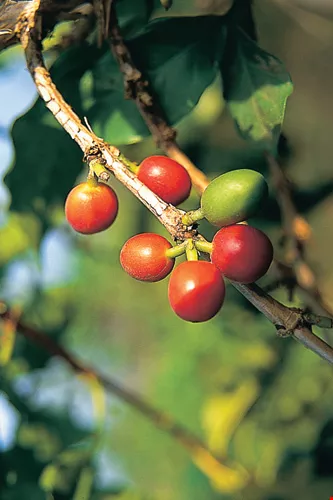
The red beans of the lush coffee plant beckon.
Masterful flavor
With his own passion for coffee, Chang decided to produce and sell it himself right there on out-of-the-way Mt. Hopao, long before the coffee craze hit. In 1984, he opened Coffee Bar-Den next to the Earth Mother temple, letting his product speak for itself to the viability of Taiwan-grown coffee.
"Ten-plus years ago, opening a coffee shop deep in the mountains here was like selling coffee in remote Mongolia! There were only a handful of households for miles around--selling two cups a day was harder than flying to the moon," he says wryly.
In 1985, Chang began to reap rewards for his efforts--his roast won a gold medal from a national gourmet organization. The next year, he was named one of ten "master farmers."
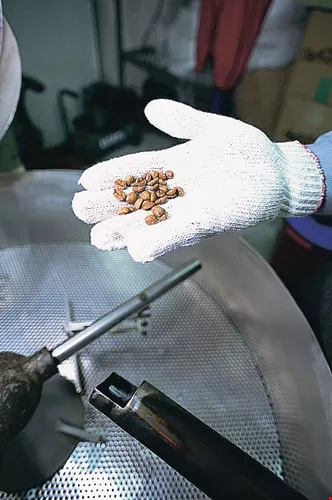
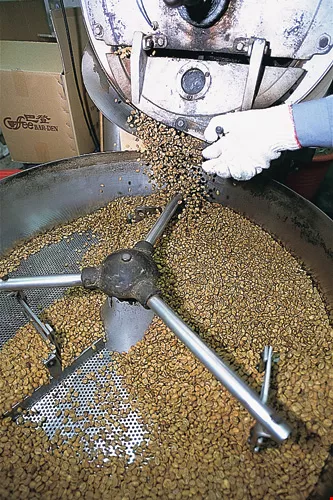
With faith in his simple idea, Chang completes the entire process himself, taking special care each step of the way. He plants the coffee plants and raises them organically. Then he harvests the beans, peels, dries, and shells them, roasts and grinds them, then finally brews his coffee. He may well be the only one in Taiwan who grows, produces, and sells his own coffee--a master coffee craftsman.
From his small shop, Chang began selling a NT$200 cup of coffee. He didn't need to worry about competition from international brands, and attracted many loyal customers. The media also rushed to cover the story of the shop promoting what it called "Yunlin coffee" or "Taiwanese coffee." In 1995, Bar-Den branched out from its base in the tiny township of Kukeng, opening shops in Taipei's Tienmu district and the famed Yungkang Street, as well as in Hsinchu, Taichung, and Kaohsiung. In all, it opened ten branches, making it a mid-sized business with 100 employees and producing 20,000 kilograms of coffee a year.
Making historical references, Chang sighs, "The eight-year war of resistance [against the Japanese] was nothing--I went through 18 years of hardship like Wang Baochuan [who waited for her husband, a Tang Dynasty general captured by the enemy]." Like coffee itself, the experience was bitter at first but became sweet with time.
Coffee renaissance
This magic bean--coffee--sparked a renaissance in Kukeng. After being struck by the September 21, 1999 earthquake and Typhoon Nari, the township began to promote itself as Taiwan's coffee mecca.
Six years ago, with no outside assistance whatsoever, the Kukeng Town Hall organized its own Mt. Hopao festival to show off the area's coffee. In 2001, the Kukeng Farmers' Association seized the opportunity and requested funding from the Council of Agriculture to turn an area used for bamboo processing into a tourist attraction with a leafy garden and experiential exhibits relating to the growing of coffee. They also created their own coffee brand name, "Coffee Mountain."
In 2003, the Yunlin County government assisted the township in putting together the first Taiwan Coffee Festival. The festival was a success, raising interest in locally produced coffee.
Farmers in Kukeng's scenic Huashan area witnessed the growing "coffee fever," and slowly began to turn over to coffee production as well. Now, along the few kilometers of road from Mt. Hopao past the Janfusun amusement park toward Huashan, there is every kind of coffeehouse imaginable. From evening deep into the night, Huashan is covered in lights beckoning to visitors, inviting them to sample a cup of Taiwanese coffee and enjoy the view of the plains below. "The area around the leisure farm used to be pretty dull. After coffee brought development, the orange and guava producers got a lift as well. Land prices in the Huashan area went up at least 30%, and even outsiders are coming to the area to open coffee shops," says Yuan Ching-hsiung, head of the Kukeng Farmers' Association. Every month, he says, around 500 tour buses pass through the tunnel of green trees that is the entrance to Kukeng. Even the older generation, who have been tea drinkers their whole lives, have been introduced to the bittersweet taste of coffee through Kukeng's reputation.
Coffee wars
A well-maintained coffee plant can yield 2-6 kg of coffee a year. The biggest cost is in labor for harvesting. Yunlin County's Agriculture Bureau fears that farmers seeking quick profits will throw production out of balance and does not encourage coffee-growing. Coffee fever is spreading, however, with farmers in Nantou, Chiayi, Tainan, and Pingtung trying their luck. The Taiwan coffee wars are just beginning. According to Coffee Association statistics, Taiwanese consume NT$13.5 billion worth of coffee a year, more than 80% of which is imported. Domestic products are just beginning to gain a foothold--for now, they are unable to compete in volume or price with imported brands.
The local coffee industry has survived the trials of history and is now starting to thrive. Will a new kind of coffee culture develop here around the local product? Taiwan's coffee lovers are waiting to see--and taste.
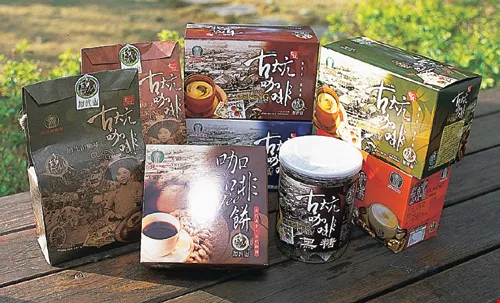
The various products produced by Kukeng Farmers' Association members bring more than NT$100 million a year into its coffers.
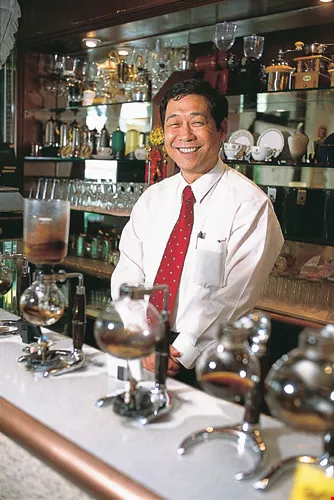
Chang Lai-en, proprietor of Coffee Bar-Den, has brought his aromatic brew to all of Taiwan.
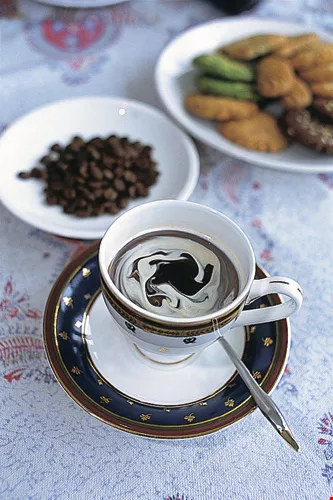
The red beans of the lush coffee plant beckon.


@List.jpg?w=522&h=410&mode=crop&format=webp&quality=80)


