The Lin Liu-Hsin Puppet Theatre Museum
Kuo Li-chuan / photos Jimmy Lin / tr. by Phil Newell
May 2006


"Using the illusory to convey the real" has always been characteristic of puppetry. All forms of puppetry--including hand puppetry, of which the Chinese say that "when the spirit of the wood and the player become one, ten fingers can depict a million soldiers"; marionette theater, originally associated with religious ritual and the battle against malevolent otherworldly forces; and shadow puppetry, sometimes called the oldest form of movie-making in the world--play out events that mimic the real world.
With fingers, strings or shadows, one can cover the gamut from joy, anger and sadness to delight, greed, fury and folly. Puppetry often entrances people, making one wonder: Who are the puppets and who is really alive? Those onstage or those sitting down in front? The Lin Liu-Hsin Puppet Theatre Museum creates this kind of mesmerizing world of illusion.
Enter the museum, on Hsining North Road in Taipei's Tataocheng area, and you seem to have slipped out of the hustle and bustle of contemporary Taipei into a space out of time, where reality and illusion intertwine. At the main entrance, master artist Chen Xihuang stroke by stroke crafts puppet heads, each with a unique expression. In the Nadou Theatre in the museum's east wing, a play rushes boisterously toward its denouement as Taiyuan Puppet Theatre Company performs The Wedding of the Mice, a high-energy Mandarin version of a traditional folk take. Between tranquility and cacophony, the cultural renewal of puppet theater, while apparently in conflict with its traditions, is in fact all part of the grand scheme of the museum's founders, especially Paul Lin, whose sense of mission toward puppet theater accounts for the collection of more than 5200 items and the ambition to be world class.

The second floor includes an exhibit of embroidered Chinese puppet costumes made by De Chun Tang, a renowned firm established in 1842.
A chance meeting in Yokohama
The full-bearded Paul Lin is a well-known gynecologist who wound up his medical practice in the US in 1984 to return to Taiwan and take over the family business--the Xie Ho Women's Hospital. Lin often travels to Japan on business, and it was on one such trip that he discovered a dozen or so traditional hand puppets in an antiques shop in Yokohama, which brought back many sweet memories of his childhood days.
As a student at Jihhsin Primary School, Lin often carried puppets in his bookbag, putting on impromptu performances at recess with his classmates. And each time he returned from school to Tainan to visit his family, his aunt would take him down to the Shengli Theater in Tainan to see some indoor puppet theater. He thus passed a happy childhood watching flying fingers toy with life and nature.
Several days after his find in Yokohama, in a museum attached to Tenri University near Osaka he saw a carving of the deity Marshal Tiandu--a patron deity of the theater--from the Qianlong Reign (1735-1795) of the Qing Dynasty, as well as a "six-legged tent" stage, shadow puppets, marionettes, embroidered costumes, and more, all richly evoking the sights and sounds of a lost age. He was overwhelmed by a bittersweet sensation: "I was really moved at the sight of these objects, representing the genius and craftsmanship of our forebears, but in Taiwan, except for antiques dealers, no one pays the slightest heed to these historic treasures."
Back in Tokyo, Lin found himself unsettled, feeling moved, fascinated, and astonished all at once. The next day he returned to Yokohama to buy up all the hand puppets in that antiques shop. "This was not," he stresses, "mere impulse or personal amusement," but had deeper roots. As a student in the UK in the 1970s, Lin had remarked that British people remained deeply proud of their historical and cultural assets, despite the declining British economy. He was moved to wonder even then what cultural assets Taiwanese could be proud of.
Having decided to throw himself into collecting puppetry artifacts, Lin displayed the same passion and dynamism he showed in running his hospital. Operating with a non-profit management mindset and an ambition to establish the world's most comprehensive puppetry museum, he expanded his collecting efforts to include Chinese-speaking countries, Southeast Asia and Europe. "Right from the first purchase of a hand puppet in 1984, it seems I was destined to pursue this cultural quest," says Lin.
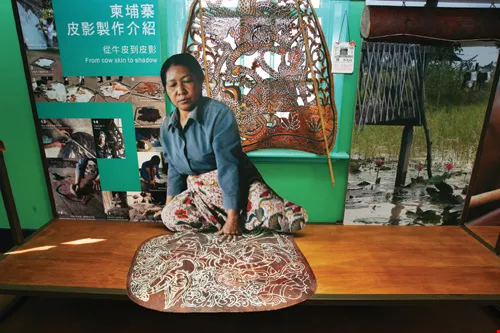
The Lin Liu-Hsin Puppet Theatre Museum was once invited to Cambodia to stage performances. After studying how shadow puppet theatre is performed there, a realistic exhibit was constructed at the museum using mannequins.
The Taiyuan Puppet Theatre Company
Lin's quest has not always been smooth, however. For example, he once purchased some exquisite Indonesian "imperial" shadow puppets (far more intricately and skillfully crafted than those used in ordinary puppet shows) from a professor at the University of Paris, only to have the French culture ministry intervene when he tried to ship them back to Taiwan. The reason was that four museums in Europe relied on loans from this professor for their shadow puppet exhibits, and would have been without such artifacts if the collection were sold. Seeing his way blocked, Lin forwarded the puppets to Brussels and shipped them to Taiwan from there.
Over the past 20-plus years, Lin has gathered together more than 5200 individual objects. His collection of Indonesian shadow puppets, Taiwanese hand puppets, handcrafted puppets from master sculptor Jiang Jiazou, Chinese shadow puppets, and Nuo Opera masks from southwestern China, is the largest in the world.
After many difficulties, the TTT (Toa-Thiu-Thia) Puppet Centre opened in 2000 in a renovated Japanese-era house in Taipei's Tataocheng area, with puppet researcher and co-founder Robin Ruizendaal, from the Netherlands, serving as director.
The next year, after hand puppet master Chen Xihuang joined the performance company, the centre established its own theater company, Taiyuan Puppet Theatre Company. Ruizendaal shifted to behind-the-scenes work, writing refreshing and entertaining new scripts that helped establish the company's reputation. They include The Wedding of the Mice, an Italian opera called Marco Polo in which the impetuous young Italian hero turns the Chinese imperial court topsy-turvy, and a shadow-puppet version of Anderson's fairy tale The Little Match Girl.
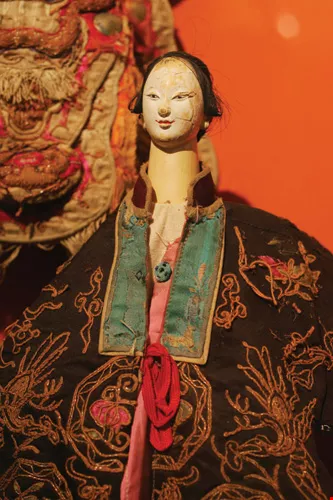
The creations of the renowned Chinese hand-puppet carver Jiang Jiazou are lifelike in every detail.
Moving house
To provide a permanent home for the collection of puppetry artifacts, Lin's mother Shih Chin-hua donated a new building. The TTT Puppet Centre moved to its current location on Hsining North Road in November 2005, and changed its name to the Lin Liu-Hsin Puppet Theatre Museum in commemoration of Lin's remarkable father. At age 12, in defiance of his family's opposition, Lin Liu-hsin had taken a ship alone to Japan to study, supporting himself by selling newspapers and the stinky soybeans (known as natto in Japanese and nadou in Chinese) that Japanese eat as a snack. Eventually he graduated from the College of Medicine at Nihon University Tokyo. The Nadou Theatre in the museum is dedicated to the memory of what he accomplished.
The museum consists of two historic four-story buildings now joined together, only one lane over from the Hsiahai City God Temple. It is well lit and expansive, with about 650 square meters of usable floor space, and a special storage area that is temperature and humidity controlled. The first floor houses a sculpture workshop and the Nadou Theater (suitable for all forms of puppet theater), while the corner next to the stairs is home to a special exhibit on Cantonese rod puppetry in the 1980s.
The second floor includes a century-old "four-legged tent" stage, with the area behind it reserved for props and instruments belonging to the Hsin Wan Jan Hand Puppet Troupe, which Chen Xihuang founded. There is also a historically significant "six-legged tent" stage, formerly used by Wang Yan, known as "the big-mouthed master." After Wang lost his eyesight, the stage was sold by a Taiwan antiques dealer to a buyer in Japan, but Lin moved heaven and earth to buy it back. In 1988, when Lin invited Wang to museum, Wang was moved to tears at the touch of his old stage.
Next to the stage is an exhibit dedicated to the late Jiang Jiazou of Quanzhou (in Fujian, China), a renowned master of puppet-head carving, as well as a display of costumes made by De Chun Tang, founded in Quanzhou in 1842, which was the leading maker of embroidered costumes for Chinese puppet theater.
Next to the exhibits just described, which evoke the sights and smells of the distant past, is a special exhibition on the Jin Guang (Golden Light) Puppet Theater, a 1960s TV program that used traditional puppets and stories but also incorporated modern music and special visual effects. The door that separates the two areas is really the dividing line between tradition and innovation.
The third floor is the hall of marionettes. In Asia, Europe, and Africa, the earliest puppet theater developed through rites intended to ward off disease and cope with the fear of death. Puppets representing deities were manipulated in rituals of praying for good fortune or expelling malevolent influences, and could even have curative powers. In Chinese literature, marionettes symbolize that people's lives are in the hands of fate.
Marionette theater arrived in Taiwan from China some time in the 18th century, and was mainly used for ritualized performances. The museum has puppets from Taiwan, Indonesia, Myanmar, and elsewhere on display, with a DIY performance area if you want to try your hand. On the fourth floor of the museum are masks from many lands.
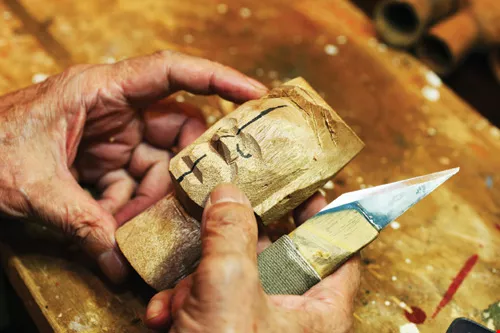
At the museum, you can see a master artist hand-crafting highly individualized puppet heads with unique facial expressions.
A good mix
"Your average museum lacks a 'fun' atmosphere, so naturally can't attract many people. The only possibility of success for promoting a form of culture is to first give people the impression that it is fun," says Robin Ruizendaal, whose very tone of voice reveals his passion for and creative interest in puppetry. Inside the museum, there are no signs telling you to keep the noise down. Visitors can pull open drawers to view exquisitely embroidered costumes, can stroll in a space of flashing lights in a rainbow of colors, can experience the "golden light" version of a tale of a Chinese martial arts hero of old, and can even put on a show of their own.
To differentiate between different performance styles, in addition to the original Taiyuan Puppet Theatre Company, which strives to carry forward the Taiwanese puppet tradition, last year the Nadou Theatre Company was also formed. This group, embracing a more innovative spirit, integrates Western dramatic aesthetics. Performances, which adopt a modernistic format and may include human actors, stage workers, and modern music as well as puppets, stress the inner meaning of the stories as well as acoustic and visual symbolism. These two performing companies, integral parts of the museum itself, add a dynamic "soft" and lively creativity to the static "hardware" of the exhibits of traditional artifacts, so that visitors are treated to a stream of surprising delights.
In recent years, museum companies have been on tours to Europe, Russia, Latin America, Cambodia, Hong Kong and Macao. This year, in cooperation with Taiyuan Publishing, the museum will publish a children's book on puppet theater, with an accompanying audio CD. Thus they are working at the educational level to sow the seeds of puppetry culture as well as broadening the international perspective of Taiwanese puppetry.
The sun is setting as our visit to the museum ends. An elderly master carver, seemingly frozen in the river of time, still concentrates intently on the expressiveness of the puppet head he is carving. Suddenly childish laughter from the theater next door shatters the stillness. Opening the door to go out, for a moment confusion reigns: Which is authentic life? And which the play-acting?
Address: 79 Hsining N. Rd., Taipei City
Tel.: (02)2556-8909
Website: http://www.taipeipuppet.com/about.html
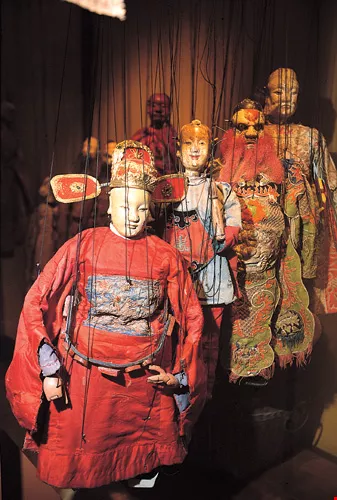
On the third floor is an exhibit of marionettes from Taiwan, India, Myanmar, and elsewhere. Marionette theater came to Taiwan from China probably sometime in the 18th century, originally mainly being used in ritualistic performances.
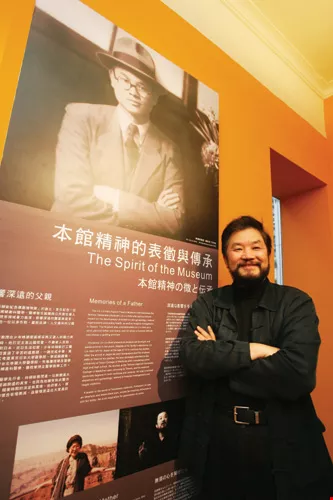
By operating with a non-profit management mindset and an ambition to establish the most comprehensive puppetry museum in the world, Paul Lin has been able to build the impressive collection he has today.

Massimo Godoli Peli, from Italy, became one of the museum's resident puppeteers after moving to Taiwan in 2001. He frequently performs traditional Italian puppet theater for audiences young and old across Taiwan.
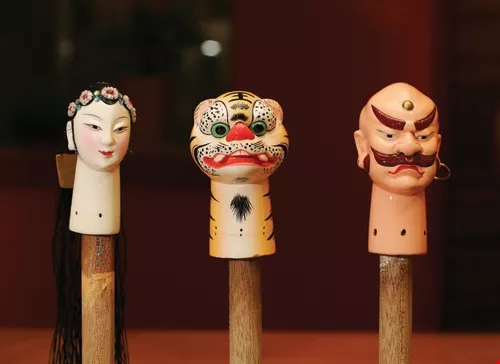
"Using the illusory to convey the real" is a distinctive feature of puppetry culture. All forms of puppetry play out events that mimic the real world.


@List.jpg?w=522&h=410&mode=crop&format=webp&quality=80)


