The Rise and Fall of "China"--Chinese Identity in Hong Kong and Taiwan Textbooks
Elaine Chen / photos Hsueh Chi-kuang / tr. by Phil Newell
May 1995
"We act as if the 21st century were far off, but it is nearly upon us. We place our hopes and our dreams there. If you want to know what kind of people there will be in the next century, you can find the answer by looking in America's classrooms." This was said by former US President George Bush, speaking on educational policy for the 21st century.
For Chinese people, the ideology that guides politics will be the most important factor for the next generation.
In recent years, both Hong Kong and Taiwan have experienced dramatic changes in their political atmospheres. What will the textbooks to educate our next generation look like, and what will be their spirit? It won't hurt to start by taking a trip to a primary school classroom to find out.
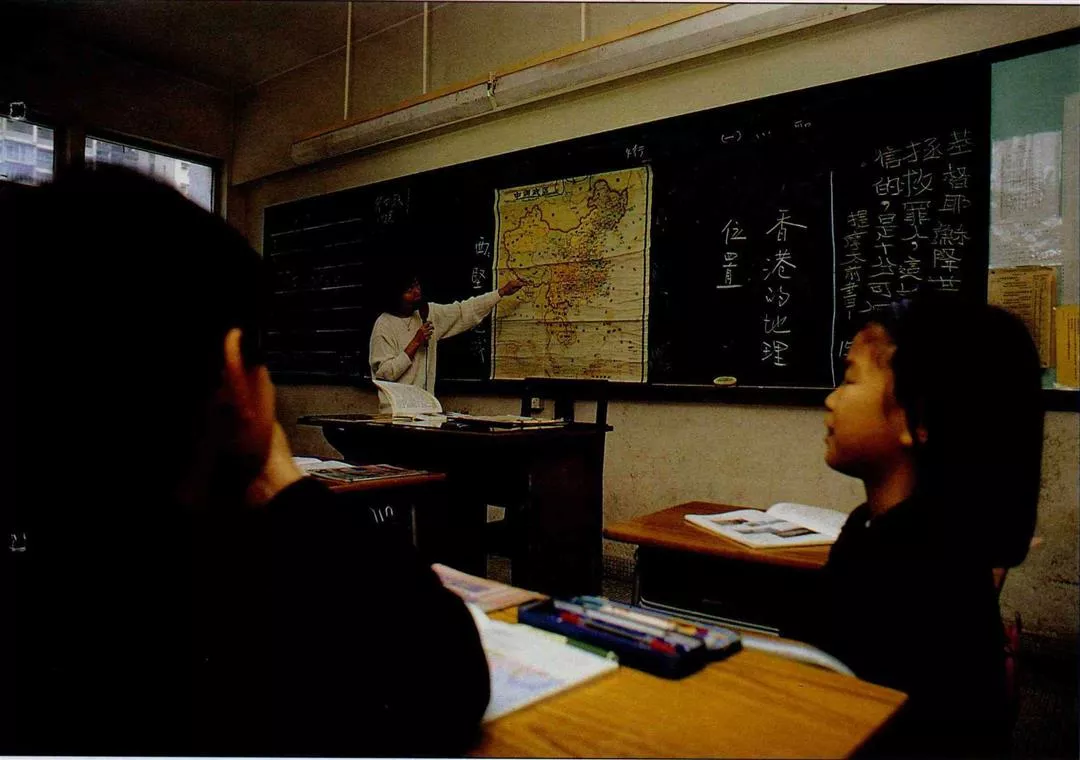
In the private Pui Ching Primary School in Hong Kong, Ms Liu, the teacher, who comes from Taiwan but married someone from Hong Kong, is teaching students in the putonghua class. (Putonghua, meaning "the common language," is the term used in mainland China and Hong Kong to describe standard Mandarin Chinese.) Today's class is Lesson 8, "The Three Great Rivers." Ms Liu instructs the students to read the lesson once together.
The whole class of little children--whose mother tongue is Cantonese--begins to stumble through the material:
"Teacher: Students, do you know China's three great rivers?
Students: We don't know.
Teacher: They are the Chang Jiang, or Yangtze River, the Yellow River, and the Pearl River.
Students: Teacher, which of these is the longest?
Teacher: The Yangtze River is the longest."
Ms Liu waits until the students have finished reading and then corrects mistakes in their pronunciation. "Yellow River is pronounced huang he, not huang ke. You really have to make that "h" sound." Referring to their texts, with romanized putonghua pronunciation written under each character, she says, "The next time you read, cover up the characters with a blank sheet of paper and just read the putonghua pronunciation. That way you can avoid guessing at the pronunciation by using the Cantonese for the character. If you try to do it by guessing, you'll never learn putonghua properly."
Because Christmas will soon arrive, Ms Liu has a little gift for the class. Using her free time, she has made up colorful cards with the letters of the putonghua phonetic alphabet. In the next term, the kids can use the cards to play putonghua spelling games.

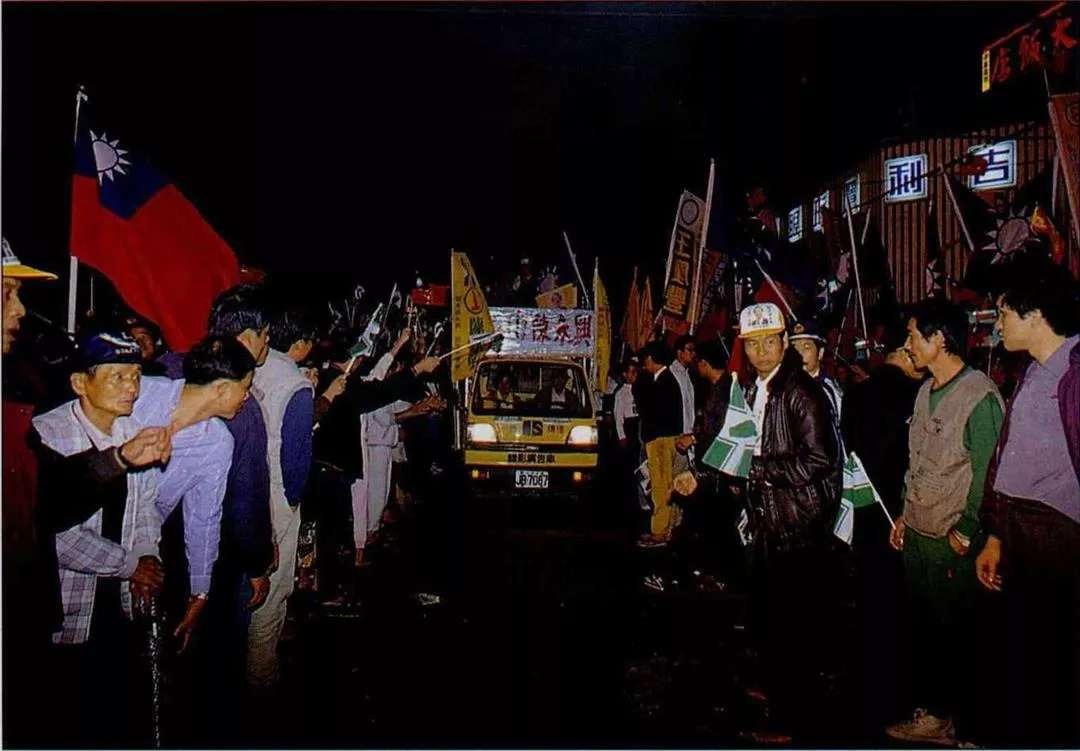
Taiwan's political transformation has been internally driven. Following the lifting of martial law and a redistribution of power among political parties, a consensus has formed around the idea of "Taiwan first." (photo by Diago Chiu)
Textbooks behind the times
In both Hong Kong and Taiwan, beginning next year new standards will be implemented in primary school textbooks in preparation for entering the 21st century.
The last time that Taiwan rewrote textbooks was in 1975, and the same books have been used ever since. Within these 20 years, there have been fundamental changes in the international and domestic situations. For example, the Soviet Union has collapsed and the Cold War is over. Within Taiwan, there has been political liberalization, economic transformagion from developing country to newly industrialized country status, and social pluralization. The authoritarian and rigid education methods of the past cannot produce the leaders that society and the country will need in the future. No wonder education in Taiwan is often criticized for trying to "use the knowledge of the past to educate the students of the present to solve the problems of the future."
Hong Kong's current curriculum is based on the years before 1978, when nine-year compulsory education was first introduced. It is thus designed for the 20% of students who before that time could test into the limited space available in middle schools, and therefore is an elitist curriculum. Naturally it has to be changed in order for it to be appropriate for students of all levels today, perhaps by reducing the number of subjects and the degree of difficulty of primary school texts.
Whatever the similarities, Taiwan and Hong Kong will have a fundamental difference in their textbooks in the future. The idea of "identification with greater China" will creep into Hong Kong even as it is being downplayed in Taiwan. The decisive factor in this difference is the political atmosphere in the two places.

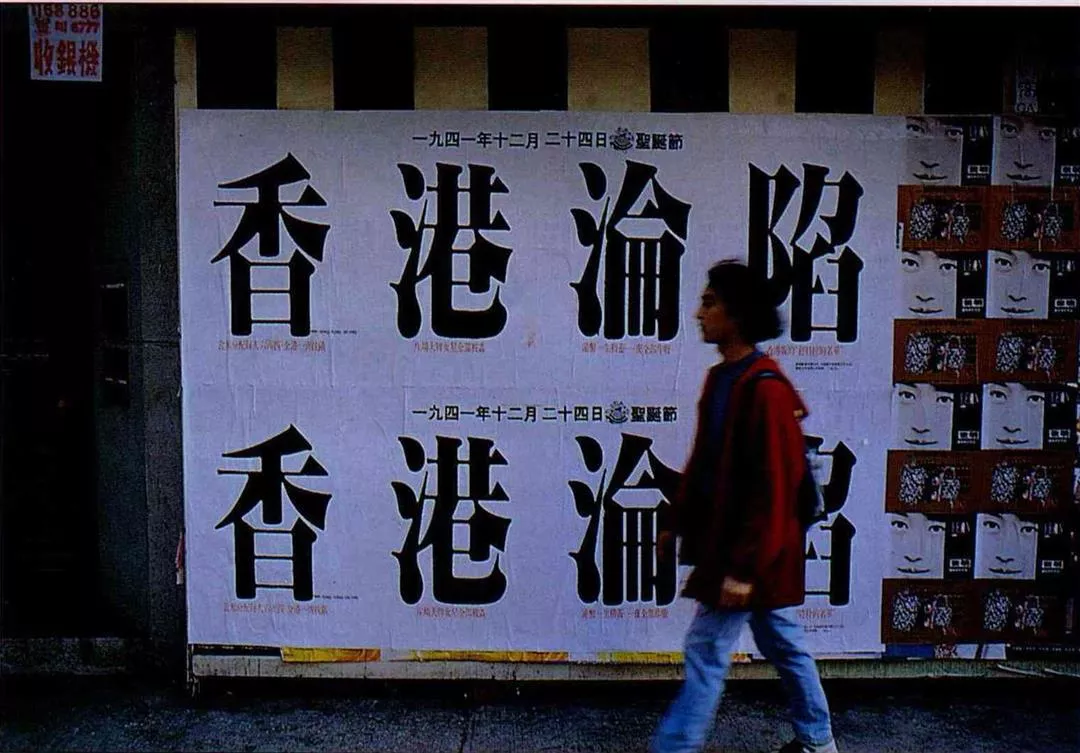
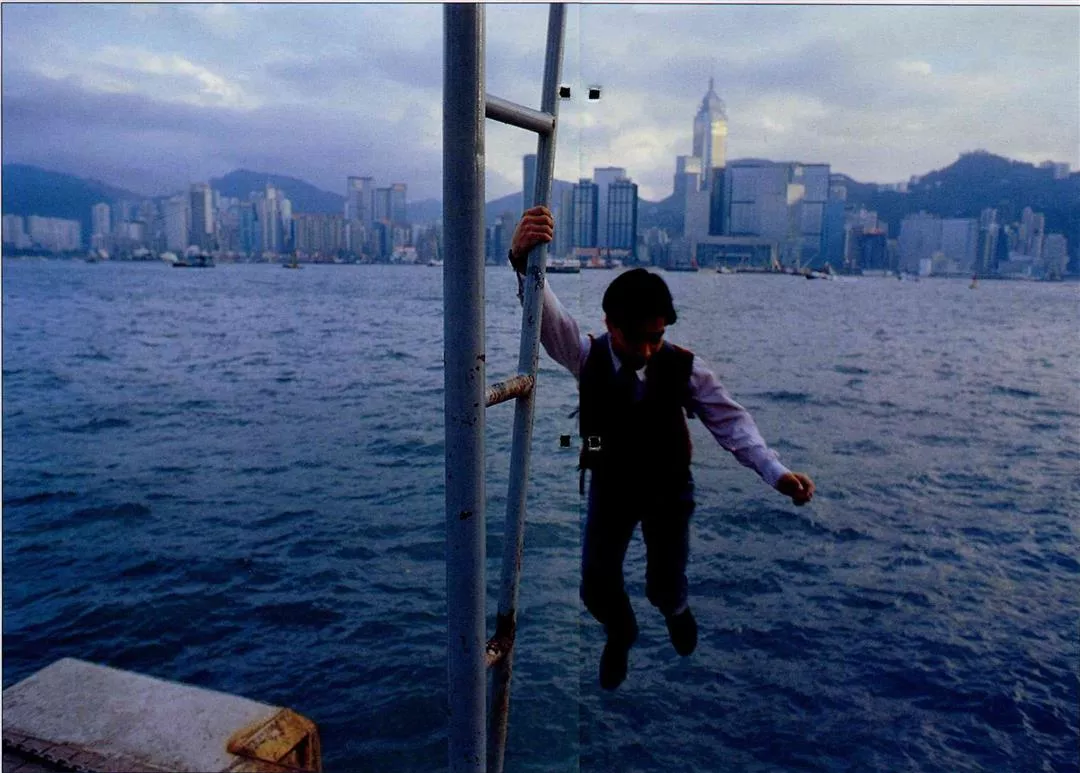
Hong Kong's political transformation is being externally driven. Last year a film described the fall of Hong Kong into Japanese hands in World War II, using the past as a metaphor for the present.
Political tides affect textbooks
In Hong Kong, the 1997 deadline is fast approaching. Hong Kong will change from a British colony into a Special Administrative Region of the "People's Republic of China." Despite talk of "one country, two systems" and guarantees that Hong Kong can retain its current social system for the next 50 years, the new government will undoubtedly make quite different demands on citizens in terms of national consciousness than in the past. Thus, the new government will inevitably alter the textbooks that shape the next generation.
In contrast to Hong Kong, where the political future is being decided by others, in Taiwan--which was a Japanese colony for 50 years, returned to the motherland for 4 years, and has since been separated from the mainland for more than four decades--political change is internally driven and autonomous.
After the lifting of martial law and a series of hard-fought elections leading to a major redistribution of votes among political parties, in Taiwan a consensus has grown up around a "nativist" idea that puts "Taiwan first." Even President Lee Teng-hui's recent comments on his ideals for the nation have deviated from the "greater China" conception, and emphasize "managing greater Taiwan and building a new mainland China."
As a result, many of the lessons in past textbooks which stressed China and de-emphasized Taiwan have naturally become the targets of public criticism.

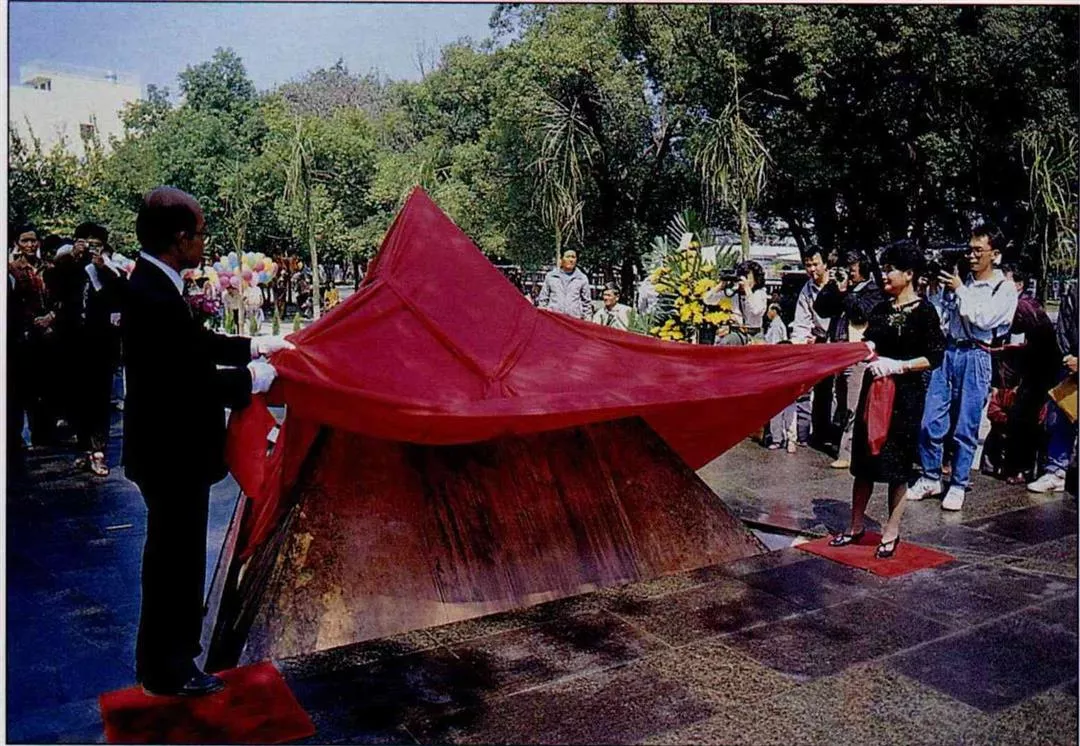
Taiwanese consciousness has been affected to a great extent by the ethnic tragedy of the early years after the return to Chinese rule which followed the Japanese colonial period. The photo shows the ceremony held upon the completion of the February 28 incident memorial in Pingtung. (photo by Cheng Yuan-ching)
How much "Taiwan"?
Though the main goal is clear, altering textbooks is a major process which requires a great deal of time. There is relatively little dispute over what should be reduced and what should be increased. But there are disputes over the degree of change.
For example, some cities and counties have already begun teaching Taiwan-centered "nativist education" using free-activities time in schools. Beginning next September these classes will be made part of the official curriculum, with 40 minutes devoted to them each week. Moreover, the new curriculum will no longer simply emphasize love of one's country, but will stress concern for all humanity starting from the level of one's hometown right up to the global level.
Besides the "nativist" education activities just discussed, in the future, third grade social studies texts will begin teaching students about Taiwan's local townships. In fourth grade, students will study the geography, environment, natural resources, economic development, social transformation, folk customs and arts, and pioneering development of Taiwan. Only in the fifth grade will students start to learn about China's borders, history, and nationalities. In sixth grade students will be taught about the world situation. Therefore, as Ministry of Education (MOE) officials put it, students will be focusing on Taiwan for one third of their six years in primary school.
However, there are still those not satisfied with this proportion. In hearings held by the Education Committee of the Legislative Yuan, members of the Democratic Progressive Party (DPP) demanded that the MOE dissolve the existing Curriculum Standards Revision Board. They requested that education focusing on Taiwan be raised to 60% of the humanities and social science curriculum in primary and middle schools.

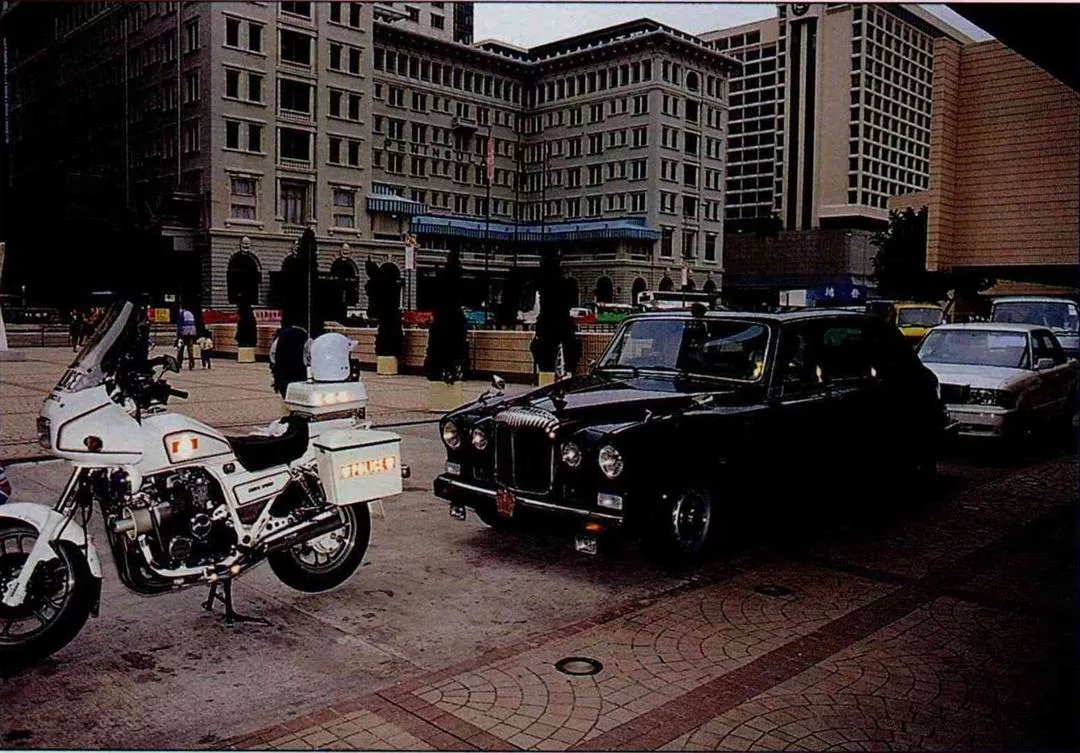
Hong Kong's lack of a national identity is due to a century as a British colony. The photo is of the official car of the Hong Kong governor.
Conflict or compromise?
"Isn't this just destroying one set of ideological blinders to replace them with another?" asks Chou Chuan, a legislator for the New Party who has been following education issues for the last two years. She says that education should transmit knowledge, not ideology. Exactly how much "Taiwan" there should be in schools should be determined by education experts, not by discussions among legislators. "My child will live in the 21st century. I want him to speak the languages of the 21st century--computers and foreign languages. Loving one's homeland is like loving one's mother, it doesn't need to be taught in school," says Chou Chuan. She notes that most members of the DPP themselves were educated in the ideology of greater China from the time they were small, but don't they love Taiwan just as much now?
What concerns many is that an overemphasis on "nativist" ideology will affect the conception of national identity. Chuang Ho-hsiung, the head of the Department of Education in Ilan County, says that there is no need to worry about this point. He says, for example, that in intramural competitions students naturally cheer for their own classes. In inter-school competitions they support their own institutions. In the Taiwan Area Athletic Meet, they back their own county. When it comes to international competitions, naturally they will cheer for the Chinese team.
"I feel that strengthening nativism will not affect national identity. These have always been at different levels," he concludes.
With political development in Taiwan, "in the future teaching materials will have to be more pluralistic. They must take into account a balance among all levels of society, ethnic groups, and sexes," says Huang Ping-huang, a professor at National Chengchih University who has been invited to convene the social studies committee of the National Institute for Compilation and Translation (NICT). It would be extremely difficult to completely avoid ideology in social studies. The idea is to minimize it as much as possible in practice.

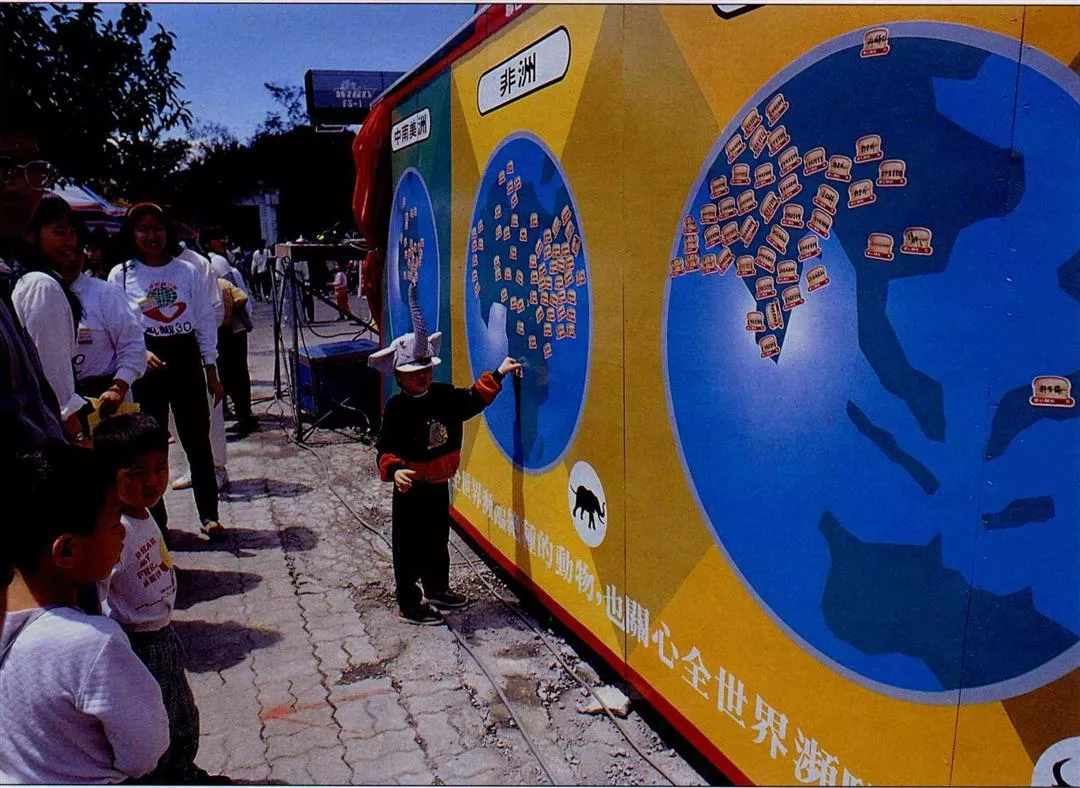
In the future Taiwan textbooks will not only emphasize Taiwan, they will have a stronger global perspective. The photo shows activities to raise money for African children victimized by war.
From monolithic to pluralistic
Perhaps this ideal was rather difficult to realize in the past. But beginning next September, not only will first-graders have a completely new curriculum, NICT will no longer be the only institution editing their textbooks. Any publishers or educators interested in the field can compete in this market. For example, Newton Publishing Company is getting together with the experimental Forest Primary School and Kang Ho Publishing Company (which already has half the market for arts and crafts books) to create textbooks, and the New Schoolmate Business Group also plans to enter this market.
"In a plural society, all the structures tend toward openness and flexibility. The government should long ago have lifted the ban on private groups producing their own textbooks in order to get rid of the bad reputation for brainwashing students," says Chou Chuan, who fought to have the ban on competition with the unified textbook system lifted. Few countries in the world except communist or backward nations use unified textbooks adopted at the national level. Even Communist China currently uses a system in which the central and local governments produce different textbooks.
Chou went to great efforts to alter the closed nature of this field. She held many public hearings; wrote advocacy papers; worked with her Legislative Yuan colleagues, scholars, and publishers to build a consensus; and constantly applied pressure to the executive branch. Later Lee Yuan-tseh, president of the Academia Sinica, called for liberating education from its restraints. Also, at a conference of primary school principals, President Lee Teng-hui stressed that textbooks should be pluralized and that there should no longer simply be one text. Finally, the Ministry of Education decided that beginning next year, any publisher could enter the textbook market. They simply have to have their books reviewed and approved, after which each city and county can adopt whichever ones they prefer.

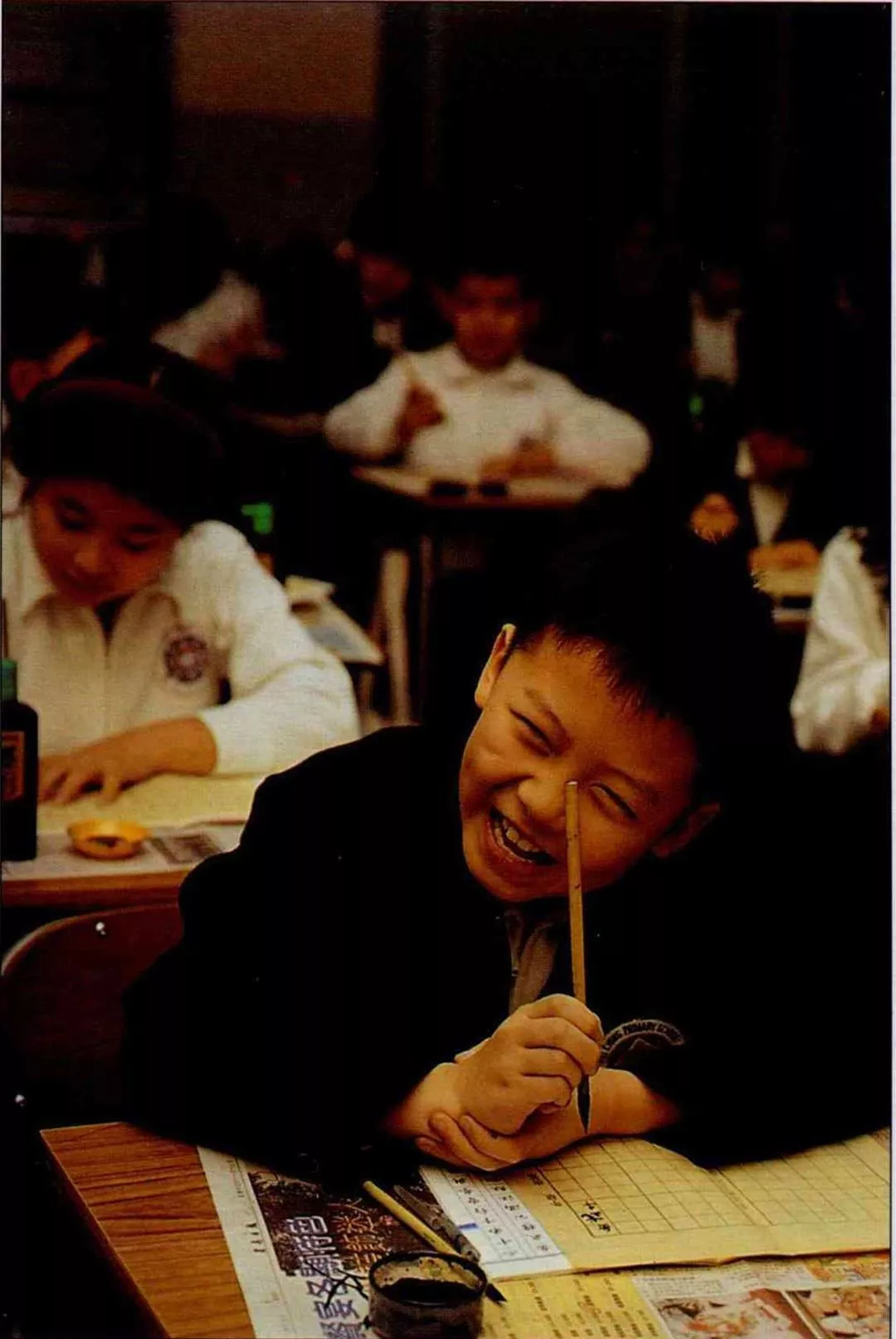
Hong Kong children are not only learning putonghua, they are also studying traditional calligraphy.
Something for everyone
But how can each county and city choose their own textbooks?
Under the old system of unified textbooks, certain ideologies were excluded. but now Taiwan's cities and counties are governed by chief executives from various political parties. What will happen in the future if those from Kuomintang cities and counties use textbook A while those from DPP areas use textbook B? Will we produce citizens of radically different ideologies?
Chuang Ho-hsiung says that the most likely process for choosing textbooks in the future will be for teachers at each school to study the options and then, with the participation of the parents, make a final choice. "The schools have long been integrated into their communities. The central authorities should not be telling parents which ideology should be used to educate their own children."
While the officials are focused on ideology, the publishers are thinking about sales.
"I'll tell you straight out that I not only want to sell textbooks to Taipei County [currently led by You Ching, a member of the DPP], I also want to get in on Kaohsiung City [whose current mayor is Wu Dun-yi of the Kuomintang]. And in the future, if the New Party wins the mayoralty in a city, I want to sell to them too. Our solution to sensitive questions is to not take a position on them," says Mike Lee, general manager of the Kang Ho Publishing Company. He takes a case in point: There are disputes over what constitutes the accurate map of China. Lee's books would put the different interpretations side by side.
Yet no matter how pluralized Taiwan textbook publishing may get, everyone agrees that the future inevitably lies with "nativism"--a greater emphasis on things Taiwanese. In contrast, because Hong Kong's political transformation is being driven from without, in terms of the revision of textbooks, there are still many serious disputes, with different value systems contending.

Can textbooks really "control" the next generation? Nobody knows for sure.

The more things change. . .
In these disputes, the British colonial government has staked out its position clearly. After the signing of the Sino-British Joint Declaration on Hong Kong, the Hong Kong Education Department released a series of instructions which advised increasing or adding classes on China, putonghua (Mandarin Chinese), and the Basic Law (the constitution, drawn up by the PRC, which will, in theory, govern Hong Kong). The Hong Kong government also has a program to provide funds to encourage publishers to publish more Chinese-language textbooks. The authorities anticipate that in 1998, 70% of middle school textbooks will be in Chinese, while English textbooks will drop from the current 60% to 30%.
Nevertheless, a key problem is that, whatever sense of moral responsibility Britain feels to ease the transition to Chinese rule, it is too much to ask that it be completely without its own subjective point of view. The new textbook standards the Hong Kong government plans to implement in 1996 have, so far, not made many necessary adjustments to accommodate Hong Kong's return to China in 1997.
For example, currently Hong Kong primary schools have six subjects: Chinese, English, mathematics, social studies, physical fitness, and science. After 1996, the latter three subjects will be combined into a "general studies" class. Because of the reduction in class time allotted to these units, the proportion of time in the whole school curriculum devoted to studying China will be even less than it is now. In the old curriculum, Chinese history was discussed from the very origins, and several important dynasties were covered. But the new texts only begin with the Opium War (1848). Among 960 educational time segments, only 20 will be devoted to Chinese history and geography.
Conflicts with PRC standards
Besides quantitative problems, there are also quite different attitudes at work. In British texts, Hong Kong is still Hong Kong while China is still China. For example, one of the items in the curriculum standards suggests: "List views on the maintenance of good relations between Hong Kong and China." Says Rodney F.C. Chui, president of the Hong Kong Educational Publishers Association, "This will be completely unacceptable after 1997." The new curriculum will be implemented beginning in September of 1996, only 9 months prior to the July 1997 turnover. The new texts should meet the needs of the future, yet they are still guided by the point of view of Hong Kong as a colony.
Many in Hong Kong are worried that China, which has always emphasized nationalism and patriotism, will in the future object to Hong Kong's textbooks.
Last November, the Cultural Subcommittee of the Preliminary Working Committee of the Preparatory Committee for the Hong Kong Special Administrative Region (a pro-PRC body which is planning for the transition to Chinese rule) issued its views on the content of textbooks. The Subcommittee stated that overall there are few problems, but that several items touching upon civic education underplay Chinese national identity, treat China as a neighboring country (rather than as the mother country), and promote the idea of "two Chinas." The committee urged that offending items be revised after 1997. Those on the Subcommittee believe that Hong Kong textbooks should emphasize Chinese nationalism, reflect the fact that Hong Kong is being returned to China, and thoroughly imbue students with the concept of "one country, two systems."
The textbooks to be used in 1997 will be approved by the Hong Kong educational authorities in 1996, after which private publishing houses will put them into print. This means that anyone who wishes to affect the post-1997 textbooks must deal with the Hong Kong educational authorities today.
However, because relations between the Preparatory Committee and the Hong Kong government are not good, the two sides are not communicating with each other. The Preparatory Committee has thus advocated going through diplomatic channels to pass on the problem to the Sino-British Joint Liaison Group for discussion. At that level, the PRC government has a great deal of influence, and decisions reached at that level would have to be implemented by the Hong Kong government.
Dilemma for publishers
Right now, the Hong Kong side does what it wants, while the Chinese side makes plans for what it wants. "Publishers are caught in the middle. On the one hand they are trying to conform to the Hong Kong reforms. But on the other, they are worried that after 1997 it will all have been wasted effort," says Rodney Chui, who is also managing director of the New Asia Publishing House.
From a strictly educational point of view, publishers are well aware that it is necessary to put a new curriculum into place. But they believe that the timing is inappropriate for what the Hong Kong government is proposing, because not enough consideration has been given to the political environment. Some in Hong Kong have even hinted darkly at a plot, arguing that the British want to throw the educational system into chaos before pulling out of Hong Kong.
Publishers have already met to discuss the problem of textbooks during the transitional period, but they have not been able to change the Hong Kong government's decision. All they can do is to review the textbook guidelines and apply some general principles to them, raising objections if the guidelines violate the terms of the Basic Law. Yet this cannot resolve their basic dilemma.
"We cannot simply publish an entirely new set of textbooks after 1997. There's not enough time. And anyway, there are not that many students in Hong Kong, while there are 40 or 50 publishing houses, so each house can only sell a very limited number of books. Since these publishers have only limited manpower and financial resources, having to produce new texts would become a major burden," points out Rodney Chui.
Because of the turmoil in Hong Kong education today, some individuals, including members of the Preparatory Committee and some Hong Kong publishers, have formed a "Hong Kong Educational Publishing Committee of Concern." Publishers hope to use this channel to learn the views of the PRC toward proposed textbooks.
Change yourself
On the other side of this debate are people like Cheung Man-kwong, a member of Hong Kong's Legislative Council, representing the educational sector. He strongly opposes taking the textbook issue to the diplomatic level. Cheung agrees that when sovereignty over Hong Kong changes after 1997, textbooks should be appropriately revised to meet the new social and economic conditions.
"However, the curriculum currently being used in Hong Kong was decided upon by specialized bodies. The government should start preparatory work as soon as possible to make some small adjustments, and there is no need to let someone else do our job and invite interference from outsiders," he says.
However, this still begs the question: What is the definition of an appropriate revision?
Kwong Chi-hung, general manager of the Hong Kong Educational Publishing Company, believes that only technical adjustments will be needed in textbooks to cope with political changes. Phrases that smack of colonialism can be altered. For example, the Chinese title of the highest ranking official can be changed from zongdu (a term corresponding to the English title "governor," but which in Chinese carries the feeling of "viceroy" or "imperial official") to "chief executive." According to Kwong's calculations, only about five percent of the contents of current textbooks would need to be revised.
But some people contend that a complete change in ideological orientation will be unavoidable. Says Rodney Chui, "Although it is clearly stipulated in the Basic Law that Hong Kong's educational system--including curriculum autonomy--need not be changed for 50 years, this is wishful thinking. Education must always take into account the fact that it is educating citizens of a particular entity."
Don't love your parents, just love China?
Chui points out that many people have seen education in Hong Kong as being politically neutral, as simply education in and for itself. But, he says with dismay, "the worst thing about colonial education is not what it teaches you, but what it doesn't teach you." In civic education in primary schools in Hong Kong, political topics are given short shrift. Children are taught to love their parents, classmates, animals, nature. . . . in fact they are taught to love just about everything except to love China, their mother country. As far as civic education goes, Chui sees this as a severe shortcoming.
But, retorts Cheung Man-kwong, "education should naturally start from the child himself or herself. You can't not study about your family and just study about China. After all, the first thing a child learns to say is 'mama,' not 'Deng Xiaoping!'" Cheung approves of adding a bit more Chinese nationalist flavor and patriotism, but warns against restricting content to these elements. In a normal peacetime situation, he thinks, the highest values should be personal freedom, human rights, democracy, and the rule of law. These are all extremely important, and students should not drop everything and study only China just because 1997 is coming.
Au Pak-kuen is the assistant director of the Hong Kong Professional Teachers' Union. Every year for the past ten years he has demonstrated his patriotism by going to the Japanese consulate in Hong Kong to denounce the Japanese government for World War II atrocities against China (such as the Rape of Nanjing). He agrees that to develop a sense of national self-confidence, it is necessary to study the nation's history. But, he feels, democratic education should precede nationalist education, otherwise the latter can be manipulated by ambitious people; when nationalism is carried to an extreme point, one only acknowledges the claims of one's own group, and there is no tolerance for others.
He hopes that in the future an independent textbook development office can be created. "Education is the most important tool for shaping thinking. Mainland China is now emphasizing patriotism in its education, and I'm really worried they are going to dump all of that on to Hong Kong."
Thought control?
No one will deny the importance of textbooks. But can textbooks really "control" the next generation? In the past, efforts have been made to control the thinking of the people, yet have often failed, as everyone from the first emperor of China to Mao discovered. In Taiwan, many people who were steeped in the ideology of "greater China" in school, today no longer wish to be a part of China. And many Chinese people in Hong Kong who experienced colonial education, today wish to strengthen nationalist consciousness.
Thus, whatever changes Hong Kong and Taiwan may make in their textbooks today, perhaps the political situation in the 21st century will be quite different. Will the next generation wish to change everything again when that time comes? Nobody can say for sure.
[Picture Caption]
p.18
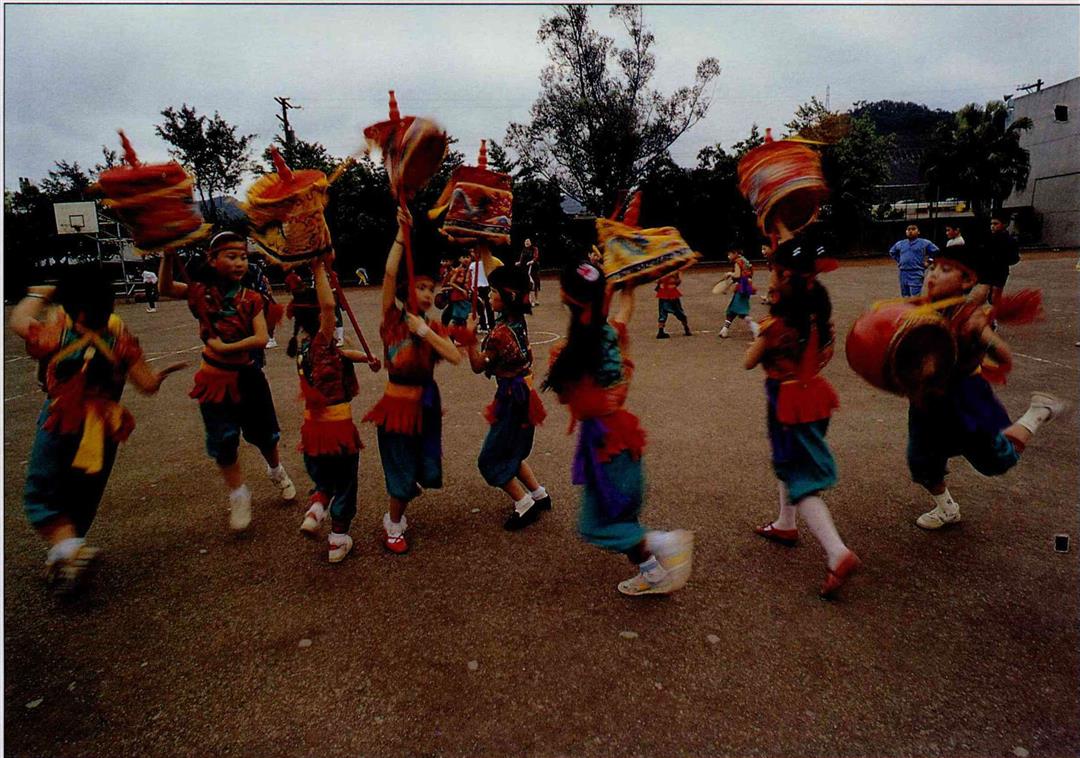
Political changes in Taiwan and Hong Kong are altering primary school textbooks enormously. In Taiwan (left photo), "nativist education" is being emphasized, while in Hong Kong (right) "China" is being stressed. (left photo by Diago Chiu)
p.20
Taiwan's political transformation has been internally driven. Following the lifting of martial law and a redistribution of power among political parties, a consensus has formed around the idea of "Taiwan first." (photo by Diago Chiu)
p.21
Hong Kong's political transformation is being externally driven. Last year a film described the fall of Hong Kong into Japanese hands in World War II, using the past as a metaphor for the present.
p.22
Taiwanese consciousness has been affected to a great extent by the ethnic tragedy of the early years after the return to Chinese rule which followed the Japanese colonial period. The photo shows the ceremony held upon the completion of the February 28 incident memorial in Pingtung. (photo by Cheng Yuan-ching)
p.23
Hong Kong's lack of a national identity is due to a century as a British colony. The photo is of the official car of the Hong Kong governor.
p.24
In the future Taiwan textbooks will not only emphasize Taiwan, they will have a stronger global perspective. The photo shows activities to raise money for African children victimized by war.
p.25
Hong Kong children are not only learning putonghua, they are also studying traditional calligraphy.
p.26
Can textbooks really "control" the next generation? Nobody knows for sure.