Volunteer Tourism: Working for Charity, Saving MoneyE
Lin Hsin-ching / photos courtesy of VYA Taiwan / tr. by Scott Williams
June 2009
Mention traveling abroad as a volunteer and most people will think of amazingly compassionate Taiwanese young people like Paul Lien, who worked with an International Cooperation and Development medical mission to deliver medical support to people in the West African nation of Burkina Faso. But what about others who want to do likewise? Lien's variety of volunteer work requires expert knowledge, great willpower, and tremendous fortitude. It's not the kind of thing that just anyone can do.
Fortunately, more and more international volunteering opportunities have become available to young people in recent years, and these opportunities are no longer limited to providing humanitarian aid to underdeveloped nations. Young people who would like to volunteer abroad can now go to Japan to help clean up Mt. Fuji while making an attempt on the summit, to the Philippines to plant mangroves on outlying islands, to Sicily to entertain the old and infirm, to Copenhagen to promote fair trade, or even to Greenland to volunteer under the midnight sun. In addition to doing good deeds, these people are saving themselves a huge amount in travel expenses.
Zhao Xinling, a senior in the Department of Industrial Design at National Cheng Kung University, decided she wanted to go abroad as a volunteer during her summer vacation two years ago. Her original plan was to go to India, but her family worried that India was neither safe nor clean enough for a young woman traveling abroad alone for the first time.
Zhao mulled it over before finally deciding to take part in Vision YouthAction's German International Work Camp. The program sent her to work as a volunteer for three weeks at the Dessau-Worlitz Garden Realm. The garden, located near Berlin, is one of Central Europe's most renowned English-style parks and was designated a World Heritage Site by UNESCO in 2000.

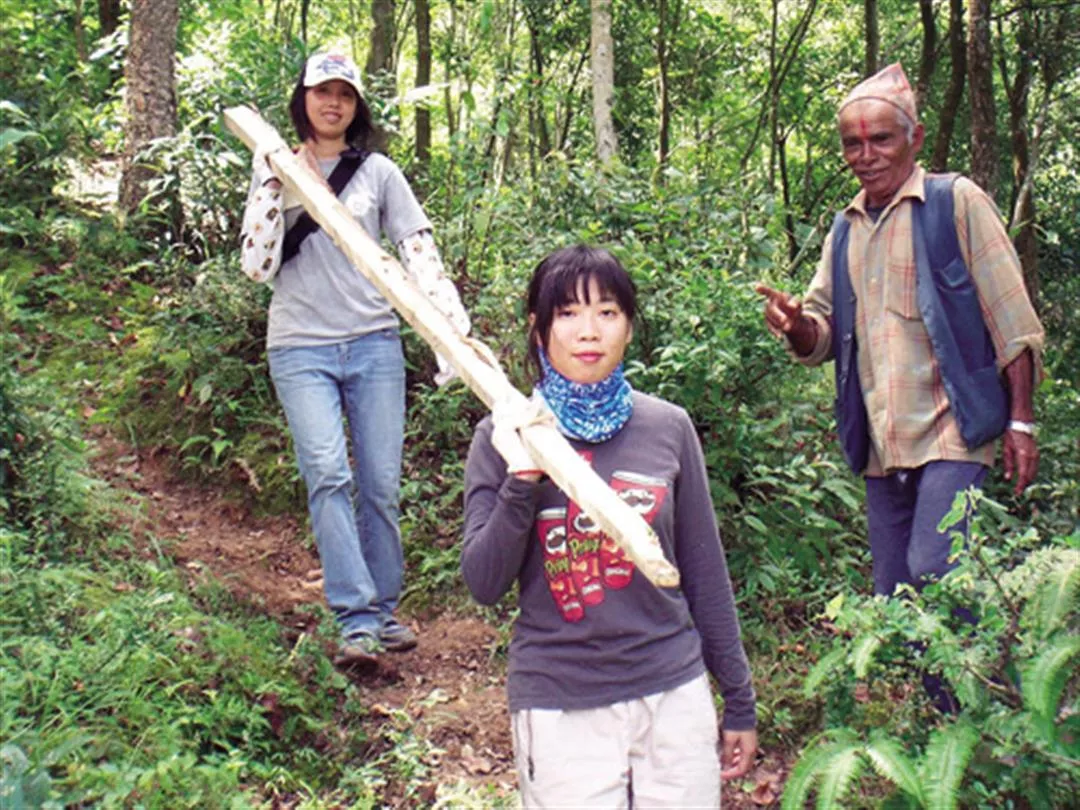
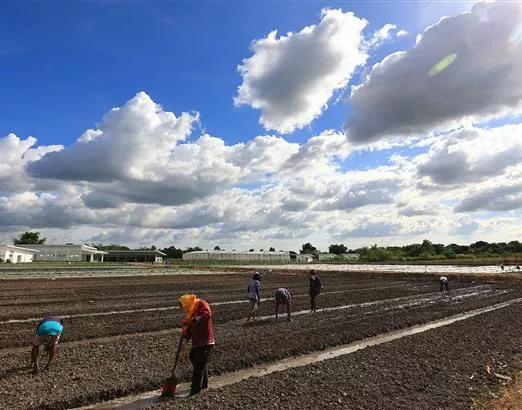
Forests are Nepal's most important asset. Volunteers work with local residents to clean up slopes and clear fallen trees. Their exertions make them better appreciate the importance of preserving forest habitats.
NT$8,500 for three weeks
In the beautiful Dessau-Worlitz Garden Realm, she worked with other volunteers from around the world to keep a rest area tidy, helped build wooden tables and chairs, and laid a footpath linking together little huts in the forest.
"I had my first experiences with mixing cement, riding a mower, and doing carpentry," says Zhao. "My back ached for the first few evenings, but I soon got used to the work. It was a lot of fun working with people my own age from all over the world. I made a bunch of friends, and we went to Berlin together on the weekends. It was hard saying goodbye to everyone-I bawled my eyes out in front of the train station."
She says that her trip to Germany as a volunteer not only fulfilled her dream of going abroad to work for the public good, but also gave her an incredibly up-close view of a beautiful World Heritage site. Better still, the experience cost her only the price of airfare, travel insurance, and an NT$8,500 volunteer registration fee. The local government picked up the tab for her room and board: she didn't have to dig into her wallet at all. In fact, the total cost of her trip ended up being less than half the amount of a typical self-directed trip to Germany.
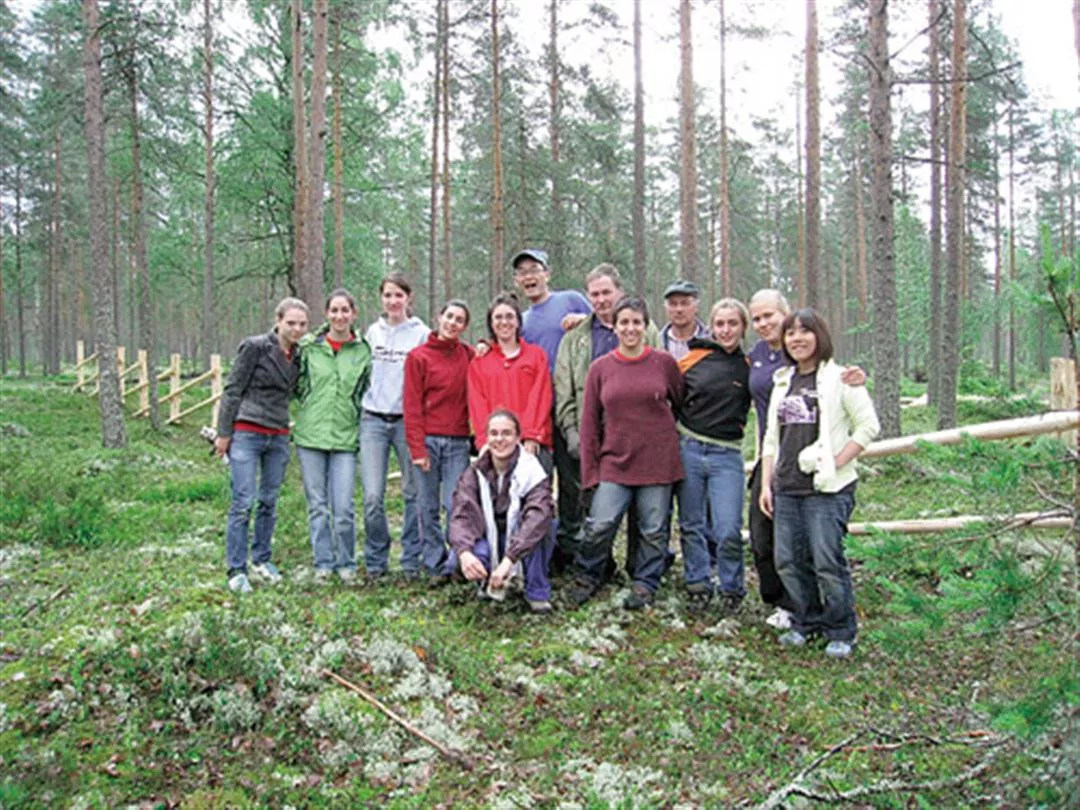
Her enthusiasm unabated, Zhao spent the following summer participating in an international work camp in Finland, helping the residents of two small towns-Kauhajoki and Nummijarvi-with environmental tasks that included cleaning up a river, releasing fish fry, and putting a fence around a national park. "Asians were so rare there that a local paper even sent a reporter to interview me," recalls Zhao, relishing the memory.

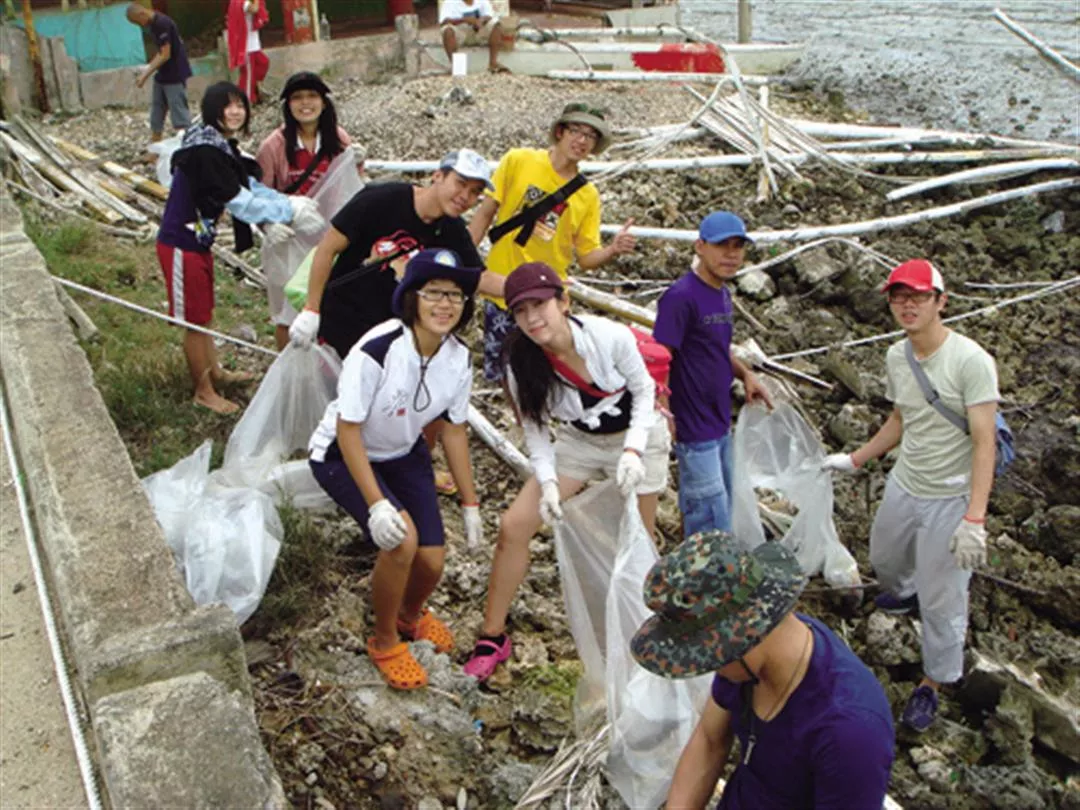
Young volunteers from around the world help locals clean up a beach.
A variety of choices
Vision YouthAction (VYA Taiwan) was the first private Taiwanese organization to be invited to join UNESCO and is currently a member of that body's Coordinating Committee for International Voluntary Service. The group's links to other youth volunteer organizations around the world enable it to offer Taiwanese young people the opportunity to participate in more than 100 international work camps every year.
In addition to Finland and Germany, VYA Taiwan offers trips to a refugee camp near Utrecht, the Netherlands, where volunteers plan plays and other creative activities, and provide refugee children with a summer full of enriching activities; to Sicily, where they perform as clowns for senior citizens living alone and for patients suffering from serious mental and physical ailments; and to Iceland, where they help locals with traditional festivals by playing "Vicky the Viking."
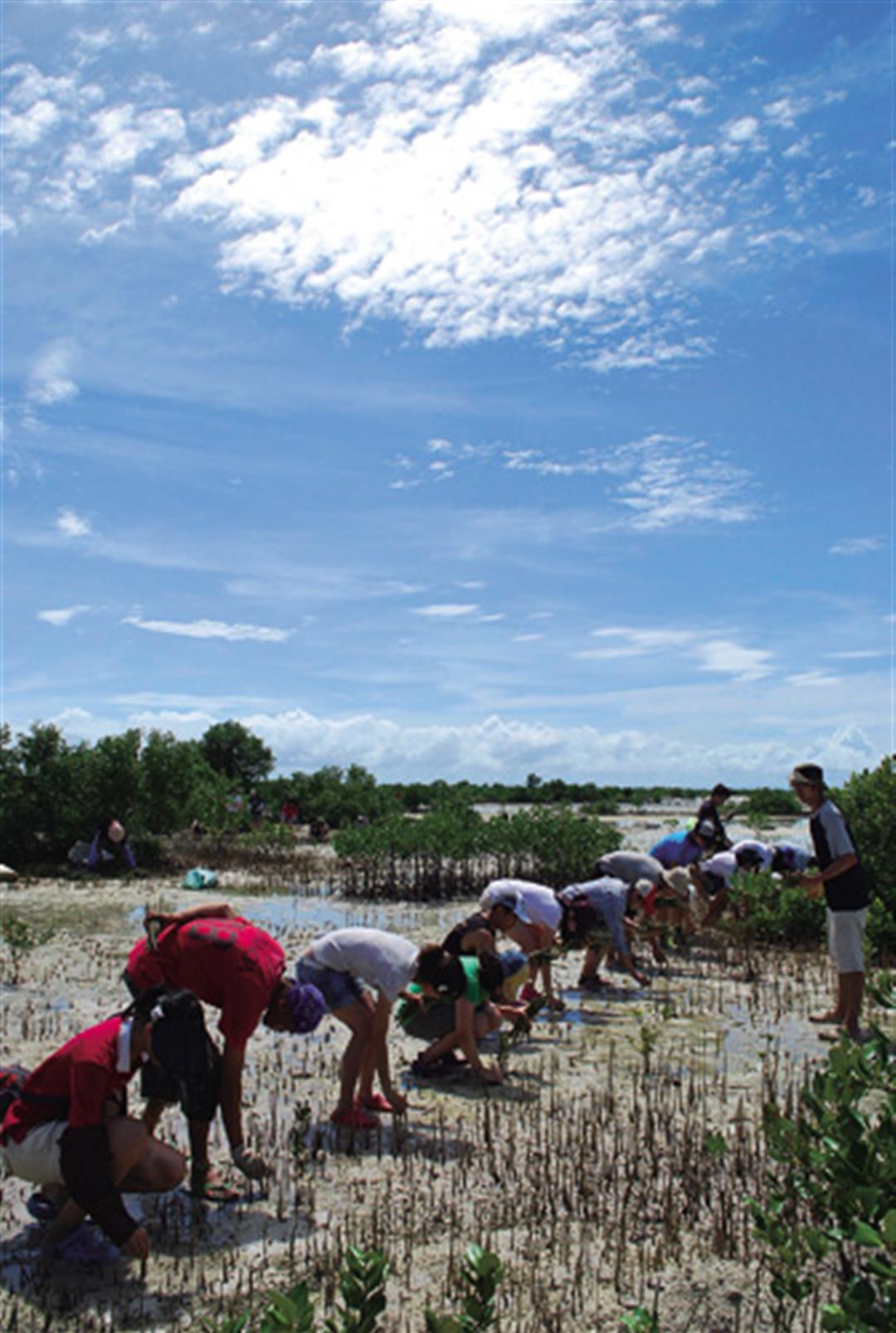
In Asia, participants have the option of going to Mongolia, where they can plant summer fruits and vegetables with children at a local orphanage; to Japan to clean up Mt. Fuji; to the Philippines to participate in a mangrove recovery program; to Nepal to engage in community construction at the feet of the Himalayas.... There are so many activities that young people are certain to find one that suits their skills and interests, no matter what their personality or field of study.
In the US, Japan, and other developed countries, program participants typically need only pay the international volunteer organization a standard registration fee of NT$8,500; governments and private foundations take care of volunteers' room and board. In developing nations such as the Philippines, Mongolia, Nepal, and India, on the other hand, participants must also pay for their food and lodging. Even so, their travel expenses are generally less than those of a backpacker.

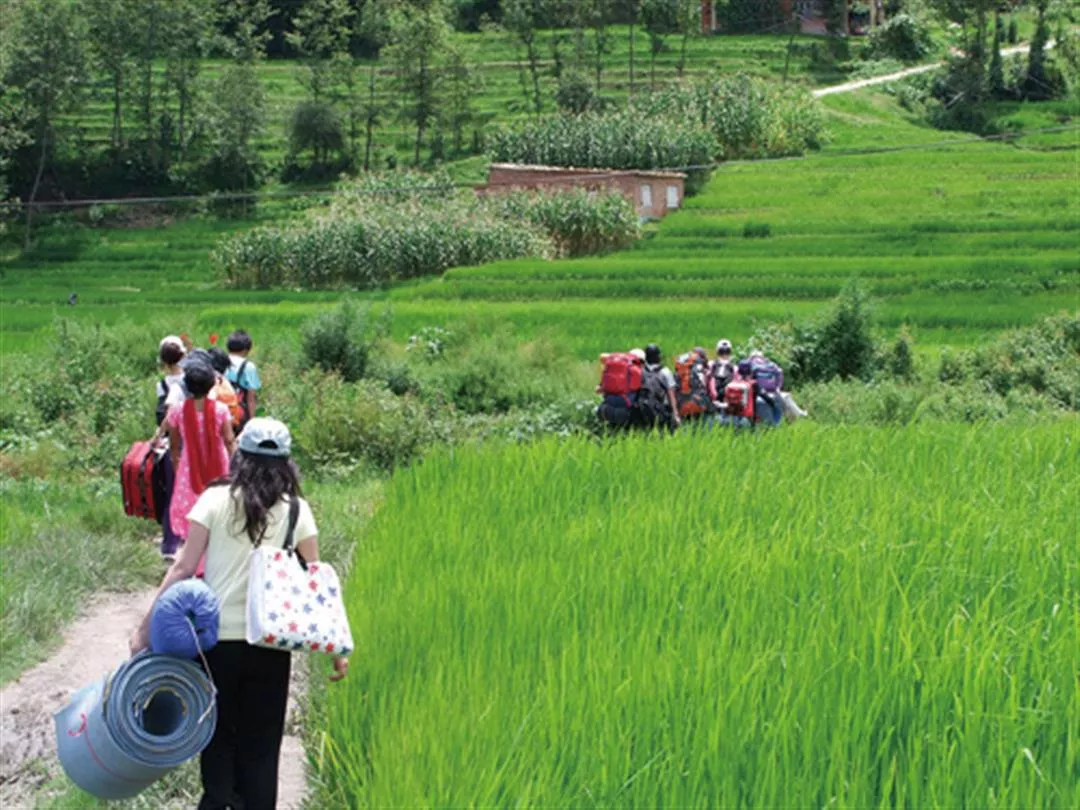
Volunteers at an international work camp in Nepal have traveled to Nagarkot at the foot of the Himalayas to help locals build an activity center and do environmental conservation work. In the photo, volunteers from around the world carry their simple kits through rural Nepal.
Eager to serve
These volunteering opportunities look both interesting and worthwhile, but some young people worry that their foreign language skills aren't up to the task, or that they lack some necessary specialty. Should such individuals worry that they will be rejected? Absolutely not.
Klaus Y. H. Ding, executive director of VYA Taiwan, says that earlier Taiwanese efforts to encourage young people to participate in international activities used to focus too strongly on language and other skills. The result was that the government and private foundations drew candidates from only a limited pool of young people-linguistically talented extroverts at top universities. Other kids who were interested in participating often excluded themselves because they thought their language skills weren't sharp enough.
"The key things ought to be whether you have a sincere desire to serve, whether you can take care of yourself while you're volunteering, whether you're willing to integrate into the community in which you are serving, and whether you're interested in cultural exchanges with volunteers from other nations," says Ding.
He says that when his group organized an international work camp for the arts in Taixi Township, Yunlin County two years ago, more than 50 young people from seven nations participated, working with local residents to spruce up a mottled old wall. Many of the kids from Japan and Korea got along well with township residents in spite of having terrible English. "Smiles and sign language are among the best kinds of communication."

While Zhao Xinling (far right) was in Finland she got on famously with young volunteers from other countries. Here they pose for a group photo in the woods.
Change youth, change the future
Young people now not only have a better chance of volunteering abroad, they have a broader array of opportunities. For example, many developed nations now offer large numbers of volunteering opportunities that combine creative/cultural education and tourism promotion.
These nations frequently involve volunteers with their local arts and cultural or environmental issues, giving rise to things like "wine-tasting volunteering," "Vicky the Viking volunteering," "archaeological volunteering," and "World Heritage environmental volunteering." By contributing their mental and physical labor, volunteers get to participate in in-depth cultural and environmental tours.
Another interesting trend is the coupling of simple volunteer services to major global issues. This allows young people to gain a first-hand perspective on and understanding of some of the issues confronting our planet, and may motivate them to make changes in their own lives.
Zheng Keming, currently a student in the Department of Recreational and Sports Management at National Taipei University, was a participant in an international environmental work camp in the Philippines, where he helped residents of Cebu City's Sudlon district and of Olango Island's Suba area clean up beaches, plant trees, and work on mangrove and wetlands recovery. Zheng says that even though he was just providing basic physical labor, his interactions with locals made him profoundly aware of the severity of the impact of global warming on global ecosystems.
"The locals told me that the sea-level rise from global warming has in the last couple of years led to flooding of the homes they've built along the coast and to severe declines in their catch of fish," says Zheng, who had never previously been much concerned about global warming. But seeing these people suffering made the phenomenon into something real and tangible. After returning to Taiwan, he began riding busses and the subway rather than his motorcycle in an effort to do something for the planet.
In this age of globalization, young people's fates are tied to that of the global village. If they can utilize their short stints as volunteer tourists to develop a more international perspective, we should certainly encourage them. By donating their efforts to other communities, they come into contact with issues in other nations that urgently require resolution. This gives them a sense of being connected to the furthest corners of the earth and the feeling that we are all in this together. In short, these adventures better connect them to our globalized world, while also transforming their perceptions of themselves and of the world we all live in.
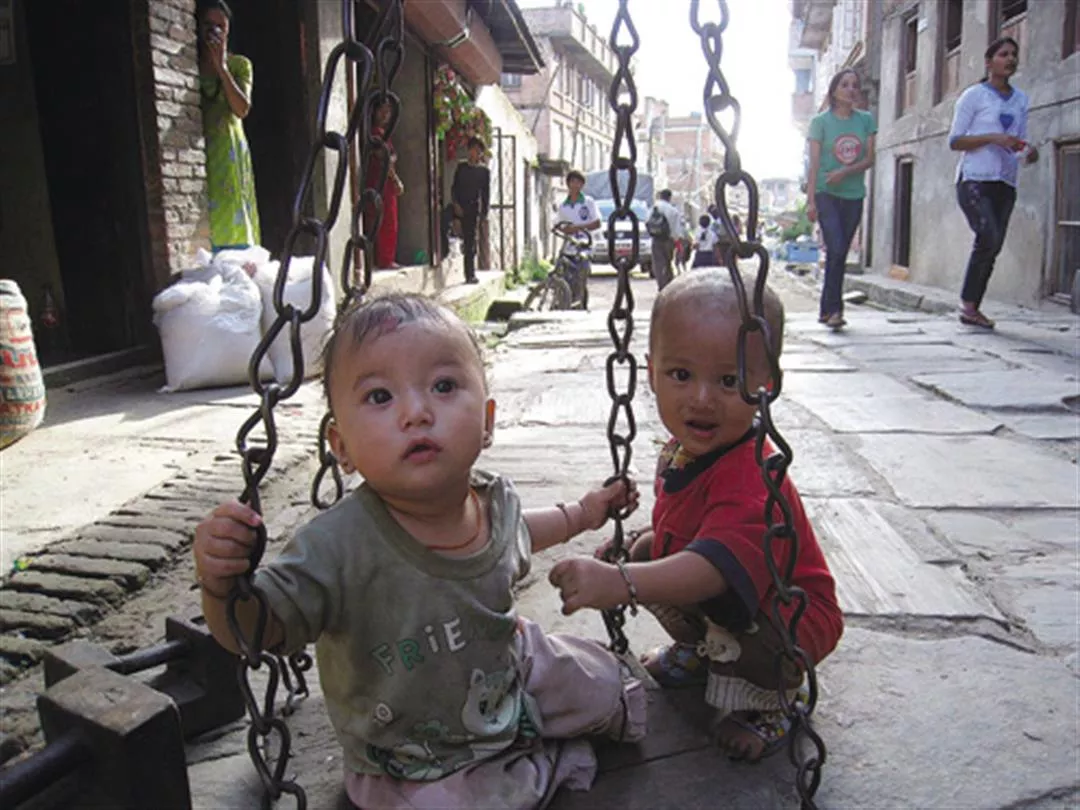
Children at remote mountain elementary schools in Nepal have access to few educational resources. Young volunteers are visiting schools and designing interesting interactive courses to give kids more contact with the larger world.
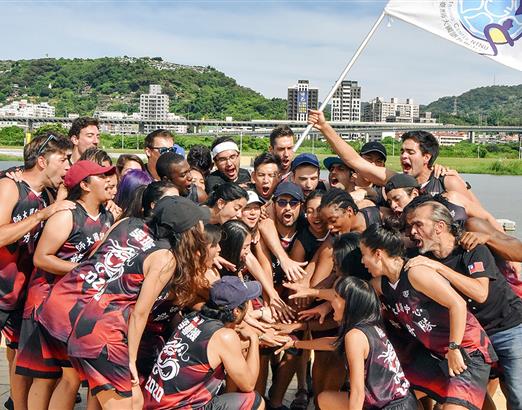
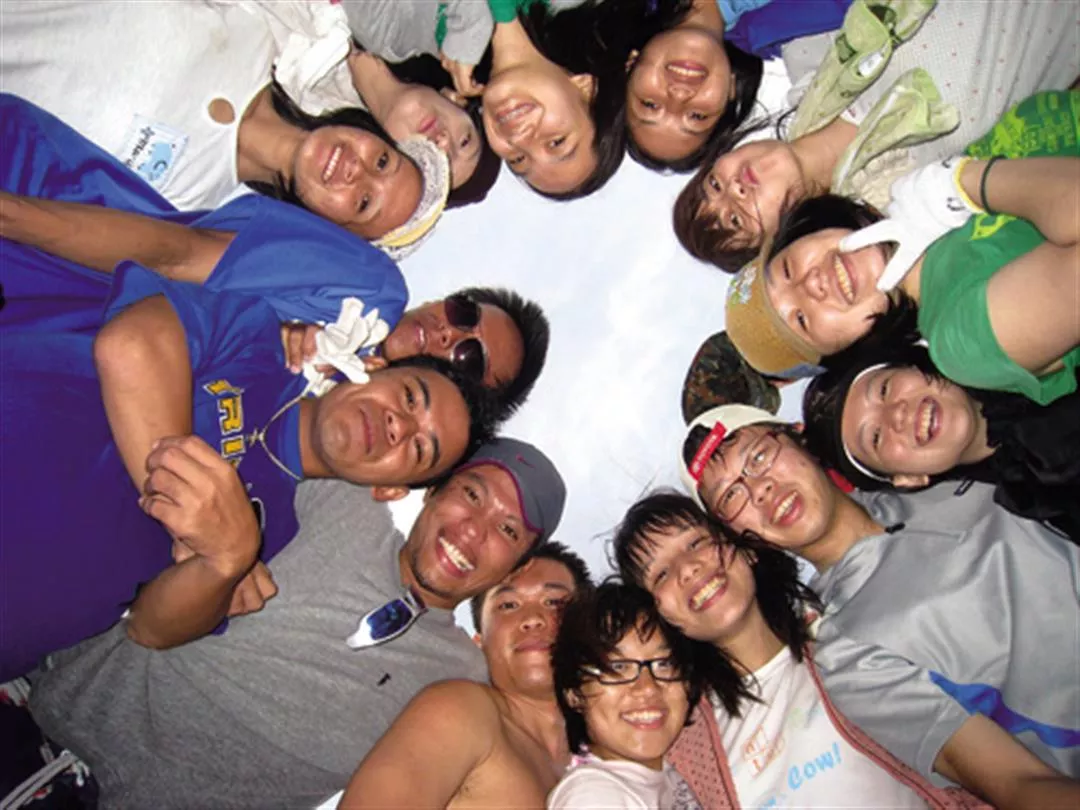
Volunteer tourists not only cut their travel expenses and make friends from around the world, they also gain firsthand experience with global issues and forge connections with the larger world. The photo shows young volunteers in the Philippines gathered together in a circle symbolizing the idea that "we are all one family."