Let the Age of the Bands Begin!
Eric Lin / photos Yuan Kui-lung / tr. by Christopher MacDonald
December 2000


The arrival of the 21st century has trig-gered an eruption of activity on the pop music scene in Taiwan, as if to answer people's craving for something new. More bands than ever before are releasing albums, and the mass media have declared this "The Age of the Band." From the Golden Melody Awards in the spring, to the summer season of outdoor concerts and now the start of winter, with gigs taking place in college halls and pubs, live bands have been all the rage this year.
There's no question that "bands" are what it is all about on the pop scene in Taiwan at the moment. The new trend was officially ushered in at this year's Golden Melody Awards.
The best group category for the Golden Melody Awards, the Taiwan music industry's annual gala event, saw a break with tradition this year: the five groups nominated for the award were all "bands," as opposed to the singing ensembles that had previously dominated. The occasion was further enlivened by live performances from each of the five bands.
Accepting the winner's award, Luan Tan lead singer Chen Tai-hsiang announced with a thrill: "Taiwan's age of the bands has arrived!"
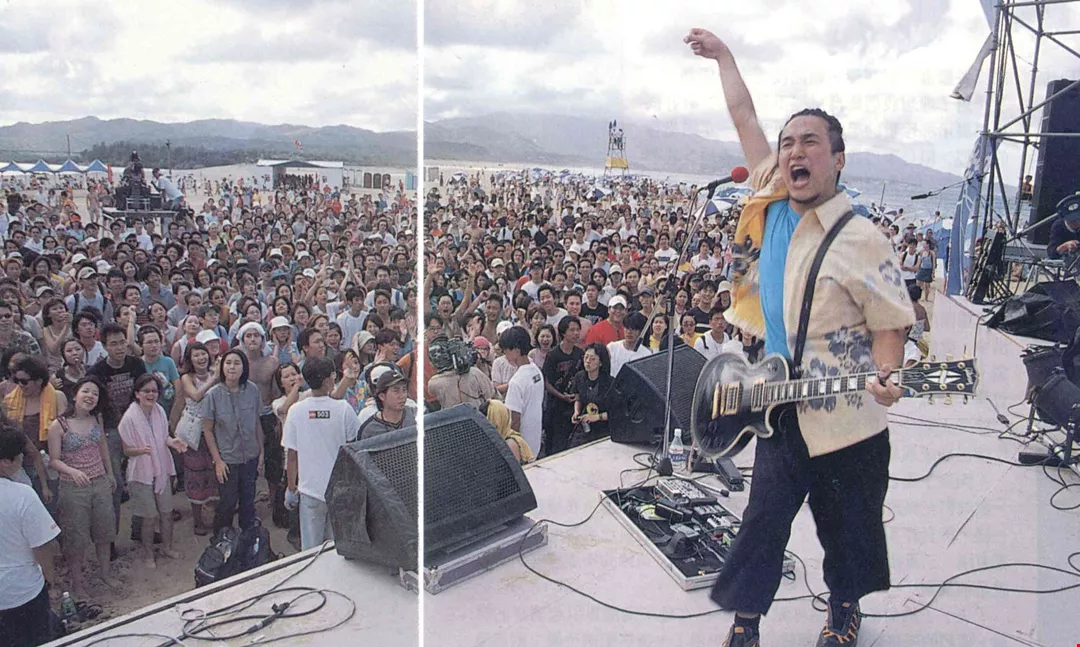
Twelve bands from Taiwan and overseas, including both mainstream and alternative acts, played into the night at a music festival held on Fulung Beach this summer. (top) Tolaku lead singer Kuo Hsi gets the crowd to sing along with him.
Bands are hot
Chen's declaration reverberated through the pop industry like the opening riff of a new song. During the summer, more music fans than ever showed up for the annual open-air concert organized by the National Rock League, while 12 bands from Taiwan and overseas, including both mainstream and alternative acts, made up the bill at the International Seaside Music Festival on Fulung Beach. In late July, another concert brought together five of Taiwan's leading bands-Luan Tan, Tolaku, Mayday, backquarter and The Flowers-before a crowd of more than 10,000 at CKS Memorial Square in Taipei.
There were more rock concerts played by more local bands and attended by more fans than ever before in Taiwan this summer, and record companies have now had to introduce new categories for their CD output, such as pop bands, underground bands and live concerts. The most popular band at the moment, Mayday, this year sold 200,000 copies of its second album Long Live Love, which is a remarkable amount given the otherwise sluggish market.
This new craze in part reflects a trend among college students for forming bands. Yang Pei-chun, who heads the Philharmonic Club at Soochow University, says that the club has suddenly become the hottest student society on campus, attracting over 150 new members this year compared with 80 or so in previous years.
"Everyone wants to form their own band, and even though most of the new club-members can't yet play any instruments, the success of former student bands like Mayday and Tolaku has inspired their rock 'n' roll dream," says Yang.
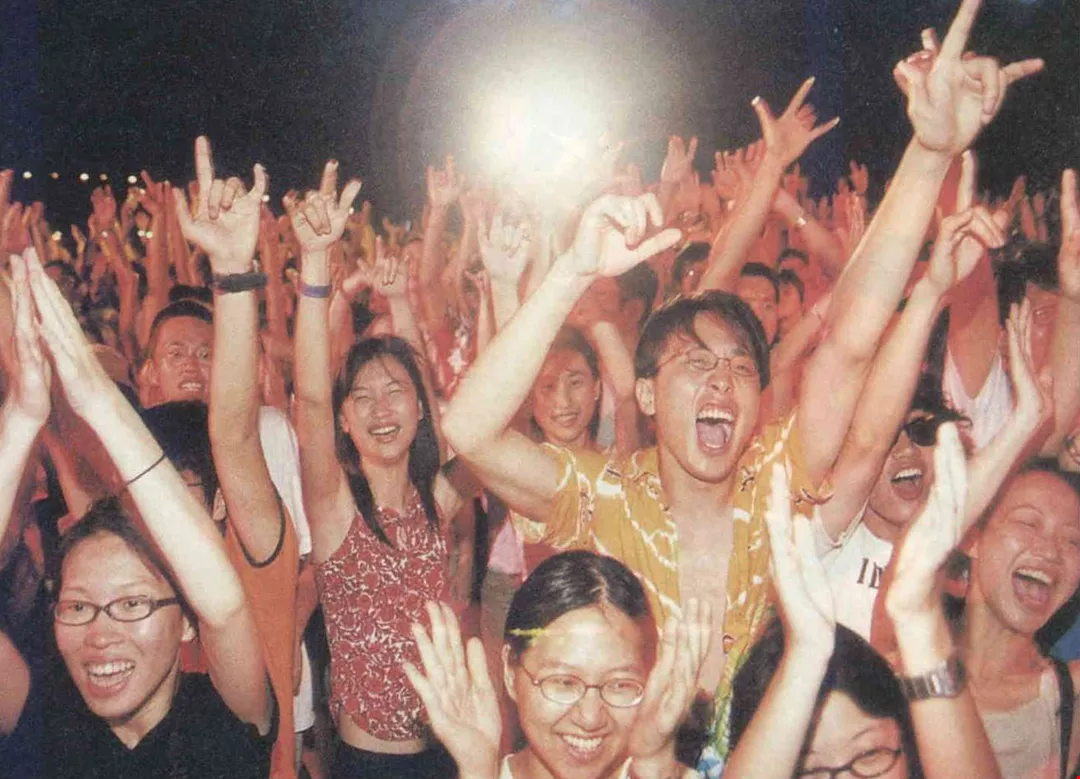
Young revelers rock to the beat beneath the stars.
Call me number one
Factors that have helped propel the pop band phenomenon include the impact made by bands at the Golden Melody Awards, the buzz generated by the mainstream record labels, and the growing audience for pop concerts. Differences between the current crop of bands have also resulted in a diverse range of musical styles, and as Mingsheng Daily pop correspondent Wang Tzu-shou points out, there are now bands representing every different branch of rock music.
The band with the biggest popular appeal has so far proved to be Mayday, a "boy band" whose music is part ballad and part hard rock. The group, which has a mainly student following, produces music tailored to market demand. Mayday songs are easy to belt out at the KTV and feature simple lyrics that reflect the attitudes of young people and their feelings about love.
"You say what use is someone like me/ You say I should be dumped in the trash truck/ You say what use are people like me/ Watching movies, late night snacks and KTV/ Eat till we sleep/ Sleep till we eat/ Mention going out and I'm with you right away/ We don't care who comes out on top/ No-one can outdo me/ Laaa...Call me number one." (From Mayday's Call Me Number One)
Songs like this, celebrating the pursuit of instant gratification, go down a storm at the KTV parlors.
Tolaku, which also emerged as a student band, has instead gone for a cleaner style of teen-pop. With their sweet, fresh love songs and witty brand of social criticism, they are regarded as creatively mature. Tolaku placed second to Luan Tan at this year's Golden Melody Awards.
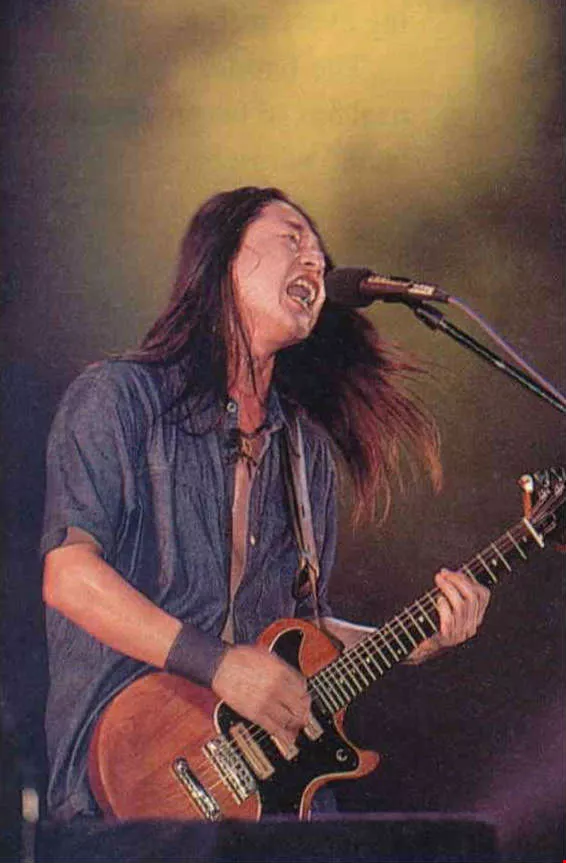
Taiwan is experiencing an unprecedented flourishing of bands in this millennium year, from the socially aware music of Backquarter.
Doing it their way
Luan Tan and Backquarter were both formed in the mid-1990s and started out doing covers of Western numbers, mainly heavy metal. Later, influenced by underground music and the trend for songs with social content, their style became increasingly involved. Both bands are mature in terms of musical technique and lyrics.
"For our ideals, we've become less than nothing/ We have to show that precious defect to the world/ You don't want me always doing things your way/ But I just cringe with embarrassment/ We're not the junk you think we are/ We don't have to be turds in the toilet..." (From Junk, by Backquarter)
With their acidic, in-your-face brand of hard rock, Backquarter conform to the image that many people have of rock bands as "loud and critical."
Multiple award-winner Luan Tan is considered Taiwan's most innovative and distinctive rock band. They formed with the goal of "making Taiwan music," forging a seamless blend between traditional Chinese beiguan music, and rock-and-roll. In the words of music critic Chen Pao-hsu: "While drawing on the essence of western rock music their roots are firmly in the Taiwan musical idiom, and their lyrics are the product of real experience. Theirs is a style of music that is both refined and unpretentious, and yet carries an explosive charge."
In addition to bands signed to big record labels, there are plenty of popular underground bands such as Chthonic and Clippers Band which have either released their own music or have not yet put out a CD.
Chthonic is a death metal band whose members doll themselves up goth fashion for performance, and whose lyrics are replete with political subtext. The group, which belongs in a class of its own, seems to have strolled out of some mythical realm portrayed in a Japanese manga comic and has attracted a corps of diehard fans. Lead-singer Fo Lai-ti reports that the group's self-released albums have each sold in the range of 20,000 to 30,000 copies, which is a better track record than some of the bands promoted by mainstream labels.
Clippers Band have yet to release an album, but they have already attracted interest on the underground scene. Their style owes something to the Taiwanese tradition of traveling musicians, and they are accompanied on stage by two dancers who look just like old-time crooner Kao Ling-feng's Ah-Chu and Ah-Hua. This, along with the band's earthy, outlandish lyrics, completely undermines the image of a traditional band.
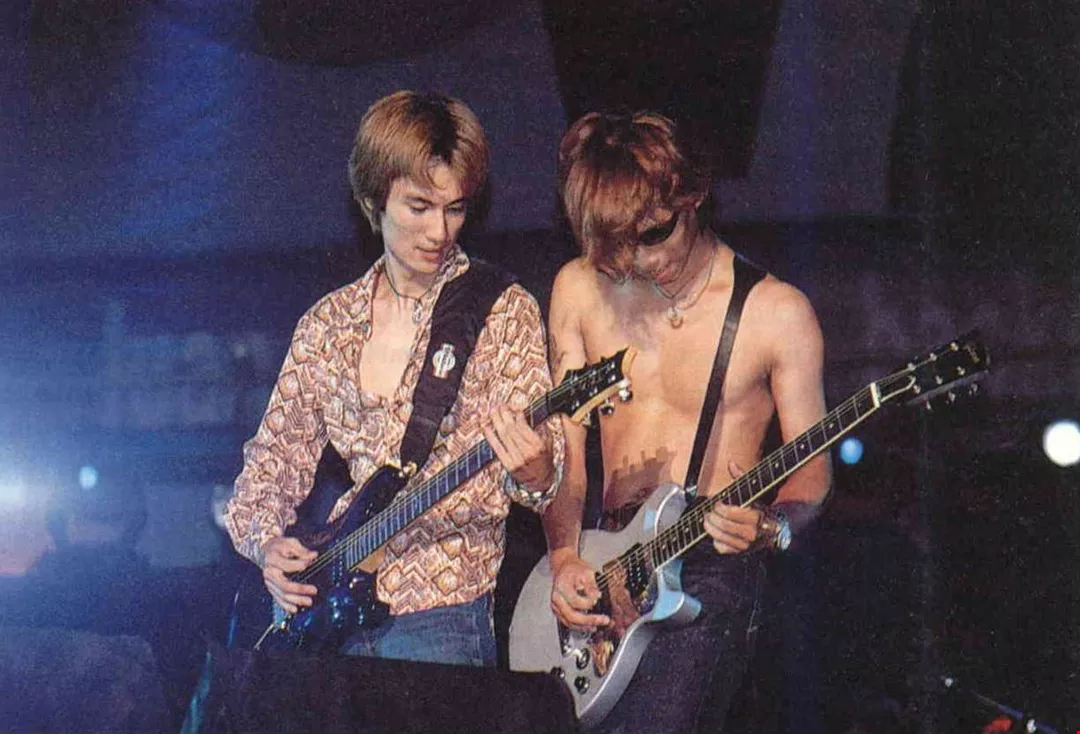
to the folksy Taiwanese sound of Luan Tan.
Not the first time
Each of these emerging bands has a style of its own, but they also have in common a way of combining homegrown and western styles of music. For example, Luan Tan's beiguan-derived music alludes to the communal rural spirit of earlier times, something which is being rediscovered in the extra-curricular life of today's students. It is a collective, pluralist mode of creation which contrasts starkly with the staleness of mainstream pop and illuminates new possibilities for music in Taiwan.
As radio presenter Tao Hsiao-ching explains, all pop singers in Taiwan used to be produced by just a handful of people. The same techniques were evident in every recording, with a corresponding loss of freshness and distinctiveness. But when bands are creating and performing music alongside one another in an environment of collective competition and endeavor, overcoming difficulties along the way, they forge a sense of shared values. Each band is a separate team of individuals, so naturally they differ in style. And a musical environment in which plenty of bands are active will naturally tend towards diversity.
In fact, this isn't the first time that the arrival of the age of the bands has been declared in Taiwan. It happened in the seventies, eighties and nineties too, which goes to shows how long the pop scene has been craving the injection of variety and vitality that bands can bring. According to Wang Tzu-shou, however, all that happened before was that a "specimen" band would hit the charts, giving people the impression that bands were about to take over. There is a burgeoning interest in pop bands right now, and a greater range of bands than ever, but so far it is still an "isolated breakthrough," with little impact on CD sales.
"At the moment Mayday is the only band doing really well, with the others selling less than 30,000 copies per album," says Wang. Most bands have yet to cross the threshold of market success, and without that it will remain difficult for them to survive outside of the mainstream.
"In the early days of the industry, record companies tended to be headed by ex-musicians who were willing to support bands even when they weren't selling well," continues Wang. "But since the arrival here in the 1990s of the major international labels, companies have only been interested in the most profitable acts. So it's hard to feel optimistic."
All the conditions are in place for pop bands to take off in Taiwan, but it hasn't quite happened yet. For all their creative power and audience appeal, the bands still have to confront the cruel reality of the market, where it's survival of the fittest. Musical quality is no guarantee of success in this industry. Instead, the key determinants are factors such as styling, packaging and promotion. Music critic Yeh Yun-fu, who once handled the marketing for a Luan Tan album, points to the way that clever promotion helped build the success of Mayday.
Mayday manager Hsieh Pei-ling acknowledges the role of good marketing in the band's success. Because of the negative stereotype of rock musicians as scruffy guys always puffing on cigarettes, Rock Records made a point of creating a fresh look for the band. The company also used advertising to encourage listeners to identify with the songs, building an image of the group as perfect "Taiwan lads" and urging fans to feel like they were part of something by buying the CDs and going to the concerts.
Hsieh notes that many bands at the moment have the necessary creativity and are making good music, but ultimately, whoever gets the marketing right will have the best chance of prevailing.
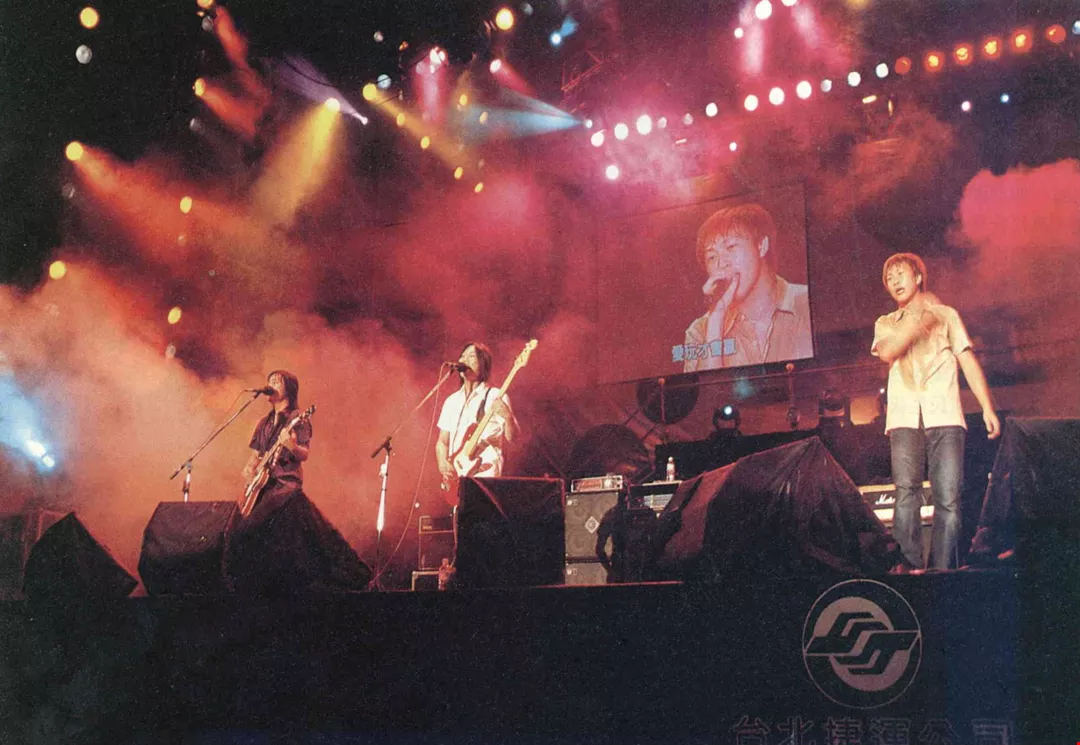
and the pop beat of college darlings Mayday (below).
KTV vs. bands
It sounds easy. So how come every record company doesn't copy this template for success? Lin Hui-che, a pop producer and former leader of the early-nineties group Baboo, points to the essential contradiction between bands and the market.
Aside from the technical issue of how the market functions, the culture of the music scene in Taiwan works against the coexistence of a diverse range of bands. According to Lin, the market success of rock acts Wu Bai & China Blue, and Faith Yang shows that fans in Taiwan are more than ready for the live-music format of real bands, and record labels have signed up a bunch of new groups on the strength of this. But mainstream pop in Taiwan is a branch of "KTV culture," and hit songs have to be good singalong numbers. Rock music, with its depth and intensity, just doesn't fit in with the mainstream in this respect. Acts like Wu Bai and Mayday have been able to satisfy both types of demand, but otherwise it is very hard to break through.
Another peculiarity of pop music culture in Taiwan, according to Lin, and another reason it is difficult for bands to make an impact, is that "everyone wants to be the number one band"-and the fans all follow whoever is number one. "There's only room at the top of each segment of the market for one set of idols at a time, which means that bands have to compete with each other in a 'winner takes all' context," he says. Because of this feature of the market, when a band moves from the underground into the mainstream it has no choice but to try and be top dog. This is why so many bands change radically, transforming into indistinguishable mass-market acts as soon as they have had a taste of success.
Once they join the mainstream, bands begin to lose that creative edge that they first honed in competition with other bands on the underground scene. Because of doubts that such bands can preserve their musical identity while pursuing market success, many suspect that the current millennium-year craze for bands may yet turn out be just a passing fashion.
Record executive Yeh Yun-fu isn't so glum about the situation. Music is trend-driven after all, and the current interest in bands is unlikely to be a fleeting fad like the craze for Portuguese egg tarts a couple of years ago. Yeh believes there is a lot more to come from Taiwanese bands in the future, but feels that the process may take longer than people realize.
For musicians who have struggled long and hard to reach where they are today, the opportunities that now exist for bands are both extraordinary and inspiring. Luan Tan lead singer Chen Tai-hsiang says that people used to have no idea what playing in a band actually involves, but things have improved now, and with "solidarity," the influence of bands can only grow.
Fo Lai-ti, lead singer with Chthonic and an organizer of the National Rock League, believes that the "band spirit" has already implanted itself in the minds of young musicians, and whether or not it finds acceptance in the mainstream market is no longer important. He points to the active involvement of many bands and fans, during this year's presidential election campaign in February, in a concert protesting against China's threat to annex Taiwan by force. Mobilizing people for a cause in this way offers music another non-mainstream alternative.
"Rock music's form provides young people with options for expressing their opinions and forging consensus, something which is totally in tune with the 'band spirit.' There's no need to rely on the
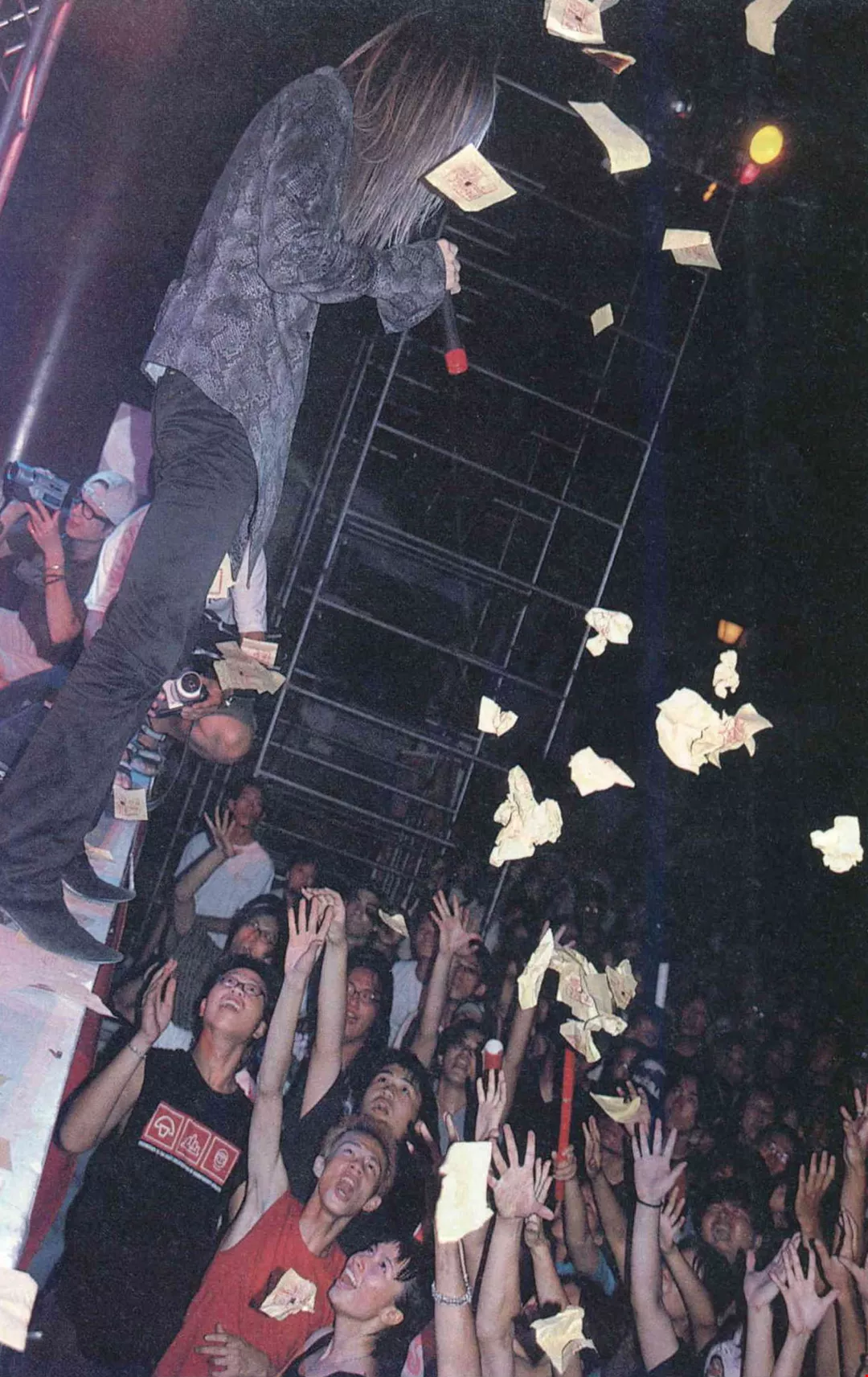
Death metal outfit Chthonic have attracted a wide following with their dark, demonic lyrics. Sometimes they shower ghost money on the audience at the climax of a concert: It's rock 'n' roll with a freaky Taiwan flavor.


@List.jpg?w=522&h=410&mode=crop&format=webp&quality=80)


