Of Taiwan's more than 500 bird species, almost half are waterbirds, which make their living on or near the water. They include "winter residents" that migrate long distances to winter in Taiwan, "summer residents" that breed here in summer, "transients" that stay briefly before continuing on their way to winter in the Philippines, Australia or New Zealand, "vagrants" that have become separated from their main flocks on their migrations, and "residents" that live permanently on Taiwan's own rivers and lakes.
The largest groups among Taiwan's waterbirds are shorebirds of the families Scolopacidae (sandpipers and snipes--41 species) and Charadriidae (plovers and lapwings--11 species), waterfowl of the family Anatidae (ducks, geese and swans--34 species), waders of the family Ardeidae (herons and bitterns--19 species), and seabirds of the family Laridae (gulls and terns--18 species). They account for a large number of species, and their populations are also very large. The majestic sight of thousands of teal bobbing on the Tanshui River at Taipei City's Huachiang Wild Duck Nature Park at the start of winter, and images of wheeling flocks of terns filling the sky above Taiwan's outlying islands in summer, are a familiar part of Taiwan's outdoor scene.
.jpg?w=1080&mode=crop&format=webp&quality=80)
Green-winged teal (waterfowl); (photo by Yeh Shou-jen).
Winter visitors the majority
The vast majority of the birds in the three great families of the shorebirds, waterfowl and waders are winter residents that fly south in autumn from the temperate and frigid zones of northern China and Siberia, either by the "land route," via Korea and the Chinese coast, or by the "sea route," via Japan and the East China Sea. After wintering in Taiwan, in late spring or early summer they migrate back northward to their breeding grounds. They seek out different environments according to their different body structures and feeding requirements.
The shorebirds, which form the largest group in terms of both the number of species and their populations, are physically the smallest of the migratory waterbirds. They have long, pointed beaks of various shapes with which they peck food out of the mudflats. The intertidal zones of estuaries, sandbars and marshes, where land meets water, are their favorite spots. With their long, thin legs they can walk with ease in shallow water and on mud. Because such places bring together organic sediment washed down the rivers, and sea creatures such as shrimps and crabs, they are a great public refectory for waterbirds of all kinds.
Waterfowl--birds of the duck family--have webbed feet suitable for swimming and diving, and are mainly active in the deeper waters of rivers and lakes. Inside their broad flat bills they have a comb-like strainer with which they can filter plant material and insects out of the water, while the water's edge is where they sun themselves and roost.
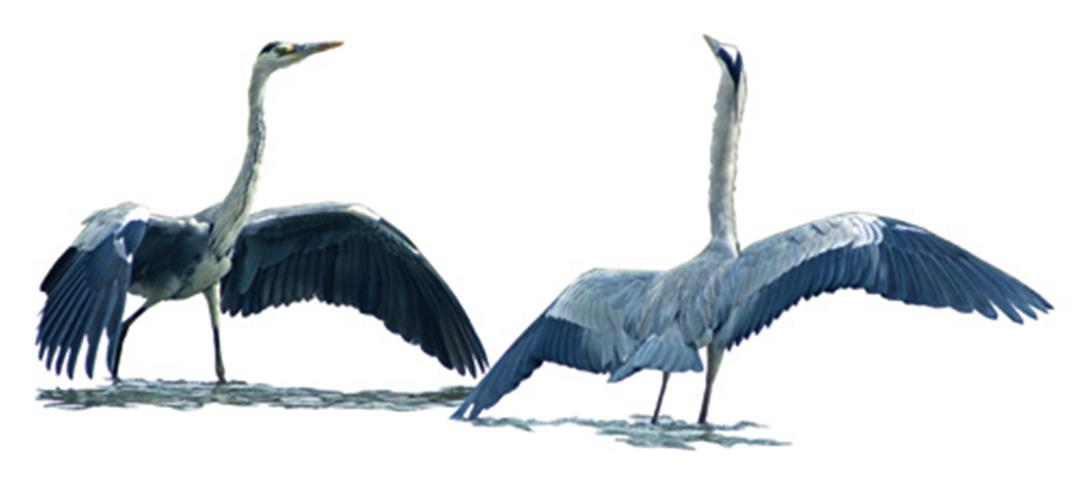
The waders of the heron family are similar in shape to the shorebirds, but a size larger. They feed on fish, insects and amphibians, and as well as being active at the water's edge, they also frequent dryer areas such as thick grassland and salt-making ponds. The heron family includes many year-round residents in Taiwan, such as the little egret, the rare Malaysian night heron and the Pacific reef egret. Their areas of activity also include woodland riverbanks and coastal reefs.
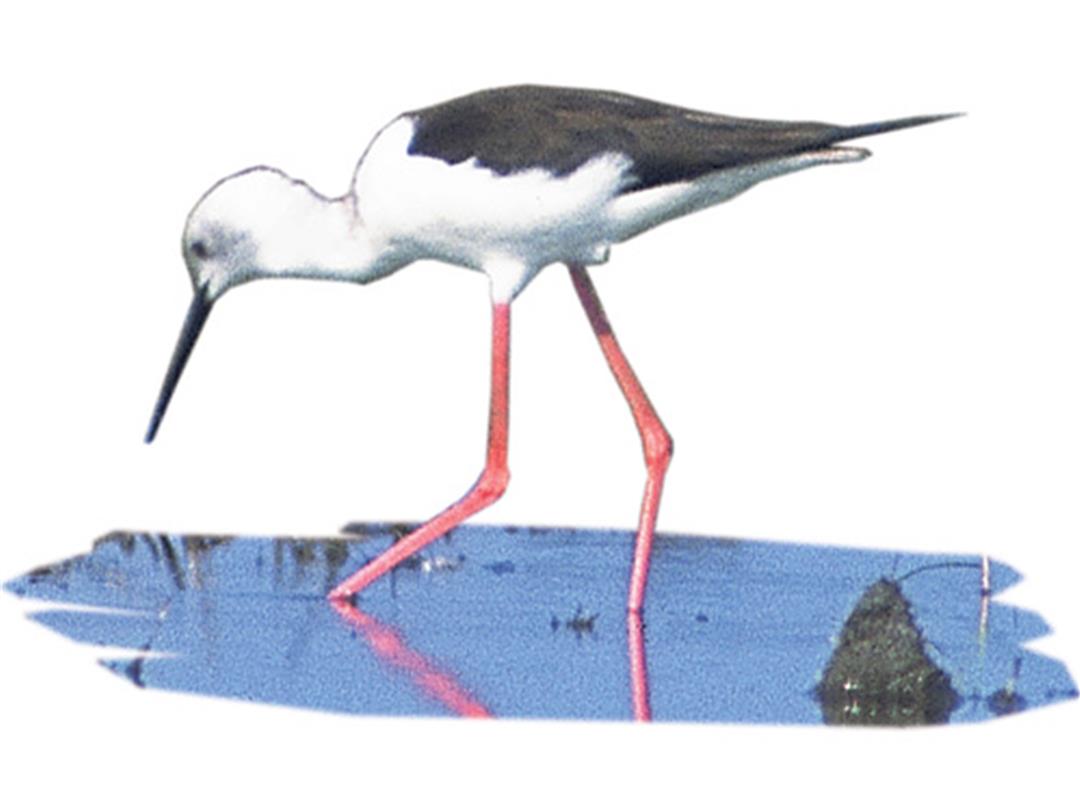
Black-winged stilt (shorebird); (photo by Chuang Kung-ju).

Summer love-nests
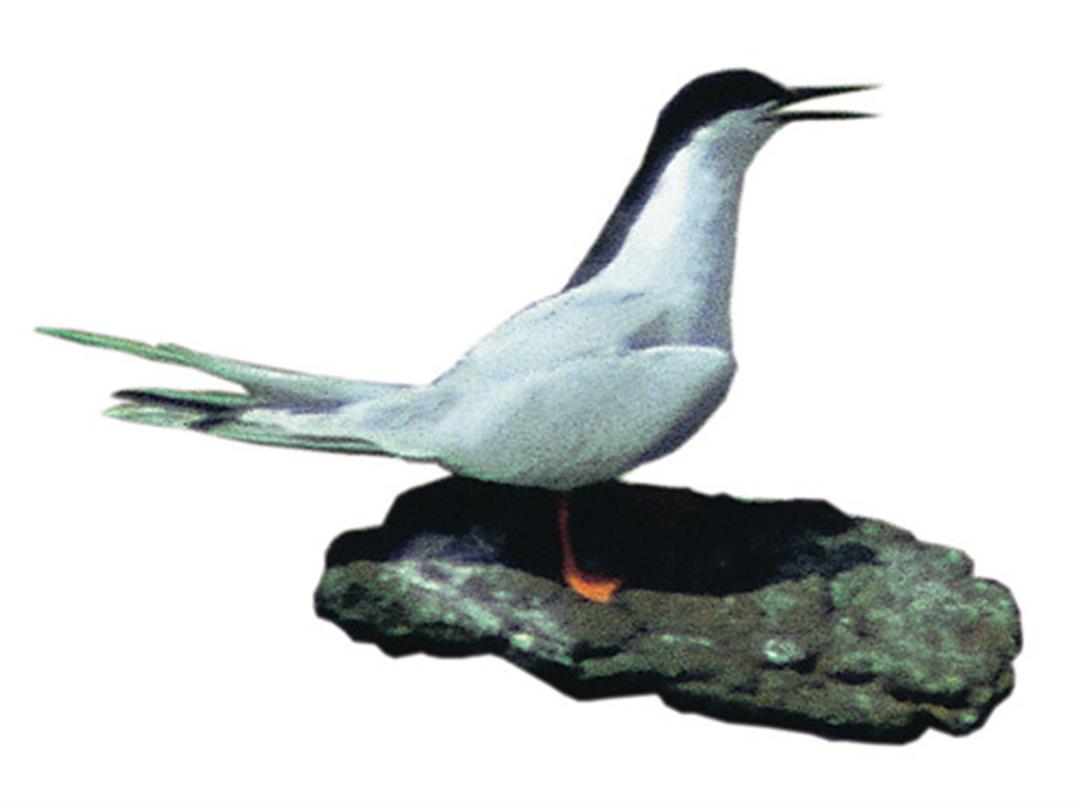
The terns that fly north from the tropics in summer to breed, such as the bridled tern and greater crested tern, are seabirds of the gull family. Their long wings are especially suited to circling high over the ocean. They plunge out of the air into the water to catch fish, and usually nest in large colonies on coastal reefs and on islets. Their cousins the gulls, such as the black-tailed gull, are mostly rare winter residents. They hunt for food while floating on the water. They are also active in areas of shallow water such as coasts, estuaries and marshes.

Roseate tern (seabird); (photo by Liu Yen-ming).
Charming vagrants
Among the birds that excite birders most are the rare "vagrants" that mostly appear on promontories such as Yehliu on Taiwan's north coast, on offshore islets, and in a few coastal windbreak forests. After a typhoon or a winter northerly airflow has passed through Taiwan, birdwatchers gather at spots such Yehliu or Ilan's Lanyang Estuary to look out for stray birds that have been blown off course by the strong winds.

Grey herons (waders); (photo by Peng Chun-fu).
Rare residents
Those waterbirds seen in Taiwan that do not fall within the major families described above are mostly "residents," such as the famed pheasant-tailed jacana, which lives in water-caltrop fields, the greater painted snipe, which is active at night on river banks and in water-rice fields, mandarin ducks, which live on forest rivers and lakes, or the kingfishers, expert fish hunters that are most often seen by bonds and streams. With the destruction of their habitats due to the disappearance of the forests and the advance of industrial and urban sprawl, these birds that live on inland water bodies now all have very small populations.
The vast majority of waterbirds change their plumage in their breeding season. Male and female birds also have different plumages. Thus a single species may have four distinct adult plumages, not to mention the changing appearance of their young.
"Birds like Swinhoe's pheasant or the Mikado pheasant are brightly colored and have a distinctive body shape, so if you've seen them once you will recognize them. But with waterbirds, you might squat in a cold sea wind for three hours, and still not be sure what you're looking at!" Simon Liao, president of the Taiwan International Birding Association, explains that besides having different winter and summer plumages, many waterbird species are very similar in size and shape, and may only differ in the color of their feet. If they are standing on a mudflat, this makes recognition all the more difficult. This is one reason why advanced birders enjoy the challenge of watching waterbirds.