"Heaven's Revenge"? Educating Taiwan about AIDS
Chang Chiung-fang / photos Vincent Chang / tr. by Scott Williams
December 1998

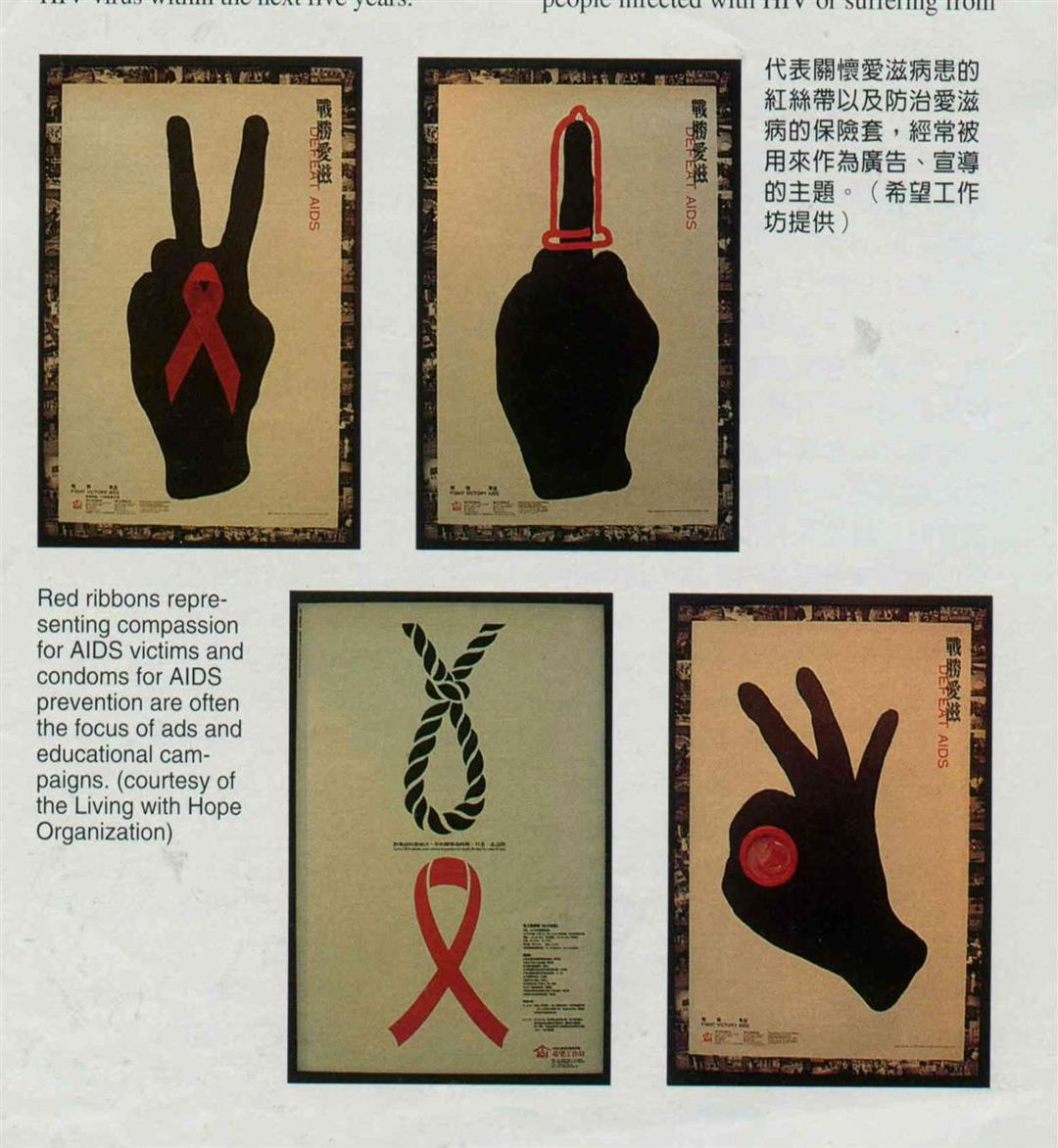
Red ribbons representing compassion for AIDS victims and condoms for AIDS prevention are often the focus of ads and educational campaigns. (courtesy of the Living with Hope Organization)
In 1988, the World Health Organization (WHO) declared December 1 "World AIDS Day." In every year since then, numerous AIDS education activities and other related events have been organized on this day.

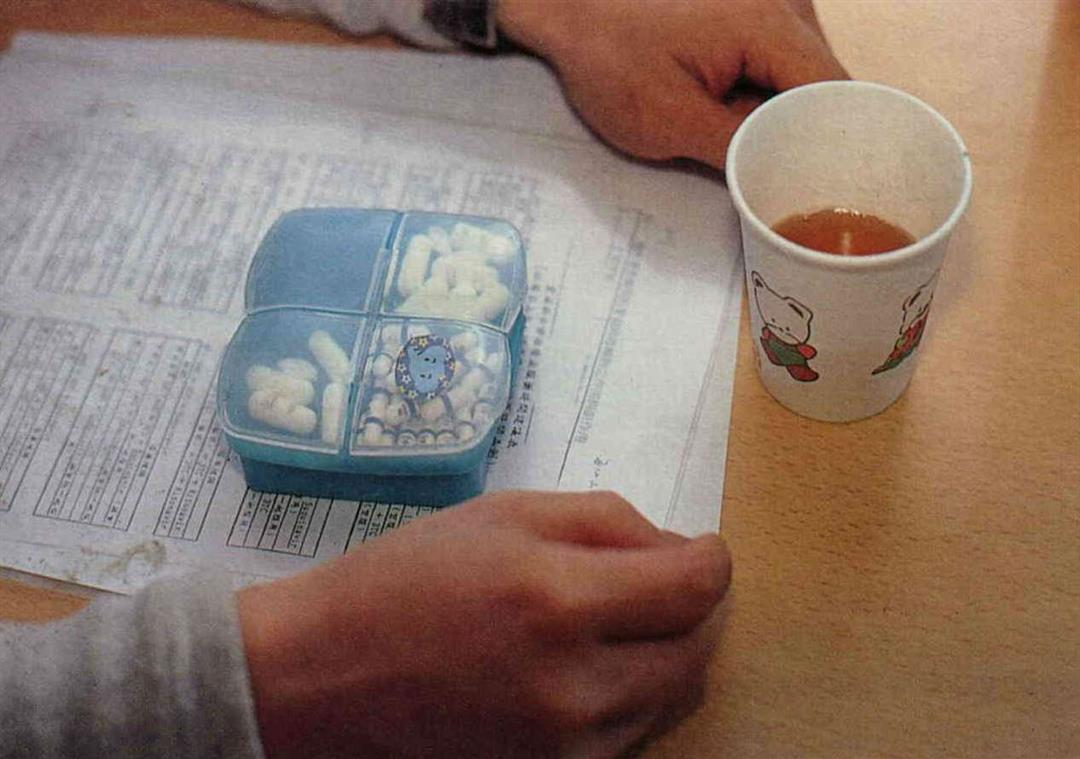
An HIV-positive man keeps three days worth of his "drug cocktail" in a s mall box. He says that he takes his medication at regular intervals every day, noting that it's like feeding a Tamagotchi.
In comparison to other nations around the world, the situation in Taiwan for people infected with the HIV virus has its good and bad points. AIDS brings us face to face with a broad range of issues. It not only challenges medical technology, but also individual character, friendship and love. It tests the fabric of society and culture, human rights and our system of justice. . . .
Recently an AIDS victim drowned at Shalun Beach in northern Taiwan. But it was only after administering mouth-to-mouth resuscitation that the lifeguard discovered the victim suffered from AIDS. A legal battle has ensued.
The lifeguard wonders why the family didn't tell him sooner that the victim suffered from AIDS. He has asked the family to guarantee that it will cover all of his medical expenses if he is found to be infected with the HIV virus within the next five years.
In fact, there is only a one in 10,000 chance of contracting AIDS through mouth-to-mouth resuscitation. Moreover, even if the lifeguard were infected, a blood test could detect the virus within three to six months. Demanding that the family be responsible for five years is unreasonable.
Still more unreasonable is that the local town hall requested that the family offer an NT$1 million accidental death insurance policy to the lifeguard as an out-of-court settlement. The case is still in litigation.
God fortune amidst bad
Although AIDS is still incurable, the introduction of new medications is continuously extending the life expectancy of the disease's victims.
Since the introduction of the three-in-one "drug cocktail" method of treatment by Dr. David Ho two years ago, many patients undergoing pharmacological treatment have regained their vigor. AIDS no longer seems like a new "Black Death." Instead, it is beginning to resemble chronic illnesses such as diabetes and heart disease, which can be controlled over long periods by drugs.
Although there are still relatively few people infected with HIV or suffering from AIDS in Taiwan, medical care for such victims is expanding.
According to statistics released by the Department of Health (DOH) in October of this year, there are currently 1,832 people in Taiwan infected with the HIV virus. There have been a total of 648 cases of full-blown AIDS, of whom 441 have died. Taiwan is still in an early stage of the epidemic and the incidence of the disease is low.
Yeh Kung-chieh, chief of the DOH's Bureau of Communicable Disease Control (BCDC), says that based on public health considerations, his department used to allocate NT$230 million every year to provide free treatment to all Taiwan's AIDS victims.
This meant all HIV-positive persons willing to receive treatment could get the most advanced "drug cocktail" treatment free of charge. In contrast to the global situation, wherein 95% of HIV-positive persons do not have access to comprehensive treatment, this seems like one bit of good fortune amidst the bad.
Chen Shou-chien, director of the Taipei Municipal Institute for VD Control, says that applying the three-in-one treatment costs more than NT$30,000 per month per patient, and examination fees add to this total. Chen says, "The only reason we are currently able to foot the bill for everyone is that there are few victims."
Chang Wei, director of the Persons with HIV/AIDS Rights Advocacy Association (PHARAA), points out that the BCDC's AIDS treatment budget is subject to annual approval by the Legislative Yuan, and could be eliminated at any time. "AIDS is just another disease. AIDS victims come from the general public. They should not be excluded from the National Health Insurance (NIH) system." He says that it is only fair that they be included in the system. He also believes that this is the only viable long-term plan.

The PHARAA pushed hard to achieve this objective, and in January of this year, the DOH formally added care for AIDS patients to those items covered by the NIH system.Crime and Punishment?
It looks as if care for AIDS victims in Taiwan is now guaranteed. However, there has been no lessening of society's discrimination against AIDS sufferers. For this reason, the treatment of AIDS in Taiwan still has a number of blind spots.
The first foreign victim of AIDS in Taiwan was discovered in 1984; the first local victim, in 1986. AIDS has been present in Taiwan for more than 10 years, and the public has a high degree of awareness of it.
According to a report entitled "Making AIDS an Issue, and Trends in the Public's Attitudes, Behavior and Conceptions with Regard to the Disease" by Hsu Mei-ling, a professor in National Chengchi University's journalism department, as many as 80% to 90% of the people of Taiwan have an accurate understanding of how AIDS is transmitted, and this figure is growing.
Unfortunately, knowledge does not equal acceptance, and the public is still strongly prejudiced against the victims of this disease.
"The AIDS disaster is the fault of homosexuals." "AIDS is Heaven's revenge." "AIDS is a disease which comes of immorality." Such emotionally charged statements cloud the issue and increase the public's fear of the disease.
In Taiwan, AIDS victims are typically divided into two moral categories: homosexuals, prostitutes and intravenous drug-users, who are viewed as having "brought it on themselves"; and there are those who became infected through blood transfusions or while still in their mother's womb, who are viewed as being "innocent."
When the "drug cocktail" was first introduced into Taiwan more than a year ago, the argument emerged that the "innocent" should have priority for treatment. In last year's debate on the inclusion of AIDS treatment in the NIH system, it was also proposed that "innocent victims" receive major medical coverage and be exempted from having to pay for any portion of their treatment. Those who had "brought it on themselves," on the other hand, would be required to bear a portion of the cost of treatment themselves.

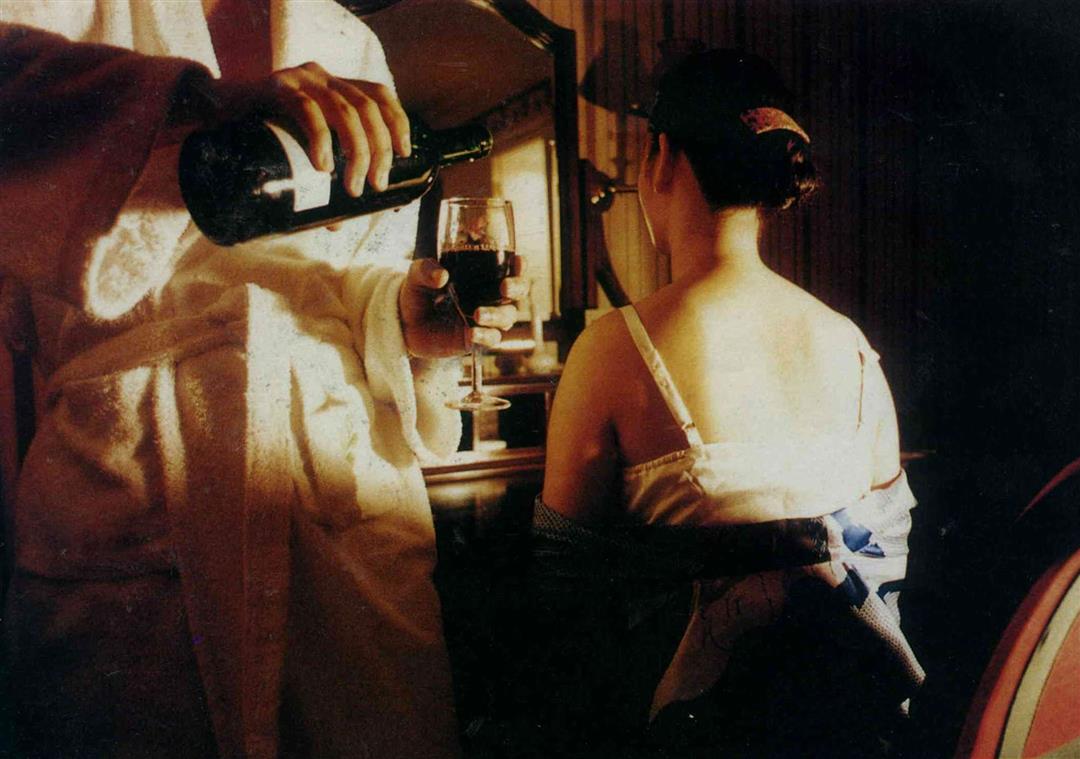
Patronizing of prostitutes and engaging in one-night stands are dangerous behaviors which are factors in the transmission of AIDS in the heterosexual community. (photo by Chou Ching-huei)
"The earlier AIDS is treated, the more easily it can be controlled by medication. Unfortunately, there are no drugs with which to treat AIDS prejudice," states an AIDS education ad."Incurable" prejudice
AIDS prejudice is visible everywhere. The PHARAA's Chang Wei says that the "Articles on the Treatment and Prevention of AIDS" promulgated by the government in December 1990 are full of prejudicial and discriminatory language. A major bone of contention is Article 15, which runs: "Those who know that they are infected with the HIV virus and, hiding this fact from others, engage in indecent acts or debauchery which infect their partner(s) may be sentenced to up to seven years in prison. . . ."
Describing the sexual activities of HIV-positive persons as "indecent acts" and "debauchery" drew protests from the PHARAA. In December of 1997, the article was amended to read: "engage in dangerous sexual practices with others or in the sharing of needles. . . ."
"In Taiwan, AIDS victims are merely a number, a statistic, a negative example to be used to teach the public," says Troy Lee, secretary-general of the Light of Friendship AIDS Control Association of Taiwan (LOFAA). According to Lee, this "flash flood" method of education has frightened many people.
Chiang Che-yan, a former vice president at National Taiwan University Hospital (NTUH), was the first doctor in Taiwan to treat patients with AIDS. He says that in one case, the day after he told a patient that he had AIDS, the patient killed himself by jumping into a river in Hsintien.

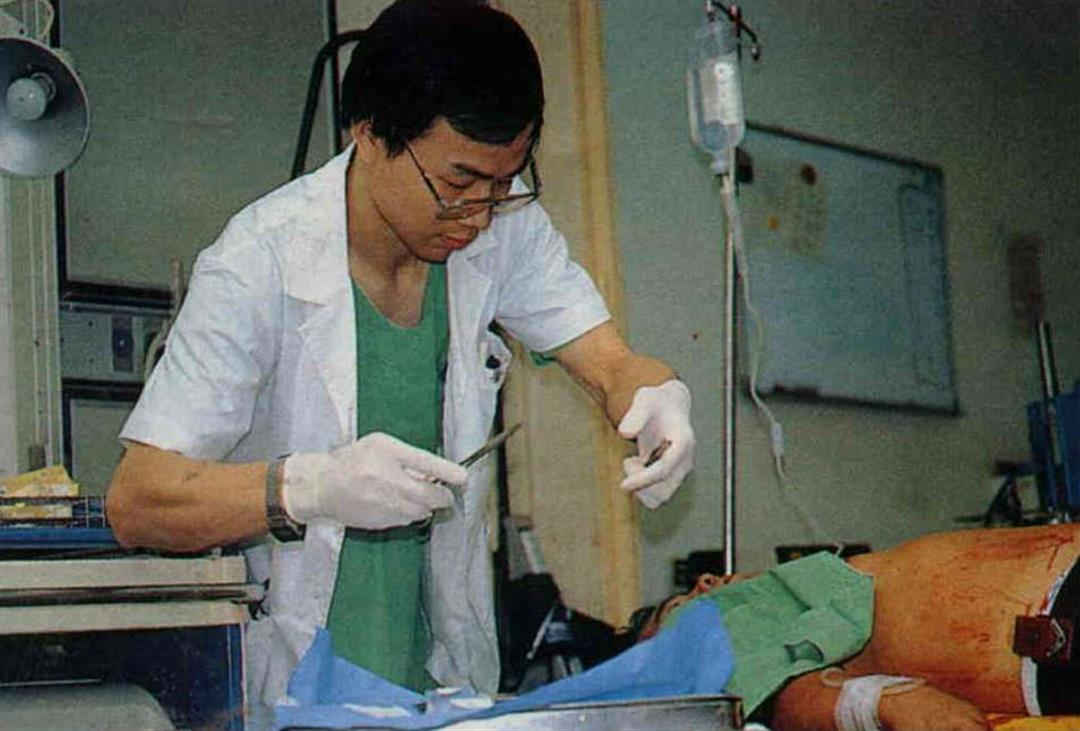
Medical treatment often involves risk to the person providing treatment. While medical staff may feel fear when they treat AIDS patients, they cannot refuse to treat them or avoid necessary treatments to protect themselves from risk.
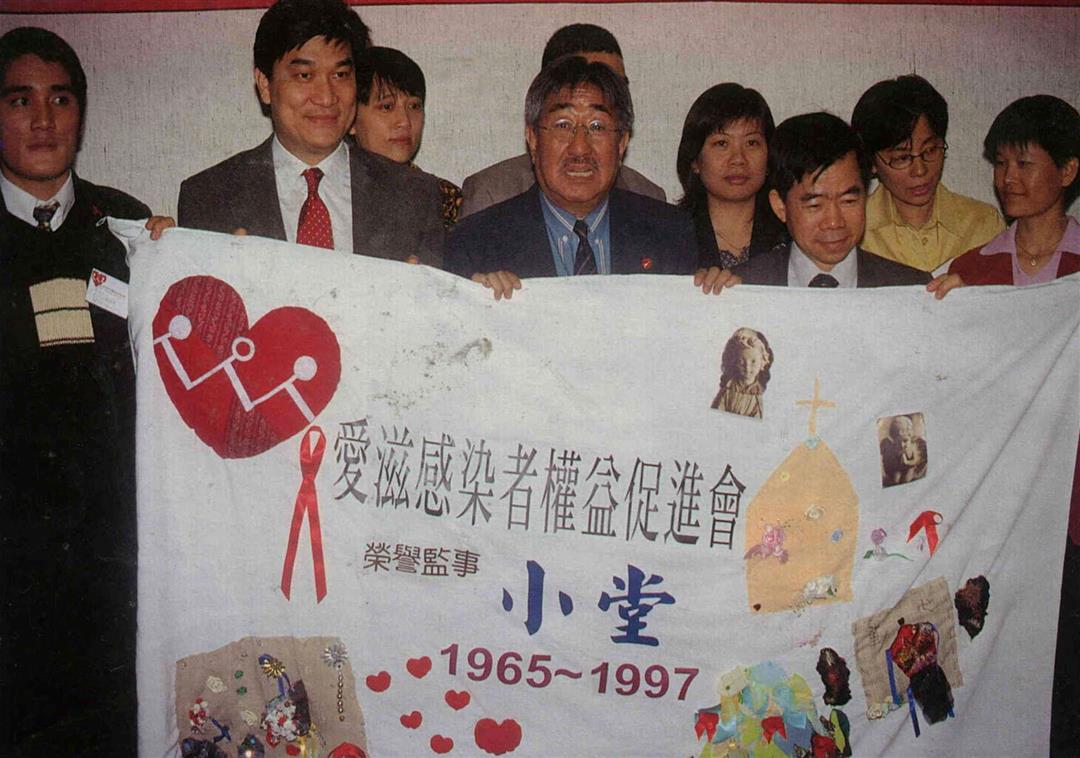
"I'm not afraid of this disease. My greatest anxiety is the discrimination and misunderstanding of others," says the HIV-positive Hsiao Chiang. He says that he takes his medication regularly every day, exercises and watches his diet. He lives a normal life like everyone else. He says that in spite of being HIV positive, he still has sexual partners, but he always uses a condom. He does so not only to avoid infecting his partners, but also to protect himself because those infected with HIV have less resistance to disease. In fact, his chance of picking up an infection from his partners is higher than his chance of infecting them.Better cancer than AIDS?
A doctor of internal medicine has posted a description on the Internet of his first encounter with an AIDS patient five years ago: "As a new doctor, taking a look at the patient's medical history, I was shocked to discover that he was an AIDS patient. I was really shocked. In a flash, there was a burst of activity in the emergency room. The staff all put on surgical masks and began disinfecting everything. . . ."
Though the situation is much better today, the attitude that "medical care providers have the right to refuse treatment to HIV-positive patients" persists.
Currently, outside of the infectious diseases and internal medicine wards of 20-some hospitals-including NTUH, Veterans General Hospital and Mackay Memorial Hospital-which are required by the DOH to treat AIDS patients, it is common for doctors to politely refuse to treat HIV-positive patients. Some doctors, especially dentists and surgeons, even go so far as to change their methods of treatment when confronted with HIV-positive patients.
In October of this year, there was a case in which an HIV-positive person was found to have a brain tumor. A neurosurgeon at one of Taipei's large hospitals refused to operate because there is more of a tendency for blood to spurt out during brain surgery. The doctor thus felt he had a greater chance of becoming infected with AIDS. The patient transferred to another hospital where a doctor was willing to operate, but the other members of the treatment team were unwilling to go through with the surgery. The patient finally found a Christian hospital in Changhua where the director, a religious man, said: "Doctors cannot refuse to treat patients." The patient had his surgery, and having recovered, has already left the hospital.
Chang Li-yu, who once worked in a cancer ward and now does social work at the NTU AIDS Hospice, says that although the illnesses are similar in that neither can be cured, the treatment that cancer patients and AIDS patients receive is as different as Heaven and Earth.

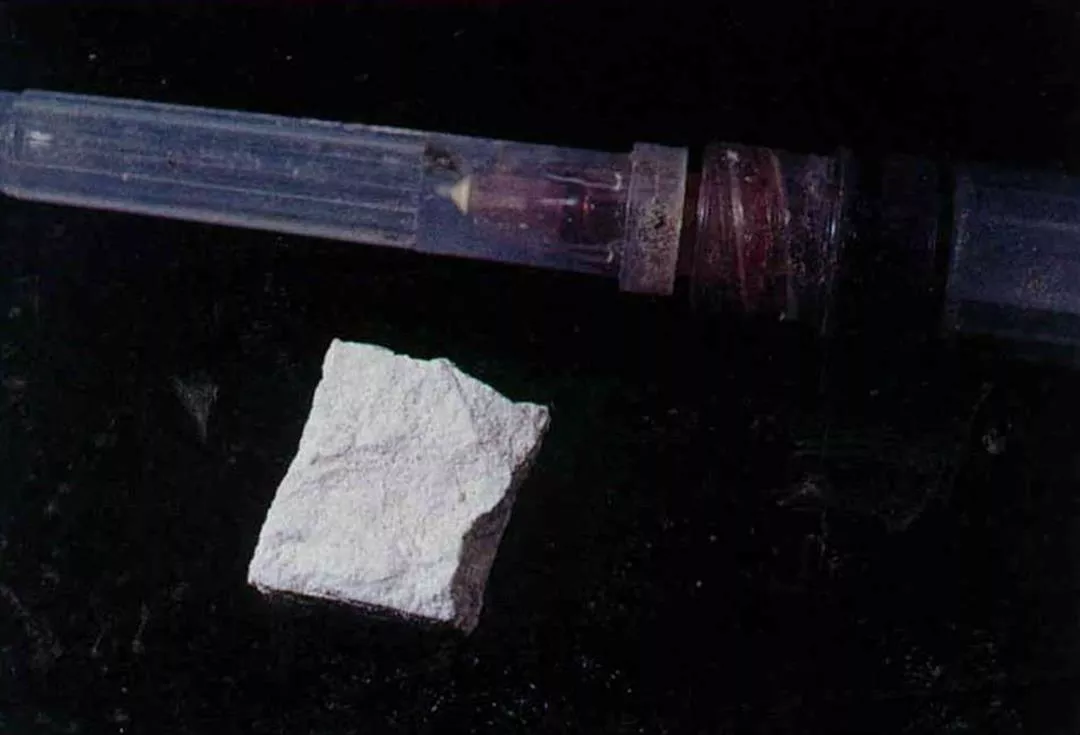
Because syringes are easy to come by in Taiwan, few intravenous drug users on the island acquire AIDS through the sharing of needles.
The family of a cancer patient usually does everything in its power to care for the patient. AIDS patients, on the other hand, are often reluctant to let their families know that they have AIDS. Even if the family does know, they may not visit or are often judgmental. And hospital roommates often point and mutter. Chang regretfully states, "They would probably be better off telling their families that they have cancer rather than AIDS."Not necessarily gay
People's prejudice against AIDS and its victims has its source in the early impression that AIDS is a disease afflicting homosexuals, intravenous drug users and other groups on society's fringes.
But it has been long since AIDS was the exclusive domain of homosexuals and drug addicts; the number of HIV-positive heterosexuals exceeded the number of homosexuals many years ago.
When AIDS first arrived in Taiwan, the majority of the island's HIV-positive persons were homosexuals. Today, however, 34.9% of Taiwan's HIV-positive persons have contracted the virus through heterosexual activities, while only 22.4% have contracted it through homosexual activities. The largest HIV-positive group is heterosexual.
Chen Yi-min, a professor at Yang Ming University's Institute of Public Health, states that although the percentage of heterosexuals infected exceeds the percentage of homosexuals, 16.4% of AIDS victims are male bisexuals. This means the rate of infection within the homosexual community is still rather high.
On the other hand, Yeh Kung-chieh points out that while that rate of infection of homosexuals and bisexuals is high, they are a rather insular group and not likely to spread the disease to the rest of the community. In contrast, when the disease arrives in the larger heterosexual community, the spread is rapid and it is thus the heterosexual community which is more at risk.
Homosexuals don't agree with the discriminatory view that they are a "high-risk group." They say that there is no "high-risk group," only "high-risk behavior."

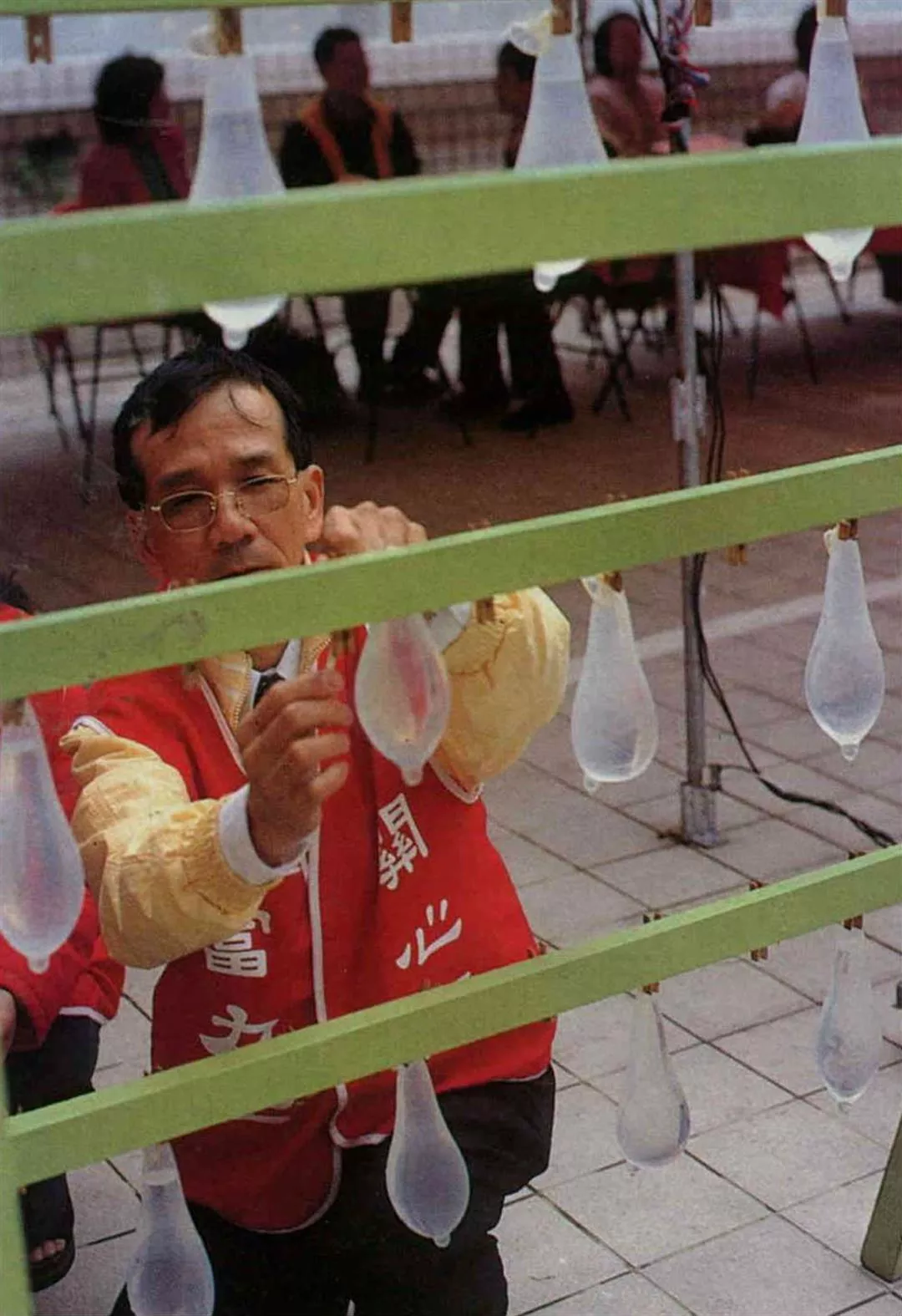
These are condoms, not lightbulbs. AIDS prevention is as easy as recognizing this fact.
Hsiao Chiang, who is very active in the homosexual community, says that AIDS has been a continuous source of stress to homosexuals. But their level of awareness is very high, so they have their blood tested regularly and take preventative measures. This contrasts with the situation of the average person, who is less likely to protect himself.Just an STD?
Research indicates that HIV is continually mutating and there are now 10 strains. Identifying the strain helps identify the source of the infection. Chen Hao-yung, head of the National Institute of Preventive Medicine's virology section, says that statistical analysis indicates that HIV-B, of North American origin, is most common in Taiwan, accounting for 67% of all HIV infections. The second most common variety is the Southeast Asian HIV-E, which accounts for 23% of all cases on the island. These two types of HIV are transmitted through sexual activity.
Chen Yi-ming says that the critical factor in more than 80% of AIDS transmission in Taiwan is sexual activity.
Chen Shou-chien says that overseas the rate of infection is higher from the sharing of needles by intravenous drug-users. But in Taiwan, there are relatively few intravenous drug-users and needles are easy to come by. Therefore this group accounts for a much smaller percentage of the island's AIDS cases.
"In Taiwan, AIDS is a venereal disease," says Troy Lee. In the past, LOFAA's primary mission was caring for AIDS victims. However, the group gradually realized that the key to AIDS prevention is education of those members of the public who are not infected with the virus. "If even sex is difficult to talk about, how can we talk about AIDS?" Li believes that AIDS prevention must begin with sex education.AIDS victims' rights
HIV-positive persons often can't bring themselves to face their own families. Even if the have the courage to do so, pressures from the outside world leave them no place in society.
A survey conducted last year by Hsu Mei-ling and Huang Shu-chen, a professor in the department of health education at National Taiwan Normal University, revealed that 56.7% of respondents felt that in order to protect the health of others, those who are HIV positive or suffer from AIDS should not be allowed to work outside their homes. In addition, 25% of respondents felt that children who suffer from AIDS should not be allowed to attend school.
Clearly, Taiwan still has far to go to guarantee the rights of AIDS victims.
In 1994, there was the case of a boy surnamed Chen who contracted AIDS through a blood transfusion administered after a car accident. When he returned to school, all 22 students in his class withdrew from the school.
Fortunately for the boy, though he was lonely for a period of his childhood, he didn't lose his right to a public education. That is not the case for older victims, who have no rights to even register for university and graduate entrance exams at some schools, much less to study. The expulsion of the HIV-positive Tien Chi-yuan from NTNU, where he was a student in the fine art department, was big news for a time. Finally, under pressure from public opinion, the university allowed Tien to complete his studies by mail and telephone.The right to work
The problem is not limited to education. AIDS victims also suffer discrimination in the workplace.
When the three-in-one "drug cocktail" was made available to Taiwan's AIDS victims in April of last year, many returned to a reasonable degree of health. DOH statistics indicate that both the frequency and duration of their hospital stays declined.
Han Sen, who was infected with the AIDS virus 13 years ago, began taking the three-in-one treatment last year. He says that although his condition still cannot be cured and he must continue taking medication for the rest of his life, he feels more hopeful than he did before. "I was never sure how much time I had left. Now, I feel I can plan my life for the next five years."
Chang Wei says that in the past, HIV-positive persons asked, "How long have I got?" Now they are beginning to ask, "What kind of job do I want to look for?"
But social attitudes have pressured HIV-positive persons into keeping their condition to themselves, especially in the workplace, in order to get by.
The health of one person who worked in the finance industry forced him to check into the hospital. When his boss found out that it was for AIDS, he immediately fired him.
In order to keep their condition secret, when HIV-positive persons get sick and have to stay in the hospital, they do not claim sick leave, instead using their vacation time.
In some fields, however, it is not easy to keep one's condition a secret. In the restaurant and hotel businesses, for example, health considerations mean that employees undergo regular blood tests. If a test shows that someone is HIV positive, the boss is usually notified before the victim, and the victim is fired.
Renting a home, getting medical treatment, finding work. . . . AIDS victims face discrimination in every facet of their lives. And even in death, they are denied their rights.
In the name of preventing the spread of infection, Taiwan's mortuaries do not accept AIDS victims. When an AIDS victim dies, the body is usually sent to a crematorium immediately.
NTU Hospital's Chang Li-yu says that in order to alleviate some of the difficulties faced by AIDS victims' families after their death, the hospital's social workers will help arrange to make the hospital's chapel available to allow families and friends to hold a short funeral service. As a result, the funerals of many AIDS victims are held in hospitals.
Last year, revisions to the "Articles on the Treatment and Prevention of AIDS" were passed which included guarantees of HIV-positive persons' rights to education, medical treatment and work. They also increased the fine for the violation of these rights to a minimum of NT$30,000 and a maximum of NT$150,000.
But most feel that these revisions will be talked up far more than they will be implemented. When society is still unable to genuinely accept HIV and AIDS sufferers, of what use are these laws?To tell or not to tell?
This lack of acceptance on the part of society makes those with HIV unwilling to admit it. Victims find it difficult to tell even family and loved ones, creating a blind spot for prevention and treatment.
The struggle to decide whether to tell is not unique to Taiwan; victims in other countries face the same problem. This year, a law was passed in New York State which states that if the victim does not tell his or her sexual partner, his doctor has the right to do so.
In order to protect an AIDS sufferer's right to privacy, Taiwan's "Articles on the Treatment and Prevention of AIDS" stipulate that administrative personnel cannot reveal this information without reason. As a result, if the victim decides not to tell a sexual partner, no one can compel him to. This has led to a number of tragedies.
The wife of an HIV-positive man was hit with a bolt from the blue when the Institute for VD Control asked her to come in for a blood test. The reason given was that her husband had come in for a test. They were, however, unable to tell her the results of her husband's test. This husband did not want to infect his wife and on one occasion, used a condom. However, faced with his wife's suspicions, he didn't dare continue to do so. As a result, his wife was also infected.
Yang Ming University's Chen Yi-ming, who is also secretary-general of the Chinese Society of Preventive Medicine, says that in Taiwan there are currently 60 known cases of infection by a spouse, most of which involve a husband infecting his wife.
The "Articles on the Treatment and Prevention of AIDS" stipulate that if an HIV positive person infects an unknowing partner with HIV, the former is punishable by up to seven years in prison. For most wives, however, punishment doesn't change the fact of their infection. Moreover, having their husband in jail is of no help to them if they want to keep their family going. Therefore, most wives choose not to prosecute.
This is another blind spot which exists in the treatment and prevention of the disease. Twu Shiing Jer, director of the Taipei City Bureau of Health, says that when a hospital diagnoses an HIV infection, it is almost impossible to trace its origin. Sometimes the victim fears being blamed by his infector for having let out his secret. Sometimes, the victim simply doesn't know who infected him. "What use is it for me to see patients? Behind every one I see another 20 or 30 are waiting."
Chang Li-yu says the question of telling is the one she most commonly encounters in the AIDS ward. "We advise them to let at least one family member know so if something happens there is someone we can contact to help." Chang says this person is usually a sibling.
But in the face of social pressures, many of those infected with HIV don't know where to turn. Chen Shou-chien says that the Taipei Institute for VD Control loses contact with around one-fourth of the HIV-positive persons who pass through its hands. The main reason is that the use of false names and addresses by the victims makes it difficult to trace them. Not the problem, the solution
"Saying that AIDS prevention is an immunological problem is not so accurate as saying it is a social reform movement," says Twu Shiing Jer, who has devoted himself to AIDS prevention work for many years.
Twu feels that AIDS prevention isn't simply a case of being compassionate towards its victims and accepting them, but even more importantly, through this acceptance, encouraging them to come out into the open.
By doing so, they can receive medical treatment. They can also provide those who are not infected with accurate information. This would be a win-win situation.
"We are not the problem. We are the solution." So states the Global Network for People Living with AIDS.