Kenting, Lishan-Eco Style
Liu Yingfeng / photos Lishan Eco Company / tr. by Scott Williams
July 2016


As the first big storm of the summer fell on Kenting in southern Taiwan, a group of travelers from Taipei made a nighttime visit to the banks of the Gangkou River, looking for two species of crab: Scandarma lintou (a tree-climbing crab) and Sesarmops intermedium (sometimes known as the “flower crab”). While out exploring, they encountered another example of the Hengchun Peninsula’s rich ecosystem: a wandering many-banded krait.
In the film Cape No. 7, a postman named Old Mao lives in the Hengchun Peninsula’s Yongjing Community. Seeking to capitalize on the film’s popularity, the neighborhood has introduced a “deliver the mail with Old Mao” tour of the area that allows tourists to imagine themselves as Old Mao strolling through Yongjing’s fields to carry correspondence to local residents.
Hengchun’s ferocious sun makes the peninsula, seaside Kenting excepted, an infrequent destination for tour groups. A group of young entrepreneurs is hoping to change that. These graduates of the Department of Forestry at National Pingtung University of Science and Technology have founded the Lishan Eco Company to show people a different side of Kenting. The company works with local partners in the Lide, Sheding, and Yongjing areas to offer mini-ecotours, and also operates a small shop.
Miles Lin, one of the founders of the Lishan Eco Company, followed a winding path to Kenting. He attended the Affiliated Taichung Senior Agricultural Vocational High School of National Chung Hsing University, earned admission to the Department of Forestry at National Pingtung University of Science and Technology (NPUST), got involved with community building with Chen Mei-hui, an associate professor in his department, and then ended up in Kenting.
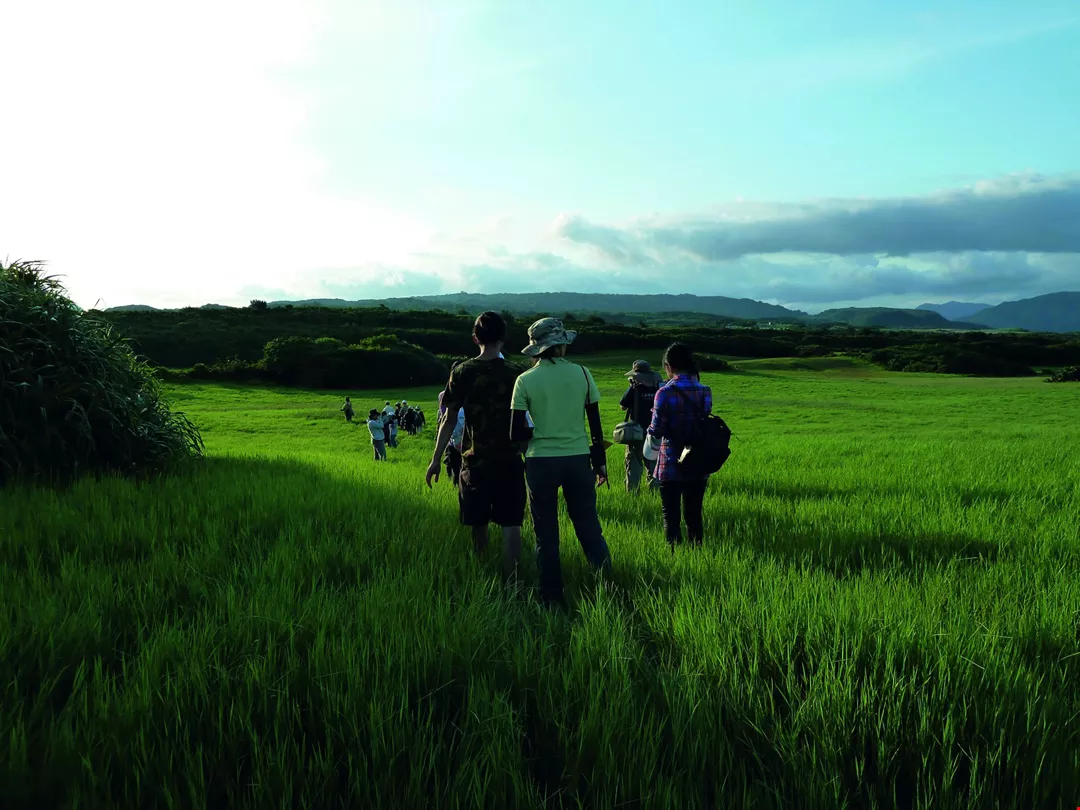
A guide takes visitors across the Yongjing Plain to experience the Gangkou River’s nighttime ecosytem. Local guides from Hengchun’s various communities know all of the area’s points of interest.
Eco-entrepreneurship
Lin got the idea to start a business on the eve of completing his graduate degree. “Graduates of the forestry program usually take jobs as civil servants with the Forestry Bureau or the Taiwan Forestry Research Institute, or become professional researchers.” But Lin was more interested in a job that would let him get out and about in the community, and figured that ecotourism had the potential to grow. After talking over the possibilities with a classmate named Yeh Chia-liang, he decided to go into business. Chen encouraged him to pursue his idea, and christened his venture with the first part of the name of the Satoyama Initiative (“lishan changyi” in Mandarin), a Japanese sustainable development initiative.
But what does “lishan” mean? And what is “ecotourism”? Lin’s company doesn’t have a physical product that makes the answers clear, so he spends a good deal of time explaining its services. Unlike most travel agencies, which simply sell tours and deliver customers to a destination, the community-oriented Lishan Eco plans mini-tours, involves local residents in the planning process, and then trains local residents to deliver the tours.
Lin is often exhausted by the demands of being personally responsible for everything his company does, but his efforts have yielded precious fruit: unique tours. “For example, our ‘fisherman’s lunchbox’ grew out of conversations with locals and highlights the essence of Daguang, a fishing community,” explains Lee Yi-hui, one of Lin’s Lishan partners.

A guide takes visitors across the Yongjing Plain to experience the Gangkou River’s nighttime ecosytem. Local guides from Hengchun’s various communities know all of the area’s points of interest.
Kenting, Lishan style
Lishan possesses rich local knowledge that enables it to fill its map of the Hengchun Peninsula with names unfamiliar to the general public. Daguang, Lide, Sheding, Shuiwaku, Yongjing, Manzhou... each spot features an ecotour and local story with strong ties to the community.
Lishan also stocks its store with wooden carvings that represent the various communities that the company works with. These carvings of clownfish, birds of prey, terrestrial crabs, and Eurasian teals incorporate unique aspects of these communities, and can be pieced together into gift boxes or even lampshades.
Lide Community, represented by a raptor, was once the site of an Aboriginal polity known as Seqalu. It is a place still steeped in Aboriginal culture. It also has a rich ecosystem that includes the large numbers of gray-faced buzzards that pass through every October, and the nearby upper reaches of the Lanren Creek. After talking with Lide residents, Lishan introduced two tours of the area: a raptor-watching tour and a Lanren Creek eco-walk.
The Gangkou Community faces the Pacific Ocean and is home to a grove of weeping figs (Ficus benjamina) made famous by the film The Life of Pi. It is also adjacent to Kenting National Park’s largest river, the Gangkou River, making it an ideal home for its many terrestrial crabs. On a short, two-hour nighttime tour, visitors can see Scandarma lintou, an indigenous tree-climbing crab that was only discovered in 1999, as well as flower crabs (Sesarmops intermedium), hermit crabs, and ornamented pygmy frogs (Microhyla ornata). They can also check out Formosan sika deer, which the Kenting National Park Administration has been breeding for many years, on the Longpan Plain near Shuiwaku Village.
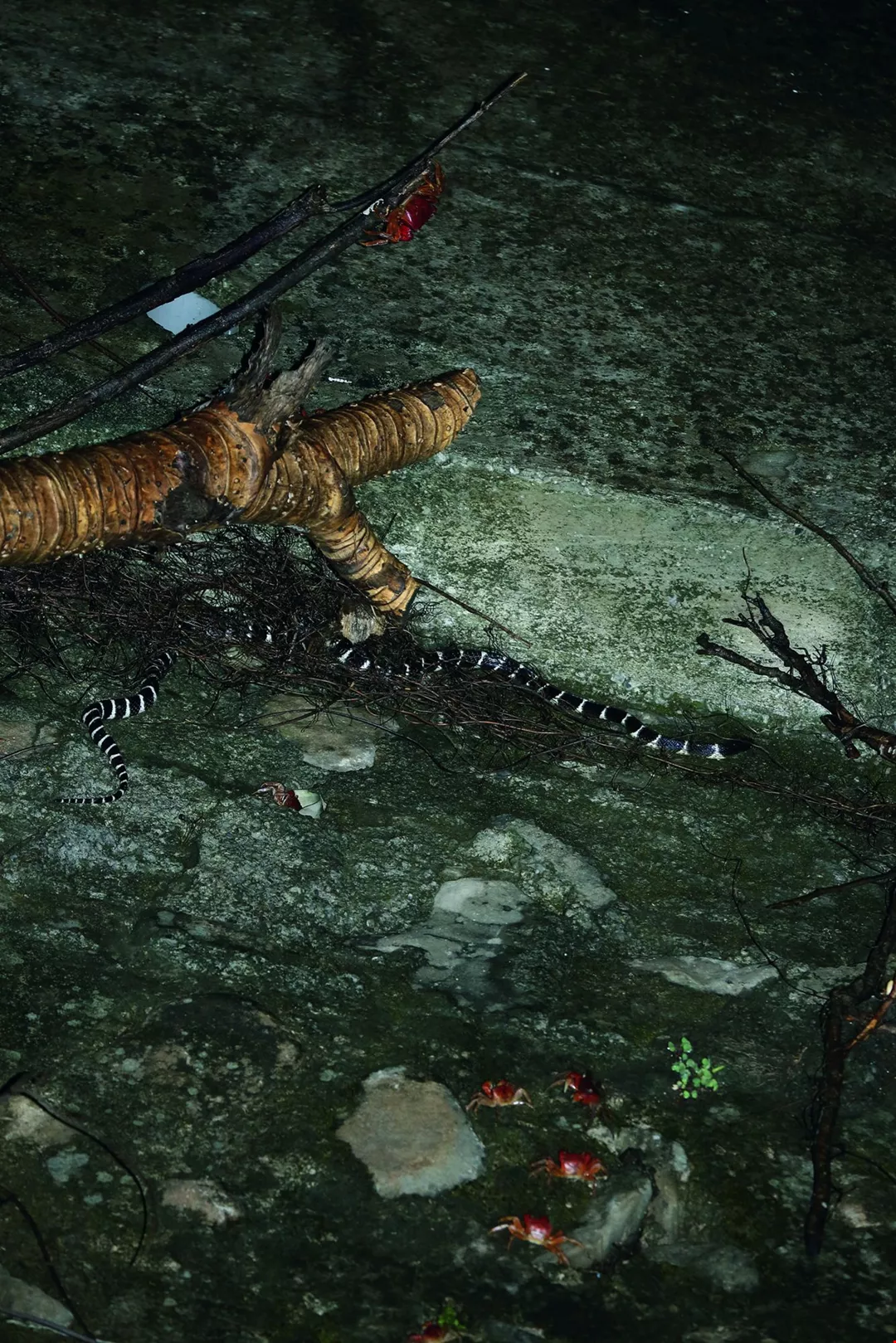
A guide takes visitors across the Yongjing Plain to experience the Gangkou River’s nighttime ecosytem. Local guides from Hengchun’s various communities know all of the area’s points of interest.
Hengchun’s “sticky” earth
At least ten locals are working with Lishan in each of the eight communities in which it operates. The company not only has seniors in their 70s and 80s leading tours, but has also begun to draw young people back to their communities with the prospect of jobs.
The emergence of Lishan has had a real economic impact on several of the communities. Lin explains that when Lishan was founded, participating communities were generating only NT$600,000–700,000 on average from ecotours and experiential travel. Nowadays, Sheding, which was Lishan’s earliest partner and has the most mature operations, is bringing in more than NT$3 million from such tourism. Daguang, which joined much later, is already seeing NT$400,000–500,000. While these figures pale in comparison to the revenues Kenting receives from its more than 7 million annual visitors, and Lishan’s 30,000 clients annually are less than 1% of the number that visit Kenting, Lin believes that the ecotourism business still has a great deal of room to grow.
The entrepreneurial path is plagued by difficult passages. The process is far from easy and Lishan occasionally has to contend with its local partners’ opposing views. But whenever exhaustion causes Lin and his partners to think about giving up, their feet just won’t let them leave.
He wryly jokes, “People say that Hengchun’s earth is especially sticky. Honestly, I’m moved every time I see local residents and Lishan’s people working together to achieve a goal.” It has been ten years since Lin first came to Hengchun, and even though he’s still finding his way along the entrepreneurial path, he and his Lishan partners have rooted themselves into the soil of Taiwan’s southernmost extremity, and have found a wealth of local color there.

On a nighttime stroll through the Lide Community on the eastern side of the Hengchun Peninsula, lift your eyes to take in a sky full of stars, or just enjoy the songs of the creatures beside you on the path
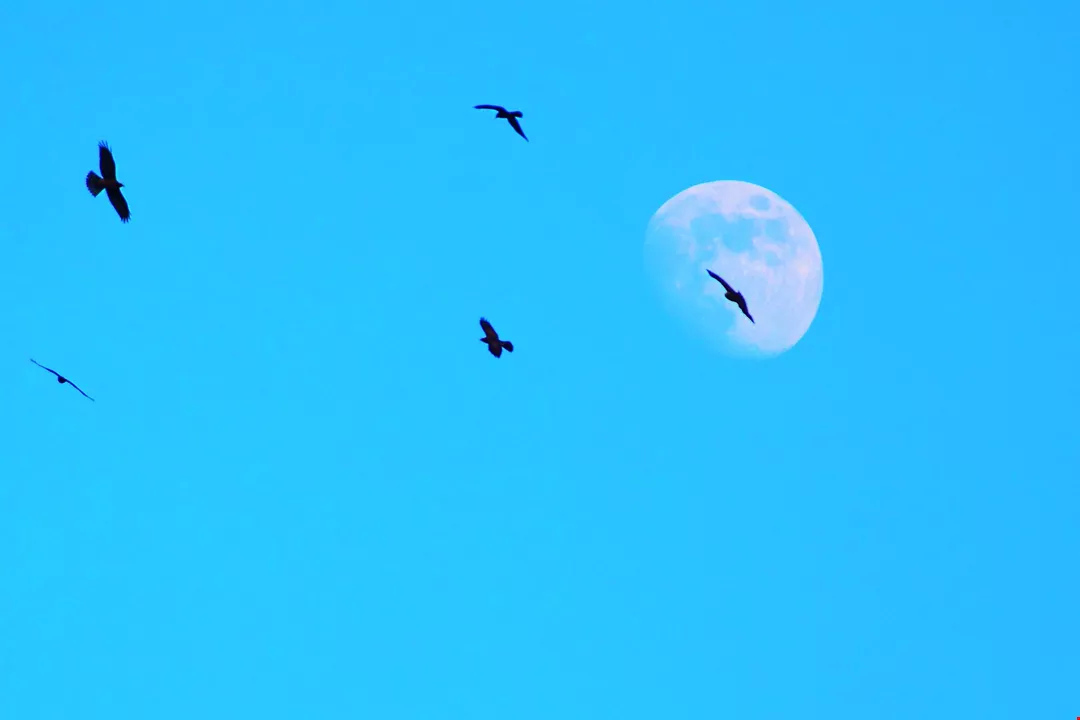
Gray-faced buzzards, blue linckia sea stars (Linckia laevigata), the fish poison tree (Barringtonia asiatica) and bioluminescent fungi... Hengchun’s rich natural ecosystem and abundant stories await.
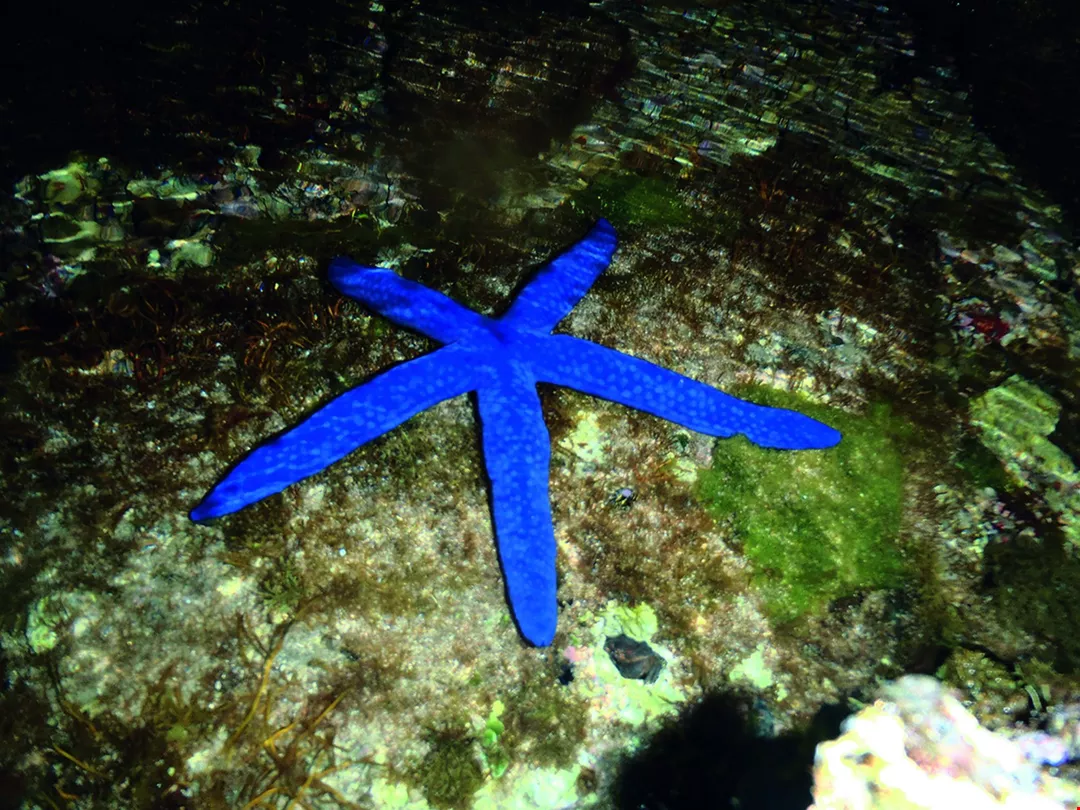
Gray-faced buzzards, blue linckia sea stars (Linckia laevigata), the fish poison tree (Barringtonia asiatica) and bioluminescent fungi... Hengchun’s rich natural ecosystem and abundant stories await.

Gray-faced buzzards, blue linckia sea stars (Linckia laevigata), the fish poison tree (Barringtonia asiatica) and bioluminescent fungi... Hengchun’s rich natural ecosystem and abundant stories await.
1.jpg?w=1080&mode=crop&format=webp&quality=80)
Gray-faced buzzards, blue linckia sea stars (Linckia laevigata), the fish poison tree (Barringtonia asiatica) and bioluminescent fungi... Hengchun’s rich natural ecosystem and abundant stories await.
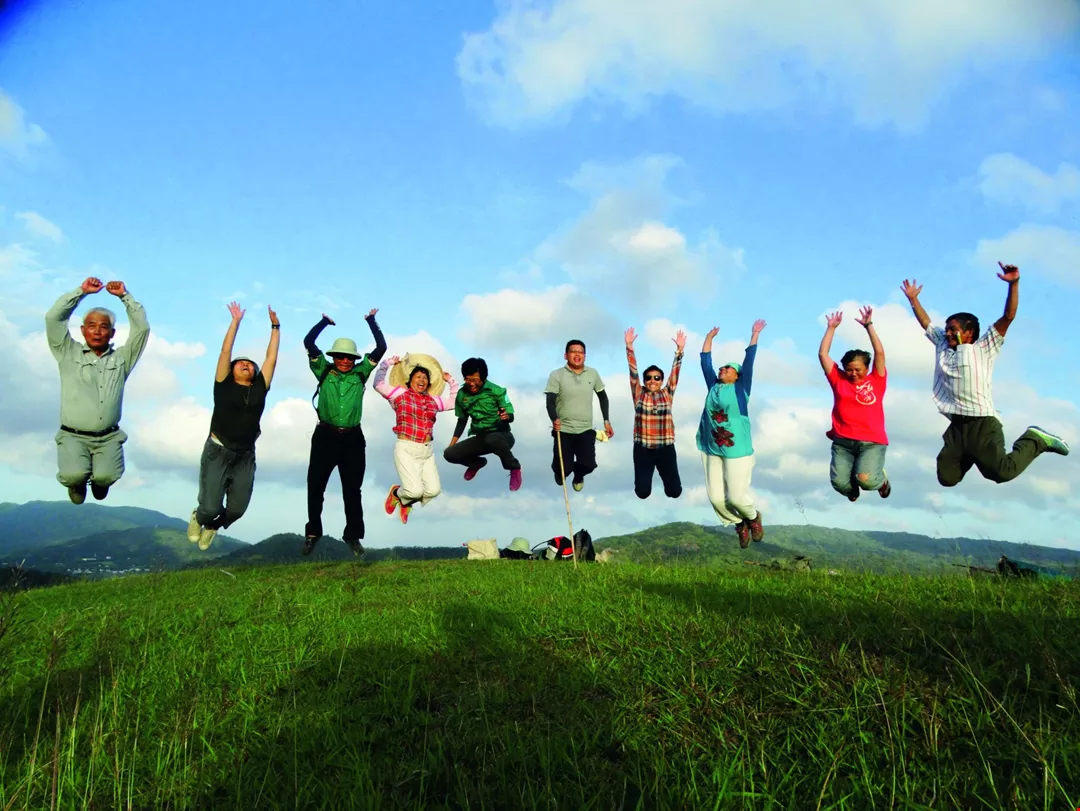
Lishan Eco’s mini-ecotours through Kenting’s communities reveal a completely different side of the area.
@List.jpg?w=522&h=410&mode=crop&format=webp&quality=80)
@List.jpg?w=522&h=410&mode=crop&format=webp&quality=80)


