Taiwanese Business Falls in Love with Vietnam... Again
Chiang Chiung-fang / photos Jimmy Lin / tr. by Phil Newell
September 2007
"Taiwan and Vietnam are business partners, geographic neighbors, and cultural brothers, and now that in recent years there have been more than 10,000 Taiwanese-Vietnamese marriages, we are even closer, more like family," says Chen Shan-lin, director-general of the Taipei Economic and Cultural Office in Ho Chi Minh City, with strong feeling. Among the countries of ASEAN, no single country's relations with Taiwan can compare with Vietnam's. "We should be devoting a lot of attention to the Taiwan-Vietnam relationship!"
This relationship starts with economics and trade.
From Taoyuan International Airport to Hanoi in northern Vietnam takes only two hours of flight time, and only three to get to Ho Chi Minh City (formerly Saigon). The plane is packed with Taiwanese businessmen who travel back and forth, and with Vietnamese brides, their Taiwanese husbands, and their ceaselessly bawling babies, going home to visit the wife's family. On the plane, the flight attendants have barely finished rushing through the food service, and before you can even begin to make the psychological adjustment, you're there in another country.
Whether it is northern or southern Vietnam, before the plane touches down and while you can get a bird's eye view of the land, there are glossy verdant rice fields as
far as the eye can see. In the south, the brownish-yellow Mekong River winds through the countryside, while in the north the brick-colored Red River encircles Hanoi. Both of them look like enormous dragons rising out of the greenery.
Here in 2007, Vietnam itself is much like a giant dragon, coiled and ready to burst forth.

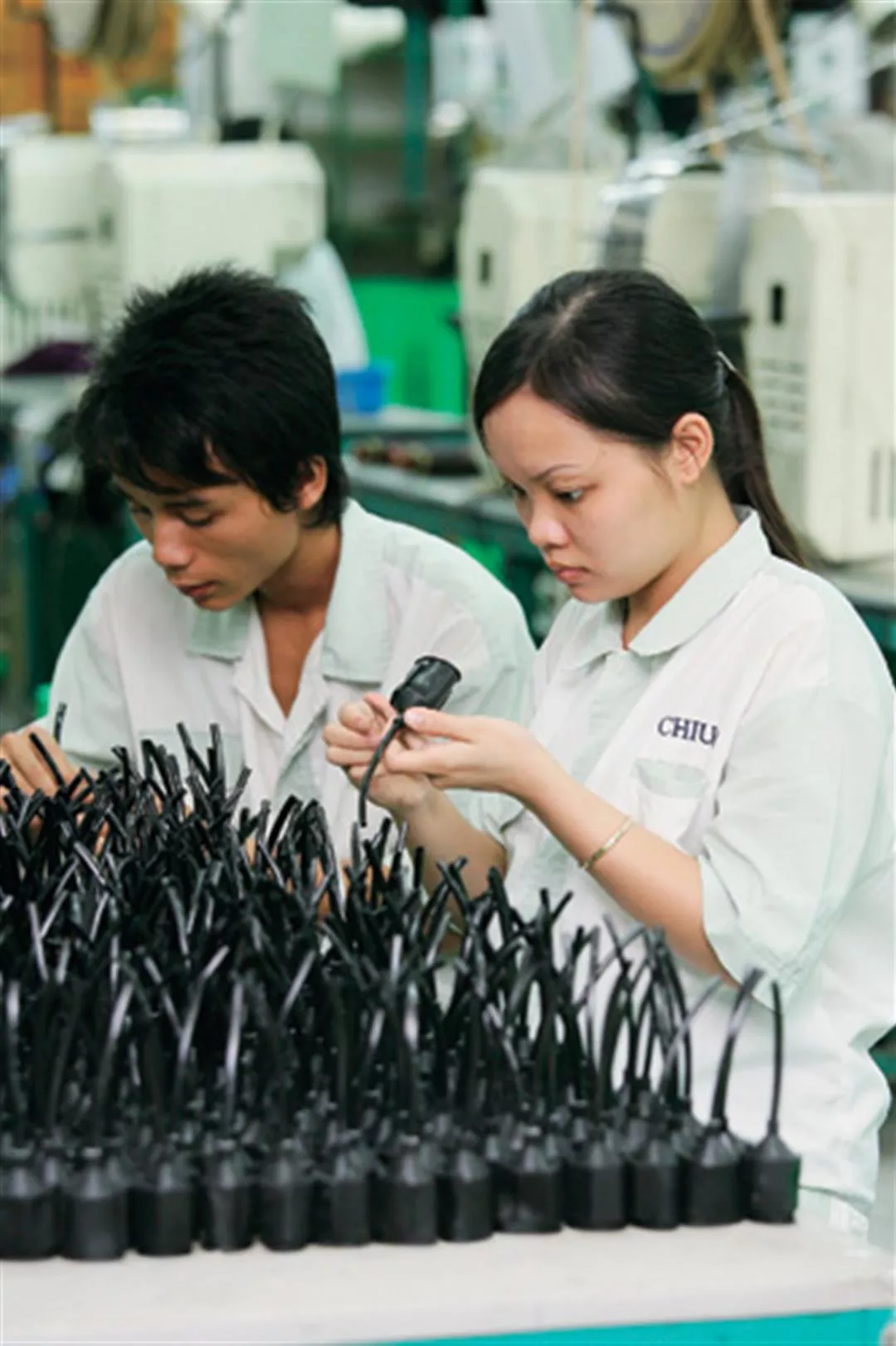
Chiu Yi Vietnam Company, which manufactures motorcycle parts, is a 12-year-old factory where everything now is fully systematized. They have carefully followed the regulations of the Vietnamese government in order to avoid labor disputes.
A new star on the world stage
In 1995, Vietnam joined the ASEAN free trade area, and thereafter established diplomatic relations with the USA and signed a free trade agreement with the EU. In 1998 it joined APEC, and then signed a series of agreements with numerous countries to promote trade and guarantee foreign investments. And in January of 2007 Vietnam became the 150th member of the World Trade Organization. The nation has clearly escaped from its long-term isolation, and has become the second fastest growing economy in the world (behind only China). In the list of "the Next Eleven" (N-11) issued by Goldman Sachs in 2005, Vietnam was at the top of the chart, and in 2007 it was named by Japanese economist Takashi Kadokura as the leading member of the five newly rising VISTA countries (Vietnam, Indonesia, South Africa, Turkey, and Argentina).
The whole world considers Vietnam to be on the rise, and Vietnam is in turn striving to play a more prominent role on the world stage. In 2004 it hosted the fifth Asia-Europe Summit, in November of 2006 APEC held its annual meeting in Hanoi, and in April of 2008 Vietnam will host the fourth meeting of the heads and vice-heads of the central banks of ASEAN countries.
Vietnam's rapid growth is drawing many foreign investors. In 2006 alone, the country took in 800 projects totaling US$10.2 billion in direct foreign investment (DFI), an increase of 47.4% over the previous year. In the UN's 2004 world investment report, Vietnam was listed 39th out of 140 countries in terms of attracting foreign capital, and fifth in Asia. With transnational corporations competing for the spoils, an economic Vietnam conflict has broken out.

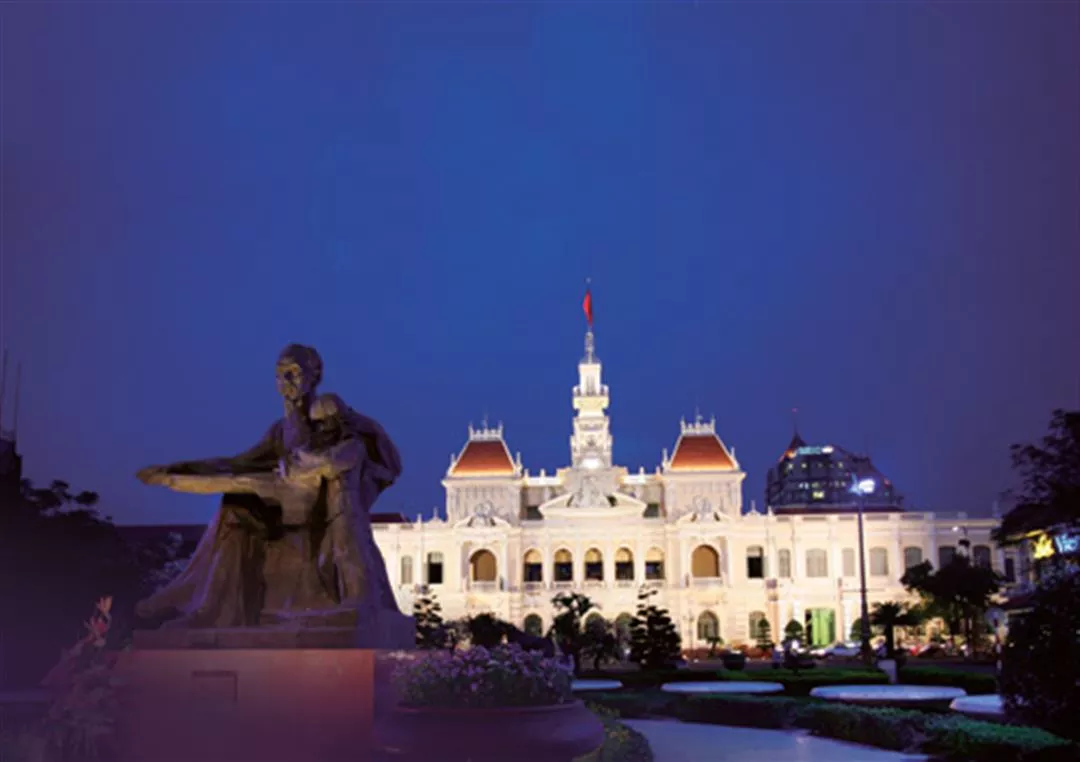
The yellow-walled City Hall, with its exquisite sculpted decorations, on what is now Nguyen Hue Boulevard, has been around for 90 years, and has been called the most beautiful structure from the French colonial period in Ho Chi Minh City. The statue in the plaza of revolutionary hero Ho Chi Minh holding a little girl symbolizes that Ho, who remained unmarried all his life, always maintained a selfless spirit of considering the people of Vietnam to be his children.
An old flame rekindled
The current wave of Vietnam fever has also swept through Taiwan.
This February, the Taiwan External Trade Development Council (TAITRA) organized a visit with over 100 corporate participants looking for investment opportunities in Vietnam. In June, the Chung Hua Institution for Economic Research held a forum on trade and economic relations with Vietnam, with not an empty place in the nearly 200-seat auditorium. Vietnam is suddenly hot, and large firms that have built factories there, such as TaYa, TECO, Evertop, and Sanyang, are now considered "Vietnam concept shares" in the stock market, and their share prices have been rising.
"Three times as many Taiwanese businesspeople have visited Vietnam this year with an eye to future investment as did so last year," says Chen Shan-lin. He gives the mass media the credit for generating this year's enthusiasm for Vietnam. Over the past year, Taiwanese media have been covering Vietnam as if they had just discovered a new continent. Taiwanese have suddenly realized that "the girl next door has grown up," and everyone's eyes seem to be turning in that direction.
In fact, Vietnam is not only looking freshly attractive to Taiwanese investors, it has been a long-time flame with whom they have woven an intricate relationship over time. Long before Vietnam was being put at the top of lists of newly developing countries, and even before the government in Taiwan first launched the Go South policy in 1994, perceptive Taiwanese businesspeople had already made major strides into Vietnam, and it would not be much of an exaggeration to say that these businesspeople have been the driving force behind the scenes of Vietnam's rise.
Since launching a policy of reform and opening to the outside world in 1986, Vietnam has attracted nearly 30,000 Taiwanese businesspeople to try their luck. Different investors, with different lengths of time in-country, have had different experiences and have drawn varied conclusions in the course of their projects.

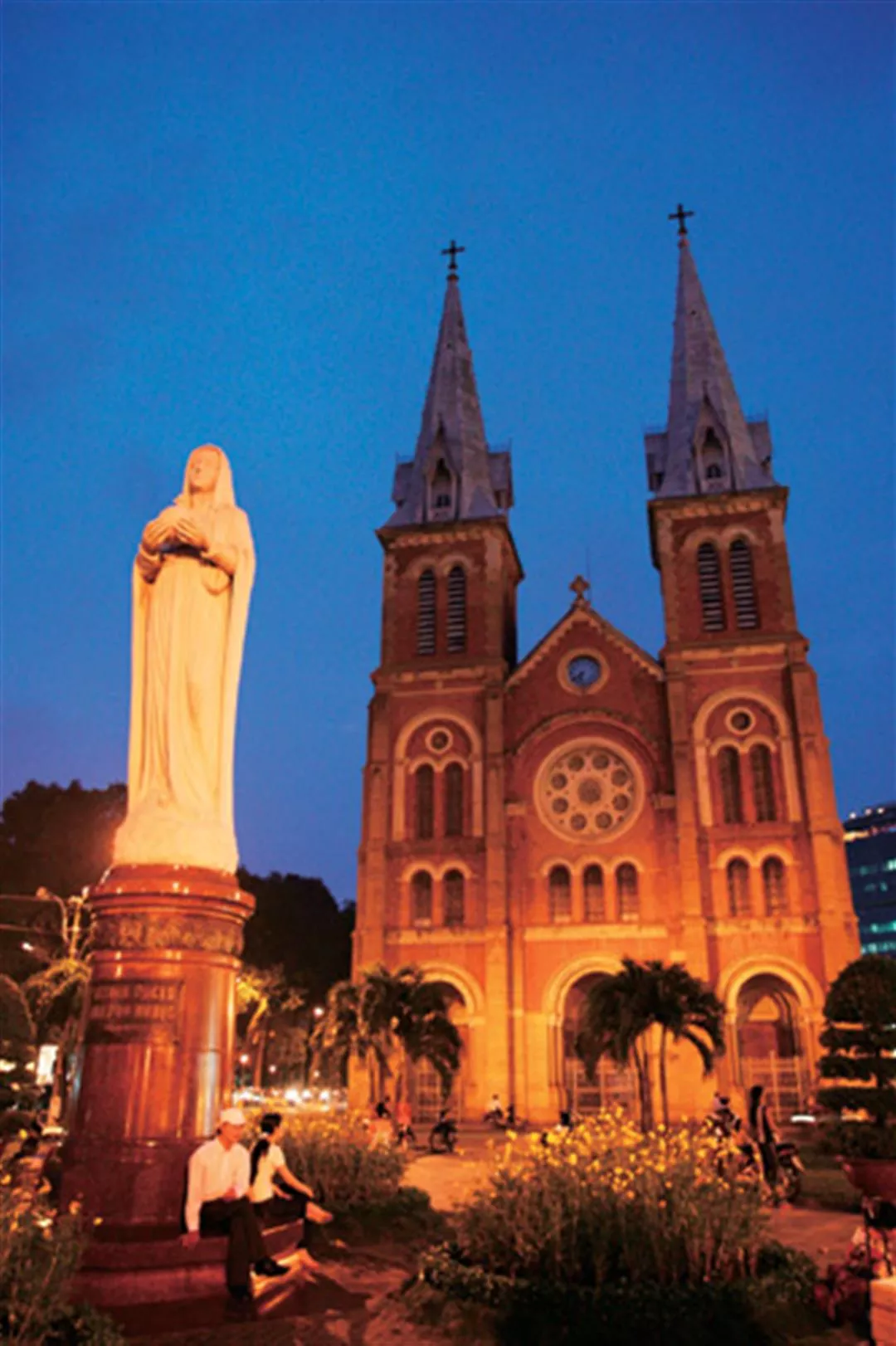
Despite its wartime experiences, Ho Chi Minh City still has many intact works of French colonial architecture. The Notre Dame Cathedral (1877) is known as the "red church" because it is built from red bricks. It is one of the city center's most famous landmarks.
Comparing new and old
Taiwanese were the earliest foreign investors in Vietnam, and for many years were the number-one source of DFI for Vietnam. As of June, 2007, there were a cumulative total of 1,637 Taiwanese projects, worth a total of US$8.7 billion, accounting for 22% of all foreign investment projects and 13% of the dollar amount of DFI. Although for the past two years the total amount of money invested has fallen to third place behind Korea and Singapore, if you take into account indirect capital flows from Taiwanese firms via Hong Kong or Singapore, Taiwan is still the single biggest investor in Vietnam.
Although Taiwan and Vietnam do not have formal diplomatic relations, there are a myriad of economic and trade links between the two.
In 1990, TAITRA set up a semi-official branch office in Vietnam, and began to organize tours for prospective investors, drawing large numbers of Taiwanese businesspeople. In 1991 TAITRA formally established an office, serving as the vanguard agency. And in 1992, the Ministry of Foreign Affairs established two Taipei Economic and Cultural Offices, one in the capital city of Hanoi and the other in Ho Chi Minh City, Vietnam's largest city.
Jeff Hou, director of the Ho Chi Minh City Representative Office of the Taiwan Trade Center, Inc., notes that back in those days Taiwanese companies were facing a host of problems at home--currency appreciation, rising wages, tightening environmental standards--and many were forced to close. Many corporate heads decided to relocate to Vietnam, which was just then opening up, and concentrated around Ho Chi Minh City, which had the country's strongest economic and commercial foundations. (Saigon, the erstwhile capital of South Vietnam, was renamed Ho Chi Minh after the country's reunification in 1975.) Early Taiwanese investors were mostly small and medium-sized enterprises (SMEs) from labor-intensive traditional industries such as textiles, furniture, and the like.
In 1993, the US, which had long been mired in the national disgrace of having lost the war to North Vietnam, finally lifted its embargo on Vietnam, creating the first major opportunity for Taiwanese investors. Nonetheless, at that time Vietnam was still bound up in the communist mindset, and many industries were not open to foreign ownership, but only joint-venture operations. Two classic examples were the Tan Thuan Export Processing Zone (1991) and the Saigon South urban development project (1993), joint projects run by the Tan Thuan Industrial Promotion Company (IPC), which was itself a creation of the Central Trading and Development Group (CT&D Group) and the Ho Chi Minh municipal government. Some Taiwanese businesspeople chose to enter cooperative projects as individuals, but given the lack of regulatory and contractual guarantees, these were risky and fraught with disputes.

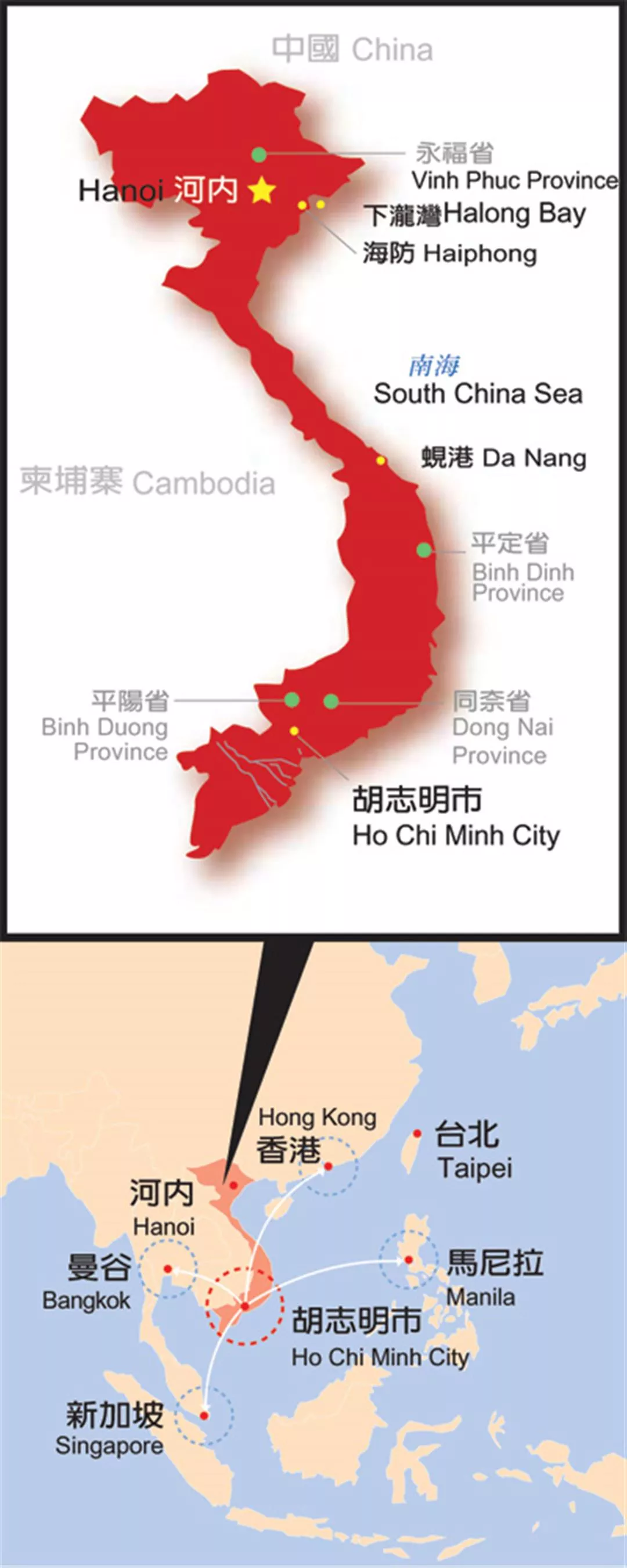
Vietnam: A Profile
Loopholes and opportunities
One painful case in point was the joint cooperation method adopted for the firm Yao-Teh International Development, Ltd.
Shen Ming-jen, chairman of Yao-Teh and also currently the general secretary of the Council of Taiwanese Chambers of Commerce in Vietnam, started out in 1990 by building an office building for rent on Dong Khoi Street, Ho Chi Minh City's busiest commercial district. After having participated in an investment tour organized by TAITRA in 1989, he was filled with enthusiasm, and not only invested in a construction enterprise, he even settled down there and married a Vietnamese beauty. Looking back over the past 18 years, he sighs that although he has been working with the Vietnamese government, for many years now he has had the feeling of being "tied down."
"But who is 'the government'?" Shen asks. The investor has no right to do anything on its own, and time and energy are wasted on complex laws and regulations, so that decisions are delayed to the point that the opportunity is lost.
Chinfon Trading Group chairman Shi H. Huang also joined in an investment tour to Vietnam and in 1992 he made the initial decision to invest there. Chinfon Trading Group has since undertaken the following projects: Sanyang Industry, which produces and sells motorcycle-related products; a cement factory jointly operated by Chinfon Global Corporation, the Haiphong municipal government, and Vietnam Cement Corporation; and a branch of Taiwan-based Chinfon Bank.

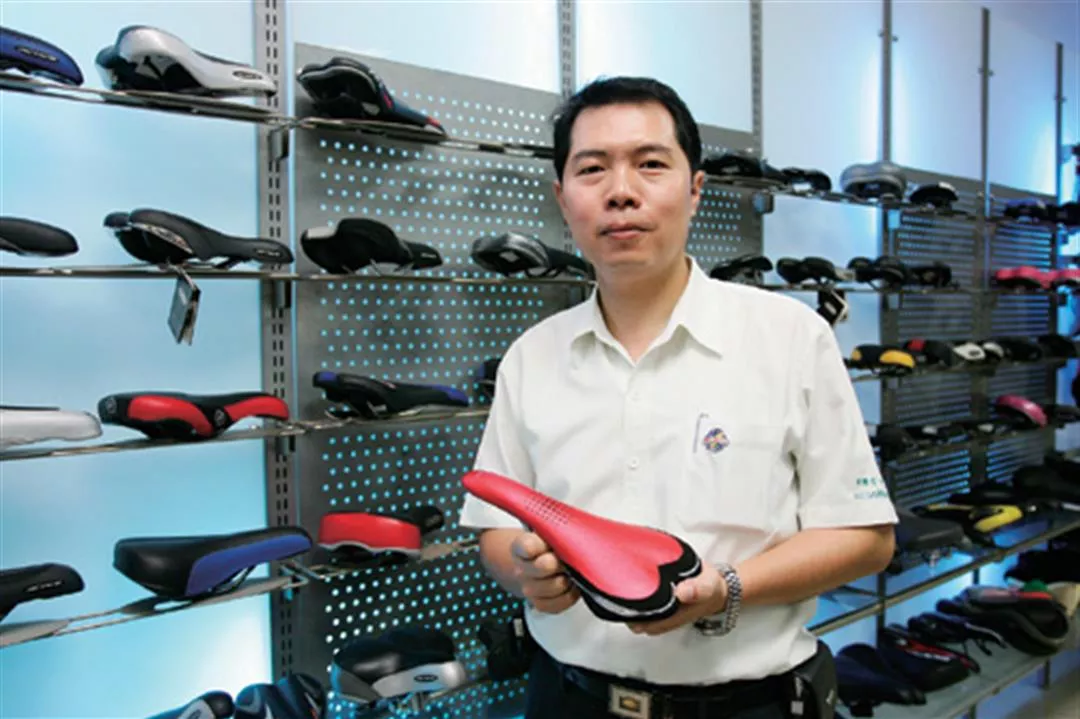
The general manager of Active International, Richard Tsai, only 37 this year, has been in Vietnam for seven years now. Since his arrival the company has expanded to ten times its original size.
Tough going for motorcycles
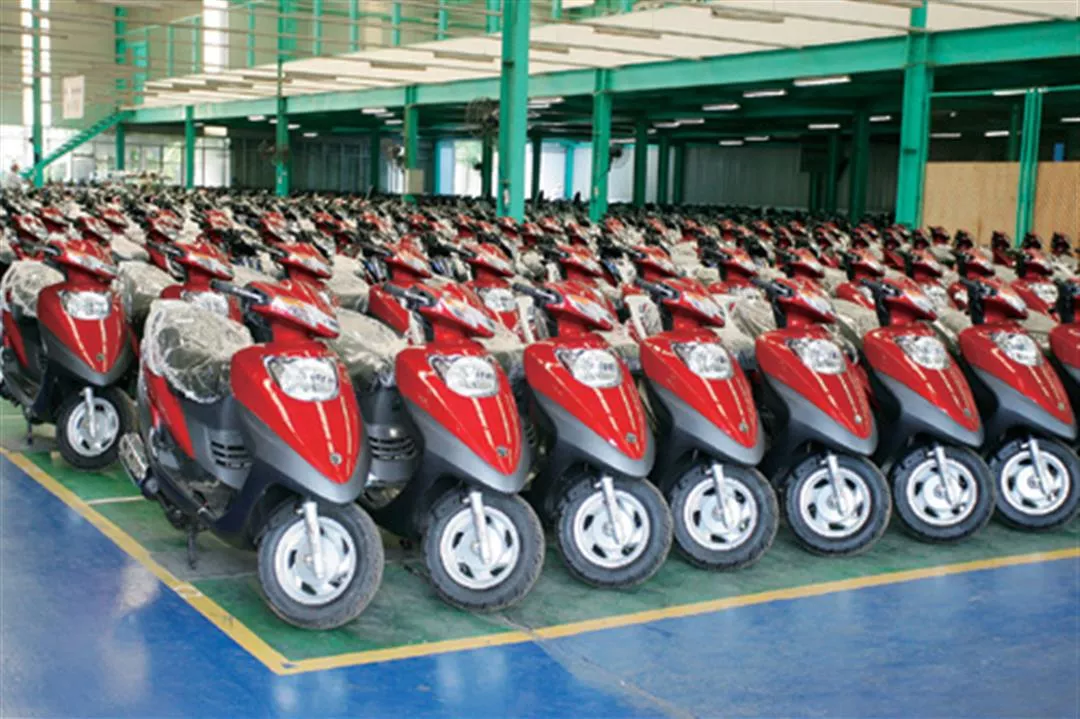
The streets of Vietnam are filled with scooters and motorcycles. They are not only a means of transportation, but a status symbol, and are especially coveted by the young. Despite this, Sanyang's investment in the country has been hard going, showing losses for the first ten years until finally beginning to turn a profit in 2003.
"Sanyang's early troubles can serve as a lesson for all Taiwanese investors," says Liu Wu-hsiung of Sanyang (he is also secretary general of the committee on Vietnam in the Taiwan International Cooperation and Development Fund). At first Sanyang sold Taiwanese products directly into the Vietnamese market, without considering the specific needs of local consumers. For example, drainage is a major problem in Vietnamese cities, and streets regularly flood in heavy rains, so tires have to be higher and wider. And before there was a widespread concept of personal credit, Sanyang was already in 1996 introducing payment by installments, without considering that collection would become a serious problem, with unpaid debts reaching 20-30%. Also, Sanyang had little previous international experience, so it didn't have its act together in terms of support systems like bilingual staff, information systems, and transnational management.
After changing management strategies and putting more effort into adapting to local circumstances, Sanyang began to develop motorcycles in Vietnam different from those in Taiwan. For example, the Attila--the Everyman's vehicle--is easy to handle (only 80 cc), uses fuel economically, is simple to repair, and has a moderate retail price (about US$1000 per bike); thus far more than 300,000 have been sold. Today Sanyang is the third-largest brand in the Vietnamese motorcycle market, behind only Honda and Yamaha.
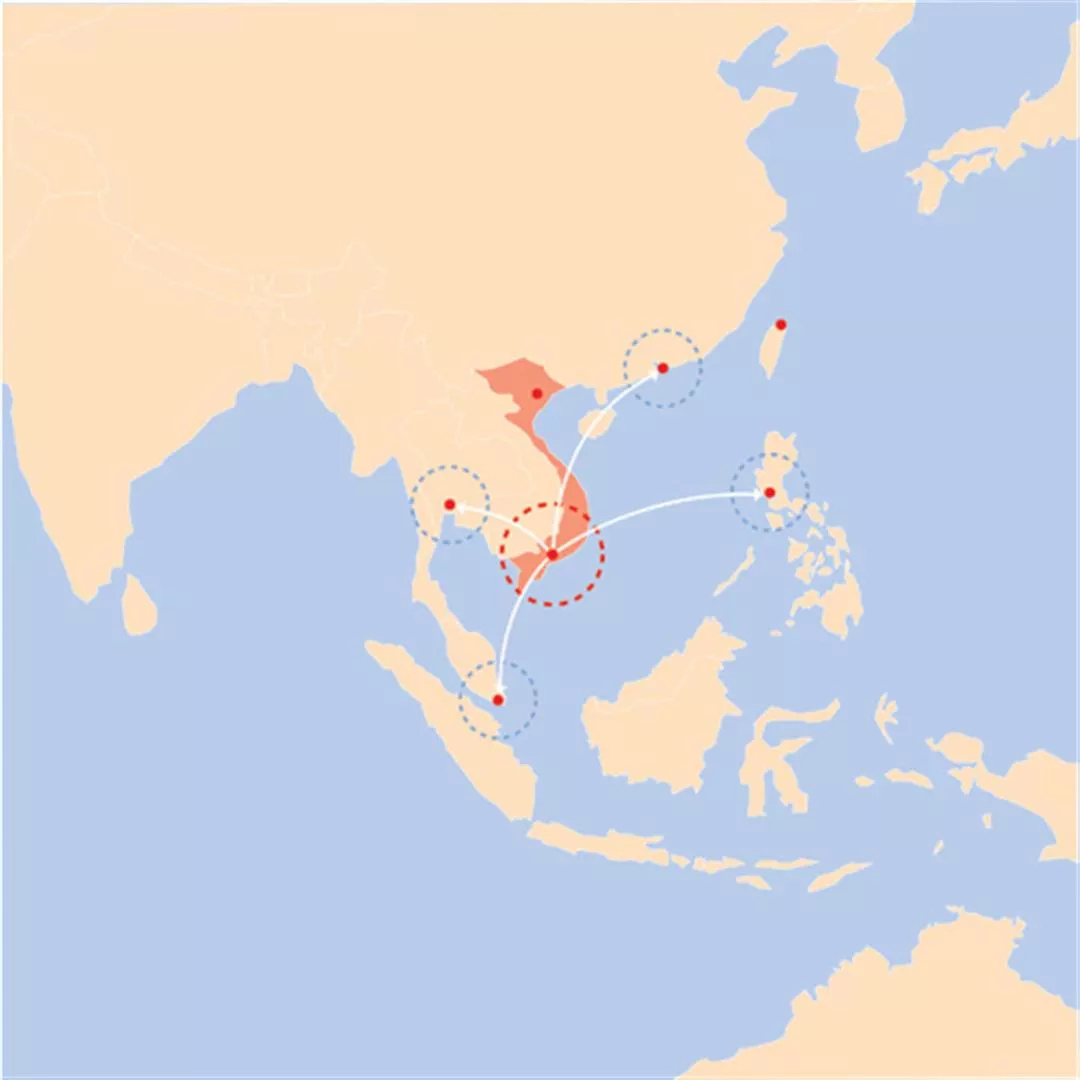
"Today Sanyang sells about 170,000 vehicles per year in Vietnam, with operating revenues of US$180 million," states Liu Wu-hsiung, adding that in the future they plan to use Vietnam as a base for further penetration of the ASEAN market (where they currently sell 50,000 bikes per year).

Vietnam: A Profile
Big fish in a Vietnamese pond
After the Asian financial crisis at the end of 1997, currencies in Southeast Asian countries depreciated precipitously, and their economies were seriously damaged. But for Taiwanese businesspeople, skilled at making the most of a bad situation and willing to take a risk on cheap acquisitions, this was another opportune moment for strengthening their positions in Vietnam.
When in 1999 Richard Tsai, general manager of Active International Co. and vice-director of the Taiwanese Chamber of Commerce in Binh Duong Province, decided to invest in Vietnam, his main consideration then was the cheap labor.
"Wages in Taiwan were ten times higher. When you consider that you could save NT$20,000 per month per employee, and that Active International's Vietnamese factory has over 400 workers, you are talking about saving nearly NT$100 million per year in labor costs alone."
Moreover, "There are so many restrictions and rules in Taiwan, but things are more wide open in Vietnam, so there are more opportunities," says Tsai. Taiwanese industry is already mature and there is an advanced division of labor among firms, with a tight production chain. Naturally, this greatly increases the competitiveness of whole industries. But correspondingly, it also narrows the possibilities for individual firms to expand upstream or downstream within their industry. But in Vietnam, where the market was more or less a blank slate, a lot of firms started to do vertical integration, and even horizontal expansion, growing larger and larger in scale.
Over the past seven years, Active International has been able to expand from its original Taiwanese operation--making bicycle seats--into related industries like PU foam production, plastic bicycle accessories, plastic injection goods processing, 3D water-transfer printing, and all kinds of bags and accessories.
Founded in 1970, Foming Bicycle Parts only did OEM in its early days. But after setting up a factory in Vietnam, it began to make products under its own brand name (Active) and do its own design work and R&D. It has already developed more than 300 bicycle seat models. Besides holding a 50% market share in Taiwan and being sold in Vietnam, Active International's bicycle seats are also exported to Thailand, Indonesia, and Europe, and last year penetrated Italy, a huge bicycle producer, for the first time. It is a classic case of a small Taiwanese firm upgrading and reinventing itself.

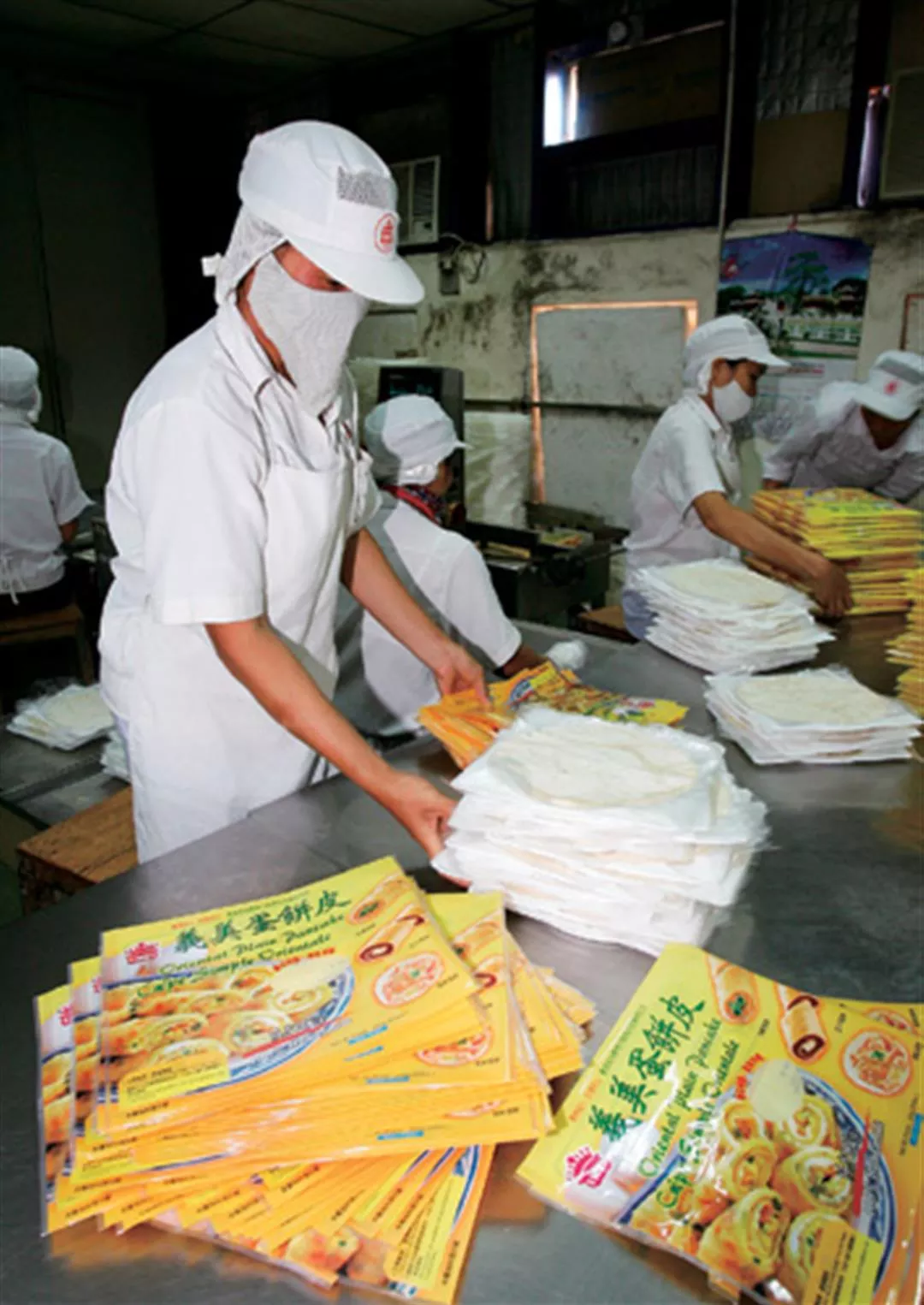
Taking advantage of Vietnam's cheap foodstuffs and labor, I-Mei produces food products for export back to Taiwan; these frozen goods are number one in their market in Taiwan.
Hi-tech heads south
The success rate of Taiwanese SMEs that got into Vietnam early and set down roots has been about 70%, as good as in the PRC. Seeing this has encouraged others to follow suit.
"From about two years ago through today, there has been a very obvious new wave of enthusiasm for investment in Vietnam," says Chen Shan-lin. This wave is related to what is happening in China. Local firms in the PRC are growing rapidly and are very competitive, so Taiwanese firms are getting squeezed out there. In addition, there have been other factors making the PRC less attractive: Certain exports from China such as shoes, bicycles, and light bulbs have been hit with anti-dumping duties by the European Union. Also wages in the PRC are rising. In Dongguan, Guangdong Province, for example, the minimum wage was adjusted in 2005 to RMB570, equivalent to about NT$2500, or 30% more than the year before. As a result many Taiwanese firms are turning to Vietnam in order to diversify risk.
Another factor forcing Taiwanese firms to seek an alternative route is that over the past few years, the PRC has been tightening up environmental protection, and the Chinese government is hoping that high-energy-consuming, high-polluting industries will relocate to the country's far west. Of the 128 persons taking part in an investment tour of Vietnam organized by TAITRA in February 2007, 80% came from traditional industrial firms that have long had factories in mainland China.
And now that Vietnam is formally an actor on the international economic stage following its entry into the WTO early this year, big corporations are more confident about the long term, increasing their willingness to invest in Vietnam. Recently several of Taiwan's largest electronics makers, such as the Hon Hai Group, AsusTek, and Compal, have moved into Vietnam.
Hon Hai plans to invest a total of US$5 billion in Vietnam. In early July the group signed a memorandum with Binh Dinh Province to inject US$1 billion into the provincial special economic zone to construct a 700-hectare industrial park, a 300-hectare general services area, and 50 hectares of luxury housing. Binh Dinh has committed itself to a package of preferential tax rates and tax exemptions.
Compal, meanwhile, plans to build a factory in Vinh Phuc Province, with an estimated US$30 million investment for the first phase.
Chang Chih-ming, head of investor relations at Compal, states that the company's three factories employing 20,000 people in Kunshan, Jiangsu Province, China, are already at saturation point. In response to requests from foreign customers that the firm diversify risk, it had to look for another production site. It chose Vietnam based mainly on cost considerations.
"Although there has been a lot of growth in the market for notebook computers in recent years, and they are taking up a growing share of the PC market, prices have been falling, so we are all confronted with the problem of reducing production costs," explains Chang. The Vietnamese government has given Compal four initial years tax free, plus a 50% reduction in taxes for years five through nine, which was a significant inducement. The Compal board of directors approved the investment plan in mid-August, and they will soon select a site and break ground.
In the face of this southward flow of Taiwanese high tech, Jeff Hou reminds us that Vietnam lacks infrastructure, and has no heavy industry. Even worse, there is a shortage of people capable of working in high tech, so electronics firms are limited at the present time to doing simple assembly of imported materials and parts pre-made just over the Chinese-Vietnamese border. Taking as one example the processors for microcomputers being made by Intel, semi-finished products are imported into Vietnam only for assembly and packaging, because although Vietnam has an overall surplus of labor, it has a shortage of technical personnel.
"You have to rely on Vietnamese expats returning from overseas for your high tech people," says TECO Corporation vice general manager Tsai Wen-sheng. He puts his hopes in returning overseas Vietnamese in their 30s and 40s, but they will need time to build the requisite skills.


Advancing into Vietnam
Although the conditions for high-tech industry in Vietnam are not all in place, this has not stopped firms from racing to go there.
Tsai Wen-sheng relates that his company has devised a "seven stars" plan built around the fastest growing areas in the world; Vietnam is the most brilliantly shining of this constellation.
Recent TECO investment projects in southern Vietnam have included a motor factory in Dong Nai Province, a home appliance factory in Binh Duong Province, and a telecommunications factory in Ho Chi Minh City. In August work began on a 50-hectare hi-tech industrial park located in Binh Duong, which will encompass seven satellite factories in one location.
"When small companies invest they are looking for timely opportunities, but when big firms invest they are looking at long-term trends," says Wu Chun-chung, head of finance and administration at TECO. Although economic conditions are not fully mature, given the long-term outlook TECO feels that setting up a presence in Vietnam is the only logical option.
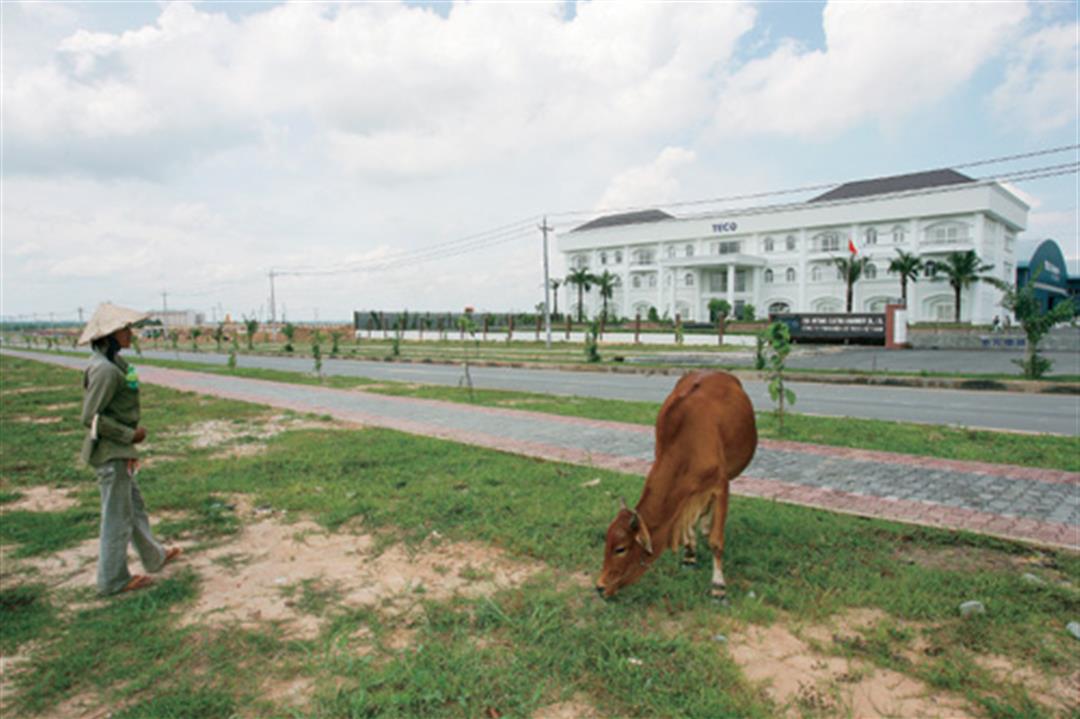
The electric motor factory in Dong Nai, in the south of the country, occupies an area of about three-and-a-half football pitches. It only went into operation last September. Although it can be described as nearby a planned international airport, it still feels like the boondocks. Outside the factory fence, there is little but water buffalo who seem much more intrigued by the grass.
TECO has been in Vietnam for less than a year. So far the motor factory is limited to processing and export of imported semi-finished products. In this initial phase, the air-conditioning division has remained limited to sales and service for the Vietnamese market; there is no manufacturing.
"Vietnam is not only an export processing platform, it is a future market that everyone has their eyes on," says Wu Chun-chung. Vietnam has over 80 million people, and although their per-capita income was only US$720 in 2006, it is predicted that Vietnam will have the fastest GDP growth among all of the N-11 countries. Moreover, under pressure from the WTO, it is certain that the market will become increasingly liberalized.

Basic infrastructure that is out of date and slow poses an obstacle to the speedy economic rise of the nation. How to improve public facilities poses a huge challenge to the Vietnamese government.
North to Hanoi
From SMEs to big corporations, from agriculture, forestry, and traditional labor-intensive industries to services and high tech, the trail forged by Taiwanese businesspeople also has had another direction: south to north--from the provinces around Ho Chi Minh City northward toward Hanoi and Haiphong.
Ho Chi Minh City, located in the Mekong River Delta, was once known as "the Little Paris of the East." A great deal of interesting architecture is left along the Saigon River from the French colonial period--such as the Notre Dame Cathedral, the Municipal Theater and the Central Post Office--creating a rich, leisurely European atmosphere. In contrast to the capital of Hanoi, located along the Red River in the north, Ho Chi Minh City has a larger population, began its economic development earlier, and has a larger number of persons of Chinese ancestry. However, as demand for labor has risen, a labor shortage has developed in the south, and Taiwanese firms are turning their eyes toward the formerly little-understood city of Hanoi.
If the atmosphere in Ho Chi Minh City can be likened to that of Shanghai, then that in the capital of Hanoi is more like that of Beijing. With its older architecture and historic monuments, it has a sterner air, and laws are more strictly enforced. Hanoi is on about the same latitude as southernmost Taiwan, with a climate more like that of Taiwan, unlike the year-round heat and humidity of Ho Chi Minh City.
The first major Taiwanese corporation to choose Hanoi was I-Mei Foods. Their 7.5-hectare factory site includes I-Mei itself (making food products), a company that produces plastic wrapping material, and another that manufactures golf bags.
I-Mei broke ground on its food factory in 1998, beginning mass production the following year. Director Lee Chun-nan states that besides things like high-quality soy sauce and food colorings, which have to be imported from Taiwan, 80% of the raw materials are locally sourced. The reason they decided to build their factory in the north is because the climate is closer to that of Taiwan, so the rice grown in both places is similarly of a chewier texture.
Vietnam is the world's second-largest rice exporting nation, with rice costing only half as much as it does in Taiwan. When you also consider that wages are one-tenth what they are in Taiwan, you can see why I-Mei moved their labor-intensive production line to Vietnam. The factory, in its eighth year of operation, now has over 400 employees, so the firm is saving a lot in production costs.
Lee states that when I-Mei first applied for a license to build a factory, it was 100% for export, so the onion pancakes and rice crackers produced there were mainly exported back to Taiwan or to Europe and America.
"In the future, I-Mei would like to explore the domestic market in Vietnam, but the time is not yet ripe," says Lee. The difficulty is not in breaking into the Vietnamese market per se, but is identical to that faced by Taiwanese firms in China--because there is no system of agents, once the number of retail outlets carrying one's products grows to a certain point, it becomes troublesome and even difficult to collect money owed, so that the more you sell, the more money you lose!

From traditional to modern and internationalized, Vietnam may have a long way to go, but it has been moving steadily forward.
Global strategy
One firm that has been cited as a classic case of the current wave of Vietnam-directed investment is Oriental Sports Industrial Company, a maker of high-end shoes.
Construction of their factory began in 2004, and production formally started in May of 2006. Of the 1000 persons at the factory, only eight (all high-level managers) are Taiwanese, four (all managers) are from the PRC, 16 (intermediate staff) are Thai, and the rest are local employees. The sample designer is from China, the floor supervisors are Thai, sales development is headed up by a Taiwanese.... It's really an interesting mix.
Miller Liang, general manager of Oriental Sports, which has had a factory in Thailand for eight years and also has operations in China, notes that in recent years Thailand's exchange rate has been unstable, and a labor shortage is leading to rising wages. Therefore their best option has become to "duplicate" their Thai operations in Vietnam based on the experience that they have had with their Thai factory.
Last year leather goods from Vietnam were subjected to anti-dumping duty by the EU, but Oriental Sports was able to get around it. "There was no anti-dumping problem for Thailand, so we brought semi-finished products from Vietnam to Thailand where they were made into finished goods," says Liang. Oriental Sports always tries to make the best arrangements it can among the investments it has in different countries, and by maintaining flexibility it can bring into full play the advantages of being a multinational corporation.

Look, don't touch?
A word of warning: Though everyone can see the opportunities in Vietnam, not everyone can take advantage of them.
Jeff Hou from the Taiwan Trade Center estimates that the success rate of Taiwanese firms in Vietnam is about 70%. But if you want to rent land in an industrial park you're in for a 50-year contract, and there are many cases of Taiwanese business-people who have wanted to pull out after not being able to make a go of it.
True as that is, successful firms have remained in the majority. By early August, already more than 60 people had signed up for the September tour organized by TAITRA, so it looks like this wave of investment in Vietnam has yet to crest.
Leaving aside the idea of a "family" relationship between the two countries, Taiwan-Vietnam economic relations have become increasingly significant, and--from the Go South policy of the 1990s to corporate investment today, from Ho Chi Minh City to Hanoi--Vietnam is playing a role that cannot be overlooked in the overall strategic deployment of Taiwanese companies in Southeast Asia.
"The future really looks bright, so now is really the time to get your fingers in the pie!" Thomas M.J. Yeh, vice chair of Taiwan's Council for Economic Planning and Development, makes Vietnam sound appetizing indeed!
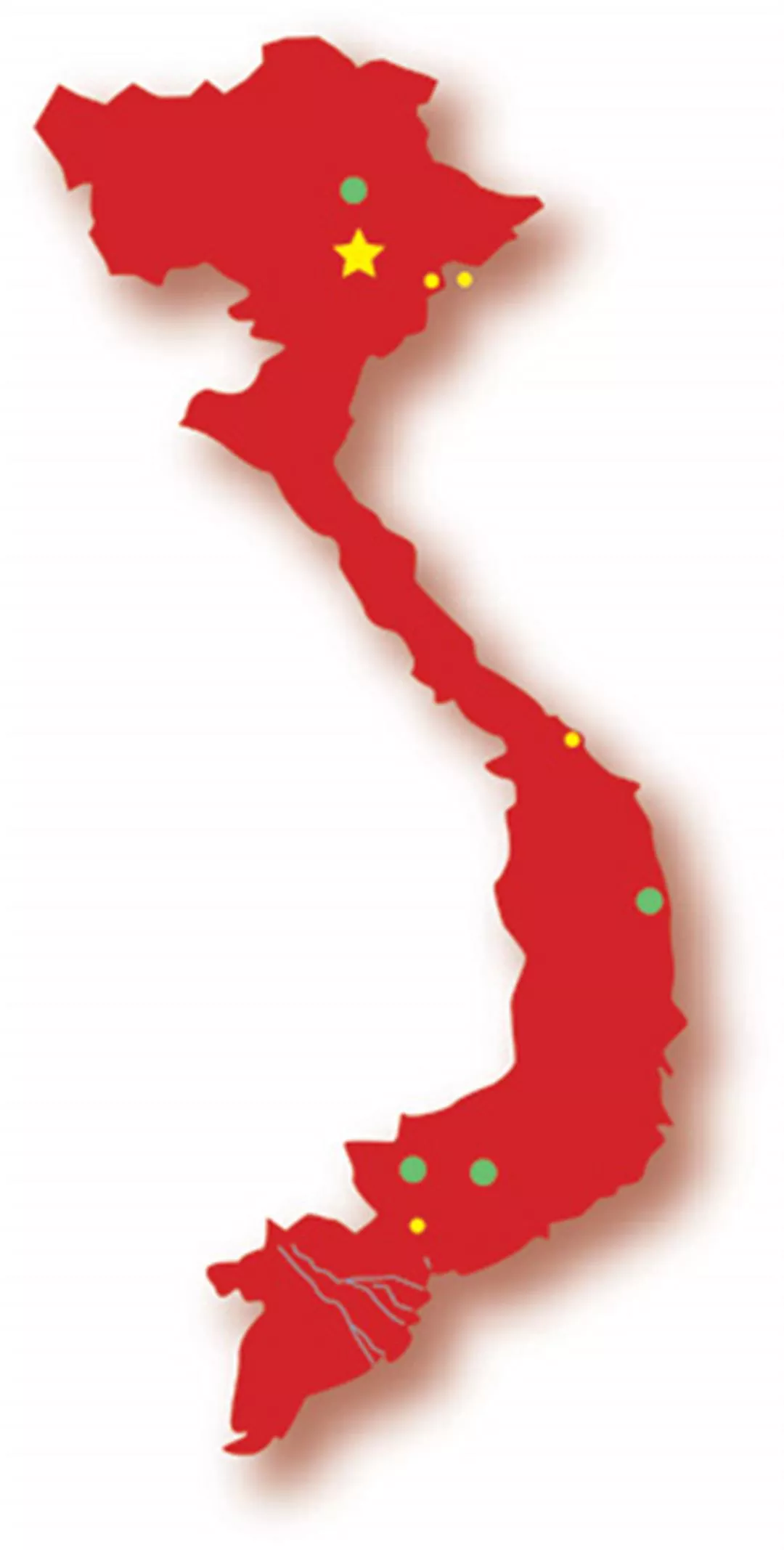
Vietnam: A ProfilePopulation: 84.1 million (65% under age 25)
Ethnicity: 54 ethnic groups (of which the Kinh people make up 88%)
Area: 331,698 square kilometers
Capital: Hanoi
Largest city: Ho Chi Minh City
Political system: Socialist republic
Climate: Tropical south with wet and dry seasons; four seasons in the north
Natural resources: Petroleum, natural gas
Agricultural products: Second largest rice and coffee exporter in the world
Per-capita national income: US$720
GDP growth: 8.17%
Exchange rate: 15,819 Dong to the US dollar
Official language: Vietnamese
Time difference from Taiwan: One hour behind
| Ranking | Source | Projects | Percentage | Amount* | Percentage |
|---|---|---|---|---|---|
| 1 | South Korea | 1,458 | 19.46 | 9,365.32 | 13.89 |
| 2 | Singapore | 486 | 6.49 | 9,191.49 | 13.63 |
| 3 | Taiwan | 1,637 | 21.85 | 8,728.09 | 12.95 |
| 4 | Japan | 819 | 10.93 | 8,067.01 | 11.97 |
| 5 | Hong Kong | 404 | 5.39 | 5,505.19 | 8.17 |
| 6 | British Virgin Islands | 300 | 4.00 | 3,818.80 | 5.66 |
| 7 | Netherlands | 76 | 1.01 | 2,429.37 | 3.60 |
| 8 | USA | 335 | 4.47 | 2,319.39 | 3.44 |
| 9 | France | 179 | 2.39 | 2,249.49 | 3.34 |
| 10 | Malaysia | 219 | 2.92 | 1,739.80 | 2.58 |
|
*US$ million
source: Vietnamese Ministry of Planning and Investment (1988-June 2007) |
|||||

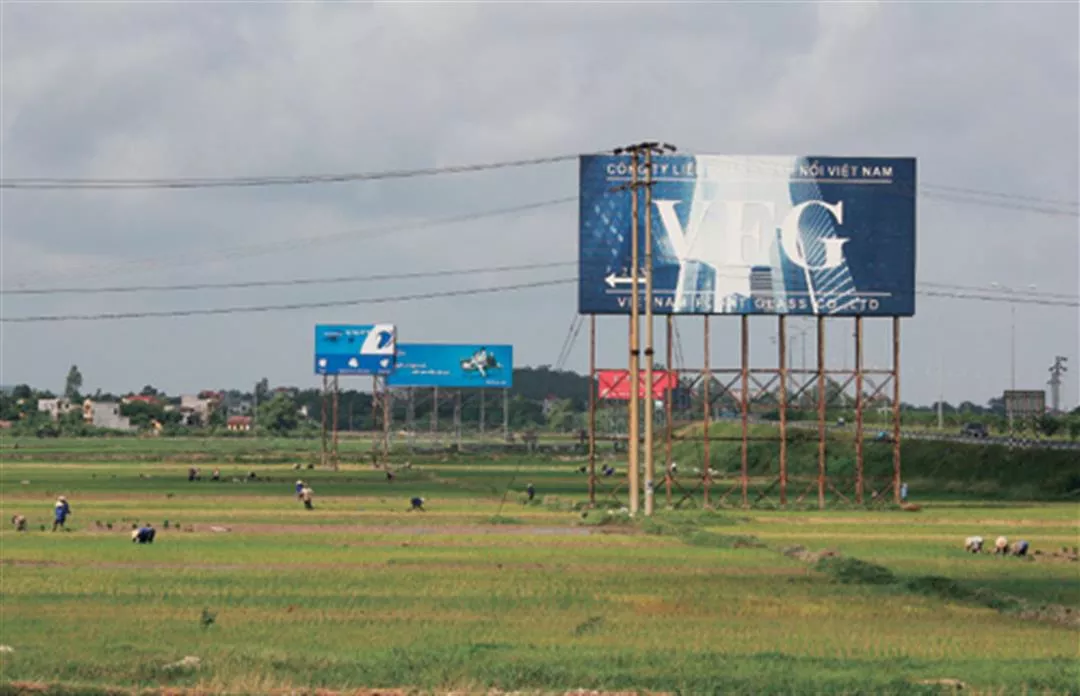
When you leave the airport in Hanoi, the road is lined on both sides with verdant rice fields being cultivated by hard-working farmers. The big corporate billboards in the field seem to be announcing the arrival of a new capitalist society.

Vietnam: A Profile

After "localizing" in thought and practice, Sanyang finally penetrated the Vietnamese market, and its motorcycles are now the third largest brand there. The photo shows Sanyang's Hanoi plant.